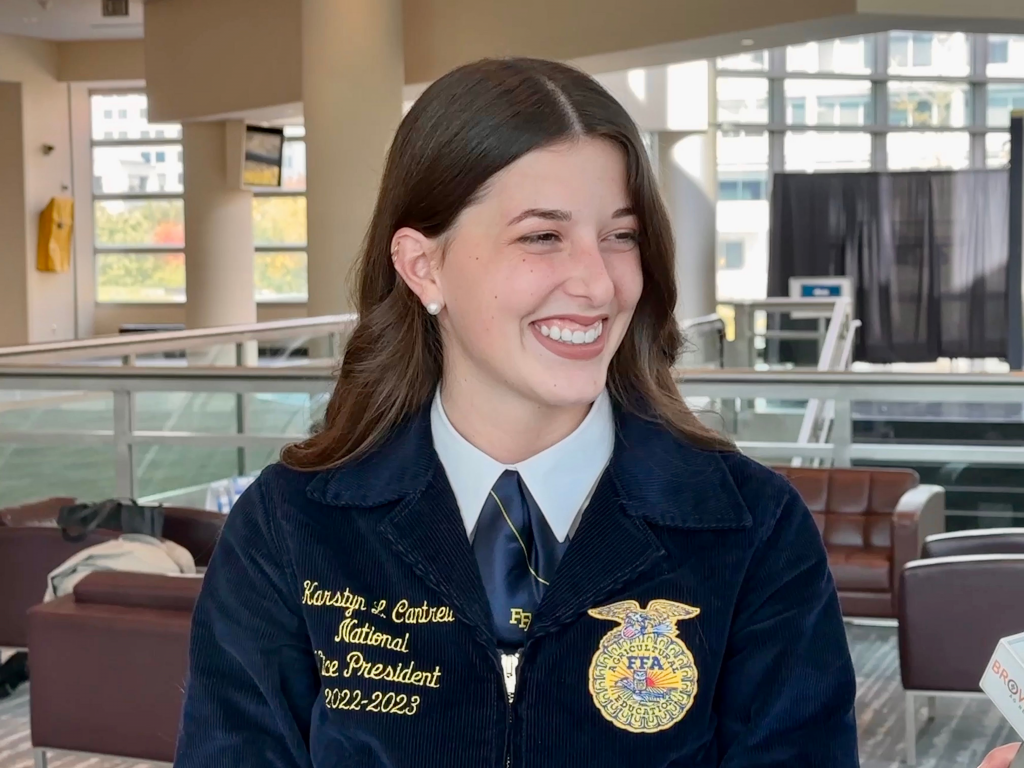
At the 2023 National FFA Convention in Indianapolis, Senior Farm and Ranch Broadcaster, Ron Hays, caught up with National FFA Officer from Skiatook, Oklahoma, Karstyn Cantrell.
Cantrell is the National Vice President for the Central Region and will give her retirement address at the end of the week.
"It has been 367 days since I was elected to national FFA office," Cantrell said. "On October 29, I ran on stage, and my life has truly been changed for the better."
Over the past year, Cantrell said she has had the chance to travel around the U.S. to nine state conventions, five camps, many conferences, and more.
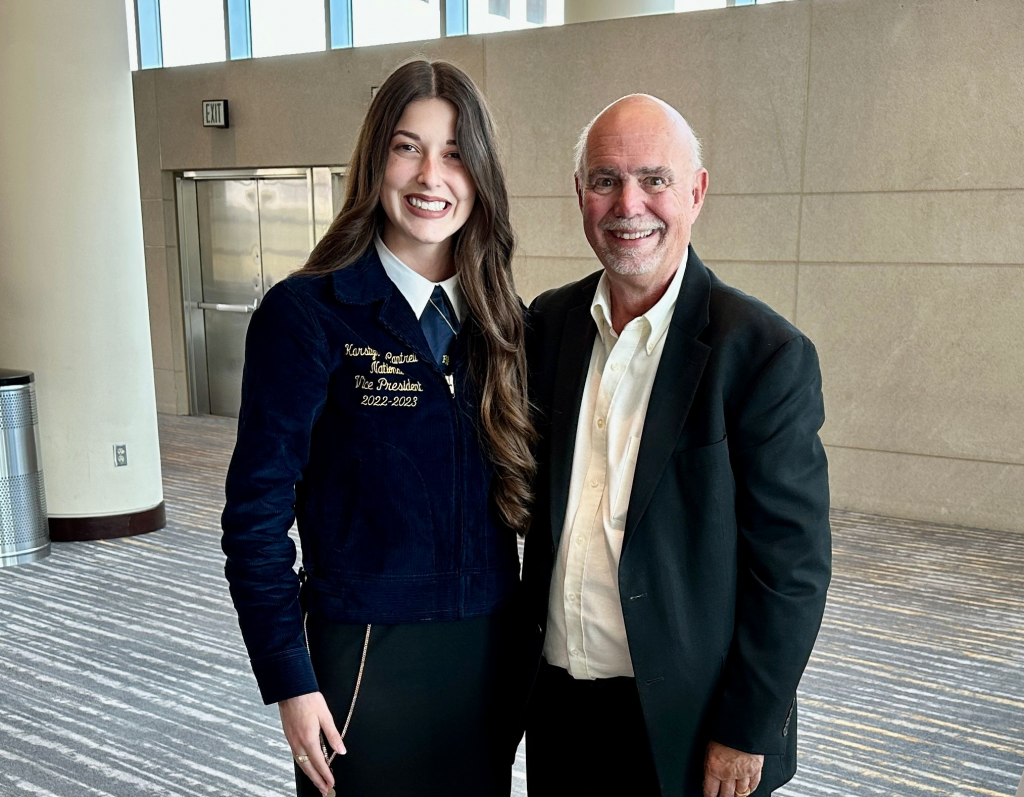
Cantrell said one of the priorities of the national FFA officer team has been to allow the student voice to be heard along with the agriculture industry as a whole.
"We were founded by farm boys who knew exactly what they wanted this organization to stand upon, which is production agriculture," Cantrell said. "We as a team are making sure we are keeping that mission at heart while still finding ways to evolve towards the future."
One of Cantrell's favorite parts of her service this past year has been the chance to have real conversations with FFA members.
"It is too often that people expect national officers always to have their life together and have everything figured out," Cantrell said. "I think something that is really special is we get to meet people where they are, and they get to meet us where we are."
Looking at this year's convention, Cantrell said she is looking forward to bringing honor to the FFA tradition that has been in her family for many years.
Cantrell will be giving her retiring address at the 2 p.m. session on Thursday afternoon. For that retiring address, Cantrell gave a little glimpse into what she will be talking about. The sessions will be livestreamed HERE.
"Something I have taken from this year is finding how trial can produce perseverance," Cantrell said.
Our coverage of Oklahoma FFA engaged at the National FFA Convention is being powered by Oklahoma Farm Bureau. Watch for our stories and interviews from Indianapolis on our Website, Daily Email, our statewide Radio Oklahoma Ag Network and our Social Media Channels. Click here for the OKFB website to learn about how they are making a difference in lives of Oklahomans. Oklahoma Farm Bureau supports the youth of rural Oklahoma year round- and reminds you- Together- We Are Rural Oklahoma!

The United States Department of Agriculture (USDA) announced today the opening of registration for the 100th Annual Agricultural Outlook Forum. This landmark event, titled "Cultivating the Future," will be held in person at the Crystal City Gateway Marriott in Arlington, Va., on February 15-16, 2024. All Forum sessions will also be livestreamed on a virtual platform.
"As we reflect on a century of agricultural progress, we're not just celebrating our achievements, we're also preparing for an even better future," said Secretary of Agriculture Thomas Vilsack.
"The 2024 Forum underscores USDA's commitment to fostering innovation, sustainability, and resilience in the sector and serves as a platform for bringing together minds dedicated to advancing America's agriculture."
The 2024 Forum program will feature a keynote address by Agriculture Secretary Tom Vilsack, a presentation on the outlook for agricultural markets and trade by USDA Chief Economist Seth Meyer, a plenary panel of distinguished guest speakers, and 30 breakout sessions covering a wide range of timely agricultural, food market, and environmental issues. More than a hundred experts from government, industry, and academia will share insights on topics such as commodity and food price outlooks, U.S. and global agricultural trade developments, agricultural innovations, climate change, and the bioeconomy.
The in-person event will also feature exhibit booths from agencies across USDA highlighting their missions and activities.
Future Leaders Program
The Future Leaders in Agriculture program is an academic competition focused on identifying college students from land-grant colleges and universities, Hispanic-Serving Institutions, and non-land-grant colleges of agriculture, who have the skills and experience to be tomorrow's leaders in agriculture. This year, 20 students in agriculture-related fields of study (15 undergraduate students and five graduate students) will be selected to participate in this program in Washington, D.C. The program will include meetings with leaders from across USDA and agricultural staff on Capitol Hill, networking opportunities with fellow student participants and USDA staff, and full participation in the 2024 Agricultural Outlook Forum. All transportation, lodging, meals, and conference registration fees are covered for the students selected. Apply today.
About USDA's Outlook Forum
USDA's Agricultural Outlook Forum began in 1923 as a way to disseminate USDA data and analyses to farmers, so they had the tools to understand markets and make informed production decisions. Over time, the event has evolved into a unique platform where key stakeholders from the agricultural sector in the United States and around the world come together every year to discuss current and emerging topics and trends in the sector.
The Agricultural Outlook Forum, organized by USDA's Office of the Chief Economist together with other USDA agencies, is independent of commercial interests and aims to facilitate information sharing among stakeholders and generate the transparency that supports more, better, and fairer markets for producers and consumers alike.
Visit the Agricultural Outlook Forum website to register, reserve discounted room rates, or apply for the USDA Future Leaders in Agriculture Program.
Follow the conversation at #AgOutlook100 on USDA's Instagram, X, and Facebook.
USDA touches the lives of all Americans each day in many positive ways. In the Biden-Harris Administration, USDA is transforming America's food system with a greater focus on more resilient local and regional food production and fairer markets for all producers. USDA is dedicated to ensuring access to safe, healthy, and nutritious food in all communities, building new markets and streams of income for farmers and producers. In order to reach these goals, USDA encourages the use of climate smart food and forestry practices. USDA is making historic investments in infrastructure and clean energy capabilities in rural America and is committed to equity across the Department by removing systemic barriers and building a workforce more representative of America. To learn more, visit www.usda.gov.
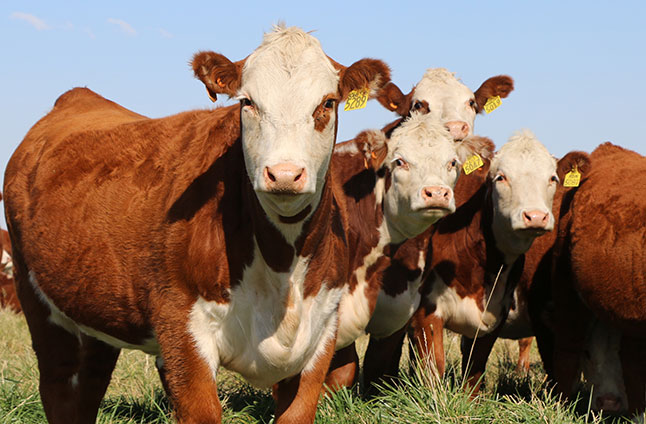
Senior Farm and Ranch Broadcaster, Ron Hays, is back talking with Oklahoma State University Extension Livestock Marketing Specialist Dr. Derrell Peel about the latest Cattle on Feed report issued by the USDA. Hays and Peel talk about how the industry is still ruminating about what the October report is telling us about rebuilding the beef cow herd in the days ahead.
"The last Cattle on Feed Report did come in with a surprisingly large placement number, so the market really capitalized on that bearish sentiment, and they used that to pull the markets down even further," Peel said. "It certainly was a bit bearish in the short-term since there are more cattle on feed because of the placements."
For the first time in a year, Peel said the on-feed number was above a year ago. The supply of cattle did not change as a result of this report, Peel added.
"It is really two things, I think," Peel said. "Some of those things were probably drought-related movement of cattle that maybe marketed in September when they normally would have marketed in October and November...the other bigger part of it is really in that October report in terms of the heifer on feed number."
Peel said the number of heifers in the feedlot was at the highest level for October in the current cattle-on-feed data series all the way back to 1996.
"The heifers represent 40 percent of all the cattle in the feedlot, and that means the way we were able to hold feedlot inventory higher than expected is because we continue to place and feed heifers instead of using them for any sort of breeding purposes," Peel said.
One of the reasons there has not been much indication of herd rebuilding, Peel said, is because of the uncertainty relative to drought and forage conditions.
"If the meteorologists are right with the El Niño pattern, it looks like this is maybe the beginning of that from the way I understand it," Peel said. "We are going to have kind of a wet winter, maybe colder than usual. Wetter in the Southern Plains and maybe not so much in the Midwest."
Peel said these possible weather conditions suggest setting up for substantially better forage conditions through the first half of next year.
"If that happens, then I do think we will begin to see more indications of heifer retention and herd rebuilding as we get into 2024," Peel said.
Regarding consumer purchasing of beef in the midst of tight cattle numbers, Peel said consumers may try to utilize ground beef consumption relative to other parts of the beef carcass.
"What this says is that all of them are going to get more expensive in a relative sense, so we are going to continue to see that squeeze," Peel said.
The Beef Buzz is a regular feature heard on radio stations around the region on the Radio Oklahoma Ag Network and is a regular audio feature found on this website as well. Click on the LISTEN BAR for today's show and check out our archives for older Beef Buzz shows covering the gamut of the beef cattle industry today.

Strong agriculture leaders are vital to the sustainability and growth of our industry, and the American Soybean Association wants to provide a student interested in agriculture with a college scholarship as they begin their education.
The Soy Scholarship is a $7,000, one-time award presented to a high school senior who plans to pursue agriculture as an area of study at any accredited college or university in the 2024-25 academic year. The scholarship is managed by ASA and made possible through a grant by BASF Corporation.
"ASA is grateful for its longstanding partnership with BASF and proud to invest in the future farmers, scientists, teachers, and other careers in agriculture that drive the industry forward," ASA President Daryl Cates (IL) said. "Agriculture has a significant role to play in sustainably feeding a growing world population, shaping climate policies, and many other ways we support and provide for people here at home and around the globe. Supporting education is imperative to industry advancement, and we applaud the dedicated young people who are interested in this challenge."
ASA and BASF have recognized and rewarded students for their hard work and interest in agriculture through the Soy Scholarship since 2008.
"BASF is pleased to continue our longstanding partnership with ASA to support talented students committed to solving the challenges facing the future of agriculture," said Scott Kay, vice president, U.S. Agricultural Solutions North America. "Our industry needs students passionate and interested in meeting the demands of a growing planet, and BASF is thrilled to invest in these students' future."
The scholarship is awarded in $3,500 increments (one per semester) for the 2023-24-school year. The student must be a child or grandchild of a current state soybean association/ASA member, maintain successful academic progress and remain in good standing with the college or university to receive the full amount of the scholarship. High school seniors may apply online Oct. 31-Dec. 31, 2023. Click here to apply. A committee of soybean grower-leaders will select the ASA BASF Scholarship recipient. The award winner will be announced this winter. Click here for more details.

Angus exhibitors led 59 entries at the 2023 American Royal Junior Angus Show, October 20 in Kansas City, Mo. Dustin Hurlbut, Raymond, S.D., evaluated the entries before naming champions.
Conley Sandy 2403 won reserve grand champion owned female at the 2023 American Royal Junior Angus Show, Oct. 20 in Kansas City, Mo. Tripp Yocham, Sapulpa, Okla., owns the January 2022 daughter of SSF On Point 4028. She first won reserve junior champion. Dustin Hurlbut, Raymond, S.D., evaluated the 59 entries. Photo by Next Level Images.

At the "Grown" tour in Enid, Radio Oklahoma Ag Network Intern, Maci Carter, had the chance to visit with Sheri Glazier, the Dirt Road Dietitian.
Through great partners like the Oklahoma Wheat Commission, Oklahoma Farm Bureau, and Sidwell Enterprises, Glazier said registered dietitians who are nutrition experts had the chance to come and see the beginning of the food processing chain in Enid last Friday.
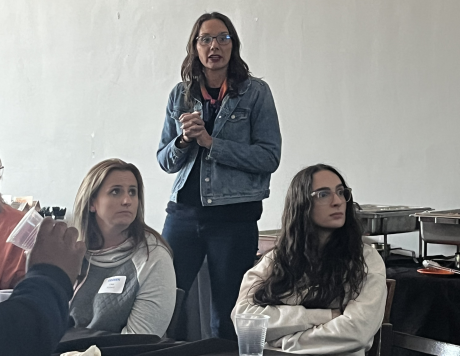
The event was geared toward Oklahoma Academy of Nutrition and Dietetics members but also open to members and non-members.
"If you are interested in learning where your food comes from, we are willing to make those opportunities possible," Glazier said. "We had students from Oklahoma State University as well as the University of Central Oklahoma. There were also dietitians who drove as far as McAlister to Enid, Oklahoma, today, and that is pulling at my heartstrings a little bit that people really found value and had the desire to drive that far to learn a little bit about agriculture in Oklahoma."
With plenty of misinformation about agriculture stemming from social media, documentaries and more, Glazier said it is rare for people to have an opportunity to talk to the individuals who raise and grow the food.
"To be able to allow them an opportunity to connect with these ultimately end-user consumers is something that, as a dietitian, I want these partners to be able to do," Glazier said.
Known as the "Dirt Road Dietitian," Glazier said she is able to combine her two passions: nutrition and agriculture.
"That is all I want to do is connect those that recommend and produce food and be confident in recommending it to those who have questions," Glazier said.
Earlier this month, eight House Republicans joined with every House Democrat to oust the former Speaker of the U.S. House of Representatives, Kevin McCarthy, for the first time in American history. As I warned then, this disastrous move plunged the House, Republicans' ability to function as a majority and the United States into chaos. Now, not only are we less than 20 days from a critical government funding deadline, but major world events occurred during our turmoil including Hamas' launch of the deadliest attack on Israel in 70 years and other Iran-backed terrorist groups attack on U.S. facilities in the Middle East. Now that the House has elected a Speaker, it is high time for this body to get back to work.
As you may recall, on September 30, hours before U.S. government funding was due to expire, the House passed and sent to the Senate a continuing resolution to continue government funding until November 17. The House has already passed four funding bills and continues to work to pass the remaining eight. While the goal should be to finish this before November 17 and come to an agreement with the Senate for full government funding for fiscal year 2024, a government shutdown is not an acceptable outcome, time is short, and it is possible the House will have to pass another continuing resolution to give us the time to conclude negotiations.
Next, as war breaks out in the Middle East and continues in Ukraine, the House must also swiftly pass support for Israel and Ukraine to continue to defend themselves in full force. While Putin's unprovoked, relentless war on Ukraine continues, the U.S. must stand firmly on the side of order and freedom and against tyranny. The U.S. also has a duty to stand with its loyal ally Israel as it defends itself against Hamas. The brutal attacks and barbaric slaughtering of innocent people, including women, children and babies, have no place in this world. Make no mistake, Hamas is a government-backed, trained and funded military terrorist organization, and it must not prevail.
Reauthorizing our country's national defense, farm and aviation programs must also be completed. Defense, aviation and farm programs are critical to keep our nation safe, food on tables and our economy on the move. The House passed the Federal Aviation Administration (FAA) reauthorization and the National Defense Authorization Act (NDAA) earlier this year and we will expect the president and the Senate to work with us to conclude enactment of these bills, as well as the Farm Bill.
Finally, House Republicans must continue to press the Senate and president to pass policies to secure the southern border. This unprecedented humanitarian and national security crisis is affecting every community across the nation in some way. Earlier this year, the House passed H.R. 2, the Secure the Border Act of 2023, which would provide for the resources and direction necessary to secure the border including resuming border wall construction; giving border patrol agents necessary resources, equipment and manpower; reforming fraud and abuse in the asylum process; preventing catch and release practices and establishing new penalties for visa overstays.
The House also more recently passed H.R. 4367, the Department of Homeland Security Appropriations Act for Fiscal Year 2024. Not only are our Customs and Border Patrol (CBP) agents and their resources stretched thin, making their job more difficult, but bad actors including drug and human traffickers, and even suspected terrorists, are taking advantage of President Biden's unenforced border. This legislation addresses the border crisis by providing funding to secure our border, removing dangerous criminals and detainees unlawfully in our country and countering China's role in the spread of fentanyl. House Republicans are committed to securing the southern border, and I was proud to support the passage of both bills to support a safer nation. With only eight weeks left in the year, members of Congress certainly have our work cut out for us, but I remain committed to completing these critical measures. I look forward to the work ahead and working with our new Speaker, Mike Johnson. I applaud him for hitting the ground running on his first day – but there is certainly still much more to do.

The red meat allergy people develop after a tick bite is becoming more common in Oklahoma. The latest CDC data poses many questions about why lone star ticks are most often to blame and why some people are less susceptible to an allergic reaction. (Photo by Shutterstock)
Oklahoma State University Extension specialists say residents should remain diligent in preventing tick bites as the alpha-gal allergy emerges as a serious health in Oklahoma and the southeastern U.S.
Tick bites are rare during the cooler months, but the pests are considered a year-round threat in states with mild winter temperatures.
12 years of mysterious illness
Sand Springs, Oklahoma, resident Stephanie McAllister developed a mysterious cough in 2008 that baffled medical specialists. She coughed constantly, but every X-ray was clear and every test declared normal. The pulmonologist she visited mentioned a chronic cough is usually an indicator of some kind of allergy, but no diagnosis was determined. Doctors suggested several serious medical ailments as the probable cause, including bulimia or anxiety. McAllister felt like she was going crazy, but deep down she knew none of these were the problem.
"I started having brain fogginess and joint pain in my arms and legs, but all of the tests ran for arthritis came back normal," she said.
In 2019, while hiking around Keystone Lake near her home, McAllister was bit by a tick and began vomiting five or six times a day. Again, every test doctors administered came back normal.
"I started Googling symptoms and reading articles," she said. "I went to three different doctors and asked them to do an alpha-gal test, and they all said it was too rare, that there was no way I had it."
Frustrated with 12 exhausting years of unexplained illness, McAllister started eating a vegan diet. Her symptoms disappeared, and she suspected alpha-gal was the culprit. In 2020, she found an urgent care that reluctantly ran the simple alpha-gal blood test, and the result was positive.
"It was a relief to know," McAllister said. "I had it for so long, and I was just thankful I knew what to do to feel better."
Today, she consumes chicken and seafood, but her avoidance of red meat is more complicated than it sounds.
"I have to be really careful with anything that's processed because beef and pork aren't listed on allergy labels," she said. "Any box, can or bag that lists natural flavors as an ingredient could have beef or pork in it. I know if I eat it, I'm going to feel terrible for the next three days."
High risk in northeast Oklahoma
A report from the Centers for Disease Control in July 2023 illustrates the geographic distribution of suspected alpha-gal syndrome cases from 2017 to 2022. The northeast and central regions of Oklahoma report some of the highest rates of alpha-gal in the country.
"Mammals have the alpha-gal compound, but humans don't," said Janice Hermann, OSU Extension nutrition specialist. "When a tick feeds on a mammal and bites a human, it can cause the human to have an allergic reaction to alpha-gal."
Meat from beef, pork and venison contain the compound and can enact a severe allergic reaction. In some cases, even milk, gelatin or beef broth can heighten alpha-gal syndrome.
Hermann explained the allergy is difficult to identify because of its delayed reaction.
"Food allergy symptoms usually occur rapidly whereas alpha-gal syndrome may not show symptoms until 2 to 6 hours after consuming the product," Hermann said. A lot of times, people don't associate it with the fact they consumed meat."
The CDC lists the following symptoms of an alpha-gal allergic reaction:
Health issues had consumed Stillwater resident Ryane Draper's life for two years,
"I had extreme fatigue. I felt like someone was drugging me every day," Draper said. "I had terrible joint inflammation, constant digestive issues, stomach pains bloating, and I was also reactive to dairy."
After a significant reaction to a meal with pork, she visited a doctor who had diagnosed a previous patient with alpha-gal. The doctor ran the same blood test on Draper, confirming the allergy in 2020.
"I'm able to consume a little bit of milk and ice cream here and there, but if I eat too much, I can feel it almost immediately," Draper said. "If cutting out certain foods works, that's what I'm going to do."
For those who have alpha-gal syndrome, some can trace the allergy to a specific tick bite. Others were never aware of a tick on their body. Bruce Noden, associate professor of medical/veterinary entomology in the OSU Department of Entomology and Plant Pathology, has personal experience with the health condition. His son was diagnosed shortly after high school.
"He got into a bunch of seed ticks out at Lake McMurtry and wound up in the hospital with anaphylaxis," Noden said. "He calls me at 11:30 at night and says, 'Dad, I can't breathe.'"
His son is one of the lucky alpha-gal victims whose symptoms eventually faded.
"We ate fish and chicken for two years in our house, and when he tried to reintroduce red meat, he came out of it," Noden said.
Alpha-gal goes global
The lone star tick variety is the most common carrier of the alpha-gal compound, inoculating a salivary protein.
"We're recognizing it more and seeing it in areas where lone star ticks are prevalent," Noden said. "The lone star tick is invading New England, and we're seeing alpha-gal cases rise there. Wherever the lone star tick is present, we have a problem."
He described the lone star tick as ubiquitous; while most other varieties feed on different hosts during different stages of their development, the lone star tick will feed on anything regardless of its stage.
Another confusing characteristic of the alpha-gal compound is human variability. Noden's international veterinary medicine colleagues in other areas of the world, such as Spain, have discovered people can show high levels of the alpha-gal antibody in their system but not exhibit allergic reactions to red meat.
"It seems there's something else going on here," he said. "We've simplified the allergy to a tick bite, but what else in the bite causes the reaction, and why is the reaction coming from lone star ticks?"
As an emerging illness, physicians are more aware of the possibility of alpha-gal when a patient shows symptoms. Dr. Lora Cotton, a primary care physician at OSU Family Medicine – Health Care Center, said the unusual symptoms are not typically associated with an allergy and can change every time a reaction occurs.
"It's probably underdiagnosed because of the variability in presentation of symptoms," Cotton said. "We're not able to pinpoint a cause right away. We mark off the common things, and when we don't find a diagnosis, that's when we should consider testing for the alpha-gal allergy."
Cotton said the blood test that reports antibodies to the alpha-gal sugar molecule is readily available. Patients can ask for the test if they suspect a tick bite.
There is no direct treatment for the allergy, and those who experience serious anaphylactic reactions should carry an EpiPen. Cotton said that although symptoms can fade over time, alpha-gal can be reactivated if a person is re-exposed to tick bites.
OSU Extension's nutrition and entomology specialists say the most effective way to prevent tick bites in tall grass or wooded areas is to spray skin with an insect repellant that contains DEET. Wear pants, tall socks and boots that impede pests from crawling onto bare skin, and always complete frequent and thorough tick checks.
Alpha-gal awareness
For residents such as McAllister in Sand Springs, the long journey of suffering from and finally receiving an alpha-gal diagnosis has changed the way she prepares for any time spent in the great outdoors.
"Now I do not go out in the woods without bug spray, and our two dogs and three cats have flea and tick medicine at all times," she said.
A native Oklahoman, McAllister was never afraid of ticks, but her experience has uncovered the scary, life-threatening side effects of an encounter.
"If I get another bite, it could make my symptoms worse," she said. "Some people still don't think it's a real thing. I believe there are a lot of people walking around with the symptoms who have no idea they have it."
OSU Extension uses research-based information to help all Oklahomans solve local issues and concerns, promote leadership and manage resources wisely throughout the state's 77 counties. Most information is available at little to no cost.
By Gail Ellis
Today, GROWERS, a leader in digital technology for agriculture, announces enhanced farmer and retailer features within two new mobile apps. The company's flagship product, GROWERS, is a FREE app for farmers enabling them to work directly with their retailers to request farm input products digitally, streamlining and organizing the entire process. In addition, GROWERS Retail allows retail counterparts to respond to farmers' requests creating new ways for retailers to drive customer loyalty and sales growth as more farmers embrace technology. GROWERS and GROWERS Retail are available today for iOS on the App Store, with the Android version scheduled to be released in two weeks.
GROWERS was created to first and foremost help farmers run better businesses using tools to help them embrace technology for all the technical aspects of organizing their business while maintaining the farmer-retailer relationship that is so important to the agriculture industry.
"Over the past decade, there have been multiple attempts at marketplaces, e-commerce, and omni-channel platforms in agriculture. They've struggled to gain widespread adoption for a variety of reasons," says Steven Valencsin, CEO of GROWERS. "Often, the model threatened relationships, attempted to disintermediate multiple players in the value chain, or simply failed to build trust in a digitally enabled transaction. With the thoughtful collaboration of retailers, cooperatives, input manufacturers, and farmers, I could not be more excited to deliver a solution to this market that brings all critical players to the table and unites them around the success of the farmer."

GROWERS: A Comprehensive Agricultural Platform
First released to the market in December 2022, the GROWERS platform makes it easier for farmers and retailers to do business with one another. The platform lets farmers send requests for farm inputs to the retailers they know and trust. This free app was created to bring a new, more efficient way to manage and organize input buying, as it digitally streamlines a farmer's workflow by capturing all requests, responses and transactions for farm input products.
Today, GROWERS brings significant enhancements for both farmers and retailers, offering native iOS and Android apps. Farmers are now greeted with a completely redesigned experience making it easy to explore new products by categories, manufacturers, and practice, or to search for specific products. Products added to a request require details such as package type and quantities, eliminating the need for unnecessary back-and-forth with the retailer. The most forward-thinking retailers are already active and listed on the platform, but if a farmer doesn't see their retailer, an invitation to join can be sent directly from GROWERS by the farmer. Detailed records of all requests, offers, and transactions are always available in the app for easy record-keeping. Additionally, GROWERS is introducing an agnostic rewards system for farmers and retailers which will be available in select markets in Q4. Now, farmers using GROWERS can earn points that translate into dollars for purchasing products. Points can be accrued by making purchases, completing a profile, leaving product reviews, referring a friend, referring a retailer, and more

"We put a lot of work into the enhancement and redesign of this latest version of our platform. The new GROWERS and GROWERS Retail apps are the results of feedback we received over the past year from our farmer, retailer, and manufacturer customers," said Joe Procopio, Chief Product Officer at GROWERS. "We created a single location where farmers can learn about new agriculture products, browse across multiple brands and manufacturers, and make the purchase either in-person with their retailer or within the app. This transition aligns perfectly with our goal to provide a simple, easy-to-use, technology solution that makes it easier for farmers and retailers to do business."
Furthermore, the newly integrated storefront functionality empowers farmers to engage directly with their preferred retailers through the retailer's storefront, working within the confines of that retailer's products and services. This innovative approach provides a farmer simply looking for a digital way to interact with a current retailer an easy option to simplify the transaction process. By connecting farmers with local retailers carrying seed, fertilizer, chemical, fuel, agronomy and application services, and input financing, GROWERS transforms into a one-stop shop for all farm input needs.
GROWERS Retail: Helping Retailers Serve Farmers Better
In addition, GROWERS is proud to introduce GROWERS Retail—an app tailored to retailers, allowing them to be where the farmers are, and do business the way farmers want to do business – digitally. GROWERS Retail equips retailers with a comprehensive toolkit to foster strong relationships with farmers and build customer loyalty through meeting farmers' ever-growing adoption of technology. This innovative app streamlines communication and collaboration between farmers and retailers, promoting informed decision-making and a deeper level of trust.
Retailers nationwide trust GROWERS to help build their businesses and interact digitally with their customers. Retailers increase reach and earn the ability to meet new customers and increase sales by allowing farmers to send Product Requests. Retailers can either respond directly to the farmer's request and provide pricing or suggest an alternative or companion product to what a farmer has requested. The app also provides the opportunity to drive farmers to a dedicated retailer storefront or proprietary products through in-app advertising.
The platform handles every piece of the ag input purchasing process from in-app payment via ACH or credit card to input financing for farmers from reputable lenders in the ag financing space. There is even an option for the farmer to put the purchase on an existing account with their retailer. GROWERS Retail offers unique ways to build customer loyalty with the ability for retailers to offer custom financing packages, as well as custom rewards programs for farmers who make purchases within the app.
GROWERS Retail helps retailers run a better business by capturing quotes, transactions, and conversations in one place. Moreover, coming soon in GROWERS Retail is the ability to analyze sales data, and make more informed business decisions with dashboards and custom reports.
Introducing Farmers to More Product Options
The platform showcases the new partnerships GROWERS has formed with agriculture input manufacturers who are now using this technology to drive sales opportunities to their channel partners as well as to educate farmers on new and existing products.
GROWERS allows farmers to browse products and learn more about their uses, active ingredients and manufacturer descriptions all in one place.
Enhanced Accessibility and User-Friendly Experience
With the platforms' debut on the Android and iOS marketplaces, users will experience heightened accessibility and convenience. GROWERS and GROWERS Retail can be easily located and downloaded via the native application stores, making it effortless for users to access the app and explore its myriad of new features and enhanced functionality.
For farmers wanting a more organized way to research farm inputs and interact with their retailers, visit the app store and download the free GROWERS app. GROWERS Retail is available for retailers with an account set up with the GROWERS team. To inquire, please visit growers.ag/retailers and schedule a meeting.
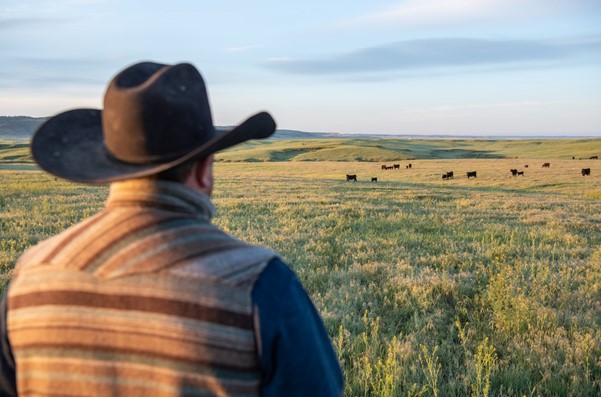
Mark Johnson, Oklahoma State University Extension Beef Cattle Breeding Specialist, offers herd health advice as part of the weekly series known as the "Cow Calf Corner" published electronically by Dr. Peel, Mark Johnson, and Paul Beck. Today, Johnson talks about advocacy.
Advocacy is defined as "public support for or recommendation of a particular cause or policy."
Only 2% of US citizens work in production agriculture. It is a foregone conclusion that virtually everyone reading this article is among that 2%. Therefore, we understand where food comes from, that beef cattle under our care and management have a higher standard of living than if they were released back into the wild. That beef production serves as a great example of sustainability and over the long-term the grazing ecosystem (consisting of soil, plants and cattle) can and does flourish when managed according to science and good animal husbandry. The point of this week's topic is to help understand that the other 98% of our population are far removed from production agriculture and therefore have a limited understanding of that knowledge. Two to three generations ago, a much larger share of the U.S. population was directly involved in the production of food. As a result of our efficiency, technology and good management in a free enterprise economy, US citizens spend a smaller percentage of their disposable income on food than any other country in the world. Our high degree of efficiency has resulted in only 2% of our population being "needed" to produce food. The beef industry is not unique in this respect. The dairy, grain production and poultry industries have all dramatically improved production capabilities and efficiently over the past 50 – 60 years. The efficiency of production agriculture has created the perception that food can be taken for granted. Our business plan should include helping consumers (the other 98%) understand beef production and advocating for our industry.
How do we advocate for our industry?
https://www.beefitswhatsfordinner.com/masters-of-beef-advocacy
Change is inevitable. The drovers and cowboys involved in the cattle drives along the Chisholm Trail during the 1870s when America acquired a taste for beef, would not recognize the beef industry of 2023. The perseverance, adaptability and hard work of American cattlemen has permitted the beef industry to sustain, survive and thrive for 150 years while meeting the consuming public's demand for our product. It is our responsibility to represent our industry and tell our story.
As cattle producers we care for animals that are capable of taking fibrous plants (undigestible by humans) and turning them into a nutrient dense, healthy and delicious food for mankind. Embrace the opportunity to share your story and advocate for your industry.
Groundwork BioAg® announced today the global launch of the Rootella Carbon™ program, based on mycorrhizal carbon - a frontier technology that leverages mycorrhizal fungi as a nature-based solution for carbon dioxide removal.
Rootella Carbon harnesses the power of Rootella® – highly effective mycorrhizal inoculants that are proven to sequester significant amounts of carbon in cropland (1-4 tCO2eq/acre annually). This innovative, Verra-certified program represents a transformative approach to carbon sequestration for conventional and regenerative farmers alike.
"Since our inception, we have known that mycorrhiza – the Queen of Biologicals™ – offers a compelling agricultural solution to mitigate climate change," said Dr. Yossi Koffman, co-founder and CEO of Groundwork BioAg. "Rootella Carbon delivers on that vision by paving the way to a gigaton of CO2 sequestration in the next decade." Rootella has been applied on over 4.5 million acres in 17 countries.
Rootella Carbon Enrollment Unlocks New Value
Carbon credit programs have been touted as a new revenue source for farmers, but adoption has been slow thus far due to high costs and practice change requirements.
In a recent survey of top producers in the United States, 63% of respondents said they would enroll in a carbon program if a product like Rootella unlocks additional revenue and fits easily into existing farming practices. Simultaneously, carbon buyers are fueling demand for premium, verifiable credits to meet net-zero pledges responsibly and sustainably.
This year, a select group of corn, soybean, alfalfa, and cotton farmers across eight states enrolled acres in Rootella Carbon, the first mycorrhizal carbon project in the world.
"Clearly soil biology is the new frontier and will be for the next 10 years," said Sledge Taylor, who farms corn, soybean and cotton on a multi-generational farm in Mississippi and enrolled in Rootella Carbon. "I invest in my soil; it is a true asset."
Rootella Carbon Program Ushers in a New Asset Class
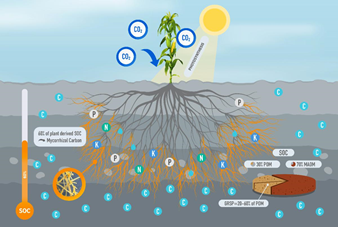
Mycorrhizal Fungi are Carbon's Main Pathway into Soil. Courtesy of Groundwork BioAg
· Enables Adoption by Conventional and Regenerative Farmers: Rootella Carbon provides growers the additionality, or practice change, needed for carbon credit eligibility, regardless of current cultivation practices.
· Delivers Carbon Permanence: Mycorrhizal fungi are carbon's main pathway into the soil. Up to 20% of plant photosynthate is passed to mycorrhizae, creating a positive net flux of carbon into the soil. Mycorrhizae aggregate soil particles to form stable and recalcitrant carbon-based molecules that persist in the soil for millennia.
· Boasts Impressive Co-Benefits: Groundwork BioAg was the first to crack the code on mass production of mycorrhiza for mainstream agriculture. By joining the Rootella Carbon program, farmers can leverage the co-benefits of Rootella products, including increased yields, fertilizer savings, and stress tolerance, while earning carbon credits.
· Generates Premium Carbon Credits: Rootella Carbon farmers expect to sequester 1-4 tCO2eq per acre per year—an unprecedented carbon sequestration rate. Carbon buyers gain access to high-integrity, high-volume, Verra-certified carbon credits. Enrollment in Rootella Carbon is currently open to farms with a minimum of 250 acres, at https://www.groundworkbioag.com/rootella-carbon
Apply by Jan. 10 to be considered as the Angus Foundation-sponsored representative.
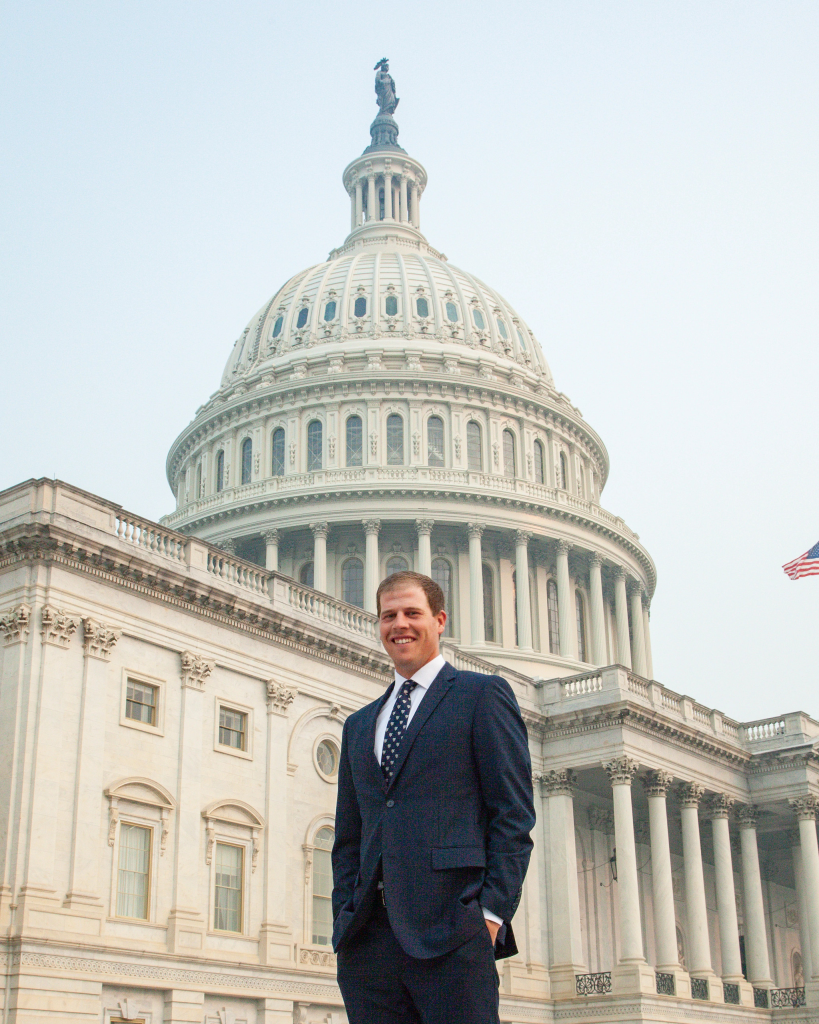
Each year, the Angus Foundation supports tomorrow's beef leaders by sponsoring one individual to represent the Angus breed at the Young Cattlemen's Conference. The educational event, spearheaded by the National Cattlemen's Beef Association, is planned for May 30 to June 6, 2024. Applications for the Angus Foundation's spot on the trip can be found on the Angus Foundation website and are due Wednesday, Jan. 10, 2024.
YCC is a program developed for up-and-coming cattle producers who are interested in seeing every part of the supply chain from production to marketing, to Capitol Hill. The primary objective is to develop leadership qualities in young cattlemen and women and expose them to all aspects of the beef industry while building their professional network.
"We're proud to offer this unique learning opportunity to our Association's young cattlemen," said Jaclyn Boester, Angus Foundation executive director. "YCC is an incredible experience and allows attendees to grow as beef industry leaders while forming meaningful relationships with their peers."
The sponsored attendee will have registration and travel costs covered by the Angus Foundation. Applicants must be between the ages of 25 and 50 and in good standing with American Angus Associationâ and a member of NCBA. For more information, visit NCBA at Beefusa.org or the Angus Foundation website.
Gabriel Connealy of Whitman, Nebraska, represented the Angus breed at the 2023 Young Cattlemen's Conference (YCC).
"I'm honored and humbled to be able to represent the Angus breed and Angus Foundation at YCC," Connealy said. "I'd like to give a sincere thank you to the Association and the Foundation for the opportunity. There are many great young people in our breed, and I would encourage each and every one of them to apply for YCC."
Connealy is well versed in both involvement and history within the Angus breed. Growing up in Nebraska on his family's Angus seedstock operation, Connealy Angus, he developed a passion for the industry and desire to assist the family business. This led him to obtain his bachelor's degree in finance and later his master's degree, with an emphasis in animal breeding and genetics, from the University of Nebraska-Lincoln (UNL). In addition to managing the family herd of 3,000 registered Angus cows, Connealy is a member of NCBA, has served as an Angus Convention voting delegate and played an integral role in the startup of his local Grant County Nebraska Farm Bureau chapter. His hunger for knowledge and dedication to the industry made YCC the ideal learning opportunity. Connealy emphasized the uniqueness of this experience, which allowed him to connect with and learn from fellow cattlemen from a variety of backgrounds.
"Truly, the highlight of the trip was the other participants from around the nation," Connealy said. "I was exposed to aspects of our industry that I knew little about and made many friends that I hope to keep in touch with and trade lessons with for years to come."
For more information and to download the application, visit AngusFoundation.org.
-Written by Peyton Schmitt, Angus Communications
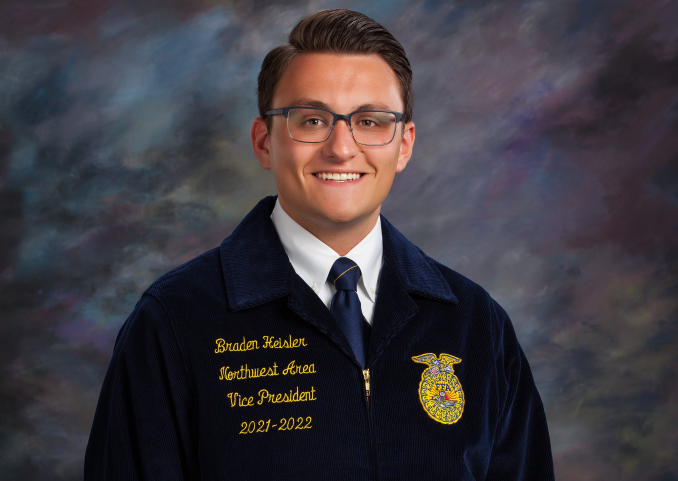
Braden Heisler of Waukomis FFA
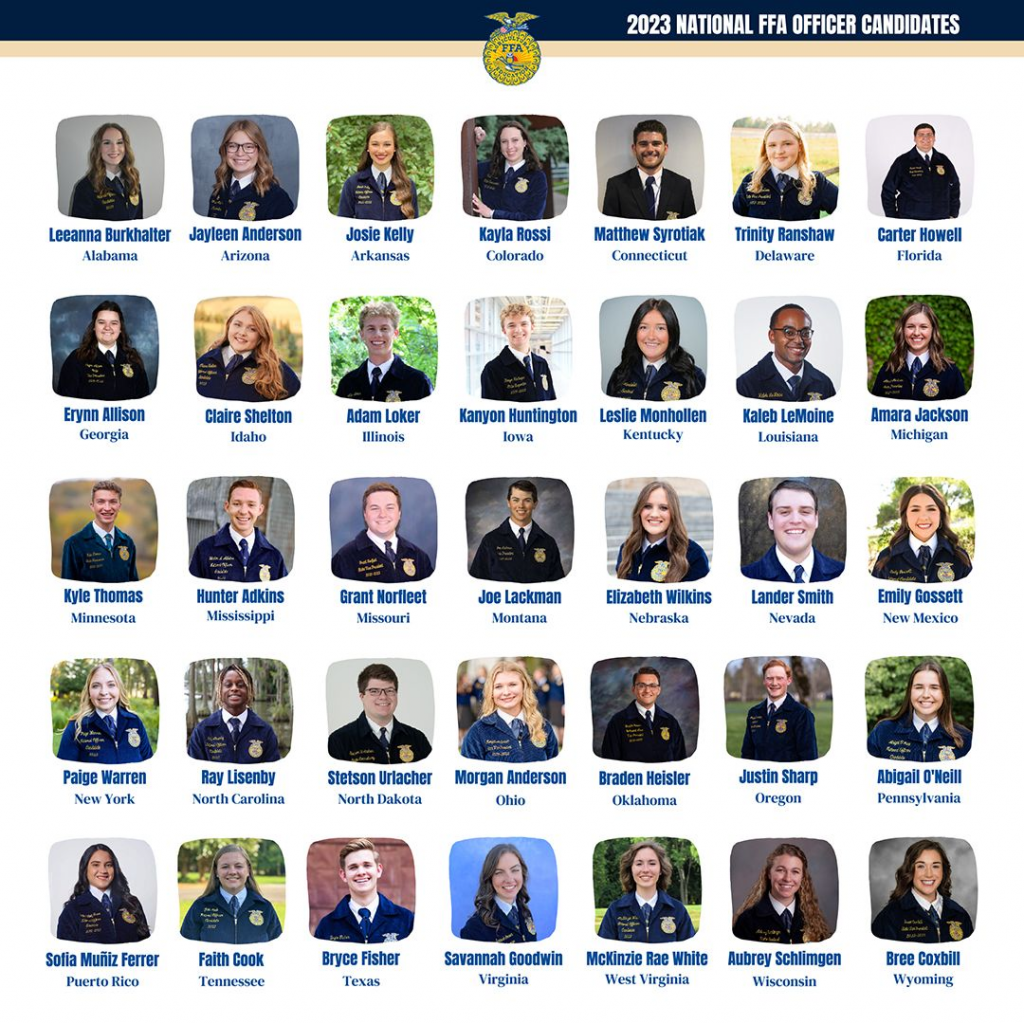
After a weekend of interviews, tests and interaction with the National FFA Officer Nomination Committee, Braden Heisler of Waukomis has received his letter confirming that he has advanced into the second round of being considered for one of six positions as a National Officer of the FFA organization for the coming year.
And- Heisler is a part of a very unique group- four undergrad students at the Ferguson College of Agriculture at Oklahoma State University were in the original 35 students from across the United States that were nominated as National Officer Candidates by their states. ALL FOUR of them- Braden Heisler of Oklahoma, Erynn Allison of Georgia, Amara Jackson of Michigan and Justin Sharp of Oregon- have advanced to the Phase Two group of 21 remaining candidates.
The other 17 candidates that have advanced to Phase Two include:
Josie Kelly, Arkansas
Kayla Rossi, Colorado
Matthew Syrotiak, Connecticut
Carter Howell, Florida
Kanyon Huntington, Iowa
Claire Shelton, Idaho
Adam Loker, Illinois
|Kyle Thomas, Minnesota
Grant Norfleet, Missouri
Amarae Lisenby, North Carolina
Elizabeth Wilkins, Nebraska
Emily Crossett, New Mexico
Morgan Anderson, Ohio
Abigail O'Neill, Pennsylvania
Faith Cook, Tennessee
Bryce Fisher, Texas
Bree Coxbill, Wyoming
Check out the pictures of all thirty five original Candidates below.
Each year, the National FFA Organization selects six student members to represent the organization as a national FFA officer.
The primary responsibility of a national officer is to serve the organization in local, state, national and international activities in a way that will inform, motivate and inspire FFA members, advisors, state staff, teachers and others to achieve the mission, strategies and core goals of the organization.
National officers dedicate one year of service with the organization. The time is spent representing student membership during meetings with the National FFA Board of Directors, facilitating workshops that bring leadership and knowledge to FFA members, delivering motivational speeches and serving as advocates for FFA on a global scale.
Our coverage of Oklahoma FFA engaged at the National FFA Convention is being powered by Oklahoma Farm Bureau. Watch for our stories and interviews from Indianapolis on our Website, Daily Email, our statewide Radio Oklahoma Ag Network and our Social Media Channels. Click here for the OKFB website to learn about how they are making a difference in lives of Oklahomans. Oklahoma Farm Bureau supports the youth of rural Oklahoma year round- and reminds you- Together- We Are Rural Oklahoma!
SOUTHERN PLAINS WINTER WHEAT:
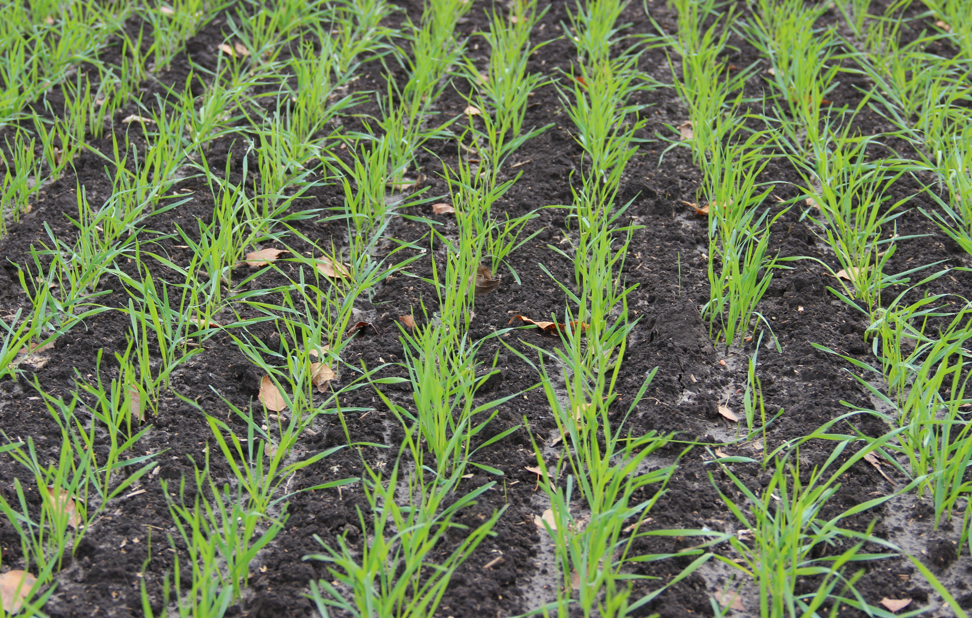
Oklahoma winter wheat planted reached 75 percent, down 7 points from the previous year and down 9 points from normal. Winter wheat emerged reached 54 percent, down 5 points from the previous year and down 14 points from normal. Winter wheat conditions rated 42 percent good to excellent, 44 percent fair and 10 percent poor to very poor.
Kansas winter wheat planted was 91 percent, ahead of 85 percent last year, and near 87 percent for the five-year average. Emerged was 70 percent, ahead of 56 percent last year and 65 percent average. Winter wheat conditions rated 32 percent good to excellent, 32 percent fair and 36 percent poor to very poor.
Texas winter wheat planted reached 73 percent, down 10 percentage points from the previous year and down 2 points from the five-year average. Winter wheat emerged reached 55 percent, down 2 points from the previous year and even with the five-year average. Winter wheat ratings reached 41 percent good to excellent, 44 percent fair and 15 percent poor to very poor.
Winter wheat planted for the U.S. reached 84 percent, down 2 percentage points from the previous year and down 1 point from the five-year average. Winter wheat emerged reached 64 percent, up 4 percentage points from the previous year and even with the five-year average. Winter wheat conditions rated 47 percent good to excellent, 35 percent fair and 18 percent poor to very poor.
Corn harvested in the U.S. reached 71 percent, down 3 percentage points from the previous year and up 5 points from the five-year average.
Soybeans harvested in the U.S. reached 85 percent, down 2 percentage points from the previous year and up 7 from the average.
Cotton bolls opening in the U.S. reached 93 percent, down 2 percentage points from the previous year and the average. Cotton harvested reached 49 percent, down 5 percentage points from the previous year and up 2 points from the average. Cotton conditions rated 29 percent good to excellent, 29 percent fair and 42 percent poor to very poor. Last week's conditions rated 29 percent good to excellent, 28 percent fair and 43 percent poor to very poor.
Rainfall totals in Oklahoma averaged 2.82 inches. According to the October 24th US Drought Monitor Report, drought conditions were rated 72 percent abnormally dry to exceptional drought, down 28 points from last year. Additionally, 49 percent of the state was in the moderate drought to exceptional drought categories, down 51 points from the previous year. Statewide, temperatures averaged in the upper 50's to mid 60's.
Winter wheat planted reached 75 percent, down 7 points from the previous year and down 9 points from normal. Winter wheat emerged reached 54 percent, down 5 points from the previous year and down 14 points from normal. Winter wheat conditions rated 42 percent good to excellent, 44 percent fair and 10 percent poor to very poor.
Corn harvested for grain reached 89 percent, down 2 points from the previous year but up 1 point from normal. Corn conditions rated 62 percent good to excellent, 25 percent fair and 13 percent poor to very poor. Last week's conditions rated the same.
Sorghum mature reached 98 percent, down 1 point from the previous year but up 3 points from normal. Sorghum harvested for grain reached 60 percent, down 3 points from the previous year and down 1 point from normal. Sorghum conditions rated 35 percent good to excellent, 40 percent fair and 25 percent poor to very poor. Last week's conditions rated the same.
Soybeans dropping leaves reached 87 percent, down 2 points from the previous year but up 4 points from normal. Soybeans harvested reached 47 percent, down 2 points from the previous year but up 7 points from normal. Soybean conditions rated 49 percent good to excellent, 34 percent fair and 17 percent poor to very poor. Last week's conditions rated 56 percent good to excellent, 30 percent fair and 14 percent poor to very poor.
Peanuts mature reached 93 percent, down 1 point from the previous year but up 1 point from normal. Peanuts harvested reached 55 percent, down 2 points from the previous year but up 2 points from normal. Peanut conditions rated 98 percent good to excellent and 2 percent fair. Last week's conditions rated the same.
Cotton harvested reached 33 percent, up 5 points from the previous year and up 6 points from normal. Cotton conditions rated 3 percent good to excellent, 52 percent fair, and 45 percent poor to very poor. Last week's conditions rated percent good to excellent, 48 percent fair and 48 percent poor to very poor.
Hay: The fifth cutting of alfalfa hay reached 32 percent, down 17 points from the previous year but up 6 points from normal. The third cutting of other hay reached 70 percent. The fourth cutting of other hay reached 7 percent, down 37 points from the previous year and down 8 points from normal.
Livestock conditions rated 65 percent good to excellent, 28 percent fair and 7 percent good to excellent. Last week's conditions rated 61 percent good to excellent, 31 percent fair and 8 percent poor to very poor.
Pasture and range conditions rated 33 percent good to excellent, 36 percent fair and 31 percent poor to very poor. Last week's conditions rated 28 percent good to excellent, 31 percent fair and 41 percent poor to very poor.
Winter wheat planted was 91 percent, ahead of 85 percent last year, and near 87 percent for the five-year average. Emerged was 70 percent, ahead of 56 percent last year and 65 percent average. Winter wheat conditions rated 32 percent good to excellent, 32 percent fair and 36 percent poor to very poor.
Corn harvested was 89 percent, equal to last year and ahead of 84 percent average.
Soybeans harvested was 80 percent, near 77 percent last year, and ahead of 66 percent average.
Sorghum mature was 96 percent, equal to both last year and average. Harvested was 69 percent, near 66 percent last year, and ahead of 59 percent average.
Cotton harvested was 35 percent, behind 49 percent last year, but ahead of 18 percent average. Cotton conditions rated 37 percent good to excellent, 39 percent fair and 24 percent poor to very poor. Last week's conditions rated 37 percent good to excellent, 37 percent fair and 26 percent poor to very poor.
Pasture and range conditions rated 13 percent good to excellent, 32 percent fair, and 55 percent poor to very poor. Last week's conditions rated 10 percent good to excellent, 32 percent fair and 58 percent poor to very poor.
Winter wheat planted reached 73 percent, down 10 percentage points from the previous year and down 2 points from the five-year average. Winter wheat emerged reached 55 percent, down 2 points from the previous year and even with the five-year average. Winter wheat ratings reached 41 percent good to excellent, 44 percent fair and 15 percent poor to very poor.
Corn harvested reached 93 percent, down 3 percentage points from the previous year and up 2 points from the five-year average. Corn conditions rated 49 percent good to excellent, 27 percent fair and 24 percent poor to very poor. Last week's conditions rated the same.
Cotton bolls opening reached 89 percent, down 5 percentage points from the previous year and down 3 points from the average. Cotton harvested reached 43 percent, down 4 points from the previous year and down 1 point from the average. Cotton conditions rated 10 percent good to excellent, 25 percent fair and 65 percent poor to very poor. Last week's conditions rated 10 percent good to excellent, 24 percent fair and 66 percent poor to very poor.
Peanuts mature reached 80 percent, up 6 points from the previous year and up 16 points from the average. Peanuts harvested reached 50 percent, down 3 percent from the previous year up 7 points from the average. Peanut conditions rated 37 percent good to excellent, 55 percent fair and 8 percent poor to very poor. Last week's conditions rated 37 percent good to excellent, 61 percent fair and 2 percent poor to very poor.
Soybeans harvested reached 79 percent, even with the previous year and down 3 from the average. Soybean conditions rated 35 percent good to excellent, 37 percent fair and 28 percent poor to very poor. Last week's conditions rated the same.
Pasture and range conditions rated 10 percent good to excellent, 28 percent fair, and 62 percent poor to very poor. Last week's conditions rated percent good to excellent, 26 percent fair and 67 percent poor to very poor.

The Oklahoma Pork Council's upcoming Bacon and Bourbon dinner is one of our most popular events of the year. Join us Friday, November 17, at VAST - the restaurant atop Oklahoma City's Devon Energy Tower - for an elevated evening of pork-focused fine dining paired with high quality bourbons selected by Republic National Distribution Company's Bruce Upthegrove.
Come enjoy sunset cocktails at 6 p.m. before dinner service begins at 7 p.m. Whether you are looking for a fancy date night in support of pork producers or a very special employee appreciation opportunity - click here to buy your tickets online before they sell out. If you are interested in purchasing a full table for eight guests, click here to send us a note. We can promise Bacon and Bourbon on November 17 will be a night you won't soon forget. Don't wait to purchase your tickets - we expect the event to be full long before the first glass of bourbon gets poured!

Radio Oklahoma Ag Network intern, Maci Carter had the chance to talk with Executive Director of the Oklahoma Wheat Commission, Mike Schulte, about the Grown Tour.
"The Oklahoma Wheat Commission, Oklahoma Farm Bureau, and Sherri Glazier, known as the 'Dirt Road Dietitian,' have put on a seminar called 'Grown,' where we have invited the Oklahoma Academy of Registered Dietitians to do a farm tour and food supply chain tour in northwestern Oklahoma," Schulte said.
One goal of the event was to demonstrate to dietitians the research that is performed to provide a safe and consistent product that is seen on grocery store shelves.
"We know they (dietitians) are really big influencers with the public that are consumers, and we feel like it has been a great relationship," Schulte said. "In the past, we have done a couple of things with them, and several of them have said when we have had to discuss regarding celiac disease or gluten sensitivities."
Registered dietitians had the chance to not only hear about research but to see and learn about wheat varieties that have recently been planted.
"It has really been a wonderful opportunity for us, but it has also been a wonderful opportunity for the registered dietitians because only one or two that were in the group of 40 actually have a farm background, so we have had wonderful opportunity to meet with individuals who may have never had the chance to grow up on a farm or be on a farm to see the production practices and the different farm practices we utilize when growing our product form the time it is planted until it is harvested," Schute said.
When it comes to gut health, Schulte said there can sometimes be misdiagnosis when it comes to gluten sensitivity, so allowing dietitians to take a look at some different options may help with some of those issues.
Wheat Checkoff dollars were utilized to educate the influencers at the event, Schulte said, because it is a good opportunity to show wheat research efforts, end-use quality characteristics and more.
"We feel like we have a really nice and consistent product that hopefully is going to let our influencers know that we as agricultural producers are working very hard to provide a safe and consistent product," Schulte said.
Dr. Derrell Peel, Oklahoma State University Extension Livestock Marketing Specialist, offers his economic analysis of the beef cattle industry as part of the weekly series known as the "Cow Calf Corner," published electronically by Dr. Peel and Mark Johnson. Today, Dr. Peel talks about wheat pasture grazing.
Most of Oklahoma has received significant rain in the past week reviving hopes for wheat pasture. The majority of the state was blessed with 1.5 to over 6 inches of rain. Only the northwest and panhandle regions missed out this time.
Wheat stands around the state are quite variable with some bigger wheat all the way down to wheat barely emerged. The latest Crop Progress report shows that 71 percent of Oklahoma wheat is planted, two percent more than last year but less than the 75 percent 5-year average. In recent extension meetings, many producers have indicated that they expect to have wheat pasture, if somewhat later than usual in many cases. Some producers have already purchased stockers, betting on the come, while others will be in the market now. Figure 1 shows prices for stocker steers this fall in Oklahoma. Prices for the preferred stockers under 500 pounds have not decreased seasonally this fall. In fact, average prices for 450-500 steers in October were higher than September. Prices for heavier feeder cattle over 600 pounds have decreased about 10 percent in recent weeks.
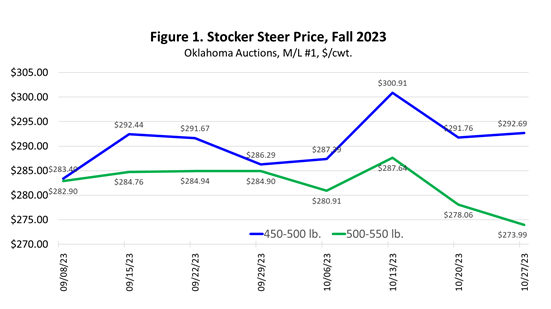
Both Live and Feeder futures have seen a huge downward correction in the past six weeks after months of trending higher. Both markets have dropped precipitously in the last half of October but appear to be stabilizing now. A profit-taking correction is not surprising and has been made worse by recent global events and enhanced market volatility. March Feeder futures are currently priced at about $238/cwt., down from roughly $255/cwt. just two weeks ago. Current cash and futures prices imply a value of gain from November 1 to early March of about $1.50/pound for a 475-stocker steer. Depending on specific cost assumptions, this is about equal to the breakeven for winter grazing, providing returns to wheat pasture and labor but nothing beyond that for the cattle. If feeder futures rebound somewhat, as I expect, there may be better opportunities to lock in additional returns in the coming weeks.
Reduced feeder auction volumes reflect the decreasing supplies of cattle in the country. Oklahoma combined auction feeder volume is down 10.6 percent year over year thus far in 2023. The auction volume has been down every week for the last ten weeks and is down 14.7 percent compared to the same period one year ago. The biggest weekly volumes of the year typically occur in the next six weeks but are likely to remain below year-ago levels. With smaller volumes and stronger wheat pasture demand, stocker calf prices are unlikely to show any seasonal weakness in the coming weeks and may move higher, depending on the impact of broader market uncertainty and volatility.
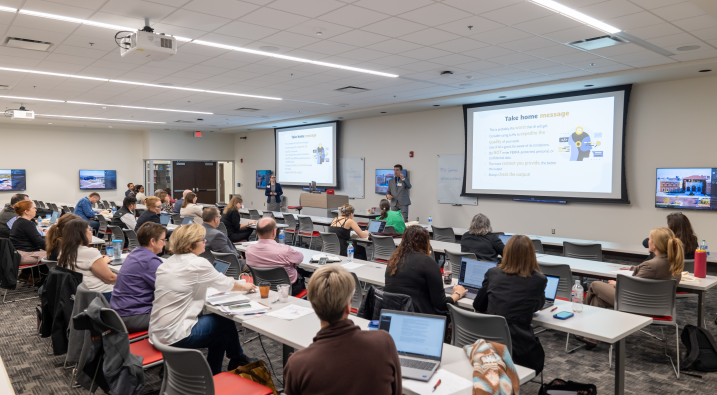
Veterinary educators from around the world attended a symposium at the Texas Tech University School of Veterinary Medicine to advance veterinary medical education.
More than 180 veterinary educators from 43 veterinary medical institutions in the U.S. and around the world came together Oct. 27-28 for the Veterinary Educator Symposium (VES) hosted by Texas Tech University's School of Veterinary Medicine in Amarillo.
The VES is an annual symposium organized by the American Association of Veterinary Medical Colleges (AAVMC) with this year being in collaboration with the Academy of Veterinary Educators (AVE) and the School of Veterinary Medicine. This prestigious symposium fosters programmatic advancement, professional development and promotes best practices among veterinary educators.
"This is absolutely a huge opportunity for the School of Veterinary Medicine to showcase our school, our purpose, and the Amarillo community to educators from across the country and around the world that are truly invested in bettering themselves in veterinary medical education and research," said Pippa Gibbons, associate professor of food animal medicine and surgery. "It's so important for us veterinary educators to come together and share research and knowledge related to veterinary education."
During the symposium, veterinary educators heard from keynote speakers and attended workshops, educational sessions, panel discussions and research poster and abstract presentations.
"AAVMC is proud to support and celebrate the incredible work of veterinary educators," said Andrew Maccabe, CEO of AAVMC. "The Veterinary Educator Symposium brings these educators together to share innovative ideas in teaching and learning to identify common challenges facing education programs and to collaborate on solutions that inspire and promote excellence in academic veterinary medicine."
AAVMC and the AVE recognized 32 distinguished educators within the U.S. and internationally as the founding members to oversee the Academy Certified Expert Educator credential. One of those 32 recognized was John Dascanio, senior associate dean for academic and student affairs at the School of Veterinary Medicine.
"I am honored to be recognized, especially in this field, as veterinary medical education is the core of our work and focus helping to develop competent and confident veterinarians," Dascanio said. "It has been a lifetime of work, with teams of colleagues, to achieve these goals. Our charge now is to develop a credentialing process to certify others in this important field."
After the conclusion of the VES symposium, the School of Veterinary Medicine and the AAVMC facilitated a productive meeting of international veterinary institutions involved in delivering curricula that include real-world, community-based clinical experiential learning called the Consortium of Workplace Based Education and Learning (COWBEL). This gave the School of Veterinary Medicine an opportunity to discuss its program and unique community-based model with other veterinary medical institutions.
"COWBEL was developed just a few years ago to bring together best practices for schools with community-based/distributed clinical year programs," Dascanio said. "Our goal is to enhance student education in private practice settings while providing outstanding oversight to achieve a great educational experience."
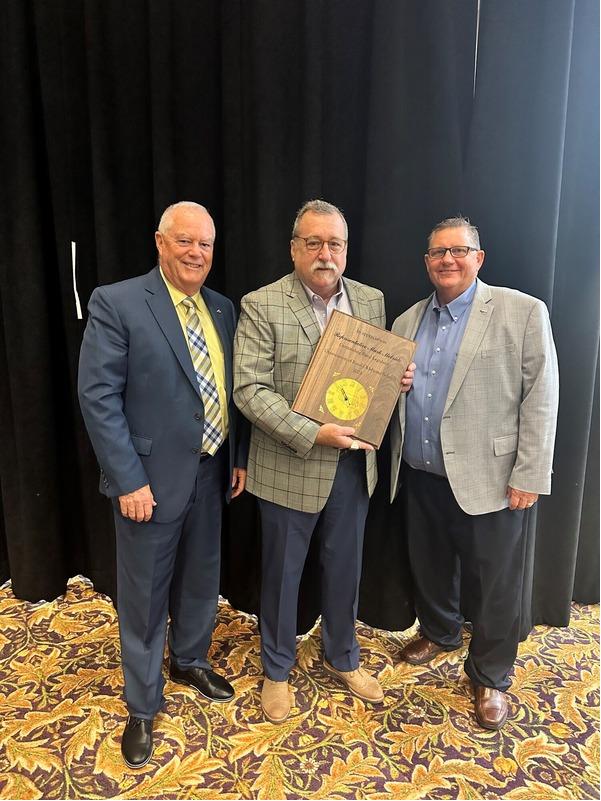
Rep. Mark McBride is recognized as Outstanding Rural Legislator by the Organization of Rural Oklahoma Schools at the group's fall conference in Shawnee.
Rep. Mark McBride, R-Moore, recently was named Outstanding Rural Legislator by the Organization of Rural Oklahoma Schools.
The award was given for McBride's work to increase funding for public schools throughout Oklahoma, including those in rural areas, and to preserve policies that benefit public education. McBride serves as chair of the House Appropriations & Budget Subcommittee for Education.
"As a product of public schools, I will always be a defender of our teachers and administrators in public education who fight every day to enhance learning for our students and to help graduate Oklahomans who are skilled and trained and ready for the future," McBride said. "Our rural schools need our help more than ever, and since my tenure as chair of the A&B Education Subcommittee, I've worked to ensure they get more equal funding to meet the needs of their student populations and to help them retain teachers. It's an honor to be recognized for my efforts."
McBride received the award at the organization's fall conference held Oct. 26-27 in Shawnee.

Syngenta Group is honored to again be recognized as one of the globe's top five leading employers in the 2023 Science Careers Top Employers Survey, reflecting its ongoing commitment to its employees, research and development, collaboration, and innovation leadership.
"We are excited that Syngenta Group is again being named as the #1 agricultural employer," says Trevor Hohls, Global Head of Seeds Development. "We pride ourselves on the common vision of becoming the most diverse, trusted, and innovative team committed to driving farmer success. This consecutive recognition is an amazing tribute to all our employees who live this mission every single day."
Syngenta Group employs 59,000 people across more than 100 countries and works everyday towards the ever-challenging goal of feeding the 8 billion people on Earth.
Recently, Syngenta Seeds held a grand opening for its R&D Innovation Center in Malta, Illinois, which joins a connected, modern ecosystem of more than 150 Syngenta R&D and production sites worldwide and exemplifies the company's $1.48 billion USD annual investment globally.
"A key to the success of this new, and our others, facility will be attracting and keeping top talent," says Warren Kruger, Head of Field Crops Seeds Development, North America at Syngenta. "It starts with providing a work environment that is both challenging and rewarding, giving teams access to the latest technology, and providing support from a leadership team that values, promotes, and recognizes innovation."
"We understand that if we want to be an innovation powerhouse, the effort will be driven by inventors, entrepreneurs, and researchers in both the public and private sectors who want to collaborate with Syngenta and bring new approaches and solutions to each field across the globe," adds Hohls. "As we synchronize facilities and bring together the world's best talent, we really are creating a brighter future."
Investing in innovation and exceptional talent has been a driver of growth for Syngenta Group in recent years and will continue to play a critical role in the future. Syngenta has been exploring developing technologies like AI, machine learning and deep learning, and the value they can bring to agriculture.
"To achieve our goals, our scientific teams must continue to seek better ways to master our craft and hone our skills," said Hohls. "This is essential as we pursue the advancements and innovations that will be necessary to meet the nutritional requirements of a growing world population and do it in a way that is sustainable for future generations."
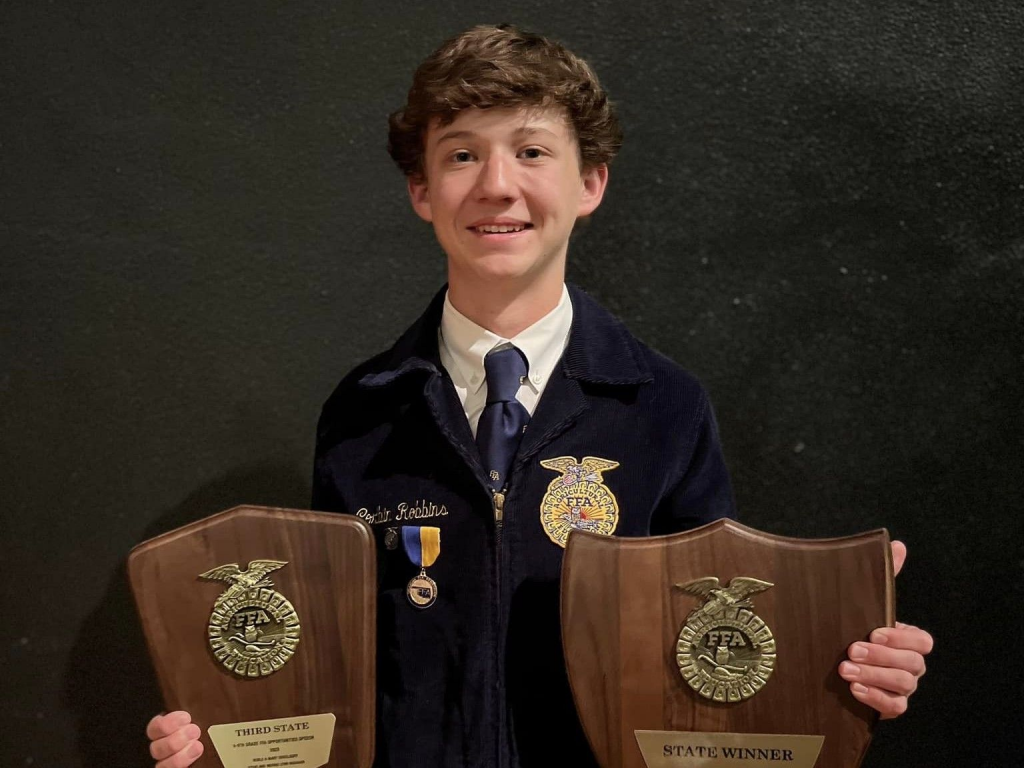
Prior to the 2023 National FFA Convention in Indianapolis, Senior Farm and Ranch Broadcaster, Ron Hays, had the chance to visit with Oklahoma's FFA Creed contestant, Corbin Robbins of the Chattanooga FFA Chapter, about the competition.
When asked what inspired him to become involved in the FFA Creed contest, Robbins said his biggest motivator was a family tradition.
"My grandpa and my grandma were in FFA, my parents and my uncle were very competitive in it, so it was kind of bred into me," Robbins said. "It was something I have always strove to do, and I am very excited to go to Indianapolis and compete for Oklahoma."
When Robbins recites the creed, he said he enjoys feeling the passion that the author, E.M. Tiffany, had when writing it.
"I come from a fifth-generation farm and ranch, and every time I say the creed, I feel it inside of me," Robbins said. "It is something I am very passionate about, and I know that FFA is passionate about."
That passion for the FFA and agriculture, Robins said, increases each time he says the FFA Creed. In an ever-changing world, as innovations in agriculture increase, Robbins said he believes the FFA Creed still holds true.
"The creed is still relevant," Robbins said. "It talks about the passion that farmers still have; it talks about the bad times and the good times..."
Robbins also recited the FFA Creed, as it reads below:
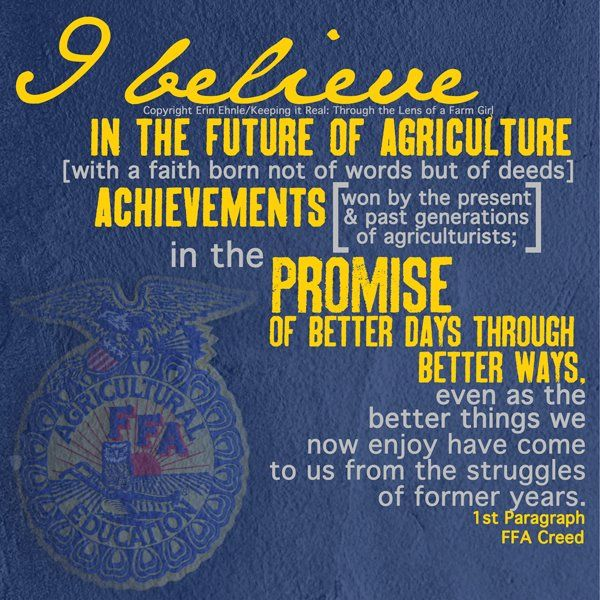
I believe in the future of agriculture, with a faith born not of words but of deeds – achievements won by the present and past generations of agriculturists; in the promise of better days through better ways, even as the better things we now enjoy have come to us from the struggles of former years.
I believe that to live and work on a good farm, or to be engaged in other agricultural pursuits, is pleasant as well as challenging; for I know the joys and discomforts of agricultural life and hold an inborn fondness for those associations which, even in hours of discouragement, I cannot deny.
I believe in leadership from ourselves and respect from others. I believe in my own ability to work efficiently and think clearly, with such knowledge and skill as I can secure, and in the ability of progressive agriculturists to serve our own and the public interest in producing and marketing the product of our toil.
I believe in less dependence on begging and more power in bargaining; in the life abundant and enough honest wealth to help make it so–for others as well as myself; in less need for charity and more of it when needed; in being happy myself and playing square with those whose happiness depends upon me.
I believe that American agriculture can and will hold true to the best traditions of our national life and that I can exert an influence in my home and community which will stand solid for my part in that inspiring task.
Our coverage of Oklahoma FFA engaged at the National FFA Convention is being powered by Oklahoma Farm Bureau. Watch for our stories and interviews from Indianapolis on our Website, Daily Email, our statewide Radio Oklahoma Ag Network and our Social Media Channels. Click here for the OKFB website to learn about how they are making a difference in lives of Oklahomans. Oklahoma Farm Bureau supports the youth of rural Oklahoma year round- and reminds you- Together- We Are Rural Oklahoma!
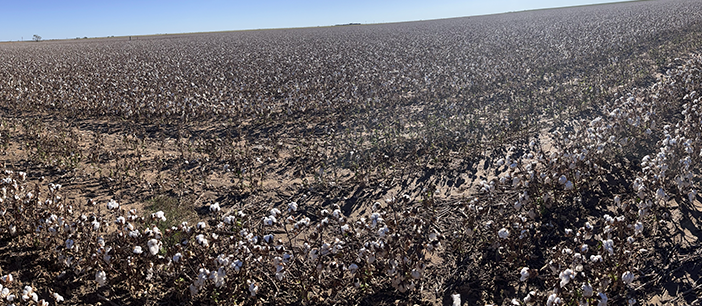
After waiting for almost a year after Congress passed legislation appropriating over $3 billion in funds for the 2022 Emergency Relief Program (ERP) for row crops to supplement weather-related challenges due to disaster to help farmers and ranchers, the U.S. Department of Agriculture has now officially released details of the program.
In a statement released by USDA, USDA Farm Service Agency (FSA), Administrator Zach Ducheneaux stated, "2022 was another year of weather-related challenges – for some, the third consecutive year or more in a row. The financial impact to a family farm or ranch in one year is significant but the cumulative impact of multiple years can be devastating."
While we could not agree more that 2022 was one of the most catastrophic crop years on record for the High Plains cotton industry and others, the current USDA administration has ultimately failed production agriculture in the development of this program. They have failed to recognize the perils of the common U.S. agriculture producer that we rely upon to provide the food and fiber to the U.S. and the world.
We have observed continuous efforts by the administration to undermine family farming and ranching operations that are solely dependent upon agriculture for their livelihood in service to our nation, despite recent hardships to feed and clothe the nation. It's truly unfortunate that the current Administration, after countless meetings and comments from PCG and others, are unwilling to listen to the farming and ranching community when we ask for much needed, meaningful support to help weather the challenging times we have succumbed to from circumstances outside of our control.
The U.S. agriculture economy has experienced unprecedented disaster events such as extreme drought, hurricanes, excessive moisture, wildfires and other related events. There have been recent programs developed under the current administration, such as the ERP program for the 2020 and 2021 crop years, that was very timely and provided helpful assistance that allowed production agriculture to survive.
So, once again, we implore the Administration and USDA to dispense with the political development of farm programs that has become an unprecedented factor; implement a program that is financially helpful to those that regularly feed and clothe our nation and the world; and, simply put, get back to the basics of focusing on the nation's agriculture economy from which this very country was built.
By Kody Bessent
There is a new blog post out at the Southern Plains Perspective. Read below! The Southern Plains Perspective is authored by Clay Pope- who farms with his wife Sarah.
Over the years I have written several articles about how livestock can help save the planet. Take cows for example—they help with nutrient cycling, they reduce wildfire danger by eating the undergrowth that fuels fires and the help by converting vegetation that we can't eat into protein that we can, all while helping sequester carbon in the soil. I love to discuss how grazing and browsing animals can (with good management) have a positive effect on the environment while at the same time providing us with food and fiber. We need to remember though, that it's not just the critters above ground that can have an impact on food production and the environment—more often than not the bugs, bacteria and other life forms under the soil do even more when it comes to feeding the world and protecting our natural resources.
Case in point, a recent study published in the journal Nature Communications showed how earthworms have a huge impact on yields, so much so that each year they may be responsible for an additional 140 million metric tons of crop production across the globe.
In this report, researchers at Colorado State University compiled the results of over 50 studies that looked at what happened to crop yields when earthworms were added to the soil. These research projects ran the gambit of agricultural crops from wheat and rice, to maize, barley, and legumes. They also included a variety of soil types, land treatment practices and levels of fertilizer application so that researchers could weigh the benefits of earthworms against these other factors.
The results of this effort found that earthworms add, on average, an impressive 23.3% increase to aboveground crop biomass. This equals out, world-wide, to roughly 140 million additional tons of yield each year. In crop terms, that tonnage equates to 6.5% of global grain yields and 2.3% of all legume production—That's a lot of additional food—and it doesn't take into account the impact worms have on other areas of production like livestock forage.
We've always known that earthworms do a lot of good–they recycle organic waste into nutrients, improve soil structure, and even boost plants' immunity to pathogens. What we're starting to realize though is exactly how much of an impact they and the rest of the sub-soil microbial community of bugs, bacteria and fungi really have on agriculture.
I've talked before about how reports have shown that undertaking practices that improve the health of the sub-soil microbial community (including worms) can reduce the need for synthetic fertilizer, with some studies showing savings of as much as $50 per acre on fertilizer costs. If the "little livestock" below ground have such a large impact on what we grow above ground, wouldn't it make sense for us to do all we can to help protect the health of this microbial herd? Are there things we could do on our crop and pasture land that could help maintain and grow the number of all these useful critters?
Well, it just so happens that many of the same practices that we want to implement to help address things like soil erosion and water quality are the same things that help protect and improve the community of bugs, bacteria and fungi in our soil. No-till and minimum till, cover crops, crop rotation, and other "climate smart" or "soil health" farming techniques can help improve the health of these useful microbes. By farming in a way that more closely mimics the natural system (remember, unless you're in a desert, nature never leaves ground bare and never uses a plow) we can help restore the health of our soil and with it the vitality of our sub-soil livestock.
As we have said so often—production agriculture and environmental protection really can go hand in hand. If we take care of the worms, (and with them the rest of the microbial community) they really can help save the day.
Many factors drive test weights, but hybrid selection is the biggest, says LG Seeds agronomist.
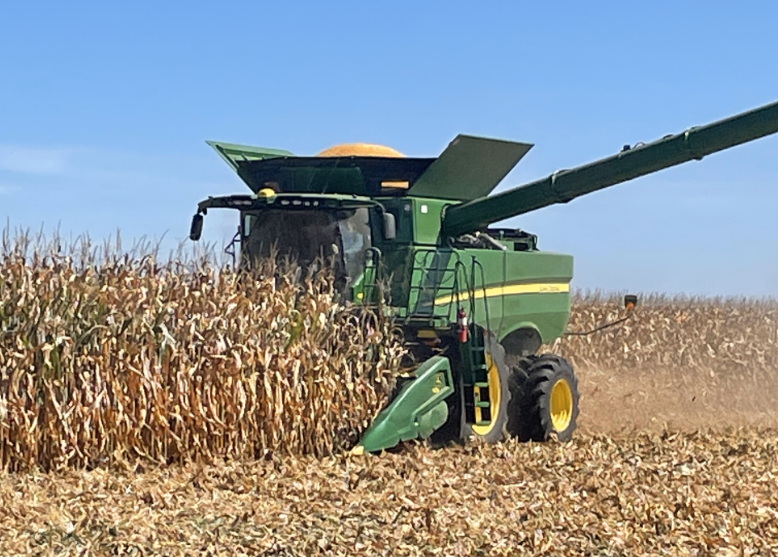
Big test weights can come with perks – bragging rights, access to premium markets, improved storability. Making them a reality starts with hybrid selection.
In fact, the hybrid you plant is one of the biggest influencers of test weight, says LG Seeds Agronomist Brian Weihmeir. He shares tips on hybrid selection and other major drivers of test weight.
#1. Choose hybrids with good test weight potential
"Some products naturally have higher test weights than others," Weihmeir says. "Your agronomist or seed salesperson can help you determine which hybrids have higher or lower test weights."
In Weihmeir's territory of south-central Illinois, hybrids known for high test weights include:
But your consideration should go beyond a hybrid's genetic potential for good test weights. "Make sure you're getting diversity in your hybrid selection," Weihmeir advises. "And don't overlook the benefits of plant health."
#2. Prioritize plant health
"When hybrids maintain better stay-green and plant health, they can pack more starch into the kernels, resulting in higher test weights," Weihmeir explains. "It's important to pay attention to defensive hybrids, ones with good plant health that protect you in years when crops are stressed by drought, heat or disease pressure."
A focus on plant health has been a differentiator for LG Seeds, according to Weihmeir. "Many LG Seeds' hybrids have strong plant health ratings against diseases like gray leaf spot, Southern rust and tar spot that help them reach higher test weights."
Tar spot, in particular, has a reputation for curbing test weights. And because tar spot is here to stay, Weihmeir says it should factor into seed choices. "A couple years ago when tar spot was severe, hybrids with good tar spot tolerance scores had better plant health, higher test weights and ultimately, higher yields."
Of course, plant health goes beyond hybrid selection. "Make sure you have a good fertility program, your soil pH is in line and nutrients are adequate," Weihmeir advises. "You should also split apply nitrogen so the crop isn't nitrogen starved midseason."
He also recommends applying a quality fungicide for an extra boost to maintain stay-green and allow that plant to pack more starch into kernels.
#3. Take advantage of natural drying
A farmer's conditioning and drying methods can also impact test weights. "Harvesting corn that's wet and drying it at high heat tends to result in lower test weights versus corn that's dried naturally in the field or stored in a bin with cooler air put on it," Weihmeir explains.
But of course, the weather and the hybrid also impact when and how a crop comes out. "Obviously, you don't want to wait so late that stand and stalk integrity are compromised," Weihmeir says.
#4. Target earlier planting dates
Earlier planting can also help with test weights. "When you plant corn earlier, you typically harvest drier grain because it has had a bit longer growing season," Weihmeir explains.
But again, that must be balanced against what Mother Nature delivers. "You don't want to mud your corn crop in," Weihmeir says. "Focus on good soil conditions and be ready to go when conditions allow."
For more tips on maximizing your crop's potential, reach out to your local LG Seeds agronomist.
Senior Farm and Ranch Broadcaster, Ron Hays, is visiting with Kansas State University Extension Livestock Market Economist, Dr. Glynn Tonsor, about the heifer numbers in the latest Cattle on Feed Report and Meat Demand Monitor.
Looking back at the October Cattle on Feed Report, "Heifer inventory was up one percent versus the year before, and heifers composed 40 percent of the total inventory, so the remaining 60, of course, were steers, but anytime we have that high of a percentage for the inventory then that is historically, at least, a pretty strong signal that ranches are not keeping their heifers at home and they are still finding their way to the feedyard," Tonsor said. "It is another fairly direct signal, at least to me, that nationally we have not pulled the trigger on expansion."
Tonsor said there is a lot of discussion about herd rebuilding, and while some ranches are in the process of rebuilding, collectively, the national cattle on feed-based numbers signal that herd expansion has not begun.
"I do think in '24 and '25 we are going to be in the process of rebuilding the herd," Tonsor said.
One study that Tonsor conducts on a regular basis is feedlot profitability. His latest numbers suggest there is still profit out there in the feedlot sector, but not as much as a few weeks ago.
"Through Christmas, we are expecting positive returns for steers that will be leaving Kansas yards, and then it is kind of a mixed bag as we go through the first half of 2024's projections," Tonsor said. "They are small losses to small gains. The main thing to probably highlight here is that compared to a month ago, at least on the front end, these four-to six-month projections, they are a fair amount lower than they were before."
There has been a $7.00, if not $9.00, cwt pullback in the projected fed cattle price in recent weeks. Tonsor's statistics are for cash prices and do not include risk management.
Switching gears to the Meat Demand Monitor, Tonsor said the latest information shows that domestic beef demand in August was up 3 percent versus August of 2022. Foreign demand for U.S. beef was down 9 percent in August compared to August of 2022, he added.
"For over a year now, consecutively, we have had a pullback in foreign demand for U.S. beef...," Tonsor said.
To view the latest Meat Demand Monitor, CLICK HERE.
The Beef Buzz is a regular feature heard on radio stations around the region on the Radio Oklahoma Ag Network and is a regular audio feature found on this website as well. Click on the LISTEN BAR for today's show and check out our archives for older Beef Buzz shows covering the gamut of the beef cattle industry today.
The Senate Select Committee on Business Retention and Economic Development will host its next meeting on Tuesday to hear from state and local leaders to discuss Michelin's closure and what can be done in the future to keep businesses in the state.
The meeting will be Tuesday, Oct. 31 at 10 a.m. at the Oklahoma State Capitol, 2300 N. Lincoln Blvd. in room 535.
"Michelin has been a pillar in Ardmore for decades," said Senate Pro Tem Greg Treat, R-Oklahoma City, who chairs the committee. "It is devastating for the community to lose these jobs and I am saddened for the individuals and families that are going to be impacted by this void being left. We called this meeting with Ardmore in mind to see how we can help these individuals in the near-term and what can be done differently in the future to keep major employers in the state. The purpose of this committee in part is to look at all aspects of business and commerce in Oklahoma. We must examine everything, including our shortcomings especially when we lose major employers."
The committee will hear from Lieutenant Governor Matt Pinnell, representatives from the Ardmore Development Authority, the City of Ardmore and the Oklahoma Department of Commerce.
"My heart breaks for the Ardmore community," said Senator Kristen Thompson, R-Edmond, who serves as the vice chair of the committee. "Losing 1,400 jobs is devastating for the families who relied on them, and for our state. I know this was a challenging decision for Michelin. We appreciate them being in the state for 53 years and we are grateful for the positive impact they brought to the Ardmore area. As I have said from the beginning of my time in the legislature, it is critically important to focus on existing Oklahoma businesses and their well-being. While we always want to recruit new businesses to the state, we must find ways to further support companies that are already here. Now, we need to shift our focus into finding solutions for the benefit of Ardmore and our fellow Oklahomans who are being negatively affected by this move."
To access Tuesday's agenda, click here.
The House of Representatives on Wednesday formally elected Congressman Mike Johnson (R-LA) to serve as the 56th Speaker of the U.S. House of Representatives. Getting back to business, even if things go according to plan and the House is able to dedicate time in December for Farm Bill consideration, there are major pitfalls, including whether to move a partisan bill where the Speaker would have a challenge keeping all of his frogs in the barrel, or a bipartisan bill where the Speaker could come under intense fire from Republican quarters for seeking to move a $1.5 trillion bill, the vast majority of which is for SNAP benefits, with few if any reforms to the program and, perhaps, too little "farm in the Farm Bill". The Speaker's legislative agenda for next year is fairly limited, including completion of FY2024 appropriations, FY2025 appropriations, and reauthorization of the NDAA and the Water Resources Development Act (WRDA). Notably, the Speaker writes that the House will not recess next August unless all 12 appropriations bills have been completed by the House. Read more here.
The leaders of the Senate Agriculture Committee, and other key lawmakers, this week called for an extension of the 2018 Farm Bill citing that development and passage of a new Farm Bill will likely spill into next year. Speaking to reporters in Missouri last Friday, Senator John Boozman (R-AR), the Ranking Republican Member on the Senate Agriculture Committee, stated, "We want to get the Farm Bill done as soon as possible, hopefully before the end of the year. [An extension] doesn't preclude us from getting it done. But it gives us that time. And it gives the farmers the certainty that they will have a Farm Bill in place." He continued, "The Farm Bill is not about Democrats and Republicans. It's really odd in that regard. It's about regions of the country, it's about commodities and then you have the nutrition side and it's all of that blended together. So, it's manageable, we just need to work together to figure out a path forward." A spokesperson for Senator Boozman added that an extension could potentially be added onto a Continuing Resolution (CR), which will likely be necessary to fund the Federal government beyond November 17. The spokesperson stated, "Sen. Boozman wants to ensure producers have certainty while we continue to work on the new Farm Bill so he wants to make sure that we take advantage of a vehicle like the upcoming CR to attach an extension to as it is hard to say how many opportunities for that outside that CR remain."
Senator Debbie Stabenow (D-MI), Chairwoman of the Senate Agriculture Committee, also called for extension in remarks on the Senate floor Wednesday. Chairwoman Stabenow stated, "Getting the Farm Bill done won't be easy. It never is. But I am committed to doing so. Unfortunately, it looks like this will take longer than I would like. But it would be irresponsible to allow vital programs in the farm safety net to lapse and revert to Depression Era policy in January. We cannot allow that to happen, and given the chaos in the House, I know we will need an extension. But let's be clear, it would be equally irresponsible to take our focus off of a multi-year Farm Bill that provides stability and certainty for our farmers. I am laser-focused on delivering a bipartisan Farm Bill that keeps farmers farming, families fed, and rural communities strong in the coming months." Senator Kevin Cramer (R-ND) stated, "The sooner we do [an extension], in my view, the more breathing room we get and the more breathing room for those that are planning. But we're to that point where the planning is well underway even as the last things are being harvested right now in the Great Plains. Those things are being determined right now and those discussions are taking place between farmers and bankers. And we have the additional inflationary costs of inputs and we have higher interest rates. And so, all the more reason for certainty and early planning to take place." Lawmakers note that producers planting winter wheat this year and producers who will head into the fields early next year would plant with no law in place absent a one-year extension of the current Farm Bill. Read more here, here, and here.
Senate Agriculture Committee Chairwoman Debbie Stabenow (D-MI) indicated this week that there could be anywhere from $4-5 billion new dollars available for the Farm Bill, although she did not specify where the dollars would come from or how they would be used. However, the Committee's Ranking GOP Member, Senator John Boozman (R-AR), on Friday emphasized that that level of funding would not likely be enough to meaningfully strengthen the farm safety net. Senator Boozman has been a very key and persistent leader in calls to protect and meaningfully strengthen the farm safety net. Senator Boozman stated, "We're trying to figure out what needs to be done and getting it scored. So, we're not ready to say what it's going to cost to get the risk management tools up to the latest level of inflation." Read more here and here.
USDA Secretary Tom Vilsack on Tuesday announced the use of the Commodity Credit Corporation (CCC) to provide $2.3 billion to "help American producers maintain and develop markets for their commodities and use U.S. commodities to bolster international food aid." The move is the result of a bipartisan request from the leaders of the Senate Agriculture Committee, who sent a letter to Secretary Vilsack in early September requesting the use of CCC funding to support the creation of better market opportunities and enhance in-kind international food assistance.
According to a release from USDA, "USDA will use $1.3 billion for the Regional Agricultural Promotion Program and support for specialty crop industries to diversify export markets, [and] $1 billion to help address global hunger." Regarding the $1.3 billion used for the Regional Agricultural Promotion Program, USDA stated, "The FY23 agricultural trade deficit is $19 billion, and USDA has projected that it will grow to $27.5 billion in FY24. There is also increased competition in our export markets in Asia and Africa. Therefore, additional investments in market development need to be made to keep ahead of the competition... The new $1.3 billion investment in a Regional Agricultural Promotion Program, or RAPP, will enable exporters to break into new markets and increase market share in growth markets." Regarding the $1 billion investment in in-kind international food assistance, USDA added, "The United States produces more commodities than are consumed, and therefore has the opportunity to extend this food, via a USDA donation, to those who are in need. USDA will purchase commodities and work with USAID, who is the lead federal agency on international emergency food aid programs, to ensure they reach those most in need around the world. The $1 billion donation will bolster ongoing efforts to address global hunger, as well as support U.S. agriculture through the purchase of surplus commodities." USDA has not yet specified any specific purchase amounts for participating commodities. Read more here and here.
It was another banner week for the Right to Repair movement with exciting developments at the state and national level.
Rocky Mountain Farmers Union member Danny Wood was invited to present on a White House panel discussing Right to Repair and the recently passed Colorado Consumer Repair Bill of Rights Act. Danny was joined on the panel by senior staff from the White House, along with representatives from Apple, Federal Trade Commission Chair Lina Khan, and other Right to Repair advocates. In his remarks, Danny hit on one of the basic points of the Right to Repair, saying "Farmers are not people that like to rely on others – we like to fix things ourselves." You can watch Danny's full speech at the video below.
Also earlier in the week, the Michigan House Agriculture Committee passed the Agriculture Equipment Repair Act, which has had significant support and involvement from Michigan Farmers Union and NFU throughout the process of bringing the bill forward. "Michigan Farmers Union was proud to have worked closely in developing this bill and will continue to fight for its passage," said Michigan Farmers Union President Bob Thompson. "I want to thank agriculture committee Chair Reggie Miller for standing with farmers in support of our Right to Repair our farm equipment. Farmers Union will continue to advocate for fair and robust access to equipment repair for family farmers in Michigan and across the country."
It may be one of NMPF's most-hidden secrets to its members – an influential quarterly publication that puts dairy's side of the story before the government and regulatory experts who directly influence dairy policy. But it's a secret that's hiding in plain sight, as the Regulatory Register is a critical part of NMPF regulatory work. And in this week's Dairy Defined Podcast, the organization's regulatory team talks about the critical work they're doing for dairy – and previews the next Register.
"It's important for us to get our side of the regulatory story out to the broader community, not only the dairy industry itself, but also the regulators at the federal and state level on the variety of issues that happen in the regulatory space that are important for the US dairy industry," said NMPF's Chief Science Officer, Jamie Jonker, on the podcast, where he was joined by Senior Vice President for Regulatory Affairs and NMPF Chief Counsel, Clay Detlefsen, and Miquela Hanselman, NMPF's Director of Regulatory Affairs.
Click here to sign up to receive the Regulatory Register. The full podcast is here. You can also find the podcast on Apple Podcasts, Spotify and Google Podcasts.

Ambassador Terry Branstad
Terry Branstad, former U.S. ambassador to China and longtime governor of Iowa, has been selected to receive the U.S. Meat Export Federation's (USMEF) Michael J. Mansfield Award. USMEF established this award in recognition of the U.S. Senate majority leader and ambassador to Japan whose five decades of government service advanced U.S. trade relations throughout the world.
Bill Westman will receive the USMEF Distinguished Service Award. This award honors outstanding figures in the red meat industry who exemplify the exceptional, individual dedication responsible for the federation's success. Westman had a 29-year career with the USDA Foreign Agricultural Service (FAS), served as senior vice president of international affairs for the North American Meat Institute (NAMI) and is now president of William Westman and Associates LLC, a boutique consulting firm specializing in agricultural trade policy, export market development, and strategic planning.
The awards will be presented Nov. 9 at the USMEF Strategic Planning Conference in New Orleans.
In both his role as ambassador and as Iowa's governor, advancing U.S. agricultural exports was a top priority for Branstad.
"When given a level playing field, U.S. farmers and ranchers will thrive in the international marketplace," Branstad said. "This is why it is so important to eliminate trade barriers and give our agricultural producers a fair opportunity to compete. I am proud to have played some role in improving global market access for American products and it has been gratifying to see U.S. agriculture capitalize on these opportunities."
It was during Branstad's time heading the U.S. Embassy in Beijing that the U.S. and China entered the Phase One Economic and Trade Agreement, which gave U.S. beef its first meaningful access to the market in 17 years. The agreement also reduced barriers for U.S. pork exports to China.
"Phase One was a critical breakthrough for the U.S. meat industry and I had the pleasure of working with USMEF on some promotional activities right after the agreement entered into force," Branstad said. "It was exciting to see firsthand how Chinese consumers welcomed the long-awaited arrival of U.S. beef."
Westman's time as an FAS foreign service officer included postings in China, the Dominican Republic, Panama, Germany, Brazil and Venezuela. He also served as interim agricultural attaché for Colombia. Westman said it is gratifying to see the remarkable expansion of U.S. red meat exports to many of these markets as trade barriers were reduced and consumers gained greater access to U.S. products.

"When I worked in the Caribbean islands, there was a little bit of the hotel restaurant trade but the general markets were pretty much closed and the tourism industry was really just developing in the Dominican Republic," Westman recalled. "Today the DR and Colombia are tremendous markets for U.S. red meat, and demand is expanding throughout Central America as well. This is the result of great persistence and collaboration, with everyone working together on trade policy, which has really made a difference in expanding the footprint of U.S. red meat internationally."
Westman said this experience served him well at NAMI, where he continued to identify global growth opportunities and worked to overcome trade barriers.
"Our focus at NAMI was largely trade policy from the Washington perspective, working closely with USTR, USDA and Capitol Hill, and providing information and guidance for trade negotiators," he said. "We worked very closely with USMEF staff to make sure we had the right information and market intelligence we needed from overseas. That close working relationship was key to our success."
Westman sees his consulting role as an opportunity to further advance global opportunities for the entire U.S. meat supply chain.
"We're now looking at things from a bit of a different perspective in terms of the nexus between economic and agricultural development in key markets that are the future, as well as opportunities for red meat exports," he said. "Across Africa, for example, we feel the next 15 years is going to provide tremendous opportunities for U.S. exporters. And we actually came up with an emerging markets program for Kenya, for livestock and meat processing development, because it's been shown that countries that have strong agriculture have strong economies, and they become good markets for our products. So this is really a long-term outlook that has allowed me to keep active in the meat industry and continue to do what I can to help it expand."
More details on the USMEF Strategic Planning Conference are posted here and highlights will be available from the USMEF website.

With less than a week left in early voting, Texas & Southwestern Cattle Raisers Association is urging its members to turn out to the polls this November in support of ballot initiatives that advance the future of the beef industry.
"There are a number of critical propositions that our association has followed throughout the 88th Regular Legislative Session," said Texas & Southwestern Cattle Raisers Association President Arthur Uhl. "Our eyes are on solidifying the Right to Farm for our industry and also protecting rural needs throughout our state as they relate to water and broadband."
Texas & Southwestern Cattle Raisers Association encourages members to vote "yes" for:
"Cattle raisers need to be informed heading into the election," said Arthur Uhl. "We're providing resources for individuals interested in how these ballot initiatives will benefit the industry, and we want individuals to understand the importance of supporting these efforts."
A voter resource guide is publicly available at www.tscra.org/vote2023.
Several notable drivers poised to impact the future of agriculture are taking shape, and American farmers are already feeling the heat. Their future success depends on their ability to meet demands for increased sustainability while facing a severe labor shortage, rising input prices and increasingly unpredictable weather events. Producing more with less will be a key goal in the new era of agriculture.
Sustainability concerns among consumers continues to drive change. In a 2021 survey of 750 U.S consumers by C.O.nxt and Menu Matters, 80% of consumers reported that sustainability is important to some degree when deciding what foods and beverages to purchase from a supermarket or order from a restaurant. Food companies and retailers have taken notice, with companies such as Unilever, PepsiCo, General Mills, Walmart and Whole Foods leading efforts to reduce their global footprint.
"The challenges facing our customers are growing in complexity and society is asking more and more of them," said Garrett Goins, manager PS&C for crop care products at John Deere and chair of AEM's Sprayer Technology Leadership Group. "The days of abundant resources in farming inputs are over. Labor, fertilizer and crop protection are all growing in scarcity and increasing in cost."
Farmers are turning to technology to reach their goals. "We've evolved from precision agriculture to digital agriculture," said Scott Shearer, PhD, PE, professor and Chair of Food Agricultural and Biological Engineering at The Ohio State University.
Precision agriculture describes farming tools that are based on observing, measuring and responding to within-field variability. "Digital agriculture is broader," said Shearer. "It covers everything from when the seed goes in the ground until there are end products on the consumer's table. Everything is connected to the internet." Digital agriculture applies artificial intelligence and machine learning (AI/ML), to interpret huge amounts of data to support a farmer's decision-making and improve the efficiency of farm operations.
FARMERS WILL WELCOME AUTONOMOUS TECHNOLOGY.
The lack of skilled labor for operating equipment is challenging farmers, but fully autonomous solutions provide reason for optimism.
"COVID exacerbated the labor shortages in rural America, "said Shearer. In addition to improved productivity from being able to operate 24/7 during critical times of the year, Shearer believes autonomy will eventually enable smaller machines that will reduce soil compaction. "Compaction from large machines is increasing runoff from agriculture and compromising soil health," he said.
"Truly autonomous farming will be possible in the very near future," says Seth Crawford, AGCO's SVP and GM of Precision Ag and Digital. "Our products already automate many difficult processes for operators, and that's the first step toward full autonomy." According to Crawford, autonomy involves far more than just automating the tractor, but also the various steps in farming. "You first have to make sure the entire job gets done right. It's making sure that every pass, whether it's tilling, planting, seeding and harvest, can be done to perfection with full autonomy."
Earlier this year, John Deere revealed a fully autonomous tractor that's ready for large-scale production and just recently announced it will produce the machinery/technology pieces of a complete, full-season-capable autonomous cropping package by 2030.
PRECISION AGRICULTURE WILL ADVANCE TO PLANT-BASED DECISION-MAKING.
While some precision agriculture tools such as guidance systems and connectivity are near full adoption (90%), others have room to grow. AEM recently quantified the environmental benefits of precision agriculture in a study and found that precision agriculture has improved fertilizer placement efficiency by 7%, and has the potential to improve an additional 14%. According to Crawford, variable rate technology and section control technology are currently used by about 50% of farmers, but adoption is still growing. Variable-rate technology allows fertilizer, chemicals and other farm inputs to be applied at different rates across a field, without manually changing rate settings on equipment or having to make multiple passes over an area.
Section control technology improves efficiency by automatically turning off planter sections or individual rows in areas that have been previously planted, or areas designated as no-plant zones such as waterways. This prevents overlap and eliminates wasted seed and other inputs in odd-shaped fields.
"The biggest challenge is building the technology into the machine and making it reliable and easy to use," said Crawford. "We have proven the payback is one to two years in most cases, now it's a matter of making it easy to use." To increase adoption, AGCO is focusing on strong test programs and identifying areas where farmers struggle with set-up.
Shearer said he has observed that farmers in Ohio are doing a much better job of soil sampling and applying nitrogen at key times in the growing process to do more with less. The Y-drop system and high clearance sprayers are new tools that extend the nitrogen application window. It's the combination of these technologies that delivers a nitrogen solution directly to the soil surface at the base of the corn plant for optimum plant uptake and nitrogen use efficiency.
The AEM study found that precision agriculture reduced herbicide placement efficiency by 9%, but that did not include new vision technology and artificial intelligence (AI) which takes precision agriculture to the plant level. Targeted spraying technologies from John Deere and AGCO detect weeds among corn, soybean and other crops, and they spray herbicide on only the weeds. John Deere reports a 77% reduction in herbicide among users. With supply chain issues causing shortages in herbicide and increases in cost of 30% in just the past year, targeted spraying technology represents significant savings for farmers.
"Farmer adoption of technology is often tied to their profitability," said Shearer.
The key will be applying AI and analysis to data to improve shared insights between growers across the agriculture ecosystem.
A recent study published by Purdue University revealed the data farmers are currently collecting:
MORE FARMERS WILL ANSWER THE CALL RELATED TO SUSTAINABILITY.
With a focus on improving soil health through natural methods rather than chemicals, sustainable agriculture is an old idea that has been gaining traction among sustainability advocates and farmers. In 2019, General Mills committed to advance regenerative agriculture on 1 million acres of farmland by 2030. In February, the USDA announced that it will invest $1 billion to support America's climate smart farmers, ranchers and forest landowners.
Mitchell Hora, founder and CEO of Continuum Ag, is on a mission to advance regenerative agriculture, promoting techniques such as no-till farming, the use of cover crops and grazing livestock on crop land. He works with farmers in 38 states and 16 different countries.
Regenerative agriculture at scale is in its infancy. According to the 2017 Census of Agriculture, just 12% of farm acres were no-till, 11% were reduced tillage, and just 2% of farm acres utilized cover crops.
Hora's approach relies on Haney soil tests that measure both organic and inorganic nutrients, software to analyze soil data, experimentation and insights to help farmers profit from the start. Hora's 700-acre family farm in Iowa, has been no-till since 1978 and utilized cover crops since 2013. As soon as possible after harvest, Hora plants a cover crop and continues to let it grow in the spring. "In the spring we will plant green and then terminate the cover crop later based on soil moisture data," said Hora. Careful management of the carbon nitrogen ratios and understanding the organic nutrients in the soil is necessary.
Since planting cover crops, the Hora's have maintained above average yields on corn and soybeans while using 33% less nitrogen, 100% less potassium, and 75% less phosphorous, and a 100% less lime. The amount of organic matter in the soil increased by 1.43% from 2010-2020.
More organic matter in the soil also means greater resiliency to floods and drought. Soil with more organic matter holds more water during an extreme rainfall, reducing runoff. It also can support plants better during droughts.
"The average farm in the U.S. can only infiltrate a half-inch of water per hour," said Hora. "On our farm, we can infiltrate four inches of rainfall in five minutes."
Hora also hasn't had to replant crops and no longer purchases federal crop insurance. All of this improves the bottom line of the farm.
"If you enable the biology to do the work for you, you don't have to spend money on inputs," said Hora.
"The savings of precision ag are real," added Goins. "It's a little bit here and a little bit there, but the savings add up."
Carbon credits are another reason why sustainable agriculture practices may flourish. The National Academy of Sciences estimates that regenerative agriculture can sequester 250 million tons of carbon dioxide in the U.S. annually, or around 4 % of our emissions. Farmers could be paid for carbon credits to offset the emissions of corporations.
Hora and Shearer said they believe the industry needs a tool to more accurately measure a farmer's carbon footprint. "To reward innovation, we need to show the farmer the actual carbon impact of their operations," added Hora.
MODERN FARMING REQUIRES NEW SKILLS.
To produce more with less, agriculture has become a high-tech industry and that means farmers will require new skills or will need to hire experts in the fields of GIS mapping, advanced soil testing, prescription maps, data analytics and computer networking."
"Our role is to work with farmers to understand the issues we're all trying to solve together –How can we increase yields with less inputs, and improve their outlook," said Crawford. "Farmers trust their local dealers and input suppliers for a lot of advice and we work with them to ensure that's part of the overall customer experience."
Lastly, there is a role for universities as well. "We continue to educate the private sector," said Shearer. "We're neutral, unbiased assessors. We want to make certain products and services align well with the science."
About the Association of Equipment Manufacturers (AEM)
AEM is the North America-based international trade group representing off-road equipment manufacturers and suppliers with more than 1,000 companies and more than 200 product lines in the agriculture and construction-related industry sectors worldwide. The equipment manufacturing industry in the United States supports 2.3 million jobs and contributes roughly $316 billion to the economy every year.
RON's Dave Lanning has a pre-opening look at today's agricultural Markets.
Click the audio tab below for today's report.
It's another step in the journey by farmers and ranchers who belong to the Oklahoma Farm Bureau to set their policy priorities for 2024 here in the final part of 2023. Taking proposals from the County Farm Bureaus- the State Resolutions Committee boiled down hundreds of ideas to 75 resolutions that will be presented for consideration by the full delegate body at the OKFB Annual Meeting in a few weeks in downtown Oklahoma City.
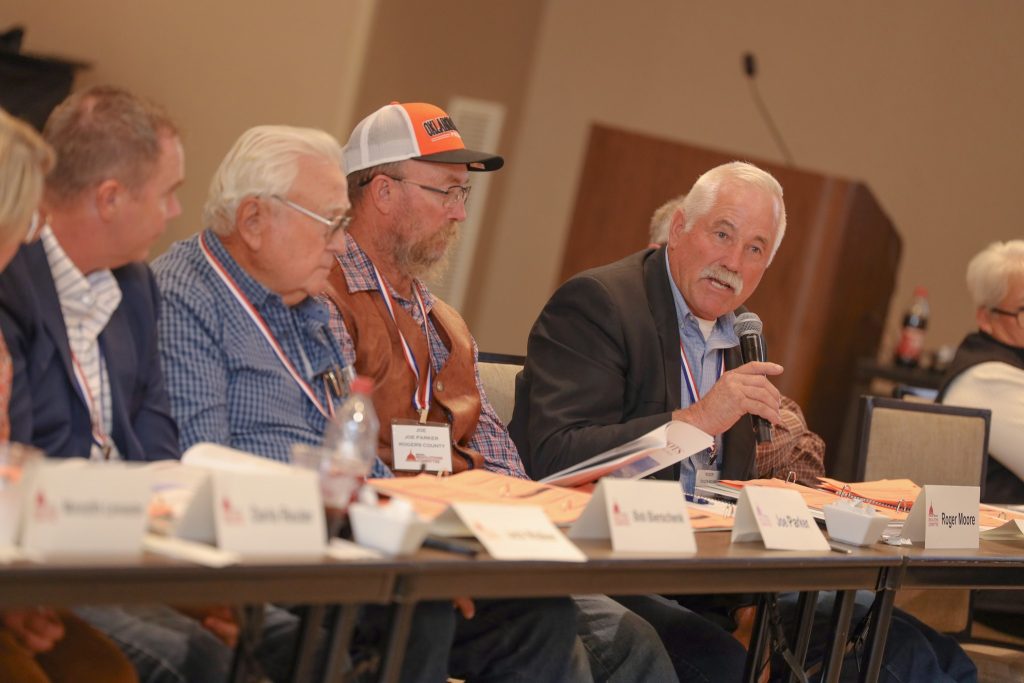
Senior Farm and Ranch broadcaster for the Oklahoma Farm Report, Ron Hays, caught up with Steve Thompson, Vice President of Public Policy for Oklahoma Farm Bureau to talk about what some of the policy themes are for the group to grapple with in 2024.
"There was almost a even split between local/state and big picture /national issues that were brought up and there was also both things that our members were supporting as well as things they are very much opposed to." Of the things that the delegates were strongly supporting- the Beef Checkoff- while one issue that the members were clearly not happy about- the EPA's plans to use the endangered species act to enhance pesticide regulations- and they also have no interest in supporting the elimination of the state income tax as called for by Governor Stitt.
One issue that received only limited attention in 2023 is medical marijuana. "That was one of the interesting evolutions this year as there was only a handful of proposals that came from counties." Thompson says that one resolution that will be considered that has to do with Medical Marijuana would propose to the state to allow greenhouses and related equipment seized from illegal grow operations be repurposed to rural schools for their ag education efforts.
Thompson also talked with Hays about the new drivers license rules that take effect November first for 14 to 17 year old youth that live on a farm or ranch or work on one to be able to qualify for a limited drivers license. See the PDF of the instructions from the Department of Public Safety on how a youth and their parents can qualify.
Jeff Edwards has been named dean of the Dale Bumpers College of Agricultural, Food and Life Sciences and senior associate vice president for academic programs of the Division of Agriculture, effective Jan. 1, 2024, in a joint appointment by U of A Provost Terry Martin and U of A System Vice President for Agriculture Deacue Fields.
Edwards will succeed interim Dean Jean-Francois Meullenet. In January, Meullenet will return to his role as senior associate vice president for agriculture research and director of the Arkansas Agricultural Experiment Station for the U of A System Division of Agriculture.
"I am thrilled Dr. Jeff Edwards will serve as the next dean of Bumpers College," Martin said. "Since joining the U of A in 2022, Dr. Edwards has accomplished a great deal in a short amount of time. He has proven himself to be an exceptional leader, and he is known throughout the country for his work in improving agricultural systems and environmental sustainability. In this new role, he will continue to serve the U of A well, and I know he will help elevate the Bumpers College and its programs in the state, region and nation."
"I'm so pleased Dr. Jeff Edwards will lead both Bumpers College and serve the Division of Agriculture in these new roles," Fields said. "As a former dean of Bumpers College and in my current position, I have a unique perspective on the specific qualities the dean should possess to aid in the college's overall success. Dr. Edwards has demonstrated these qualities, and he has a great vision for integrating functions of the land-grant mission, which will be a tremendous asset to the University of Arkansas and the UA System Division of Agriculture."
As the dean of Bumpers College, Edwards will provide leadership and oversee the college's academic and research enterprises, student recruitment and operations. As senior associate vice president, Edwards will help address the many challenges and opportunities faced by agricultural and rural communities in the state. Edwards will also help connect academic activities between the Fayetteville campus with the U of A System's Division of Agriculture.
"I'm honored to be named the dean of Bumpers College and appointed as a senior associate vice president with the Division of Agriculture," Edwards said. "Since earning my doctorate at the U of A, I have viewed Arkansas as my home. I'm glad I returned to Bumpers College as a department head about a year ago, and I'm grateful for this new opportunity to serve as the dean. I look forward to leading the college and raising its profile on both the national and international stage."
Edwards joined the U of A in 2022 as head of the Department of Crop, Soil and Environmental Sciences, which includes about 80 faculty and staff members, offers two undergraduate degree programs as well as M.S. and Ph.D. degrees, serving approximately 240 students. As head of the department, Edwards was instrumental in establishing a formal mentoring program for assistant professors, implementing regular internal communications within the department and securing funding for two state-of-the-art growth chambers.
Prior to his current role at the U of A, Edwards spent 18 years at Oklahoma State University. He started as an assistant professor and small grains extension specialist in 2004 and attained the rank of full professor in 2012. From 2015 to 2022, he served as head of the Department of Plant and Soil Sciences at OSU.
Edwards' areas of research include wheat variety testing, sustainable agricultural production systems, optimal fertilization strategies for small grains and development of robust small grains production systems that are adaptable to changing climatic and environmental conditions.
In addition, Edwards has contributed to more than 93 research publications and has received numerous awards for his work and research. Awards he has received include the 2022 Oklahoma Crop Improvement Association Premier Supporter Award, 2013 National Excellence in Extension Award, Warth Distinguished Professorship in Agronomy, 2012 Crop Science Citation of Excellence for Associate Editors, 2011 Agronomy Journal Outstanding Reviewer Award, 2007 Oklahoma Wheat Growers Association Wheat Promoter of the Year and the 2007 ASA-CSSA-SSSA Early Career Professional Award.
Edwards received his Ph.D. in crop, soil, and environmental science and a master's degree in agronomy from the U of A. He received his bachelor's degree in agriculture from Western Kentucky University. In 2018, he received an Outstanding Alumni Award from U of A's Department of Crop, Soil and Environmental Sciences.
For more information on Edwards, view his curriculum vitae.
"I'd like to express my sincere gratitude to Jean-Francois Meullenet for serving as interim dean of Bumpers College," Martin said. "I'm thankful for his excellent leadership during this time and look forward to his continued service with the division."
About the Dale Bumpers College of Agricultural, Food and Life Sciences: Bumpers College provides life-changing opportunities to position and prepare graduates who will be leaders in the businesses associated with foods, family, the environment, agriculture, sustainability and human quality of life; and who will be first-choice candidates of employers looking for leaders, innovators, policy makers and entrepreneurs. The college is named for Dale Bumpers, former Arkansas governor and longtime U.S. senator who made the state prominent in national and international agriculture. For more information about Bumpers College, visit our website, and follow us on Twitter at @BumpersCollege and Instagram at BumpersCollege.
About the Division of Agriculture: The University of Arkansas System Division of Agriculture's mission is to strengthen agriculture, communities, and families by connecting trusted research to the adoption of best practices. The Division of Agriculture conducts research and extension work within the nation's historic land grant education system through the Agricultural Experiment Station and the Cooperative Extension Service. The Division of Agriculture is one of 20 entities within the University of Arkansas System. It has offices in all 75 counties in Arkansas and faculty on five system campuses. The University of Arkansas System Division of Agriculture is an Affirmative Action/Equal Opportunity Employer.
About the University of Arkansas: As Arkansas' flagship institution, the U of A provides an internationally competitive education in more than 200 academic programs. Founded in 1871, the U of A contributes more than $2.2 billion to Arkansas' economy through the teaching of new knowledge and skills, entrepreneurship and job development, discovery through research and creative activity while also providing training for professional disciplines. The Carnegie Foundation classifies the U of A among the few U.S. colleges and universities with the highest level of research activity. U.S. News & World Report ranks the U of A among the top public universities in the nation. See how the U of A works to build a better world at Arkansas Research and Economic Development News.
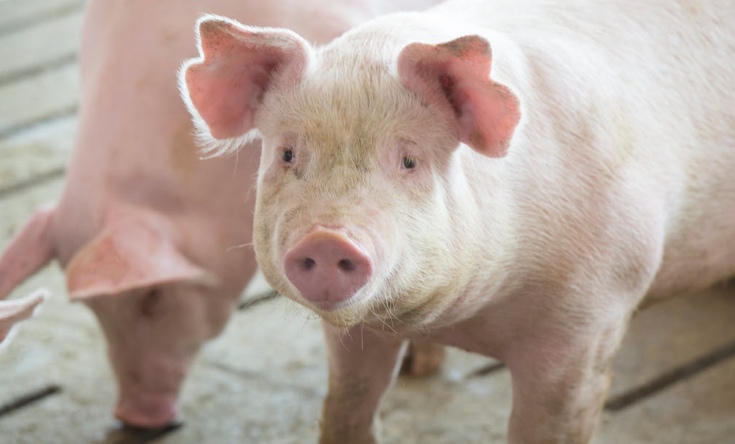
This October Pork Month hits differently than years past. For pork producers across the country, it's been a difficult year financially.
At the National Pork Board (NPB), we are keenly aware of the unprecedented challenges the pork industry is facing. While the current economic situation puts a damper on a normally high-celebration month such as Pork Month, it remains an opportunity for our industry to come together and take pride in the high-quality product we produce.
To support pork producers, we have been aggressively deploying Pork Checkoff dollars in domestic and international markets to drive both volume and demand.
Our focused initiatives are intended to position pork to more households, sell more pork to consumers and ultimately drive consumption through more eating occasions.
Let me be clear: Our market growth efforts are not just about selling more pork. They are about creating long-term demand.
It has been said that "Culture eats strategy for breakfast." In other words, you must be in the market to understand the market. This certainly applies to the development of international markets.
Recently, NPB strategically reallocated funds to support additional international and market development growth, building on existing robust market demand initiatives. The additional investment targets incremental demand creation for U.S. pork exports.
The U.S. exports 27.5% of our annual pork production1 – meaning the maintenance and expansion of our international markets is critical.
NPB has invested in foreign market development, trade promotion and facilitation to build global demand for U.S. pork, diversify markets and differentiate from competitors.
It is imperative the Pork Checkoff understands the current and future needs of consumers in global markets to properly serve them.
We are also working to drive domestic demand for quality pork and making the case for consumers to buy more pork more often.
Through Pork Checkoff-funded research, NPB has identified highly populated areas in California, New York and Texas as key geographies critical to the growth of domestic demand for pork. These highly populated geographies have little knowledge of pork and production. NPB is setting out to change consumer perceptions by strategically targeting them with digital ads, social media campaigns and Instacart options.

Furthermore, NPB has identified millennial moms as a key consumer audience. Motivated by taste, nutrition and simple meal preparation, millennial moms are a target audience for NPB's newest platform, Surprisingly Pork. This is a vision to showcase pork in a new light, emphasizing that it is good for you and good for the planet.
Through Surprisingly Pork, we are translating relevant research into compelling and emotive language subverting people's ingrained beliefs about pork.
Our efforts to grow domestic market demand were bolstered by our board last month, with the board approving an additional $2 million for activities in the fourth quarter. For 2023, we will have invested $10.1 million for domestic marketing, $11 million for international marketing, and $8.1 million for human nutrition.
Many consumers are surprised at how good pork is for people and the planet. What many are quick to forget is pork's resilience over time. As a fourth-generation farmer and the CEO of the National Pork Board, I have witnessed this resilience.

The pork industry's We Care Ethical Principles guide everything we do. I am incredibly proud to be part of an industry whose core values include a commitment to doing what's right for people, pigs, and the planet.
No matter the farm size or type, pig farmers are committed to raising pigs responsibly, ethically and sustainably.
We know work needs to be done to drive demand at home and across the globe. All our efforts – domestically and internally – add up to opportunity. We are working diligently to ensure brighter days are on the horizon.

Through the ups and downs – especially the downs – we are here for you. You can trust we are by your side to support you, thoughtfully build market growth and protect the continuity of pig farming.
Your trust in NPB and unwavering commitment to your farm fuel our motivation to work hard for you. I urge you to sign up for the Pork Checkoff weekly email so you can stay informed.
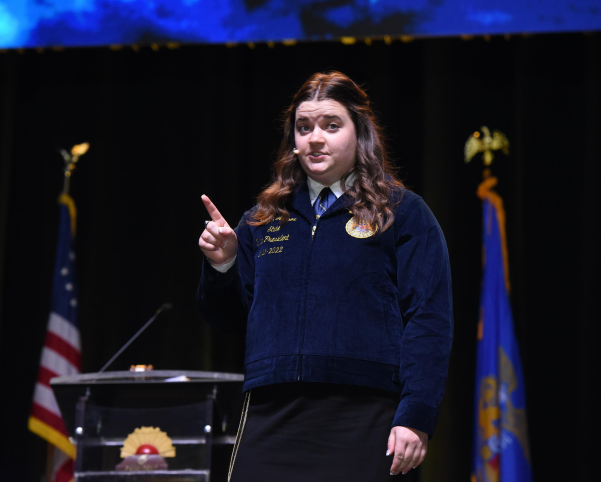
Update- see the correction in the first two paragraphs reflecting that there are four National Officer candidates attending Oklahoma State University this fall.
Out of a total of 35 national FFA officer candidates who will be in Indianapolis for the National FFA Convention this coming week to compete for six spots in the next National FFA officer leadership team, four of those 35 candidates are students at Oklahoma State University studying in the Ferguson College of Agriculture. (Check out the pictures of all thirty five Candidates at the bottom of this story)
Those four students include Braden Heisler of Waukomis, Oklahoma, Erynn Allison, from Tifton, Georgia, Amara Jackson of Durand, Michigan and Justin Sharp of Oregon. Senior Farm and Ranch Broadcaster, Ron Hays, had the chance to visit with Allison about what inspired her to run for a national FFA office.
Early on, Allison said she knew the FFA was where she was meant to be.
"I participated in over 14 career development events through my time that ranged from prepared public speaking, where I gave a speech on prescribed burns, to floriculture and environmental natural resources," Allison said.
Allison also participated in livestock shows and took on many leadership roles throughout her FFA career.
"I found my place in leadership," Allison said. "I was an area officer for two years, and eventually, I served as Georgia FFA State South Region Vice President my senior year of high school," Allison said.
Allison said FFA is the reason she chose to attend Oklahoma State University in hopes of pursuing a career as an agricultural educator. When asked about her experience at OSU, Allison said it feels like home.
"I went on my tour, and a city full of orange became home in 30 minutes," Allison said. "Driving around the town, I knew immediately that this was where I was supposed to be."
The thing that Allison said motivates her most to be a national FFA officer is to have a chance to recognize the students within the organization.
"National FFA has 945,000 members, and those 945,000 students deserve to have their name and story heard and to know that it matters," Allison said. "As a national officer, I hope to recognize those students."
Our coverage of Oklahoma FFA engaged at the National FFA Convention is being powered by Oklahoma Farm Bureau. Watch for our stories and interviews from Indianapolis on our Website, Daily Email, our statewide Radio Oklahoma Ag Network and our Social Media Channels. Click here for the OKFB website to learn about how they are making a difference in lives of Oklahomans. Oklahoma Farm Bureau supports the youth of rural Oklahoma year round- and reminds you- Together- We Are Rural Oklahoma!
The Cotton Board's 2022 Annual Report is now available online. To download the report, visit the Stakeholder Transparency section of cottonboard.org. The report offers a letter from Sonja Chapman, The Cotton Board's 2022 chairman. In Chapman's letter, she says, "The Cotton Board maintains a strong collection rate, receives positive audit results, and engages in strong communication efforts.
The exceptional professionals on staff at The Cotton Board and Cotton Incorporated are determined to move the industry forward, deliver a strong sustainability message to consumers and users of cotton, and increase downstream demand for cotton." The report features 2022 budget/financial information, an overview of the top-line strategic priorities of the Cotton Research and Promotion Program, and information on projects and programs from 2022.

Today, Growth Energy, the nation's largest biofuels trade association, submitted a letter to the U.S. Internal Revenue Service (IRS) outlining why the IRS should ensure that American producers of bioethanol can certify eligibility for the sustainable aviation fuel (SAF) tax credits enacted in sections 40B and 45Z of the Inflation Reduction Act (IRA) in a manner that is focused solely on the lifecycle greenhouse gas (GHG) emissions reductions of SAF.
In the letter, Growth Energy urges IRS to "interpret the 40B and 45Z certification process as calling for a workable alternative to CORSIA's requirements for the certification of SAF that is based on criteria that reasonably relate to substantiating the lifecycle emissions of the fuel." Growth stated further that "the IRS should clarify these certification criteria in conjunction with confirming that GREET is an acceptable 'similar methodology' for determining lifecycle greenhouse reductions" of SAF.
"Treasury has the power to ensure that American companies, American workers, and American communities benefit from growth in the still-nascent SAF market," said Growth Energy CEO Emily Skor. "That's why it's critical that IRS shape its policies in a way that recognizes the importance of bioethanol as a potential feedstock for SAF and reflects Congress' intent that IRA incentives be assessed on their lifecycle GHG emissions reduction potential, and nothing more. As we note in our letter, a number of our members have already made substantial investments in SAF production, and the IRA's Section 40B and 45Z tax credits have the potential to greatly accelerate this trend."
This is the fifth letter Growth Energy has sent to the U.S. Treasury Department in the last 12 months urging the agency to make bioethanol a centerpiece of its tax policy pertaining to SAF production. Read our other letters and learn more about SAF at growthenergy.org/saf.
Background
Section 40B(f) of the Inflation Reduction Act (IRA) gives taxpayers claiming SAF credits a choice of certification schemes to certify compliance with SAF credit eligibility requirements: (1) "general requirements, supply chain traceability requirements, and information transmission requirements" issued by the International Civil Aviation Organization (ICAO) under the Carbon Offsetting and Reduction Scheme for International Aviation (CORSIA) framework; or (2) "requirements similar" to those established under CORSIA for those taxpayers who use an "alternative methodology" to CORSIA to calculate lifecycle GHG emissions, as allowed under Section 40B(e).
The CORSIA eligibility requirements for the Section 40B and Section 45Z SAF tax incentives that are currently in place, and were in place at the enactment of the IRA, relate to ensuring the integrity of the lifecycle greenhouse gas (GHG) analysis of candidate feedstocks, including, for example, a requirement that feedstocks for sustainable aviation fuel (SAF) do not originate from forestland converted to agricultural production after 2007, and related supply chain traceability requirements. At their core, such requirements provide mechanisms to substantiate the lifecycle GHG reductions of the SAF. Beginning in 2024, however, the general requirements for certification under the CORSIA framework will include expansive new "sustainability criteria" that reach far beyond lifecycle GHG analysis into issues such as labor standards, community engagement, and other socioeconomic conditions of the region where the SAF is produced. As explained in detail in Growth Energy's letter, given the focus of the IRA on reducing lifecycle GHG emissions from aviation fuel, it would be unreasonable to interpret Congress' intent in passing the IRA to require all of the far-reaching, new sustainability criteria under CORSIA to apply to the certification process under Sections 40B and 45Z. Moreover, requiring compliance with each of the newly-applicable sustainability criteria in 2024 would be burdensome or potentially infeasible for many SAF producers.

Sen. Jerry Alvord, R-Wilson, issued the following statement on Friday following the announcement of the closure of the Michelin tire plant in Ardmore.
"Yesterday afternoon I met with Michelin representatives, Bill Murphy President & CEO of the Ardmore Chamber of Commerce and Ardmore Development Authority, Kevin Boatwright the Ardmore City Manager, State Rep. Tammy Townley and State Rep. Josh Cantrell.
"Earlier in the day, we all were informed of the announced closure of the Michelin tire plant in Ardmore. The abruptness of this announcement caught everyone off guard, including those in the industry. This decision will undoubtedly have a significant economic impact on our community, and the loss of jobs is deeply distressing. Our thoughts are with the hardworking employees and their families who will be affected by this unfortunate development. I understand the importance of job stability and economic security and will work tirelessly to help bring new opportunities to our community and great state.
"All of us are in agreement that as Michelin closes down operations over the next two years, we must immediately work together to not only process this news, but consider what options might be available as we look ahead. Murphy said it well, 'This plant has been an anchor not only in Ardmore but throughout southern Oklahoma's economy, providing hundreds of well-paying jobs for more than 50 years.'
"We remain steadfast in our concern for the dedicated employees of the plant during this transition.
"The immediate response from employers in local industry and businesses, as well as outreach from our education partners, Murray State College & Southern Tech, has been impressive. The job market has been looking for hard working, skilled employees and we feel confident great opportunities await many employees as they transition into other local businesses. We have a large variety of family-owned and corporate businesses that have invested in South Central Oklahoma for many years. Our partners at the Ardmore Chamber and Ardmore Development Authority are working with existing and prospective companies on additional investments and job opportunities that will help many workers through this transition phase.
"We are all sensitive to the hardships that will be experienced, and we will do all that we can to alleviate these stressful times, working together to develop economic opportunities."
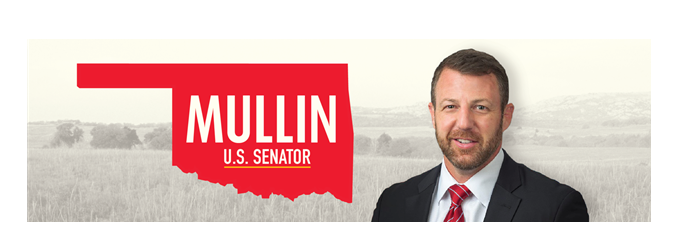
By Senator Markwayne Mullin
At the Republican National Convention in July 1980, then-candidate Ronald Reagan boldly declared: "We know only too well that war comes not when the forces of freedom are strong, but when they are weak. It is then that tyrants are tempted."
President Reagan's foreign policy was rooted in the idea that investing in our national defense was key to not only contain communism, but to defeat it. Under the Reagan Doctrine, America embraced "peace through strength" – ultimately placing U.S. leadership at the forefront of democracy to preserve liberty and freedom for all.
Now, more than 30 years later, a new axis of evil has emerged among Iran, Russia, China, and North Korea to test American resolve. It's more important than ever for the United States to embody peace through strength on the world stage as a matter of national security.
Unfortunately, despite growing allegiances among America's toughest adversaries, Joe Biden has repeatedly chosen appeasement over deterrence. Time after time, this administration has elected to bend the knee to foreign threats at the American people's expense.
Look no further than the Biden administration's disastrous and chaotic withdrawal from Afghanistan which resulted in the tragic death of 13 American servicemembers. Joe Biden sent a message to the world that the United States would abandon our own citizens and our closest allies in a botched military action. What's worse, we set a precedent that the U.S. could not be counted on in times of emergency.
While the decay of peace through strength has intensified under Joe Biden, this toxic appeasement strategy didn't start under this administration. Barack Obama too sat back and watched while Russian President Vladimir Putin took influence in Syria, expanding power in the Middle East to a scope not seen since the 1970s.
The Chinese Communist Party (CCP) would love nothing more than to destroy American leadership and sever our alliances to expand their authoritarian influence around the globe. North Korea is upping their military exercises and test launches as they grow their nuclear arsenal. Iranian forces are working overtime to escalate nuclear capabilities while financing brutal terrorist regimes. Russia is looking to overtake Ukraine, reestablish the Soviet bloc, and expand malign influence operations around the world.
Make no mistake: this new axis of evil is partnering to weaken America and facilitate their anti-western authoritarian autocratic takeover by any means necessary.
President Reagan knew that in the absence of strong American leadership, there is chaos. Oklahomans aren't afraid to call out the evil regimes around the world that threaten to destabilize a U.S.-led world order. Joe Biden must step up and do the same.
The U.S. Department of Agriculture (USDA) is announcing the appointment of 21 new members and nine returning members to the National Advisory Committee on Microbiological Criteria for Foods (NACMCF). The purpose of the committee is to provide impartial scientific advice and recommendations to federal food safety agencies that assures the safety of foods.
Members of the committee are chosen based on their expertise in microbiology, risk assessment, epidemiology, public health, food science and other relevant disciplines. One individual affiliated with a consumer group is included in the membership of the committee and five members are federal government employees representing the five federal agencies involved in NACMCF. The activities of NACMCF are carried out, in part, by subcommittees that are focused on specific areas being considered by the full committee.
"NACMCF members bring a wealth of expertise and dedication to the critical mission of ensuring the safety of our nation's meat and poultry products," said Agriculture Secretary Tom Vilsack. "Their contributions will help us continue to strengthen our nation's food supply and protect the health and well-being of American consumers."
NACMCF has made important contributions to a broad range of critical food safety issues. The committee reports provide current information and scientific advice to federal food safety agencies and serve as a foundation for regulations and programs aimed at reducing foodborne disease and enhancing public health. Federal food safety agencies involved with NACMCF are USDA's Food Safety and Inspection Service (FSIS), the U.S. Department of Health and Human Services' Food and Drug Administration (FDA) and the Centers for Disease Control and Prevention, the Department of Commerce National Marine Fisheries Service, and the Department of Defense Veterinary Services.
The newly appointed NACMCF members to serve a two-year term are:
The returning NACMCF members are:
See the full list of NACMCF members.
NACMCF will hold a virtual public meeting of the full committee and subcommittees from November 14, 2023, to November 16, 2023. In addition to welcoming the new members, the committee will introduce a new charge from FSIS on genomic characterization of pathogens and continue working on the response to the FDA's charge on Cronobacter spp. in Powdered Infant Formula. More details about NACMCF charges are available on the FSIS website. You may also register to attend the NACMCF meeting, on FSIS' website.
Background
NACMCF was established in 1988 in response to a recommendation of the National Academy of Sciences for an interagency approach to microbiological criteria for foods and in response to a recommendation of the U.S. House of Representatives Committee on Appropriations, as expressed in the Rural Development, Agriculture, and Related Agencies Appropriation Bill for fiscal year 1988. NACMCF provides impartial scientific advice and recommendations to the Secretary of Agriculture and the Secretary of Health and Human Services on public health issues relative to the safety and wholesomeness of the U.S. food supply, including development of microbiological criteria and review and evaluation of epidemiological and risk assessment data and methodologies for assessing microbiological hazards in foods. The committee also provides scientific advice and recommendations to the Centers for Disease Control and Prevention and the Departments of Commerce and Defense. More information on NACMCF is available on the FSIS website.
USDA touches the lives of all Americans each day in so many positive ways. In the Biden-Harris Administration, USDA is transforming America's food system with a greater focus on more resilient local and regional food production, fairer markets for all producers, ensuring access to safe, healthy, and nutritious food in all communities, building new markets and streams of income for farmers and producers using climate smart food and forestry practices, making historic investments in infrastructure and clean energy capabilities in rural America, and committing to equity across the Department by removing systemic barriers and building a workforce more representative of America. To learn more, visit www.usda.gov.

Farm Director, KC Sheperd, is talking with Ashley Randolph about the 2023 Oklahoma Ag Expo coming up on November 6-8 in Norman, Okla. Randolph is the Director of Communications at the Oklahoma Grain and Feed Association and the Oklahoma Agribusiness Retailers Association.
The expo will be held at the Embassy Suites at 2501 Conference Drive in Norman. The Oklahoma Ag Expo is a joint venture of the Oklahoma Grain and Feed Association and the Oklahoma Agribusiness Retailers Association.
Private and commercial applicators and certified crop advisors will have the opportunity to take CEU courses through the Oklahoma Department of Agriculture, Food, and Forestry all throughout the event.
"We will be kicking off Ag Expo on Monday, November 6, with our golf tournament, which is for OSU ag scholarships," Randolph said. "Then we will kick off registration, and the trade show will be on Tuesday."
Over the three days, Randolph said the Expo has invited an excellent lineup of speakers. Topics will range from fumigation to weed management, and more.
"We are excited for our lineup of speakers and have a pretty big trade show lined up," Randolph said. "We have a wide variety. We have got chemical and fertilizer folks, as well as construction companies, seed companies, fumigation companies, and everything in between."
On Tuesday night, the Ag Political Action (PAC) Committee for the Oklahoma Grain and Feed Association and the Oklahoma Agribusiness Retailers Association will be hosting a live and silent auction that anyone is welcome to attend.
"This is a great opportunity to continue supporting our legislators and especially those who see the importance of investing in rural and agriculture here in Oklahoma," Randolph said.
For more information, click here.
To see the schedule for the expo, click here.
To register, click here.
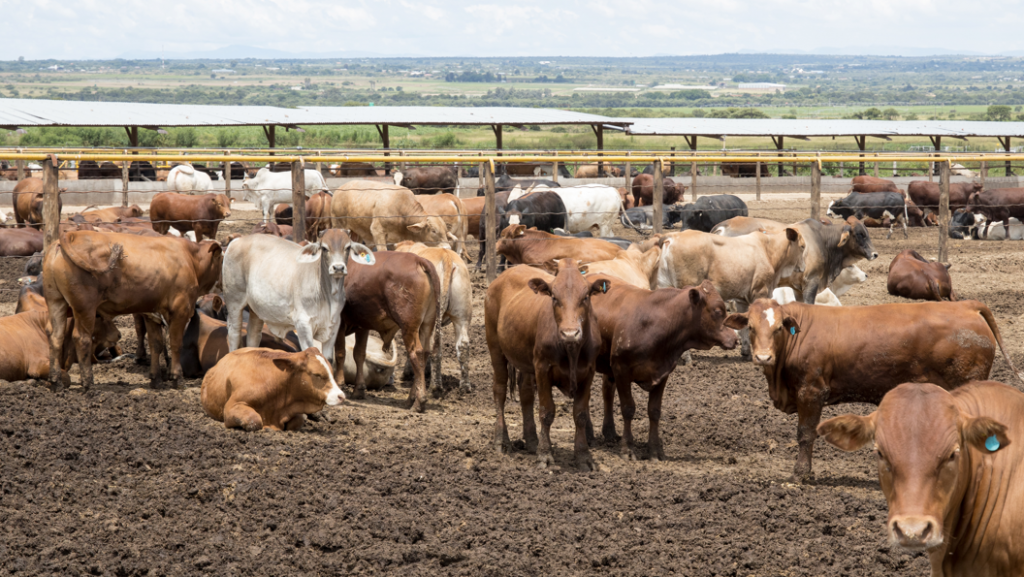
On Monday, the Cattle Markets took some big dips. The Cattle on Feed report from last Friday was considered Bearish and bulls bailed as the decline gathered steam, creating more downward pressure. Bob Rodenberger at Stockman's livestock auction in Apache says these kinds of extremes are somewhat seasonal, "We've seen a $30 break from the September high on The futures, and we've taken probably $20-25 off the feeders if you look at the index from the first the middle of September till now we went from kinda 258 to2 62 index down to 240 to241 and this is seasonal. "
Rodenberger says while this drop is seasonal, it's not something producers like to see, "We always see a break. And the calf market is all relevant to wheat pasture. Now we got some good rains around, but that's going to be a little delayed for the people buying calves, and they're gonna buy calves cheaper with feeder cattle cheaper. So the only positive thing is, the fat market stayed pretty steady."
Rodenberger says Livestock Risk Protection is important for weeks like this in the market when the boards start breaking, "When the board starts breaking, we no longer have human instinct. Now it's all computer so when it hits those trigger spots, tit goes automatically into the down mode, and we've cleaned everybody out. "
Even though the markets did come back up somewhat, Rodenberger says, hopefully, we have found some solid ground, "We still know that we've got a million less cattle available from January 1, 2024 through the rest of the year. Now. We still have plenty of cattle available right now. And that's where the markets at. Cattle on Feed Report came out and whether its right or wrong, it doesn't matter because The people that move the market go off what the USDA says."
Rodenberger says he has seen some good rains around the area, which will help the wheat farmers, "Apache anywhere from one and a half to three and a half inches in a 50-mile trade area. We've got good rain, and they're talking rain through the middle of next week."
Rodenberger expects the runs to be lighter all around next week due to the forecasted rain throughout the state. To visit with Bob Rodenberger at Stockmans LIvestock Auction in Apache call 800 926 9696
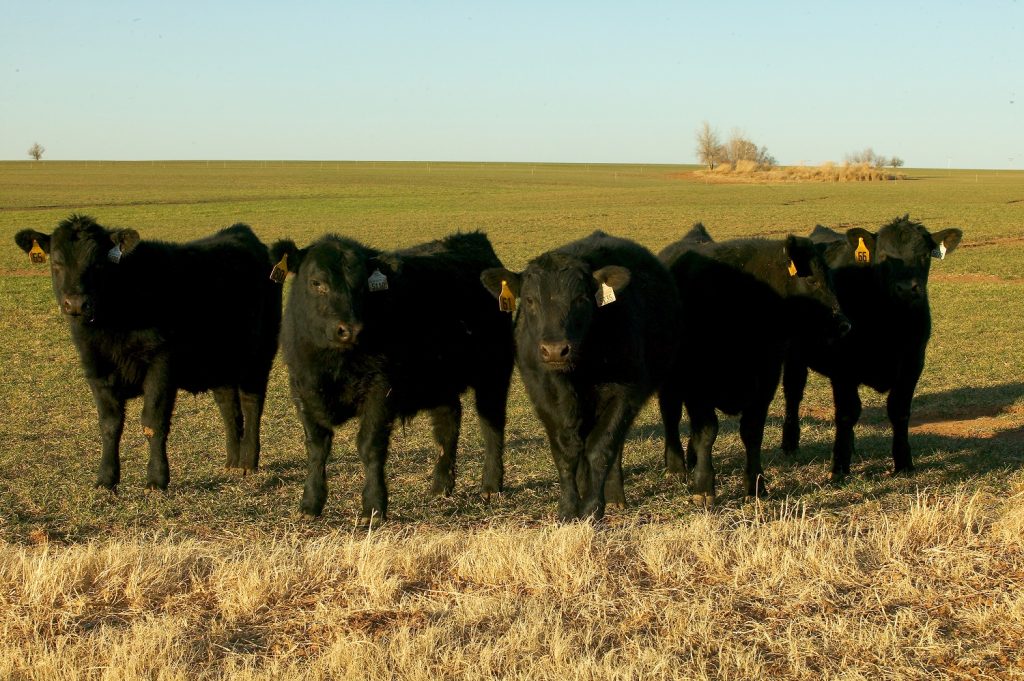
Cattle grazing on Wheat pasture.
Senior Farm and Ranch Broadcaster, Ron Hays, is talking with Elanco Animal Health Principal Research Scientist Ron Tessman, about Bovine Respiratory Disease.
"We look at across any of the sectors of the cattle industry, and BRD is right there at the top, if not at the top when we think about cost," Tessman said. "It is not just the monetary cost of treatment, but the cost associated with labor, with identifying the disease, and really the cost associated with production losses that we may not even recognize."
The lungs of a cow are set up to receive BRD, Tessman said, as research has found that many cows have had BRD without treatment. Because of the long-term implications of BRD on the health of cattle, Tessman recommends administering Zelnate.
"It is a product that is unique in the market when we think about those things that are approved for BRD, in that it is not an antibiotic and it is not a vaccine," Tessman said. "It is termed an immunostimulant. I prefer to call it an immunomodulator."
Tessman said Zelnate is effective in reducing and prevent illness due to BRD and lung damage.
"It works immediately in stimulating that innate immune response," Tessman said.
The Beef Buzz is a regular feature heard on radio stations around the region on the Radio Oklahoma Ag Network and is a regular audio feature found on this website as well. Click on the LISTEN BAR for today's show and check out our archives for older Beef Buzz shows covering the gamut of the beef cattle industry today.
ASA this week applauded USDA's efforts to strengthen U.S. trade and food aid by providing funds to maintain and develop markets and address global hunger. Agriculture Secretary Tom Vilsack announced $2.3 billion will be allocated from the Commodity Credit Corporation, $1.3 billion of which will go toward the Regional Agriculture Promotion Program and diversification of specialty crop export markets, the balance toward international food assistance.
What ASA says: ASA President Daryl Cates, who grows soybeans in Illinois, said in a news release this week, "America's soybean farmers rely on strong existing export markets and opportunities to open and build new markets. It can take decades to grow markets for our beans and only a matter of days in some cases to lose them, so having the funds to sufficiently support export promotion programs is something ASA and soy growers have consistently championed. And, as both an industry that participates in food aid programs and as human beings, we are pleased to see the administration looking for additional ways to help us address global food insecurity."
Cates says he and others in the soy industry are happy to see USDA acknowledging the uncertainty that surrounds agriculture and challenges that arise from that unpredictability, and that the department has conveyed through its funding infusion the importance of market development programs.
"USDA has demonstrated that it recognizes the importance of market promotion programs. We are thankful USDA sees value in the collective efforts of the Foreign Agricultural Service and agriculture cooperators like the American Soybean Association, which are stewards of market development funding and bring vital aid programs and market expansion projects to life," said Cates.
Why it matters: ASA remains committed to its trade and food aid efforts and will continue to push for doubling of Market Access Program and Foreign Market Development program funding in the 2023 Farm Bill reauthorization.
Background: ASA utilizes funds from USDA to support the U.S. Soybean Export Council, which develops and expands markets for U.S. soybean farmers, and ASA's World Initiative for Soy in Human Health, which work to find new and build emerging markets for soy.
RON's Dave Lanning has a pre-opening look at today's agricultural Markets.
Click the audio tab below for today's report.
Congressman Tom Cole (OK-04), Vice Chairman of the House Appropriations Committee, released the following statement after the U.S. House of Representatives passed H.R. 4394, the Energy and Water Development and Related Agencies Appropriations Act of 2024. Cole supported the legislation.
"While spending American dollars more wisely and reining in Green New Deal policies, the bill passed in the House today provides strong funding to the U.S. Department of Energy and sets the interests of America first," said Cole. "This bill advances initiatives to strengthen our energy security, continue the modernization of our nuclear weapons stockpile and infrastructure and reduces the U.S.'s reliance on foreign sources of critical minerals. The legislation also provides for harbor maintenance and inland waterways construction to ensure goods can be moved safely to and from global markets and increases water supply and drought resilience programs.
"Finally, I am proud this legislation codifies the Supreme Court's reversal of President Biden's overreaching Waters of the United States (WOTUS) rule to return control of waterways such as streams, ditches, ponds and creeks from the federal government to individual states and private owners. This is significant to Oklahomans and rural Americans by ensuring regulatory certainty to landowners to responsibly steward their own property."
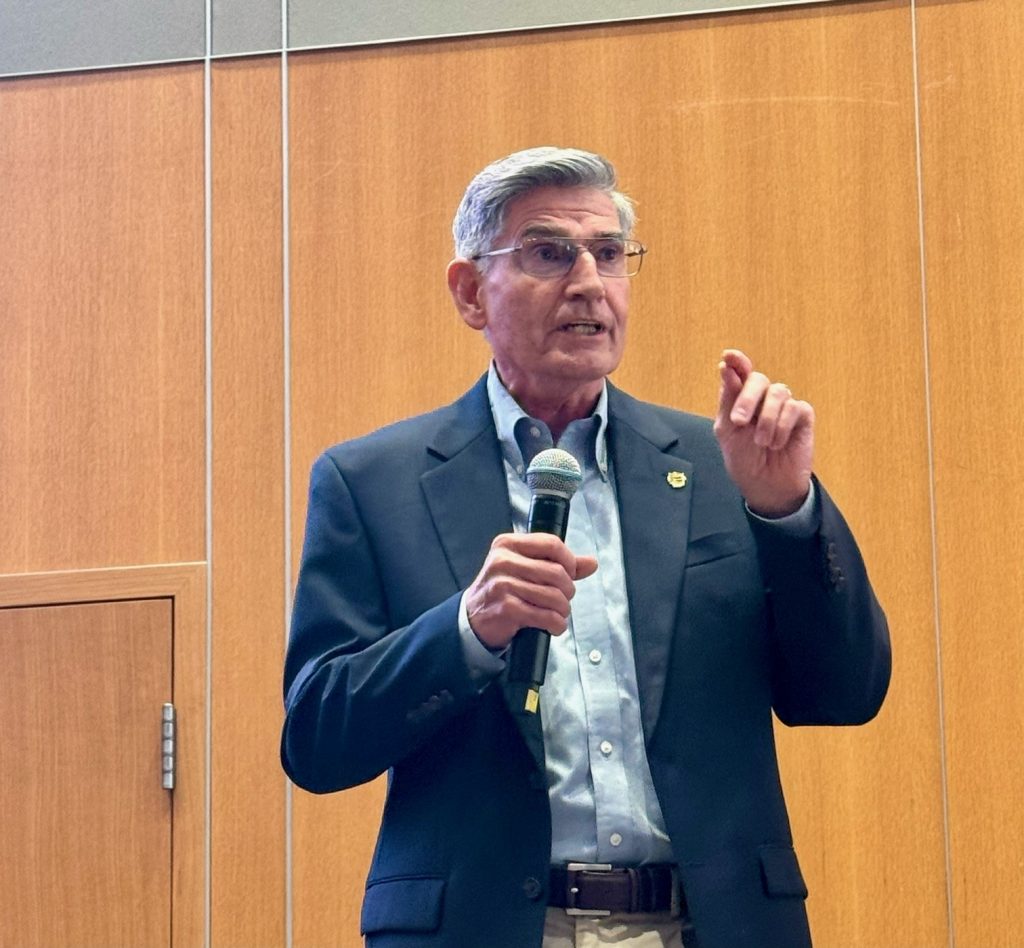
This Week on SUNUP is Oklahoma State University Extension grain market economist Kim Anderson. During this week's edition, Anderson talks about the latest news in the crop markets.
Starting with China, Anderson said the U.S. and China signed a trade agreement, and time will tell how the markets will react. In Ukraine, Anderson said grain and other products are being shipped out of the export corridor without Russian interference.
Argentina has had some wheat production issues, Anderson said, and the production is slightly below average.
"For the full month of October and back to September, we have been trading (wheat) at $6.00 to $6.30," Anderson said. "This week, we did see some weakness in wheat prices and got below six dollars..."
Looking at corn, Anderson said the ending stocks for the world are projected well above average. World soybean stocks are also above average, Anderson said, and the price is good.
This week on SUNUP:
Watch SUNUP:
Saturday at 7:30 a.m. & Sunday at 6 a.m. on OETA (PBS)
YouTube.com/SUNUPtv
Nourish the Future—a national education initiative developed by science teachers for science teachers—is recruiting its next round of Teacher Leaders! The Teacher Leader Community (TLC) is a year-long cohort experience specially designed for middle and high school teachers. The program offers participants opportunities to:
The deadline for the TLC V application is Wednesday, November 1, 2023. The leadership experience begins in January 2024 with a virtual celebration and introduction to the Nourish the Future program.
"The Nourish the Future program plays a crucial role in emphasizing the significance of agriculture in science education. By nurturing critical-thinking skills, this initiative empowers students to tackle real-world challenges," said Nebraska grower and Sustainable Ag Research Action Team Chair Jason Lewis. "Engaging students in ag-based curriculum not only inspires a passion for science, but it also addresses the growing job opportunities within the ag industry."
NCGA believes agriculture is a vital partner in engaging students in STEM concepts in ways that directly and indirectly impact their lives. Not only does teaching an ag-based curriculum in the science classroom inspire students to solve real-world science issues, but it also addresses the job gap in agriculture-related careers, many of which go unfilled.
Nourish the Future is made possible through the assistance of the National Corn Growers Association, the nation's corn farmers and their state corn checkoff programs. For more information on additional workshops, events and curriculum, visit nourishthefuture.org.

Oklahoma State University and Southwestern Oklahoma State University researchers have teamed up to study the potential of using metal catalysts to clean wastewater enough to make it drinkable. (Photo by Alisa Boswell-Gore, OSU Agriculture)
Oklahoma State University researchers are studying the potential process of cleaning wastewater for commercial and residential use.
Most water that people use in their daily living comes from rivers, groundwater or lakes, said Kiranmayi Mangalgiri, assistant professor in the OSU Department of Biosystems and Agricultural Engineering. It is sent to a drinking water treatment plant and then used in residential homes and industrial facilities. Afterward, it goes to a wastewater treatment plant, which cleans the water and returns it to a river, ocean or other water outlet.
"It is a very linear way of using water," Mangalgiri said. "Water is scarcer nowadays, and our population is growing, so we need to find ways to supplement existing water supplies. One way we can do that is by cleaning up the wastewater we are using to the extent that it makes a better water source for drinking."
Mangalgiri is teaming up with Tim Hubin, professor of chemistry and physics at Southwestern Oklahoma State University, who developed tetra azamacrocyclic catalysts for cleaning out contaminants in water.
A ligand is an organic molecule that binds a metal ion to form a metal-ligand complex. Hubin's catalysts are iron and manganese complexes with ligands that have certain properties that allow its metal ion to perform a specific task, such as the modification of organic molecules. These ligands provide stability, allowing the catalysts to not decompose in water, a condition that typically causes similar iron and manganese complexes to fall apart. These metal catalysts activate oxygen or hydrogen peroxide to modify organic molecules.
"We would like to ultimately see an inexpensive solid-state catalyst material that could be packed into a cartridge that would become part of a water purification process," Hubin said. "The catalyst would be able to remove contaminants to a greater extent than current technologies provide."
Most treatments for removing contaminants from water – i.e., microfiltration, reverse osmosis, advanced oxidation – use a lot of energy.
"One of our research questions is, 'Are there energy-efficient processes that can be used?' That's where the catalysts come in," Mangalgiri said. "When we add the catalysts to the water, they degrade contaminants in water, and they regenerate to start the cycle again."
In a preliminary study during the summer of 2023, Mangalgiri and Hubin's team tested four catalysts against four types of antibiotic contaminants in three types of water.
They discovered that some catalysts were more effective than others, with one catalyst outperforming the others.
The next steps are to:
"We are trying to discover which catalyst will be most reliable in a real system while also being cost-effective. We want to know what aspect of wastewater most affects its treatability," Mangalgiri said. "For example, if the alkalinity of the water is what affects these systems the most, that can help us decide what level of alkalinity is appropriate for this type of treatment system."
She said the process could eventually be applied to water for agricultural use. Mangalgiri's team hopes to eventually partner with city water and wastewater utility departments in Oklahoma for the next phase of the project.
"Our goal is to set up a pilot scale system with a 50-liter or larger water system. That will help us take this to full scale," she said. "But before we get there, we need to understand how these systems work in real conditions."
OSU Ag Research is Oklahoma's premier research and technology development agency in agriculture, natural resources and the life sciences.
By Alisa Boswell-Gore
Congressman Tom Cole (OK-04) released the following statement after Michelin North America announced the closing of the Ardmore Michelin manufacturing plant in the Fourth District of Oklahoma after more than 50 years of business.
"This news is certainly a shock and disappointment to the Ardmore community and surrounding areas as approximately 1,400 jobs will be affected," said Cole. "My office will continue to monitor the situation and work with community leaders in any way we can to ensure the community's and employees' needs are taken care of."
Ahead of the 2023 National FFA Convention in Indianapolis, Senior Farm and Ranch Broadcaster, Ron Hays, had the chance to visit with Braden Heisler of Waukomis, Oklahoma. A current Oklahoma State University Student and former FFA state officer for 2021-2022, Heisler is Oklahoma's national FFA officer candidate for 2023.
"In order to serve as a national officer, you take a year off of college, you move away, you travel the country for a year, and so it is a really big decision," Heisler said.
After plenty of thought, Heisler said his calling to run for a national office was impossible to ignore.
"It was very much rooted in my experience in the blue and gold jacket," Heisler said. "When I started FFA, I didn't really have a lot of understanding of what it meant to really be passionate about something and what it meant to really care about something. That is what I found in this jacket. This jacket provides an opportunity for every person from every background to find a place where they belong."
Heisler said he is grateful for those who have invested in him along the way, as he believes he would not be where he is today without the help of others.
"There are FFA members just like that, who when they zip up the jacket for the first time, they don't know what it means," Heisler said. "If there is not somebody there to invest in them and be committed to them, then that jacket may not hold that meaning for them."
If given the chance to serve as a national officer, Heisler said he looks forward to investing his time in others, like many did for him.
"I think there is a lot of personal growth in spending a year of my life committed to other people and really learning from their stories," Heisler said. "I will meet a lot of people from backgrounds I have never experienced before, I will get to travel the country, and I will get to learn what it means to commit yourself in absolutely everything you are doing to a mission that is a lot greater than you are."
Heisler will be interviewing this weekend, then after the committee votes, there will be the first "cut" made in the national officer process on Monday night- about 50 percent. The process will continue after the first cut, until six final national FFA offices have been selected. Those six will be announced on Sunday, November 4th, during the last session of the convention.
Our coverage of Oklahoma FFA engaged at the National FFA Convention is being powered by Oklahoma Farm Bureau. Watch for our stories and interviews from Indianapolis on our Website, Daily Email, our statewide Radio Oklahoma Ag Network and our Social Media Channels. Click here for the OKFB website to learn about how they are making a difference in lives of Oklahomans. Oklahoma Farm Bureau supports the youth of rural Oklahoma year round- and reminds you- Together- We Are Rural Oklahoma!
Managers of Noble Research Institute's regenerative ranches share lessons they've learned while training multiple species for adaptive grazing.
Whether you're new to using temporary electric polywire fencing in adaptive grazing or you are introducing new livestock to your regenerative ranch, you'll likely find yourself in hot-wire training mode at some point.
The ranch managers at Noble Research Institute can relate. As Noble transitioned its seven research ranch operations to regenerative management, the ranch teams needed to train their cattle to respect the electric fences used to make temporary grazing paddocks. On top of that, when Noble increased livestock diversity by adding sheep and goats to their grazing rotations, the former "cowboys" learned how different small ruminants can be when it comes to hot wires.
Here are some of the hot-wire lessons three of Noble's ranch managers say they have learned along the way:
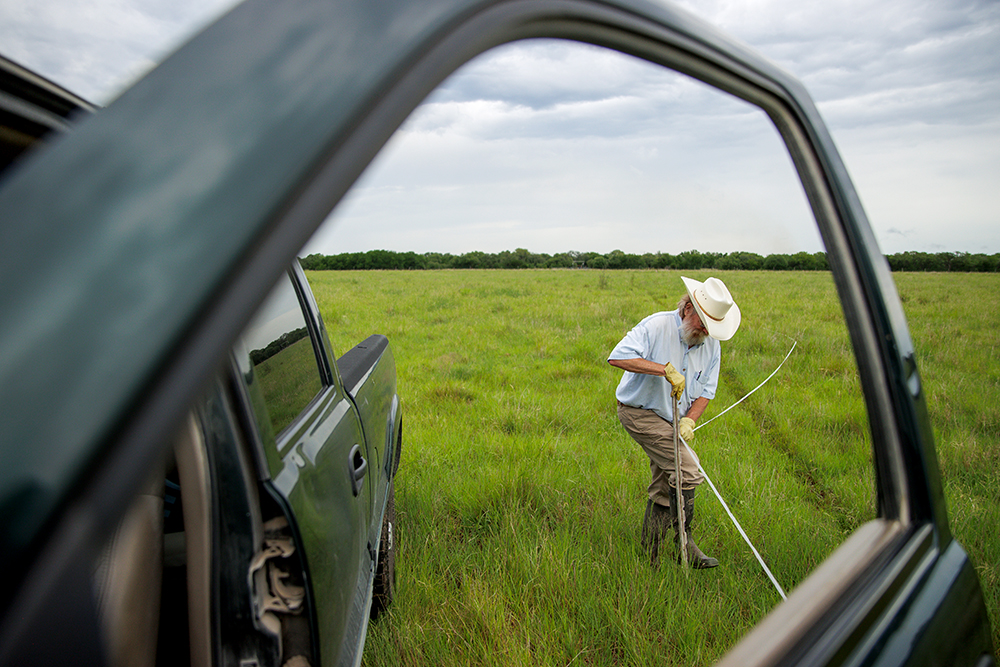
Joe Pokay, Noble Ranches general manager, says "An electric fence is just a psychological barrier, so animals have to be trained to respect it." And it's the rancher's job to do that with any new animals.
When he and the managers on Noble's Oswalt Ranch were learning how to work with the goats they brought in, they trained the first batch in a permanent pen with a three-polywire fence across it as a barrier. After that, the goats did well respecting the fences out in the pasture.
"But when we got more goats, we didn't take the time to train them exactly the same way, figuring the goats we already had would train them," Pokay says. Nope. They had to try several times to train them out in the pasture, and "once we got it right, it was fine."
The good news, says Red River Ranch manager Kevin Pierce, is that calves, kids and lambs born on the ranch learn on their own at a very early age not to go near the wire.
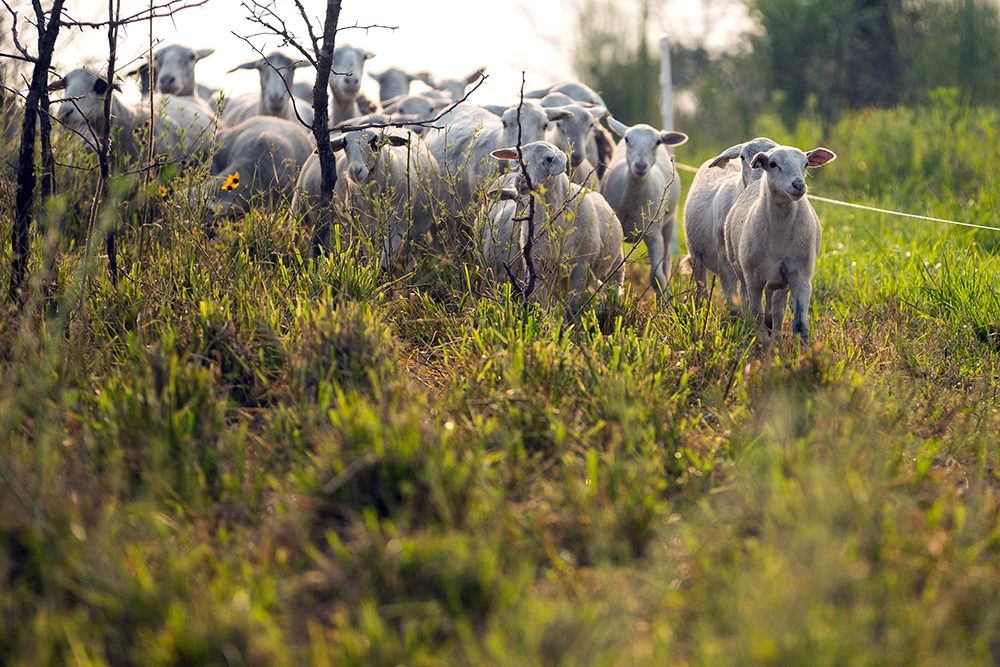
Of the three species, cattle are the most respectful of hot wire and usually can be contained with just one wire. Goats need to be trained with more than one really hot wire, and usually take more time to learn their lesson; sheep are somewhere in between. The small ruminants don't seem to sense the electrical field until they're right at the wire unless it's really hot.
"When the cows are really trained, they won't walk over a downed wire," Pokay says. "I've had barbed wire lying on the ground while building new fence, and when I tried to move cows through a gate, they wouldn't even walk over a barbed wire."
Paul Luna, manager of the Noble headquarters ranch, recalls moving a group of bulls to fresh forage that "took right off at a dead sprint. I had a single hot wire as a cross fence, and I would have sworn they were going to run right through it. But every one of them just put on their brakes and stopped on a dime when they saw that fence."
When it comes to goats, though, "For some reason they don't respect hot wires as well," Luna says. Their horns keep them from being shocked at first, "then they'll get their head through there, and by the time they get shocked, they just keep going through it."
Pierce agrees about sheep and goats and hot wire. "For some reason, they think they need to test it more often than a cow does. But you can keep them in with hot wire. It just takes a little more effort."
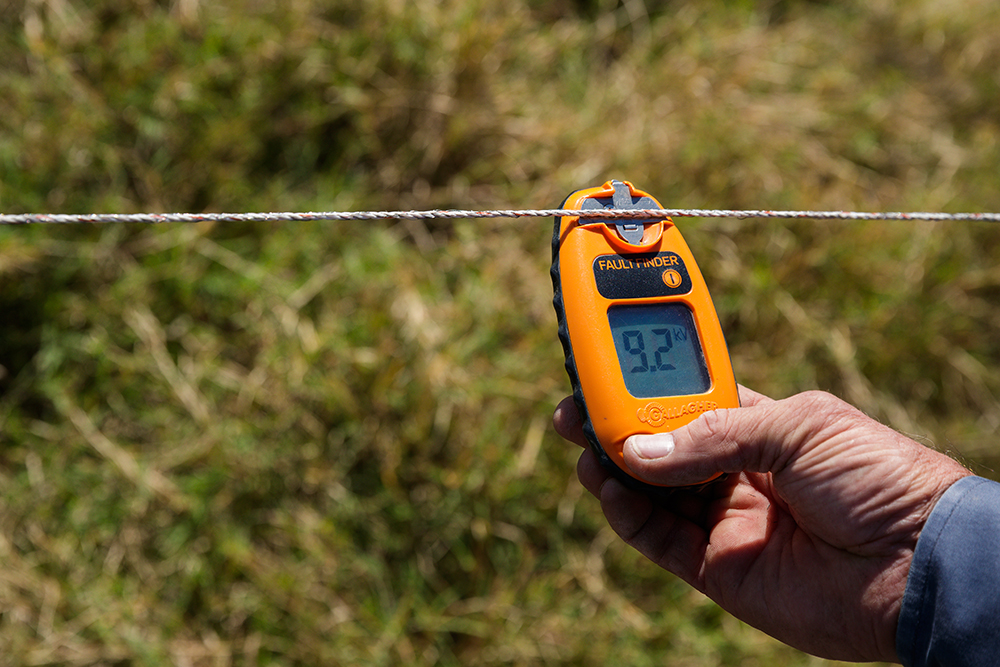
"I would put it up just like the fence they're going to be behind, and maybe tie some surveying ribbon to it so they can see there's something there," Pierce says. "They're going to be curious, and they're going to get shocked, and they're going to tear it down a few times before they figure out that 'Hey, that hurts. Now we can walk around it and go get a drink and everything's fine.'"
Pokay agrees that it's important to train with the same wire that will be used in the pastures, so the animals get used to seeing it. And he says using a permanent pen really helps so you don't worry about them actually getting out during training.
All three managers agree that it's essential to have the training wire in good working order and charged enough to be hot, especially hot enough to shock sheep and goats.
"You want the first experience to be an actual shock," Pokay says. "You don't want them to come up and think 'oh, that kind of tickled. I don't really need to respect this thing.'"
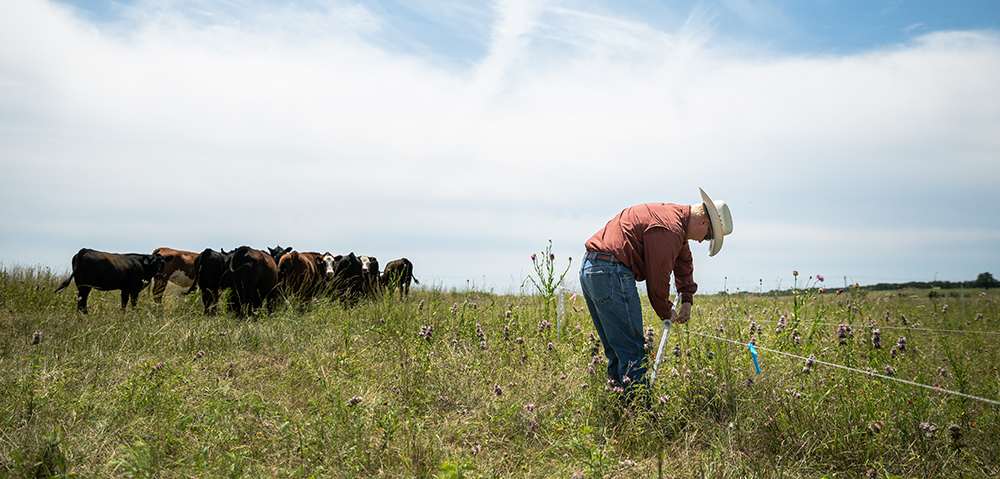
Pokay likes dual-purpose chargers that can be plugged into AC power at the training pen and then put on a solar panel and moved to the pasture. "They're efficient, and you don't have to buy two."
Using quality polywire that carries adequate current is important, too, as is being sure fences are built tight, kept clear of weeds and other power-draining problems, and maintained well. You may want to mow in the path of an electric fence, or route temporary cross-fences around the taller forage, especially for small ruminants.
"You can't just treat it like a barbed wire fence, like there's no maintenance to it," Pierce says. Even animals well-trained to hot wire will eventually figure out a fence isn't hot.
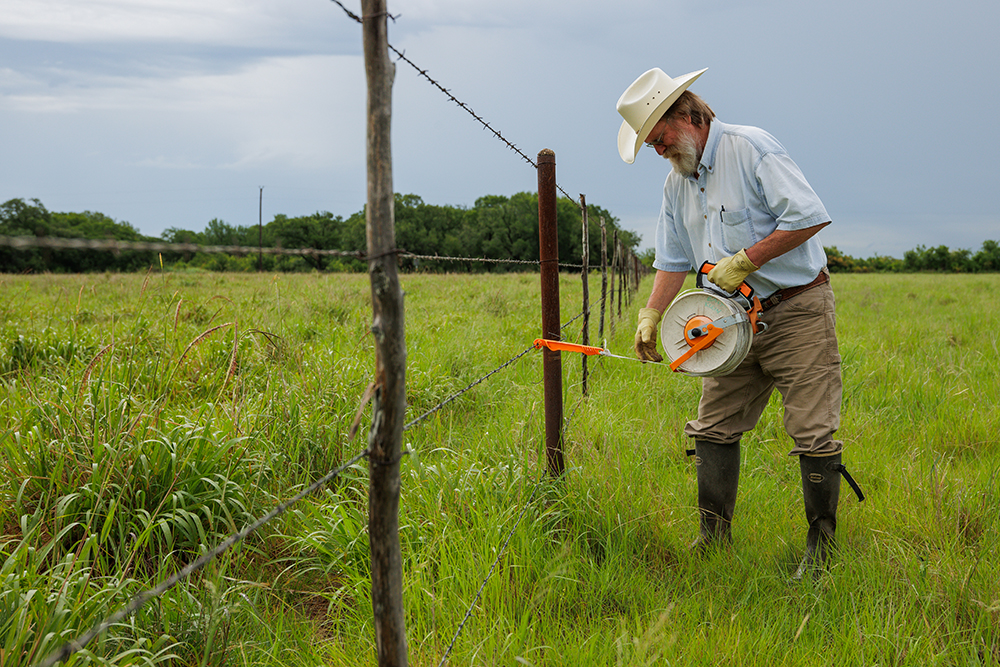
When training, in addition to using the same materials the livestock will encounter in the pasture, it pays to be patient and consistent in your approach. Expect it to take a day or two in the training paddock for the animals to get used to the hot wire.
Through trial and error as you train, you'll learn what works best for you and your animals – if feed or water encourages them to walk about the fence; if they need to be guided in the first time or two; how much time they need to just navigate and learn on their own.
When you do turn them out into the bigger pasture, try flagging the fence with surveyor's tape so they can see the wire, and consider heading off a run-away break-through by meeting them at the temporary fence.
"We knew what end they were going to run to, so we'd get on the other side of the fence to at least slow them down once they got there," Pierce says of turning out newly trained stock. "Then they could sniff around, and maybe get shocked. But once they get shocked, they're done with it."
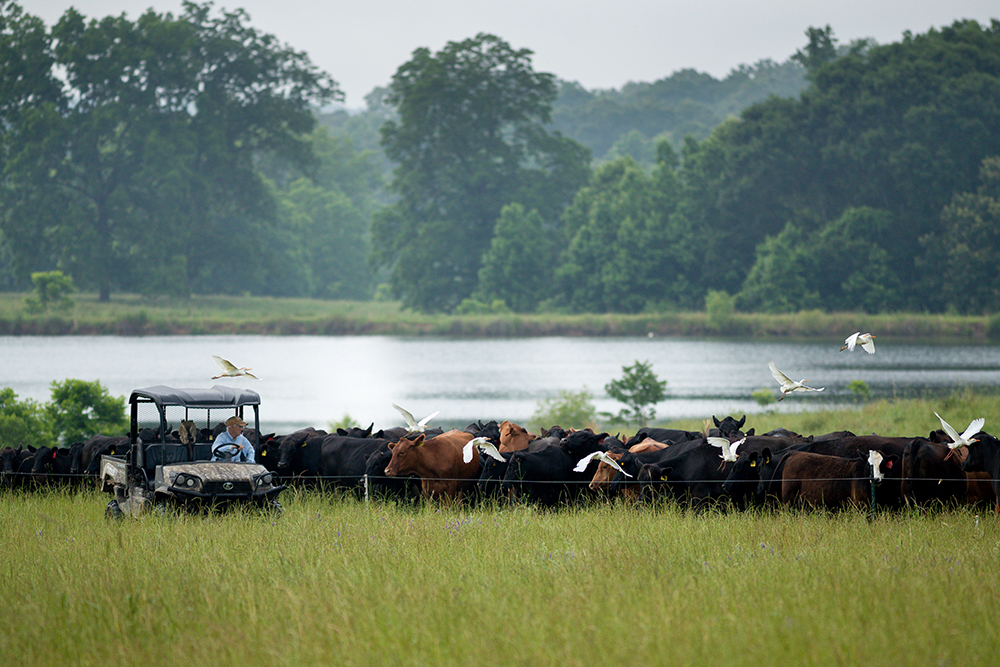
Pierce says one or two hot wires will hold his sheep and goats as long as they are happy and have what they want to eat, but if they run out of what they like, "they can get out of the hot wire anytime they want to. Now, cows are a little bit different," he says. "They can eat up everything, and still, they're more respectful to a fence."
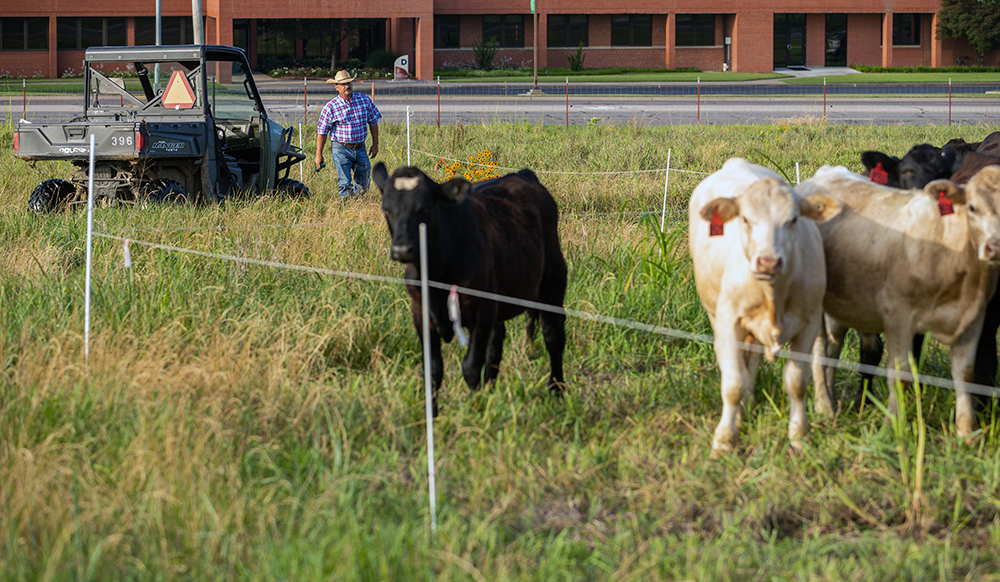
All three managers agree that the time invested in training animals at the start pays dividends, including allowing the use of fewer strands of wire for temporary grazing paddocks.
"I had about 36 bulls and 63 goats grazing together, and I just used one wire about knee-high," Luna says. The bulls don't jump it even though they could, and the goats respect it most of the time.
"And yet, I've got four sheep that'll keep going through the fence no matter what," he says. "But they're usually grazing right where they got out."
To see how Pokay and Pierce managed the large herd of goats introduced to Noble's Oswalt Ranch in 2022, watch Episode 5 of the Noble "Regenerating the Ranch" docuseries on YouTube: Adding 500 Goats to Our Ranch. Also see Luna Building a Solar-charged Polywire Paddock for Rotational Grazing.
Story Credit: Marilyn Cummins, Noble Research Institute
Since the start of the year, world wheat prices have consistently trended lower, with Russian wheat maintaining its position as the world's cheapest origin. With the Northern Hemisphere wheat harvest now complete, it brings about the question: have markets touched their seasonal lows, and in what direction will they go next? In this article, we will evaluate the underlying market factors driving recent price trends and highlight factors to watch moving forward.
Following the initial shock of Russia's Ukraine invasion in 2022 with volatility on the way, world wheat prices have steadily decreased. From January 2023 to present, world wheat prices are down $77/MT, on average.
Russia's influence in the world market is driving this trend in world price levels. According to the October World Agricultural Supply and Demand Estimates, Russian production was estimated at 85.0 MMT, 5.0 MMT above the five-year average. Likewise, 2023/24 Russian exports are forecast at 50.0 MMT, the highest on record. The ample supplies of Russian wheat and significant export flows have put downward pressure on the world wheat market. As a result, the October 23, 2023 AgriCensus price data puts Russian wheat with 12.5% protein (on a dry moisture basis) at $225/MT FOB, their lowest price since September 2020 and the cheapest on the world market.
Over the same time, world wheat demand has softened. For the first time since 2018/19, USDA projects a reduction in global use, with the October WASDE putting demand at 792 MMT, down from 796 MMT the year prior.
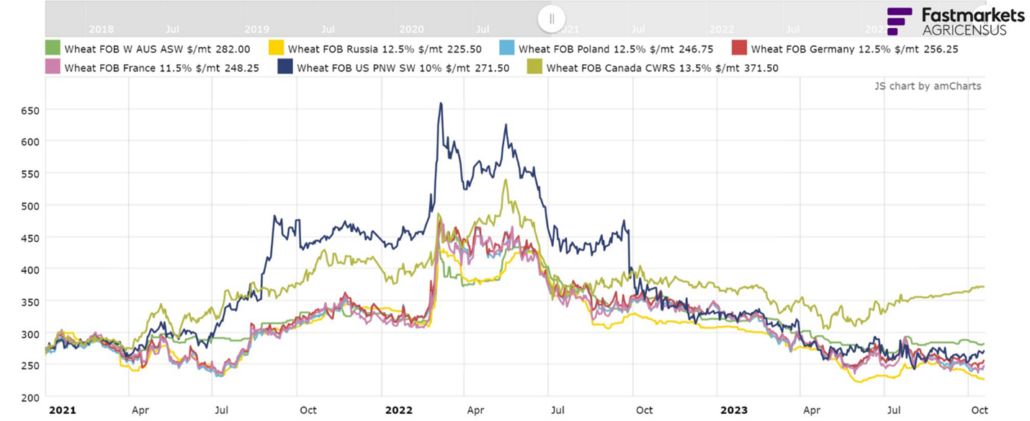
Since January 2023, world wheat prices have decreased by 17%, weighed by ample supplies exported from Russia. Source: AgirCensus Price Data, October 23, 2023.
At first glance, the global supply and demand situation shows ample Black Sea grain exports and softening global demand, the perfect pairing for lower global wheat prices.
Looking more closely, ending stocks in major exporting countries are forecast to fall to the lowest level since 2012/13, demonstrating a tighter global balance sheet that is, apparently, not reflected in current price levels.
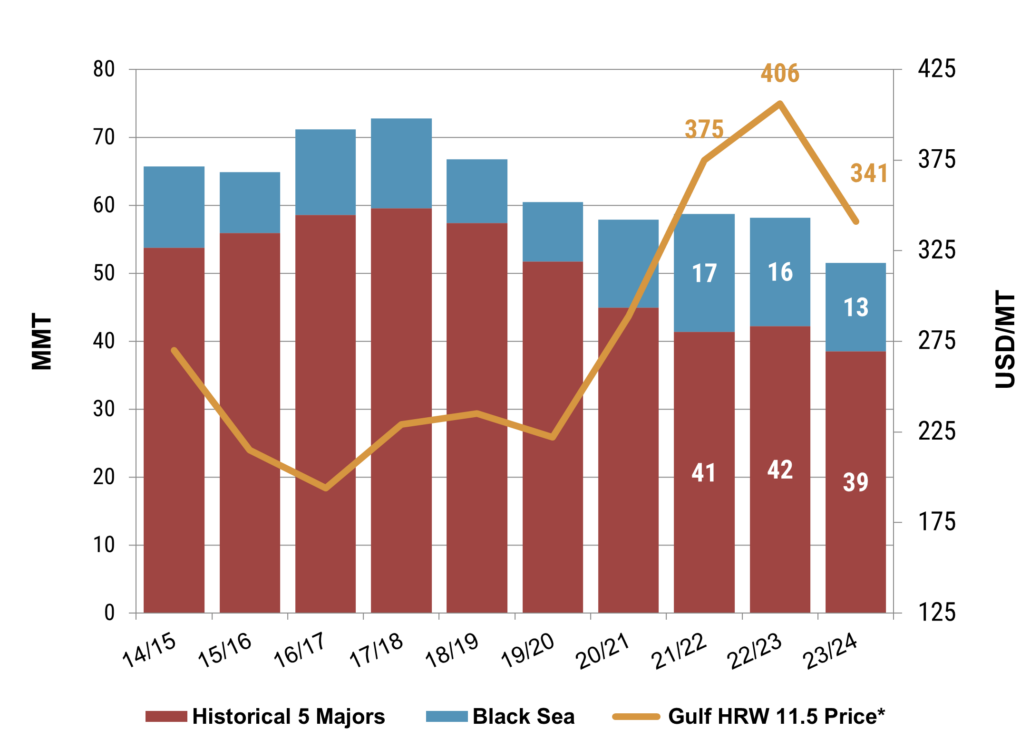
Ending stocks in major exporting countries are down 10% on the year and 29% from 2017/18. Despite the decreased stocks, wheat prices sit near 2021 levels, failing to reflect the tighter world balance sheet. Source: World Agricultural Supply and Demand Estimates and U.S. Wheat Associates Price Report.
Additionally, Southern Hemisphere wheat production, particularly Australian output, is a factor to watch. As the El Niño weather event develops in the equatorial Pacific, dry weather is expected to prevail in Australia. As a result, the October World Agricultural Supply and Demand Estimates put Australian production at 24.5 MMT, down 1.5 MMT from September and 15.2 MMT below the year prior. However, recent rains in Australia may help improve yields, bringing an additional bearish influence to the world market.
In addition to supply and demand, macroeconomic factors have played an increasingly important role in world wheat prices. The U.S. dollar was strong a year ago, but softened over the first half of 2023. However, beginning in July, the dollar index shifted up again, driven by a sustained hawkish view held by the U.S. Federal Reserve and the resilience of the U.S. economy in the face of higher interest rates. As importers are keenly aware, a strong dollar adds cost to wheat purchases.
On the bullish side, commercial funds have become "net short" in the Chicago Board of Trade Wheat (CBOT) futures. The trend indicates that commercial investors believe prices will continue trending lower. If the sentiment shifts and prices rise, funds will be forced to cover the positions, potentially adding significant volatility and upward pressure on Chicago wheat futures and the market as a whole.
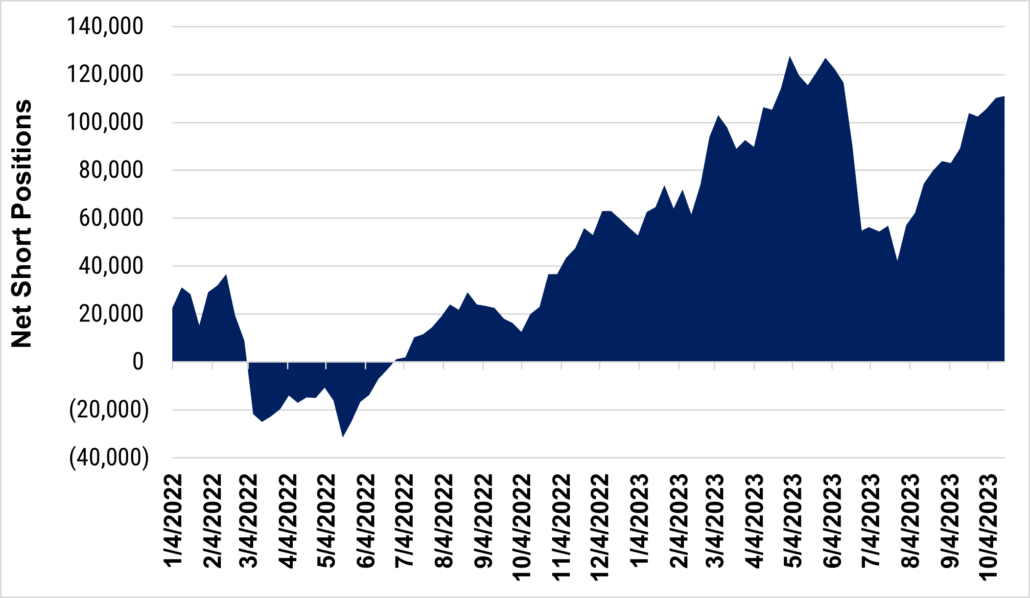
Speculative funds hold a net short position in CBOT Wheat futures. If sentiment shifts, forcing a massive covering of the short positions, prices will skyrocket; thus, contributing additional short-term volatility and bullish influence on the market. Source: Commodity Futures Trading Commission Data.
Finally, we cannot discuss global wheat prices without addressing the geopolitical risks associated with continued conflicts. Grain continues to flow from the Black Sea, and the market outlook has stabilized. Nevertheless, sentiment could shift quickly if a new development or escalation occurs in the conflict. Similarly, the unknowns of the war in the Middle East could have a detrimental impact on oil prices, directly impacting ocean freight rates and dampening the global economy.
In summary, many lurking influences may impact world wheat prices, both bullish and bearish, that are not yet priced into world markets. Buyers should closely monitor the Southern Hemisphere wheat harvest developments, pay attention to upcoming updates to the USDA World Agricultural Supply and Demand Estimates, and stay well informed regarding changes in the world macroeconomic situation.
With many unknowns, it is vital to maintain a dialogue with your local U.S. Wheat Associates (USW) office and suppliers to capitalize on opportunities to maximize the value of U.S. wheat.
By Tyllor Ledford, USW Market Analyst

The National Chicken Council (NCC) has installed the four officers that will guide the organization through 2024. The installation took place at NCC's 68th Annual Conference in Washington, D.C. Randy Day, retired CEO and special advisor to the Perdue Farms Board of Directors, will serve as 2023-2024 Chairman.
Randy led the company's senior leadership team, which includes Perdue Foods, Perdue AgriBusiness, and Perdue Farms corporate functions. After 43 years, Randy retired as CEO this past summer and is now serving as special advisor to the Board. He was named CEO in March of 2017, after serving as Chief Operating Officer. Randy began his professional career with Perdue Farms in 1980, holding various positions of increasing responsibility in the company's two operating divisions, Perdue Foods and Perdue AgriBusiness. He received his bachelor of science degree in biology from Western Maryland College, earned a master's degree in poultry nutrition from the University of Maryland-College Park, and completed the Advanced Management Program at the Harvard Business School. Randy and his wife Debbie reside in Salisbury, Maryland. They have three children and seven grandchildren. To download a picture of Randy Day, click here.
Peco Foods Chief Operations Officer Bill Griffith will serve as Vice Chairman. Bill has more than 25 years of management experience in the food industry and is known for his strong reputation for innovation, sustainability and quality. Prior to joining Peco, he worked for Keystone Foods U.S. where he served as President from 2016-2019 and also held roles of VP of Global Food Safety and Quality Assurance, and VP of Food Safety and Quality Assurance. In addition to nine years with Keystone, Bill had a successful tenure at Perdue Foods, overseeing food safety, quality and regulatory compliance. Preceding his time at Perdue, he was a microbiologist at Tyson Foods where he established a global reputation as an innovator in food safety technology. He holds two degrees from Virginia Polytechnic Institute and State University: a B.S. in Biology and a B.A. in Chemistry. Bill resides in Tuscaloosa, Alabama with his wife Sonja. They have two children, Shrader and Will. To download a picture of Bill Griffith, click here.
New to the 2022-2023 officer corps is David Jackson, Chief Operating Officer of Simmons Foods, Simmons Prepared Foods, Simmons Pet Food and Simmons Animal Nutrition, who will serve as NCC Secretary-Treasurer. David joined Simmons in 1991 and has over 32 years of poultry and pet food experience. From October of 2016, until his appointment as Chief Operating Officer over all the Simmons companies in October 2018, David was President and Chief Operation Officer of Simmons' poultry operations. From March 2014 through October 2016, he served as President and Chief Operating Officer of Simmons Pet Food. From 2012 through March 2014, he served as President of Simmons Wet Pet Food division, and from 2007 through 2011, he served as President of Simmons Prepared Foods. David received a Bachelor of Science degree in Administrative Management from the University of Arkansas and a Master of Business Administration degree from the University of Texas at Austin. David resides in Siloam Springs, Arkansas with his wife Sasha. They have two grown children, Trey and Julia. To download a picture of David Jackson, click here.
In addition to the three new officers, Mike Brown was elected to a thirteenth term as President of NCC. To download a picture of Mike Brown, click here.
"I look forward to working with the new officers, NCC Executive Committee and Board of Directors to continue to advance the industry's interests and achieve our shared goals for next year," said Brown. "This officer corps brings more than 100 years of combined experience in the poultry business and will be a major asset for NCC and the broiler industry."
Recently, Farm Director, KC Sheperd, had the chance to visit with the Senior Director of Processing and Engagement for the National Pork Board, Kevin Sheehan.
As the holiday season is near, Sheehan talks about pork options for families.
"Pork is of tremendous value to families to help them stretch their dollar whether they are buying a fully cooked ham or maybe some ground pork that you can put in some wonderful meals," Sheehan said. "Pork is of great value and is also quite nutritious."
Sheehan talked about the various ways pork can be served, as pork is extremely healthy and nutritious.
"It is important for us at the (Pork) Checkoff to be showing recipes and cooking recipes for air fryers, for instapots, and how to properly grow and cook pork," Sheehan said.
Pork is the most consumed meat protein across the world, Sheehan said, and many individuals immigrate to the U.S. from other countries that primarily eat pork.
Some of the pork board's priorities at the moment, Sheehan said, consist of making sure that multicultural consumers are tied into great pork items available in the U.S.
"Showing them that a pork chop can be nutritious and giving them recipes for wonderful pork chips or loin roast that they can cook at family events and bring everybody over to enjoy pork," Sheehan said.
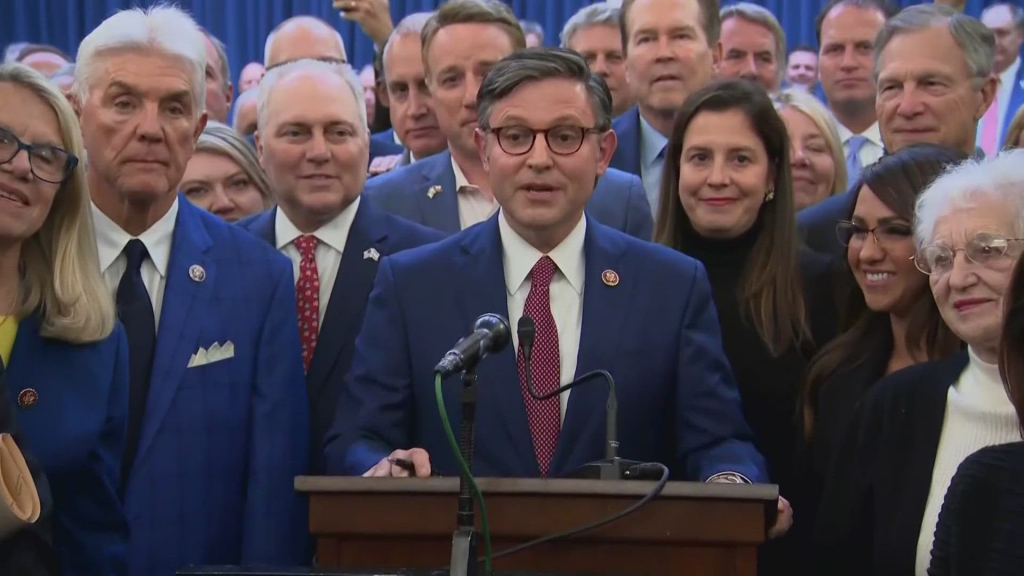
Senior Farm and Ranch Broadcaster, Ron Hays, is visiting with the Vice President of Governmental Affairs at the National Cattlemen's Beef Association, Ethan Lane, about the election of the new Speaker of the House, Mike Johnson.
"This has been a true test of relationships on Capitol Hill and some of the fashions in the House Republican conference," Lane said. "Those have been on full display in the last 22 days. I believe they have taken more Speaker votes since the first of October than all the way back to 1989 in the House of Representatives."
Lane said Mike Johnson has been heavily considered by many since the beginning of the process.
"The reason for that is the level of respect his colleagues in the House Republican Conference have for him," Lane said. "He a principled conservative, he is a man who definitely is low on acrimony and high on what we call 'comity' in the House of Representatives, goodwill, he engages with a smile, he is a gentleman...," Lane said.
By all accounts, Lane said Mike Johnson is someone who sees the world the same way as cattle producers and members of NCBA.
Editor's Note- Johnson's fourth district of Louisiana includes a lot of beef cattle production in the northwest and west central areas of the state.
"Without question, he is going to be put to the test in the first few weeks here," Lane said. "Obviously, we have a government funding extension that expires in less than a month. There has been no movement on that front in the last 20 days, and that is going to become his top priority, as I understand."
There are going to be some big-ticket items on the table aside from that government funding extension, including the agricultural appropriations bill that failed on the House floor at the end of September, which Lane said will be negotiated from the bill that passed out of the House Appropriations Committee.
"Obviously, there will be some discussions about what to do about the expired Farm Bill and whether or not there needs to be an extension of some length and time to give negotiators on both sides of the hill time to process some kind of a bill that moves on both the Houses of Congress in the next year or so," Lane said.
Regarding the ag appropriations bill, Lane said NCBA is paying special attention to a range of priorities for cattle producers in the bill.
"The original bill that came out of the appropriations committee includes money for tags, for electronic ID tags to offset the cost for producers," Lane said. "USDA is working on a rulemaking now that would be about a 26-million-dollar economic cost to implement to producers."
The Beef Buzz is a regular feature heard on radio stations around the region on the Radio Oklahoma Ag Network and is a regular audio feature found on this website as well. Click on the LISTEN BAR for today's show and check out our archives for older Beef Buzz shows covering the gamut of the beef cattle industry today.
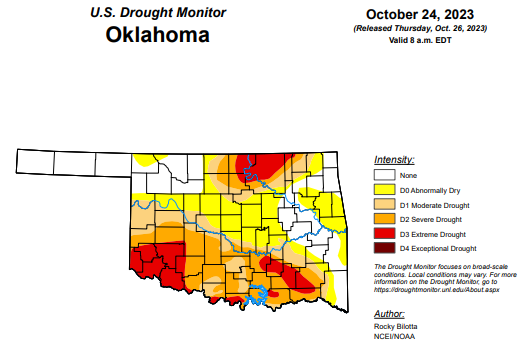
To view the latest Oklahoma drought map, CLICK HERE.
According to the latest Oklahoma drought monitor report, exceptional drought remains at zero percent, unchanged from the past three months.
Extreme drought or worse is at 13.47 percent, unchanged from last week.
Severe drought or worse is at 33.91 percent, unchanged from last week.
Moderate drought or worse is at 49.29 percent, up slightly from last week's 48.24 percent.
Abnormally dry or worse conditions are at 72.12 percent, improved slightly from last week's 73.02 percent.
According to the 6 to 10-Day Precipitation Outlook Map, the eastern half of the state is leaning below a 40 to 50 percent chance of precipitation through November 4. The western half of the state is leaning below a 33 to 40 percent chance of precipitation through that date.
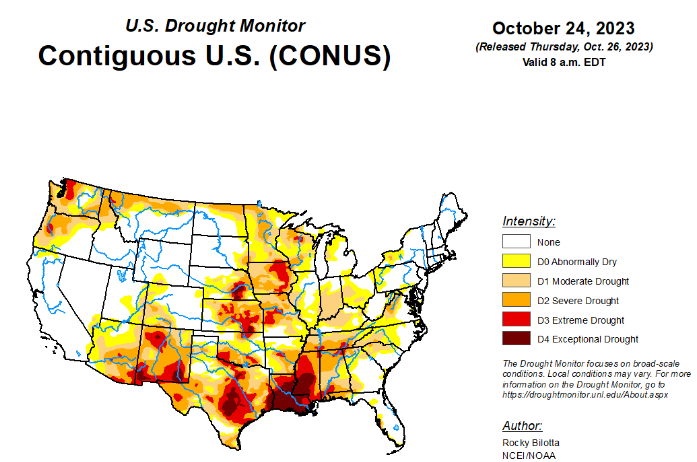
To view the United States Drought Map, click here.
According to the latest U.S. drought monitor, a strong upper-level ridge dominated much of the western U.S., providing anomalously warm temperatures, by as much as 20 degrees above average, and dry conditions over the central and western parts of the country. While a front extending from the Great Lakes to the Gulf Coast produced rain over parts of Ohio Valley and Great Lakes before moving eastward and bringing rain to parts of the Northeast and Southeast. The most widespread improvements were made to parts of eastern Texas, central Wisconsin and in parts of the Ohio River Valley, where above-normal precipitation was observed this past week. Dry conditions continued across much of the Southern region, with widespread degradations occurring across the Tennessee Valley, central Mississippi Valley and northern parts of the Southeast. In the Southwest, near- to record-warm temperatures coupled with below-normal precipitation for the month, resulted in degradation in the southern parts of the region. In Hawaii, drought continues to intensify across all islands, while no changes occurred on Kauai.
In the Southern Plains, dry conditions continued across much of the Southern region this week while heavy precipitation fell over parts of eastern Texas to southern Oklahoma. Portions of the Texas Panhandle received up to 4 inches of rainfall (up to 600% above normal) this week, resulting in removal of exceptional drought (D4) while extreme drought (D3) and severe drought (D2) conditions were improved in this region. On the dry side, a broad 1-category degradation was made to Arkansas, Tennessee and in northern parts of Mississippi and Louisiana, where little to no precipitation fell. Extreme drought was expanded in southeast Louisiana, while D3 was expanded in northern Louisiana, northern Mississippi and introduced in parts of central Arkansas and southern Tennessee. Precipitation in these areas are around 2-3 inches below normal for the month. The drought expansion and intensification was based on short-term SPI/SPEI, NDMC's short-term blend, streamflow and soil moisture data.
In the High Plains, precipitation fell over the northern and eastern parts of the region, with much of the rain falling outside of the drought areas. For this reason, much of the High Plains remained as status quo this week. Little to no precipitation fell over most of Nebraska, Kansas, Colorado and southern Wyoming. This coupled with above-normal temperatures (around 10-15°F above normal), along with deteriorating conditions shown in short-term SPI/SPEI, streamflow and soil moisture data, justified slight degradations across these states. Severe drought (D2) was expanded in northeast Kansas, while moderate drought (D1) was expanded in the southeast part of the state. D1 was also expanded in parts of southwest Wyoming, while abnormal dryness (D0) was expanded from southwest Nebraska into northeast Wyoming and D0 was introduced along the central border of Kansas and Wyoming.
In the West, Much of the West remained as status quo this week. Precipitation fell across much of the region, which was enough to prevent further degradation but not enough to warrant large improvements. Heavier precipitation fell across parts of Montana, with rain totals up to 300-400% above normal, over the past week. This beneficial rainfall, along with precipitation percentiles and short-term SPI/SPEI, soil moisture and streamflow data, resulted in abnormal dryness (D0) and moderate (D1) to severe (D2) drought improvements along the northern parts of Montana. As for temperature, much of the region was well above normal with temperatures up to 15°F above normal. Parts of the Southwest are experiencing record warm temperatures for this month-to-date period, while Phoenix, AZ, reached 105°F on October 16th and 104°F on October 19th and 20th, setting the three hottest temperatures on record for this time of the year. These above-normal temperatures coupled with below-normal precipitation resulted in the expansion of D1 and D2 in southern Arizona and across the state of New Mexico. Introduction of D3 was also added to northwest New Mexico based on precipitation deficits and short-term SPI/SPEI and soil moisture data.
Looking ahead, During the next five days (October 24-28, 2023), remnant energy and moisture from Tropical Storm Norma could stream northward to spread heavy rainfall to parts of the southern and central U.S. early to mid-next week, while chances of snow increase in the northern Rockies and into parts of the northern Plains late next week. The Weather Prediction Center has highlighted a slight risk of excessive rainfall for parts of northern Texas and west-central Oklahoma due to potential flash flooding. Well above normal temperatures will spread from the Midwest into the East (15-20 degrees above normal), while daytime maximum temperatures for the northern portions of the Rockies and Plains could be 10-20 degrees below normal.
The Climate Prediction Center's 6-10 day outlook (valid October 28-November 2, 2023) favors near to above-normal precipitation throughout much of contiguous U.S., and Alaska with below-normal precipitation most likely from the Pacific Northwest to the northern Plains, across much of Hawaii and in parts of southeast Alaska. Increased probabilities for below-normal temperatures are forecast for much of the contiguous U.S. while above-normal temperatures are likely from Louisiana to New England, as well as much of Alaska and Hawaii.
To view the 6-10 Day Precipitation Outlook Map, click here.
To view the 6-10 Day Temperature Outlook Map, click here.
To view the Monthly Drought Outlook Map, click here.

As Halloween approaches, AAA reminds ghosts and goblins, trick-or-treaters, parents, and party goers too, of the dangerous traffic safety concerns associated with the holiday – increased pedestrian activity and drunk driving – both of which converge this weekend as Halloween activities begin ahead of the holiday itself on Tuesday, October 31.
A scare in good fun is expected on Halloween, but AAA warns, not when it comes to child pedestrian safety.

Creative costumes, trick-or-treating and bags full of goodies become top Halloween priorities, but safety often becomes an afterthought. Excited trick-or-treaters can forget about safety, so drivers, party-goers and parents must be even more alert, as the risk of kids being injured by moving vehicles increases on Halloween night.
"With an increased risk of pedestrian crashes on Halloween night, AAA urges parents to take the time to make trick-or-treaters and their costumes safer and more visible to motorists," says Rylie Fletcher, manager of Public and Government Affairs for AAA Oklahoma. "In addition, motorists must eliminate distractions, slow down and watch for children, as well as have a completely sober designated driver if drinking as part of a Halloween celebration."
Halloween is a statistically dangerous night for drunk driving. Because of parties, trick-or-treating, and other festivities, Halloween night can be especially dangerous on our nation's roads. According to NHTSA, in the U.S.:
"Halloween is a time to make happy memories, not tragic nightmares," says Fletcher. "The only thing scarier than zombies and witches loose on the streets is an impaired driver."
AAA Halloween Safety Tips
Motorists
Parents
Trick-or-Treaters
Party Goers

Rep. Kevin Wallace, R-Wellston, today expressed his support of Israel in the ongoing war with Hamas.
"The atrocities committed against the nation of Israel and the Jewish people are reprehensible. Reports show at least 1,400 Israelis were murdered in the surprise attack launched Oct. 7. This includes babies that were burned or beheaded. Women were raped, young people at a music festival were targeted, many were kidnapped, thousands of people were injured, and more than 5,000 rockets have been fired against Israeli towns and civilians.
"Israel did not provoke this attack but instead is acting to defend itself and it's right to exist both as a nation and as a people. My heart goes out to all innocent people who have been harmed in this war, but the message is clear: don't harbor terrorists and don't allow them to exist within your borders. That is the best way to keep yourself and your loved ones safe.
"America, and Oklahoma have long been allies of Israel, believing the nation is blessed by God and that those who bless Israel will be blessed and those who curse Israel will be cursed.
"Today, I must express my support for the nation of Israel and the Jewish people. I bless them, and I pray for the peace of Jerusalem. I call on our national governmental leaders to support this ally in its efforts to protect its people and to refrain from sending money or other forms of support to nations that are sworn enemies of this sovereign state of Israel."

Helena Agri-Enterprises is expanding seed treatment opportunities for soybean growers in 2024 with the launch of Seed Shield® Select and Enertia®. A multi-fungicide and insecticide combination, Seed Shield Select provides protection from all major soybean seedling diseases and insects while optimizing root health and plant vigor. Enertia is an enzyme-based, biological soybean seed treatment designed to enhance soil health and improve nutrient availability as roots develop. With soybean acres expected to rise across the country next season, the duo not only helps insure valuable seed investments, but it also provides a strong foundation for growth and yield potential.
"In farming, re-planting seed or re-spraying a crop are two of the costliest applications a producer can make," says Josh Byford, Director of Seed at Helena. "Even though current germplasm and technology packages provide the foundation for a high level of success, the environment can bring about a multitude of yield-limiting factors from planting to full crop establishment. A seed treatment can provide valuable protection, or insurance, to minimize seed and seedling loss."
Seed Shield Select contains five fungicide active ingredients, an industry-standard insecticide, and Helena's Asset® Formulation Technology. Out of the five fungicides, picarbutrazox is the latest to enter the market. Its performance raises the bar on control of Pythium and Phytophthora, two of the most notorious challenges for soybean farmers.
"A very good seed treatment should provide broad spectrum seedling disease protection, but a lot of products on the market today are deficient, especially against Pythium," says Tony Lourens, Brand Manager of Seed Treatments, Fungicides and Insecticides with Helena Products Group. "Our goal with Seed Shield Select is to be more effective on the worst diseases by targeting them with multiple modes of action. We combine that activity with well-rounded insect control and strong root and shoot development to give growers a seed treatment that gets soybeans out of the ground faster, healthier and with a lot of vigor."
Previewed at the Commodity Classic in Orlando, Florida, earlier this year, Enertia takes a natural approach to unlocking soil nutrition. Its patented enzyme technology reacts with soil organic matter to increase microbial activity in the root zone and improve nutrient cycling in the soil. By enhancing soil structure and reducing nutrient loss, soybeans can thrive in a more productive growing environment.
"The big benefit of Enertia is VersaShield® Formulation Technology," says Mike Powell, Senior Brand Manager of BioScience with Helena Products Group. "Most biological seed treatments become ineffective if you try to mix them with insecticides, fungicides and other common inputs. VersaShield stabilizes the enzymes in Enertia for ease of use, long-lasting activity and consistency.
Seed Shield Select and Enertia are the latest in a line of seed treatments from Helena, featuring inoculants, plant growth regulators, SDS solutions, nematicides and other disease and insect control options. Helena encourages soybean growers to secure their seed treatments now, as supply is limited for the 2024 growing season. Visit HelenaAgri.com to find your local Helena representative and for more information on Seed Shield Select and Enertia.
About Helena Agri-Enterprises, LLC
Helena Agri-Enterprises, LLC is a complete agronomic solutions provider headquartered outside of Memphis in Collierville, Tennessee. Helena is a multi-faceted retailer and distributor in the production agriculture and specialty markets, offering innovative products and services to improve productivity for greater customer returns. This includes crop protection and crop production products, seed and seed treatments, AGRIntelligence® tools, professional application, financial services, and chemical formulation. Helena is driven by a belief in People... Products... Knowledge®... Through knowledgeable and dedicated people, superior products, and the latest, proven technologies, Helena is committed to helping customers succeed.

Agri-food leaders around the world believe the industry can work together to create a better, more sustainable food system, according to the Alltech Sustainability Insights report, released today.
Alltech conducted a global, industry-wide survey to gather insights on the issues that matter most to the agri-food value chain and its stakeholders. In collaboration with Opinions, an independent research agency based in Ireland, Alltech collected insights through 26 interviews with industry leaders and via a comprehensive survey completed by more than 2,500 members of the agri-food industry. This effort presented an exciting opportunity to quantify attitudes and perceptions about sustainability from stakeholders across the agri-food value chain and identify tangible actions to build a more sustainable future.
"Our goal was to listen to the voices of our industry and its stakeholders and develop a robust, future-facing program of insights that are relevant, ambitious and genuinely impactful," said Tara McCarthy, global vice president of ESG at Alltech. "Our industry is navigating unprecedented disruption, yet it remains confident and committed to evolving toward a more sustainable food system. The key to success will be the development of innovative solutions, but even more critical is the capacity of the industry to work together across the value chain."
The survey questions were focused on five areas: challenges and opportunities; drivers and priorities; attitudes toward change; support and guidance; and who they believe is going to pay for sustainability. The key findings of the survey include:
"Our industry is navigating extraordinary times, but the opportunities for positive impact are even more unprecedented," said Dr. Mark Lyons, president and CEO of Alltech. "Imagine what is possible when we all work toward the shared goals of providing nutrition for all, revitalizing local economies and replenishing the planet's natural resources."
For more information and survey results, visit alltech.com/sustainability-insights.
Congressman Tom Cole (OK-04) released to following statement after the U.S. House of Representatives passed House Resolution 771, Standing with Israel as It Defends Itself Against the Barbaric War Launched by Hamas and Other Terrorists. The resolution passed the House with overwhelming bipartisan support.
"Nearly three weeks ago, innocent Israeli civilians awoke to the deadliest attack on the nation in its entire history, going back more than 70 years," said Cole. "The brutal attacks and barbaric slaughtering of innocent people, including women, children and babies, have no place in this world. Make no mistake, Hamas is a government-backed, trained and funded military terrorist organization. Hamas must not prevail; the U.S. has a duty to stand with one of our closest, most important allies. I was proud to support this resolution, and it is my hope the House can soon move forward critical emergency assistance in support of Israel and its right to defend itself in full force."
RON's Dave Lanning has a pre-opening look at today's agricultural Markets.
Click the audio tab below for today's report.
Congressman Tom Cole (OK-04) congratulated Congressman Mike Johnson (LA-04) on being elected the 56th Speaker of the U.S. House of Representatives.
"I am proud to congratulate my colleague and friend, Mike Johnson, on being elected the 56th Speaker of the House," said Cole. "Mike has been an instrumental leader in the Republican Conference during his time in office, first leading the Republican Study Committee and more recently as Vice Chairman of the House Republican Conference. A principled Louisianan, he has a plan to finish the House's work and secure the southern border. I have full faith in his ability to lead this body and look forward to working with him."
Congresswoman Stephanie Bice released the following statement after voting for Representative Mike Johnson as the new Speaker of the House:
"Today, I voted in strong support of Mike Johnson as Speaker of the House. Earlier this year, I gave the nomination speech for Mike when he ran for Vice Chairman of the Republican Conference, and I know firsthand that Mike is a steadfast conservative that has the ability to unite our conference.
We are at an unprecedented time. We must secure the southern border and work to pass a spending bill before the November 17th deadline. On the international front, we have the largest invasion in Europe since WWII, the Middle East is a tinderbox, our troops have been attacked, and terrorists are emboldened.Democracy is messy; however, it is crucial that we abandon the idea of pitting us against one another. Now is the time to come together and continue pushing our pro-American and pro-growth agenda. We must be laser focused. Let's get back to work."
Congressman Frank Lucas (OK-03) released the following statement after voting for Rep. Mike Johnson (LA-04) as the next Speaker of the House.
"Congratulations to our new Speaker – a true conservative and a principled leader – Mike Johnson. I look forward to getting the House back in order so that we can tackle the issues facing our country at home and abroad," said Congressman Frank Lucas. "Like my colleagues in Washington and my constituents in Oklahoma, I am excited for this next chapter of leadership in our country."

American Farm Bureau Federation President Zippy Duvall commented today on the election of Rep. Mike Johnson (R-La.) to be Speaker of the House.
"AFBF congratulates Rep. Mike Johnson on his election to Speaker of the House. Speaker Johnson has a strong history of supporting America's farmers and ranchers, which has earned him the 'Friend of Farm Bureau' award multiple times.
"America's families are relying on Speaker Johnson, and Congress, to focus on pressing needs, including completion of fiscal year 2024 appropriations and passage of a farm bill. The farm bill provides certainty to those who grow this nation's food, fuel and fiber and plays a vital role in ensuring a safe and affordable food supply for everyone.
"We stand ready to work with Speaker Johnson to pass this important legislation. Every family in America is counting on his leadership."
Congressman Josh Brecheen voted for Rep. Mike Johnson (R-LA) in conference yesterday and on the House floor today and issued the following statement after Johnson was elected Speaker of the House.
"Rep. Mike Johnson is admired by the entire Republican Conference because of his integrity, his humility, and his commitment to put the best interests of the country over his own political self-interest. A former constitutional lawyer who worked on religious liberty issues, Rep. Johnson is a man who has a deep rudder of faith and understands that our nation must return to founding principles. I was honored to vote for him and congratulate him on being elected Speaker," said Congressman Josh Brecheen.
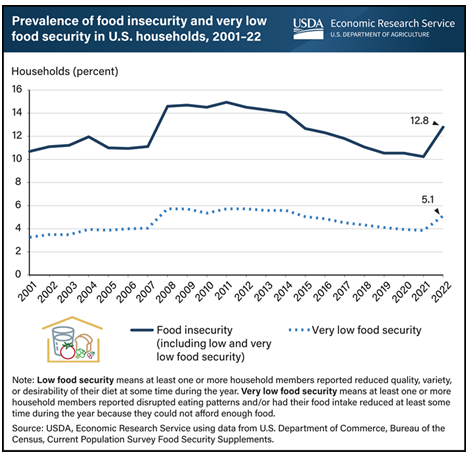
House Agriculture Committee Ranking Member David Scott released the below statement in reaction to the release of the U.S. Department of Agriculture (USDA) Economic Research Service's (ERS) report, Household Food Security in the United States in 2022.
"Today's ERS report, Household Food Security in the United States in 2022, underlines the vital importance of protecting SNAP, our Nation's most effective anti-hunger program. While House Republicans remain mired in disunity and dysfunction, House Democrats remain united in our years-long campaign to protect and defend Federal food assistance programs from unwarranted, immoral, and shortsighted attacks.
"This ERS report is the latest sign that the need for SNAP is as critical as ever. To grow our economy and protect our children, the elderly, and veterans from hunger, we must reject harmful attempts by extreme House Republicans to slash SNAP benefits."
Report Takeways:
- Some 12.8 percent of U.S. households were food insecure in 2022, a jump from 10.2 percent the year before and the largest annual increase in USDA's hunger measure since 2008.
- In 2022, 17 million households were food insecure at some time during the year, meaning they had difficulty providing enough food for all their members because of a lack of resources.
- The prevalence of food insecurity in 2022 was higher than in 2021 and 2020.
- From 2021 to 2022, food insecurity increased for nearly all subgroups of households, including those with children.
- Only about 55 percent of food-insecure households participated in one or more of the three largest Federal food assistance programs administered by USDA.
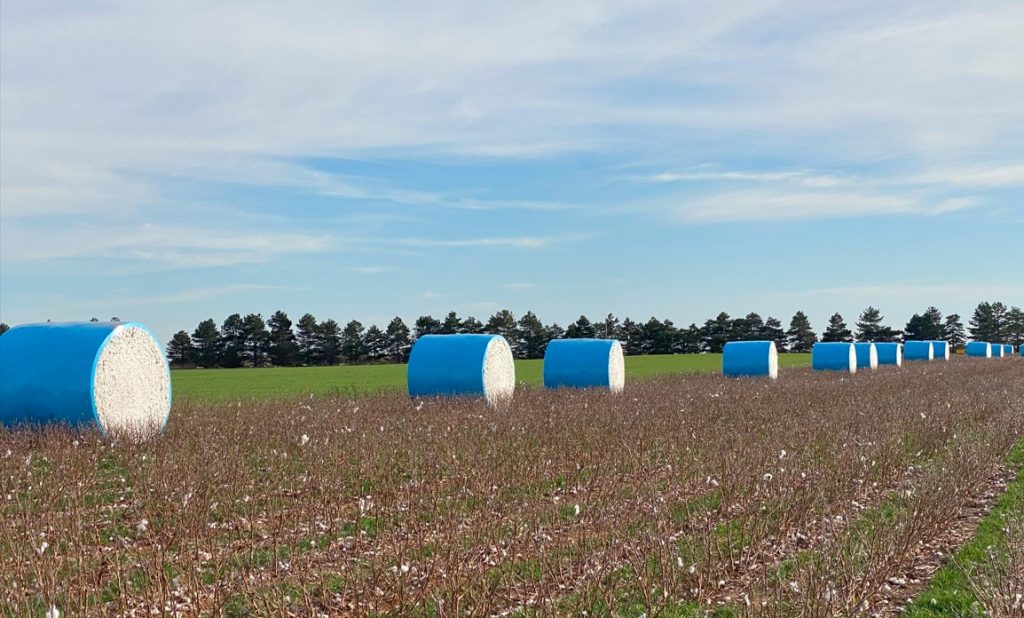
The U.S. Cotton Trust Protocol is today announcing an increase of 25% compared to 2022 in the total area of planted cotton acres enrolled in the program, reaching 1.6 million acres in 2023 – its greatest extent to date.
This represents not only impressive growth in enrolled cotton acreage in a single year but also the fourth successive year of continued expansion of enrolled cotton acres. The 1.6m planted acres enrolled in the Trust Protocol represents 16% of all planted U.S. cotton acres in 2023.
Today's announcement therefore marks a key milestone in the growth and development of the program and means that an ever-increasing amount of more sustainably-grown cotton is available for brand and retailer members to access.
"We continue to be inspired and encouraged to see that U.S. cotton growers have once again expanded the number of planted acres enrolled in the program, underscoring their unwavering commitment to ongoing improvement," said Daren Abney, Executive Director of the U.S. Cotton Trust Protocol. "With the growing number of enrolled acres, we're making even more environmentally responsible cotton accessible to our brand and retailer members for sourcing. The Trust Protocol team is excited to support our members in their more responsible sourcing practices."
Brand and retailer members can track both U.S. Cotton and Protocol Cotton through the Protocol Consumption Management Solution (PCMS) and claim Protocol Consumption Units (PCCUs). Protocol Cotton is grown and harvested on Protocol farms and 1 PCCU is minted for each kilogram of Protocol Cotton in the system. To date, 970 million PCCUs are available to be consumed in the PCMS, which is equivalent to 4.45 million bales of cotton.
The Trust Protocol's vision is to set a new standard in sustainable cotton production where full transparency is a reality and continuous improvement is the central goal. The program's core values include a commitment to U.S. cotton's legacy of authenticity, innovation and excellence, environmental stewardship, caring of people, and personal and corporate integrity. The program currently has more than 1,800 supplier members over 40 companies and brands including global brands and retailers such as Ralph Lauren, Gap, Levi Strauss & Co. and J.Crew.
The U.S. Cotton Trust Protocol is aligned with the UN Sustainable Development Goals, recognized by Textile Exchange and Forum for the Future, and part of the Sustainable Apparel Coalition, Cotton 2025 Sustainable Cotton Challenge, Cotton 2040 and Cotton Up initiatives. It has also been recognized and published in the ITC Standards Map, recognized as a standard for sustainable cotton by the Partnership for Sustainable Textiles, and is an ISEAL Community Member.
| Last week, fed cattle slaughter saw a bit of recovery with a 638,000 head weekly total. Singling out the fed cattle slaughter shows Friday's total was reduced just 8,000 head compared to the average daily total in the four prior business days that averaged 98,750 head each. In the previous week, negotiated fed cattle traded in a range between $185-$186/cwt. last week in a market that denoted a much firmer tone than it had for many weeks. This price level was the highest since early August in a market that has been tightly rangebound for multiple weeks. |
 |
| The October 1 Cattle on Feed report, published last Friday, is the most impactful short-term market factor at this time. Feedlot placements for September were unexpectedly 106% of placements a year ago, contrasted against varied analyst pre-report estimates for placements just over 100%. December Live Cattle futures, which closed Friday at $184.60/cwt., ended Monday's session at $178.35/cwt., a $6.25/cwt. decrease). In a volatile, short-term scenario, Live Cattle contracts began to recover some of the lost ground by Tuesday morning. Meanwhile, current cattle and beef market fundamentals are positive. Packer demand for cattle was sharp last week with the $2/cwt. price increase on a significant volume of negotiated cattle. Total USDA Choice carcass production is 8% lower than a year ago in the latest weekly report, driven lower by a one percentage point decline in the Choice grade. Also, cutout values have turned the corner with higher weekly average values across the board last week with CAB up $3.97/cwt., and Choice up $4.15/cwt. and Select $1.32/cwt. higher. As we had mentioned two months ago, the dip in total USDA Choice boxed beef tonnage was destined to hit the fourth quarter market with widening Choice-Select price spreads. That is evident in our latest data with the Choice cutout $25.79/cwt. premium to Select. The CAB/Choice price spread is more stable at $20.44/cwt., which is historically wide but perfectly aligned with October price spread values since 2020. |
| CAB Brand Sales Third Best in 45-Year History |
| Shifting market dynamics have already marked trend changes in the 2023 cattle and beef markets. These shifts are most succinctly summarized through two factors, fewer cattle and higher prices, that will further entrench themselves in near-term trends. As Certified Angus Beef celebrated the close of its 45th year this September, several highlights emboldened brand stakeholders and producers. The single largest factor in the brand's supply, fed cattle slaughter volume, provided a formidable obstacle as the nation's drought-reduced cow herd pulled fed cattle supplies 3.3% lower for the past 12 months. However, with other positive trends, CAB acceptance increased 0.5% for the fiscal year with 5.82 million head earning the CAB brand. Marbling trends have been on a lower pattern in the past year with USDA Choice slightly lower for the period. However, the Premium Choice carcass share has been surprisingly strong. This, coupled with the Prime grade working both above and below the 2022 pattern, allowed the CAB carcass acceptance rate to improve half of a percentage point to 36% in fiscal 2023. Cattlemen continue to include Angus genetics in their breeding programs to a greater degree, boosting brand-eligible cattle to more than 72% of total fed cattle supplies. This includes enrichment from the heavily Angus-influenced beef x dairy population. There were 16 million Angus-type carcasses processed at licensed packers in the fiscal year, roughly 72% of the fed steer and heifer supply. |
 |
| CAB brand sales battled the headwind of smaller steer and heifer slaughter to end the year just 0.5% lower than in the 2022 fiscal year. This culminated in the third-largest sales volume year and the eighth year of brand sales surpassing one billion pounds. While retail grocery store sales were understandably 4.9% lower on the year there were several notable highlights on the positive side of the ledger. International brand sales were up 6% with largest gains in China, Hong Kong, South Korea and Mexico even though total U.S. beef exports charted a negative trend. Record-large CAB Prime sales featured a 17.7% increase while value-added products were up 9.8%. Both categories surpassed 40 million pounds of CAB sales volume. Fourth quarter trends are currently widening quality carcass price spreads with the Choice/Select spread at $25.79/cwt. and the CAB/Choice spread at $20.44/cwt. Short-term packer demand for quality cattle to fulfill demand for traditional CAB and CAB Prime carcasses should result in continued expanded grid premiums through early December. Although surprisingly larger feedlot placement head counts were reported for September, continued high quality carcass supply challenges will remain a theme in the brand's 46th year, already underway. This recommends cattlemen in each sector maintain focus on carcass demand factors and the margin opportunity that exists for cattle to meet modern consumer expectations. |
To celebrate National Pork Month on October 24, a free Prairie Fresh pork lunch was served, courtesy of the Made in Oklahoma Coalition, Oklahoma Pork Council, Head Country, and Homeland Stores. Following the lunch, Farm Director, KC Sheperd had the chance to visit with David Brooks, a founding member of the Made in Oklahoma Coalition.
Brooks has been working with the Made in Oklahoma Coalition for 25 years and has also been with Shawnee Mills for 26 years. Brooks is seen on television quite often cooking Made in Oklahoma recipes.
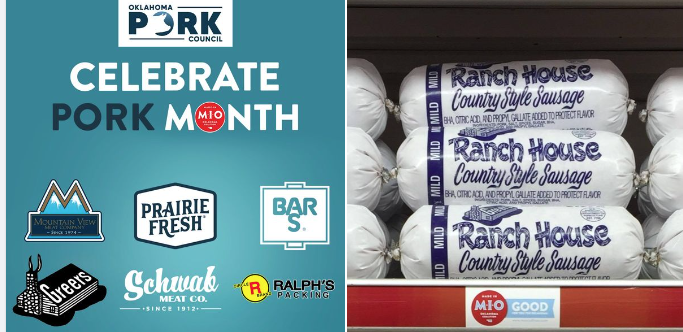
As the holiday season draws near, Brooks said some of his favorite Made in Oklahoma products include pecan pies and hams.
"We have so many pepper jellies and things like that just trim out a good dinner," Brooks said.
Brooks said there are now around 100 companies within the Made in Oklahoma Coalition that produce everything from meat and produce to dressings and sauces. The Made in Oklahoma Coalition website also has gift baskets available.
"We can do breakfast, lunch, and dinner," Brooks said. "We actually have a couple of egg companies now."
At https://www.miocoalition.com/, Brooks said each company can be found with a list of services and products they provide. The website also features recipes, restaurants that service Made in Oklahoma products, and more!
"If you can think of it, Made in Oklahoma is making it," Brooks said.
Get your official Made in Oklahoma Recipe Guide, free to download here:


Cleaning up the garden in the fall gives gardeners a head start in the spring. (Photo by Shutterstock)
With the arrival of colder weather, gardeners should spend some time tidying up their garden spaces in the off-season.
What stays in the garden and what goes? Casey Hentges, Oklahoma State University Extension specialist and host of OSU Agriculture's "Oklahoma Gardening" television show, said most annuals and tropical plants should be pulled up from the garden.
"Vegetable plants such as tomatoes and peppers can be removed, roots and all," Hentges said. "When removing the plants, try to leave as much soil as possible. If gardeners didn't experience any pest or disease problems, this plant material can be added to a compost pile. Nice, rich compost will be a great addition to your garden next spring."
However, if pest and/or disease issues occurred, those plants should be removed and thrown away. They are not good candidates for the compost pile because that gives the pests a place to overwinter and become a problem again next year.
Laura Payne, OSU Extension horticulture educator in Payne County, said gardeners should consider leaving some plant material to serve as habitat for beneficial insects during the cold, winter months.
"If gardeners remove everything from the garden, that takes away shelter and a place to overwinter for many beneficial insects," Payne said. "Leave some plants in the garden for shelter and those can then be cleaned up in the spring. A good rule of thumb is to remove annuals, but leave perennials unless they are diseased, dead or damaged from insect infestation."
If the garden contains plants that reseed, leave them in place to start over in the spring if desired.
"If it's more of a weed or nuisance plant, pull it out carefully and bag it, so the seeds don't get distributed," Payne said. "Throw these plant materials in the trash. Gardeners don't want to put them in the compost pile."
Trees and shrubs
In addition to cleaning up plant material, some may want to prune trees and shrubs. While pruning can be done any time of the year, different plants have recommended pruning times, Payne said.
"Pruning should be done when it results in the least damage to the plant. Continual improper pruning results in damaged or weakened plants," she said. "The best time to prune plants is during late winter or early spring before growth begins. However, deciduous trees can be pruned now. The least desirable time is immediately after new growth develops in the spring."
Grasses and Leaves
Ornamental grasses are popular plants in the landscape, but what should gardeners do with them in the winter?
Hentges said both annual and perennial grasses should be left in the garden for now.
"Annual ornamental grasses can be removed, or if a gardener chooses, can remain until late winter and then be dug up and removed," she said. "Leave perennial grasses in place and plan to trim them back in late winter just before new growth emerges. The great thing about ornamental grasses is gardeners get a fourth season out of them due to the visual interest and movement they provide in a winter landscape."
Perennial grasses like monkey grass should remain in place and then mowed in the spring to prepare for new growth.
Hentges also suggests raking leaves from cool-season lawns, such as fescue; the grass is still actively growing, and removing the leaves helps ensure the grass receives as much sunlight as possible over the winter.
Payne said the fall season is a good time to do a soil test. Learning what the soil may lack now gives gardeners plenty of time to prepare for spring planting by amending the soil with organic material. Gardeners can layer about an inch of compost on top of the soil. A thin layer of leaves also works, but be careful not to pile them too high. A thick layer of leaves can impede rainfall from reaching the soil.
General gardening maintenance
OSU Extension offers additional gardening information.
OSU Extension uses research-based information to help all Oklahomans solve local issues and concerns, promote leadership and manage resources wisely throughout the state's 77 counties. Most information is available at little to no cost.
Agriculture Secretary Tom Vilsack today previewed the Organic Livestock and Poultry Standards (OLPS) final rule. This new rule establishes clear, strong and consistent standards for organic livestock and poultry production, levels the playing field for organic livestock farmers, ranchers and businesses and promotes fairer, more competitive markets for their products, while providing consumers with more transparency about their purchases.
"USDA is creating a fairer, more competitive and transparent food system. This organic poultry and livestock standard establishes clear and strong standards that will increase the consistency of animal welfare practices in organic production and in how these practices are enforced," said Vilsack. "Competitive markets help deliver greater value to all producers, regardless of size."
This change was driven by strong interest from consumers and the organic industry. USDA encouraged the public to comment and USDA received more than 40,000 written comments, all of which were carefully reviewed to inform drafting of this final rule. USDA also held a listening session on August 2022 to hear public comments on the proposed rule.
OLPS improves uniformity with regard to animal welfare practice requirements for organic livestock and poultry, promoting their well-being and natural behaviors.
The final rule outlines more consistent standards for six key areas, including:
In partnership with USDA-accredited certifiers, USDA's National Organic Program will oversee the implementation of and enforce compliance with these new, more consistent standards to support the growth of the organic market.
Implementing OLPS will give organic livestock and poultry farmers, ranchers and businesses - including those interested in transitioning to organic - more opportunities to compete fairly in the market. The rule supports ongoing consumer confidence and trust in the USDA organic seal by better aligning the organic standards with consumers' expectations for animal welfare. Many consumers are willing to pay a premium for organic livestock products, particularly for the organic chicken, egg and meat industry. By increasing consumer trust in the organic label by aligning the organic standard with consumers' animal welfare preferences, USDA is helping to deliver greater value to producers, and creating a fairer, more competitive and transparent food system.
Today's announcement supports USDA's ongoing National Organic Program mission to protect the integrity of the USDA organic seal and maintain strong consumer confidence in the label. USDA-certified organic products are an increasingly important part of American agriculture, and the organic community represents a fast-growing food and farming sector in the United States and the global marketplace.
Earlier this year, the USDA National Organic Program (NOP) previewed the Strengthening Organic Enforcement (SOE) final rule. The final rule is the biggest update to the organic regulations since the original Act in 1990, providing a significant increase in oversight and enforcement authority to reinforce the trust of consumers, farmers and those transitioning to organic production.
The final rule will be published in the Federal Register. A preview of the rule is available on the AMS website.
While the United States' adversaries such as China and Iran are bolstering their oil production, the United States, under the direction of the Biden Administration has significantly reduced energy production here at home and has sold off more than 40 percent of our oil stocks in the Strategic Petroleum Reserve (SPR). Now, as war breaks out in the Middle East, the depletion of our emergency oil supplies to the lowest levels since the 1980s presents a unique threat to our nation, our longest ally Israel and partners around the world.
Earlier this month, tension in the Middle East reached a boiling point following Hamas' barbaric attacks on Israel. The U.S. stands in support of Israel and its right to defend itself in full force. Incidentally, we must also remember it was the U.S.'s aid to Israel in 1973 during the Yom Kippur War that first caused a detrimental embargo of oil flowing into America from the Arab members of OPEC. This embargo led to skyrocketing energy prices and energy shortages across the country, but it ultimately led the U.S. to establish the SPR in 1975. The creation of the SPR supported the United States' energy industry by bolstering energy production at home and created a strategic safety net for times of war and natural disasters.
In contrast, President Joe Biden since his first day in office has taken actions that have dangerously and significantly reduced our nation's energy independence and production. When this caused the prices of energy to skyrocket, the president then wrongfully and dangerously drained our Strategic Petroleum Reserve (SPR) to its lowest level in 40 years. This move, done for political expedience rather than meaningful effect, unfortunately did not have any effect on energy prices.
With our own energy production hampered and our emergency reserves reduced, if OPEC countries were to turn off the spigot, this would put the U.S. in an incredibly vulnerable position. With only 56 days of total U.S. oil imports last year currently in the reserve, cutting the U.S. off from imports would trigger even higher energy prices, energy rationing and shortages and Americans waiting in long lines at the gas pumps.
In addition, the U.S. has the capabilities to provide Israel oil supplies during its time of need instead of relying on other nations that do not have its best interests in mind. In fact, Iran's Foreign Minister has already called on Islamic countries to boycott Israel, including cutting off oil shipments. In 2018 under the last administration, the U.S. passed Saudi Arabia to be the world's top producer of petroleum. We led through the adoption of an energy policy that allowed the U.S. to produce to its full potential. This helped us moderate energy prices, meet demand elsewhere, such as to our allies and Europe, and provided thousands of high paying jobs here at home. While Israel relies on most of its oil imports from these Islamic nations, we can and we should be providing our friend and ally with oil.
To protect our strategic petroleum reserve and our national security interests, earlier this year House Republicans passed the Strategic Production Response Act to prevent drawdowns of the SPR and require President Biden to put a plan in place to increase domestic production. House Republicans also passed the Protecting America's Strategic Petroleum Reserve from China Act, which would prevent the U.S. Secretary of Energy from selling any amount of the United States' emergency oil reserves to entities affiliated with the Chinese Communist Party or entities that intend to export to China.
If conflict in the Middle East were to spread, the drawdown of our emergency oil supply might put our national security at risk. Energy security is national security, and now is the time to restart energy production here at home to unleash American energy dominance, drive down energy costs for Americans and ensure energy security for our country and our allies.
Nominations are now open for the National Cattlemen's Beef Association Environmental Stewardship Award. Established in 1991, the Environmental Stewardship Award Program (ESAP) annually recognizes outstanding stewardship practices and conservation achievements of cattle producers across the nation.
"Cattle producers across the country are committed to conserving natural resources for future generations," said NCBA President Todd Wilkinson. "This award celebrates the innovative efforts our industry is undertaking to protect the environment, engage with communities and remain profitable."
Any individual, group or organization is eligible to nominate one individual or business raising or feeding cattle. Individuals and families may not nominate themselves, although nominees may be involved in the preparation of the application. Past nominees are encouraged to resubmit applications; however, previous winners may not reapply.
Along with a typed application, one nomination letter and three letters of recommendation highlighting the nominee's leadership in conservation are required, and the deadline is March 8, 2024. Nominees do not have to be members of NCBA but should support the objectives of their state and national organization.
Award winners are selected by a committee of representatives from universities, cattle production, conservation organizations as well as federal and state agencies. For guidance, the judges consider the management of water, wildlife, vegetation, air, and soil along with leadership abilities and the sustainability of the business.
Regional winners will be recognized at CattleCon25 in San Antonio, Texas, in February 2025, and the national winner will be announced at the Celebration of America's Land Stewards Event in Washington, D.C., in spring 2025. Travel and registration for these events are provided by ESAP for winners.
The Environmental Stewardship Award Program is an initiative of the National Cattlemen's Beef Association and the National Cattlemen's Foundation and is made possible with generous support from Corteva Agriscience, U.S. Department of Agriculture Natural Resources Conservation Service, McDonald's, and U.S. Fish and Wildlife Service. For more information and to download the nomination packet, visit www.environmentalstewardship.org.
Did you know that Japanese food is now liked by 74% of Americans? Which is more than Thai, French, Greek, German and Caribbean! Can you guess, which one tops the Chart? It's not Chinese or Mexican or Spanish!
A fresh new research (Taste of America: Unpacking America's Food Preferences) by limitlesscooking.com reveals not just the most popular dishes but also gives an insightful glimpse into gender and age group preferences.
The study primarily relies on the data collected from YouGov, an international research data and analytics group. The survey examined the responses of approximately 1,500 people selected from the organization's research panel.
📝Key Findings of the Study:
👇Here's the Full Breakdown of the Research:
The Top 20 American Dishes By Popularity
1. Mashed Potatoes: Mashed potatoes are the most popular food among Americans. Having an 85% popularity rate, it surpasses even hamburgers and cheeseburgers in favorability.
2. Hamburgers: Having originated in the United States, Hamburgers have become an iconic American staple and are now the second most popular food, with an 84% popularity score.
3. Cheeseburgers: Cheeseburgers and hamburgers share the same popularity score of 84%. These classic American dishes, dating back to around 1924, remain a common choice for lunch or dinner.
4. Grilled Cheese: Grilled cheese sandwiches are a convenient and straightforward meal, consisting of buttered bread fried with cheese in between, and they have an 83% popularity score among Americans.
5. Steak and Baked Potatoes: A classic American dish, that maintains its popularity, with 83% of respondents having a favorable impression of this hearty meal.
6. French Fries: French fries are immensely popular, with an 82% favorability score. Their popularity is celebrated with National French Fry Day on July 13.
7. Fried Chicken: Fried food, including various types of fried chicken, is highly popular in America. It has a widespread preference level of 82%, matching that of French fries.
8. Corn on the Cob: A beloved side dish that is often paired with various American meals, achieves a favorable score of 81%. It secures a place in the top 10 dishes as its popularity surpasses that of other favorites like hash browns and apple pies.
9. Hash Browns: Hash browns, a breakfast staple made from finely chopped and fried potatoes, are a favorite among Americans, earning an 81% favorability score. They are even served on the breakfast menu at McDonald's, reflecting their widespread popularity.
10. Southern Style Fried Chicken: While it's slightly less popular than traditional fried chicken, it still enjoys a favorable score of 79%. Its popularity has been on the rise with the expansion of fast-food chains like Popeyes and Joellas offering this classic dish.
**Please follow the original study link for the list of the 20 most popular American dishes
Baby Boomers Like BBQ Ribs 13% More Than Millenials!!

Different age groups have varying preferences when it comes to food. Younger individuals tend to favor fried and fast foods, while older adults lean towards healthier options.
Baby boomers have a more positive perception of foods like apple pie, BBQ ribs, and roast beef compared to millennials, with respective preference percentages of 12%, 13%, and 11%.
On the other hand, they are less enthusiastic about tater tots and hot dogs, with a 6% and 1% lower preference compared to millennials.
Millennials tend to highly favor mashed potatoes, hamburgers, and French fries, while Generation X prefers mashed potatoes, hamburgers, and cheeseburgers with even higher scores. Their least popular choices are Philly cheesesteaks, sloppy joes, and hot dogs.
Women Find Some Food More Delightful Than Men!

Males and females have different tastes in food. Hormones such as progesterone, testosterone, and estrogen can influence what men or women like to eat and their cravings for foods.
According to our research, women like French fries approximately 6% more than men. They also like corn on the cob approximately 5% more than men. Both grilled cheese and mashed potatoes are favored by women 4% more than by men.
The most pointed differences are when it comes to "cookout" foods such as hot dogs (-9%), Philly cheesesteak sandwiches (-8%), roast beef (-6%), and BBQ ribs (-5%). Those foods, which are often associated with grilling or sporting events, seem to be liked less by women than men.
International Dishes that Americans Like The Most and The Least!
Americans often eat American foods, but they have some preferences when it comes to international dishes as well.
10 International Foods Americans Like Most:
There are 10 types of international cuisine that most Americans have tried and enjoyed. They include the following in order of popularity.

10 International Foods Americans Like Least:
Americans also have international cuisines that they often do not like. These dishes may taste unusual or not suit their palates — or they could simply be unfamiliar.
The least preferred cuisine options include (from most popular to least popular):

International Cuisines Most Americans Have Not Tried

The chart shown here suggests that Caribbean, Vietnamese, and Brazilian cuisines are likely to be well-received by Americans who haven't tried them before. Among those surveyed, 68% of Americans liked Caribbean dishes, making them the most popular. Vietnamese food was favored by 59% of respondents, while Brazilian cuisine was liked by 55%.
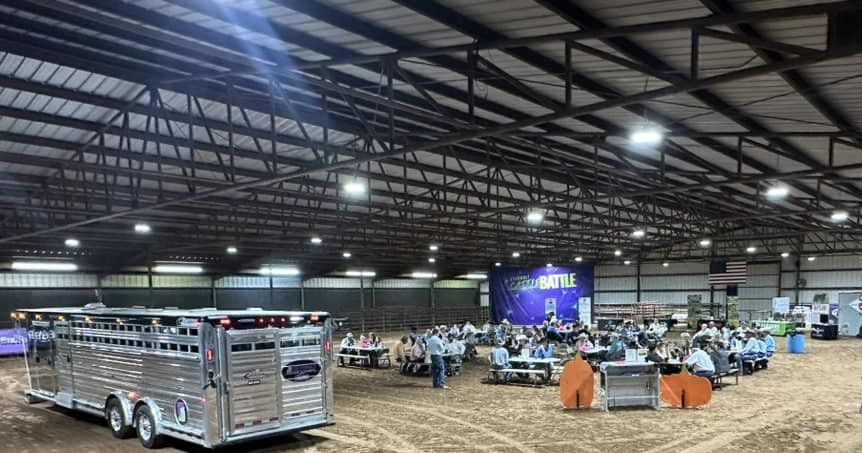
Senior Farm and Ranch Broadcaster, Ron Hays, is featuring comments from Farm Director, KC Sheperd's interview with the Executive Vice President of the Oklahoma Cattlemen's Association, Michael Kelsey, about the OCA 2023 Fall Gatherings.
The OCA has been conducting fall gatherings for over 20 years, Kelsey said, to allow cattle producers, OCA members, and more to have a chance to get together and talk about the latest issues.
There are nine Fall Gatherings hosted across the state, Kelsey said, and anyone is welcome to attend.
"Our winter policy meeting is in January, so a lot of times, we get a lot of good ideas and a lot of good feedback and input from members at these meetings," Kelsey said.
Some of the issues that Kelsey has been hearing lately from producers include the cattle markets, the Farm Bill, tax policy, and more.
"The governor is proposing to eliminate the income tax, which we do not favor, and we have not been bashful about that...," Kelsey said.
Fall Gatherings are meant to be very informal, Kelsey said, and they are usually hosted at local establishments instead of a community center or expo center.
"They are at farms, ranches, maybe some livestock markets," Kelsey said.
Fall Gatherings will be hosted through November 16th across the state. To see more information about the 2023 Fall Gatherings and see the schedule, CLICK HERE.
The Beef Buzz is a regular feature heard on radio stations around the region on the Radio Oklahoma Ag Network and is a regular audio feature found on this website as well. Click on the LISTEN BAR for today's show and check out our archives for older Beef Buzz shows covering the gamut of the beef cattle industry today.
Today, the U.S. Department of Agriculture (USDA)'s Economic Research Service released the Household Food Security in the United States in 2022 report, which examined American households' ability to access sufficient food last year. The report found that the vast majority – 87.2 percent – of U.S. households were food secure throughout 2022, meaning they had consistent, dependable access to enough food for active, healthy living. However, 17 million households were food insecure at some point during the year, including 6.8 million households that reported very low food security. The study also found statistically significant increases across categories from 2021.
Agriculture Secretary Tom Vilsack made the following statement regarding the report's findings:
"The 2022 Household Food Security in the United States report is a sobering reminder that, while the vast majority of Americans are able to affordably feed themselves and their families, too many of our neighbors struggle to put healthy food on the table. These numbers are more than statistics. They paint a picture of just how many Americans faced the heartbreaking challenge last year of struggling to meet a basic need for themselves and their children, and the survey responses should be a wake-up call to those wanting to further roll back our anti-poverty and anti-hunger programs.
"These findings are unacceptable, yet the report is the latest piece of evidence that as the pandemic began to wane in 2022, another public health concern—food insecurity—increased. The experience of the pandemic showed us that when government invests in meaningful support for families, we can make a positive impact on food security, even during challenging economic times. Just over half of food insecure families reported gaining assistance through the Supplemental Nutrition Assistance Program (SNAP), the National School Lunch Program or the Supplemental Nutrition Assistance Program for Women, Infants and Children (WIC), all of which are currently at risk of reduced funding or restricted access. The uptick in food insecurity also occurred at a time when significant safety net enhancements that helped people through the worst of the pandemic began to end, including the expanded Child Tax Credit, universally free school meals, and, in a number of states, higher SNAP benefits.
"No child should go hungry in America. The report is a stark reminder of the consequences of shrinking our proven safety net, and it underscores the need to deliver on the Biden-Harris Administration National Strategy on Hunger, Nutrition, and Health. That starts with the urgent need for Congress to fully fund WIC and continue the 25-year track record of bipartisan consensus to make sure every eligible low-income mom, infant, and child can get the vital, developmentally appropriate nutrition they need to thrive. We also need a Farm Bill that protects SNAP benefits—because they work to help lift people out of poverty—and for all states to embrace the Summer EBT program to help kids access healthy food during the summer months, when school is out and child food insecurity is highest.
With this evidence before us, there is no excuse to look the other way while our country's children and families contend with this unfair yet preventable hardship."

| Now available in a research EPD format, functional longevity (FL) evaluates how long Angus cows stay in the herd and how many calves they produce. The Functional Longevity (FL) research expected progeny difference (EPD) was released by the American Angus Association® for breeders on October 25. The trait's purpose is to help further characterize relevant maternal traits, which aim to increase the long-term success of breeders and profitability of cow-calf herds. The Angus Genetics Inc (AGI®) research team, which conducts the breed's development of EPDs, leveraged the dataset from Angus Herd Improvement Records (AHIR®) Inventory Reporting as a base for FL. "I want to applaud the membership, because those data submissions on those traits that we needed have really ramped up," said Smitty Lamb, Association board of directors' member and AGI® board chairman. "You've allowed us to provide this tool." At its most basic, functional longevity looks at not only how long a sire's daughters will stay in the herd, but also how many calves they will produce during their lifetime. The unit of the trait is number of calves produced by six years of age, with a higher EPD meaning on average sires' daughters are predicted to produce more calves by six years of age, compared to a lower EPD. Kelli Retallick-Riley, president of AGI®, said she and her team are eager to observe how well the FL research EPD aligns with expectations. "We know members have been out there breeding cattle for generations upon generations, so their feedback will be important to hear as we continue to make this tool the best it can be," she said. Brady Larson of Larson Angus Ranch, Sharon Springs, Kansas, said he has been looking forward to analyzing the initial research EPD results. He is enrolled in Inventory Reporting and his herd gained MaternalPlus® recognition. For his efforts, he and others enrolled in Inventory Reporting have first access to the FL research EPD. "We can learn from it and have better selection criteria in the future," he said. "I'm glad that a lot of these maternal issues are getting looked at, and I'm more than happy to keep turning in as much data as I can through MaternalPlus® to help." A research EPD is a prelude to a production EPD. A research EPD does not get updated weekly but can be updated periodically as more data flows into the database. Once more data is collected, the evaluation will become even more robust, and the research EPD can be moved to production. Andre Garcia, a geneticist with AGI®, said one difficulty with the FL EPD model was accommodating and using as much breeder-collected data as possible without sacrificing EPD accuracy. The low heritability of the trait also presents modeling challenges. "Some people may ask, 'Heritability is low, so what's the point?' but there is a point," Garcia said. "You're not going to make genetic progress as fast. However, as soon as you start, the more progress you can accumulate over time." He encourages producers who aren't participating in Inventory Reporting already to submit their data. This helps ensure accurate EPDs across the board and contributes to the fine-tuning of FL in its initial research state and the production stage in the future. Garcia said genetic correlations between functional longevity and other traits are of interest and will be explored in future research, especially as more and more data is collected. Larson admits it is a challenge to account for each animal and collect every recommended data point. Regardless, he will continue to submit data and utilize EPD tools as they are developed, because he said he wants to be part of the solution for opportunities he sees. "On the cow side of it, there's so much more that goes into it that needs studied and applied," Larson said. "I want to make the best cow that I can that will last a long time." As a research EPD, FL will not be incorporated into the maternal weaned calf value ($M). Current research is ongoing to learn more about how the EPD could potentially play in $M when FL moves to a production stage in the future. The research report for the FL research EPD is available at https://www.angus.org/performance/documents/FunctionalLongevityResearchReport.pdf. For more information, members can register to join an Angus University Webinar on December 5, at https://bit.ly/AngusU1223. A live question-and-answer session will follow a short presentation on the FL research EPD. – Written by Sarah Kocher, Angus Communications |
Cooler weather serves as a reminder of all the necessary end of season work that needs to be done before winter sets in. And that includes prepping hay tools properly for winter storage to ensure they are ready to go to work when hay season comes around again next spring. Maintaining and preparing equipment for seasonal storage is important for every farm and acreage, and Kubota has compiled our top tips to help you get your hay tools ready for winter.
Balers
Baling can be messy and dusty, so do yourself and your baler a favor by cleaning out any remaining hay and debris before storing for the winter. Be sure to take the extra step and blow out any remaining dust and debris.
Balers may have wear points that require attention in season and at the end of season too. Thoroughly inspect belts, pickup teeth, pickup cams and rollers, along with the bearings. Net wrap and knotting systems also deserve attention to make sure they are functioning properly before being stored. Better yet, contact your local Kubota dealer to schedule your baler inspection service. If anything requires additional maintenance or parts, make this a priority before moving the baler into storage. You can find Kubota Genuine Parts at your local Kubota dealer or online at shop.kubotausa.com.
Rakes & Tedders
Tines, bearings and universal joints require an end of season inspection, especially on rakes and tedders. Grease necessary moving parts and consult the operator's manual for other necessary maintenance items. Check for broken or bent tines and repair or replace where necessary.
Mowing Equipment
Disc mowers and disc mower conditioners are made up of plenty of moving parts, and they all need to be inspected, greased and stored in working order. Check belts for wear and replace where needed. Special attention should be given to inspecting disc blades and replacing as needed. Mowing equipment also requires a thorough cleaning, removing any hay or plant material, power washing and blowing out tight spaces to remove dust and debris. Proper winter maintenance will ensure the machine performs when it's needed next year and ready for another busy hay season.
Optimize Next Year's Equipment Operation
Prepare for optimal equipment operation next year by ensuring your hay tools are properly washed and cleaned, which can help extend their lifespan but also uncovers areas in need of attention or repair. Address any required maintenance or part replacements now, avoiding the springtime rush on the farm.
When it comes to winter storage for your hay equipment, choose a secure, dry location. This year-end maintenance and storage strategy is an investment in your equipment that will help pay off in time saved next spring.
Need help with winter maintenance? Your local dealer has your back. From preventative maintenance and routine checkups to total system repairs, entrust your equipment to certified Kubota technicians at your local Kubota dealership. Connect with your local dealership today to tap into their wealth of expertise, covering everything from service and maintenance to sourcing Genuine Kubota Parts.

To protect Oklahoma's pork producers from needless and excessive regulation, Attorney General Gentner Drummond is opposing a new Massachusetts law that bans states from selling or shipping pork through Massachusetts if they do not meet strict hog-housing requirements.
Massachusetts's pork ban means that even if Oklahoma-produced pork meets all Oklahoma and federal safety and quality standards, it cannot be sold in — or even transported through — the Bay State if it fails to comply with Massachusetts's hog-housing requirements.
"This ban will significantly hurt pork producers in Oklahoma and across the nation," Drummond said. "Oklahoma's robust and responsible pork producers deserve a level playing field. It is imperative that Massachusetts consider the long-term, negative effects this unconstitutional measure will cause producers and consumers."
In an amicus brief filed Oct. 10, Drummond and 12 other state attorneys general said Massachusetts' ban will cost the industry hundreds of millions of dollars, drive many producers out of business, and dramatically raise pork prices. This new ban also sets a dangerous precedent that would allow states to upend markets across the country based on their political agendas.
The 13-state coalition contends the Massachusetts pork ban is unconstitutional. Violations include the Commerce Clause, which gives the federal government, not state governments, the power to regulate interstate commerce. The ban also violates the Import-Export Clause prohibiting states from imposing import taxes on products brought in from other states.
Additionally, the ban violates the Full Faith and Credit Clause that requires states to respect laws passed in other states.
In addition to Oklahoma, the Iowa-led amicus brief was joined by Louisiana, Mississippi, Missouri, Montana, Nebraska, New Hampshire, North Dakota, South Carolina, South Dakota, Utah and Wyoming.
Read the full brief here.
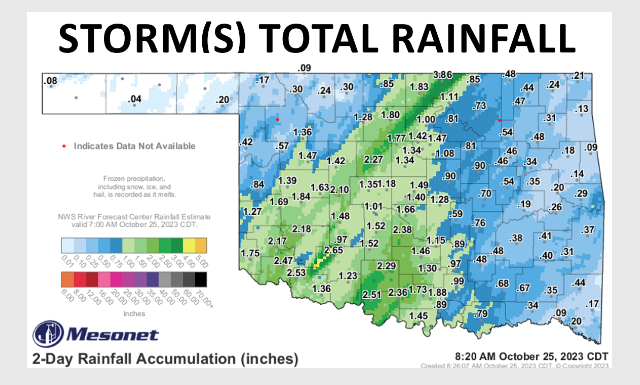
This week, Oklahoma has seen some much-needed rain across the state, with what looks to be more on the way thanks to Hurricane Norma. State Climatologist Gary McManus says we've seen very generous rainfall with a possibility of storm # 2 and Storm #3. Storm #2 is arriving this week with an opportunity for More rain in Oklahoma (everywhere but the Panhandle). There is a possibility of some Flash Flooding later today, so be careful while driving. Storm #3 will hit the state, moving in over the weekend, Just in time for Halloween!
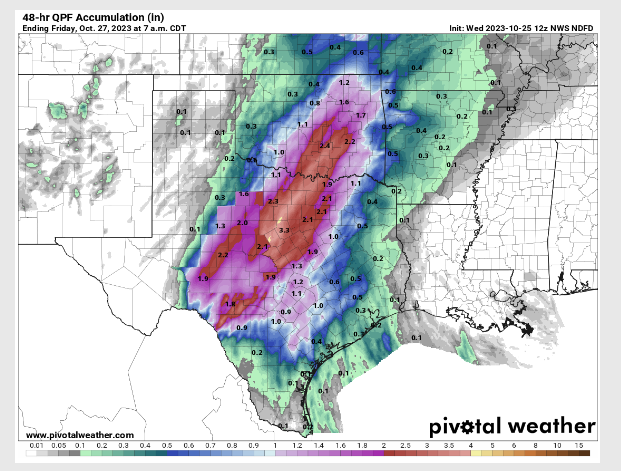
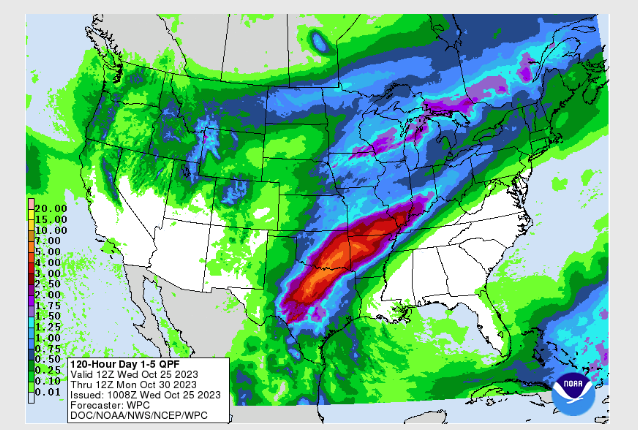
With these storms comes much cooler weather, "I would imagine to the east, we'll see those lows drop below record-high levels as the rain moves in, but again just another way to show how moist it is. Those high dewpoints act as sort of a barrier to temperatures falling below that point (dewpoint to be exact) due to the release of heat with condensation if
the temperature reached that dewpoint temperature."
Mcmanus says Storm #3 Will be bringing Chilly Spooky Temps for the Trick or Treaters next week, "We're going to
get a cold front on Friday with storm system #3, but sometime Saturday night or Sunday, we're going to get a COLD front, with the first arctic air of the season. And I'm talking bone-chilling cold if you're out in it, with wind chills down into the 20s, a widespread hard freeze, and maybe some ice up in NW OK."
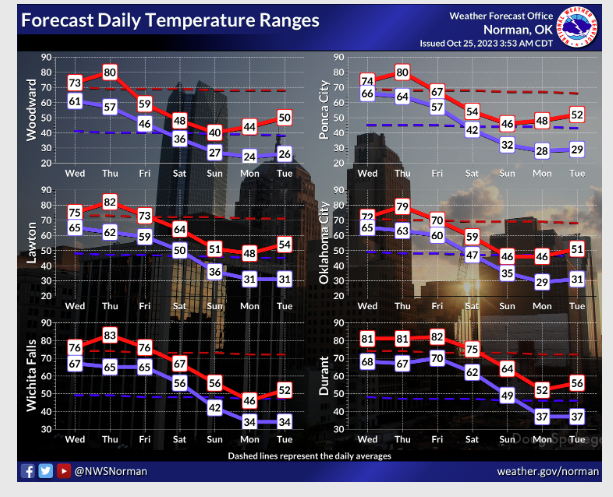
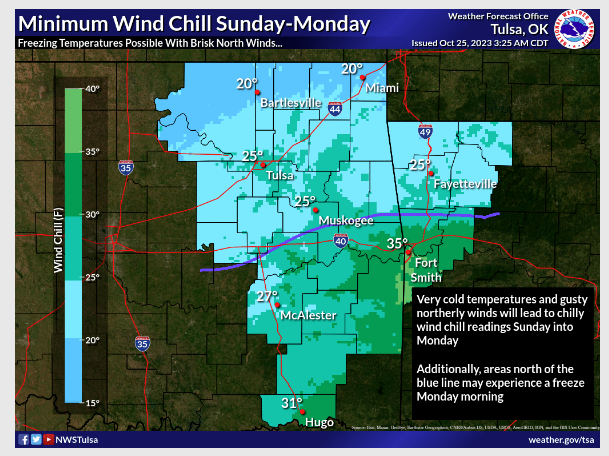
Even though it will be much cooler for Halloween this year, McManus says it will at least warm up to the 40s that afternoon, but dress those Kiddos up warm for the evening, "Your trick-or-treaters are going to be eating
frozen caramel apples as temps fall back into the 30s that evening."
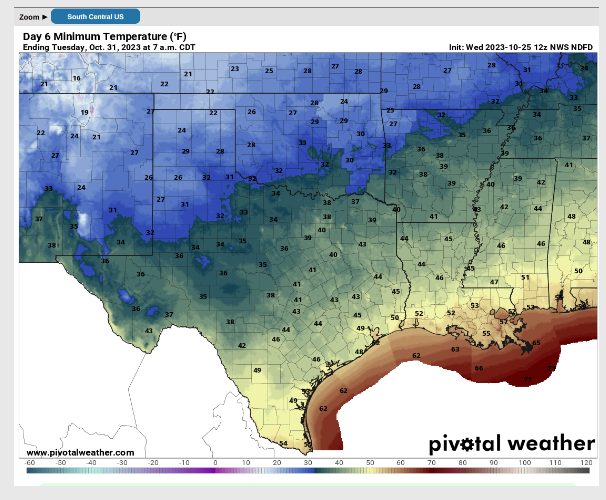
To read more from State Climatologist Gary McManus on his Mesonet Ticker, click here:
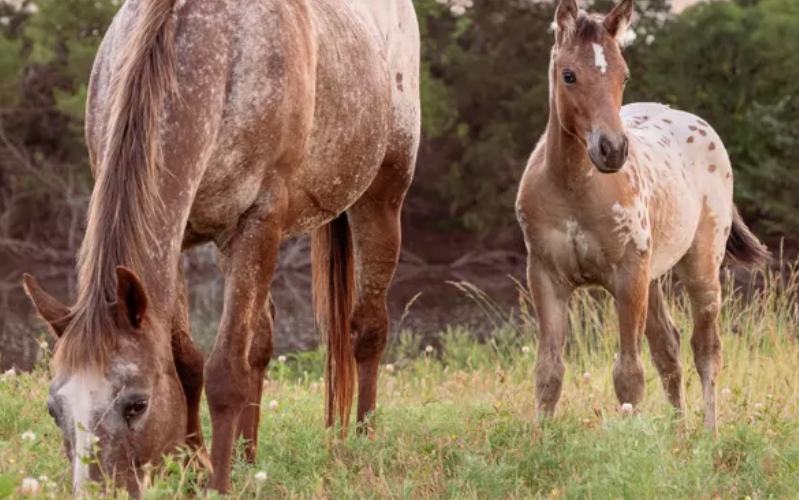
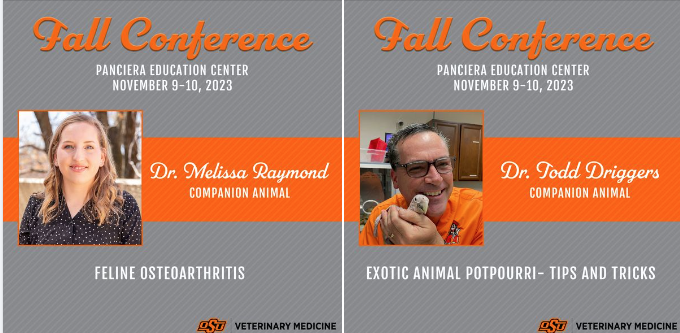
REGISTER HERE
TO REGISTER - select your registration type and proceed through the registration questions.
If you are not a current OSU student, staff or faculty member, you do not need a promo code to register. Skip this field.
You do not have to register for an account to register for Fall Conference. When you have entered all your information choose "CHECK OUT AS GUEST," enter a contact email, then click the CHECK OUT AS GUEST button. If you do not receive an email confirmation, something went wrong and you may not be fully registered. Contact us with questions.
You do not need to register for Fall Conference to attend Alumni Events. However, if you wish to attend both Fall Conference and Alumni events, you must register separately.
To register for the Technician Track on Friday, select "Technician" as your registration type, and then choose "register for "Technician In-Person Friday Only."
In-person conference registration includes light refreshments.
Link to: Fall Conference Frequently Asked Questions
Link to: Fall Conference Home Page
Link to: Alumni Events Page
Link to: Alumni Events Registration
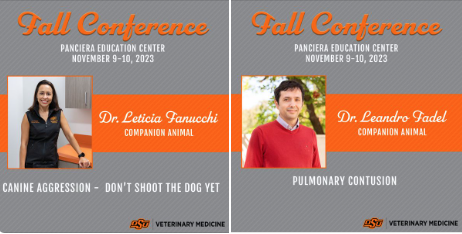
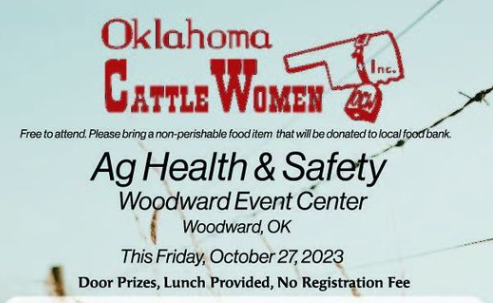
The Oklahoma Cattlewomen will be holding an Ag Health and Safety event coming up on October 27th, at 9am at the Woodward Event Center. This Event is Free, but they would like everyone to register so they can get a good head count on lunch.
Several speakers will be on hand to talk about Weather, chute Safety, Mental Health, Basic CPR, and Weather Awareness, so you won't want to miss this event!
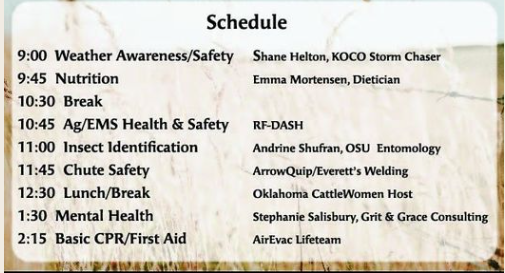
A new study by AAA found that in-vehicle tire pressure monitoring systems (TPMS) are generally accurate, but drivers should still check their tire pressure manually. Why keep tabs on your tires? They are the only part of your car in contact with the road, and proper inflation is the key to safety and better gas mileage.
"Whether in rain, sleet, snow, or dry conditions, tires are the unsung heroes of your car," said Greg Brannon, AAA's director of automotive engineering. "They are designed to work best when properly inflated. Our research found that the pressure monitoring systems that provide data for instrument displays or trigger the amber dashboard warning worked as intended. But we recommend always having a dependable old-school manual pressure gauge to check them once a month because a tire can be more than 20% deflated before it triggers the dashboard warning."

AAA engineers evaluated 11 passenger vehicles, 2022-2024 models including sedans, pickups, and SUVs, with "direct" TPMS, which uses air pressure sensors mounted in each wheel. According to the AAA study, the average percentage difference between displayed and actual tire pressure was between 1.2% and -1.5%, depending on tire location. Additionally, the amber warning TPMS light illuminated when tires were underinflated to 75% of the posted pressure (located on the sticker inside the door jam) for five of eleven test vehicles. Five of the six remaining test vehicles illuminated the TPMS warning dashboard light when tires were deflated to 70.3 to 72.9% of posted pressure, depending on the test vehicle.
Key findings from the study
AAA's recommendations
AAA urges drivers to utilize displayed tire pressures in the instrument cluster and keep tires inflated to the vehicle's posted pressure rather than relying solely on the TPMS light to determine when a tire needs to be re-inflated. TPMS lights only illuminate when one or more tires are severely underinflated, so drivers should regularly check the displayed tire pressure at each corner. In addition, not all vehicle TPMS systems provide pressure readings. Some systems, especially on older vehicles, only have a warning light if one or more tires are low.

AAA encourages drivers to regularly check their tire pressure (either in the instrument cluster or using a gauge), even if their TPMS light is not illuminated. And with winter approaching, it's important to remember that cold weather makes the air denser, so the pressure in the tire is reduced, triggering a dashboard warning. Do not ignore the warning even if the light goes off after driving because the tire is likely low. For this reason, tire pressure should be checked when cold.
Please refer to the full report for methodology details - including specific vehicle makes/models, tire brands and specifications, and testing equipment
Mark Johnson, Oklahoma State University Extension Beef Cattle Breeding Specialist, offers herd health advice as part of the weekly series known as the "Cow Calf Corner" published electronically by Dr. Peel, Mark Johnson, and Paul Beck. Today, Johnson talks about cost-effective feeding.
Evaluating Money Saved When Purchasing Feed on Cost per Unit of Protein and Energy Basis
Last week we broke down the cost per unit of protein and energy in 20% and 38% percent range cubes at current prices. This week we evaluate the money saved when purchasing feed on the cost per unit of protein or energy in order to meet a specific nutritional objective. The bottom-line point of this article is working through an example to determine the most cost effective ration or supplement based on the feeding or supplementation objective.
The Scenario & Objective
We have 60 mature cows, average weight of 1,300 lbs., due to calve in January, entering the last trimester of pregnancy, cows are in a Body Condition Score (BCS) of 5.5. We have ample standing forage in the form of native grass which forage analysis indicates is 5% CP and 55% TDN. On grass of this type, cows should consume 1.9 – 2.0% of their body weight resulting in forage dry matter consumption of 25 lbs./day. Knowing that reproductive efficiency is highly correlated to nutrition, our objective is for cows to maintain current weight and BCS until calving.
These cows will need 1.84 lbs. of CP and 13.3 lbs. of TDN per day over the next 100 days.
If possible we would like to maintain cows by utilizing the standing forage. Can this be done?
25 lbs. Forage DM intake x .05 CP = 1.25 lbs./day CP intake.
1.84 lbs. CP required – 1.25 lbs. from the forage equals a daily CP deficiency of .59 lbs./day.
25 lbs. Forage DM intake x .55 TDN = 13.75 lbs./day TDN intake. There is no energy deficiency.
We have identified a supplemental need for protein. Research have consistently shown that protein supplementation is extremely effective for cattle grazing protein-deficient forage. In fact, energy supplementation will not be effective if dietary protein is deficient.
Now the questions is: Which of the two protein supplements evaluated can most cost effectively meet our goal? The 20% CP range cubes at $350/ton or the 38% range cubes at $475/ton.
It would take 3 lbs./day of the 20% cubes to meet the CP requirement. For example: .59 lb. CP deficiency/.20 CP content = 3 lbs. We previously determined the cost per unit of CP in the 20% range cubes to be $.875. Taking the .59 lb. CP deficiency x $.875 = $.52/day cost with 20% cubes to meet CP needs. This daily cost x 100 days of supplementation x 60 cows equals an expense of $3,120.
It would take 1.58 lbs./day of the 38% cubes to meet the CP requirement. For example: .59 CP deficiency/.38 CP content = 1.58. We previously determined the cost per unit of CP in the 38% range cubes to be $.625. Taking the .59 lb. CP deficiency x $.625 = $.37/day cost to supplement the cows with 38% cubes to meet their CP needs. This daily cost x 100 days of supplementation x 60 cows equals an expense of $2,220.
Supplementing the 38% range cubes purchased at a cost of $475/ton instead of the 20% cubes at a lower price per ton resulted in a savings of approximately $900 to supplement the 60 cows for 100 days.
Unnecessary supplementation increases feed cost without real benefit. The goal of supplementation is to feed just enough of the right supplement to optimize the overall diet. Determining the most cost effective means of supplementing cows requires the evaluation of feeds on a cost per unit of protein and energy provided. Can you afford not to?
Computer software, such as OSU Cowculator program, can better pinpoint an animal's nutrient requirement at a specific time and in a specific stage of production. These and other useful tools can be found at beefextension.com.
Below, Mark Johnson, OSU Extension beef cattle breeding specialist, explains why manure scoring is so important to a cattle operation on SunUpTV from October 14, 2023.
RON's Dave Lanning has a pre-opening look at today's agricultural Markets.
Click the audio tab below for today's report.

The National Corn Growers Association (NCGA) applauded Secretary Tom Vilsack's announcement today that his agency is releasing $1.3 billion in funds from the Commodity Credit Corporation to support trade promotion to diversify and develop markets for commodities and specialty crop industries.
Vilsack's decision, which will help growers break into new markets in Asia and Africa, was strongly supported and encouraged by Senate Agriculture Committee Chairwoman Debbie Stabenow (D-Mich.) and Ranking Member John Boozman (R-Ark.).
"To remain competitive globally, American farmers need our policymakers to make the necessary investments that will help ensure a strong global market for our crops," said NCGA President Harold Wolle. "We are deeply appreciative of Secretary Vilsack as well as Sens. Stabenow and Boozman for making this funding a reality."
Analysis has shown that for every $1 invested in export market development, exports are increased by $24.50, according to USDA.
The funding comes as NCGA pushes for increased investments for two key trade programs: the Market Access Program, which provides support in marketing activities abroad, and Foreign Market Development, which helps create and maintain long-term export markets. MAP's authorized funding has not changed since 2006 and FMD funding has remained the same since 2002.
"It has been almost 20 years since we have had an increase in funding for these crucial trade programs," Wolle said. "We are falling behind other countries that are being more aggressive in their international market development programs. This announcement is welcome news, but it is equally crucial that Congress increases funding for MAP and FMD as it reauthorizes the farm bill."
NCGA partners closely with the United States Grains Council to develop trade markets for corn globally.
To celebrate National Pork Month on October 24, a free Prairie Fresh pork lunch was served, courtesy of the Made in Oklahoma Coalition, Oklahoma Pork Council, Head Country, and Homeland Stores. Following the lunch, an MIO product sweepstakes winner was drawn from over 3,000 entries. The winner was notified on Saturday and chosen as Mary Huddleston of Logan County. She had 7 minutes to load her cart full of MIO products throughout the store, and at the end of that 7 minutes, she had loaded up TWO carts of MIO products, including Ice Cream, Craft Beer, Pork Products, Pies, Milk, Mixes and More!
Farm Director, KC Sheperd, had the chance to visit with the winner, Mary Huddleston, who first heard about the promotion on Facebook, had the chance to fill her shopping cart with MIO products during a seven-minute shopping spree.
"I am so thankful and grateful for the opportunity," Huddleston said. With the Cost of everything on the rise these days, Huddleston said her eye was on all the Meat Products, "Meat! Pork! I use Shawnee Mills religiously so I will also be on that aisle, and Head Country BBQ Sauce, I mean these are our favorites at our house."
Over 100 people had already been through the line when we arrived around 12:30, including Ag Secretary Blayne Arthur and Deputy Commissioner JanLee Rowlett.
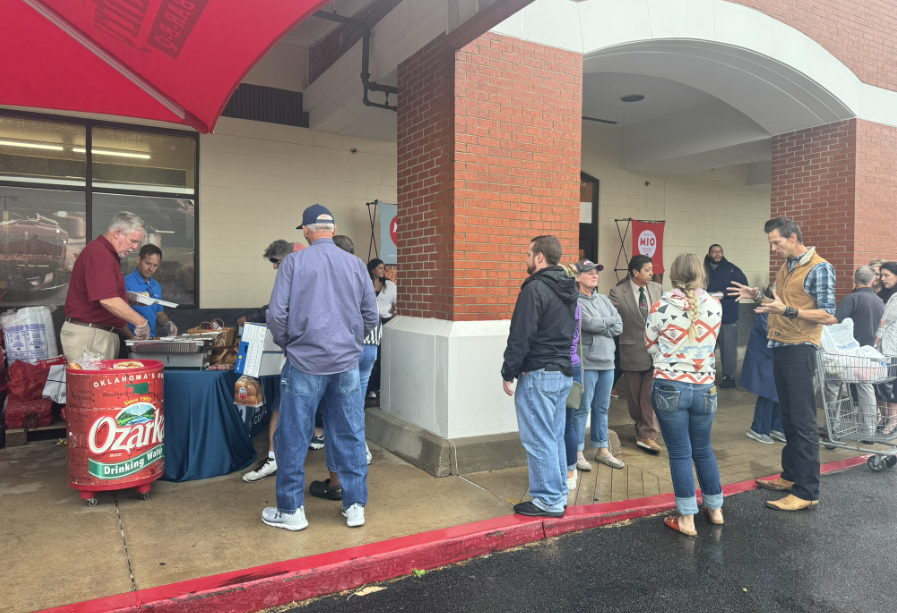
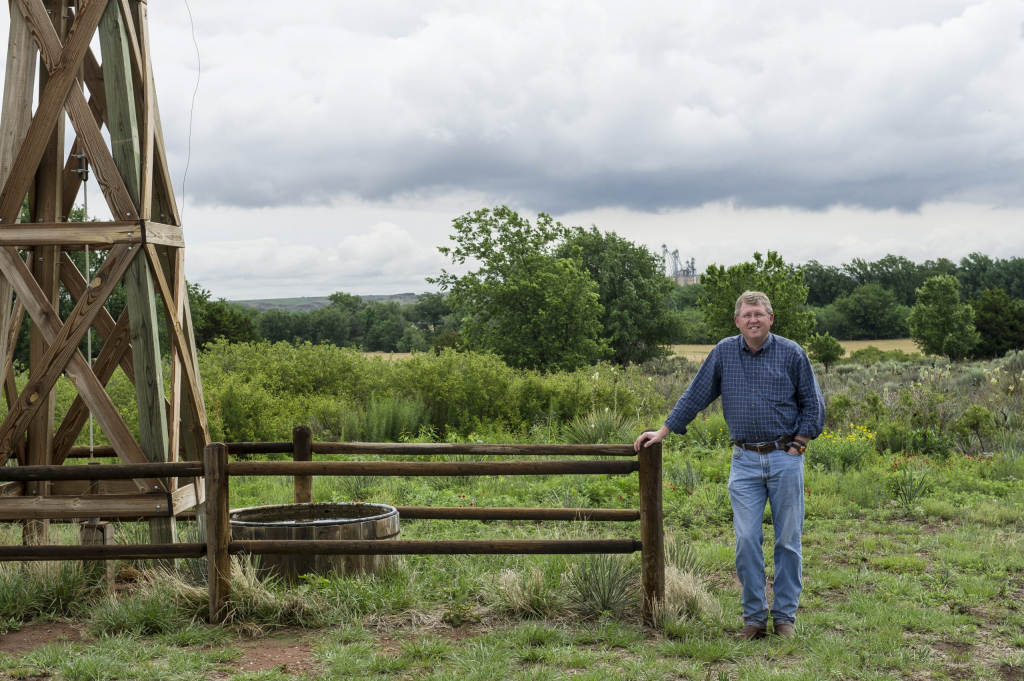
Senior Farm and Ranch Broadcaster, Ron Hays, recently had the chance to catch up with Congressman Frank Lucas and talk about the latest update regarding the farm bill.
The biggest hurdle now, Lucas said, is sorting out who will be Speaker of the House.
"Chairman Thompson, of course, like everyone and everything else in the United States House, is kind of handicapped until we sort out the Speaker situation," Lucas said. "Which, I would like to think would be any day now. G.T. (Thompson) and the committee staff, and the committee members, I think, have done the hearings, they have laid the groundwork to move forward. We just need to have this leadership situation sorted out in the House, so we will know when the time is available to consider something on the floor."
Farm Bills are about as complicated as it gets, Lucas said, because of the many moving parts and parties involved.
"We will get it done, as we have, it's just hard, and in a year like this, it is a little harder," Lucas said.
Extending the 2018 Farm Bill would be more complicated than it might seem, Lucas said, because if it is extended, it must be extended for at least one year.
"Chairman Thompson is very committed and very focused that instead of an extension, we just need to do the bill," Lucas said. "I agree with Chairman Thompson, but if it gets to the point where an extension provides certainly and stability, then I think we will do what we need to do."
The other positive part of the equation, Lucas said, is that presidents tend to sign farm bills during election years, and 2024 will be an election year.
"I would rather have a good bill with numbers we can live with, than in haste do something that perhaps would not last five years," Lucas said.

Applications for Talon host ranches are due October 31, intern applications due December 1.
The Talon internship program provides college-aged students the unique opportunity to spend their summer on an Angus operation gaining valuable, hands-on experience. Interns gain extensive ranching knowledge while enhancing their skills as advocates for the beef industry. Host applications for the Angus/Talon Youth Educational Learning Program internship are due Oct. 31, and student intern applications are due Dec. 1.
"We are thankful for the vision of Cam Cooper in preparing the next generation of leaders for Angus and the cattle industry," said Jaclyn Boester, Angus Foundation executive director.
The late Camron "Cam" Cooper of the Talon Ranch, Twin Bridges, Montana, developed the Angus/Talon Youth Educational Learning Program Endowment Fund in 2009 to be a one-of-a-kind educational experience for students.
"It's exciting to watch our interns grow and flourish each year through the hands-on experiences and mentorship provided by their host ranches," Boester said.
College sophomores, juniors, seniors and graduate students under the age of 25 and majoring in an agricultural-related field of study are eligible to apply.
"Taking a big step like moving 22 hours away from home is intimidating for sure," said Garrett Ulmer, Talon intern at Eleven Milliron Ranch in Sumner, Nebraska. "But as long as you work hard and have fun, it won't be something you regret doing. By taking this step, I've gained so much experience — not to mention the memories that will last a lifetime."
Ulmer studies animal and veterinary science at Clemson University. He developed a passion for the beef industry growing up on a commercial beef operation and showing heifers in 4-H and is a member of the South Carolina Junior Angus Association. Ulmer plans to pursue a master's degree in animal reproduction or heifer development, and one day hopes to have his own herd of Angus cattle. During his summer in Nebraska, Ulmer took part in cow synchronization and breeding, grazing management and crop and forage production on the ranch.
"By participating in the Talon Internship, I enhanced my networking skills along with technical skills that I couldn't have learned in a classroom," Ulmer said.
Compensation for Talon interns is provided by the Angus Foundation through the Angus/Talon Youth Educational Learning Program Endowment Fund.
Angus breeders and students interested in participating in the program can learn more and apply at bit.ly/AngusFoundationTalonProgram, or contact Boester at JBoester@Angus.org.
— Written by Peyton Schmitt, Angus Communications
Where is the next breakthrough in agriculture coming from? The answer could be from the students who participated in the 2023 Wilbur-Ellis Innovation Award.
This video from the Innovation Award celebration features the winners of a $25,000 grand prize and four $5,000 honorable mention awards, along with the judges who evaluated the teams' ideas for feeding a growing world, which were featured on Farm Journal's AgWeb site. In the video, the students talk about how the Innovation Award helped them explore creative solutions to a major global challenge – feeding a population that is expected to grow by 2 billion people over the next 30 years.

"The Innovation Award was launched as part of the company's 100th anniversary celebration in 2021. In the two years since the program began, 230 students have participated on 60 teams, bringing forward creative ideas to enhance agriculture and food production," said Wilbur-Ellis President and Chief Executive Officer John Buckley. "Choosing the most innovative ideas from such a great collection is difficult. But this year, one idea was particularly impressive – and that idea came from the Grain Science Team at Kansas State University, which received the Innovation Award's top prize of $25,000." The team proposed:
Four teams received $5,000 Honorable Mention awards for these ideas:
Congratulations to all the Innovation Award winners ... your creativity is an inspiration for everyone who cares about the future of agriculture! To learn more about the Innovation Award and this year's winners, visit https://www.wilburellis.com/innovation-award/.
About the Wilbur-Ellis companies: Founded in 1921, the Wilbur-Ellis companies are leading marketers, distributors and manufacturers of agricultural products and animal nutrients. By developing strong relationships, making strategic market investments, and capitalizing on new opportunities, the Wilbur-Ellis companies have continued to grow the business with sales of over $3.5 billion. For more information, please visit www.wilburellis.com


The National Association of State Departments of Agriculture applauds Secretary Vilsack for establishing the Regional Agricultural Promotion Program to better promote America's food and agriculture products in demand across the globe.
"It's important to know that for every $1 invested in export market development programs, $24 is returned in export revenue. Simply put, this program is a win for farmers, ranchers and the American economy because it will increase income and create more American jobs in the farm and food sector," NASDA CEO Ted McKinney said. "This program will build upon the success of the Agricultural Trade Promotion Program, which is projected to generate $6.44 billion in farm cash receipts and nearly 14,780 jobs annually."
Four finalists have been selected in the 11th annual National Anthem Singing Contest, sponsored by Norbrook®. The National Cattlemen's Beef Association (NCBA) is inviting the public to vote for the winner beginning November 1.
Introducing the four finalists:
Landri Jones of Weatherford, Oklahoma, is a fifth-generation cattle producer and FFA member whose family manages a cow-calf operation.
Shirley Matlock of Greenfield, Indiana, is a veteran of the United States Air Force and enjoys working alongside her children and grandchildren on the family's cow-calf operation, including singing to the herd when on gate duty.
Brittany Price of Center, North Dakota, is a fifth-generation farmer and rancher who works for North Dakota State University Extension, raises Simmental cattle, and helps her husband run a feedlot.
Anna Sponheim of Winifred, Montana, helps on her family's cattle and wheat farm and serves the industry as Program Manager at the Montana Beef Council.
Videos of the finalists will be available for viewing and voting at convention.ncba.org beginning November 1. The public can vote for their favorite singer once per day per person through November 15, and the winner will be announced November 17.
The winner will perform the "Star-Spangled Banner" at the Opening General Session of CattleCon24 and will receive round trip airfare to Orlando, Florida, a hotel room for three nights, free convention registration, plus a pair of boots, jeans and a shirt from Roper or Stetson.
For more information and to register for CattleCon24 and reserve housing, visit convention.ncba.org.

Exciting Partnerships & New Pork Products
at Convenience Stores Nationwide
NPB is excited to share 2 new marketing promotions resulting from the successful partnership and collaboration between NPB, pork producers and key players in the convenience store sector.
All-In on Pork Tamales
Laredo Taco Company, a division of 7-Eleven
Laredo Taco Company, a division of 7-Eleven, has fully embraced pork tamales, showcasing our delicious product as part of their offerings. The tamales are offered in convenient 12-count and 6-count packs at 511 stores across 10 states (TX, TN, MD, CT, VA, OK, CO, PA, OH, FL).
Additionally, window banners and signs will prominently display our blue Pork logo.
This offering is a direct result of NPB's partnership with the convenience store. It's worth noting that 7-Eleven has invested significantly in pork, purchasing over 4 million pounds of picnics and jowls for fresh production each year.
NPB is thrilled to partner with the second-largest convenience store distributor in the U.S. to roll out a new item – Spicy Cuban Sandwich with ham, hot capicola and pulled pork.
Core Mark, a subsidiary of the parent company Performance Food Group (PFG), has 45 distribution and sales offices across 22 states and approximately 55,000 convenience store customers nationally. The reach and influence of this partnership promise to make a significant splash in the convenience store arena, propelling delicious pork products into the spotlight.
NPB remains committed to our mission to champion the interests of pork producers and initiatives that significantly ramp up the demand for pork products. We're not just setting the bar, we're raising it, bringing innovative and mouth-watering pork products to consumers nationwide and around the world.
Nine graduate students from six institutions have embarked on their journey as Real Pork Scholars this fall semester. This NPB program offers professional mentorship, networking opportunities and training to help students communicate complex information with ease.
Key Points of the Program:
As the 2023 cohort begins its work, NPB will start recruiting for the next class of Real Pork Scholars, opening applications on November 1.
Read More

Today, the U.S. Department of Agriculture (USDA) announced its plan to use Commodity Credit Corporation (CCC) funds to create the Regional Agriculture Promotion Program (RAPP) - a $1.3 billion program to assist agricultural groups in marketing their commodities overseas. In addition, and under the RAPP program, USDA will also provide $1 billion in commodity-based international food aid.
In response to the announcement, the U.S. Grains Council (USGC) thanked the USDA:
"The U.S. Grains Council thanks Secretary Vilsack and the USDA for continuing to promote market development through providing a new program funding source," said USGC President and CEO Ryan LeGrand. "The success of the Council would not be possible without its partners in both the public and private sector, and we look forward to expanding exports of corn, sorghum, barley and their co-products with this new source of funding, however, there is still a need to increase long-term funding of the MAP and FMD programs in a new farm bill."
Like the Agricultural Trade Promotion (ATP) funds that were first distributed in 2019, RAPP funding from USDA's Foreign Agricultural Service (FAS) will supplement the Market Access Program (MAP) and Foreign Market Development (FMD) funds the Council relies on annually to help its members expand markets for grains in all forms and its international partners to serve their local consumers.

Agriculture Secretary Tom Vilsack announced today that the U.S. Department of Agriculture (USDA) is providing $2.3 billion to help American producers maintain and develop markets for their commodities and use U.S. commodities to bolster international food aid.
Consistent with a bipartisan request from the Senate Committee on Agriculture, Nutrition, and Forestry, USDA is utilizing funds from the Commodity Credit Corporation (CCC) to address challenges related to trade and food insecurity impacting U.S. farmers and the international community. USDA will use:
"The Commodity Credit Corporation continues to address the needs of American producers as significant and unpredictable challenges arise, including impacts to international commodities markets and global food insecurity in the wake of ongoing conflict and a changing climate," said Secretary Vilsack. "The Commodity Credit Corporation and USDA's market development and aid programs are critically important at this time, and with this additional support we can strengthen U.S agriculture's presence in existing markets, open up new market opportunities, and build on our relationships and connections to ensure that high-quality American agriculture and food products reach where they are needed in the world."
Secretary Vilsack made today's announcement as part of the World Food Prize's Borlaug Dialogue that is held in Des Moines, Iowa each October and brings together world leaders and experts to address global food security issues. This announcement comes on the heels of the 90th anniversary of the CCC, which was incorporated on October 17, 1933 in response to the Great Depression and the Dust Bowl's devastation on producers and their operations. For 90 years, the CCC has stabilized markets, supported farm income and prices, and enhanced the ability of farmers to market their commodities.
Regional Agricultural Promotion Program
The FY23 agricultural trade deficit is $19 billion, and USDA has projected that it will grow to $27.5 billion in FY24. There is also increased competition in our export markets in Asia and Africa. Therefore, additional investments in market development need to be made to keep ahead of the competition. Analysis has shown that for every $1 invested in export market development, exports are increased by $24.50. Increased agricultural exports means income directly back to producers. Trade promotion investment helps keep existing markets open and creates access to new markets. Further, investing in non-traditional markets will help the United States diversify away from dependence on a handful of large markets.
The new $1.3 billion investment in a Regional Agricultural Promotion Program, or RAPP, will enable exporters to break into new markets and increase market share in growth markets. Further, an investment in providing targeted technical assistance to the specialty crops industry will help it enter and expand markets that often impose onerous non-tariff barriers on their products. Five years ago, in reaction to the trade war with China, USDA developed the Agricultural Trade Promotion Program (ATP) to help exporters diversify their markets. The funds from ATP will expire next year and with that, many exporters are already curtailing their activities. Without being on the ground in markets, it is nearly impossible to build the trust and relationships needed to create opportunities. The RAPP will address this critical loss and ensure continuity of the relationships key to market development.
International Food Aid
Recent challenges to supply chains and on-going conflicts have exacerbated what was already a dire situation of increased numbers of people experiencing food insecurity globally. An estimated 205 million people need life-saving food assistance, and some 768 million people are facing chronic hunger, according to the Global Report on Food Crises and FAO. American agriculture is well positioned to help fill these gaps. The United States produces more commodities than are consumed, and therefore has the opportunity to extend this food, via a USDA donation, to those who are in need.
USDA will purchase commodities and work with USAID, who is the lead federal agency on international emergency food aid programs, to ensure they reach those most in need around the world. The $1 billion donation will bolster ongoing efforts to address global hunger, as well as support U.S. agriculture through the purchase of surplus commodities. U.S. agriculture stakeholders are eager to assist in addressing hunger that continues in some areas of the world due to conflict, droughts and other challenges. Given the exceptionally high food needs around the world at this time, these additional commodities will fill critical resource gaps.
USDA touches the lives of all Americans each day in so many positive ways. In the Biden-Harris Administration, USDA is transforming America's food system with a greater focus on more resilient local and regional food production, fairer markets for all producers, ensuring access to safe, healthy, and nutritious food in all communities, building new markets and streams of income for farmers and producers using climate smart food and forestry practices, making historic investments in infrastructure and clean energy capabilities in rural America, and committing to equity across the Department by removing systemic barriers and building a workforce more representative of America. To learn more, visit www.usda.gov.
The American Soybean Association applauds the U.S. Department of Agriculture's efforts to strengthen U.S. trade and food aid by providing funds to maintain and develop markets and address global hunger. Agriculture Secretary Tom Vilsack announced $2.3 billion will be allocated from the Commodity Credit Corporation, $1.3 billion of which will go toward the Regional Agriculture Promotion Program and diversification of specialty crop export markets, the balance toward international food assistance.
ASA President Daryl Cates, who grows soybeans in Illinois, said, "America's soybean farmers rely on strong existing export markets and opportunities to open and build new markets. It can take decades to grow markets for our beans and only a matter of days in some cases to lose them, so having the funds to sufficiently support export promotion programs is something ASA and soy growers have consistently championed. And, as both an industry that participates in food aid programs and as human beings, we are pleased to see the administration looking for additional ways to help us address global food insecurity."
Cates says he and others in the soy industry are happy to see USDA acknowledging the uncertainty that surrounds agriculture and challenges that arise from that unpredictability, and that the department has conveyed through its funding infusion the importance of market development programs.
"USDA has demonstrated that it recognizes the importance of market promotion programs. We are thankful USDA sees value in the collective efforts of the Foreign Agricultural Service and agriculture cooperators like the American Soybean Association, which are stewards of market development funding and bring vital aid programs and market expansion projects to life," said Cates.
ASA remains committed to its trade and food aid efforts and will continue to push for doubling of Market Access Program and Foreign Market Development program funding in the 2023 Farm Bill reauthorization. ASA utilizes funds from USDA to support the U.S. Soybean Export Council, which develops and expands markets for U.S. soybean farmers, and ASA's World Initiative for Soy in Human Health, which work to find new and build emerging markets for soy.
U.S. Secretary of Agriculture Tom Vilsack announced today that USDA will utilize $1.3 billion from the Commodity Credit Corporation (CCC) to fund a Regional Agricultural Promotion Program aimed at diversifying export markets for U.S. agricultural products.
U.S. Meat Export Federation (USMEF) President and CEO Dan Halstrom issued the following statement:
USMEF thanks Secretary Vilsack and the staff at USDA for prioritizing international market development by making these funds available through the Commodity Credit Corporation. The USDA Market Access Program (MAP) and Foreign Market Development (FMD) Program have a proven track record of providing excellent, value-added returns to U.S. producers, and more recently the Agricultural Trade Promotion Program (ATP) helped U.S. agriculture overcome trade obstacles and develop new markets. With ATP funding coming to the end, new investments in foreign market development are very timely and much appreciated. We also thank Congressional leaders for their support of this program and for their continued support of MAP and FMD funding.
The National Milk Producers Federation (NMPF) and U.S. Dairy Export Council (USDEC) praised today's announcement from the U.S. Department of Agriculture that it plans to devote $2.3 billion from the Commodity Credit Corporation to promoting better market opportunities for U.S. agricultural producers and expanding food aid to support communities in need around the world.
The expanded export support program and food aid were requested by Senate Agriculture Committee Chairwoman Debbie Stabenow, D-MI, and Ranking Member Sen. John Boozman, R-AR, in late August. USDA will devote $1.3 billion to establishing a Regional Agricultural Trade Promotion Program, and $1 billion to commodity-based international food aid.
"The U.S. dairy community is grateful for the USDA's decision to invest in supporting the cultivation of enhanced international market opportunities for America's dairy farmers and cooperatives. We thank Senators Stabenow and Boozman for their initiative in encouraging USDA to pursue this course of action," said NMPF president and CEO Jim Mulhern. "Now more than ever, the U.S. dairy industry relies on exports. If distributed to those sectors that are presently underfunded such as dairy, the new export promotion funding will put us in a better position to compete globally and grow our consumer base. NMPF encourages Congress to build on today's announcement by USDA to also deliver additional funding for the Market Access Program and Foreign Market Development Program in the development of the next Farm Bill."
NMPF, USDEC and other agricultural leaders are advocating for Congress to double funding for the Market Access Program and Foreign Market Development program – the two programs have not received a raise in over 16 years, despite offering consistent returns on investment. "Farmers, manufacturers and workers up and down the dairy supply chain benefit from expanded trade opportunities that help the industry thrive in today's global economy," said USDEC president and CEO Krysta Harden. "We're thankful that USDA is taking this important step to support American Agriculture and appreciate Senators Stabenow and Boozman elevating the importance of using CCC resources to fund programs that will strengthen the U.S. dairy industry through the creation of new markets and the promotion of nutritional dairy-containing products in food aid. We look forward to continuing to work together to level the playing field for America's dairy farmers and producers."
U.S. Senators Debbie Stabenow (D-MI), Chairwoman of the Senate Committee on Agriculture, Nutrition, and Forestry, and John Boozman (R-AR), Ranking Member, today applauded the announcement that the U.S. Department of Agriculture will use its authorities under the Commodity Credit Corporation (CCC) Charter Act to provide $2.3 billion to invest in trade promotion and in-kind international food assistance, both of which support American farmers and producers.
"As we continue our work writing a strong, bipartisan Farm Bill, American farmers and producers have been clear about the need to strengthen trade opportunities, increase revenue streams, and help producers grow and thrive in a global economy. As we also face rising global food insecurity, it is also clear that our country must do everything we can to address humanitarian needs abroad while supporting American farmers. Today's announcement by Secretary Vilsack is welcome news, and we thank him for his timely response to our letter on this matter from September. While this funding is welcome, it does not replace the need for a Farm Bill. We look forward to continuing our work to deliver a strong, bipartisan Farm Bill that meets the needs of farmers and the American people." The announcement follows a letter sent by the Senators urging Secretary Vilsack to support American farmers by making investments through the CCC in trade promotion and food assistance in September

Global civilization is up against a rising rate of disaster, according to a new Food and Agriculture Organization report. That puts agriculture at risk.
According to the report, "The Impact of Disasters on Agriculture and Food Security: Avoiding and Reducing Losses Through Investment in Resilience," the world saw about 100 disaster events per year in the 1970s compared to about 400 events per year in the past 20 years.
Disasters are defined in the report as "serious disruptions to the functioning of a community or society." These most commonly are natural: drought, flooding, extreme temperatures, and storms. They can also be man-made, related to armed conflicts—civil unrest, regime change, interstate conflicts and civil war—which are at their highest level since World War II.
An estimated $3.8 trillion in crops and livestock production has been lost due to disaster events over the last 30 years, according to the report. That's an average $123 billion lost each year, 5% of the annual global GDP. The report also found that agriculture sustained nearly 23% of total economic losses from disasters, according to post-disaster assessments from 2007 to 2022.
"Agriculture is one of the most highly exposed and vulnerable sectors in the context of disaster risk, given its profound dependence on natural resources and climate conditions," wrote Dr. Qu Dongyu, FAO director general, in the report's foreword.
It's also one of the most important in which to build resiliency. Without productive agriculture, there is no food. Without food, disaster only grows more deadly.
The report, which aimed to organize and disseminate available knowledge on the impact of disasters on agriculture, highlights three needs:
By anticipating and preparing for difficult conditions, farmers are better equipped to weather storms and bounce back afterwards.
Solutions from the Land is fortunate to have a front seat to see innovative farmers at work building resilience. Farmers across the world are making small steps forward every day as they produce food, take care of the land, and provide a variety of other fundamental ecosystem services.
It has never been more important to nurture farmer creativity and to connect farmers with other farmers, researchers and allied industries. That's exactly what we do at SfL. We help individual ideas grow into widespread solutions that work for more farmers and communities, near and far.
As Dr. Qu writes: "In a world with limited resources, we need to increase investment in resilience by adopting creating, innovative and scalable solutions that can avoid and reduce losses generated by disasters."
This may come in the form of more stress-tolerant seeds or tools that enable more desirable timing of planting or harvesting. It could involve more efficient irrigation techniques or grazing patterns. There's always something new, something we haven't thought of yet, but getting those ideas out into actionable form requires collaboration, ingenuity, persistence and a little boldness.
SfL will continue to stand behind farmers, providing them a platform from which to share their ideas and advocating for policy that encourages proactive, farmer-centered approaches for building resiliency.
The post New FAO report calls for investments in agricultural resilience appeared first on Solutions from the Land.
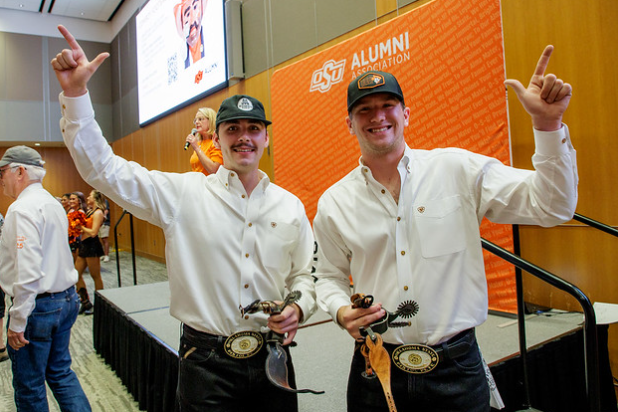
Left to right, Bryce Coon and Caden Schaufele are currently Pistol Petes No. 95 and 96. (Photo by Gary Lawson, Oklahoma State University)
A clear testament to a spirited university is a mascot recognized around the world – and that's just what Oklahoma State University has. As OSU begins another celebration of America's Greatest Homecoming, it honors 100 years of its beloved mascot, Pistol Pete.
"The Year of the Cowboy" was selected as the 2023 homecoming theme in honor of Frank Eaton's legacy. Eaton is the inspiration behind the Pistol Pete persona that is known across the world by fans, alumni, students and others following the initial portrayal by Charles Lester in 1958.
While Pistol Petes of years past come from academic programs and colleges across campus, the Ferguson College of Agriculture is home to several alumni who have donned the head and served as Pete. Of the 96 Pistol Petes to date, 23 have been awarded degrees from the Ferguson College with Pistol Petes No. 95 and 96 currently working toward degrees in the college.
The 36-pound mascot head aside, representing OSU as a nationally recognized mascot and being a full-time student is not an easy task. Pistol Petes are expected to balance coursework and involvement in organizations across campus with several weekly appearances, including gamedays, university events, weddings, corporate events and more. The Ferguson College faculty and staff support the Petes and help them succeed in both their professional and personal lives.
Cale Walker, who served from 2006 to 2007 as Pistol Pete No. 71, is grateful for the encouragement he received from faculty and staff during his time as Pete. While in the Ferguson College, Walker also served on the college's student council, completing one term as president.
"The faculty were very supportive during my time as Pete," said Walker, who graduated in 2008 with a bachelor's degree in agricultural leadership. "The Ferguson College took a lot of pride in having one of their own be Pete, and over time, we have all grown to expect the college to be well represented each year."
Matt Ralls is a 1998 environmental science graduate from the Ferguson College. He served as Pistol Pete No. 56 from 1996 to 1998 and recalls an experience similar to Walker's.
"The professors were a standout part of my journey, each bringing their unique personality which made the learning environment not only educational but also engaging," said Ralls. "They were incredibly encouraging and supportive, always striving to bring out the best in their students," he said.
When Ralls saw an advertisement in the newspaper promoting tryouts, he decided to attend. The night before, he read an entire book about Frank "Pistol Pete" Eaton to get a better understanding of Eaton's life and the mascot's role.
"When I had the opportunity to meet the former Petes during the interview process, I learned being Pistol Pete was more than just funny skits and taking pictures," Ralls said. "It was about the legacy of Frank Eaton and the traditions and values of the Oklahoma State community."
In addition to portraying Pete, Ralls served as vice president of the Ferguson College Student Council and spent his time involved in many other on-campus organizations such as the Environmental Science Club, Freshman Representative Council and more — though, he kept his two years as the mascot a secret from everyone but a few individuals close to him.
Ralls, an All-American Mascot pick in 1997, said serving as Pistol Pete is not just an honor to those who portray him, but also a privilege.
"I had the unique opportunity to represent my school, unite the student body and create lasting memories with the proud alumni of Oklahoma State, all while getting a unique view that very few see – through the eyes of Pistol Pete," Ralls said.
Caden Schaufele is currently serving as Pistol Pete No. 96 while working toward a degree in agribusiness with a concentration in pre-law.
"The phrase 'Ferguson Family' is 100% true. They really do care about you here and they've been willing and open to work with my schedule," Schaufele said.
"No matter the circumstance or schedule, growth and success are taught, learned and encouraged in the Ferguson College," he said.
Growing up around OSU and the Ferguson College, Schaufele saw a welcoming college family that practiced the Cowboy Code.
"I came to realize in four years that the Ferguson College is something special, and it's set apart from other colleges in several aspects," Schaufele said.
To those chosen to portray Pistol Pete, it is more than putting on the head and attending events.
"It's hard for me to put into words what it meant to be the face of over 250,000 students, alumni, fans and friends," said Walker, who was selected as an All-American and Most Collegiate Mascot for his time as Pete. "It was the opportunity of a lifetime, and I will always share the stories with my children, who think it's the coolest thing in the world that their dad was Pete."
Schaufele and Pistol Pete No. 95, Bryce Coon, an agricultural systems technology major, are the newest members of the mascot fraternity, a group exclusive to Pistol Pete alumni, following their initiation in September.
"Being a student in the Ferguson College and being Pistol Pete have helped make my time in college the most meaningful and memorable experience. These two things have taught me more about life than I could ever imagine and the experiences that come with being a Ferguson College student are second to none," Coon said.
"Pete is just one of the many faces I see when I think of OSU. Whether people know who I am or not, they know Pete, and I think that's really cool," Schaufele said. "I get to serve in that capacity for a university I grew up with and want to continue to support no matter what."
An enhanced sense of OSU spirit, paired with connections, support, community and family are fundamental pieces that make the Ferguson College of Agriculture unique. Those pieces remain for so many previous Petes who have ventured on to new phases of life after OSU.
"Many years later, those connections I made in the Ferguson College and as Pete are still guiding and supporting me as a professional," Walker said. "Throughout my seasons of life, friends from the Ferguson College have been and will continue to be an integral part of my family and me."
America's Greatest Homecoming 2023, celebrating "The Year of the Cowboy," will take place Oct. 22-28. The Ferguson College of Agriculture Homecoming reception is scheduled for Friday, Oct. 27 from 3 to 5 p.m. at the Charles and Linda Cline Equine Teaching Facility.
By Sophia Fahleson
OSU Agriculture is dedicated to improving the quality of life of Oklahomans through science-based information and education. It is comprised of the Ferguson College of Agriculture and two state agencies: OSU Ag Research and OSU Extension.

Make plans now to attend the Stockyards Cowboy Christmas Parade!
Stockyards City Main Street invites you to Historic Stockyards City for the annual Cowboy Christmas Parade on Saturday, December 2nd! The festivities kick off at 10:00 a.m. with the Slash O Ranch Longhorns leading the parade. Also included in the parade are equestrian groups, marching bands, antique cars, community groups, law enforcement, pageant royalty, the famous Cowboy Santa, and much more!
Following the parade, there will be lots of other activities. You can get your picture made with Cowboy Santa, enjoy live entertainment and hot chocolate.
Shop the unique locally owned stores. You might even find a few surprises, so plan on stayin' a while!
| Starts | Sat Dec 2 2023, 10:00am CST |
| Ends | Sat Dec 2 2023, 03:00pm CS |
U.S. Wheat Associates (USW) and the National Association of Wheat Growers (NAWG) are pleased that U.S. wheat growers now have the opportunity to increase global food assistance and expand export market access under new USDA funding programs announced Oct. 24, 2023. USW and NAWG thank Secretary of Agriculture Tom Vilsack for releasing the new funds that will directly benefit U.S. wheat farmers and their overseas customers. Additionally, we thank Senators Stabenow (D-MI) and Boozman (R-AR) for their August 28 letter to Secretary Vilsack formally requesting additional support for trade promotion and food assistance.
Food Assistance
U.S. wheat farmers have been partners in U.S. food assistance programs for more than 60 years and take pride in sharing their harvest to address critical hunger needs around the world. Through the USDA's Food for Progress and USAID Food for Peace programs, the American people have donated more than one million metric tons of wheat annually for the past three years.
"Additional funding for food assistance programs will help address the most urgent humanitarian needs in a generation. USW and NAWG look forward to working with USDA and other partners to ensure additional food donations generate the most benefit where it is needed most," said NAWG President Brent Cheyne. "As NAWG works with Congress to reauthorize the Farm Bill, we continue to advocate for strengthening the in-kind commodity donation program and additional investments in the existing trade promotion programs."
Export Market Development
Organizations like USW that participate in USDA Foreign Agricultural Service (FAS) export market development programs were very encouraged when the Agricultural Trade Promotion (ATP) program was established in 2019 as part of a program to ease the effects of trade retaliation against U.S. farmers and exporters. Those funds originated from the Commodity Credit Corporation (CCC) and FAS awarded grants to almost 60 cooperating organizations to be invested by 2024.
"USW demonstrated that the additional funding helped us protect crucial wheat export sales in established markets and build a base for growth in new markets," said USW Chairman and Oklahoma wheat farmer Michael Peters. "We appreciate the introduction of the new Regional Agricultural Promotion Program (RAPP), and the USW team will work very hard to use it effectively. Looking ahead, global wheat trade is increasingly competitive and market development takes time and consistency. That's why we believe that in the long-term, increases for established Farm Bill export development programs are the best way forward."
All across its supply chain, U.S. wheat depends on the successful public-private partnership between USW's state wheat commission members and USDA FAS export market development programs. Checkoff contributions qualify USW to apply for matching funds through programs like the Market Access Program (MAP) and the Foreign Market Development (FMD) program.
Under U.S. farm legislation, Congress apportions funding for MAP, FMD and other export programs. Annual funding for MAP has not changed from $200 million since 2006 and annual FMD funding of $34.5 million has not changed since 2002, yet other countries have significantly ramped up their export promotion spending.
"Study after study has shown that these programs consistently meet their purpose to boost agricultural export volume and revenue while supporting the entire U.S. economy, and the benefits grow with additional funding," Peters said.
For more information about the benefits of FAS export market development programs visit www.AgExportsCount.com.
About U.S. Wheat Associates
U.S. Wheat Associates' (USW) mission is to "develop, maintain, and expand international markets to enhance wheat's profitability for U.S. wheat producers and its value for their customers." USW activities in more than 100 countries are made possible through producer checkoff dollars managed by 17 state wheat commissions and cost-share funding provided by USDA's Foreign Agricultural Service. USW maintains 15 offices strategically located around the world to help wheat buyers, millers, bakers, wheat food processors and government officials understand the quality, value and reliability of all six U.S. wheat classes. For more information, visit www.uswheat.org.
About the National Association of Wheat Growers
NAWG is the primary policy representative in Washington D.C. for wheat growers, working to ensure a better future for America's growers, the industry, and the general public. NAWG works with a team of 20 state wheat grower organizations to benefit the wheat industry at the national level. NAWG's staff members are in constant contact with state association representatives, NAWG grower leaders, Members of Congress, Congressional staff members, Administration officials, and the public.
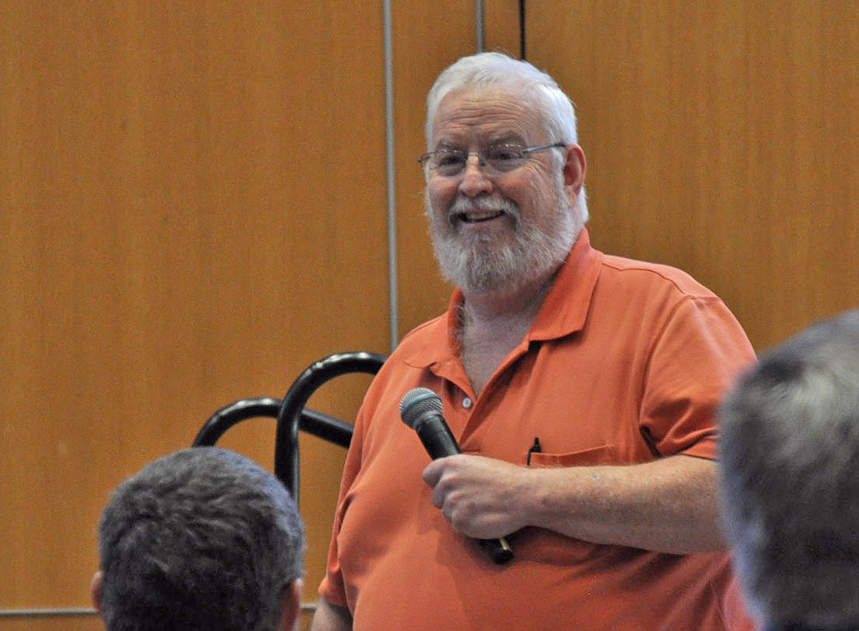
Wheat producers attending the recent Rural Economic Outlook Conference at Oklahoma State University heard forecasts for markets and weather, both of which indicated upside potential in the year ahead.
At the moment, fall planting conditions vary widely across the state.
"We just got our wheat in," said Jordan Shearer, a farmer and loan officer from Shattuck who attended the conference. "In our area, we've got good prospects for wheat pasture for the first time in three years."
Fred Schmedt, a certified seed grower from Ardmore, said he hadn't even considered getting out the drill.
"We're terribly dry," he said.
That could change by the end of the year, according to TV meteorologist and agricultural weather consultant Brian Bledsoe, a conference presenter from Colorado Springs.
"Be prepared for a little snow and maybe a lot of snow," he said in his weather outlook.
"One month that continues to show up for me in the weather models is the month of December," he said. "We could see storms coming out of the Southwest and lighting things up in the central part of the country."
That's based on an unusual set-up, in which the El Nino climate pattern, driven by warmer-than-usual waters in the Pacific, coincides with the negative phase of the Pacific Decadal Oscillation. Going back through historical records, Bledsoe could find only one winter — 1972-1973 — when those two patterns converged. "It was frigid," he said.
The negative PDO, which has been in place since 1998, generally correlates with dry conditions across the south and the west.
El Nino, however, typically brings a more active storm track, which is most pronounced in the winter, Bledsoe said.
Most models show wet weather lingering into the spring, with the impact fading by the end of next year.
"Expect to get precipitation early in the year and drier conditions later in the year," he said.
After hearing the presentation, Schmedt said he felt more motivated to get the crop planted sooner rather than later.
Late planting of wheat is not unusual in his area, he said, in part because it typically follows a fall cotton crop and also because fewer cattle are running on wheat pasture these days.
"In our part of the world, we sow a lot of wheat in December after the cotton harvest stops. If we sow it too early, it consumes whatever moisture you've got," he said.
His part of the state is coming off an abundant harvest. Some of the certified seed grown in the area was transferred up to Alva to help address seed deficits in the northwest region.
"We had more crop than we had storage for," Schmedt said.
Roger Fischer, a farmer from Chattanooga, said last year some of his yields hit 66 bushels to the acre, with beneficial rain falling in certain areas. He was able to save back enough seed for planting, after investing in certified seed the previous year.
So far, he's dusted in some wheat but was running behind schedule on fall planting.
"This will be my 47th crop," he said. "One thing I've learned is you can't make a good crop without the inputs. With reports like we heard today, we'll be giving it plenty of fertilizer and rolling the dice."
In Northwest Oklahoma, improved planting conditions are helping to take some of the sting out of a disastrous year.
Shearer's family lost their wheat crop and came within two weeks of liquidating their entire cowherd before rain finally arrived late last spring.
"We had 25 inches between May first and mid-July," he said.
By late summer, it had turned hot and dry again.
"One of the local farmers told me he never thought he'd see a year where you could lose a wheat crop, get 25 inches of rain and then have the sorghum burn up," Shearer said.
Higher profit margins on cattle could help the region recover. During the conference, OSU livestock marketing specialist Derrell Peel said record high cattle prices are likely to continue for at least two more years due to historically low cattle numbers.
"We've seen a tremendous uptrend in feeder prices," he said. "Fed prices are at record levels and still moving higher."
"Running stockers on wheat pasture has potential," he added, "if we can get the wheat up and going, but that's a challenge."
Grain prices, on the other hand, have been disappointing in recent weeks. Still, OSU's grain marketing specialist Kim Anderson said farmers are likely to see future pricing opportunities and upward rallies, since world ending stocks are relatively tight and disruptions are ongoing in Russia, Ukraine and other parts of the globe.
USDA has projected next year's average wheat price at $6.20 a bushel.
Karen Jones, of Waukomis, another producer attending the meeting, said she was busy planting wheat behind fall crops and hoping for the best.
In addition to wheat, she's also planted about a quarter of her fall acreage to canola. She currently serves on the board of the U.S. Canola Association.
"I'm not sure if it will make a crop or not," she said. "There's not enough moisture right now to get it up. If we get an early freeze, that could take it out too."
Jones estimated statewide canola plantings will be back on pace with 2021, after being zeroed out by adverse weather conditions last year.
Reviving wheat
Several conference speakers and attendees took note of the long-term downward trend in wheat acres.
According to Anderson, wheat acres declined almost by half since 1982, from 8 million to 4.5 million acres. During the same period, corn and soybean acres doubled, and pasture, range and hay land increased by around a third.
That concerns Roger Fischer, because he believes wheat's adaptability makes it a great fit for the state.
"I've been no-till for 25 years," he said. "It fits well with wheat, especially in a cotton rotation."
The declining wheat acres also caught the attention of Scott Senseman, OSU's associate vice president of research and director of the Ag Experiment Station.
With more future investment and support, he believes OSU's wheat improvement team is in an ideal position to remedy that.
"It's impressive to see what they've done with what they've had to work with," he said citing outdated greenhouses and labs. "Hopefully we'll be able to help support their work with a new agronomy facility. The initial idea was brought forth six years ago, but now we're looking at adding a phenotyping facility, which wasn't in the mix back then."
Phenotyping refers to the use of highly advanced cameras, which collect and process large amounts of imagery on a continual basis, allowing breeders to detect promising varieties earlier in development.
An investment in new facilities would not only support current research but also attract the best and brightest agronomists in the future, he said.
"We want any new facility to be about advancement not just replacement," he said.
According to Fischer, another boost could come from a new marketing initiative by OSU, Oklahoma Genetics Inc. and marketing firm Farm Strategy that is looking at adding value to the state's wheat crop by segregating new varieties with exceptional flour milling characteristics.
"I think it's a really interesting project," he said. "I think it's a path we should go down. Anything we can do to encourage more wheat production. Wheat is so adaptable to our region, and it needs to be in our rotation."
OSU's new vice president and dean of agriculture Jason Lusk said during his luncheon remarks value-added development was one of the university's top priorities.
"We have a lot of opportunity to add value in Oklahoma," he said. "The wheat improvement team in particular is doing lots of interesting things right now on the consumer end of things."
(Article courtesy of Candace Krebs, OK Genetics)
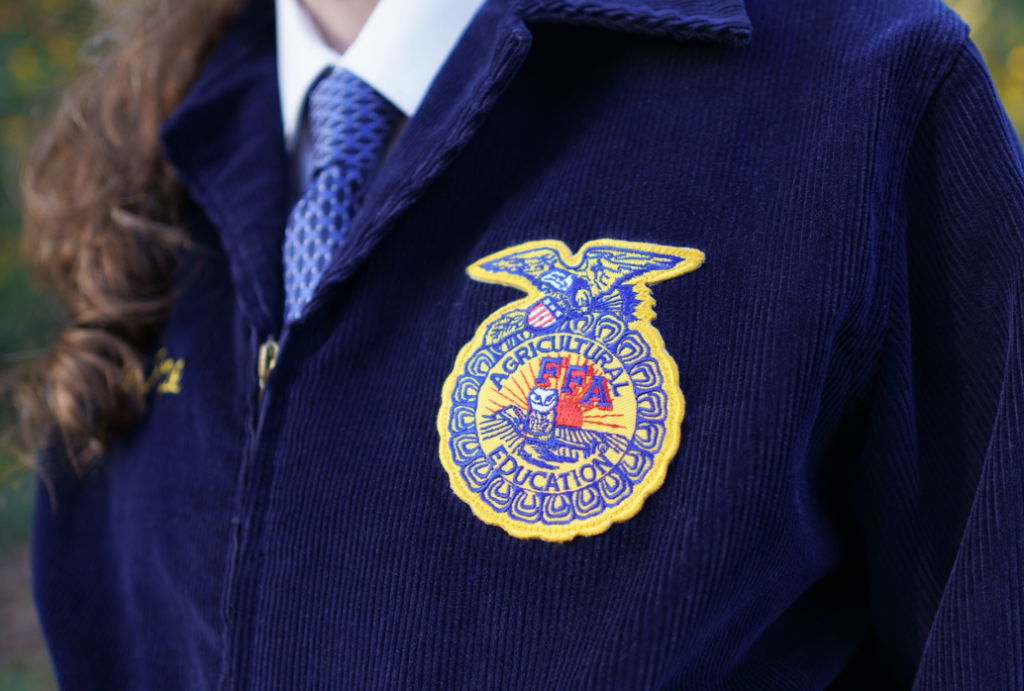
FFA members and supporters from across the country will celebrate agriculture and agricultural education next week during the 96th National FFA Convention & Expo in Indianapolis.
This time-honored tradition, hosted by the city of Indianapolis, will be held next week, Nov. 1-4.
More than 65,000+ FFA members from the U.S., Puerto Rico and U.S. Virgin Islands are expected to participate in the event.
Those attending will participate in general convention sessions hosted at Lucas Oil Stadium, be inspired by their peers as they are recognized for their accomplishments and hear from keynote speakers. Convention attendees will also explore various career paths at the National FFA Expo in the Indiana Convention Center, participate in career success tours, and more.
Convention events will begin on Wednesday, Nov. 1, when the Expo opens for all attendees to explore various career pathways in agriculture and attend leadership workshops. The opening general session, featuring Juan Bendana, will be held in Lucas Oil Stadium at 3:30 p.m. on Wednesday, Nov. 1
The fun continues with several entertainment opportunities, including a Wednesday night concert featuring Lainey Wilson and special guest Dillon Carmichael, and rodeos on Wednesday, Thursday and Friday.
FFA members and advisors can also take their skills to the next level in student and teacher workshops — hearing from industry leaders, motivational speakers and more — and watch members discuss their agricultural projects on the new Student Showcase Stage.
Service has always been a part of the FFA motto, and it will be front and center at this year's event as members participate in service projects at the convention center and various sites in Indianapolis.
Watch the National FFA Convention & Expo like never before on FFA Live!, our streaming broadcast that begins with the first drop of the gavel on Wednesday, Nov. 1, and ends with the election of the 2023-24 National FFA Officers on Saturday, Nov. 4. In between, you'll see the national convention and expo in action, with live broadcasts of each general session, Finals Hall presentations, historical footage, interviews and information about the FFA member experience. Visit here for more information.
General convention sessions will also be aired live on RFD-TV and the Cowgirl Channel.
The National FFA Organization is a school-based national youth leadership development organization of more than 945,000 student members as part of 9,163 local FFA chapters in all 50 states, Puerto Rico and the U.S. Virgin Islands.
Our coverage of Oklahoma FFA engaged at the National FFA Convention is being powered by Oklahoma Farm Bureau. Watch for our stories and interviews from Indianapolis on our Website, Daily Email, our statewide Radio Oklahoma Ag Network and our Social Media Channels. Click here for the OKFB website to learn about how they are making a difference in lives of Oklahomans. Oklahoma Farm Bureau supports the youth of rural Oklahoma year round- and reminds you- Together- We Are Rural Oklahoma!
The record number of aging vehicles on our roadways and colder temperatures in the coming months put drivers at greater risk of a breakdown this winter. With that in mind, AAA is urging vehicle owners to schedule car care now to avoid becoming stranded at the roadside when conditions change.

According to S&P Global, the average age of vehicles on American roadways is a record 12.5 years old, so the winter months will likely take a greater toll on tires, batteries and aging parts.
Previous AAA research shows that vehicles 10 years and older are twice as likely to end up stranded on the side of the road compared to newer vehicles. On top of that, the odds of needing a tow quadruples.
"During last year's relatively mild winter, AAA responded to almost 65,000 calls for Emergency Roadside Service, just in Oklahoma alone, and almost half of those calls required a tow," says Rylie Fletcher, spokesperson for AAA in Oklahoma. "October is Car Care Month to ensure that all vehicles, new and old, are ready for day-to-day driving and holiday travel, whenever winter arrives."
AAA Offers FIVE Most Important Car Care Tips for Older Cars
Despite advances in vehicle technology, including maintenance reminders and other dashboard alerts, drivers of newer vehicles are still at risk of a breakdown as well.
AAA Tips for Saving on Car Care
In an effort to encourage car care, AAA is offering a variety of discounts at its local AAA Car Care Insurance and Travel (CCIT) Centers through the end of October:

AgGateway is pleased to announce that ten college students have been selected to attend the organization's Annual Conference in November through the Gateway to Ag Careers program.
Sponsored by the AgCIO Roundtable, the Gateway to Ag Careers program offers students the opportunity to attend learning sessions and network with attendees at the AgGateway Annual Conference while making valuable contacts with agriculture industry leaders.
"We're excited to be hosting these exceptional students, who represent the bright future we are all working for in this industry," says Brent Kemp, AgGateway President and CEO. "There are many opportunities for young people in the world of technology, and it is our hope that exposure to what agriculture has to offer at the AgGateway Annual Conference will demonstrate that this industry offers a wide range of fulfilling career paths."
"We've supported this program because we must nurture the interest that students have expressed in this industry," says Karen Oerter, Director IT, Winfield United at Land O' Lakes and President of the AgCIO Roundtable. "The work we do will ultimately impact the efficiency of the value chain -- and ultimately, the farmer -- and knowing that our work plays a key role in feeding the world is very gratifying."
The application process required each student to submit an essay explaining what they hoped to gain by attending the AgGateway Annual Conference. Academic advisors and others had the opportunity to provide supporting information to accompany the application.
At the Conference, the students will make individual presentations at a special session during the conference to share their work, ambitions, and interests in the agriculture industry.
The ten recipients represent nine different academic institutions from across the country. They are as follows:
The Gateway to Ag Careers Program accepts student applications from June 1 through September 15 annually and provide awards for up to 10 students. For more information about the Gateway to Ag Careers program, visit the AgGateway website or contact Paul Schrimpf, Director of Marketing and Communications at paul.schrimpf@aggateway.org.
RON's Dave Lanning has a pre-opening look at today's agricultural Markets.
Click the audio tab below for today's report.
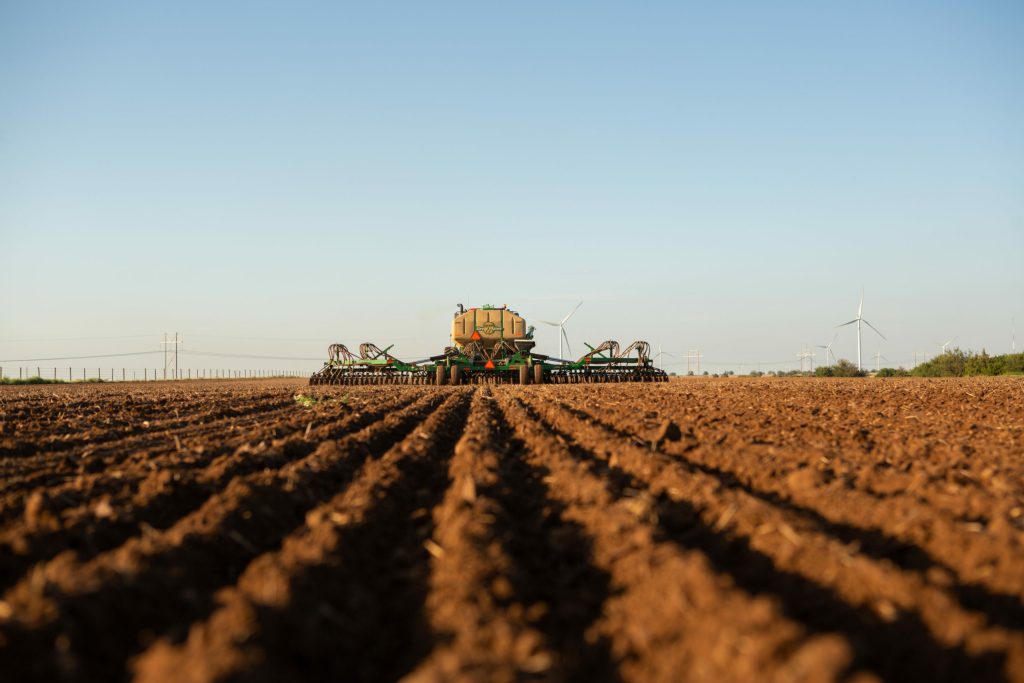
SOUTHERN PLAINS WINTER WHEAT:
In Oklahoma, winter wheat planted reached 71 percent, up 2 points from the previous year but down 4 points from normal. Winter wheat emerged reached 52 percent, up 13 points from the previous year but down 4 points from normal.
In Kansas, winter wheat planted was 85 percent, ahead of 74 percent last year and 79 percent for the five-year average. Emerged was 57 percent, ahead of 44 percent last year, and near 55 percent average.
In Texas, winter wheat planted reached 68 percent, down 6 percentage points from the previous year and down 1 point from the five-year average. Winter wheat emerged reached 45 percent, even with the previous year and the five-year average.
Winter wheat planted reached 77 percent, down 1 percentage point from the previous year and the five-year average. Winter wheat emerged reached 53 percent, up 6 points from the previous year and even with the average.
Corn harvested for the U.S reached 59 percent, even with the previous year and up 5 points from the five-year average.
Soybeans harvested reached 76 percent, down 2 percentage points from the previous year and up 9 points from the five-year average.
Cotton bolls opening reached 90 percent, down 2 percentage points from the previous year and down 1 point from the five-year average. Cotton harvested reached 41 percent, down 3 percentage points from the previous year and up 2 from the average. Cotton conditions rated 29 percent good to excellent, 28 percent fair and 43 percent poor to very poor. Last week's conditions rated 30 percent good to excellent, 27 percent fair and 43 percent poor to very poor.
Rainfall totals in Oklahoma averaged 0.00 inches. According to the October 17th US Drought Monitor Report, drought conditions were rated 73 percent abnormally dry to exceptional drought, down 27 points from last year. Additionally, 48 percent of the state was in the moderate drought to exceptional drought categories, down 52 points from the previous year. Statewide, temperatures averaged in the low 60's.
Winter wheat planted reached 71 percent, up 2 points from the previous year but down 4 points from normal. Winter wheat emerged reached 52 percent, up 13 points from the previous year but down 4 points from normal.
Corn harvested for grain reached 77 percent, down 4 points from the previous year but unchanged from normal. Corn conditions rated 62 percent good to excellent, 25 percent fair and 13 percent poor to very poor. Last week's conditions rated the same.
Sorghum mature reached 93 percent, down 5 points from the previous year but up 1 point from normal. Sorghum harvested for grain reached 52 percent, up 1 point from the previous year but unchanged from normal. Sorghum conditions rated 35 percent good to excellent, 40 percent fair and 25 percent poor to very poor. Last week's conditions rated 31 percent good to excellent, 42 percent fair and 27 percent poor to very poor.
Soybeans dropping leaves reached 80 percent, down 2 points from the previous year but up 4 points from normal. Soybeans harvested reached 37 percent, down 2 points from the previous year but up 5 points from normal. Soybean conditions rated 56 percent good to excellent, 30 percent fair and 14 percent poor to very poor. Last week's conditions rated 62 percent good to excellent, 28 percent fair and 10 percent poor to very poor.
Peanuts mature reached 84 percent, down 6 points from the previous year but up 2 points from normal. Peanuts harvested reached 39 percent, down 2 points from the previous year but unchanged from normal. Peanut conditions rated 98 percent good to excellent, and 2 percent fair. Last week's conditions rated the same.
Cotton bolls opening reached 95 percent, unchanged from the previous year but up 2 points from normal. Cotton harvested reached 22 percent, up 3 points from the previous year and from normal. Cotton conditions rated 4 percent good to excellent, 48 percent fair and 48 percent poor to very poor. Last week's conditions rated 9 percent good to excellent, 39 percent fair and 52 percent poor to very poor.
Hay: The fourth cutting of alfalfa hay reached 95 percent. The fifth cutting of alfalfa hay reached 30 percent, down 9 points from the previous year but up 8 points from normal. The third cutting of other hay reached 66 percent, down 28 points from the previous year but unchanged from normal. The fourth cutting of other hay reached 5 percent, down 29 points from the previous year and down 5 points from normal.
Pasture and range conditions rated 28 percent good to excellent, 31 percent fair and 41 percent poor to very poor. Last week's conditions rated 30 percent good to excellent, 34 percent fair and 36 percent poor to very poor.
Livestock conditions rated 61 percent good to excellent, 31 percent fair and 8 percent poor to very poor. Last week's conditions rated 60 percent good to excellent, 30 percent fair and 10 percent poor to very poor.
Winter wheat planted was 85 percent, ahead of 74 percent last year and 79 percent for the five-year average. Emerged was 57 percent, ahead of 44 percent last year, and near 55 percent average.
Corn harvested was 82 percent, equal to last year, and ahead of 76 percent average.
Soybeans dropping leaves was 97 percent, near 96 percent last year and 95 percent average. Harvested was 71 percent, ahead of 63 percent last year, and well ahead of 50 percent average. Harvested was 57 percent, ahead of 51 percent last year and 45 percent average. Sorghum conditions rated 29 percent good to excellent, 37 percent fair and 34 percent poor to very poor. Last week's conditions rated 34 percent good to excellent, 38 percent fair and 30 percent poor to very poor.
Cotton harvested was 30 percent, behind 42 percent last year, but ahead of 13 percent average. Cotton conditions rated 37 percent good to excellent, 37 percent fair and 26 percent poor to very poor. Last week's conditions rated 37 percent good to excellent, 41 percent fair and 22 percent poor to very poor.
Pasture and range conditions rated 10 percent good to excellent, 32 percent fair and 58 percent poor to very poor. Last week's conditions rated 14 percent good to excellent, 33 percent fair and 53 percent poor to very poor.
Winter wheat planted reached 68 percent, down 6 percentage points from the previous year and down 1 point from the five-year average. Winter wheat emerged reached 45 percent, even with the previous year and the five-year average.
Corn harvested reached 89 percent, down 3 percentage points from the previous year and up 2 points from the five-year average. Corn conditions rated 49 percent good to excellent, 27 percent fair and 24 percent poor to very poor. Last week's conditions rated the same.
Cotton bolls opening reached 86 percent, down 2 percentage points from the previous year and the five-year average. Cotton harvested reached 40 percent, down 1 point from the previous year and up 1 point from the average. Cotton conditions rated 10 percent good to excellent, 24 percent fair and 66 percent poor to very poor. Last week's conditions rated 11 percent good to excellent, 24 percent fair and 65 percent poor to very poor.
Peanuts mature reached 64 percent, even with the previous year and up 7 points from the five-year average. Peanuts harvested reached 35 percent, down 5 percentage points from the previous year and up 5 points from the average. Peanut conditions rated 37 percent good to excellent, 61 percent fair and 2 percent poor to very poor. Last week's conditions rated 38 percent good to excellent, 53 percent fair and 9 percent poor to very poor.
Sorghum harvested reached 97 percent, down 3 percentage points from the previous year and up 4 from the average. Sorghum conditions rated 45 percent good to excellent, 22 percent fair and 33 percent poor to very poor. Last week's conditions rated the same.
Soybeans harvested reached 74 percent, up 3 percentage points from the previous year and down 4 points from the five-year average. Soybean conditions rated 35 percent good to excellent, 37 percent fair and 28 percent poor to very poor. Last week's conditions rated the same.
Range and pasture conditions rated 7 percent good to excellent, 26 percent fair and 67 percent poor to very poor. Last week's conditions rated 7 percent good to excellent, 24 percent fair and 69 percent poor to very poor.
 The American Soybean Association is pleased to announce an addition to its Washington, D.C.-based advocacy staff. Joe Prosser joins ASA Oct. 25 in a newly created policy manager role, one of two that will be filled this fall. Prosser and the second manager will round out the policy team, led by Executive Director of Government Affairs Christy Seyfert and including three directors of government affairs. Prosser grew up in the suburbs of Omaha, Nebraska, and worked during harvest and planting seasons—and, he says, "any time in between I could get down there,"—on his family's wheat and soybean farm in Larned, Kansas. It was there he developed an appreciation for agriculture and helping others understand where food and agricultural products come from. Seyfert said Prosser was a standout candidate, commenting, "We were impressed by Joe's experience on the Hill specific to agriculture and enthusiasm for joining ASA and representing soybean farmers. We know he will be a great addition to our D.C. policy team." ASA advocates on policy issues ranging from farm policy and biofuels to trade, conservation, biotechnology, animal ag, tax law, regulatory decisions affecting crop protection and more—issues that impact the livelihoods of U.S. soybean farmers across some 30 major soy states. The policy managers will contribute to policy development and advocacy execution, collaborate across ASA functions to provide team support, and build relationships with ASA's diverse stakeholders. Prior to accepting the position with ASA, Prosser worked as a legislative assistant for agriculture and financial services for Congressman John Duarte (R-CA), legislative correspondent for Senator Joni Ernst (R-IA) covering agriculture, energy, environment and cryptocurrency, and he interned with Senator Roger Marshall (R-KS). Prosser earned a Bachelor of Science in Economics from Kansas State University with a minor in political science. |
| ### The American Soybean Association (ASA) represents U.S. soybean farmers on domestic and international policy issues important to the soybean industry. ASA has 26 affiliated state associations representing 30 soybean-producing states and more than 500,000 soybean farmers. More information at soygrowers.com. |
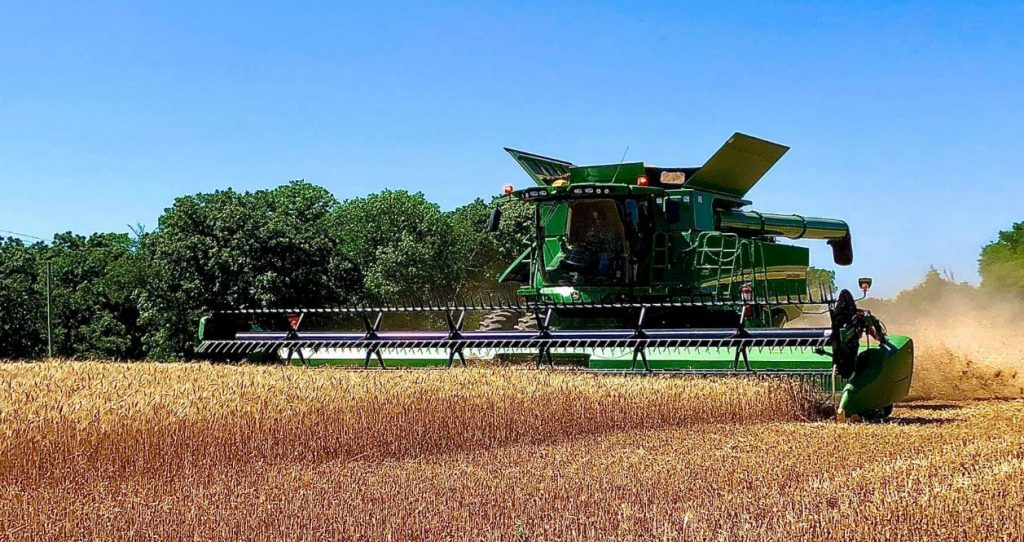
The National Wheat Yield Contest is thrilled to announce the achievements of its 24 national winners, hailing from 12 different states, who have achieved an average yield of 144 bushels per acre across all categories. Additionally, we proudly recognize the 83 state winners representing 28 states, with their remarkable yields averaging 127 bushels per acre across the various categories, including Winter Wheat-dryland, Winter Wheat-irrigated, Spring Wheat-dryland, and Spring Wheat-irrigated. It is worth noting that some dryland category winners are determined by high yield, while others are evaluated based on their percentage over the county average.
One of the highlights this year is the exceptional resilience demonstrated by wheat growers. Despite facing adversity, with 59% of winter wheat production affected by drought on May 9, and 75% of spring wheat production impacted on July 25, these dedicated individuals have showcased their unwavering commitment to maximizing their wheat productivity in spite of environmental challenges. The entry deadlines for the contest, falling on May 15 and August 1 for winter and spring wheat, received robust participation, defying the odds posed by prolonged drought in the central and southern plains, as well as the challenging conditions in spring wheat areas.
"Eastern soft winter wheat areas had tremendous yields this year, and millers are happy with the quality of wheat coming from these areas. It is exciting to see the potential when the genetics, management, and environment are all aligned in the wheat grower's favor." Commented Bernard Peterson, Chairman of the National Wheat Foundation, and farmer in Loretto, KY.
The contest not only emphasizes high yield but also places great importance on quality. The 24 national winners will submit grain samples for detailed analysis of milling and baking qualities, with expert panels assessing the wheat samples for quality. Outstanding quality will be rewarded with $250 awards at the reception, and these exceptional quality winners will be officially announced in mid-January.
In recognition of their outstanding achievements, the national winners will be honored with a trip to the Commodity Classic in February 2024, hosted in Houston, TX. The accolades will culminate in a special celebration at the National Wheat Foundation Winner's Reception on February 28, 2024.
These remarkable individuals not only demonstrate exceptional yields but also exemplify the unwavering spirit and dedication within the wheat industry, setting a high standard for excellence and innovation.
The contest would not be possible without the help of our tremendous partners: John Deere, WestBred, BASF, U.S. Wheat Associates, Croplan, Eastman, The McGregor Companies, AgriMaxx, Ardent Mills, BushelFarm, Dyna-Gro, GrainSense, Limagrain Cereal Seeds, Mennel, North Carolina Small Grain Growers Association, Ohio Corn&Wheat, PlainsGold, UniSouth Genetics, UPL, Grain Craft, Grow Pro, Kansas Wheat, Michigan Wheat, Miller Milling, North Dakota Mill, and Northern Crops Institute.
An additional thanks to Progressive Farmer/DTN, the official publication of the National Wheat Yield Contest.
See the national winners here and the state winners here.
2023 NATIONAL WINNERS
Winter Wheat-Dryland
Bin Buster Dick Judah OR
1st Derek Berger OR
2nd Randy Eschenburg MI
3rd Kent Edwards OH
4th Guy Gochenour VA
5th William Willard MD
1st-% Over County Marc Arnusch CO
2nd-% Over County Brett Arnusch CO
3rd-% Over County Travis Freeburg NE
4th-% Over County Casey Cantwell CO
5th-% Over County David Ebers OK
Winter Wheat-Irrigated
Bin Buster Chris Gross WA
1st Gary Reynolds ID
2nd Nick Suwyn MI
Spring Wheat-Dryland
Bin Buster Brad Disrud ND
1st John Wesolowski MN
2nd Lance Olson ND
3rd Trevor Stout ID
1st-% Over County Austin Kautzman ND
2nd-% Over County Jason Signalness ND
3rd-% Over County Devan Laufer ND
Spring Wheat-Irrigated
Bin Buster Dallin Wilcox ID
1st Jess Blatchford OR
2nd Jeff Bieber ND
For more details on the National Wheat Yield Contest, visit yieldcontest.wheatfoundation.org. For questions on sponsorship of the 2024 contest, contact Anne Osborne aosborne@wheatworld.org.
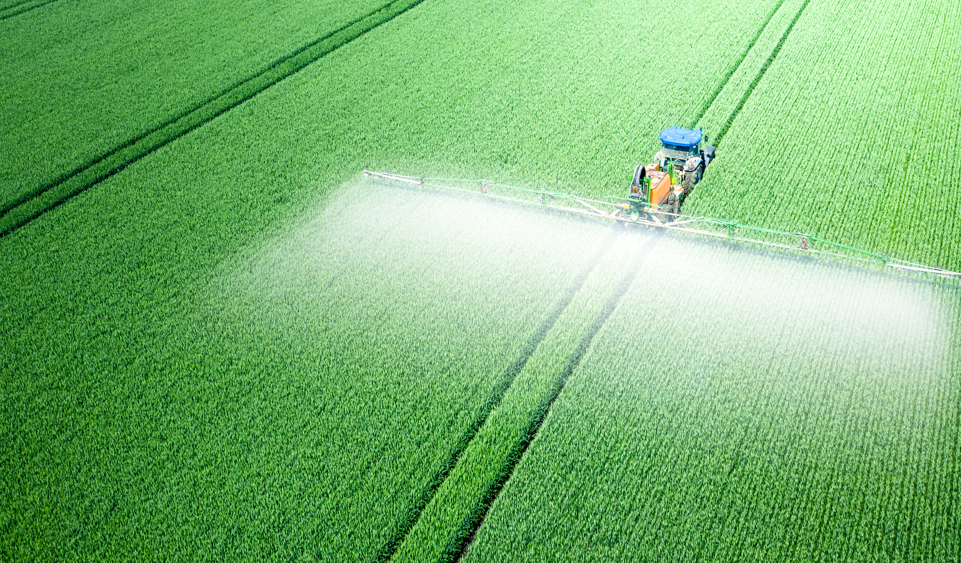
Nearly 1,500 farmers, ranchers, pesticide applicators, and agricultural producers from across the country have come together to voice strong disapproval to EPA, criticizing the agency's Endangered Species Act herbicide strategy framework proposal. The agricultural producers, who called for withdrawal of the strategy in a letter sent to EPA, expressed grave concern over the impacts it would likely have on U.S. agricultural production and conservation efforts.
The hundreds and hundreds of farmers and other individuals raised numerous issues with the proposal in the letter, including that it is very complex and makes it difficult for producers and applicators to even determine their regulatory requirements. There were also concerns with the proposal lacking sufficient, affordable options with which growers can comply. For many producers, the new regulations would cost their farms millions of dollars, while others may be unable to comply at all, jeopardizing their access to needed herbicides and thus threatening their businesses.
"Weeds are one of the most devastating pests farmers face," said Alan Meadows, a soybean grower from Halls, Tennessee, and director of the American Soybean Association. "Weeds can steal limited water and nutrients from the soil and crowd out your crop. If not properly managed, they can quickly overtake a field and even result in total crop failure. If the herbicide strategy or other regulations deprive us of the tools needed to manage these destructive pests, many farms across the U.S. will struggle to stay afloat."
Importantly, the letter also cites concerns farmers have with the proposal's likely impact on the environment. Many conservation practices, such as reduced tillage and cover crops, are highly dependent on herbicide access. Most growers in the U.S. terminate their cover crops with herbicides before planting their primary crop. Herbicides also afford farmers an alternative to tilling the soil to eradicate weeds, allowing for soil carbon sequestration and significant reductions in both soil erosion and tractor fuel use. These and other environmental benefits could be at risk if farmers lose access to herbicides under this proposal. Read the full farmer letter to EPA here.
The Food and Agriculture Climate Alliance (FACA)
The Food and Agriculture Climate Alliance (FACA) is encouraged by the release of USDA's General Assessment of the Role of Agriculture and Forestry in the U.S. Carbon Markets. The release of this report marks the first step in USDA's implementation of the bipartisan Growing Climate Solutions Act, which was included in the Consolidated Appropriations Act of 2023.
Passage of the bipartisan Growing Climate Solutions Act was a top priority for FACA last Congress, and we are pleased to see USDA making progress on its implementation. Voluntary carbon markets offer an opportunity for farmers, ranchers and forest owners to be compensated for reducing their environmental footprint. FACA continues to support the establishment of a USDA program to ensure producers have access to reliable information and resources.
Our members look forward to reviewing the report in full and are committed to working with USDA on its efforts to assist producers interested in exploring voluntary market opportunities.
FACA members are united in support of climate policies that are voluntary, market-based and scientifically sound. Read FACA policy recommendations and see the full list of member organizations at agclimatealliance.com.
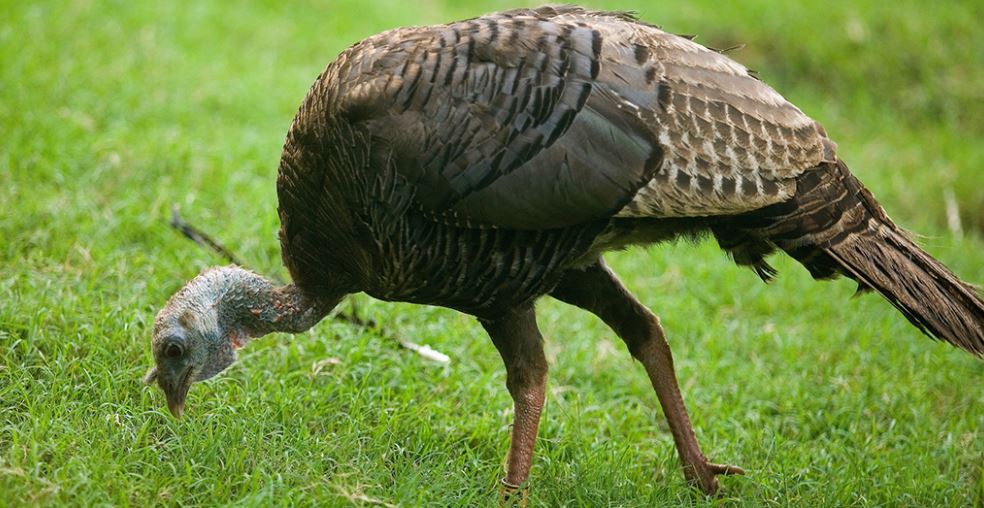
The Senate Tourism and Wildlife Committee heard from wildlife experts Monday about why Oklahoma has seen a significant decline it its turkey population. Sen. Blake "Cowboy" Stephens, R-Tahlequah, requested the study to find possible legislative solutions to increase their numbers.
"As someone who grew up hunting in rural Oklahoma, I'm extremely concerned and saddened by the disturbing drop we've seen in our state's turkey population in recent years," Stephens said. "We have a legislative and moral responsibility to protect not only our state lands, but the species that inhabit them, including the wild turkey. I appreciate the recommendations we received from our state's wildlife experts and am looking forward to working with my colleagues to help better protect the majestic thunder chicken as it is fondly referred to."
According to the Oklahoma Department of Wildlife Conservation (ODWC), this is not the first time the wild turkey population has dropped since they were first documented in the state in 1832. The ODCW closed their hunting season in 1916 and it was thought they were extinct in 1925. From 1948 to 1996, the agency embarked on a successful restoration project. Today, there are three subspecies throughout the state and hunting is allowed in all 77 counties.
The agency conducts multiple surveys throughout the year to track the populations, which have shown steady decline in the last decade in the state's four major regions. The southwest region has seen the greatest loss during that time at over 18,000, with the most significant drop in harvested birds between 2020 and 2021 when the state actually saw a major spike in the number of hunting licenses, pointing to a severe problem with the turkey population. The northwest region has seen a loss of over 14,000 birds with a slight rebound in the last year. The central and northeast regions have both seen continuous decreases in populations.
While there are a number of factors that contribute to the turkey population decline, USDA Wildlife Services pointed to nest predation by mesocarnivores, such as raccoons, skunks, crows, and feral swine as the top cause.
Recommendations to increase the turkey population, included maintaining and supporting Wildlife Management Areas (WMA) and providing technical assistance to landowners to protect the turkey habitat. Other recommendations included better managing predator populations, especially during nesting season, which would involve raising awareness and providing more training to private land owners, counties, hunting clubs and others about the most successful techniques to decrease predator populations. Experts also noted that the state needs better information on turkey demographics and population genetics to effectively manage their populations. A list of speakers and their presentations is available at https://oksenate.gov/committees/meeting-notices/tourism-and-wildlife-2nd-revised-2
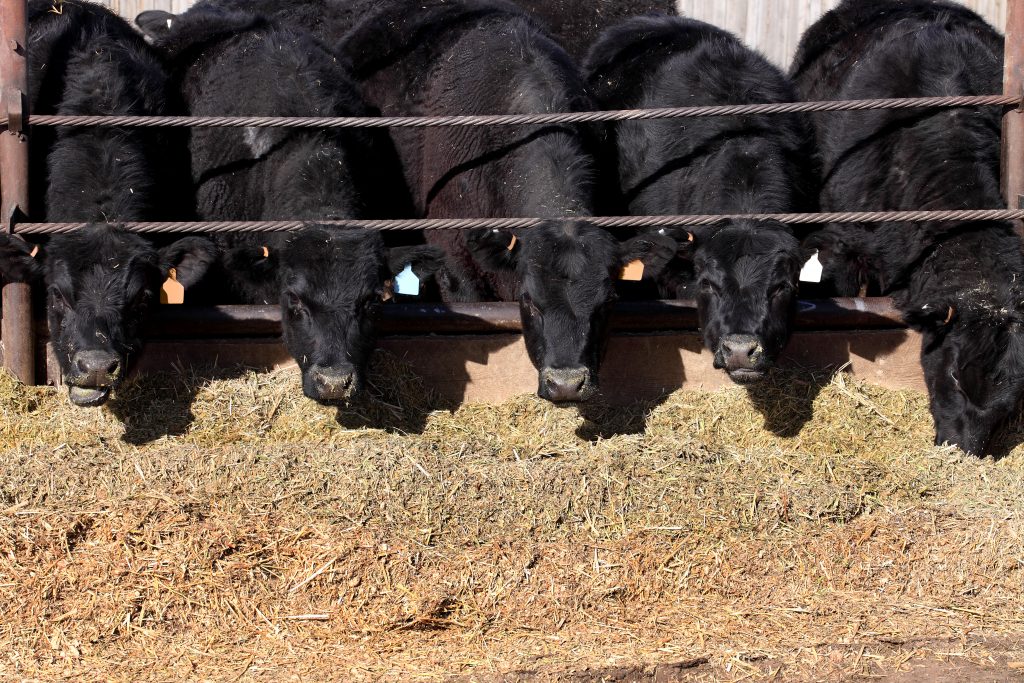
Senior Farm and Ranch Broadcaster, Ron Hays, is back talking with Oklahoma State University Extension Livestock Marketing Specialist Dr. Derrell Peel about the latest Cattle on Feed report issued by the USDA and heifer numbers in feedlots.
In the report issued on October 20, placements were up six percent from one year ago. Peel said while this number is eye-catching, the number he is paying closest attention to is the number of females in feedlots.
"What is really important in this report is the quarterly breakdown on steers and heifers," Peel said. "If you look at absolute numbers, the number of cattle on feed now is up 71,000 head from a year ago, and 60,000 head of that increase year-over-year is heifers."
Peel said heifers represent 40 percent of total cattle on feed inventory. In the short run, Peel said there are more cattle in feedlots, but in the long run, this report shows that heifer retention has not commenced and will most likely be postponed well into 2024.
"Without a doubt, we will see a smaller beef cow herd in January, and depending on what happens next year with drought and producer expectations, that will probably be the cyclical low, but I suppose at this point we have to kind of wait and see," Peel said.
It is too late in the season, Peel said, to change the picture much for this fall when it comes to heifer retention. Any potential regrowth in the herd will depend on what happens next year, he added.
"For 2024 and probably a couple of years beyond that, we are talking about very tight supplies and continually high prices," Peel said.
The Beef Buzz is a regular feature heard on radio stations around the region on the Radio Oklahoma Ag Network and is a regular audio feature found on this website as well. Click on the LISTEN BAR for today's show and check out our archives for older Beef Buzz shows covering the gamut of the beef cattle industry today.
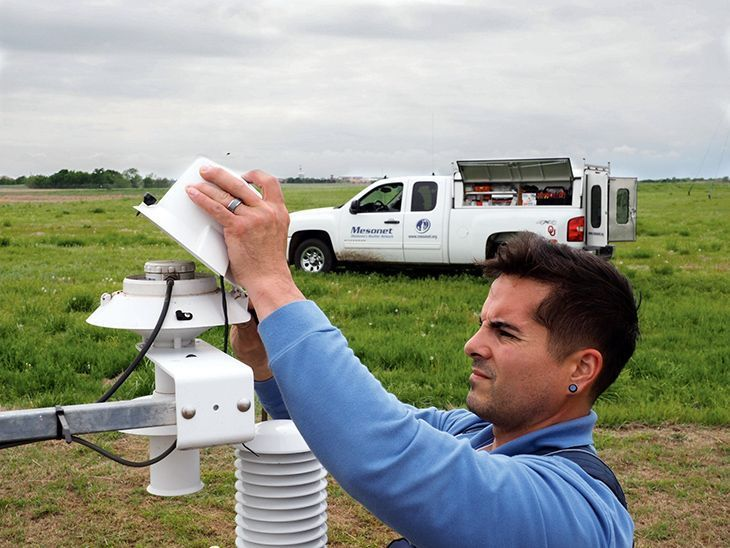
Next week, the Science Committee is preparing to introduce The Weather Act Reauthorization, comprehensive legislation that continues to strengthen and advance the U.S. weather system.
Farm and Ranch Broadcaster, Ron Hays, is talking with Congressman Frank Lucas about his work on weather reauthorization as Chairman of the House Committee on Science, Space and Technology.
The Weather Reauthorization Lucas will soon be covering in committee will be important for Oklahomans and the Oklahoma Mesonet system. Reauthorization will ensure the state's system remains thriving and successful and a model for other states and regions to learn from.
"The goal of the Weather Act, of course, is how to simultaneously move forward to use the accomplishments of the previous bill, develop promising technologies and techniques from everything from hurricane forecasting on down the line, improve the speed with which we get our forecasts, extend the length of those forecasts...," Lucas said.
Weather impacts everything and everyone, Lucas said, regardless of place or industry. Lucas said the Weather Reauthorization Act will improve NOAA's efforts at modernization flexibility and accuracy.
"This is a piece of legislation we work really hard on in a very bipartisan way in the Science Committee, and we should be ready to go to file the bill shortly," Lucas said.
One of the highlights of this bill Lucas talked about includes providing farmers and ranchers better tools and services for agriculture and water management, including improvements to subseasonal to seasonal research and forecasting.
"It will enable producers to better judge and gauge what kind of crops they should raise, how many resources they should invest in those, should they change to a different crop and giving them the necessary information," Lucas said.
Farmers and ranchers feed and clothe the world, Lucas said, and they need the best technology to handle what they cannot control, including the weather.
"That is what this weather reauthorization is all about," Lucas said. "Providing them with more accurate, factual, longer-term information to make their decisions on," Lucas said.
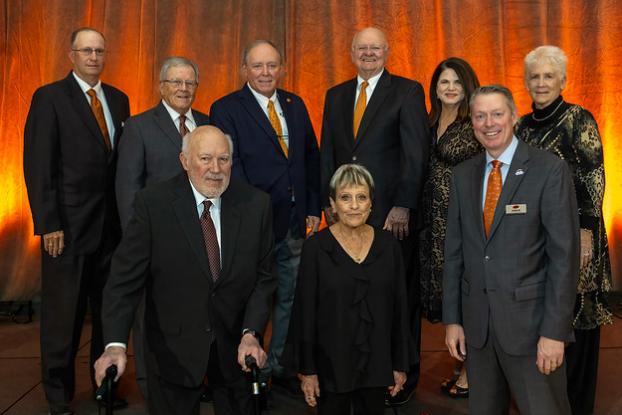
Recipients of the 2023 Oklahoma State University Ferguson College of Agriculture Distinguished Alumni Award include (back row) Eddie Fields, Terry Tippens, Andy Cole, Gary Clark, Heather Buckmaster and Lou Bentley on behalf of her late husband Lionel Bentley. Recipients of the 2023 Champion for OSU Agriculture Award include (front row) Jon Newell and Kay Ingersoll, who was honored with her late husband Win Ingersoll. Also pictured is Jayson Lusk, vice president and dean of OSU Agriculture. (Photo by Mitchell Alcala, OSU Agriculture)
Oklahoma State University recently honored an outstanding group of individuals who have brought distinction to the Ferguson College of Agriculture and demonstrated a continuing commitment to agricultural sciences and natural resources.
During the OSU Agriculture Honors ceremony on Oct. 20, the Division of Agricultural Sciences and Natural Resources, comprised of the Ferguson College of Agriculture and two state agencies – OSU Extension and OSU Ag Research – recognized honorees of the 2023 Distinguished Alumni and Champions for OSU Agriculture awards.
"The awards celebrated during OSU Ag Honors are the most prestigious honors the division can bestow on an individual," said Jayson Lusk, vice president and dean of OSU Agriculture. "From supporting the New Frontiers campaign, helping to build a state-of-the-art teaching, research and Extension facility for OSU Agriculture, creating scholarships benefiting students and serving as champions for the agricultural industry, this year's recipients are an incredible group whom we are proud to recognize."
The late Lionel Bentley of Washington, Heather Buckmaster of Oklahoma City, Gary Clark of Stillwater, Andy Cole of Amarillo, Texas, Eddie Fields of Wynona and Terry Tippens of Edmond were honored as 2023 Distinguished Alumni Award recipients.
Established in 1983, the Distinguished Alumni Award recognizes individuals whose accomplishments serve as a model for current and future Ferguson College of Agriculture students.
In addition, the late Win Ingersoll and wife Kay of Inola as well as Jon Newell of St. Louis, Missouri, were honored as 2023 Champions for OSU Agriculture.
Established in 2011, the Champion for OSU Agriculture Award recognizes individuals who are not graduates of the Ferguson College of Agriculture but who have brought distinction to the division.
Lyndall Stout, OSU Agriculture Office of Communications & Marketing director and host of the television show "SUNUP," served as the event's master of ceremonies.
"The OSU Ag Honors ceremony is always one of my favorite nights to celebrate the incredible honorees and learn more about them through special videos telling their life stories," she said. "The 2023 recipients are among an impressive group of honorees, and we appreciate the opportunity to applaud their many achievements."
Visit OSU Agriculture Honors to learn more about this year's honorees in addition to past recipients of the Distinguished Alumni and Champion for OSU Agriculture awards.

Leveraging the strength of a global marketing team embedded within local markets throughout the world, Alltech is enhancing its marketing capabilities and establishing new teams to deliver greater strategic partnership across the business for Alltech's customers.
"We are capitalizing on the geographical and value chain differentiators of our global marketing structure, providing more pathways for our field-based team members to bring the voice of the customer back into the business," said Susanna Elliott, chief marketing and communications officer at Alltech. "Our globally connected yet locally focused marketing strategy is aligning to deliver more relevance – and competitive edge – to our customers."
Within marketing, the company is establishing a new Data & Insights function, positioning its creative team to take a global creative agency approach and building new pathways for market and customer engagement. To champion these enhanced capabilities, new appointments within Alltech's global marketing team include:
Creative team:
Data & Insights team:
Communications team:
Species teams:
For more information about Alltech, visit alltech.com.
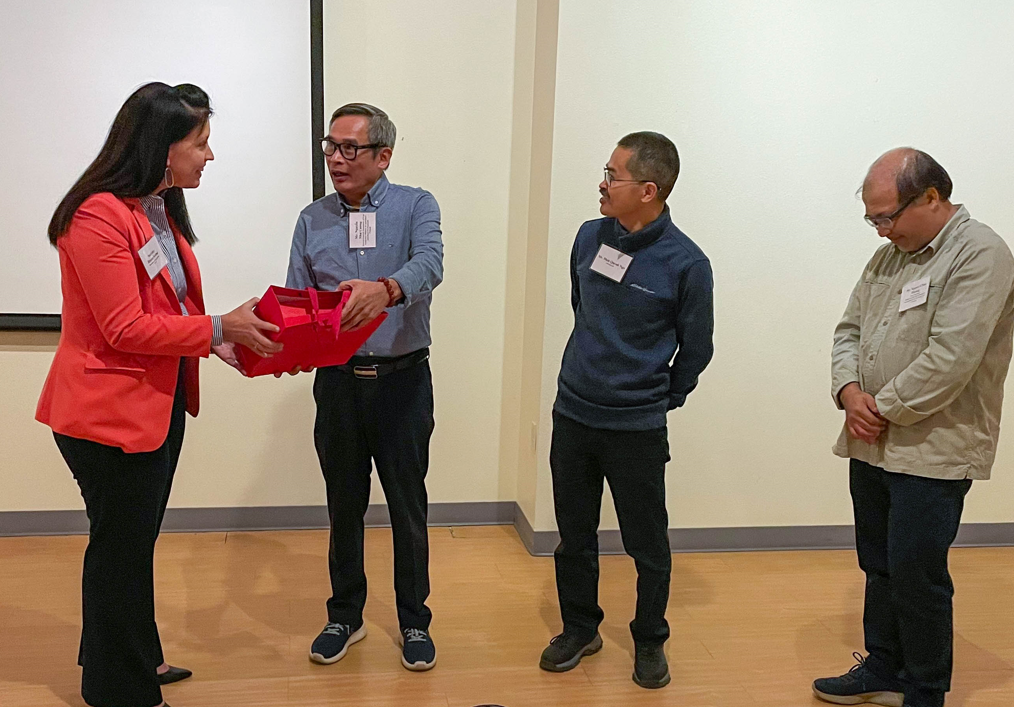
The Oklahoma State Board of Agriculture hosted delegations from Vietnam and Thailand this week as part of an inbound trade mission. The delegates made stops in Oklahoma, Arkansas, and Texas.
"We always enjoy introducing people to Oklahoma agriculture," said Oklahoma Secretary of Agriculture Blayne Arthur. "One of our primary goals at the department is to increase opportunities for our local producers to expand their business to markets around the world."
The trade mission took place in southeast Oklahoma, home to the vast majority of the state's forestland. The delegates toured a tree farm in Idabel, a distillery in Hochatown, and the Oklahoma Department of Agriculture, Food, and Forestry Tree Improvement Center.
Members of the Oklahoma State Board of Agriculture partnered with the National Association of State Departments of Agriculture to host the Oklahoma portion of the trade mission. NASDA, which is comprised of secretaries, directors, and commissioners of agriculture from across the United States, sent representatives to Vietnam and Thailand on trade missions earlier this year.
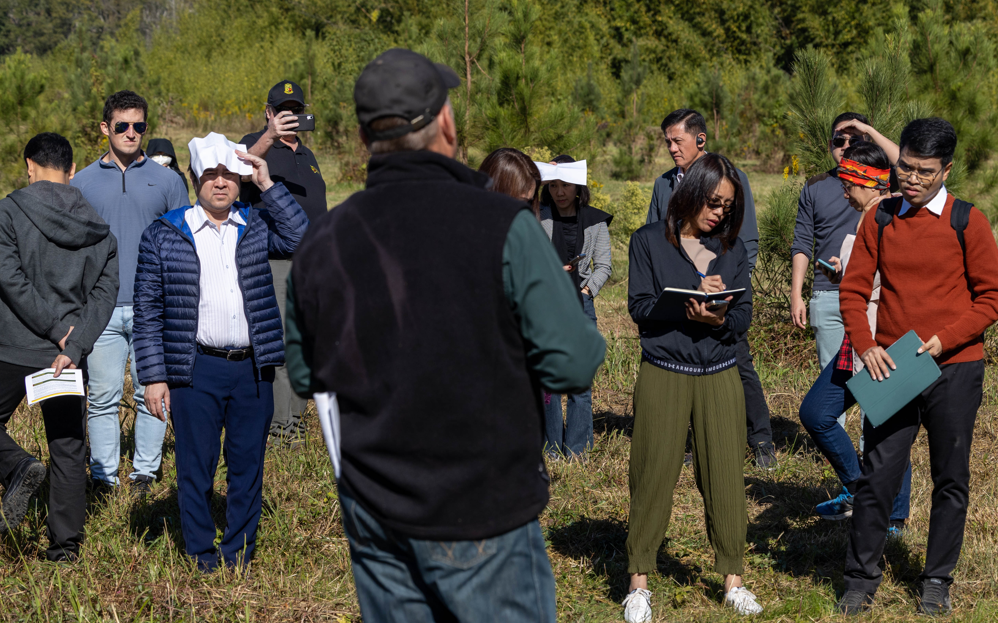
Last month, Arthur was elected NASDA President at the conclusion of the NASDA Annual Meeting in Cheyenne, Wyo.
"The opportunity to serve NASDA as President is incredibly humbling and certainly an honor, and I appreciate the support of my fellow ag Commissioners in this new role," Arthur said. "Agriculture looks different all across the United States, but I look forward to working together to cultivate common ground as we help producers feed, fuel, and clothe the world. NASDA members will remain steadfast in our commitment to strengthen and promote agriculture in this country, and I am excited to continue this work with my colleagues."
Nematodes are the leading cause of soybean yield loss in the United States, costing growers an estimated $1.5 billion in yield annually.[1] These microscopic organisms are present in most areas where soybeans are grown, and because they feed on the roots of the plant, the damage caused by nematodes is often invisible without any aboveground symptoms. With the release of Poncho® Votivo® Precise seed treatment, BASF Agricultural Solutions provides soybean growers with another way to defend their fields from multiple generations of nematodes, increasing early-season crop vigor and maximizing yield potential.
Poncho Votivo Precise seed treatment creates a living biological barrier that grows with the root, preventing damage from a wide range of nematode species and encouraging plant growth. Enhanced root growth and biomass at key development stages is critical to increasing yield potential, and Poncho Votivo Precise seed treatment supports a strong start to the season.
"Protection from nematodes is paramount to maximizing soybean growth and yield potential," said Troy Bauer, BASF Senior Field Technical Representative, Seed Treatments. "Poncho Votivo Precise seed treatment is unique in that it combines a biological and insecticide. The biological grows with the root system to protect the soybean from nematodes while the insecticide delivers immediate protection from key insect pests."
Poncho Votivo Precise seed treatment also supports early-season plant vigor by providing strong performance against a broad spectrum of damaging insects and pests – both above and below the ground. The insecticidal active ingredient delivers immediate efficacy from key early-season insects including aphids, seed corn maggots, bean leaf beetle, white grubs and grape colaspis.
BASF Agricultural Solutions continues to provide industry-leading protection from nematodes for growers doing the Biggest Job on Earth. The impact of Sudden Death Syndrome (SDS) in soybeans can be exacerbated by nematode pressures, making it critical to manage SDS and nematodes with Poncho Votivo Precise or ILEVO® seed treatments depending on your field pressure. To learn more, visit: agriculture.basf.us
Read and follow label directions. Poncho®, Votivo® and ILEVO® are registered trademarks of BASF. © 2023, BASF Corporation. All Rights Reserved.
About BASF's Agricultural Solutions division
Farming is fundamental to provide enough healthy and affordable food for a rapidly growing population while reducing environmental impacts. Working with partners and agricultural experts and by integrating sustainability criteria into all business decisions, we help farmers to create a positive impact on sustainable agriculture. That's why we invest in a strong R&D pipeline, connecting innovative thinking with practical action in the field. Our portfolio comprises seeds and specifically selected plant traits, chemical and biological crop protection, solutions for soil management, plant health, pest control and digital farming. With expert teams in the lab, field, office and in production, we strive to find the right balance for success – for farmers, agriculture and future generations. In 2022, our division generated sales of €10.3 billion. For more information, please visit www.agriculture.basf.com or any of our social media channels.
About BASF
BASF Corporation, headquartered in Florham Park, New Jersey, is the North American affiliate of BASF SE, Ludwigshafen, Germany. BASF has approximately 16,000 employees in North America and had sales of $25.7 billion in 2022. For more information about BASF's North American operations, visit www.basf.com/us.
At BASF, we create chemistry for a sustainable future. We combine economic success with environmental protection and social responsibility. More than 111,000 employees in the BASF Group contribute to the success of our customers in nearly all sectors and almost every country in the world. Our portfolio comprises six segments: Chemicals, Materials, Industrial Solutions, Surface Technologies, Nutrition & Care and Agricultural Solutions. BASF generated sales of €87.3 billion in 2022. BASF shares are traded on the stock exchange in Frankfurt (BAS) and as American Depositary Receipts (BASFY) in the United States. Further information at www.basf.com.
[1] 2015-2021 Crop Protection Network annual soybean cyst nematode (SCN) estimated yield loss at commodity price ($14/bu.)
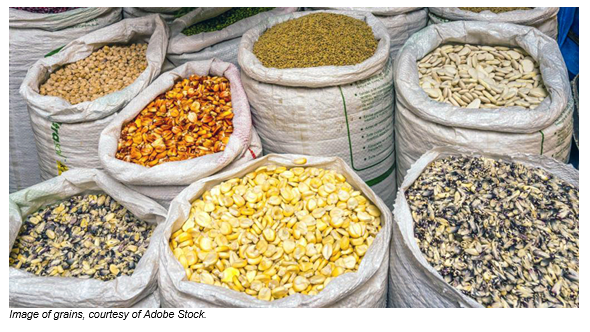
The Specialty Crop Research Initiative (SCRI) program addresses critical needs of the specialty crop industry by awarding grants to support research and Extension that address key challenges of national, regional and multi-state importance in sustaining all components of food and agriculture, including conventional and organic food production systems. Projects must address at least one of five focus areas:
Application deadline is December 8. For more information, read the SCRI funding opportunity.
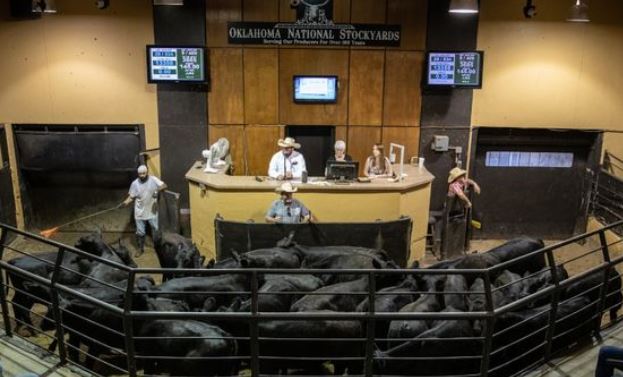
Dr. Derrell Peel, Oklahoma State University Extension Livestock Marketing Specialist, offers his economic analysis of the beef cattle industry as part of the weekly series known as the "Cow Calf Corner," published electronically by Dr. Peel and Mark Johnson. Today, Dr. Peel talks about cattle prices.
Higher placements and reduced marketings resulted in an October 1 feedlot inventory of 11.58 million head, 0.6 percent higher than one year ago. This was the first monthly year-over-year increase in 13 months and the second highest October on-feed total in the data series back to 1996. The October USDA Cattle on Feed report showed September feedlot marketings down 10.6 percent year over year. This marketing total reflects one less business day in the month compared to last year and was slightly less than average pre-report estimates for marketings. September feedlot placements were up 6.1 percent from one year ago. Placements were expected to be up year over year, but this total was larger than pre-report estimates.
Despite ever smaller feeder cattle supplies, feedlot inventories have temporarily halted the slow decline of the last year with the September surge in placements. Sixty-eight percent of the increase in September placements were between 700 and 900 pounds, which means that the bulk of the cattle will be marketed in the first quarter of 2024. The remaining increase in placements were cattle weighing less than 700 pounds and will be marketed in the second quarter of the year. Some of the placements were likely drought-forced early feeder sales and may be offset by some reduction in feeder numbers in the fourth quarter. Increased placements no doubt also reflects many producers selling feeder cattle to take advantage of the sharply higher prices this fall.
Continued heifer feeding made up the biggest part of the increase in feedlot inventories. October 1 feedlot inventories were up 71,000 head from one year ago and heifers made up 60,000 head (84.5 percent) of the increase. The number of heifers on feed was up 3.7 percent from July and up 1.3 percent over last year. This is the largest October heifer on feed total in the data series back to 1996. Heifers currently represent exactly 40 percent of the total cattle on feed, up fractionally from July and are at the highest percentage of feedlot inventories since October 2001.
The industry continues to liquidate females. Monthly slaughter data through September shows that total female (cow + heifer) slaughter has averaged 51.8 percent of total cattle slaughter for the past twelve months. This is the highest twelve-month average female slaughter percentage since August 1986. The latest slaughter data and the latest Cattle on Feed report both suggest that heifer retention is not beginning in 2023. Year-to-date beef cow slaughter is down 12.9 percent from last year but will still result in a net culling rate over 11.5 percent for year - indicating continued liquidation. The beef cow herd will be smaller in January 2024, and it increasingly looks like the best that could happen in 2024 is to stabilize the herd with significant growth delayed until 2025 or beyond.
Beef production is down 5.2 percent thus far in 2023. This is a significant decline from 2022 record beef production but is less of a decrease than would be the case if herd liquidation were not continuing. Smaller beef cow inventories are ahead and more dramatic reductions in cattle slaughter and beef production – and higher cattle prices - will occur when herd rebuilding gets rolling. This process looks to continue into 2026 at least. This latest Cattle on Feed report may be taken as bearish for cattle markets in the short term, but it is certainly bullish for cattle markets in the coming years.
J-Team Dairy is home to 200 Holstein cows in Orange County, Virginia. Today, it's one of two dairies in the county, compared to a dozen 20 years ago.
Molly McWilliams says the secret to her dairy's survival is simple: "Put your cows first, and they'll take care of you."
McWilliams, 29, is a fifth-generation dairy farmer and new mom to a one-year-old daughter who she hopes will one day make the sixth generation of J-Team Dairy. To get there, McWilliams prioritizes innovation, sustainability and of course, her cows.
For the rest of McWilliams' story and others in our Farmer Focus series, check out NMPF's Sharing Our Story page
RON's Dave Lanning has a pre-opening look at today's agricultural Markets.
Click the audio tab below for today's report.
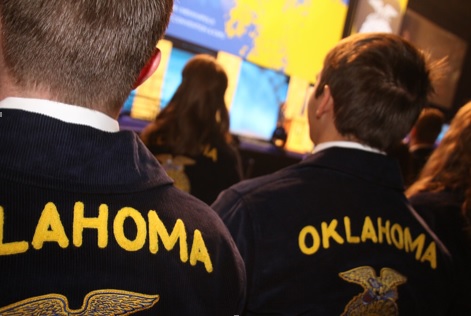
More than 4,000 Oklahoma FFA members are expected to make the trip to Indianapolis for the 96th National FFA Convention and Expo November first through the fourth.
Oklahoma Farm Report's Ron Hays talked to the Executive Secretary of the Oklahoma FFA Association, Trevor Lucas, who says thousands of Blue and Gold jackets will be seen next week in Indianapolis in and around the FFA Convention- "upwards of four to five getting close to six thousand Oklahoma FFA members will make the trek up to the National FFA Convention in Indianapolis- that's pretty impressive"
Lucas says that Oklahoma will be well represented in the more one hundred competitive events that are decided at the National Convention here in 2023. "We are number one in proficiency award national finalists and we're number three in the agriscience fair finalists" and in the number of national three star chapters we have the fourth most of any state in America.
Here's the list of several of these categories and how Oklahoma FFA ranks against other top preforming states:
2023 National FFA Convention Finalist Results
Proficiency National Finalists
1. Oklahoma 20
2. Ohio 19
3. Georgia 18
4. Texas and California tied with 16
Agricultural Proficiency Awards honor FFA members who, through supervised agricultural experiences, have developed specialized skills that they can apply toward their future careers.
Nationally, students can compete for awards in nearly 50 areas ranging from agricultural communications to wildlife management. Proficiency awards are also recognized at local and state levels and provide recognition to members that are exploring and becoming established in agricultural career pathways.
Agriscience Fair National Finalists
1, Texas 31
2. Ohio 30
3. Oklahoma 28
4. Georgia 26
5. California 23
The National FFA Agriscience Fair recognizes students who gain real-world, hands-on experiences in agricultural enterprises. Students use scientific principles and emerging technologies to solve complex problems related to agriculture, food, and natural resources. The agriscience fair is for middle and high school students. Participation begins at the local level and progresses to state and national levels.
National 3 Star Chapters
Chapters that receive a gold rating by their state FFA associations are eligible to compete for National FFA 3-star, 2-star or 1-star ratings. Each chapter that competes for these awards will receive a multi-year plaque and a spur designating their 3-star, 2-star or 1-star rating. They will receive additional spurs for each year they compete and receive a rating from the National FFA Organization. Chapters that receive a national 3-star chapter rating will be eligible to compete for the National Premier Chapter Awards, Models of Excellence and Middle School Models of Excellence Awards.
National 3 Star Premiere Chapters
The national level also recognizes the top chapters with innovative activities in each of the three divisions: growing leaders, building communities and strengthening agriculture. The top ten chapters in each division receive a National FFA Premier Chapter Award plaque. Of those top ten in each division, a top premier chapter will be chosen in each division. Only 3-star chapters are eligible for premier chapter awards.
Hays and Lucas also talked about one young lady who will be on the Lucas Oil Stadium stage from beginning to end as one of the six national FFA officers who is serving as the National Central Region Vice President- Karstyn Cantrell of Skiatook. Click here for a conversation that Ron Hays had with her earlier this year when she stopped and participated in the 2023 Oklahoma FFA Convention in Tulsa.
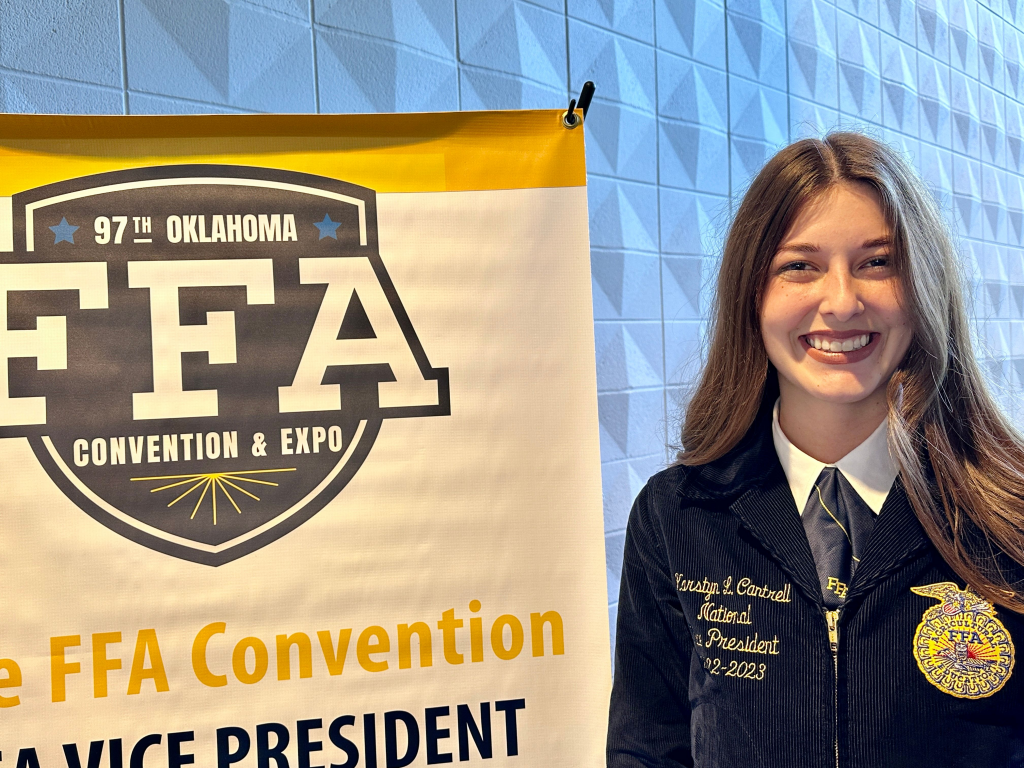
Check out the PDF below which lists the hundreds of FFA members (and supporters) from Oklahoma that are competing or being recognized November 1-4 in Indianapolis.
Placements in the October Cattle on Feed Report caught most analysts by surprise- as they totaled 2.21 million head in September, 6% above 2022. Net placements were 2.15 million head. The six percent above a year ago was well above the pre report guess average of one percent above a year ago.
Cattle and calves on feed for the slaughter market in the United States for feedlots with capacity of 1,000 or more head totaled 11.6 million head on Oct. 1, 2023. The inventory was 1% above Oct. 1, 2022, USDA NASS reported on Friday. This is the second-highest Oct. 1 inventory since the series began in 1996. The inventory included 6.95 million steers and steer calves, up slightly from the previous year. This group accounted for 60% of the total inventory.
Heifers and heifer calves accounted for 4.64 million head, up 1% from 2022.
Marketings of fed cattle during September totaled 1.66 million head, 11% below 2022.
| USDA Actual | Average Estimate | Range | |
| On Feed Oct. 1 | 101% | 99.7% | 99.0-100.3% |
| Placed in September | 106% | 101.0% | 95.9-104.8% |
| Marketed in September | 89% | 90.4% | 89.5-91.5% |
Oklahoma State University Extension Livestock Market Economist Dr. Derrell Peel says "Big placements which kinda reverses the trends that we had been seeing of year over year decreases in the on feed numbers at least temporarily."
As to why this six percent increase in placements, Peel sees several reasons- "Drought has to be one of them- so timing has to be part of it where we are pulling some cattle forward- marketing them earlier because of drought conditions. Combine that with such strong prices that we have this year, so with producers who were a little short of feed had no hesitation about going ahead and marketing their calves- and even those that had adequate feed decided to take advantage of current high prices as they felt the current high prices were something they could not pass up- with some cattlemen skeptical about how long current high prices may last."
As for the marketings number standing at just 89% of a year ago- Dr. Peel says that about half of that decline was because there was one less business day this year than last. He adds "We just don't have as many cattle as a year ago so slaughter has been done- it's a tiny bit smaller than expected but the big surprise was the placements. "
Listen to the audio at the top of the story for part one of our conversation with Dr. Peel on the Cattle on Feed- and be watching for part two that we will feature in our Tuesday email and will be posted Tuesday morning in our Beef Buzz section of OklahomaFarmReport.Com.
The Beef Buzz is a regular feature heard on radio stations around the region on the Radio Oklahoma Ag Network and is a regular audio feature found on this website as well. Click on the LISTEN BAR for today's show and check out our archives for older Beef Buzz shows covering the gamut of the beef cattle industry today.
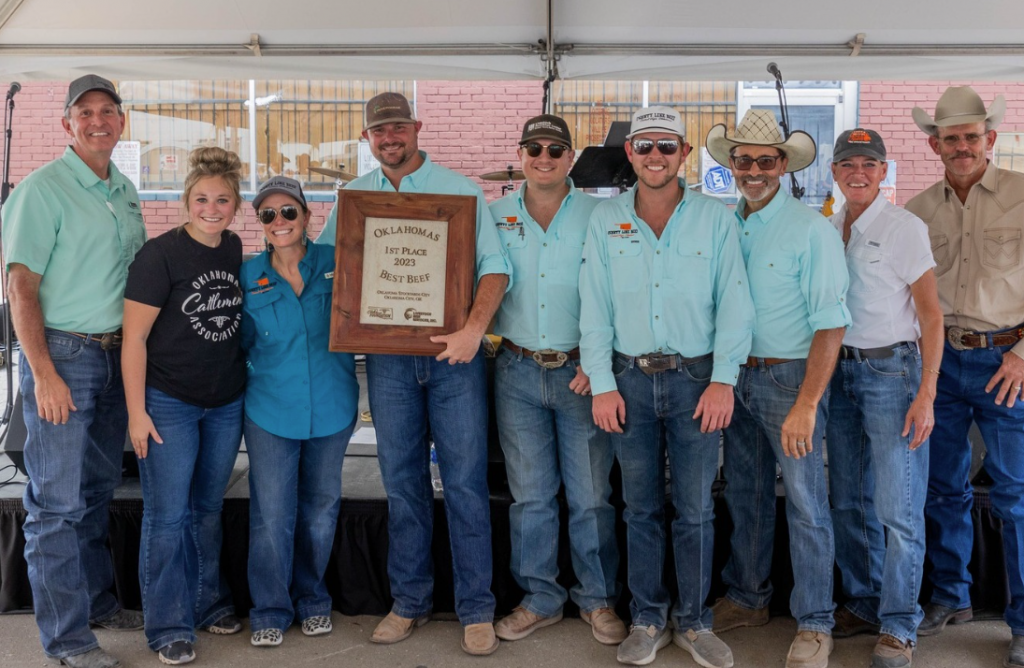
County Line Beef
The Stockyard Stampede took place on Saturday in Historic Stockyard City, where Longhorns led the parade, Horses gave rides, and folks got to sample some of the best beef in Oklahoma at the Best Beef Competition. There were plenty of fun things to do with your family, including a petting zoo, Made In Oklahoma Vendors for shopping, horse-drawn carriage rides, ice cream, snow cones, and of course downtown shopping in Cowtown! The one thing you couldn't ignore was the delightful smell of steak cooking underneath Oklahoma's Best Beef Competition Tent.
Thousands of people came through the beef tent to smell, taste, and see what this event was all about. Farm Director KC Sheperd was on Hand to visit with Judge Jody Harris from Stillwater, Oklahoma, who is a professional BBQ and steak cooker who said she was looking for Taste and Texture, "We were looking at taste, and we were looking at texture. Taste, you know I believe these cooks here today wanted to showcase the beef that they're providing us." Harris said she also enjoyed getting to hear the personal stories of the ranches being showcased, "As they brought in the steak, they had three minutes to tell us all about their ranch, all about their herd, all about the companies they have, and even about how they prepared the steaks, a very special day."
Harris said all of the steaks were great, so great In fact, the difference between third and first is, "We're talking 4/10ths of a point, so it's very close."
Winners were announced in two categories after the crowd had the opportunity to vote on People's choice. The Nationally Sanctioned Judges chose County Line Beef as #1, followed by Wheeler Farms, and 3rd place went to Piguet's Prime Time. After the winners were announced, KC sat down with Mariah Reimer, Foundation Executive Director at the Oklahoma Cattlemen's Association, to talk about the success of the event, "I just want to thank all of our competitors. They just did outstanding. The Judges always have a hard time." For the National Judging, Reimer said they bring in judges whose main job is to judge beef, "All they do is travel across the country and taste steak, they taste beef, and they vote and then they also compete at the national level, so they get recertified every year, so they are experts in their field."
Last years event was held in the Stockyard's sale area, but this year, Reimer moved the event to Mainstreet so folks could take part in the other festivities going on for the Stockyard Stampede, "I know we've got a great event; I know it'll show, but we moved it right on Main Street. The (Longhorn) cattle come right through here, right by our event, which makes for a great photo op. So you couldn't ask for a better location right here in Stockyard City right on Main Street."
With the move, Reimer said they saw twice as many people, "We had over 1200 people come through here. Last year, we had a little around 600 over by the stockyards. This year, we moved right on Main Street and had over 1200 people come through. They learned about our product, they learned about what we do, and it was a great day."
Looking forward to next year, Reimer said she's still looking upward to make the event bigger and better, "We're gonna shoot for that over 1000 attendees, it's across the entire state. So last year, we won an award for premiere special event under 1000. It was statewide, and we got great recognition for it, and this year, we're aiming for over 1000. Get another award under our belts, get more exposure and more fan-favorite awards, and just keep going for the cattle industry. That's what we do every day."
 1st Place: County Line Beef
2nd Place: Wheeler Farms Meat & Market
3rd Place: Piguets Prime Time
People's Choice Award: Diamond 4 Cattle Co.
Some of the finalists had prepared steaks last year, but this year also brought two brand new operations to the competition, said Reimer.
Finalists who competed include:
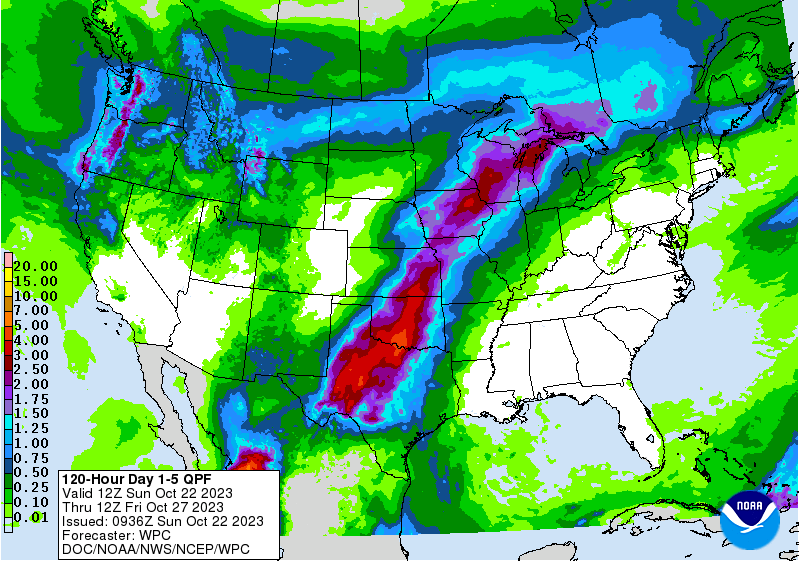
Leftovers of Hurricane Norma Help Bring Rain in Across Texas and Oklahoma
Forecasters are predicting significant rain for the first time since mid summer across a good portion of Oklahoma- including areas that have felt a flash drought rise up in recent days. State Climatologist Gary McManus said these rains- if the systems bringing it into Oklahoma hold together, "would be key to stop the flash drought in its tracks."
Best chances of rain as seen in the latest forecasts are showing up Tuesday into Wednesday with the main body of the state with at least an inch of rain- with under an inch projected for the panhandle. The forecast map above was released on Sunday morning by the National Weather Service. According to the Weather Prediction Center of the National Weather Service- the combination of a Pacific Front with Tropical Storm Norma are pushing closer to Texas and Oklahoma- "As the frontal system continues east, increasing moisture associated with Tropical Storm Norma currently in the Pacific is forecast to bring showers and thunderstorms to the Southern Plains overnight Monday, with some locally heavy rainfall possible."
Local Mesonet forecasts suggest best rainfall chances for Oklahoma are Tuesday and Tuesday evening- starting in the southwest and moving up into the state.

Attorney General Gentner Drummond today filed suit against the Oklahoma Statewide Virtual Charter School Board for approving what would be the nation's first religious charter school funded by public tax dollars.
On June 5, the Board voted 3-2 to approve an application for St. Isidore of Seville Virtual Charter School even though the school's sponsor, the Catholic Archdiocese of Oklahoma City, has emphasized that religious indoctrination will play a prominent role.
Although the Office of the Attorney General had cautioned board members that approving the application would violate their oaths to uphold the state and U.S. constitutions, three members this week signed the contract for St. Isidore.
"The board members who approved this contract have violated the religious liberty of every Oklahoman by forcing us to fund the teachings of a specific religious sect with our tax dollars," Drummond said.
"Today, Oklahomans are being compelled to fund Catholicism. Because of the legal precedent created by the Board's actions, tomorrow we may be forced to fund radical Muslim teachings like Sharia law. In fact, Governor Stitt has already indicated that he would welcome a Muslim charter school funded by our tax dollars. That is a gross violation of our religious liberty. As the defender of Oklahoma's religious freedoms, I am prepared to litigate this issue to the United States Supreme Court if that's what is required to protect our Constitutional rights."
Filed with the Oklahoma State Supreme Court, the lawsuit notes that the state Constitution expressly prohibits "sectarian control" of public schools. The litigation also argues that the would-be school impinges on religious liberty by violating the Establishment Clause of the First Amendment to the U.S. Constitution.
Drummond said these constitutional protections ensure religious liberty, preventing a scenario in which Muslim Oklahomans would be forced to fund Christian and Jewish schools, Jewish Oklahomans would be forced to fund Christian and Muslim schools, and Oklahomans of no faith would be forced to fund religious schools for all faiths.
"There is no religious freedom in compelling Oklahomans to fund religions that may violate their own deeply held beliefs," he said. "The framers of the U.S. Constitution and those who drafted Oklahoma's Constitution clearly understood how best to protect religious freedom: by preventing the State from sponsoring any religion at all."
In 2016, Oklahoma voters soundly rejected amending the Constitution to let public money be applied to sectarian organizations. Now, the offending board members are seeking to undo the will of the people by forcing Oklahoma tax revenue to fund religious teaching.
The lawsuit points out that the matter is particularly urgent for action by the Court. Proceeding with the nation's first-ever, publicly funded religious charter school puts at risk more than $1 billion in federal education dollars that Oklahoma receives each year. To receive such funds, states must ensure compliance with applicable laws, including the Elementary and Secondary Education Act, which clearly prohibits a religious public charter school.
"Oklahomans know all too well that our public schools face a slew of serious challenges," Drummond said. "Given that reality, it is unconscionable that we would jeopardize desperately needed education dollars for the sake of a blatantly misguided endeavor."
Taxpayers deserve much better, he said.
"Not only is this an irreparable violation of our individual religious liberty, but it is an unthinkable waste of our tax dollars," said Drummond. "At a time when Oklahoma students underperform their peers across the country in every subject, why would we spend one penny of our tax dollars educating them on Catholicism, Sharia law or any other religious teaching? I would prefer we focus on reading proficiency so they can read the Bible at home with their family. That's where religion is best taught: in homes and in churches, with the loving guidance of parents and pastors."
Pecan harvest has started at the Cimarron Valley Research Station near Perkins, Oklahoma. The state's estimated harvest this year is 22 million pounds, a marked improvement over the past two years that saw a diminished statewide harvest due to a late spring freeze in 2021 and an early fall freeze in 2022. (Photo by Mitchell Alcala, OSU Agriculture)
Wind storms earlier this year, coupled with a late spring freeze in 2021 and an early fall freeze in 2022, have wreaked havoc on Oklahoma's pecan crop the past couple of years, but the 2023 outlook is good with harvest on the horizon.
Becky Carroll, Oklahoma State University Extension senior specialist, fruit and pecans, said the National Pecan Shellers Association predicts this year's crop estimate at 22 million pounds, which is above the average of 17 million pounds in Oklahoma.
"Pecan production is big in Oklahoma. It may not be as big of a commodity as wheat or cattle, but according to the National Agricultural Statistics Service Census of Agriculture, Oklahoma has 1,878 pecan farms that total 96,000 acres of land dedicated to pecan production," Carroll said. "About 75% of the pecans grown here are native pecans, but the improved varieties are gaining ground due to large new plantings and to urban sprawl where native groves are being replaced by housing and commercial businesses. With the large turnout at the pecan field day recently featuring native pecans, landowners are still interested in learning how to manage our wild, natural production, too."
Producers have struggled the past couple of years, and some growers are still recovering from the freezes in 2021 and 2022 and recent drought conditions. Carroll said trees tend to shed a lot of pecans before they mature in a drought, and those that do mature are typically smaller.
"If they're too small, commercial shellers don't want to purchase them," she said. "It doesn't affect the taste, but it takes a lot more pecans to make a pound, which is more work for the shellers."
Carroll said the pecans were late ripening in 2022 because of the drought, and the early freeze in October took out much of the crop. The pecans froze in the shuck and weren't viable. In 2021, the late freeze damaged buds growing on the trees.
"Pecans need about 54 inches of water in a season, and we might average 35 inches total in central Oklahoma," she said. "Last summer's drought was brutal for producers. Most orchards right now don't have irrigation, but many people planting new orchards are installing it. Irrigating native groves is not economically feasible."
The wind storms earlier this year also caused problems for growers because they had to clean up the orchard floor in preparation for harvest.
Susan Haydon Raybourn, a third-generation pecan producer in Okfuskee County, said she is looking forward to a fruitful harvest this year at Haydon Farms. The past two years have been especially challenging for her operation.
"This year we're recovering from last year's freeze, and we've also been dealing with pecan nut scab," she said. "Being a native orchard, we tend not to spray as much as they do in the improved variety orchards."
During the freezes, Raybourn said they had bonfires burning in the orchard, but when it's that cold for that long, there wasn't much else she could do to save the crop.
Raybourn's 600-acre pecan grove is part of a 1,600-acre operation her grandfather, Grover Haydon, started in 1915. Her parents, Paul and Maxine Haydon, made substantial improvements to the farm for 70 years, and she now manages it with her sister. There also are 60 acres dedicated to Stuart pecans that were grafted by her grandfather.
"We will be ecstatic to be gathering a more typical harvest this season," she said. "Harvest at Haydon Farms will likely continue through mid-January."
Pecan production is more than a business for Raybourn.
"It's my heritage," she said. "The trees have been nurtured by my family for multiple generations, and I get to live in the home my grandparents built and that I grew up in. The fact that I have the opportunity to carry on and do this job is an honor and privilege."
Josh Grundmann knows something about a family business. He has worked with his parents at Valley View Pecan Company, a business established in 2001, since finishing graduate school at OSU in 2009. He purchased the commercial shelling and candy company located near Shawnee from his parents in 2022.
Valley View Pecan Company is one of two commercial shelling companies in Oklahoma. Grundmann said he shells for 40 to 50 growers and averages about 150,000 to 200,000 pounds of pecans each year. While the average load is 2,000 pounds per producer, the business does shell down to 300 to 500 pounds for small retail stores.
"Being in the shelling and candy business, I didn't really think about being involved in agriculture until we had a bad crop," Grundmann said. "With the projection of a good crop this year, I'm looking forward to seeing our customers again and catching up because that means they're thriving."
During the past two lean harvest years, he said he had to purchase pecans from out of state to maintain the retail side of his business, which offers a variety of homemade candies along with several kinds of nuts.
"The shelling side of the business is seasonal, but our retail shop is open year round," he said.
Carroll said Oklahoma is one of the top pecan-producing states, along with Georgia, New Mexico, Texas and Arizona. Carter, Garvin, Ottawa, Bryan and Love counties were Oklahoma's top-producing counties in the latest ag census.
"Things are looking really good for this year's harvest, and hopefully our growers will be successful," she said.
Read more about pecan research at OSU.
OSU Extension uses research-based information to help all Oklahomans solve local issues and concerns, promote leadership and manage resources wisely throughout the state's 77 counties. Most information is available at little to no cost.
At yesterday's Advanced Bioeconomy Leadership 2023 Conference in San Francisco, Calif., the National Corn Growers Association (NCGA) announced the winners of the Consider Corn Challenge IV. Four winners were chosen, each with a unique way to improve a product or process using feed corn to produce biobased materials.
"The Consider Corn Challenge fosters innovative collaborations between corn farmers and industry, which paves the way for new products, chemicals and applications. This year's winners have continued to demonstrate corn's adaptability," said NCGA's Director of Market Development Sarah McKay. "And corn's unique versatility can be witnessed in the showcase of their diverse approaches and applications. This contest continues to highlight the fact that U.S. corn is an extremely flexible feedstock suited for biobased products."
The four winners for the Consider Corn Challenge IV are Bluestem Biosciences Inc., based out of Omaha, Neb.; Pennsylvania State University, located in the state's University City; Nexceris, headquartered in Lewis Center, Ohio; and Maizly, whose U.S. office is located in Phoenix, Ariz.
Bluestem Biosciences, Inc. has developed novel yeast biology for the sustainable anaerobic bio-production of 3-Hydroxypropionic acid (3-HP), a chemical intermediate for the acrylates chemical family, a $25B total addressable market. This strategic platform molecule serves a variety of consumer end markets, like personal care products, paints and coatings. Bluestem will leverage its novel yeast biology through the retrofit of underutilized existing shuttered ethanol production facilities across the U.S. Bluestem's anaerobic biology is intended to mimic ethanol production, creating numerous economic benefits while supporting the rural Midwest bioeconomy and agricultural communities. Additionally, Bluestem's technology reduces dependence on petroleum for feedstock currently used in chemical production and relies on corn as the primary feedstock, while reshoring supply chains back to the United States.
Pennsylvania State University's technology utilizes both corn starch and corn oil for applications in energy storage in lithium batteries. Corn starch will be evaluated for conversion into both hard and soft carbons; corn oil will be evaluated for conversion into a soft carbon. The carbon materials will be characterized for structure by a suite of material characterization methods, including transmission electron microscopy, X-ray diffraction, and Raman spectroscopy.
Nexceris has developed a new sugar-to-chemicals process that uses renewable dextrose to make industrial chemicals, instead of oil or gas, and can cut CO2 emissions by greater than 85%. Sugar2X uses state-of-the-art reactors and a new catalyst design to operate continuously on a dextrose, a domestic, renewable feedstock, with established rail transport, and clean H2 from electricity. The technology also strongly benefits American farmers and rural communities by converting sugars to renewable chemical products that can be cost-competitive with existing fossil-based processes, allowing market forces to improve commodity corn prices and demand that drives this value stream.
Maizly has developed the world's first corn-based milk alternative, called Maizly Original.
Not only does Maizly Original look like dairy milk, but it has a similar mouthfeel to dairy milk
and a complementary taste profile so as not to impact the flavor of the underlying beverage or cereal. Not only can Maizly Original froth for your cappuccino and white your tea or coffee, but it is also perfect for baking with. Maizly Original contains less sugar yet more calcium, as well as vitamins A, D and E, and added chickpea protein. Being lactose-, gluten-, and allergen-free, Maizly Original is "Available to All."
"Finding new uses for corn is a key priority for NCGA," said Ohio farmer and Market Development Action Team Vice Chair Dennis Vennekotter. "The Consider Corn Challenge provides a unique opportunity to harness the potential of corn as a versatile, sustainable feedstock. It not only showcases the ingenuity of participants but also fosters vital collaborations between industry and corn producers, paving the way for innovative, market-driven solutions."
The total prize pool for the fourth iteration of the contest was U.S. $250,000. Each of the four winners received $62,500.

Fifteen farm and ranch women leaders graduated from the fall session of Women's Communications Boot Camp hosted by the American Farm Bureau Federation.
The agricultural leaders completed an intensive four-day course that featured hands-on sessions focused on public speaking, working with the media and messaging. Program graduates will use their training to strategically support Farm Bureau's priority issues. This includes participating in local media opportunities, sharing information with elected officials and joining social media campaigns that spotlight modern agriculture.
"Agriculture needs strong advocates who are willing to step up and share their stories on the local, state and national level," said Isabella Chism, an Indiana row crop farmer and chair of the AFB Women's Leadership Committee. "The Farm Bureau women leaders who have completed this training are poised to creatively use their skills in a broad range of settings."
Boot Camp graduates are Nicole Richardson Clements, Arizona; Rachel Bearden, Arkansas; Nanette Auhll, Colorado; Julie Hardy, Georgia; Janis Highley, Indiana; Jennifer Newby, Kentucky; Courtney Gerace, Louisiana; Danielle Yerby, Louisiana; Meghan Gennings, Massachusetts; Carlina Harris, New Mexico; Julia Hardy, North Carolina; Margaret Harrison, South Carolina; Emilee Haubner, Texas; Megan Webb, West Virginia; and Diane Garcia, Utah.
"Engaging with elected officials and consumers is an important element of agriculture advocacy work," said AFBF President Zippy Duvall. "AFBF is proud to continue offering this training to women farmers and ranchers twice each year. I applaud our graduates and congratulate them for taking this next step in their leadership journey."
This is the 19th Boot Camp. The program has 284 graduates and is open to all women involved in Farm Bureau.
"Participating in Women's Communications Boot Camp was challenging, inspiring and motivating," said Meghan Gennings, a Massachusetts Farm Bureau leader and lab instructor in the Department of Veterinary and Animal Sciences at the University of Massachusetts. "I look forward to sharing what I've learned about being a better advocate for agriculture with other members when I return home."
The American Farm Bureau Women's Leadership Committee, in partnership with AFBF staff, hosts and provides training for Women's Communications Boot Camp biannually. Applications open in December for the next spring session of Boot Camp, slated for April 1-4, 2024.
Photos from this event may be downloaded at https://fb.org/fall23bootcamp.
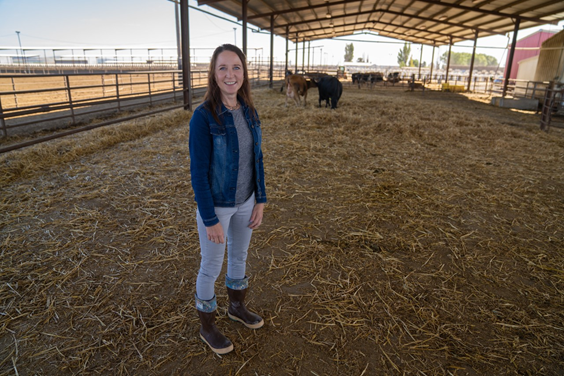
Veterinarians play a crucial role in society, safeguarding animal health and welfare while also protecting public health. As part of the National Association of State Departments of Agriculture's recent campaign to highlight careers in agriculture, Washington State Veterinarian Amber Itle recently shared more about her role's impact for her community and state and why she loves working for her state's agriculture department.
"I never envisioned myself in the role of a state veterinarian," Itle said. "I always thought government or regulatory work was bureaucratic and siloed, but that can't be further from the truth, at least not at the Washington State Department of Agriculture. Working at WSDA, I feel empowered to work with integrity, vulnerability and courage every day to make things just a little bit better for animals in Washington."
Itle further attributed her dedication and appreciation for working for her state agriculture department to Washington State Agriculture Director Derek Sandison.
"Working with Director Sandison has been an incredible experience as he works hard to find solutions to natural resources and climate change challenges across the state, establish strong trade relationships locally and abroad, and influence national policy to address concerns here at home," Itle said. "He is an inspirational leader who promotes a culture of innovation, empowerment and curiosity that fosters collaborative work efforts that benefit agency employees and Washington agriculture alike."
Itle was raised on her family's dairy farm, participating in all the chores that come with the job from milking the cows to delivering the final products. The farm is not, however, the only commonality Itle shares with her family.
"I grew up under the mentorship of my Dad, who is continuing to practice as a full-time livestock veterinarian after 51 years in practice," Itle said. "My sister also shares the profession as a mixed practitioner of 25 years. I have to admit that I always thought I'd follow in those footsteps because I loved practice, loved being with the animals, loved working with the producers."
She credits her experience on the farm along with her family's mentorship with giving her insight on the divide between the farmers producing food and the shoppers consuming it, encouraging her to explore different positions in the veterinary field.
"Growing up on my family's fourth generation dairy farm uniquely informed my perspective to my work as I understood the gap between the producer and the consumer from an early age," Itle said. "I have worked as a producer, a private veterinarian, a livestock market veterinarian, a regulatory field veterinarian and a foreign animal disease diagnostician. Now as the Washington State Veterinarian, my position exists at the intersection of these roles, uniquely positioned at the juncture of producers, practitioners and consumers in communities statewide."
Itle's journey from a successful private practice to the state department of agriculture has been a rewarding one. While she once measured success by immediate animal care outcomes, she now sees it in her ability to shape policies that benefit animals and humans alike.
"In recent years, our state has adopted the One Health conceptual framework that includes overlapping constructs of animal, human and environmental health when we execute response efforts and to inform policy decisions that impact our communities," Itle said. "I lead the animal health program to protect animal and public health through disease detection, containment and eradication, but we also do this by protecting the economic viability of our food animal industries because we take food security seriously."
Food security may not be a responsibility everyone considers when they think about the daily work of veterinarians. Community health and climate change probably do not come to mind either, yet as part of a One Health approach, Itle examines these threats and others holistically as she and her team execute response efforts to inform policy decisions impacting their state.
"We all know that by only thinking about one element of this conceptual framework, we may miss the importance of the interrelatedness of the work we all do, making decisions that negatively impact another," Itle said. "WSDA has embraced addressing how decisions also impact equity and environmental justice for marginalized communities."
Dr. Itle also serves as secretary of the National Assembly of State Animal Health Officials, which represents state and territorial animal health officials of the U.S. NASAHO works collectively to safeguard animal and public health and the food supply, acting as a communications network and offering educational resources, publications and research. NASDA and NASAHO share common interests in animal agriculture including foreign and emerging animal diseases, animal biotechnology, antimicrobial resistance and rural veterinary shortages. The organizations continue to work to protect key policy priorities in the farm bill, including the National Animal Vaccine and Veterinary Countermeasures Bank, National Animal Disease Preparedness and Response Program, and National Animal Heath Lab Network. These programs help build resilience in rural communities and protect the food supply through ensuring resources and strategies are in place to prevent animal disease and minimize loss in the event of outbreaks.
Itle said protecting rural communities helps protect human, animal and environmental health as climate change threatens to expand the range of new diseases and pests. In a global world, community outbreaks quickly become statewide – and worldwide – issues as we saw with the COVID-19 epidemic and the recent Highly Pathogenic Avian Influenza outbreak.
Itle sums up the responsibility and commitment she has to her department, community and state.
"At the end of the day, as the stewards of animal health in Washington, our vets are here to protect Washington families and the animals in their care through collaboration, education, regulation, preparation and public service."
Ultimately, Itle's boots-on-the-ground approach, visiting farms, participating in outreach programs and connecting with local producers, exemplifies her dedication as a steward of animal health in Washington.
###
NASDA is a nonpartisan, nonprofit association which represents the elected and appointed commissioners, secretaries and directors of the departments of agriculture in all 50 states and four U.S. territories. NASDA enhances American food and agricultural communities through policy, partnerships and public engagement. To learn more about NASDA, please visit www.nasda.org.
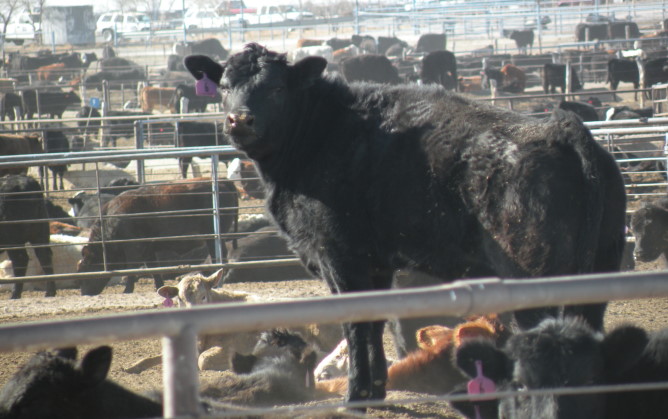
KC Sheperd, Farm Director, is back talking with Bob Rodenberger, a partner with Stockman Oklahoma Livestock Marketing, as he gives the latest on the cattle markets.
For the past few weeks, Rodenberger said the cattle market has had a softer tone. This week, he added that prices were lower.
"The fat market has kind of run into a stalemate today, and it is mainly due to anticipation of meat prices," Rodenberger said. "We are going to see the consumer resist this higher meat."
With higher prices of almost everything, Rodenberger said people do not have much disposable income.
"In general, there is still a good margin," Rodenberger said. "With the calves being a little cheaper and the board being cheaper. The same margin is there for the people anticipating wheat pasture."
The biggest setback for producers, Rodenberger said, would be not having that anticipated wheat pasture because there is a good profit margin for them there.
"If they are not going to go to wheat, they are going to go to the feedyard," Rodenberger said. "The cost of gain is going to be quite a bit under what it was last year, and the cost of gain is going to be probably as cheap as what we leased wheat for last year."
The wheat is looking pretty good for many producers in the state, Rodenberger said, as many have their wheat up and are waiting on some moisture.
"Wheat is a lot tougher than people give it credit for," Rodenberger said.

Mississippi River water levels have reached record lows in the first half of October. At Memphis, for example, the river stage, or height of the river's surface relative to the zero-stage level of 189.9 feet, fell to a record low of minus 11.5 feet on Oct. 11. This is lower than last year's record low of minus 10.81 feet at Memphis. As described in previous articles including Severe Weather and Low Mississippi River Levels Bring Uncertainty to Harvest and Low Mississippi River Levels Drive up Grain Transportation Costs, these low river levels have reduced and delayed barge traffic and increased transportation costs for farmers during peak harvest season. One factor that helps mitigate the impact of transportation disruptions is the quantity of available grain storage in on-farm and off-farm facilities. Understanding trends and regional differences in storage availability provides insights on how well grain stocks and newly harvested grain can be held when transportation conditions are uncertain.
From ocean port congestion and labor strikes to low river levels, railway service shortfalls and a nexus of state and federal freight regulation, farmers and ranchers are well acquainted with transportation disruptions. One effective albeit costly way to buffer against these disruptions is investment in on-farm and off-farm storage. Having sufficient storage capacity close to agriculturally productive regions means farmers can have a place to offload harvest if downstream transportation options are too expensive or unavailable. If storage is unavailable, farmers will be forced to absorb elevated transportation costs, face steep price cuts to get product moved or risk crop quality losses.
USDA's latest Grain Transportation Report from the Agricultural Marketing Service highlighted National Agricultural Statistics Service data on grain storage capacity for both on-farm (including bins, cribs and sheds used to store grains and oilseeds on farms) and off-farm facilities (including elevators, warehouses, terminals, mills and crushers). As of Dec. 1, 2022, the U.S. had 25.4 billion bushels worth of total grain storage capacity: 11.8 billion (47%) of off-farm storage and 13.6 billion (53%) of on-farm storage. Figure 1 displays the total capacity for grain storage (on-farm and off-farm) by state as of Dec. 1, 2022. As expected, the bulk of grain storage is in heavy grain-producing heartland states. Iowa leads with 3.57 billion bushels worth of storage capacity followed by Illinois (3.15 billion) and Minnesota (2.37 billion).

As of Sept. 1, 2023, farmers and commercial grain facilities held 3.69 billion bushels of grain in storage, a marginal 16-million-bushel, or 0.4%, decline from last year but down 25%, or 933 million bushels, from the prior five-year average. On-farm grain stocks made up 39% of total grain stocks. Combining current grain stocks with expected fall harvested crops (corn, soybeans and sorghum) puts total grain supply at approximately 23.12 billion bushels. Comparing this to the total storage capacity of 25.4 billion bushels shows the U.S. has about 2.18 billion bushels of surplus grain storage space. Any supply dynamics that would cause stocks to breach this 25.4-billion-bushel threshold and exceed existing storage infrastructure.
The concept of a grain storage surplus, however, is not uniform across all states. Some states have a storage deficit, making them more susceptible to the impacts of transportation disruptions. Figures 2 and 3 display state-by-state grain storage capacity surplus or deficits based on current stock and production estimates.


Notably, not all heartland states are created equal in terms of grain storage availability. While states like North Dakota and Minnesota have a large surplus of available space (332 million bushels and 279 million bushels, respectively), states like Indiana and Ohio have a significant storage deficit (-117 million bushels and -73 million bushels, respectively). Several other states reliant on the Mississippi River for grain transport face low grain storage availability, such as Missouri (-53 million bushels), Kentucky (-31 million bushels), Tennessee (-43 million bushels), Mississippi (-48 million bushels) and Louisiana (-34 million bushels). Worsening conditions in this region mean product has few places left to go since it cannot be easily moved to downstream buyers. Shifting to costlier rail or trucking services often becomes a last resort.
Analyzing on-farm and off-farm storage trends can reveal which states have seen the most growth or loss of storage capacity. On-farm storage allows farmers the most flexibility in terms of weathering external market disruptions. Farmers are only reliant on themselves and their own equipment and capacity restrictions in getting grain stored under this category. Once grain leaves the farm, that storage is no longer accessible for that crop, shrinking the practical storage capacity of the broader market. The more on-farm storage available to farmers the more control farmers have on the marketing of their crop which influences final received prices. On-farm storage has made up an average of 54% of total storage capacity for the past five years.
Mirroring the distribution of total storage capacity, Iowa leads as the state with the highest on-farm storage capacity with space for 2.05 billion bushels, followed by Minnesota (1.55 billion) and Illinois (1.5 billion). Compared to the prior five-year average, most states have seen little change in available on-farm storage for a national increase of 0.6% or 76 million bushels. Tennessee and Kentucky have far outpaced this national percent increase with an 11% and 14% increase, respectively. Tennessee and Kentucky faced severe, storage-destroying storms in late 2021. The availability of several federal cost-share programs to fund the reconstruction of expanded facilities could be the cause for these larger-than-average increases. On the other end, Oregon and Washington had a significant decrease in on-farm storage (-11% and -8.6%, respectively). Reasons for these localized declines are difficult to isolate but may be linked to the declining number of farms in the region generally or ongoing political efforts to breach Columbia River dams that have made maintaining and investing in grain markets riskier. The less on-farm storage available, the more pressured farmers are to deliver grain immediately after harvest.


Off-farm storage has made up an average of 46% of grain storage capacity for the last five years. Farmers reliant on storage under this category may still be reliant on external transportation services to get grain stored (e.g., a shuttle rail service, trucking company or waterway), opening producers to more cost risk. Illinois leads as the state with the highest off-farm storage capacity with 1.65 billion bushels worth of grain storage capacity. Illinois is followed by Iowa (1.52 billion) and Kansas (1.2 billion). Compared to the prior five-year average, national off-farm storage is up 2% or 241 million bushels. Most grain-heavy states have seen an increase in off-farm storage from the prior five-year average. Illinois had the highest increase – 6.1% – followed by North Carolina (6%) and Kentucky (4.9%). The Southwest faced the most significant loss in off-farm storage with New Mexico down 10.8%, California down 9.6% and Arizona down 5.6%. Perhaps persistent drought conditions have foiled continued upkeep in larger-scale grain facilities, though other localized factors are likely at play.


Storing grain for longer periods of time raises other farm financial considerations. The cost of holding grain has not been spared from high interest rates or increasing costs for labor, energy and other operating expenses. Interest expenses can make up a quarter to a third of a grain elevator's total cost of storing grain, shrinking the bids farmers may receive for their crops and increasing the supply of grain (not being stored) on the market. Farmers also often have large sums of money tied up in grain inventory (based on capital they borrowed for the season's expenses), which can be paid back with the proceeds from the sale of grain. If that grain continues to be stored, those farmers are on the hook for more interest payments and continue to have much of their capital tied up.
Basis, the difference between the current local cash price and a relevant futures contract price for a certain time period, is impacted by both storage costs and transportation availability. A negative basis value represents a cash price under a futures price while a positive value represents a cash price over the futures price. A basis that becomes more positive is often described as "narrowing," while a basis that becomes more negative is considered to be "widening." When basis is more positive or narrower than usual the market is sending a signal to make more cash sales within a region, while a widening basis would signal that the market is discouraging cash sales and it may be a better bet to store crops. These dynamics are important to understanding local demand. Higher transportation costs due to disruptions can widen basis, discouraging movement of grain to impacted regions. Higher storage costs have a similar but opposite effect, narrowing basis when cash prices increase in response. Tracking basis can help farmers determine whether storing or selling crop will provide the better price.
Conclusion
A general increase in both on-farm and off-farm storage is a good sign for farmers facing uncertain transportation conditions. For most states and nationally, existing storage exceeds stocks and fall harvest expectations, providing a positive marketing safety net. In other states, farmers will be more exposed to risk when their crops cannot be easily moved. For the 40th week of 2023, downbound grain movements of corn, soybeans and wheat at St. Louis are far below previous years. Compared to the same week last October, total commodity movements were down 55%, or 153,000 tons, with corn down 69% (76,000 tons), soybeans down 46% (75,000 tons) and wheat down to zero. Farmers in Indiana, Ohio and Missouri will face hurdles in dealing with harvested grain this season. Finding an alternative to river transportation for excess crops will likely be necessary. Long-term risk management plan discussions for commodity growers should include on-farm storage availability, a great but costly way to hedge against current and future transportation risk. Additional on-farm storage capacity provides farmers more control of product marketing and a leg up on the ultimate price they receive for their crop.
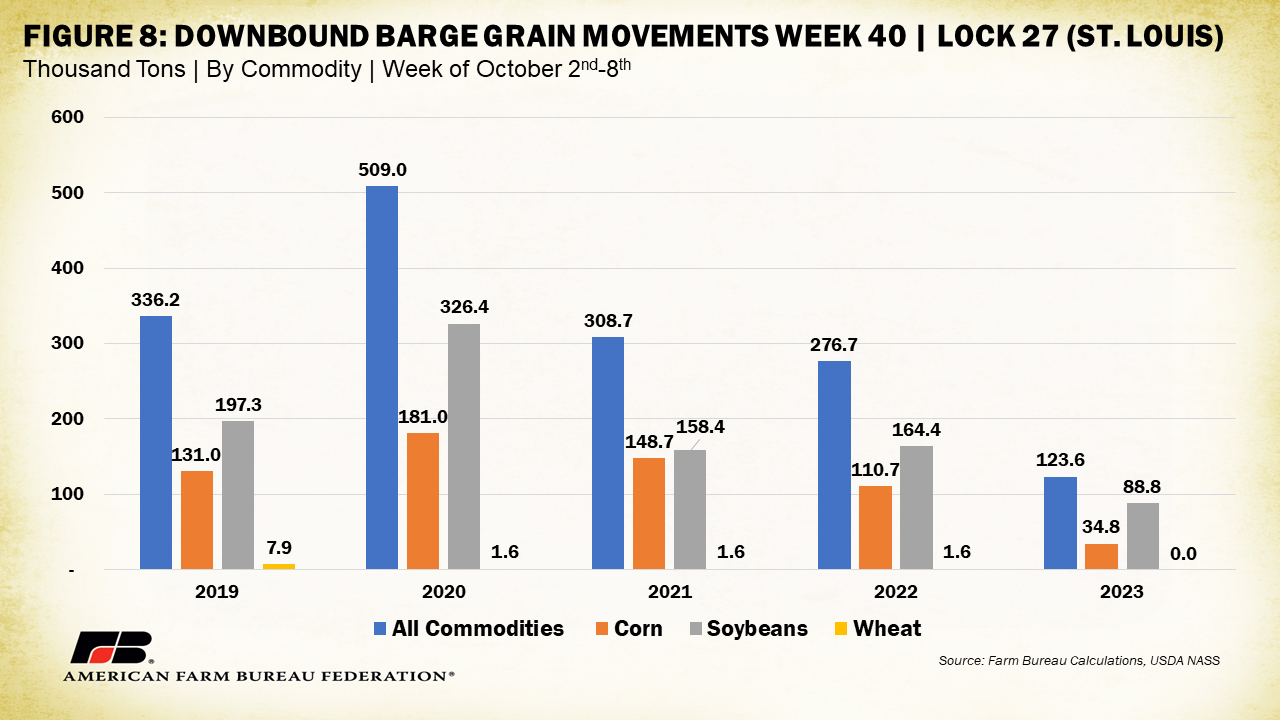
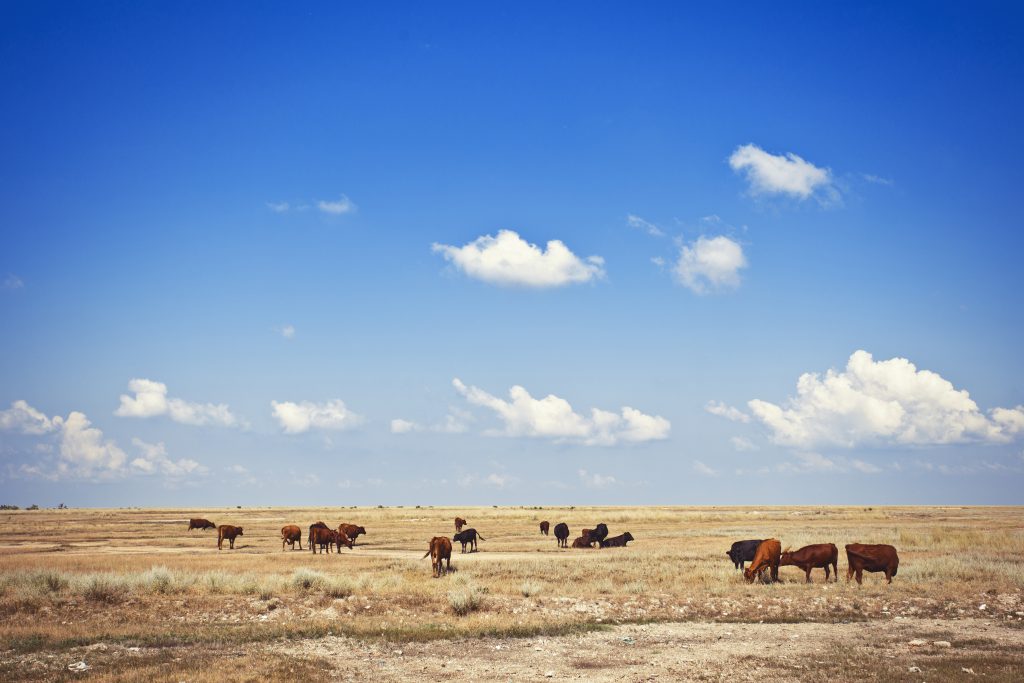
Senior Farm and Ranch Broadcaster, Ron Hays, is featuring comments from the President and CEO of CattleFax, Randy Blach, at the recent Texas Cattle Feeders Association Convention in Grapevine, Texas.
As a keynote speaker at the TCFA Convention, Blach talked about where the cattle business is at now and what it will take to start rebuilding the herd.
While the herd shrinkage has not stopped over the past year, Blach said there are some areas in better shape grazing-wise and water-wise, but parts of the Southern Plains are still suffering.
"We still have got another two to three years of tightening supplies before we can start to rebuild these herds," Blach said.
Fewer pounds available domestically and internationally will mean competitors will gain market share at our expense in some of our key foreign markets.
"With production down five percent this year, it is a significant supply decline, so U.S. beef prices are very high when we look at the global market," Blach said. "Other suppliers like Brazil, Australia, and New Zealand are gaining market share on the U.S. beef export markets in places like Japan, China, and South Korea."
Another topic Blach talked about at the convention was money flow in cattle markets.
"Typically, when markets are trending higher, we have more money flowing into them and more outside speculative money that is coming in investment money," Blach said. "That is always important for our markets to where we have somebody we can lay the risk off to."
There has been some uncertainty in the past few weeks regarding whether a budget deal will pass through Congress, Blach said, and with no leadership in the House, more liquidation of money flow has been seen.
"Whenever you see money flow coming out of markets, typically, a market is trending down," Blach said. "A futures market is trending down. It lessens the opportunity for producers to be able to lay off that risk when we go through these types of times."
Regarding drought, Blach said conditions have improved nationally, but there are some key areas in beef cattle country that are still not ideal.
"It is a strong El Nino, but not everybody is participating in it," Blach said. "I think the thing we have to watch for is a lot of El Nino's don't last more than a year, so we are watching this one pretty closely to see whether we are going to have back-to-back years of El Nino to where we can see more of the U.S. get into a more favorable grazing and water position."
The Beef Buzz is a regular feature heard on radio stations around the region on the Radio Oklahoma Ag Network and is a regular audio feature found on this website as well. Click on the LISTEN BAR for today's show and check out our archives for older Beef Buzz shows covering the gamut of the beef cattle industry today.
RON's Dave Lanning has a pre-opening look at today's agricultural Markets.
Click the audio tab below for today's report.
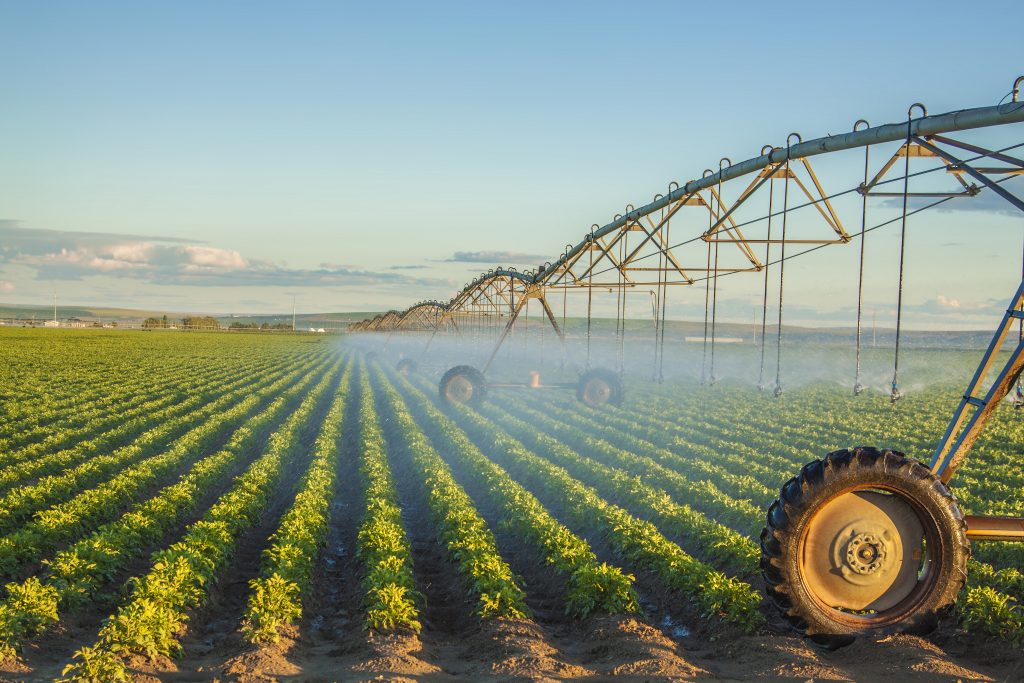
Rep. Carl Newton, R-Cherokee, will examine the historic use and impact of water consumption from Oklahoma's underground aquifers.
The interim study, IS23-011 is scheduled for 9 a.m. Tuesday, Oct. 24, in Room 206 at the State Capitol, 2300 N Lincoln Blvd.
"I want to look at how much water we've consumed from our underground aquifers and how it has been used so that we can determine best practices to preserve this precious resource going forward," Newton said.
He explained that in many parts of Oklahoma, there is limited surface water. Farmers, ranchers and other residents and consumers have to rely on these aquifers to provide water for people, animals and crops.
"It's important that we be good stewards of our water supply," Newton said. "I'm gathering a team of experts to help guide our discussion."

This Week on SUNUP is Oklahoma State University Extension grain market economist Kim Anderson. During this week's edition, Anderson talks about the impact of the Israel-Hamas war on the market and current prices.
Anderson said in his opinion, the Israel-Hamas war has had zero impact on prices, although the war does increase the risk of something happening.
"When you increase risk, you have a tendency to decrease prices just a little bit, but for all practical purposes right now, I don't think there is going to be any impact," Anderson said.
Wheat prices in northern Oklahoma are around $6.10, Anderson said, and close to $5.80 in southern Oklahoma.
"Not much is going on in the wheat market right now, but prices are flat," Anderson said.
The world stocks-to-use ratio for wheat is projected to be about 33 percent, Anderson said, and the average is 35 percent.
"Both world and U.S. stocks are tight," Anderson said.
The average winter wheat price is $5.85 in Oklahoma, Anderson said, and prices now are slightly above $6.00.
"I am kind of optimistic with wheat," Anderson said.
This week on SUNUP:
Watch SUNUP:
Saturday at 7:30 a.m. & Sunday at 6 a.m. on OETA (PBS)
YouTube.com/SUNUPtv
AAA Urges Drivers to 'Slow Down, Move Over', Away from First Responders, Disabled Vehicles.

As National 'Move Over' Day approaches this Saturday, Oct. 21st, AAA is underscoring the need for drivers to slow down and 'move over,' away from first responders and disabled motorists at the roadside at all hours, but especially as the days grow shorter. The latest statistics indicate that more than 75% of all roadside deaths occur after dark.
According to data* analyzed by the AAA Foundation for Traffic Safety, almost 2,000 people were killed in roadside crashes over the five-year period from 2017-2021, and nearly 1,500 of those deaths occurred after dark.
"This is extremely troubling, especially with the darkest days of the year ahead," said AAA spokesperson Rylie Fletcher. "The Move Over law is intended to ensure that first responders working at the roadside can provide emergency services to those in need without risk to themselves or those they are trying to help. We are asking everyone to adjust their driving behaviors accordingly."
In Oklahoma, 25 people died in roadside crashes while outside a disabled vehicle between 2017 and 2021 – 14 of them occurring after dark.
Oklahoma's 'Move Over' Law
Move Over laws exist in all 50 states.
Oklahoma's Move Over law requires all motorists to slow down and when possible, move over a lane, away from first responders and/or disabled vehicles at the roadside.
Starting Nov. 1, failing to change lanes or reduce speed near emergency vehicles, licensed wreckers, or vehicles with flashing lights can lead to higher costing penalties for Oklahoma drivers. A first-time offense will carry a $1,000 fine, while subsequent violations will result in a higher $2,500 fine. If such an offense results in an injury to an emergency worker, fines of up to $5,000 may apply. In the tragic event of an emergency worker's loss of life due to the offense, fines of up to $10,000 may be imposed.
Safety Recommendations for Drivers
"The lives of our first responders and those they are trying to help, as well as individual drivers dealing with a flat tire or car breakdown is literally on your shoulders," Fletcher added. "Please, slow down, move over and be especially cautious after dark."
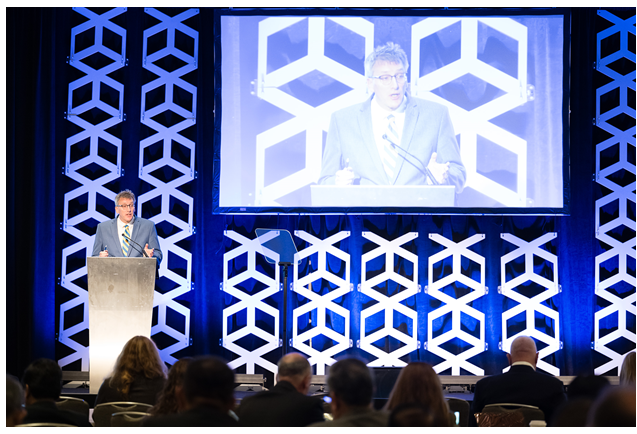
Pictured, U.S. Department of Agriculture Acting Deputy Undersecretary Jason Hafemeister provides keynote remarks at this week's Global Ethanol Summit. In addition to Hafemeister, attendees heard from USGC Chairman Brent Boydston, POET Founder and CEO Jeff Broin, Summit Agricultural Group Executive Chairman Bruce Rastetter and USGC President and CEO Ryan LeGrand during the first general session.
On Monday, attendees at the U.S. Grains Council's (USGC's) Global Ethanol Summit (GES) settled in for the first day of programming, which was packed with four general sessions focused on different challenges and opportunities facing the bioethanol industry.
USGC Chairman Brent Boydston opened the event and introduced the day's three keynote speakers: POET Founder and CEO Jeff Broin; Summit Agricultural Group Executive Chairman Bruce Rastetter; and U.S. Department of Agriculture (USDA) Acting Deputy Undersecretary Jason Hafemeister. USGC President and CEO Ryan LeGrand then gave an opening address previewing the remainder of the event's content.
"USDA is constantly involved with other countries about expanding bioethanol blends and sustainable production practices," Hafemeister said. "Domestically and abroad, USDA is seeking to show that biofuel products have real value and create a durable commercial market that allows consumers to have a choice of using biofuels that makes them realize, 'this saves me money, benefits the environment and I feel better for it.'"
The second general session included a panel discussion on governmental perspectives on global ethanol policies and speakers shared stories of successful bioethanol integration efforts in their regions. Growth Energy CEO Emily Skor moderated the conversation and was joined by panelists including Lauren Clarke, manager at Environment and Climate Change Canada; Hideaki Fujisawa, minister of economy, trade, industry/business and energy at the Embassy of Japan; Ruby de Guzman, director of renewable energy management at the Philippines Department of Energy; Brian Richardson, chief technical director of energy at the Jamaican Ministry of Science, Energy, Telecommunications and Transport; and Rod Snyder, senior advisor to the administrator at the U.S. Environmental Protection Agency.
The afternoon began with a roundtable of experts from multilateral organizations who offered an overview of global ethanol feedstocks and end-use outlooks. Moderator Gerry Ostheimer, executive director at Biofuture Campaign, headed the group that featured a video message from Paolo Frankl, head of renewable energy at the International Energy Agency; Marcel Adenauer, policy analyst at the Organization for Economic Cooperation and Development; Dawit Kelemework Mekonnen, senior economist at the World Bank; Constance Miller, deputy coordinator for the secretariat at the Global Bioenergy Partnership; and Augustin Torroba, head of renewables and international biofuels specialist at the Inter-American Institute for Cooperation on Agriculture.
"We want to support transparent and informed policymaking and help countries understand assessments of their climate goals and obligations," Miller said. "As an industry, we need to use recent geopolitical momentum towards clean energy to take on and address misconceptions about biofuels."
The day came to a close with a panel discussion on international engagement efforts to achieve global E10 policies and beyond. Moderator Doug Berven, vice president for corporate affairs at POET, took to the stage with Rodrigo Cardenal, president and CEO of the Panama National Sugarcane Industry Association; Aditya Jhunjhunwala, president of the India Sugar Mill Association; Andrea Kent, past president and board director of Renewable Industries Canada; Dr. Stephan Meeder, president of ePURE; and Gerardo Tee, chairman of the ethanol producers association of the Philippines. The event ended the following day with concurrent sessions covering new-use applications for bioethanol, bioethanol infrastructure and compatibility and environmental and human health benefits of renewable fuels, in addition to four memorandum of understanding (MOU) signings between the Council; Honduras Sugar Producers Association; Department of Environment of Nuevo Leon, Mexico; the Secretariat of Ecology and Environment of Quintana Roo, Mexico; and the Ministry of Energy of Ghana.
Dave Deken has a brand new project called 'AG NOW" featuring Ag updates, weather, and visits with specialists in the agricultural field. This is the first episode featuring OSU's Dr. Brian Arnall and K State's Dr Lolotto.
2023 was a challenging year for wheat production across the Southern Great Plains, but with the promise of a changing weather pattern, producers are hopeful for at least an average year for wheat yields. Meteorologist Matt Makens has an optimistic outlook for precipitation across the wheat-growing areas of the United States and is even watching snow possibilities as we near November.
Then, we talk with Kansas State University's Dr. Romulo Lolotto about the recent moisture and what it means for the wheat crop going into the soil across Kansas. Finally, Oklahoma State University's Dr. Brian Arnall explains why late-September planted wheat has the chance to thrive even without rain since the seeds went into the ground across parts of Oklahoma.
Farm Director, KC Sheperd, is talking with Rann Williams about his late father's induction into the Cotton Research and Promotion Program Hall of Fame.
The 2023 honorees of the Cotton Research and Promotion Program Hall of Fame were chosen from nominations made by Certified Producer and Importer Organizations and voted upon by a Committee of Cotton Incorporated Board of Directors.
His father, Murray Williams, was an innovative grower from Oklahoma who has been recognized on local, state, and national levels for his leadership and dedication to the industry. A proponent for soil and water conservation, Murray Williams oversaw his family farming operation of over 6,500 acres. In the late 1960s, he was the first grower in Oklahoma to use the new pre-plant herbicide Treflan®. On the forefront of new practices, he was the first in his area to implement the installation of laser-guided drainage pipes, aiding in land production, as well as the first to build tail-water pits to allow for the recycling of irrigation water.
Additionally, Murray Williams donated his land to Oklahoma State University for cotton test plots, helping to further advance cotton production in the state. Along with being on the cutting edge of technology on the farm, he served on the National Cotton Council, the National Cotton Board, and the Cotton Incorporated Board of Directors. For his contributions to the industry, Murray Williams was recognized by Cotton Farming Magazine as the United States Cotton Farmer of the Year in 1980, and by Progressive Farmer Magazine in 1983 as the Man of the Year in Service to Oklahoma Agriculture.
Growing up, Williams said cotton was his family's main crop.
"It was my dad's love," Williams said. "Previously, when he has done an interview, he pretty much said that cotton is in his blood, and I truly believe that."
Williams said that as a child, he remembers playing an integral role in day-to-day operations beside his father on his family's farm, as the help was greatly needed.
"He had a lot of faith," Williams said. "I never saw worry or concern on his face. He always had a plan, and he carried through with that plan."
Williams said his father was unphased by weather setbacks because he always had a plan.
"We was looked up to by the neighbors on a local level, a state level, and at a national level," Williams said. "He wasn't afraid to try new things and new methods..."
Traveling the cotton belt to observe different operations, Williams said his father would come back and apply the same science and technology to his operation and improve on it. Williams said he believes that his father would like to be remembered as an honest and faithful servant to God, his family, and his community.
"He was involved, whether it was the fair, the livestock show, the church, the school system...," Williams said.
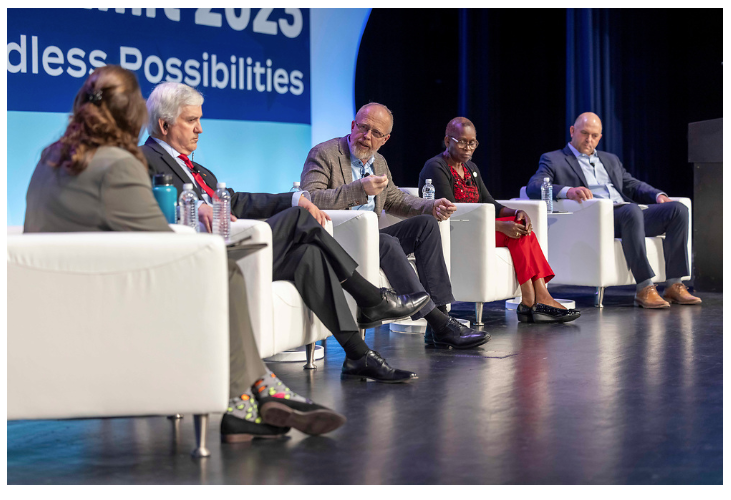
Concluding the first International Dairy Federation World Dairy Summit (IDF WDS) held in the United States in 30 years, more than 1,240 dairy leaders from 55 countries celebrated IDF's 120th anniversary and highlighted dairy's innovations, market opportunities and contributions to global sustainability, food security and more.
IDF President Piercristiano Brazzale and Director General Caroline Emond, along with U.S.-IDF Co-Chairs Nick Gardner and Shawna Morris, emphasized the importance of bringing the global dairy sector together and released a declaration statement that called on governments, global organizations and the world's food and beverage sector to support "Being Dairy."
"As it has been since the first World Dairy Congress held in 1903 in Brussels, the IDF WDS has been an unmatched opportunity to collaborate on the most promising opportunities and most important challenges in the dairy sector," Brazzale said. "The hard work and dedication of everyone in the dairy sector produces delicious, nutritious, and simply irreplaceable food that feeds more than 6 billion consumers and sustains one billion livelihoods globally."
The summit delivered four days of dynamic programming, including eight main sessions and 21 break-out sessions focused on policy, scientific and technical insights and exclusive market analysis. IDF also released the World Dairy Situation Report 2023, its 2022-23 annual report and announced the winners of its second annual IDF Dairy Innovation Awards, which celebrate and encourage innovative practices across the world.
"U.S. dairy is honored to have hosted this momentous IDF WDS 2023, bringing dairy's premier annual gathering to the United States for the first time in three decades," said Gardner, who also serves as the Chair of the U.S. Committee to IDF and as U.S. Dairy Export Council senior vice president for sustainability and multilateral affairs. "Hearing from world-renowned speakers, forging relationships with peers, and even visiting some of the United States leading dairy regions – IDF WDS 2023 participants have seen U.S. dairy's contributions first-hand and further strengthened our collective ability to champion dairy's critical role in nutrition, food security, environmental stewardship, and more."
Session highlights included:
Details on the full program can be found on the website.
IDF WDS 2024 will be held in Paris, Oct. 15-18, with the theme "Dairy 4 the Future."
"Closing IDF WDS 2023 and looking ahead to IDF WDS 2024 in Paris, we are more inspired and energized than ever by the consistent improvements and successes our industry continues to drive," Brazzale said.
For more information and to subscribe for updates, visit www.idfwds2024.com/.
On this episode, NCBA Executive Director of Government Affairs Kent Bacus takes us inside the World Meat Congress to learn about the pressing issues facing livestock and meat producers across the world. Bacus shares news about NCBA's new leadership role within the International Meat Secretariat and he recounts some experiences from the conference that show us why it is so important to advocate for cattle producers here in the United States.
Saying fertilizer shortages are creating a hardship for farmers across the U.S., the National Corn Growers Association (NCGA) – along with 62 other agricultural groups, including state corn grower organizations – sent a letter today to Commerce Secretary Gina Raimondo calling on her to consider the current difficulties faced by farmers as she recalculates duties on phosphate fertilizer imported from Morocco.
The letter comes after the U.S. Court of International Trade ordered the agency to reconsider its previous decision on calculating the duties.
"High costs and limited availability of fertilizer continue to strain family farms across the United States," the letter said. "[We] urge you to consider the impact of phosphate duties as the Department of Commerce works to reconsider its duty rate calculation."
The duties levied on fertilizes have caused one of the U.S.'s top importers of certain phosphate fertilizers, the Moroccan-based OCP Group, to drastically reduce U.S. imports over the last few years, even on products not sold in this country or easily attained by American farmers.
As the letter explains, these developments are having a financial impact on farmers.
"Duties levied on phosphate imports combined with these other factors have led to substantial price volatility over the past three years as evident by phosphate price increases of over 230% from 2020 to 2022," according to the letter signatories. "During 2022, farmers spent $36.9 billion on fertilizer and lime, compared to $24.4 billion in 2020."
The issue originated in February 2021 when Commerce called on the International Trade Commission to implement duties of almost 20% on imported fertilizers from Morocco after the Mosaic Company, which manufactures fertilizers used in the U.S. and abroad, filed a petition with the department seeking the levies. The ITC voted in March of that year to impose the duties while adding similar levies on Russian imports.
Soon after, NCGA and state corn grower groups launched a full campaign to raise awareness among policymakers, including members of Congress and administration officials, about the impact the duties would have on farmers. The organization worked with the media and provided written statements and farmer testimony on the matter.
The court's recent ruling to remand Commerce's decision was seen as a partial win by grower leaders, but advocates say for farmers to be successful, trade barriers must be eliminated completely.
"American agriculture must have market access to compete globally, and a major impediment like a fertilizer duty only undermines the ability to establish and expand markets," the letter noted.
Absent delays, Commerce is expected to finalize its administrative review by November 1, and issue its remand determination by December 13.

Keeping microbes alive and vigorous is bringing big benefits to corn and soybean growers this year, and today Meristem Crop Performance® announced a new industry-leading formulation for cotton growers.
"Massive roots, more nutrients, higher yields -- farmers are seeing great results this season with REVLINE HOPPER THROTTLE powered by our BIO-CAPSULE microbial delivery system," said Mitch Eviston, Meristem's Founder and CEO. "Now cotton farmers will be able to gain the advantage of our patented delivery system."
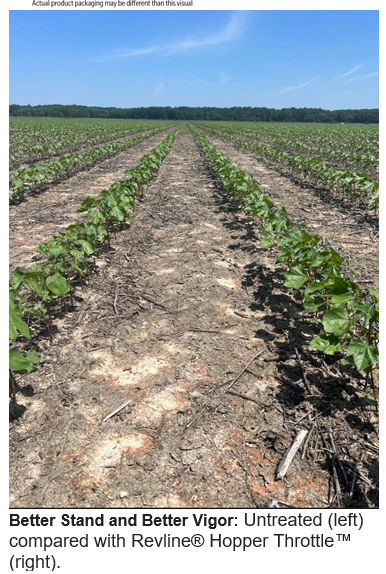
REVLINE HOPPER THROTTLE COTTON contains a full collection of microbes and micronutrients safely packaged for convenient deployment at planting. REVLINE HOPPER THROTTLE COTTON's BIO-CAPSULEs are charged with newly added, crop-specific strain of Terrasym® for cotton in conjunction with a powerful consortium of 10 bio-fertility and N-fixing microbes that focuses on the nutritional needs and stresses facing cotton. In addition, Meristem's new Active Carbon Technology™ feeds these aggressive microbes and helps protect the cotton crop during events that bring plant stress. All of these unique offerings are released at planting in conjunction with a micronutrient blend featuring manganese and IONLOCK™ zinc. It's carried to the seed in an 80/20 talc/graphite seed fluency agent and each pail is treats 20 units of cotton at planting.
In-field research has demonstrated up to 10-times the number of live microbes can be delivered through the planter box when compared to seed treatment or liquid starter. The benefit is fast emergence, a strong stand, and better plant health all season-long.
"The cotton we treated with REVLINE HOPPER THROTTLE COTTON came up to a better stand and had better vigor than the untreated blocks from the start," said Lee Baynes, who raises 8,000 acres cotton at Tibbs Farms in West Tennessee and ran comparisons with the new cotton formulation. "This is a big deal for us on cotton seedlings which are weak by nature. Anything to help push that crop beyond thrips and nematode pressure is a big win." He added that he also liked the convenience of delivery through the hopper box, because it was no different than using conventional talc/graphite.
"I've spent 10 years working with biologicals," says Chris Thrasher, Meristem's Director of Innovation and Product Management. "I've had the pleasure of working with some very good biological technologies, but we've never had a dependable way to keep microbes vigorous all the way to field level and in high enough concentration to benefit crops the most." Thrasher says he's excited to see it come to farmers who raise cotton.
"Now we are able to bring the proper load of bios and micros to the crop and put them, safely, right where they need to be," Thrasher explains. "As an industry, we've tried to put more on the seed through seed treatment, but available space on the seed is limited. Now we can adhere to the seed in a high enough concentration to improve the effectiveness of biologicals."
Thrasher explains that the Bio-Capsule will carry innovative technology like the new ION-LOCK Zinc, specially formulated to effectively deliver 10-times the zinc to each of those seeds through the planter box. "When you have the right material in the right place for that seed, it's like getting perfect delivery of a shot of adrenalin," he says.
About Meristem Crop Performance
Meristem Crop Performance Group, LLC (www.meristemag.com) is one of the fastest-growing crop input companies in America. Meristem sources, formulates, licenses, and delivers high-quality crop inputs to farmers at a price point empowering them to gain real productivity by increasing yields and lowering their per unit production cost. Meristem is building a highly efficient channel to bring crop inputs to market, reducing waste and accelerating access to farm-ready innovations, such as their patented Bio-Capsule Technology™ and Microbilize Technology™ biological delivery systems. For more information, visit www.meristemag.com, or follow Meristem Crop Performance on Twitter, Facebook, LinkedIn, and YouTube.
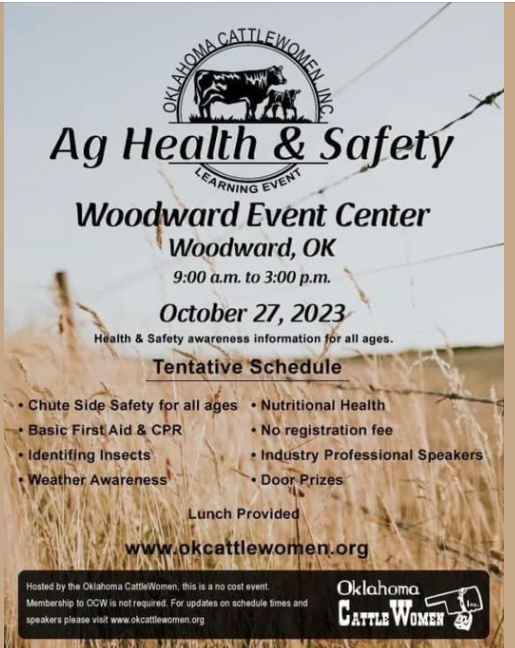
The Oklahoma Cattlewomen will be hosting an Ag Health and Safety Event coming up on October 27th, 2023 kicking off from 9 am to 3 pm. Industry Professionals will be speaking on several important topics.
Attendees will see topics on:
*Chute Side Safety for all Ages
*Nutritional Health
*Basic First Aid and CPR
*Topics on Weather
The event is free of charge and door prizes will be given.
OCW Ag Health & Safety
27 Oct 2023 9:00 AM - 3:00 PM
Location: Woodward Event Center
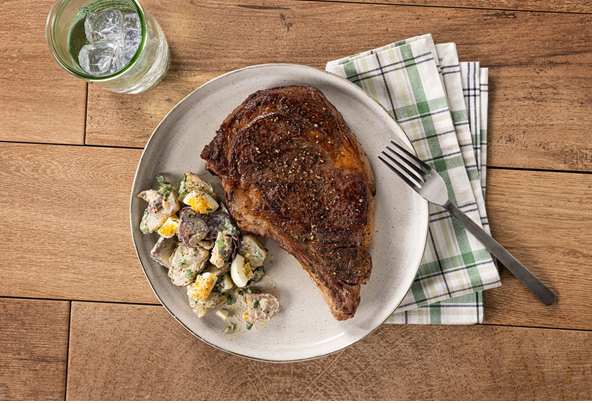
| It has been 45 years since Certified Angus Beef's (CAB) first customer purchased a strip steak at Renzetti's IGA grocery store. Since then, consumer demand for high-quality beef has grown, ultimately driving demand for premium Angus genetics. "The Certified Angus Beef brand was founded on a mission to improve the consumer's beef eating experience and drive demand for Angus cattle," says John Stika, president of CAB. Marking the third-highest sales year on record, the global beef brand sold 1.227 billion pounds across 52 countries during the 2023 fiscal year. While down 7 million pounds, or 0.6%, from total sales in 2022, this year marks the brand's eighth year over a billion pounds sold. Additionally, March 2023 was the third highest sales month in the brand's history at 112.3 million pounds. "It's because of the community around this brand, their daily hard work, and intentionality in leveraging the value of the Certified Angus Beef ® brand that we're celebrating yet another year of over 1 billion pounds sold," Stika says. |
 |
| Caption: Angus producers have diligently selected high-quality cattle that produce premium beef, allowing for 5.82 million carcasses to qualify for the Certified Angus Beef ® brand. |
| CAB Supply Increased Despite Lower Fed Cattle Numbers "Angus producers deserve a tremendous amount of credit for maintaining their focus on marbling and continuing to improve the quality of their cattle," Stika says. While the total fed cattle supply declined by 3%, this year 5.82 million carcasses were certified for the brand, increasing CAB supply 0.5%. This resulted in a 36% acceptance rate after 16.16 million cattle were identified as eligible for the brand. Family farmers and ranchers' commitment to supplying high-quality cattle continues to be rewarded through grid premiums. As reported in March 2022, premiums paid by packers to producers for brand-qualifying cattle totaled $182 million annually or $3.5 million per week. Meeting Consumer Demand Consumers continue to demand high-quality beef offerings at the meat case and while dining out, both domestically and internationally. With 414.8 million pounds sold, foodservice sales are up 2.4% from 2022 and reached their second-best year to date. While diners enjoyed Certified Angus Beef ® at their favorite dining establishments, from Michelin star restaurants to acclaimed barbecue joints and beyond, they also purchased the trusted beef brand in the meat case. Retail stores recorded 521 million pounds sold in 2023, marking the fifth year of over 500 million pounds sold across retailers, though down 4.9% in total sales from last year. U.S. sales dipped slightly from last year, but international sales soared to 188 million pounds, an increase of 5.5%. The highest growth was recorded in China, Hong Kong, South Korea and Mexico. Looking across the marketplace, the steady increase in demand for labor and time-saving solutions led value-added products—items such as fully-cooked briskets, hamburger patties, marinated roasts, franks, flavored meatballs, etc.—to a new annual record. Up 9.8% from 2022, 44.7 million pounds were sold across retail and foodservice, both in U.S. and international markets. Certified Angus Beef ® Prime sales marked a new milestone with 41 million pounds sold, up 17.7% from last year. Given the current marketing conditions, these record sales are further indication that consumers are not backing down from quality. As Certified Angus Beef further embraced consumer choice, Certified Angus Beef ® Natural saw 4.4 million pounds sold, down 6.4% from 2022. "We are all connected through our shared commitment to quality, and to fulfill the growing demand that's out there for the brand," Stika says. "In the process, we'll continue to engage the entire beef community in creating a more prosperous and sustainable future for everyone involved in this brand." |
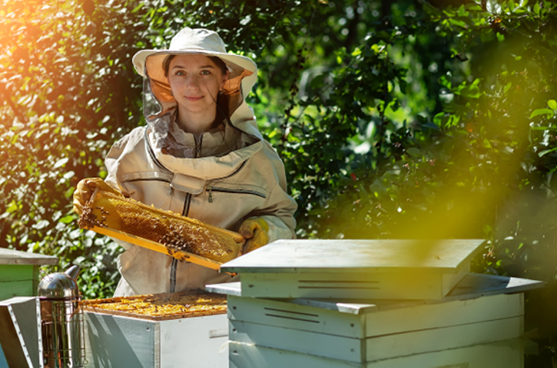
Small farms account for 90% of all U.S. farms, and they play an important role in the agricultural sector. The viability and sustainability of small farms is important to the nation's economy and to the stewardship of our biological and natural resources. On National Farmers Day, USDA's National Institute of Food and Agriculture is highlighting its Small Business Innovation Research and Small Business Technology Transfer (SBIR-STTR) programs and how they are benefiting small farms across the country.
Both the SBIR and STTR programs are providing solutions to the issues that face American agriculture and society. SBIR/STTR funds focused, valuable projects and creates partnerships between university researchers and small businesses to bring together science, research, production and marketing in a way that allows forward-thinking ideas to become a reality.

Backed by more than 40 years of scientific research, Alltech is dedicated to providing solutions and products that contribute to the success of the global animal health industry. This commitment continues with the publication of a new study, "The Effect of Organic Trace Mineral Supplementation in the Form of Proteinates on Performance and Sustainability Parameters in Laying Hens: A Meta-Analysis," recently published in the journal Animals. Results show that the inclusion of Bioplex® organic trace minerals in layer diets significantly benefits production performance and egg quality traits and contributes to a lower carbon footprint. The findings also suggest that the most bioavailable form of essential minerals is crucial for optimizing health and performance in laying hens.
The meta-analysis, led by Dr. Laurann Byrne, research project manager at the Alltech European Bioscience Centre, considered the importance of mineral form on production performance, egg quality traits and carbon footprint. It combined data from 32 global studies involving 107 dietary assessments of 30,992 laying hens.
Dr. Byrne looked at the impact of supplementing laying hen diets with organic trace minerals in the form of mineral proteinates, specifically Bioplex copper, iron, manganese and zinc. The study demonstrated that using Bioplex led to improvements in hen-day production, feed conversion ratio, egg mass, egg weight and egg loss. Eggshell parameters such as thickness, strength, weight and eggshell percentage also were improved.
A life-cycle assessment model — the Alltech E-CO2 Poultry EA™ — was used to evaluate the carbon footprint of egg production. Results showed a reduction in feed and total emission intensities per kilogram of eggs when using organic trace mineral proteinates. The inclusion of Bioplex® in layer diets resulted in a 1.65% reduction of the carbon footprint for every dozen eggs produced (feed emission intensity per dozen eggs).
"With correct formulation, more cost-effective feeds can be produced, resulting in a greater return on investment and a lower carbon footprint," Dr. Byrne said. "As the results show, there is a proven track record of improvement in performance and sustainability with organic trace minerals."
For more information, click here to read the study or visit Alltech.com/Bioplex.
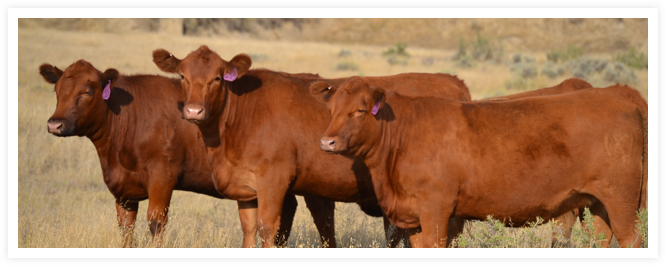
Price discovery in the feeder cattle market rarely includes genetic information. Almost nothing is known about the genetics of 98% of feeder cattle being sold on a weekly basis. That is unfortunate and it holds the industry back, because genetics control approximately one-third of growth, efficiency and carcass results.
Enter the Genetic Merit Pricing Task Force, a coalition of 32 producers from all industry segments assembled to help the industry accelerate toward widespread use of genetic information in pricing feeder cattle. Ken Odde, Ph.D., former Kansas State University animal science department head and group facilitator, believes the Genetic Merit Pricing Task Force has a critical mission that can help make all industry segments more efficient and prosperous.
"If you look at crops, pork, poultry, dairy and virtually all other agricultural products, genetics are heavily emphasized," Odde explained. "Yet in the beef industry, we trade millions of feeder cattle and calves annually, while knowing next to nothing about their genetics. Without objective genetic information on potential growth rate, feed efficiency, marbling and other key traits, we cannot accurately project how a given group of cattle will perform or how valuable their carcasses will be. That lack of genetic information creates a big hole in our ability to price cattle according to their true value."
Task force members represent some of the nation's brightest and most experienced cattle producers, marketers, backgrounders and feeders the industry has to offer. (See Appendix 1 for a complete list.) Their charge is to help bring objective genetic information into the price discovery process for feeder cattle and calves, which ultimately means more sellers offering this type of information to prospective buyers, and then buyers effectively using this information as they bid on and buy cattle.
The GMP Task Force also has a large and growing list of supporting industry organizations. (See Appendix 2.)
"We are pleased with the broad-based industry support we have received thus far," Odde said. "We are in conversation with many other key cattle organizations at the current time. Look for our list of supporters to grow significantly in the months ahead. Once people understand the importance of genetic information becoming actively used in the feeder cattle and calf markets, they quickly recognize it is the right direction for improving the beef business."
The GMP Task Force will hold its first face-to-face meeting Nov. 2 in Denver. Quarterly in-person meetings will continue for approximately 15 to 18 months, with additional virtual meetings held as needed to supplement the group's discussions and work.
"When you consider the success objective genetic information brought to our seedstock market over the past several decades, you get some idea what could happen in the feeder cattle market," said Tom Brink, Red Angus Association of America CEO and one of the GMP Task Force founders. "Industry-wide genetic improvement will progress more rapidly when genetic information is part of the price discovery process, and that benefits everyone from ranch to consumer."
Appendix 1: Task Force Participants
· James Barrett, Texas
· Dave Daley, California
· Dave Delaney, Texas
· John Grande, Montana
· Rob Gill, Wyoming
· Randy Heflin, Kansas
· Scott Howard, Ph.D., Colorado
· Jarrid Herrman, Kansas, Oklahoma, South Dakota
· Sam Hands, Kansas
· Jennifer Houston, Tennessee
· Larry Kuehn, Ph.D., Nebraska
· Cassie Lapaseotes, Nebraska
· Dennis Metzger, Nebraska
· Grant Morgan, Kansas
· Kevin Miller, Colorado
· Mark Nelson, Nebraska
· John Nalivka, Oregon
· Austin Paul, Kentucky
· Trey Patterson, Wyoming
· Jake Parnell, California
· Dustin Puhrmann, Iowa
· Darrell Peel, Ph.D., Oklahoma
· Don Schiefelbein, Minnesota
· Wade Small, Idaho
· Nolan Stone, Colorado
· Matt Spangler, Ph.D., Nebraska
· Jason Timmerman, Nebraska
· Brent Thiel, South Dakota
· David Trowbridge, Iowa
· Will Townsend, Montana
· Craig Uden, Nebraska
· Janie VanWinkle, Colorado
Appendix 2: Task Force Supporting Organizations
Funding Partners
· American Hereford Association
· American International Charolais Association
· Santa Gertrudis Breeders International
· International Brangus Breeders Association
· Allied Genetic Resources/All Beef LLC
· American Simmental Association
· Neogen Corporation
· Beefmaster Breeders United
· Red Angus Association of America
Other On-Record Supporters
· American Gelbvieh Association
· Colorado Cattlemen's Association
· Livestock Marketing Association
· North American Limousin Foundation
· North American Piedmontese Association
· American Shorthorn Association
· American Brahman Breeders Association
· Florida Cattlemen's Association

Today, Growth Energy, the nation's largest biofuels trade association, announced the election of Tom Willis as chairman of the association's board of directors. Willis was previously the board's treasurer and is CEO of Conestoga Energy Holdings, a leading provider of sustainable, low-carbon ethanol with the capacity to produce more than 200 million gallons annually.
"Growth Energy and its members have always been at the forefront of innovation and that's never been truer than it is today. We're building a broad, sector-spanning bioeconomy, poised to provide solutions to any number of economic and environmental challenges," said Willis. "I'm honored to serve as Growth Energy's chairman during this exciting time. I look forward to working with our board, our members, and the Growth Energy staff to ensure continued progress for an ever-expanding industry."
Growth Energy's outgoing Chairman Dan Sanders, CEO of Front Range Energy, welcomed Willis to the position, noting his strong leadership within the industry and strong background in agriculture. "For years, Tom has been one of our resident experts on how the biofuels industry is delivering on the nation's energy, environmental, and economic goals," Sanders said. "Beyond his leadership at Conestoga, he's farmed hundreds of acres, raised livestock, and was one of the country's first evangelists for carbon capture technology, which is only growing in popularity and importance for our industry. His leadership, acumen, and vision make him uniquely positioned to take the reins and lead our membership into this next chapter."
Growth Energy CEO Emily Skor also thanked Sanders for his four years of service to the organization. "Dan's steadfast resolve, his confidence in and commitment to the Growth Energy membership and staff has elevated our organization's size, stature, and impact. Dan led Growth Energy through the challenges and uncertainty during the pandemic, rounding out his tenure as chairman helping us secure critical tax incentives and continued access to higher blends throughout the last two summer driving seasons," Skor said. "It has been an honor and a privilege to work closely with him and I speak for the entire Growth Energy community when I say that we're grateful for his work as chairman."
The Growth Energy Board of Directors includes biofuels producers of all sizes, advocacy experts, agricultural leaders, and a NASCAR team owner. Learn more about Growth Energy's Board of Directors here. Willis' bio can be found here.
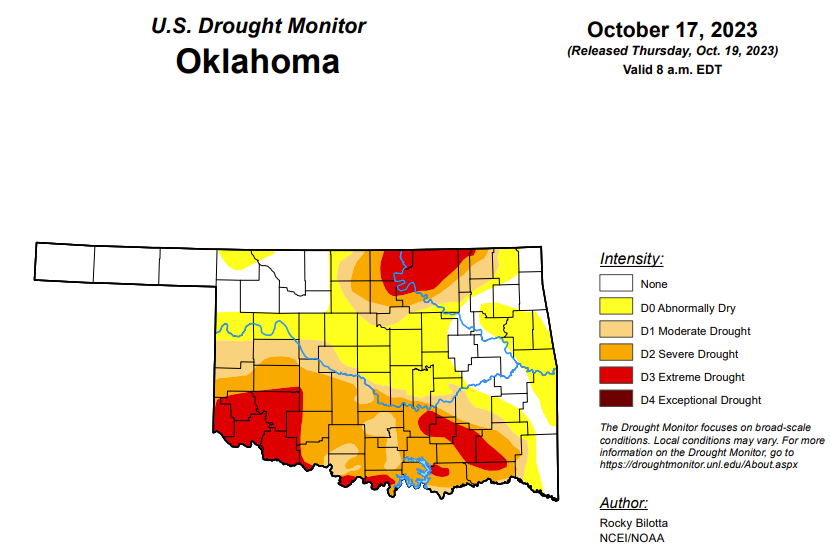
To view the latest Oklahoma drought map, CLICK HERE.
According to the latest Oklahoma drought monitor report, exceptional drought remains at zero percent, unchanged from 3 months ago.
Extreme drought or worse is now at 13.47 percent, up from last week's 8.48 percent.
Severe drought or worse is now at 33.91 percent, up from last week's 29.44 percent.
Moderate drought or worse is now at 48.24 percent, up from last week's 43.11 percent.
Abnormally dry or worse conditions are now at 73.02 percent, up from last week's 63.32.
According to the 6 to 10-Day Precipitation Outlook Map, the majority of the state is likely above a 50 to 60 percent chance of precipitation through October 28. The southwest part of the state is likely above a 60 to 70 percent chance of precipitation through that October 28 date.
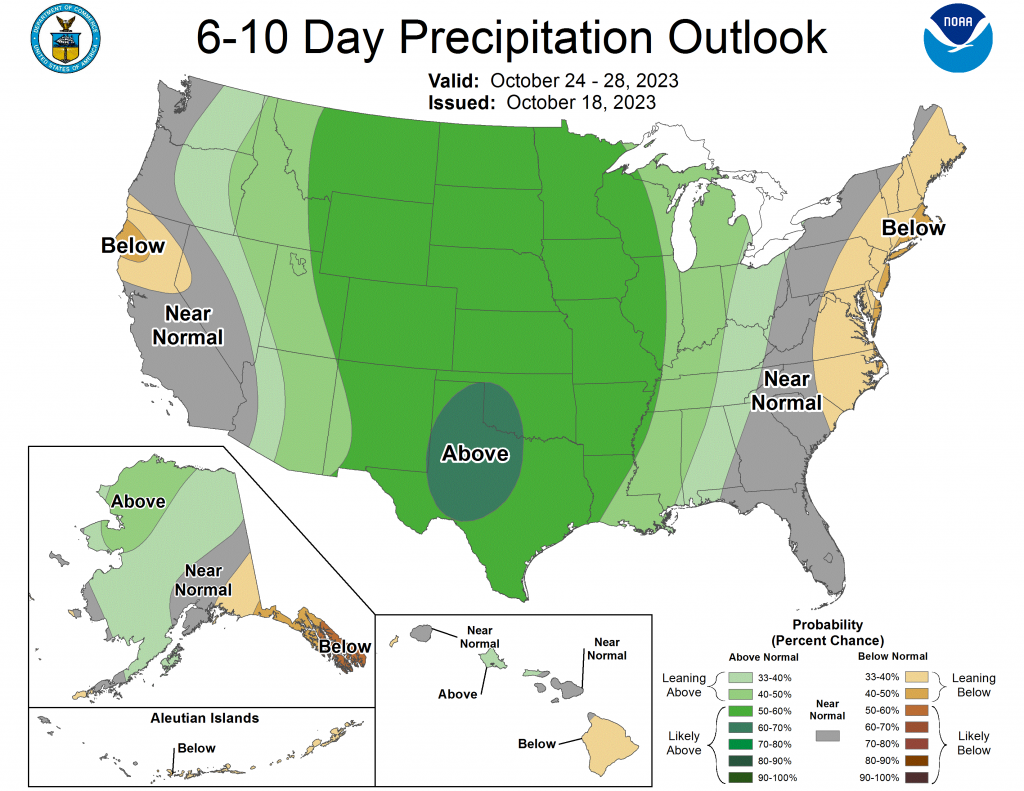
According to the latest U.S. drought monitor, an intense low-pressure system moved across the contiguous U.S., bringing heavy precipitation (greater than 2 inches) across much of the central Plains and Midwest this week. While in the southeast, upper-level energy moving across the Southeast brought rain over parts of Alabama, Georgia, South Carolina, and northern Florida, before moving into the southern Mid-Atlantic. The most widespread improvements were made to northern Nebraska, eastern South Dakota, southern Minnesota, southern Wisconsin, northern Indiana and southern Texas where more well above normal precipitation was observed this past week. Dry conditions continued across much of the Southern region, with widespread degradations occurring across the Tennessee Valley, central Mississippi Valley and northern parts of the southern Plains. Following a wet September, minor improvements were warranted for parts of Washington. In Hawaii, drought continues to intensify across parts of Kauai and the Big Island.
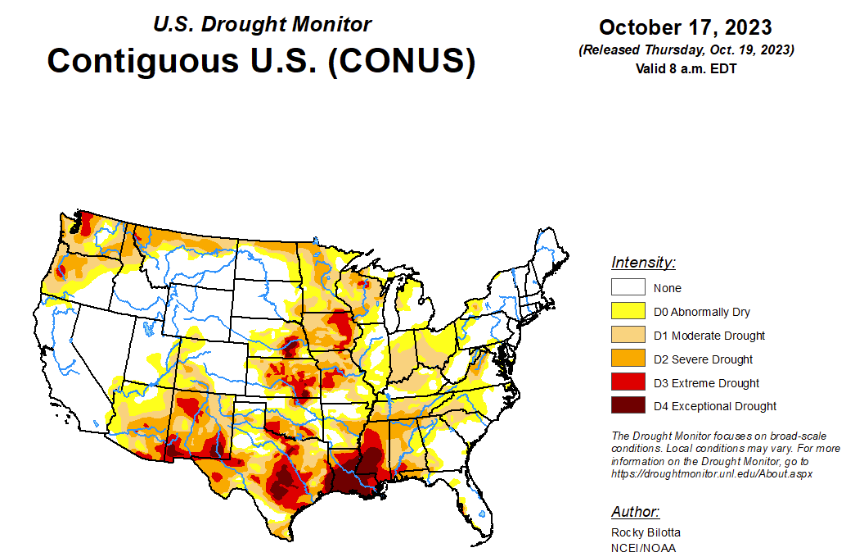
To view the United States Drought Map, click here.
In the South, dry conditions continue across much of the Southern region. Exceptional drought (D4) and extreme drought (D3) was expanded in central and northern Mississippi, while D3 was expanded into northern Louisiana. Moderate drought (D1) to severe drought (D2) was expanded in southern Arkansas. Board 1-category degradation occurred over the states of Oklahoma and Tennessee, in addition to parts of western, central and northern Texas, where dryness continues to degrade conditions. Precipitation in these areas are around 1-2 inches below normal for the month. The drought expansion and intensification was based on short-term SPI/SPEI, NDMC's short-term blend, streamflow and soil moisture data. While heavy precipitation brought improvements to parts of southern and eastern Texas and in southern Mississippi, with some areas reporting over 2 inches of rainfall this week, resulting in exceptional drought being removed from southern Mississippi and extreme drought was removed from southern Texas.
In the High Plains, heavy precipitation brought widespread improvements to the southeastern parts of the region, especially along the South Dakota and Nebraska border. Much of northern Nebraska received at least 2 inches of precipitation, with some areas reporting more than 7 inches this week. Board 1-category improvements were made across northern Nebraska, while 2-category improvements were made where historic rainfall was reported. The heavy precipitation also improved abnormal dryness (D0) and moderate to severe drought (D1-D2) conditions in eastern South Dakota, as shown in short-term SPI/SPEI timescales and soil moisture data. A small area in southwest Nebraska, Chase County, was degraded to D1 due to acute dryness over the past two months and justified by short-term SPI/SPEI data and soil moisture being consistently under the 20th percentile. In Kansas, northern parts of the state received precipitation this past week but not enough to lead to large improvements. Precipitation did improve a small area of extreme drought (D3) in the central part of the state, in the counties of McPherson and Saline. Status quo was maintained across much of the state with some degradation occurring along the eastern part of the state based on SPI/SPEI and soil moisture data.
In the West, precipitation fell across much of the West with heavy precipitation along the coast from Washington to northern California, where more than 1 inch of precipitation occurred this past week. Above-normal precipitation led to improvements to severe drought (D2) in southwest Washington, along with abnormal dryness (D0) to extreme drought (D1-D3) improvements to western Oregon and D0 to moderate drought (D1) improvements in northern California. Beneficial precipitation led to improvements in moderate drought to extreme drought (D0-D3) in portions of northwest Montana, as shown in SPI/SPEI, streamflow and soil moisture data. Status quo was maintained across the rest of the region this week.
Looking ahead, during the next five days (October 19-24, 2023), a front extending from the Upper Mississippi Valley to the Southern High Plains will move eastward to the Lower Great Lakes/Mid-Atlantic to the Central Gulf Coast by Friday. The system will produce rain over parts of the Upper/Middle Mississippi Valley on Wednesday evening, moving into the Great Lakes/Ohio Valley by Thursday and continuing eastward into Friday. On October 21, guidance shows potential for significant rainfall over parts of the Northeast, while the West is forecasted to receive rain from the weekend into next week. Some of the precipitation over the West should fall as snow in the higher northern Rockies, with snow levels gradually declining with time.
The Climate Prediction Center's 6-10 day outlook (valid October 23-27, 2023) favors near to above-normal precipitation throughout much of contiguous U.S., Alaska and Hawaii with below-normal precipitation most likely across the East Coast and in parts of southeast Alaska and on the Big Island in Hawaii. Increased probabilities for above-normal temperatures are forecast from the Plains to the East Coast, as well as much of Alaska and Hawaii, while below-normal temperatures are likely across much of the West.
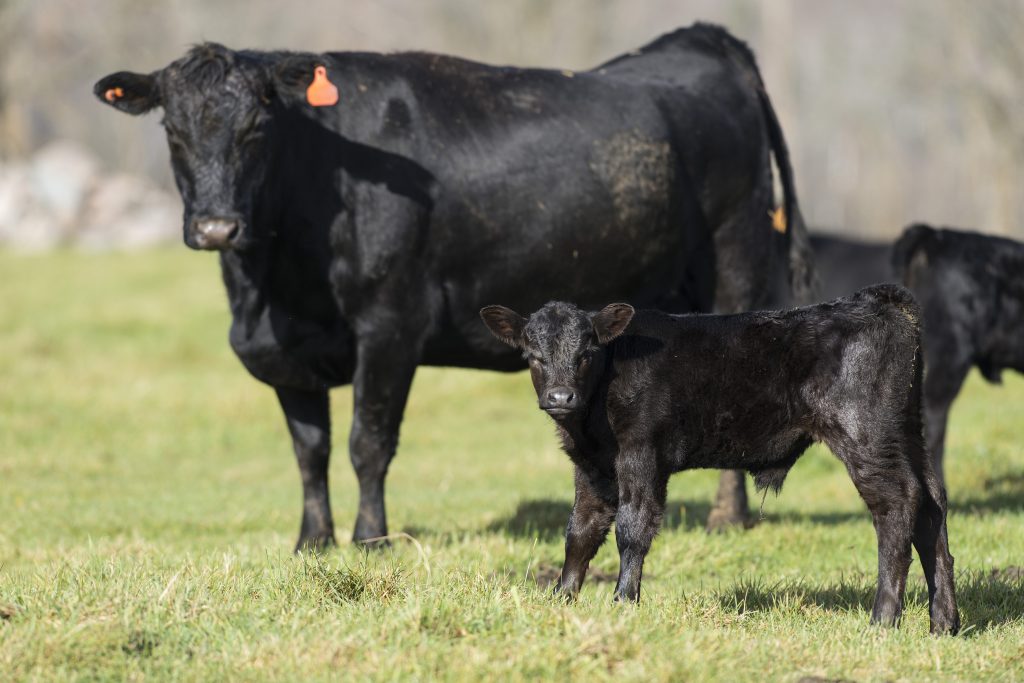
Senior Farm and Ranch Broadcaster, Ron Hays, is featuring comments from Kansas State University's Dr. Bob Weaber about what is ahead for genetics in the beef industry.
The Beef Cattle Institute at Kansas State University regularly conducts a podcast with experts on staff. One of the recent podcast episodes features comments from Weaber, who specializes in beef breeding, genetics, and cow-calf operations.
"I think one of the really interesting dialogues that is going around in the producer world is some refocusing on maternal genetics," Weaber said.
Some of these attributes in this conversation over maternal genetics, Weaber said, include a focus on what genetics will create cows to go the distance and help with low cost while also producing outstanding calves.
In the midst of continuous liquidation of the cow herd, Weaber said as producers eventually start to rebuild, he is hopeful that producers will be selective with their replacements.
"One of the topics that is really important is making crossbred cows," Weaber said. "We know the advantage of making those cows in terms of longevity and fertility."
Selecting cows that are the right size, Weaber said, is also critical.
"We had a grad student do a big model a while back that suggested that moderate-size cows are actually, at least here in eastern Kansas, the appropriate kind of cow," Weaber said.
Weaber also talked about paying attention to lactation.
"Those really high milk cows have a high nutrient requirement, and they have a higher maintenance requirement all 12 months of the year, so again, moderation is kind of the key to making sure those cows are fit for your production environment," Weaber said.
The Beef Buzz is a regular feature heard on radio stations around the region on the Radio Oklahoma Ag Network and is a regular audio feature found on this website as well. Click on the LISTEN BAR for today's show and check out our archives for older Beef Buzz shows covering the gamut of the beef cattle industry today.
RON's Dave Lanning has a pre-opening look at today's agricultural Markets.
Click the audio tab below for today's report.
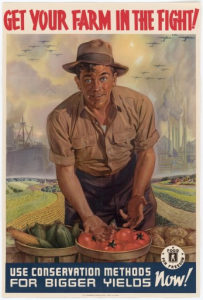
There is a new blog post out at the Southern Plains Perspective. Read below! The Southern Plains Perspective is authored by Clay Pope- who farms with his wife Sarah.
We need a brown revolution.
Most of us are familiar with the green revolution—the explosion of agriculture production that happened between the 1940's and 1970's, due largely to the work of Norman Borlaug and others who developed high-yield, hybrid seeds and helped expand irrigation infrastructure, chemical fertilizer use and mechanical agriculture throughout the developing world.
The time has come for another leap forward in agriculture—and a change in attitude when it comes to farming and ranching. Now is the time for a revolution that involves not bringing new inputs into the field but in taking care of what's already there. It's a revolution focusing not so much on the seed we put in the ground but on how we treat the ground itself—it's time we focus on soil health. It's time for the brown revolution.
Now, full disclosure, I didn't come up with the term brown revolution—it was probably coined at Cornell University and been in use at least since 2011. What it means is that the time has come to start thinking about how the health of our soil effects agriculture production—it also means that we need to start thinking more about how the health of our soil effects the environment. What's cool is that if we take better care of the soil, we will find an intersection between both of these goals.
Studies have shown that by converting to no-till alone, you can reduce fuel use when growing crops by as much as 4 gallons of diesel per acre per year. Other sources have reported that by using soil health practices like no-till and cover crops, you can reduce the need for synthetic fertilizer, with one 2017 study showing that the use of these practices reduced fertilizer costs by as much as $50 per acre (and think how much prices have gone up since then!).
In addition, for every 1% increase in organic matter, the soils water holding capacity increases by 3.2 times- that can equal out to as much as 2,500 gallons of additional water per acre per year! Research also shows that each tillage pass you take can cost you a quarter of an inch of moisture or more. In fact, Oklahoma State University has reported that a conventional wheat-summer fallow cropping system loses roughly 59 percent of rainfall back to the atmosphere through evaporation---something that no-till, strip till and other conservation tillage methods can help reverse.
By going no-till you can also decrease soil erosion—a huge benefit in and of itself-- but you also decrease the amount of run-off into our water. Turbidity (dirt in the water) and sedimentation are two of the largest water quality challenge we have. In addition, most nutrients and bacteria that get into our water do so by being tied to soil particles that run-off of agriculture land. If we can control soil erosion, we can improve water quality—and save the towns downstream (and their rate payers) money in water treatment costs
Through reduced tillage you also increase the amount of organic carbon "sequestered" into the soil. Remember, plants breathe in carbon dioxide and breathe out oxygen. By going no-till it's estimated that you can also sequester around half a ton of carbon dioxide per acre per year while helping your overall production. That's carbon dioxide that's taken out of the atmosphere, reducing greenhouse gasses (you also are reducing greenhouse gasses by reducing fuel use as well) while helping maintain and in many cases increase production long term.
By improving soil health, you help with overall production while improving water quality, reducing soil erosion and helping address climate change. You also increase your ability to adapt to wild weather swings like droughts and floods--things we will have to deal more and more with in the future. A final added benefit is the help you also provide wildlife habitat by improving the quality of streams and lakes and by providing cover and food for wildlife on untilled fields.
All this points to one simple fact—by being mindful of the health of our soils we will be better able to feed and clothe an increasing world population while helping to address climate change, improving water quality, reducing soil erosion, reducing fuel use and helping improve wildlife habitats. Protecting the environment and production agriculture are not mutually exclusive. All it takes is a little revolutionary thinking—brown revolutionary thinking.

Today, the Biden-Harris Administration announced the U.S. Department of Agriculture's Forest Service is making nearly $50 million in grant funding available for proposals that support crucial links between resilient, healthy forests, strong rural economies and jobs in the forestry sector. Made possible by President Biden's Investing in America agenda, a key pillar of Bidenomics, this funding will spark innovation, create new markets for wood products and renewable wood energy, expand processing capacity, and help tackle the climate crisis.
"A strong forest products economy contributes to healthier forests, vibrant communities and jobs in rural areas," said Agriculture Secretary Tom Vilsack. "Thanks to President Biden's Investing in America agenda, we are investing in rural economies by growing markets for forest products through sustainable forest management while reducing wildfire risk, fighting climate change, and accelerating economic development."
This announcement is part of President Biden's Investing in America agenda to generate economic opportunity and build a clean energy economy nationwide. The grants are made possible by President Biden's Inflation Reduction Act, the largest climate investment in history and a core pillar of Bidenomics, as well as President Biden's Bipartisan Infrastructure Law, an historic investment to rebuild America's aging infrastructure.
The open funding opportunity comes through the Forest Service's three key grant programs to support the forest products economy: Wood Innovations Grant, Community Wood Grant, and Wood Products Infrastructure Assistance Grant Programs. The agency is seeking proposals that support innovative uses of wood in the construction of low carbon buildings, as a renewable energy source, and in manufacturing and processing products. These programs also provide direct support to expand and retrofit wood energy systems and wood products manufacturing facilities nationwide.
The Forest Service is requesting proposals from eligible entities in the private, non-profit, and government sectors including Tribes, local and state governments, businesses and for-profit entities, institutions of higher education, as well as public utility, fire, conservation, and school districts, among others.
These investments will support forest management projects to improve forest health and reduce wildfire risk across all land ownerships. Byproducts of these activities, like small diameter timber and woody biomass, have historically been of little market value. Thanks in part to these Forest Service grant programs, funding is available to support the use of this often-unused material in many types of wood products.
Businesses that are engaged in or support the forest products economy are eligible to apply for funding to expand manufacturing capacity. These businesses are vital employers in local communities, especially in tribal or rural communities.
The investments will also support the Forest Service's 10-year strategy to address the wildfire crisis in the places where it poses the most immediate threats to communities. The agency is investing in projects that source wood from activities that reduce risks to communities, like prescribed fire and mechanical thinning to reduce the vegetation that fuels wildfires.
Visit the Forest Service webpage for more information on funding for the Wood Innovations, Community Wood and Wood Products Infrastructure Assistance Grant Programs.
USDA touches the lives of all Americans each day in so many positive ways. Under the Biden-Harris administration, USDA is transforming America's food system with a greater focus on more resilient local and regional food production, fairer markets for all producers, ensuring access to safe, healthy and nutritious food in all communities, building new markets and streams of income for farmers and producers using climate smart food and forestry practices, making historic investments in infrastructure and clean energy capabilities in rural America, and committing to equity across the Department by removing systemic barriers and building a workforce more representative of America. To learn more, visit www.usda.gov.
Twelve Oklahoma teachers were recently selected to receive a bushel basket of accurate agriculture books as part of Oklahoma Farm Bureau's Bushels for Books program.
A collaboration between the OKFB Foundation for Agriculture and the OKFB Women's Leadership Committee, Bushels for Books is designed to spread agriculture literacy to children around the state through providing a selection of books that accurately portray the agriculture industry.
"As family farmers and ranchers, we are passionate about teaching others how their food gets to the dinner table," said Mignon Bolay, OKFB WLC chair. "We greatly appreciate these educators who have made agriculture literacy a part of their curriculum."
Teachers who received bushel baskets this year include:
• Fayla Ray, Guymon Public Library
• Crystal Ostermann, Frederick Public Schools
• Linda Deason, Windsor Hills Elementary
• Anita Hawkins, Rose Witcher Learning Center
• Ashley Duval, Coleman Public School
• Tracie Garrison, Tuskahoma Public School
• Audie Smith, Haworth Public Schools
• Bobbie Hummingbird, Warner Elementary School
• Travis Jinkens, Foyil Public School
• Lea Ann Johns, Peckham School
• Dana Johnson, Tupelo Public Schools
• Anna Deripaska, San Miguel School of Tulsa
The program is open to Pre-K through eighth-grade teachers and librarians in Oklahoma, and each teacher who applies receives a book for participating.
"With less than 2% of the population involved in production agriculture, it is more important than ever that children understand where their food comes from," said David VonTungeln, OKFB Foundation for Agriculture president. "We hope these books provide a fun learning opportunity for our young people around the state."
To learn more about OKFB's Bushels for Books program, visit okfb.news/2ZewRrs.
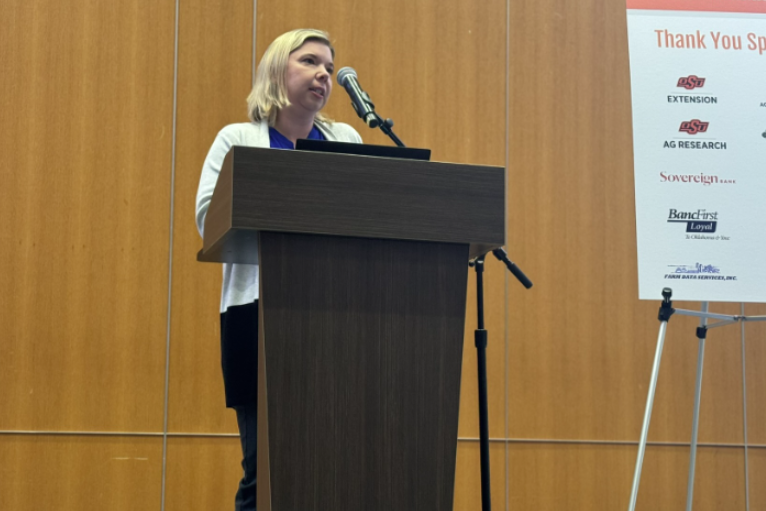
Recently Farm Director, KC Sheperd, had the chance to visit with Oklahoma State University associate professor of agricultural economics, Dr. Amy Hagerman, about the next Farm Bill.
"Wheat base, when you do your ARC and PLC over, for example, is at a much higher level than what our actual planted wheat acres are in the state," Hagerman said.
Winter wheat acres have dropped by about 2 million acres, Hagerman said, when looking at base acres versus planted acres.
In the next Farm Bill, Hagerman said there have been some conversations about a base update.
"We are talking about the potential for a crop-based update, and what that looks like, whether it is voluntary, or mandatory, is all very much up in the air," Hagerman said.
A reallocation of base in the state could have either positive impacts or negative, Hagerman said, depending on the producer.
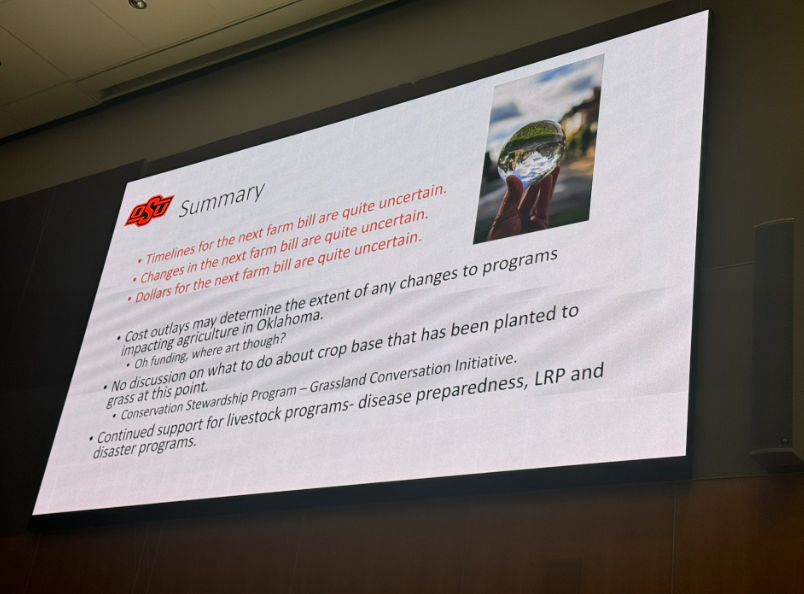
"I think given that gap between base acres and planted acres, our wheat producers have the greatest potential to be impacted, whether that is positively or negatively, depending on how they do the update," Hagerman said.
Hagerman also said when it comes to crop insurance programs, there needs to be a better understanding of whether producers are taking advantage of higher-level coverage options. There might be some potential for discussion in the next Farm Bill, Hagerman said, about creating some options for producers to affordably take a buy-up option.
"We do have some people who take advantage of that supplemental coverage option insurance in the state, but when you are talking about that one step above that can really take you to a high level of coverage on your crop, that Enhanced Coverage Option or ECO, very few people in the state take advantage of that," Hagerman said. "It is not really clear why at this point."
The 2018 Farm Bill has now expired, Hagerman said, so going forward, this will not be a large issue until the new marketing year for commodities.
"Really, we need to see an extension by the end of this calendar year, and I think it is quite likely that will happen," Hagerman said. "Then we can continue our Farm Bill programs forward for 2024 while they continue to work on that bill..."
Renovo Seed™ debuts today with an elite lineup of more than 80 proven, prebuilt seed mixes that simplify forage, cover crop and conservation seed choices. Access to a robust caliber of seed mixes and an established supply chain have paved the way for Renovo Seed to launch its commercial seed brand, a first for the forage, cover crop, and conservation space. You can find Renovo Seed at a growing network of seed dealerships and ag cooperatives nationwide, as well as online.
"We're problem solvers. Our priority is making these seed mixes easy to use for every farmer, rancher or landowner. You don't have to be an agronomy expert or conservation fanatic to understand our products," says Justin Fruechte, ag product expert for Renovo Seed. "We take the guesswork out of your seed choices."
Customers can purchase seed on Renovo Seed's website and have it shipped right to their door. The site also serves as a powerful resource, featuring seed selector tools to simplify the decision-making process, as well as agronomic details, video tutorials, firsthand farmer and rancher experiences, and how-to guides that enhance understanding and confidence in the products.
"Our North American footprint and streamlined distribution means we can get seed into your hands fast," says Shannon Kubik, brand president of Renovo Seed. "Because our products are often used for double cropping or to complement other crops, turnaround time is critical. Timely delivery is another way we're able to simplify and improve the seed-buying experience for our customers."
Renovo Seed may be new, but its team is made up of experts who have been land-use linchpins for decades, linking practical land use solutions with long-term farm profitability. Backed by MillbornTM, a vertically integrated seed supply chain powerhouse with over 35 years in the seed industry, Renovo Seed has the distribution channels and experience to back up its products.
"Our people are rooted in the land," says Kubik. "They farm. They have livestock. They're invested in their farms' longevity. Their experiences have helped us build products that offer real value and solutions guided by three principles: renew, revive, repeat."
"We believe that not only can the land be renewed, but also the entire seed buying and crop planning experience. We create easy-to-use, effective seed mixes that make it simple for farmers, ranchers, and landowners to renew their crop plan and revive their land," Kubik adds.
Whether you're looking for high quality alfalfa or grass for feed for your livestock, diverse cover crop solutions, hay and pasture mixes, conservation seed, or are an outdoor enthusiast looking for premier food plot options, Renovo Seed has proven seed mixes to simplify decisions and help you exceed goals.
To take the guesswork out of your forage, cover crop and conservation seed choices, visit renovoseed.com or call 888-498-7333 to locate a dealer near you.
The meeting serves as the largest yearly gathering of Farm Bureau members in the state with general sessions, policy discussions, breakout sessions, awards, networking and fun with fellow farmers and ranchers.
The Omni Oklahoma City hotel will be the site for the 2023 annual meeting, offering Farm Bureau members a modern, convenient space to gather.
The Omni's meeting space is located on a single floor, meaning OKFB members are a quick elevator ride away from their guest rooms to the event area. The Omni offers a variety of in-house dining options and is located in downtown Oklahoma City with numerous dining and entertainment choices within either walking distance or accessible with a quick street car ride.
Farm Bureau members will vote on the organization's grassroots policy positions during the Saturday business sessions, considering resolutions submitted by county Farm Bureaus from around the state.
OKFB members will also elect fellow Farm Bureau members to lead the organization, including the election of the OKFB president. Districts 1, 4, and 7 will caucus to elect district directors, and both Women's Leadership Committee and Young Farmers & Ranchers members will caucus to select leaders for the upcoming year. OKFB delegates will also vote on proposed changes to the organization's bylaws, the text of which can be found in the Summer 2023 issue of Oklahoma Country magazine.
Farm Bureau members will have numerous opportunities to learn about OKFB's programs and activities while connecting with fellow Farm Bureau leaders to learn and grow.
Breakout sessions on Saturday will feature updates from OKFB members and staff along with a session focusing on mental wellness as the capstone of OKFB's Cultivating Healthy Minds program.
County Farm Bureau board members and county staff will have the opportunity to attend training sessions on Friday, and receptions and coffee talk sessions will allow members to visit with fellow Farm Bureau leaders and OKFB staff members to learn what the organization can do to support the future of agriculture and rural Oklahoma.
Farm Bureau members will once again gather to celebrate the achievements of fellow farmers and ranchers while celebrating a year of the impacts of agriculture.
Friday night will feature a game night for Farm Bureau members in an informal setting to enjoy the evening and try for a chance to win prizes with a Price is Right-inspired gameshow event.
The Saturday night awards banquet will recognize the efforts and achievements of Farm Bureau members, county Farm Bureaus and the Oklahoma agriculture community.
Our annual meeting will also provide many opportunities for Oklahoma agriculturalists to gather and connect.
OKFB's 2023 annual meeting will of course feature daily general sessions with speakers and updates, a trade show with vendors from across the state, a Sunday morning breakfast and worship service, YF&R competitive events, a WLC business meeting, the OKFB Ag PAC reception and more.
Check out the latest convention schedule below, and see our featured general session speakers
Updated October 16, 2023
Please note: The following convention schedule is updated as changes are available. The final schedule will be published in the convention program.
8 a.m. – Credentials Committee Breakfast
8 a.m. – YF&R Discussion Meet Orientation
9 a.m. – Registration, Trade Show and Silent Auction Opens
9 a.m. – YF&R Discussion Meet Round One
10 a.m. – County Board Member Training
10 a.m. – County Staff Training
10 a.m. – YF&R Discussion Meet Round Two
11 a.m. – Cultivating Healthy Minds Meeting & Luncheon
11:30 a.m. – YF&R Discussion Meet Finals Luncheon
12 p.m. – County Board Member Training Luncheon
12:15 p.m. – YF&R Discussion Meet Finals
1:30 p.m. – Opening General Session
3:15 p.m. – Breakout: AFBF Issues Advisory Committee Reports
3:15 p.m. – Breakout: Oklahoma Grassroots Rural & Ag Business Accelerators
3:15 p.m. – Breakout: Cultivating Healthy Minds with Dr. Tobin Redwine
4:30 p.m. – Women's Leadership Committee Business Meeting
4:30 p.m. – YF&R Dinner and Caucus
5:30 p.m. – Women's Leadership Committee Dinner
7:30 p.m. – OKFB Game Night/Entertainment
7:30 a.m. – Credentials Committee Breakfast
7:30 a.m. – Financial Committee Breakfast
7:30 a.m. – Resolutions Committee Breakfast
8 a.m. – Registration Opens
8:45 a.m. – OKFBMIC Policyholders Meeting
9 a.m. – Trade Show and Silent Auction Opens
9:30 a.m. – General Session
11:30 a.m. – WLC Advocacy Luncheon
12 p.m. – Lunch Available from Food Trucks
12 p.m. – Credentials Committee Luncheon
1 p.m. – OKFB District Caucuses (Districts 1, 4 and 7)
1:30 p.m. – General Session
5 p.m. – County Presidents Reception
5 p.m. – Farm & Ranch Family Recognition Reception
5:30 p.m. – Ag Community Reception
7 p.m. – Dinner and Awards Program
7:30 a.m. – County Presidents Coffee Talk
7:30 a.m. – WLC Coffee Talk
7:30 a.m. – Public Policy Coffee Talk
8:45 a.m. – Worship Service and Group Breakfast

American Farm Bureau President
Friday Opening Session Speaker

Oklahoma State University Vice President and Dean of agriculture
Friday Opening Session Speaker

Oklahoma City Mayor
Friday Opening Session Speaker

Vivayic
Friday Opening Session Speaker

American Farm Bureau Women's Leadership Chair

U.S. Army (Retired)
Saturday Dinner & Awards Speaker

Motivational speaker and entertainer
Sunday Worship Session
Senior Farm and Ranch Broadcaster, Ron Hays, is back talking with the Chief Executive Officer of National Livestock, Robert York. This time, Hays and York talk about the future of the cattle industry when it comes to marketing.
National Livestock is based in Oklahoma City at the Oklahoma National Stockyards and consists of businesses spread out across the country focused on cattle. York and his team have the chance to interact with cattle producers across the country on a daily basis, including here in the Southern Plains.
"The industry has changed so much, and the cattle have changed so much," York said.
Genetics have improved immensely, York said, and there are countless ways producers can differentiate themselves.
"You do have to approach it from a better-than-average standpoint if you want to consistently get the best prices," York said.
Many generational producers have been aggressive with adoption of programs for their cattle, York said, which has been exciting to watch because of the herd and genetic improvements that have followed.
"Based on how my grandpa used to do things, and how my family would have done it years ago, it was a lot of different process," York said.
Value-added programs have been beneficial for producers, but York said before changing up an operation, a producer might need to measure the cost and profit of doing so.
York also talked about a new ranching operation in Southeastern Oklahoma that is part of National Livestock.
"We started a new company called 1931 Legacy Ranch- 1931 being the year that National (Livestock) was founded, and then Legacy because we want to tell the story about the producers, not a story about National (Livestock)," York said.
The 1931 Legacy Ranch will produce an Oklahoma grown beef product, grown by co-op members.
"It has been an exciting change for us," York said. "We do have a storefront we hope will be open this year, we are developing a beef brand and getting the labeling done."
The Beef Buzz is a regular feature heard on radio stations around the region on the Radio Oklahoma Ag Network and is a regular audio feature found on this website as well. Click on the LISTEN BAR for today's show and check out our archives for older Beef Buzz shows covering the gamut of the beef cattle industry today.
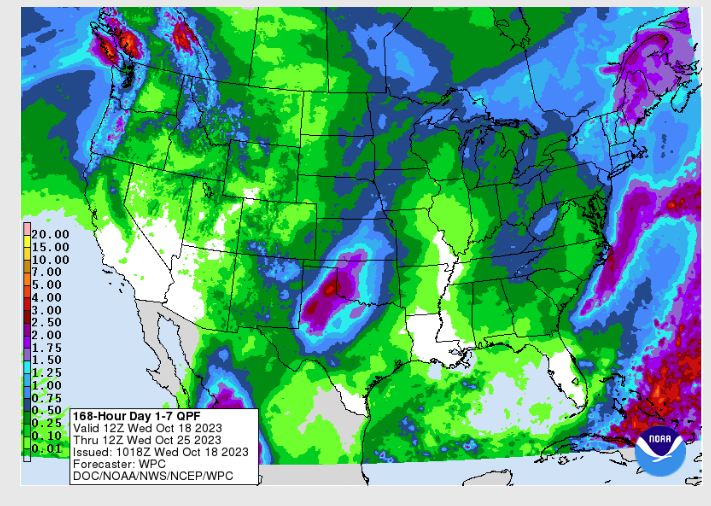
It has been dry the past couple of weeks in Oklahoma, and farmers are looking for some rainfall in the forecast. State Climatologist Gary McManus says tropical storm Norma might be the answer for much-needed rainfall.
"When it comes to these tropical storm remnants, you're in really dicey territory, especially coming from the southwest where there's not a lot of flow," McManus said. "In this case, we have a large upper-level trough approaching from the west that looks like it will help catch the Norma and steer it towards the north/northeast, possibly right up our way. The resulting rain is finally showing up on the 7-day forecast."
McManus says most of the rain from that system will actually wait and arrive on the 7th day.
When storms like this approach, according to McManus, many things can happen.
"Those remnants travel up our way, and with the approaching storm from the west, we should have good moisture return from the Gulf of Mexico with dewpoints quite high for this time of year," McManus said. "So a lot still has to happen between now and early next week, but we're certainly due for some luck and rain."
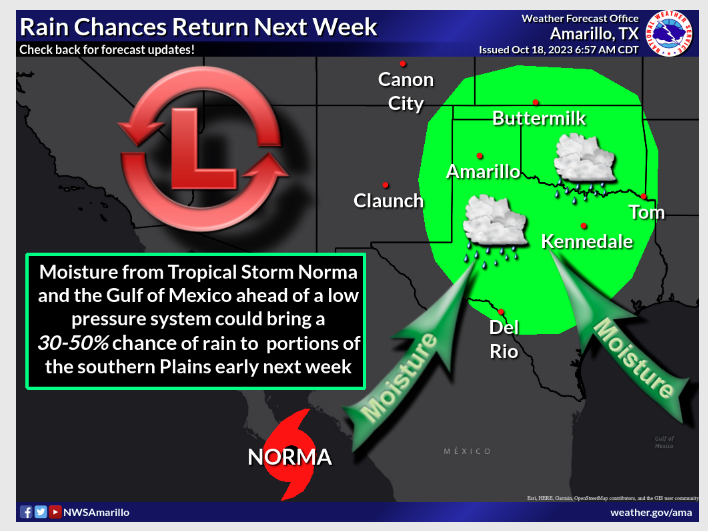
The Fall temps we saw last week are not as prominent this week as highs in the upper 70's and 80's cover the state, however, a cold front is making its way through the state as we speak, but McManus says its more of a 'lukewarm' cold front, and we should see minimal impacts on today's temperatures.
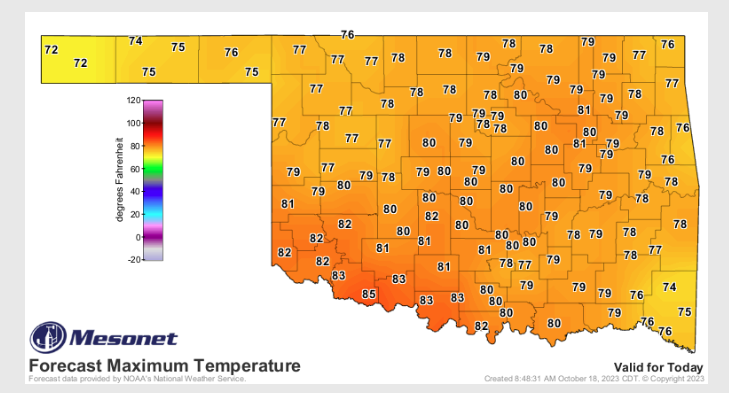
Oklahoma sure needs the moisture as we are on day 89 of our flash drought. McManus says over the next couple of days this rain will fall off and the drought maps will continue to get uglier.
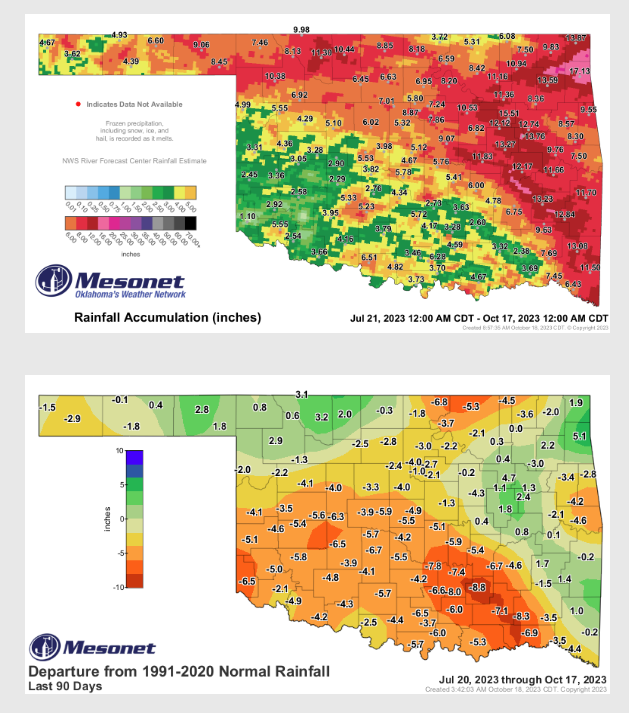
So right now we are hoping that Norman will come to town and bring some much needed rainfall to the state!
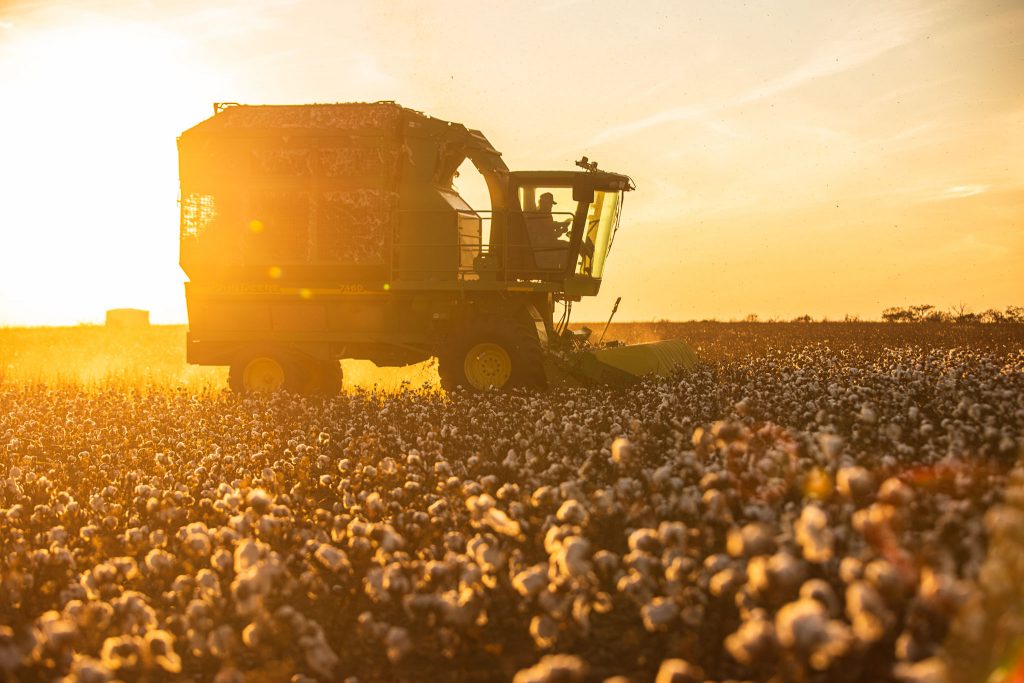
The Cotton Board's 2022 Annual Report is now available online. To download the report, visit cottonboard.org/stakeholder-transparency.
The report offers a letter from Sonja Chapman, who served as Cotton Board's 2022 chairman. In Chapman's letter she says, " The Cotton Board maintains a strong collection rate, receives positive audit results, and engages in strong communication efforts. The exceptional professionals on staff at The Cotton Board and Cotton Incorporated are determined to move the industry forward, deliver a strong sustainability message to consumers and users of cotton, and increase downstream demand for cotton."
The report features 2022 budget/financial information, an overview of the top-line strategic priorities of the Cotton Research and Promotion Program, and information on projects and programs from 2022.
The Cotton Board's annual report is published electronically to save money and paper. However, if you would prefer to receive a copy of the report in paper or DVD format, please contact Stacey Gorman at sgorman@cottonboard.org.
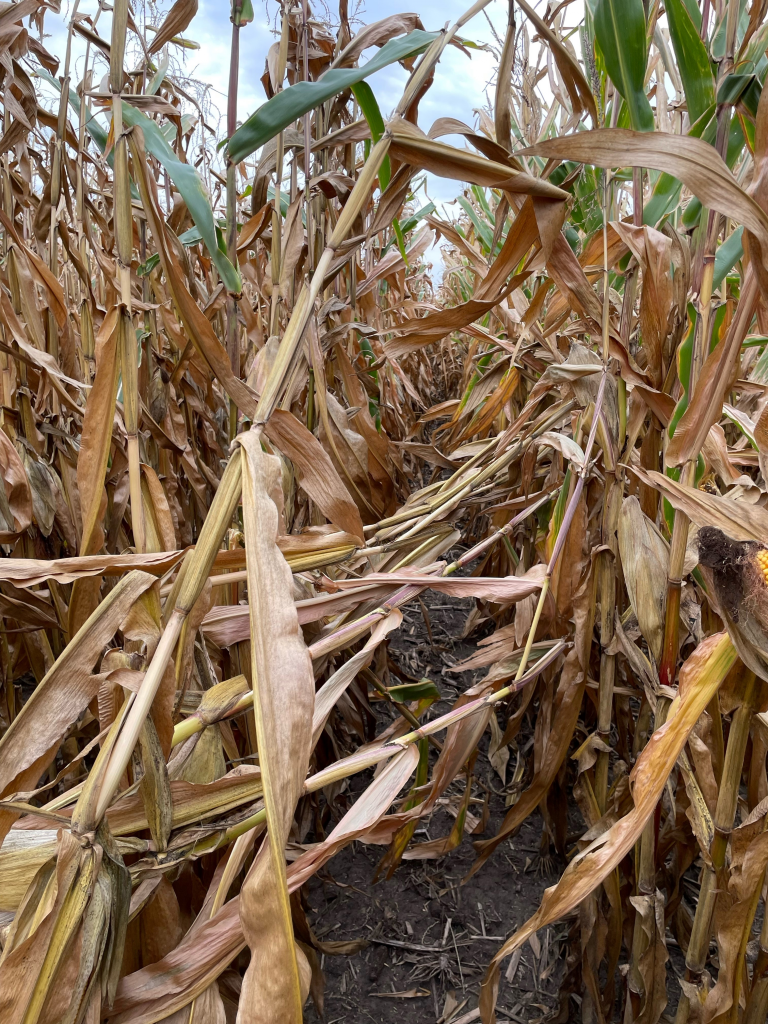
Strong stands and good plant health are on display with A630-04 to the right, whereas the competitor product to the left has stalks breaking below the ear.
Late-season plant health is critical to a smooth harvest and maximizing yield potential. It's not something that just "happens." Keeping your corn crop healthy all the way to harvest takes planning, hybrid selection, fertility management and fungicide.
"It's an investment that pays off — especially in challenging years," says AgriGold Agronomist Jeff Morey. In years when drought and heat stress the crop, he has witnessed a 10- to 20-bushel-an-acre advantage.
Late-season plant health starts with hybrid selection
Plant health should influence farmers' corn hybrid decisions. "Farmers with a lot of acres to combine need that corn plant standing well into October. They should look for genetics with good late-season plant health, stalk quality and standability," Morey advises. "You'll find those ratings in our seed guide."
"A fungicide application is a must for hybrids with lower plant health ratings and on disease-prone acres," he adds. "You'll also want to make sure you have good fertility, including getting nitrogen into those plants when they need it."
Fungicide's ability to improve standability at harvest has made them popular in Morey's Iowa territory. "Farmers recognize the need for fungicides and genetics with strong plant health to ensure the plant is standing later in the season," he says.
Recognize disease can be a lingering threat
Stalk health issues can date back to the start of the growing season. "The longer corn takes to emerge, the more potential for disease to infect the plant," Morey explains. "If infection occurs early and the environment is right, disease can have an immediate impact on yield."

If the environment is not conducive, a plant can be infected early in the season with no immediate impact. However, that doesn't mean the threat goes away.
"A crop may look healthy for much of the season, leading a farmer to opt against a fungicide application," Morey says. "But if late-season drought stresses the crop or nitrogen runs low, the disease that infected the plant early in the season can flare, degrading stalk quality and harvestability."
The lesson is twofold:
"If you're able to plant your crop within a 10-day window, don't rush," Morey says. "There's no need to push planting earlier if it means fighting wet, cool conditions that can translate to yield loss and standability issues come harvest."
Additional considerations for corn-on-corn and no-till acres
Farmers with corn-on-corn or no-till acres should be especially vigilant regarding disease threats. "These acres are subject to more disease pressure, so farmers should make sure to choose hybrids with good plant health," Morey says.
Traits with good corn rootworm protection, such as Duracade®, SmartStax® and SmartStaxPro®, are also important on these vulnerable acres.
Don't fret about a later harvest
There is still discussion about whether applying fungicide to a 108-day relative maturity hybrid will make it act more like a 110-day. That is a possibility, Morey says. "But if you have a green plant that stayed healthy to the end of the season, it should pay off in yield. It also tends to lead to a decent dry down."
Morey asks, "If it's going to dry down and stand in the field, what's your concern?" Plus, extending the growing season has soil health benefits. He points out, "The best thing for soil health is to have plants growing on it."
Take stock at harvest and plan for next season
Morey encourages farmers to keep a notepad handy throughout harvest. "Keep record of how products fared in terms of plant health," he says. "When harvest wraps up, talk with your agronomist and see if your experience matched what they heard from other farmers. Then use that to make decisions that work well for your farm next season."
For more support choosing hybrids that will thrive from emergence until the combines roll, reach out to your local AgriGold agronomist.
Compared to the last report, Hay is slow to steady—minimal movement across Oklahoma. Compared to last year's inventory and this year's, we are the complete opposite. Most producers have more than enough hay, which leads to a buyer's market. Some are holding off on selling hay due to the uncertainty of what winter may bring.
Trends:
Alfalfa Large squares $180-$200 a ton
Alfalfa Rounds - No Trend
Grinding hay - No Trend
Bermuda 5x6 rounds - $70-$100 a bale
Bermuda Large Squares - No Trend
Grass Hay 4x5-4x6 - $60-$70 a bale
Grass Hay 5x6 - $70-$80 a bale
The Oklahoma Mesonet Drought Monitor shows we are at 0 percent in exceptional drought, 8.48 percent in an extreme drought, 29.44 percent in severe drought, 43.11 percent in moderate, 63.32 percent in abnormally dry conditions, 36.68 percent that has no drought conditions.
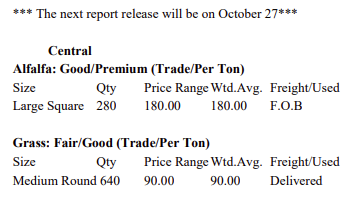
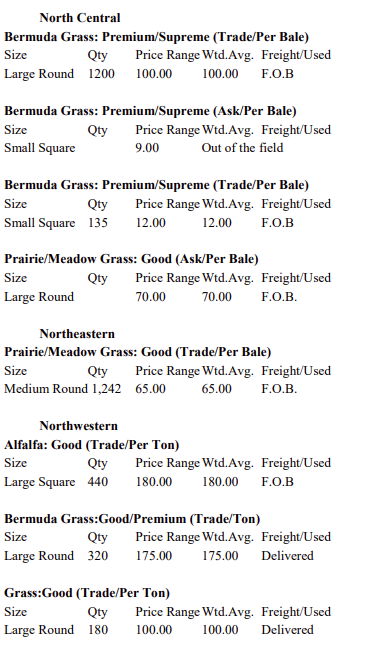
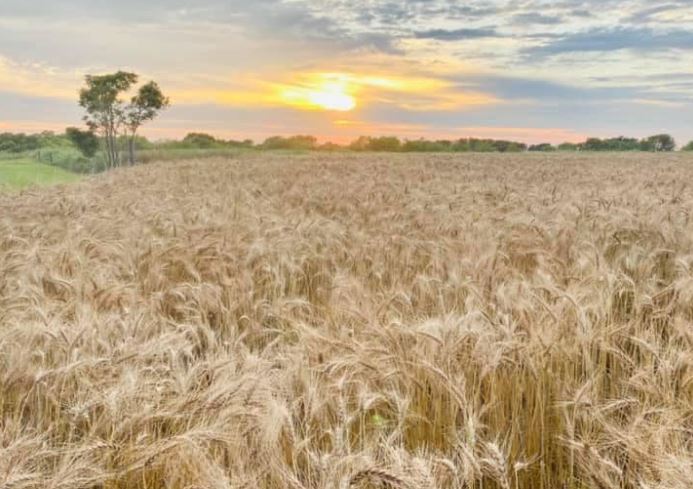
The U.S. Grains Council's (USGC's) Global Ethanol Summit (GES) concluded today with a variety of concurrent panel discussions with experts on various topics within the biofuel industry.
GES, Oct. 16-18, is an education and trade forum that seeks to elevate bioethanol's international visibility and ongoing successful initiatives as a viable decarbonization solution within the transportation sector. More than 350 ministerial-level officials and industry leaders, bioethanol producers and refiners from more than 40 countries are attending this year to learn about the numerous environmental and human health benefits of globally expanding the use of biofuels.
The concurrent sessions featured topics such as new use applications for biofuels, biofuel infrastructure and compatibility and environmental and human health benefits of renewable fuels.
Today's events culminated in a series of memorandum of understanding signings between the Council and key ethanol stakeholders from around the world.
"Users are seeing bioethanol's undeniable benefits and the commensurate increased consumption means there is a growing recognition of what industry leaders have always known – bioethanol is available right here, right now and it is here to stay," said USGC President and CEO Ryan LeGrand.
After closing comments by LeGrand, 11 groups of participants dispersed to ethanol-producing states around the country where they will spend the next few days viewing the biofuel value chain firsthand before heading back to their home countries. Team details are listed below:
More from the meeting is available on social media using the hashtag #Grains23 or through the website.
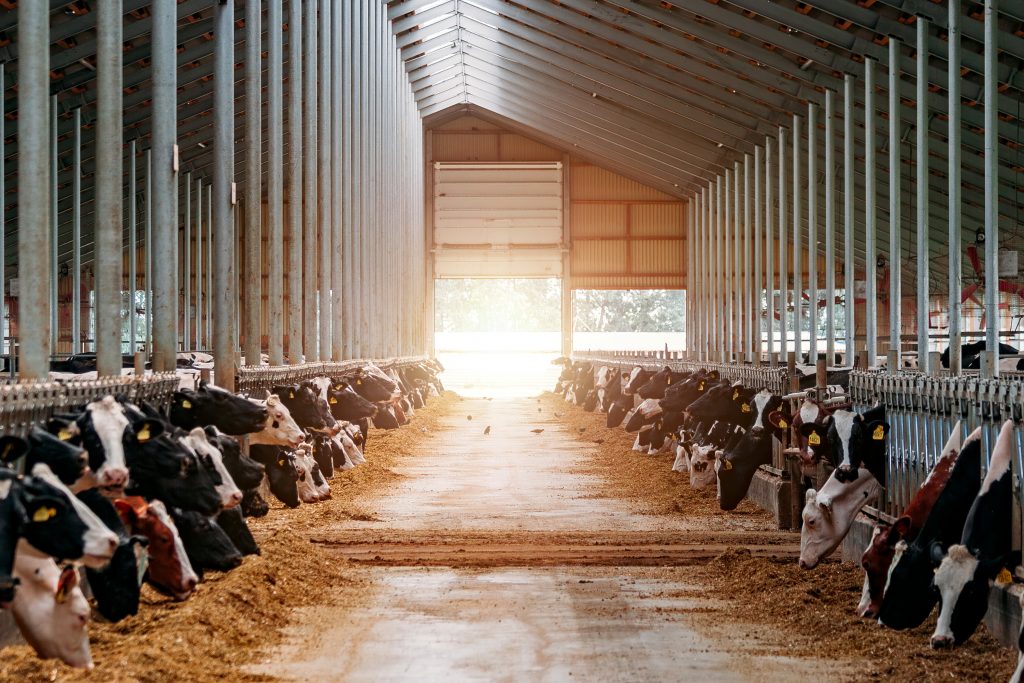
The U.S Department of Agriculture (USDA) is extending the application deadline for the Milk Loss Program (MLP) to Monday, Oct. 30, 2023, allowing more time for eligible dairy farmers to apply for much-needed, weather-related disaster recovery assistance.
Administered by USDA's Farm Service Agency (FSA), MLP compensates dairy producers who, because of qualifying weather events, dumped or removed milk without compensation from the commercial milk market in calendar years 2020, 2021 and 2022. Eligible causes of loss also include consequences of these weather events, such as power outages, impassable roads and infrastructure losses. FSA opened MLP enrollment on Sept. 11, 2023; the original MLP deadline was Oct. 16, 2023.
"We recognize that MLP benefits are critical to the financial recovery of dairy operations significantly impacted by weather-related disasters that inhibited their ability to deliver or store their milk in one, or even multiple years," said FSA Administrator Zach Ducheneaux. "We also understand that dairy farming is a 24/7, 365-day commitment. We hope the application deadline extension ensures that all dairy farmers in need of assistance will now have adequate time to apply."
How to Apply
To apply for MLP, producers must submit:
If not previously filed with FSA, applicants must also submit all the following items within 60 days of the MLP application deadline:
Most producers, especially those who have previously participated in FSA programs, will likely have these required forms already on file. But those who are uncertain or want to confirm the status of their forms can contact FSA at their local USDA Service Center.
For more information on eligibility and payments, view the MLP fact sheet.
USDA touches the lives of all Americans each day in so many positive ways. In the Biden-Harris administration, USDA is transforming America's food system with a greater focus on more resilient local and regional food production, fairer markets for all producers, ensuring access to safe, healthy and nutritious food in all communities, building new markets and streams of income for farmers and producers using climate smart food and forestry practices, making historic investments in infrastructure and clean energy capabilities in rural America, and committing to equity across the Department by removing systemic barriers and building a workforce more representative of America. To learn more, visit www.usda.gov.
USDA is an equal opportunity provider, employer and lender.
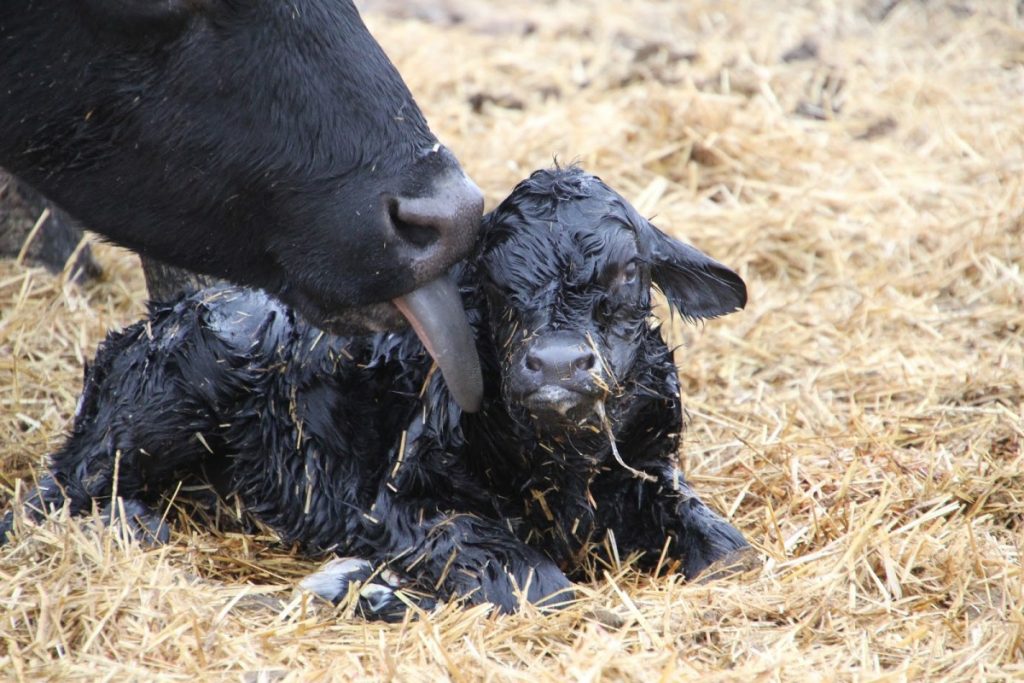
On this edition of Cow-Calf Corner, Rosslyn Biggs, DVM, OSU Cooperative Extension State Extension Beef Cattle Veterinarian, and Dana Zook, OSU Cooperative Extension Northwest Area Livestock Specialist, talk about evaluating pregnancy status in cattle.
The three primary methods to evaluate pregnancy in cows include rectal palpation, reproductive tract ultrasound, and blood testing. In 2017, the USDA National Animal Health Monitoring System Beef Cow-Calf Study evaluated the number of operations that utilized pregnancy checking. Although percentages were higher as herd size increased, across all operations only 19.3% used palpation, 8.8% used ultrasound, and 3.5% used blood testing for pregnancy evaluation. Producers who choose not to evaluate pregnancy status undoubtedly leave money on the table below.
Historically, rectal palpation has been the industry standard and is currently the most common pregnancy testing method in the region. The reproductive tract and/or the fetal calf is manually palpated to determine pregnancy status, approximate age of the calf, and identify any physical issues that may exist in the reproductive tract or pelvis of the cow.
Ultrasound is another option to identify pregnancy as early as 21 days with high reliability at 28 days or more. Fetal age can be determined earlier than palpation alone and depending on the stage of pregnancy with more accuracy using ultrasound. Ultrasound also provides the opportunity to determine sex and potential physical abnormalities of the fetus and cow. It is important to note, both palpation and ultrasound require highly specialized training and may only be performed by those legally able to do so as outline by a state's veterinary practice act.
Blood sampling is the final option for pregnancy testing. Unlike humans, cows do not excrete a pregnancy identifier in urine. These tests detect pregnancy glycoproteins in the blood, and most can detect pregnancy reliably at 28-29 days. A skilled producer can obtain blood samples for cows and the blood pregnancy test can be done chute side with a result within 20 minutes, or the blood sample can be sent to a lab.
There are advantages and disadvantages to each option. Producers should consult with their veterinarian on which method fits the needs of the operation. Blood testing may provide a convenience factor in some situations but does not replace the value of having a veterinarian involved in the herd. Pregnancy checking time traditionally opens the door for broader discussion regarding herd health and lays the foundation for establishing a valid veterinary-client-patient-relationship. If blood testing is the best option, the producer and their veterinarian should set aside separate time and resources to continue discussion on the operational needs and goals.
| Comparison of Rectal Palpation, Ultrasound, and Blood Tests for Beef Cattle Pregnancy Diagnosis1 | |||
| Rectal Palpation | Ultrasound | Blood Tests | |
| Accuracy of Pregnancy Diagnosis | High | High | High |
| Accuracy of Assessment of Fetal Viability | Moderate | High | No |
| Determination of Fetal Age | Yes | Yes | No |
| Determination of Fetal Sex | No | Yes | No |
| Results available immediately | Yes | Yes | No |
| Level of training required to perform diagnosis method | High | High | Moderate |
| Provides opportunity to discuss with your vet other animal health issues on your operation | Yes | Yes | No |
| Establishes basis for veterinarian-client-patient relationship | Yes | Yes | No |
| 1Adapted from Beef Cow Pregnancy Examination. Alabama Cooperative Extension System. March 2018 |
Below, Dr. Mark Johnson explains the importance of reproductive efficiency on cowherd productivity on SunUpTV from October 7, 2023.

The U.S. Grains Council's (USGC's) Global Ethanol Summit (GES) concluded on October 17th, 2023, with a variety of concurrent panel discussions with experts on various topics within the biofuel industry.
GES, Oct. 16-18, is an education and trade forum that seeks to elevate bioethanol's international visibility and ongoing successful initiatives as a viable decarbonization solution within the transportation sector. More than 350 ministerial-level officials and industry leaders, bioethanol producers and refiners from more than 40 countries are attending this year to learn about the numerous environmental and human health benefits of globally expanding the use of biofuels.
The concurrent sessions featured topics such as new use applications for biofuels, biofuel infrastructure and compatibility and environmental and human health benefits of renewable fuels.
Today's events culminated in a series of memorandum of understanding signings between the Council and key ethanol stakeholders from around the world.
"Users are seeing bioethanol's undeniable benefits and the commensurate increased consumption means there is a growing recognition of what industry leaders have always known – bioethanol is available right here, right now and it is here to stay," said USGC President and CEO Ryan LeGrand.
After closing comments by LeGrand, 11 groups of participants dispersed to ethanol-producing states around the country where they will spend the next few days viewing the biofuel value chain firsthand before heading back to their home countries. Team details are listed below:
More from the meeting is available on social media using the hashtag #Grains23 or through the website.
RON's Dave Lanning has a pre-opening look at today's agricultural Markets.
Click the audio tab below for today's report.

Dr. Shannon Ferrell
Oklahoma Farm Bureau members wrapped up the webinar portion of the Cultivating Healthy Minds series with a look at resilience in agriculture on Friday, Oct. 13.
The finale of the three-part webinar series featured Oklahoma State University's Dr. Shannon Ferrell as he led members through an exploration of agriculture's unique stressors and risks when it comes to mental health.
Ferrell shared some of Oklahoma's disheartening mental health statistics, including ranking third nationally in citizens experiencing mental illness, ranking first nationally in adverse childhood experiences per person, and ranking 49th overall in mental health.

"When it comes to mental health issues, we are the bottom of the barrel," he said.
Oklahoma's suicide rates, depression rates and overdose rates have also increased, especially after the COVID-19 pandemic.
The mental health crisis is not exclusive to Oklahoma, but it is often magnified in rural communities, Ferrell said.
"The rural suicide rate exceeded the urban suicide rate starting in 2009, and the gap between those two rates has been rising ever since then," he said.
While many factors influence the prevalence of mental health issues in rural areas like isolation, older populations and overworked rural hospitals, those in agriculture face additional challenges due to their occupation.
Compared to an industry like manufacturing – where if a company does everything right, they usually get the output they expect – the agriculture industry could not be more different.
Farmers and ranchers can do everything right and still not be guaranteed a product at the end, Ferrell said.
"You might not get the calf crop," he said. "You might not get the grain crop or whatever it is you are raising, even if you do everything right, and that is stressful."
Stress is the root of many of the mental health problems in agriculture, Ferrell said. Factors that are out of a farmer's control like the weather or pest invasions only add stress to an industry that already has a relatively low rate of financial return.
"In the end, the great paradox that we face in rural mental health is some of the things that are our greatest strengths might also be the sources of our greatest vulnerabilities," he said.
One of those vulnerabilities is the mental and physical grit that farmers and ranchers must have. Agricultural producers have to be tough, independent, and often have to be experts in a number of agricultural areas to succeed, and the same approach is often taken with mental health concerns, Ferrell said.
However, the human body is not capable of processing trauma and stress alone.
"If you've gone through a lot of hard stuff, you need to share that," Ferrell said. "You need to get it out and not just bottle it up."
Though the agriculture community is great at coming together when disaster strikes, Ferrell believes the same community can be one of the worst in terms of talking about emotions and feelings. He expressed the importance of talking about mental health in the agriculture industry and letting people know they are not alone in their journeys.
Ferrell said prolonged exposure to stress creates stress overload, which then causes burnout.
"If we have too much stress for too long of a time and don't find a way to positively process that stress, it starts to accumulate, build up, and what could have been a small problem starts to grow," he said.
Ferrell recommended self-care as a tool to avoid burnout, comparing it to maintenance of farm implements.
"If you don't maintain your stuff, one of two things is going to happen," he said. "Either its performance is going to slowly degrade over time and become worthless, or it's going to blow up on you."
Ferrell said the same will happen to farmers and ranchers if they do not take care of themselves.
He shared with members the signs to watch out for when it comes to mental health disorders in themselves and in others, and he encouraged them to reach out to their friends and family if they notice something abnormal.
He also encouraged members to be observant in their communities and to pay attention to who is not present, noting it is easy to notice a "squeaky wheel" but harder to recognize someone who is not there.
Ferrell recommended several strategies and resources to help a friend or family member in need, from simply starting a conversation to engaging in suicide intervention.
While the agriculture community is resilient in times of physical need and disaster, Ferrell challenged Farm Bureau members to build their mental resilience, too, through increasing their awareness of stress and treating it just like any physical malady. Minor farming injuries like cuts are usually not catastrophic if addressed properly and quickly but can lead to infection or worse if ignored.
The same can be said for stress and mental health, Ferrell said.
"The whole key for all of this is for us to recognize when we've got mental health issues and to treat them early on and effectively to get the help we need before it gets too serious," he said.
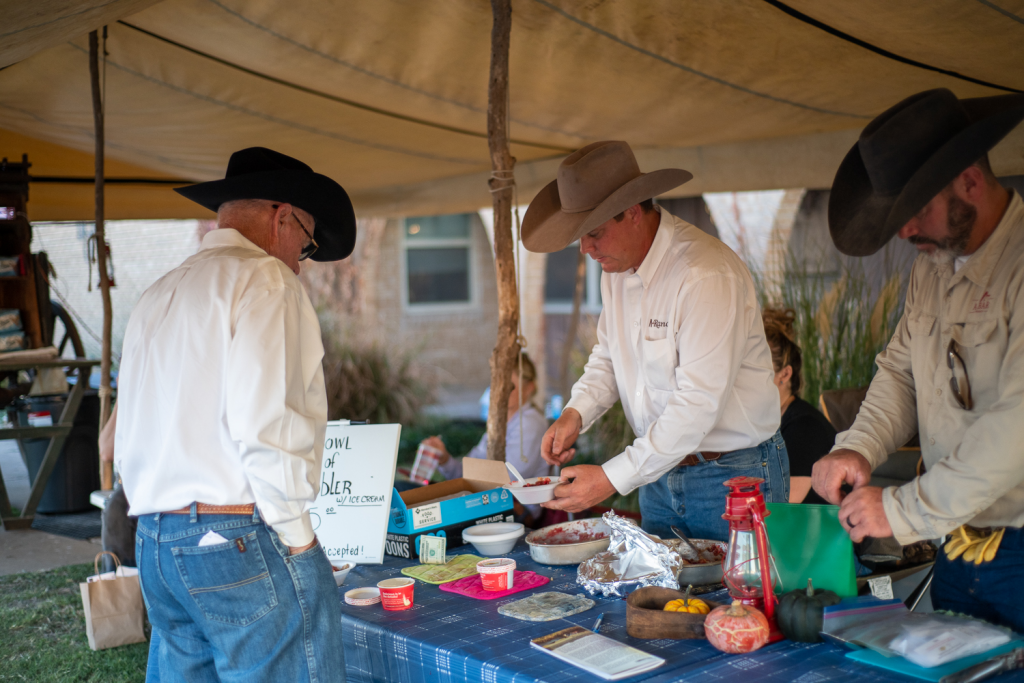
Farm Director, KC Sheperd, had the chance to visit with the Executive Director of the Oklahoma Cattlemen's Foundation, Mariah Reimer, about Oklahoma's Best Beef Competition coming up on October 21st in Historic Stockyards City at 11 a.m. next to Langston's.
Visitors are invited to watch local ranches grill their own steaks with Oklahoma celebrities. The event will feature public tastings, Made in Oklahoma vendor booths, Andy's Frozen Custard, and a Huvepharma tailgate trailer to watch the football games.
Finalists who will be competing include:
"Basically, you bring your ranch's own prime cuts of beef, we serve that to the public...," Reimer said.
The unique twist on this event, Reimer said, is there is a "People's Choice Award," where visitors at the event have a vote, but the ranchers are also judged by sanctioned judges who award first, second, and third place.
"It really is an opportunity to network," Reimer said.
Oklahoma's Best Beef Competition is not only a fun event for all, but Reimer said many of the ranchers came out of last year's event with new buyers for their direct-to-consumer beef.
"I know one individual, she had over 50 new orders, and another one became the supplier for the governor," Reimer said.

Agriculture leaders anticipate the overall economic conditions of the U.S. will improve in the next 12 months despite lingering economic concerns. They are keenly focused on managing profitability by taking command of the business areas they have control over such as increasing efficiencies through automation, adding new products and services with higher profit margins, and leveraging artificial intelligence to analyze data and support decision-making.
These insights are drawn from a nationwide survey of small and middle market companies across the U.S. conducted by Umpqua Bank as part of its annual 2023 Business Barometer report.
Based on the study's results, more than half of respondents from the agricultural sector are optimistic about future economic conditions, and 59% expect revenues to increase. In terms of profitability, 68% expect an increase in the next 12 months, compared to 62% of healthcare businesses that responded to the survey, 56% of manufacturing, and 53% and 52% of business service and wholesale companies, respectively.
"The agriculture sector is an important part of our livelihood and our economy, and business leaders in this industry are confident in their prospects and planning investments to fuel growth," said Bill Barclay, Umpqua's Head of Community and Business Banking. "To tackle factors under their control over the next 12 months, agribusiness plan to invest in marketing, artificial intelligence, and automation, which could further improve their operational efficiency, expand market reach, and bolster bottom lines."
Priorities in the Next 12 Months
As senior leaders begin to meet and update their business plans for 2024, it is clear agriculture businesses have specific ideas where they will use their investment dollars. Survey respondents noted they are very likely to prioritize the following:
Agriculture Sector Taking-On Critical Business Areas
While business leaders are currently focused on growing their business (34%) through marketing, addressing increased costs (26%), and launching technology improvements (14%), they are also looking ahead into 2024. These executives are strategically focused on four key areas they believe most critical for future business success: (52%) improving operational efficiency, (46%) financial management, products and services (29%) and hiring and retention (29%).
Top Concerns
While climate change is among the concerns the agriculture sector has identified, it is also facing other immediate challenges. The top worries that are currently keeping some of the agriculture executives surveyed up at night include (by order of importance):
Methodology
On behalf of Umpqua Bank, DHM Research conducted an online survey of 1,250 owners, executives, and financial decision-makers of American small and middle market companies during July 27 to August 8, 2023. 22% of middle market respondents are minority-owned while 23% of small respondents are certified woman-owned and 17% minority-owned. The margin of error is: ±2.8%.
About Umpqua Bank
Umpqua Bank is a subsidiary of Columbia Banking System Inc. (Nasdaq: COLB), and a premier regional bank in the Western U.S., with offices in Oregon, Washington, California, Idaho, Nevada, Utah, Arizona and Colorado. With over $50 billion of assets, Umpqua combines the resources, sophistication and expertise of a national bank with a commitment to deliver personalized service at scale. The bank consistently ranks as one of America's Best Banks (ranked by Forbes) and supports consumers and businesses through a full suite of services, including retail and commercial banking; Small Business Administration lending; institutional and corporate banking; equipment leasing; and wealth management. The bank's corporate headquarters are in Lake Oswego, Oregon. Learn more at https://www.umpquabank.com.
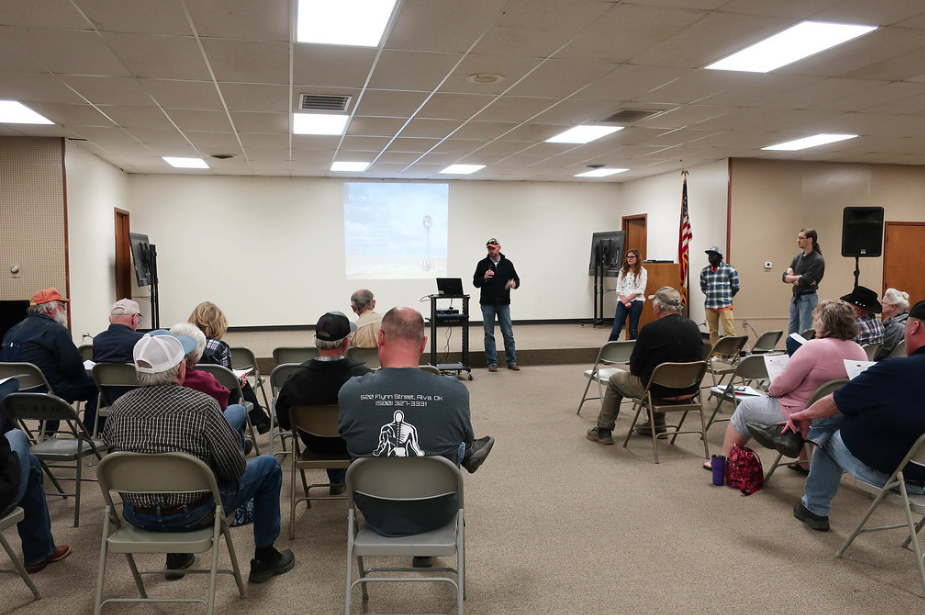
: Kevin Wagner, Oklahoma Water Resources Center director, talks to well owners during the 2022 Oklahoma Well Owner Network Program. The 2023-24 program has kicked off, and coordinators are seeking out communities that need help with well water testing. (Photo by OSU Agriculture)
Oklahoma well owners are on their way to healthier drinking water this fall thanks to the Oklahoma Well Owner Network.
The program, led by the Oklahoma Water Resources Center and Oklahoma State University Extension, provides free residential well water testing and training to rural counties in Oklahoma through a $200,000 grant from the Centers for Disease Control and Prevention and a $350,000 grant from the USDA-National Institute of Food and Agriculture's Rural Health and Safety Education Program.
"In 2018 we surveyed citizens across Oklahoma on what their biggest water resource concerns were," said Kevin Wagner, water resource center director. "Consistently across the state, Oklahomans' key concern was drinking water quality."
To address water issues in rural Oklahoma, the water center conducted a pilot program in Alfalfa, Pontotoc and Tillman counties in spring 2022 with the help of OSU environmental science students. More than 150 water samples were tested during the program with two-thirds of participants saying they planned to adopt annual well water testing.
"This program demonstrates OSU's land-grant mission in terms of Extension, ag research and education," said Abu Mansaray, a research specialist with the water center, who has helped plan and execute the water testing. "We are reaching out to Oklahoma communities to help address a critical problem that is not covered by federal and state agencies."
In the Oklahoma Well Owner Network, well owners in select counties submit a water sample from their private well for testing. Researchers at the Oklahoma Water Resource Center then test the water samples for nitrates, total dissolved solids (salts), pH levels and bacteria. The test results are relayed to the well owners within one week.
Beginning this year, Extension specialists will partner with rural libraries to distribute educational materials specific to Oklahoma that support well maintenance and water quality improvement.
"We've hosted a few events at county fairs so far this year and have had good turnout," said Jeff Sadler, water resource Extension specialist. "We are now looking for new opportunities to take this program to counties in Oklahoma where people are most interested in learning more information about their own well water and how to maintain it."
The network will operate from now through spring 2024 and will conduct 24 testing programs across the state. Those interested in a well water test can contact their local county educator or the Oklahoma Water Resources Center at water@okstate.edu.
By Alisa Boswell-Gore
OSU Agriculture is dedicated to improving the quality of life of Oklahomans through science-based information and education. It is comprised of the Ferguson College of Agriculture and two state agencies: OSU Ag Research and OSU Extension.
This material is based upon work supported by the Centers for Disease Control and Prevention through a $200,000 grant and by the National Institute of Food and Agriculture of the U.S. Department of Agriculture under award number 2023-46100-41052 for $349,956. Any opinions, findings, conclusions or recommendations expressed in this publication are those of the author(s) and do not necessarily reflect the view of the U.S. Department of Agriculture.

Today, the National Association of Conservation Districts (NACD) announced the launch of its application period for the 2024 Friends of NACD District Grants Program.
Now in its fifth round of funding, the Friends of NACD District Grants Program is an initiative of NACD's volunteer board members, who dedicate time to creating and advocating for new opportunities for conservation districts to grow their programs and capacity. The 2024 program will award top ranking applicants up to $2,500 each, to conduct new activities or test novel approaches to their operations.
Past grantees have implemented projects that have helped to enhance their visibility within their communities, reach new clients and grow their partnerships. Examples include: a climate resilience focused educational demonstration forest project created by Oxford County Soil and Water Conservation District, a 2023 grantee in Hiram, Maine; an educational outreach program to increase invasive species awareness led by the Clark County Soil and Water Conservation District in Indiana, a 2022 grantee; the Start Farming Mentorship Program started by the Duval Soil and Water Conservation District, a 2021 grantee in Jacksonville, Florida; and a recycling bin for agricultural chemical containers constructed by the Butte Soil and Water Conservation District, a 2020 grantee in Arco, Idaho.
The Friends of NACD program was established in 2009 to enable individuals and organizations to support the nation's nearly 3,000 conservation districts through cash donations to NACD.
Learn more about Friends of NACD and the District Grants Program and apply on NACD's website.
Texas & Southwestern Cattle Raisers Association School for Successful Ranching, an educational program held in conjunction with the Cattle Raisers Convention & Expo, announced its 2024 call for speakers is open now through November 15. Interested speakers are encouraged to submit session proposals focusing on the latest issues, research and technology impacting the beef industry.
Selected School for Successful Ranching speakers will present in Fort Worth March 22-24, 2024 in conjunction with the 2024 Cattle Raisers Convention & Expo, the largest cattle industry event in the Southwest. The event boasts 30 hours of educational content delivered through a variety of formats including panel discussions, technical presentations, and live demonstrations.
To be considered, speakers should submit timely session topics relating to livestock production, natural resources and wildlife, property rights, legal and business operations, and political and regulatory issues. Multiple sessions may be submitted for consideration.
Selected speakers will be notified by December 15.
Click here to submit a proposal no later than Nov. 15.
At the 2023 Rural Economic Outlook Conference, Farm Director KC Sheperd had the chance to talk with the Chief Meteorologist of KKTV News in Colorado Springs, Brian Bledsoe.
One of the topics Bledsoe touched on at the conference is the role the Pacific Ocean plays in weather patterns.
"The Pacific is so important in how our weather, not only short term, but long term, gets governed," Bledsoe said. "For the past three years, the Pacific overall has been in a very cold state. We have had not only a broad scale but also with the La Nina episode, we have been dealing with more dryness than not for a large part of the mid-section of the country."
The big talk now, Bledsoe said, is the El Nino that is coming on. Bledsoe said there has been some mixed messaging on the arrival of El Nino, and it won't exactly cure every problem regarding drought.
"The thing to keep in mind right now is that the Pacific overall is still cold in that long-range cycle, despite the fact we have this El Nino here," Bledsoe said. "While we might have good moisture, I think going forward here for the next few months, the fact that the Pacific is cold needs to be in the back of our minds, and we need to be looking out for potential dryness late in '24 and possibly even in '25."
Bledsoe also said there are three different types of El Nino depending on where the warm pool sets up along the Equator in the central and eastern Pacific Oceans.
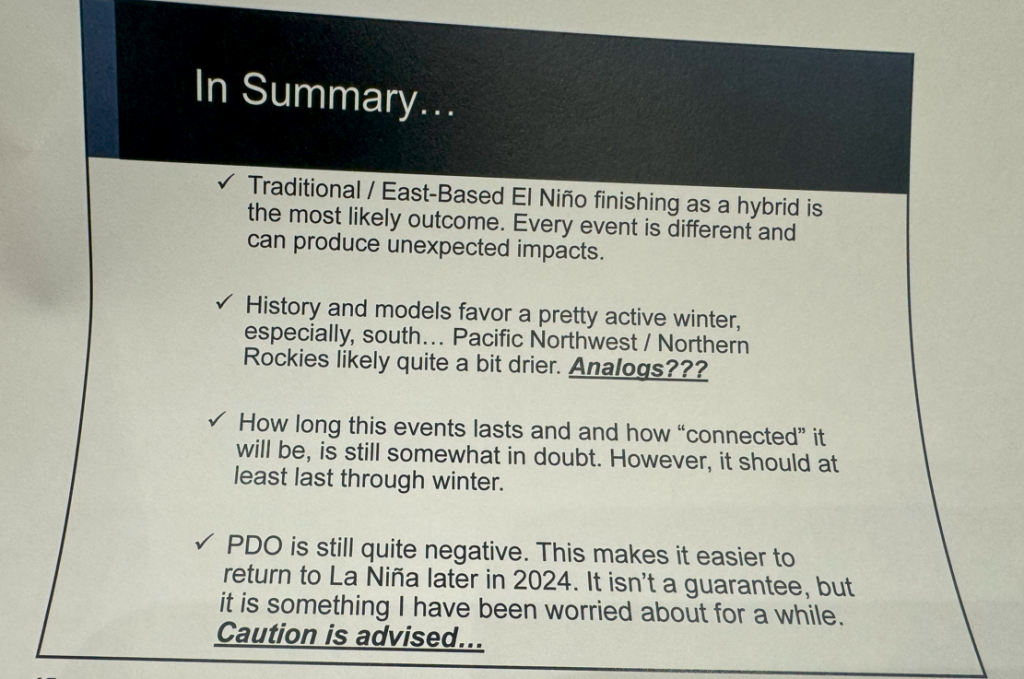
"The different variations of it can have different outlooks and different impacts in different places, and I think that is the message that is very important is that not every El Nino is the same, and there are always going to be different impacts and overall 'flavors' of impacts, depending on where you live in the country," Bledsoe said.
Looking into winter, Bledsoe said the midsection of the country may see some colder temperatures this year.
"I think there is an opportunity for it to not only be colder than average but also wetter than average," Bledsoe said. "I think that is especially true the further south you go."
Bledsoe also said Oklahoma could possibly see a wetter spring.
"I am a lot less concerned about moisture the first half of '24 than I am for the back," Bledsoe said. "I still think there will be some El Nino influence going on, and we won't immediately go right back to that dry stuff, but I think that drier pattern is something we definitely need to pay attention to later on in 2024."
Regarding the weekly drought monitor, Bledsoe said if a person feels like the information is not accurate for their part of the state, there are things they can do to submit feedback.
"We had some of those problems in Colorado, so what I did is I contacted the state climatologist in Colorado and also the drought mitigation center in Lincoln, Nebraska," Bledsoe said. "Those folks love to hear from people. Especially if they know their product maybe isn't serving the folks in that region."
Senior Farm and Ranch Broadcaster, Ron Hays, is talking with the Chief Executive Officer of National Livestock, Robert York. Hays and York talk about the state of the cattle industry.
National Livestock is based in Oklahoma City at the Oklahoma National Stockyards and consists of businesses spread out across the country focused on cattle. York and his team have the chance to interact with cattle producers across the country on a daily basis, including here in the Southern Plains.
York describes the morale of cattle producers around the country to be cautiously optimistic.
"They definitely are excited about the high prices," York said.
Because of rising prices, York said he believes there will be opportunity to improve or replace those things that have needed attention on cattle operations for quite some time.
On the other hand, York said producers have concerns regarding labor and rising interest rates.
"This is a lot different feel than it was in 2014," York said. "Early on, when prices ramped up in the beginning of 2014 to '15, you just saw so many heifers retained. Even heifers that shouldn't have been retained, you just saw people looking for the opportunity to sell a bred heifer and make money."
This time around, York said he is seeing a decline in producers because of more retirements and age.
"Whether it be labor or just the headaches of keeping an operation going, it is just not quite as attractive to as many younger people as it was to maybe a couple of older generations," York said.
One thing that has become more popular over the years, York said, has been the use of Livestock Risk Protection. On that note, York said Livestock Risk Services has recently been added to the National Family of livestock-related businesses.
"A lot of customer interest in LRP and lots of good reasons for that," York said. "You can get a good price on cattle, you don't have to come up with the money until the calves are sold, and you don't have to deal with margin calls..."
The Beef Buzz is a regular feature heard on radio stations around the region on the Radio Oklahoma Ag Network and is a regular audio feature found on this website as well. Click on the LISTEN BAR for today's show and check out our archives for older Beef Buzz shows covering the gamut of the beef cattle industry today.

Senator James Lankford (R-OK) joined Senator Cindy Hyde-Smith (R-MS) to challenge Environmental Protection Agency (EPA) efforts to restrict the use of rodenticides, claiming the proposed mitigation measures could endanger the nation's food supply, public health, and property. The letter encourages EPA Administrator Michael S. Regan to work with rodenticide producers and users to develop science-based policies that would allow continued use of 11 rodent control products. In November 2022, the EPA proposed mitigation measures for rodenticides.
"The proposed mitigation measures would place severe restrictions on the use of rodenticides, hampering the ability of growers, consumers, pest control operators, restaurants, other food handling establishments, schools, health care facilities, and businesses to control rats, mice, and other rodents," the Senators wrote. "They would also complicate compliance with food safety regulations that require rodent control. Rather than protecting the environment, limiting access to vital rodenticides would harm the American food supply, public health, animal health and welfare, and infrastructure."
The letter was also signed by Senators John Boozman (R-AR), John Barrasso (R-WY), Pete Ricketts (R-NE), Ted Budd (R-NC), Mike Crapo (R-ID), Bill Hagerty (R-TN), Jim Risch (R-ID), Chuck Grassley (R-IA), Cynthia Lummis (R-WY), Thom Tillis (R-NC), Katie Britt (R-AL), Deb Fischer (R-NE), Joni Ernst (R-IA), John Thune (R-SD), and Roger Wicker (R-MS).
The Senators' concerns about the proposed mitigation measures are based on the fact they would, among other things: classify most of the products as restricted use pesticides; require that users become licensed, state-certified applicators; prohibit current surface (non-bait station) application methods used to protect many crops; and require growers to conduct carcass searches for two weeks after application. Rodents are responsible for millions of dollars in damages to field crops, stored grain, and farm equipment annually, according to the US Department of Agriculture. The pest can also spread over 60 diseases to humans, companion animals, and livestock.
Read the letter here or below.
Dear Administrator Regan:
We are writing on behalf of growers, pest control operators, and consumers in our states who are concerned about the consequences if EPA moves forward with its November 29, 2022, proposed mitigation measures for the 11 rodenticides. We encourage you to take the time to work with stakeholders to ensure that any new mitigation measures for these products do not jeopardize the ability of users to protect the food supply, public health, property, and infrastructure. Any new measures should be based on sound science and must recognize the significant benefits that the products provide.
According to the US Department of Agriculture, rodents are responsible for millions of dollars in damages to field crops, stored grain, and farm equipment annually. They can also spread over 60 diseases to humans, companion animals, and livestock.' The proposed mitigation measures would place severe restrictions on the use of rodenticides, hampering the ability of growers, consumers, pest control operators, restaurants, other food handling establishments, schools, health care facilities, and businesses to control rats, mice, and other rodents. They would also complicate compliance with food safety regulations that require rodent control. Rather than protecting the environment, limiting access to vital rodenticides would harm the American food supply, public health, animal health and welfare, and infrastructure. The proposed measures would also hamper environmental justice efforts by increasing the cost of rodent control and making food more expensive for those who can least afford it.
These proposed mitigation measures include: classifying most of the products as restricted use pesticides; requiring that users of these products become licensed, state-certified applicators; requiring the use of respirators for many products; prohibiting the surface (non-bait station) application methods currently used to protect many crops; and requiring growers to conduct carcass searches for two weeks after application. Stipulating that the applicator consult with Bulletins Live! Two, prior to rodenticide application, could also result in additional limitations on product use based on location.
We strongly encourage the EPA to work with rodenticide registrants and product users to ensure that any new mitigation measures are practical, science-based, and allow continued access to these essential pest control tools. As written, the proposed mitigation measures will result in crop damage and livestock loss, jeopardize the safety of the food supply, weaken public health protections, and make it more difficult for people to protect their homes and property from rodents.
Attendees of the U.S. Grains Council's (USGC's) Global Ethanol Summit settled in for the first full day of programming today, which was packed with four general sessions focused on different challenges and opportunities facing the biofuel industry.
GES, Oct. 16-18, is an education and trade forum that seeks to elevate bioethanol's international visibility and ongoing successful initiatives as a viable decarbonization solution within the transportation sector. More than 350 ministerial-level officials and industry leaders, bioethanol producers and refiners from more than 40 countries are attending this year to learn about the numerous environmental and human health benefits of globally expanding the use of biofuels.
USGC Chairman Brent Boydston opened the event and introduced the day's three keynote speakers: POET Founder and CEO Jeff Broin; Summit Agricultural Group Executive Chairman Bruce Rastetter; and U.S. Department of Agriculture (USDA) Acting Deputy Undersecretary Jason Hafemeister. USGC President and CEO Ryan LeGrand then gave an opening address previewing the remainder of the event's content.
"USDA is constantly involved with other countries about expanding bioethanol blends and sustainable production practices," Hafemeister said. "Domestically and abroad, USDA is seeking to show that biofuel products have real value and create a durable commercial market that allows consumers to have a choice of using biofuels that makes them realize, 'this saves me money, benefits the environment and I feel better for it.'"
The second general session included a panel discussion on governmental perspectives on global ethanol policies and speakers shared stories of successful biofuel integration efforts in their regions. Growth Energy CEO Emily Skor moderated the conversation and was joined by panelists including Lauren Clarke, manager at Environment and Climate Change Canada; Hideaki Fujisawa, minister of economy, trade, industry/business and energy at the Embassy of Japan; Ruby de Guzman, director of renewable energy management at the Philippines Department of Energy; Brian Richardson, chief technical director of energy at the Jamaican Ministry of Science, Energy, Telecommunications and Transport; and Rod Snyder, senior advisor to the administrator at the U.S. Environmental Protection Agency.
The afternoon began with a roundtable of experts from multilateral organizations who offered an overview of global ethanol feedstocks and end-use outlooks. Moderator Gerry Ostheimer, executive director at Biofuture Campaign, headed the group that featured a video message from Paolo Frankl, head of renewable energy at the International Energy Agency; Marcel Adenauer, policy analyst at the Organization for Economic Cooperation and Development; Dawit Kelemework Mekonnen, senior economist at the World Bank; Constance Miller, deputy coordinator for the secretariat at the Global Bioenergy Partnership; and Augustin Torroba, head of renewables and international biofuels specialist at the Inter-American Institute for Cooperation on Agriculture.
"We want to support transparent and informed policymaking and help countries understand assessments of their climate goals and obligations," Miller said. "As an industry, we need to use recent geopolitical momentum towards clean energy to take on and address misconceptions about biofuels."
The day came to a close with a panel discussion on international engagement efforts to achieve global E10 policies and beyond. Moderator Doug Berven, vice president for corporate affairs at POET, took to the stage with Rodrigo Cardenal, president and CEO of the Panama National Sugarcane Industry Association; Aditya Jhunjhunwala, president of the India Sugar Mill Association; Andrea Kent, past president and board director of Renewable Industries Canada; Dr. Stephan Meeder, president of ePURE; and Gerardo Tee, chairman of the ethanol producers association of the Philippines.
Tomorrow, programming will continue with seven concurrent sessions on a variety of detailed topics on biofuel uses and the latest research on its carbon reduction capabilities. Memorandums of understanding will also be signed between the Council and key ethanol stakeholders from around the world. At the end of the event, 11 groups of participants will travel around the country to view the biofuel value chain firsthand before heading back to their home countries.
More from the meeting is available on social media using the hashtag #Grains23 or through the website.
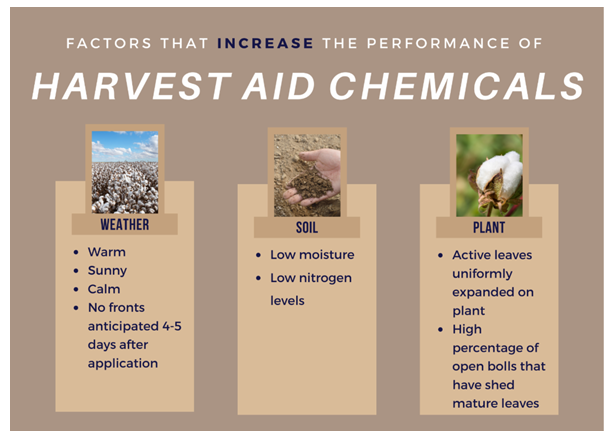
As presented by Kerry Siders, Extension Agent – Integrated Pest Management for Cochran, Hockley and Lamb Counties
As we move into harvest season, it may be time to consider and apply harvest aids to your crop to reduce potential losses of lint yield and fiber quality. Kerry Siders, IPM agent for Cochran, Hockley and Lamb Counties, presented information on harvest aids to the Plains Cotton Advisory Group this morning (October 13), where he emphasized that harvest aids can result in earlier harvest, preservation of fiber quality and fewer seed quality reductions due to field exposure.
"Weathering losses in the High Plains can result in considerable reduction in dollar value of the crop unless measures are taken to protect yield and quality potential," he said. "This is especially true for open boll picker-type cotton varieties."
Factors that increase the performance of harvest-aid chemicals include:
However, there are also factors that can negatively affect the performance of harvest aid chemicals. Along with the polar opposite of the above positive factors, improper calibration of application rates and poor spray coverage can negatively impact the performance of your harvest aids.

Crop Maturity
Crop maturity determination is also critical for a successful harvest-aid program, Siders added. Premature crop termination has been shown to reduce lint yield, seed quality, micronaire and fiber strength.
These chemicals generally terminate fiber and plant development rather abruptly, as they are intended to accelerate harvest of a mature crop. Something important to note that Siders emphasized is that harvest-aid chemicals cannot increase the rate of fiber development.
"Only additional good growing weather including open skies and adequate heat units combined with functional leaves can mature cotton bolls," he added.
While you can predict through a percentage of open bolls (some say 40% to 60% open bolls is a good sign to start applying harvest aid chemicals), Siders says this is a subjective approach.
Best method for determining maturity:
Harvest Aid Application Timing
The Nodes Above Cracked Boll (NACB) method is another tool Siders discussed to help time harvest aid application.
When the crop has four or fewer nodes above cracked boll it is ready for a boll opener (ethephon) and a defoliant application.
For more information, read the Texas High Plains Cotton Harvest Aid Guide here.
The answer: it depends on how much money you have.
USDA's Economic Research Service has just issued a chart on how much countries worldwide spend on food on average as a percent of their total expenditures.
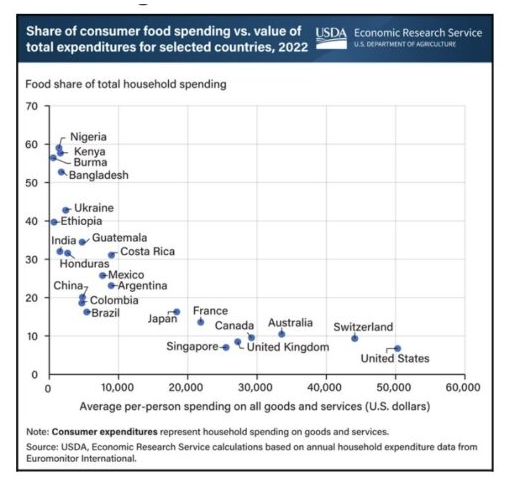
As a general rule:
As incomes rise with economic development and urbanization, the share of income spent on food tends to fall while discretionary spending on household goods, education, medical services, and recreation tends to increase.
Rich countries like ours spend less than 10% of our incomes on food—on average.
But Americans with lower incomes spend more than 30% on food.
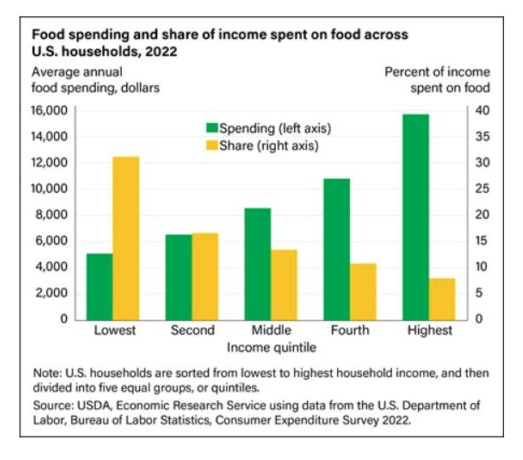
This is why food assistance needs to include income assistance as a matter of policy, especially because people are having to spend more and more on food, even after adjusting for inflation.
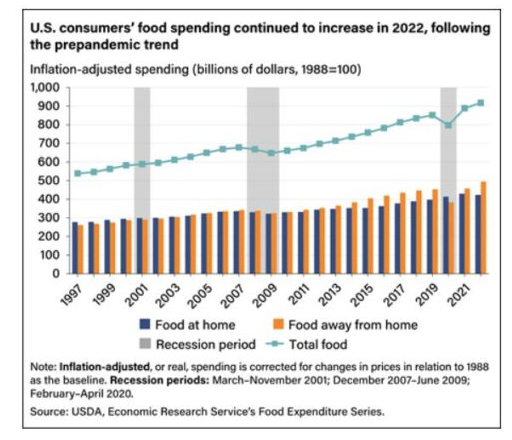
RON's Dave Lanning has a pre-opening look at today's agricultural Markets.
Click the audio tab below for today's report.
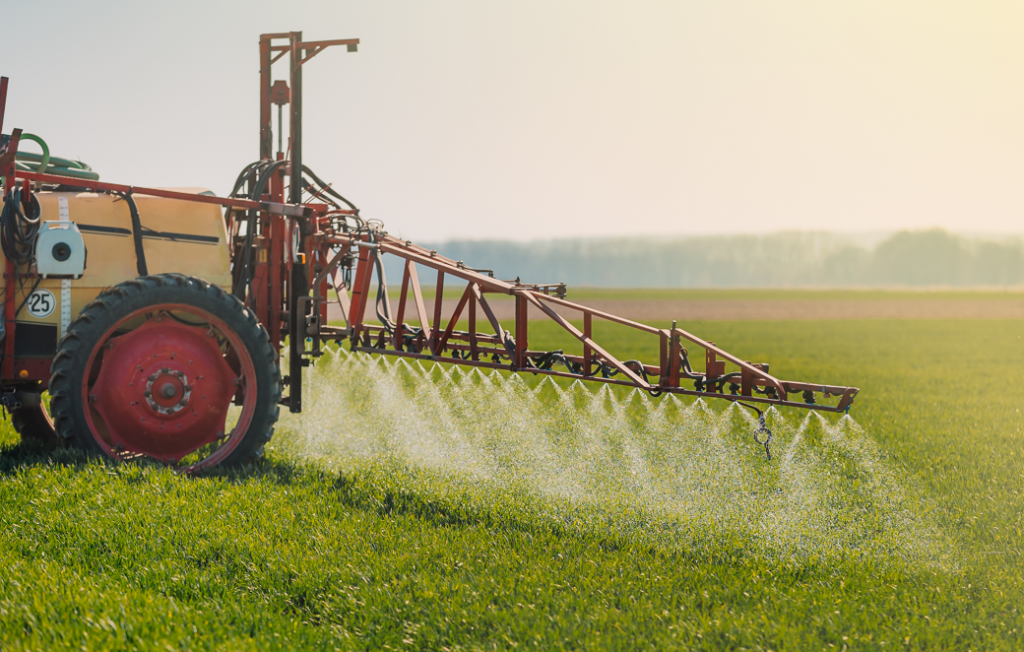
Oklahoma Farm Bureau members are invited to submit their concerns about the Environmental Protection Agency's proposed herbicide strategy before the Oct. 22 comment period deadline.
EPA released the Draft Herbicide Strategy Framework in July in response to extensive litigation from environmental groups about EPA's noncompliance with the Endangered Species Act. The proposed framework is EPA's attempt to protect some 900 endangered species and their habitats through significant use restrictions and mitigations on most agricultural herbicide uses.
Growers located in pesticide use limitation areas – or PULAs – which include many parts of Oklahoma, could be subject to even greater restrictions. Many of the proposed restrictions will be unworkable, forcing growers to adopt outdated cropping practices that are costly, burdensome and irrelevant to modern agriculture.
The agency extended the original 60-day public comment period on the proposed framework an additional 30 days, and OKFB members are encouraged to make the voice of farmers and ranchers heard through submitting a comment urging the EPA to withdraw the proposal.
Below is sample text that may be used when submitting a comment. OKFB members may submit the text as is or customize, add to or completely re-write the text as they see fit.
I am concerned about EPA's Draft Herbicide Strategy which will limit the use of herbicides in my state. I urge EPA to withdraw the proposal and work with agricultural producers and organizations for reasonable solutions to address threatened and endangered species concerns.
Members have two options to submit their comments:
The deadline to submit comments directly is Sunday, Oct. 22. Entries through the form below must be submitted by midnight on Friday, Oct. 20 to allow OKFB appropriate time to send the comments before the deadline.
For more information or clarification, contact Marla Peek, OKFB senior director of regulatory affairs, at (405) 523-2300.
Noble received one of six grants from the National Fish and Wildlife Foundation to improve soil health, support biodiversity and increase carbon sequestration.
Noble Research Institute announced today that the National Fish and Wildlife Foundation and partners awarded the independent nonprofit agricultural research organization one of six grants to improve grassland health, support biodiversity and increase carbon sequestration to improve climate resilience in the Southern Great Plains grasslands.
Consistent application of these principles results in improved soil health over time and can unleash the many benefits of healthy soil. One imperative benefit is increased biodiversity of plants and pollinators as well as enhanced habitat for wildlife.
"Using adaptive grazing is such a powerful tool to improve plant diversity, which is critical to wildlife habitat," said Will Moseley, Noble regenerative ranching adviser and Certified Wildlife Biologist®. "By improving water distribution and infrastructure, we will be able to use small ruminants to keep woody encroachment from turning our grasslands into woodlands."
The NFWF grants were awarded through the Southern Plains Grasslands Program, with individual contributions provided by Burger King, Sysco and Cargill, and additional support from the USDA's Natural Resources Conservation Service and the U.S. Fish and Wildlife Service.
The impact of the support from NFWF and its partners will extend long past the duration of the grant. Resulting research findings and grazing management experiences will shape Noble's rancher education curriculum moving forward, a curriculum that will be dynamic and shared across the nation.
Noble aims to help producers overcome the barriers that deter the lasting use of regenerative, profitable land management practices in grazing animal production. Our goal is to guide farmers and ranchers in applying regenerative principles that yield healthier soil, more productive grazing land and business success.
"With this support from National Fish and Wildlife Foundation and their funding partners, Noble can equip farmers and ranchers to address the health and resilience of grasslands and enhance the habitat for the wildlife dependent on these lands," said Steve Rhines, Noble Research Institute president and CEO. "Simultaneously, we can help them create a more resilient ranching operation to ensure their family remains on the land for generations to come."
About Noble Research Institute
Noble Research Institute, LLC is an independent nonprofit agricultural research organization dedicated to guiding farmers and ranchers in applying regenerative principles that yield healthier soil, more productive grazing land, and business success. Researchers, facilitators and ranch staff work together to give farmers and ranchers the skills and tools to regenerate the land in a profitable manner. Noble is focused on the regenerative management of the nation's grazing acres, which directly impacts pasture and range environments, wildlife, pecan production, and livestock production. Regenerative management recognizes that each decision made on the ranch impacts the interactions of the soil, plants, water, animals, economics and people. Noble's 14,000 acres of working ranch lands provide a living laboratory on which to demonstrate and practice regenerative principles and ideas to deliver value to farmers and ranchers across the U.S.
About the National Fish and Wildlife Foundation
Chartered by Congress in 1984, the National Fish and Wildlife Foundation (NFWF) protects and restores the nation's fish, wildlife, plants and habitats. Working with federal, corporate, foundation and individual partners, NFWF has funded more than 6,000 organizations and generated a total conservation impact of $8.1 billion. Learn more at www.nfwf.org.

Noble Research Institute is an independent nonprofit agricultural research organization dedicated to guiding farmers and ranchers in applying regenerative principles that yield healthier soil, more productive grazing land, and business success.
At Noble, researchers, facilitators and ranch staff work together to share with farmers and ranchers the skills and tools to regenerate the land in a profitable manner. Noble is focused on the regenerative management of the nation's grazing acres, which directly impacts pasture and range environments, wildlife, pecan production, and livestock production. Regenerative management recognizes that each decision made on the ranch impacts the interactions of the soil, plants, water, animals, economics and people. Noble's 14,000 acres of working ranch lands provide a living laboratory on which to demonstrate and practice regenerative principles and ideas to deliver value to farmers and ranchers across the U.S.
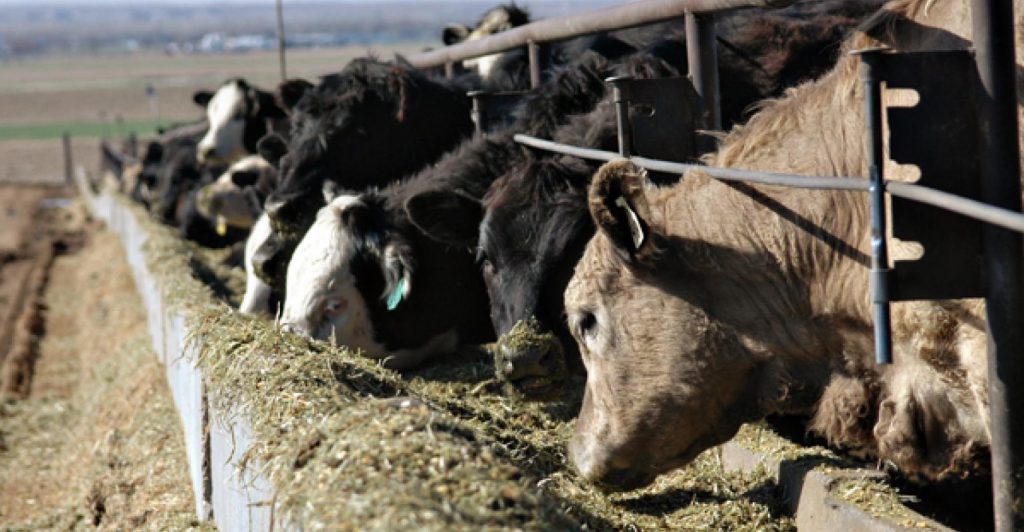
Mark Johnson, Oklahoma State University Extension Beef Cattle Breeding Specialist, offers herd health advice as part of the weekly series known as the "Cow Calf Corner" published electronically by Dr. Peel, Mark Johnson, and Paul Beck. Today, Johnson talks about feeding efficiency.
From a nutritional standpoint, cattle basically need protein, energy, vitamins, minerals and water. Assuming free choice vitamin/mineral and water is in adequate supply, most nutritional supplementation and feeding focuses primarily on the crude protein (CP) and energy (TDN) needs of cattle. Furthermore, nutritional needs of cattle vary by age, size, stage of production, environmental conditions and weather, gender, breed and other factors (like level of milk production). In any nutritional program it is imperative to determine the objective of why we are feeding or supplementing. After defining our goal, we can minimize input costs and maximize our profit potential by evaluating feeds based on nutrient content as opposed to just looking at the price per ton or bag.
Evaluating Feeds on a Cost per Unit of Protein and Energy Basis
At the time of this writing, 38% CP, 70% TDN range cubes are available at a bulk price of $475/ton, the same commercial feed mill has 20% CP, 70% TDN cubes priced at $350/ton. Protein and TDN content are on an "As Fed" basis. If we are in a situation requiring protein supplementation of cows grazing warm season grass this fall, either of these protein supplements could meet our needs, but which is the more cost effective alternative? At a glance, $350/ton strikes most of us as a more cost effective feed. But what are we actually getting? Some "Cowboy Math" yields the following answers:
The 38% Cubes
At a cost of $475, one ton of 38% cubes contains 760 lbs. of CP and 1,400 lbs. of TDN:
For example: 2,000 lbs. x .38 = 760 lbs. and 2,000 x .70 = 1,400 lbs.
The cost per unit of CP is $.625/lb., the cost per unit of TDN is $.34/lb.
For example: $475/760 lbs. = $.625 and $475/1,400 lbs. = $.34
The 20% Cubes
At a cost of $350, one ton of 20% cubes contains 400 lbs. of CP and 1,400 lbs. of TDN:
For example: 2,000 lbs. x .20 = 400 lbs. and 2,000 x .70 = 1,400 lbs.
The cost per unit of CP is $.875/lb., the cost per unit of TDN is $.25/lb.
For example: $350/400 = $.875 and $350/1400 = $.25
So, we have determined the more cost effective source of CP is the 38% cubes and the more cost effective source of energy is the 20% cubes. What is the most cost effective feed? Depends on our nutritional objective. What we are we feeding/supplementing and why.
SOUTHERN PLAINS WINTER WHEAT:
In Oklahoma, winter wheat planted reached 64 percent, up 13 points from the previous year and up 1 point from normal. Winter wheat emerged reached 31 percent, up 2 points from the previous year but down 12 points from normal.
In Kansas, winter wheat planted was 70 percent, ahead of 62 percent last year, and near 68 percent for the five-year average. Emerged was 38 percent, ahead of 31 percent last year, but behind 43 percent average.
In Texas, winter wheat planted reached 62 percent, down 6 percentage points from the previous year and even with the five-year average. Winter wheat emerged reached 35 percent, down 1 percentage point from the previous year and down 2 points from the five-year average.
Winter wheat planted for the U.S. reached 68 percent, up 1 percentage point from the previous year and even with the five-year average. Winter wheat emerged reached 39 percent, up 3 percentage points from the previous year and down 4 points from the average.
Corn maturity reached 95 percent, up 2 percentage points from the previous year and up 3 points from the average. Corn harvested reached 45 percent, up 2 percentage points from the previous year and up 3 percentage points from the average. Corn conditions rated 53 percent good to excellent, 29 percent fair and 18 percent poor to very poor. Last week's conditions rated the same.
Soybeans dropping leaves rated 97 percent, up 2 percentage points from the previous year and up 4 percentage points from the five-year average. Soybeans harvested reached 62 percent, up 2 percentage points from the previous year and up 10 points from the average. Soybean conditions rated 52 percent good to excellent, 30 percent fair and 18 percent poor to very poor. Last week's conditions rated 51 percent good to excellent, 31 percent fair and 18 percent poor to very poor.
Cotton bolls opening reached 87 percent, down 1 percentage point from the previous year and the five-year average. Cotton harvested reached 33 percent, down 3 percentage points from the previous year and up 1 point from the average. Cotton conditions rated 30 percent good to excellent, 27 percent fair and 43 percent poor to very poor. Last week's conditions rated 32 percent good to excellent, 27 percent fair, and 41 percent poor to very poor.
Rainfall totals in Oklahoma averaged 0.03 inches. According to the October 10th US Drought Monitor Report, drought conditions were rated 63 percent abnormally dry to exceptional drought, down 37 points from last year. Additionally, 43 percent of the state was in the moderate drought to exceptional drought categories, down 57 points from the previous year. Statewide, temperatures averaged in the upper 50's to low 60's.
Winter wheat planted reached 64 percent, up 13 points from the previous year and up 1 point from normal. Winter wheat emerged reached 31 percent, up 2 points from the previous year but down 12 points from normal.
Corn harvested for grain reached 63 percent, down 6 points from the previous year and down 2 points from normal. Corn conditions rated 62 percent good to excellent, 25 percent fair and 13 percent poor to very poor. Last week's conditions rated 66 percent good to excellent, 22 percent fair and 12 percent poor to very poor.
Sorghum coloring reached 95 percent, unchanged from the previous year but down 1 point from normal. Sorghum mature reached 85 percent, down 3 points from the previous year but up 1 point from normal. Sorghum harvested for grain reached 42 percent, up 3 points from the previous year and up 1 point from normal. Sorghum conditions rated 31 percent good to excellent, 42 percent fair and 27 percent poor to very poor. Last week's conditions rated 34 percent good to excellent, 35 percent fair and 31 percent poor to very poor.
Soybeans dropping leaves reached 65 percent, down 4 points from the previous year but unchanged from normal. Soybeans harvested reached 23 percent, down 5 points from the previous year but up 1 point from normal. Soybean conditions rated 62 percent good to excellent, 28 percent fair and 10 percent poor to very poor. Last week's conditions rated 66 percent good to excellent, 23 percent fair and 11 percent poor to very poor.
Peanuts mature reached 72 percent, down 11 points from the previous year but unchanged from normal. Peanuts harvested reached 19 percent, up 5 points from the previous year but down 4 points from normal. Peanut conditions rated 98 percent good to excellent and 2 percent fair. Last week's conditions rated the same.
Cotton bolls opening reached 90 percent, down 2 points from the previous year but up 1 point from normal. Central Oklahoma cotton harvest has begun in some areas. Cotton harvested reached 12 percent, up 6 points from the previous year but unchanged from normal. Cotton conditions rated 9 percent good to excellent, 39 percent fair and 52 percent poor to very poor. Last week's conditions rated 9 percent good to excellent, 35 percent fair and 56 percent poor to very poor.
Hay: The fourth cutting of alfalfa hay reached 91 percent, down 3 points from the previous year. The fifth cutting of alfalfa hay reached 25 percent, down 6 points from the previous year but up 8 points from normal. The third cutting of other hay reached 61 percent, down 28 points from the previous year but unchanged from normal.
Livestock conditions rated 60 percent good to excellent, 30 percent fair and 10 percent poor to very poor. Last week's conditions rated 67 percent good to excellent, 25 percent fair and 8 percent poor to very poor.
Pasture and range conditions rated 30 percent good to excellent, 34 percent fair and 36 percent poor to very poor. Last week's conditions rated 37 percent good to excellent, 36 percent fair and 27 percent poor to very poor.
Winter wheat planted was 70 percent, ahead of 62 percent last year, and near 68 percent for the five-year average. Emerged was 38 percent, ahead of 31 percent last year, but behind 43 percent average.
Corn harvested was 72 percent, near 71 percent last year, and ahead of 66 percent average.
Sorghum mature was 87 percent, ahead of 81 percent last year, and near 84 percent average. Harvested was 39 percent, near 37 percent last year, and ahead of 32 percent average. Sorghum conditions rated 34 percent good to excellent, 38 percent fair and 30 percent poor to very poor. Last week's conditions rated 32 percent good to excellent, 37 percent fair and 31 percent poor to very poor.
Cotton bolls opening was 96 percent, ahead of 87 percent last year and 85 percent average. Harvested was 17 percent, behind 25 percent last year, but ahead of 7 percent average. Cotton conditions rated 37 percent good to excellent, 41 percent fair and 22 percent poor to very poor. Last week's conditions rated 39 percent good to excellent, 39 percent fair and 22 percent poor to very poor.
Pasture and range conditions rated 14 percent good to excellent, 33 percent fair and 53 percent poor to very poor. Last week's conditions rated 12 percent good to excellent, 35 percent fair and 53 percent poor to very poor.
Winter wheat planted reached 62 percent, down 6 percentage points from the previous year and even with the five-year average. Winter wheat emerged reached 35 percent, down 1 percentage point from the previous year and down 2 points from the five-year average.
Corn matured reached 99 percent, down 1 percentage point from the previous year and up 3 points from the five-year average. Corn harvested reached 86 percent, down 2 percentage points from the previous year and up 3 from the average. Corn conditions rated 49 percent good to excellent, 27 percent fair and 24 percent poor to very poor. Last week's conditions rated the same.
Cotton bolls opening reached 82 percent, down 2 percentage points from the previous year and the average. Cotton harvested reached 37 percent, down 2 percent from the previous year and up 3 points from the average. Cotton conditions rated 11 percent good to excellent, 24 percent fair and 65 percent poor to very poor. Last week's conditions rated 15 percent good to excellent, 24 percent fair and 61 percent poor to very poor.
Peanuts matured reached 60 percent, up 1 point from the previous year and up 8 points from the average. Peanuts harvested reached 20 percent, down 4 percentage points from the previous year and even with the average. Peanut conditions rated 38 percent good to excellent, 53 percent fair and 9 percent poor to very poor. Last week's conditions rated 39 percent good to excellent, 45 percent fair and 16 percent poor to very poor.
Sorghum harvested reached 92 percent, down 6 points from the previous year and up 2 from the five-year average. Sorghum conditions rated 45 percent good to excellent, 22 percent fair and 33 percent poor to very poor. Last week's conditions rated the same.
Soybeans dropping leaves reached 96 percent, down 4 percentage points from the previous year and up 3 from the average. Soybeans harvested reached 68 percent, up 4 points from the previous year and down 4 points from the average. Soybean conditions rated 35 percent good to excellent, 37 percent fair and 28 percent poor to very poor. Last week's conditions rated the same.
Pasture and range conditions rated 7 percent good to excellent, 24 percent fair and 69 percent poor to very poor. Last week's conditions rated 8 percent good to excellent, 24 percent fair and 68 percent poor to very poor.

Attendees of the U.S. Grains Council's (USGC's) Global Ethanol Summit settled in for the first full day of programming today, which was packed with four general sessions focused on different challenges and opportunities facing the biofuel industry.
GES, Oct. 16-18, is an education and trade forum that seeks to elevate bioethanol's international visibility and ongoing successful initiatives as a viable decarbonization solution within the transportation sector. More than 350 ministerial-level officials and industry leaders, bioethanol producers and refiners from more than 40 countries are attending this year to learn about the numerous environmental and human health benefits of globally expanding the use of biofuels.
USGC Chairman Brent Boydston opened the event and introduced the day's three keynote speakers: POET Founder and CEO Jeff Broin; Summit Agricultural Group Executive Chairman Bruce Rastetter; and U.S. Department of Agriculture (USDA) Acting Deputy Undersecretary Jason Hafemeister. USGC President and CEO Ryan LeGrand then gave an opening address previewing the remainder of the event's content.
"USDA is constantly involved with other countries about expanding bioethanol blends and sustainable production practices," Hafemeister said. "Domestically and abroad, USDA is seeking to show that biofuel products have real value and create a durable commercial market that allows consumers to have a choice of using biofuels that makes them realize, 'this saves me money, benefits the environment and I feel better for it.'"
The second general session included a panel discussion on governmental perspectives on global ethanol policies and speakers shared stories of successful biofuel integration efforts in their regions. Growth Energy CEO Emily Skor moderated the conversation and was joined by panelists including Lauren Clarke, manager at Environment and Climate Change Canada; Hideaki Fujisawa, minister of economy, trade, industry/business and energy at the Embassy of Japan; Ruby de Guzman, director of renewable energy management at the Philippines Department of Energy; Brian Richardson, chief technical director of energy at the Jamaican Ministry of Science, Energy, Telecommunications and Transport; and Rod Snyder, senior advisor to the administrator at the U.S. Environmental Protection Agency.
The afternoon began with a roundtable of experts from multilateral organizations who offered an overview of global ethanol feedstocks and end-use outlooks. Moderator Gerry Ostheimer, executive director at Biofuture Campaign, headed the group that featured a video message from Paolo Frankl, head of renewable energy at the International Energy Agency; Marcel Adenauer, policy analyst at the Organization for Economic Cooperation and Development; Dawit Kelemework Mekonnen, senior economist at the World Bank; Constance Miller, deputy coordinator for the secretariat at the Global Bioenergy Partnership; and Augustin Torroba, head of renewables and international biofuels specialist at the Inter-American Institute for Cooperation on Agriculture.
"We want to support transparent and informed policymaking and help countries understand assessments of their climate goals and obligations," Miller said. "As an industry, we need to use recent geopolitical momentum towards clean energy to take on and address misconceptions about biofuels."
The day came to a close with a panel discussion on international engagement efforts to achieve global E10 policies and beyond. Moderator Doug Berven, vice president for corporate affairs at POET, took to the stage with Rodrigo Cardenal, president and CEO of the Panama National Sugarcane Industry Association; Aditya Jhunjhunwala, president of the India Sugar Mill Association; Andrea Kent, past president and board director of Renewable Industries Canada; Dr. Stephan Meeder, president of ePURE; and Gerardo Tee, chairman of the ethanol producers association of the Philippines.
Tomorrow, programming will continue with seven concurrent sessions on a variety of detailed topics on biofuel uses and the latest research on its carbon reduction capabilities. Memorandums of understanding will also be signed between the Council and key ethanol stakeholders from around the world. At the end of the event, 11 groups of participants will travel around the country to view the biofuel value chain firsthand before heading back to their home countries.
More from the meeting is available on social media using the hashtag #Grains23 or through the website.
Our country is currently experiencing the worst crisis at our southern border in American history as a direct result of the Biden Administration's halting of border wall construction, tying the hands of the U.S. Customs and Border Protection (CBP) and zero enforcement of existing border policies. In fact, since President Joe Biden assumed office, nearly 6 million migrants have illegally crossed or have been apprehended at the U.S.-Mexico border. It is long past time for the president to begin working with House Republicans to find solutions to this unprecedented humanitarian and national security crisis.
In September, some reports have indicated that more than 260,000 encounters at the border, surpassing the previous record of 252,320 from December 2022. In addition, in fiscal year 2023 CBP seized 25,591 pounds of deadly fentanyl, enough to kill every American citizen, and another record was surpassed with 151 people apprehended whose names appear on the terrorist watch list. Now, even Democratic leaders and lawmakers, who have long denounced the need for stronger border security, have even begun waking up to this crisis. Incentives that have exacerbated this crisis have hurt nearly every city across the United States
As border patrol agents and U.S. resources continue to be strained, it is unfortunate that the Biden Administration still has no plan to deal with this crisis. Earlier this year, House Republicans passed commonsense legislation that would end President Biden's border crisis. As the strongest border security bill in U.S. history, if signed into law H.R. 2, the Secure the Border Act of 2023, would provide for the resources and direction necessary to secure the border including resuming border wall construction, giving border patrol agents necessary resources, equipment and manpower, reforming fraud and abuse in the asylum process, preventing catch and release practices and establishing new penalties for visa overstays.
In addition, last month House Republicans passed H.R. 4367, the Department of Homeland Security Appropriations Act for Fiscal Year 2024, to provide full funding for the Department of Homeland security which is critical to securing our nation from within. This legislation ensures our selfless CBP agents are provided with the foundation needed to protect our citizens. CBP agents are stretched thin as millions take advantage of the president's open border, and this legislation would provide the funding to secure the border, remove dangerous criminals and detainees unlawfully in our country and counter China's role in the spread of fentanyl.
President Joe Biden's southern border is a chaotic scene of his own making. An open border empowers drug cartels, suspected terrorists and human traffickers, and allows fentanyl and illicit drugs to flow into our communities. Not only is this a threat to the integrity of our nation, but it puts every community at risk. The president must secure the border now.

The National Highway Traffic Safety Administration's proposed new fuel economy standards "greatly missed the intent" of the Corporate Average Fuel Economy program to enhance energy security, according to technical comments filed today by the National Corn Growers Association, Renewable Fuels Association and National Farmers Union. The proposal, they assert, will lead to an overreliance on foreign critical minerals due to its myopic dependence on electric vehicles.
"As NHTSA determines the appropriate CAFE and fuel efficiency standards, it should avoid putting all our eggs in the electrification basket," the three national trade associations wrote. "NHTSA's current proposal greatly missed the intent of the CAFE program. As Congress has acknowledged, solving energy security and air pollution issues related to the transportation sector requires a diversified portfolio of approaches."
The associations noted an overreliance on electric vehicles that ignores specific challenges of these new vehicles, such as "the increased energy security vulnerabilities flowing from the critical minerals needed for electric vehicle batteries," as well as the feasibility of the auto industry to produce sufficient volumes, secure needed critical mineral supplies and develop an appropriate workable charging station infrastructure.
The comments conclude with a call on NHTSA to work with the U.S. Environmental Protection Agency to reinstitute strong incentives for flex fuel vehicles that use lower-carbon, American-made ethanol.
"Whether FFVs currently run on gasoline or E85, building up the portion of the fleet capable of running on E85 gives the country an additional option to address potential future oil or critical mineral crises in a way that can protect our national security and reduce greenhouse gas emissions," the comments state. "Given vehicles' long useful life, EPA and NHTSA should not wait for a crisis to incentivize FFVs. It will be too late to act if they are suddenly needed to address a crisis. Instead, the country should plan ahead and build fuel diversity into the system now."
The U.S. Department of Agriculture (USDA) has issued more than $1.77 billion this year to agricultural producers and landowners through its Conservation Reserve Program (CRP), a critical piece of the Department's efforts to support climate-smart agriculture and forestry on working lands. Right now, CRP's more than 667,000 participants received payments from USDA's Farm Service Agency (FSA) for their voluntary conservation efforts on more than 23 million acres of private land. Since 2021, CRP has grown by 21 percent in terms of acres enrolled, testament to the Biden-Harris administration's program improvement efforts.
"Through the addition of tools to sequester carbon, reduce greenhouse gas emissions and better quantify these efforts, while also bringing into the fold more Tribes and underserved producers, we've made the Conservation Reserve Program better for our nation's natural resources and for our agricultural producers and landowners," said Agriculture Secretary Tom Vilsack. "These producers and landowners voluntarily place their land under contract and, in the spirit of stewardship, agree to establish and maintain prescribed conservation practices for the life of contract. We're grateful to all CRP participants who are making a tremendous difference by proactively addressing climate change and conserving natural resources now and for future generations."
Top five states for CRP participant payments:
Improvements to CRP
Since 2021, FSA has made improvements to the program:
Additionally, FSA made significant improvements to the Conservation Reserve Enhancement Program (CREP) that reduce barriers by making the program more accessible to a broader cross-section of agricultural producers and new conservation partners. These program improvements include the flexibility for partners to provide matching funds in the form of cash, in-kind contributions, or technical assistance and the ability for FSA to invest in additional, full-time staff devoted to working directly with our CREP partners and program specialists in FSA's state offices.
Since 2021, FSA has also entered into the first-ever Tribal Nations CREP agreements in partnership with the Cheyenne River, Rosebud and Oglala Sioux Tribes. In 2022, USDA also entered into the Big Sioux River Watershed CREP agreement with the South Dakota Department of Game, Fish & Parks to assist farmers, ranchers and agricultural landowners to improve water quality, reduce soil erosion, enhance wildlife habitat, and create public hunting and fishing access. These CREP agreements reflect priorities and goals of USDA to broaden the scope and reach of its voluntary, incentive-based conservation programs to engage underserved producers.
FSA's conservation programs had a strong showing in 2023. FSA partnered with producers and landowners to enroll 3.9 million CRP this year – including 927,000 enrolled acres through General CRP, 2.3 million acres enrolled in Grassland CRP and 694,000 acres enrolled in Continuous CRP. These results underscore the continued importance of CRP as a tool to help producers invest in the long-term health, sustainability, and profitability of their land and natural resources.
More Information
CRP is a voluntary program contract with agricultural producers through which environmentally sensitive agricultural land is devoted to conservation benefits. CRP participants establish long-term, resource-conserving plant species, such as approved grasses or trees to control soil erosion, improve water quality and develop wildlife habitat. In return, FSA provides participants with rental payments and cost-share assistance. Contract duration is between 10 and 15 years.
To learn more about CRP and other FSA programs, producers can contact their local USDA Service Center.
USDA touches the lives of all Americans each day in so many positive ways. Under the Biden-Harris administration, USDA is transforming America's food system with a greater focus on more resilient local and regional food production, fairer markets for all producers, ensuring access to safe, healthy and nutritious food in all communities, building new markets and streams of income for farmers and producers using climate smart food and forestry practices, making historic investments in infrastructure and clean energy capabilities in rural America, and committing to equity across the Department by removing systemic barriers and building a workforce more representative of America. To learn more, visit www.usda.gov.
U.S. Department of Agriculture (USDA) Secretary Tom Vilsack today highlighted progress made in partnering with farmers and American businesses to increase innovative domestic fertilizer production and in making it easier for U.S. farmers to grow food through the practice of double cropping. USDA also announced $52.6 million in awards under the Fertilizer Production Expansion Program, which will fund 17 new projects to boost domestic fertilizer manufacturing, support innovative fertilizer technologies, and help lower costs for farmers.
As part of President Biden's Investing in America agenda, Secretary Vilsack announced these during a visit to Pernault Farms in Kankakee, Ill., where the double cropping practice is being utilized. Support for double cropping and domestic fertilizer production expansion are part of a broader set of commitments made in September 2022 by President Biden and Secretary Vilsack, at a nearby Kankakee Farm, to help producers boost production and address global food security. The Fertilizer Production Expansion Program (FPEP) is funded by USDA's Commodity Credit Corporation and is part of a government-wide effort to spur domestic competition and combat an increase in fertilizer costs caused by the war in Ukraine.
"With President Biden's leadership, USDA is creating a resilient, sustainable and competitive agricultural economy, which allows farmers to continue doing what they do best by growing food for the rest of the world," said Agriculture Secretary Vilsack. "Through a farmer-focused commitment, we will continue to build on our efforts to lower costs, bring made-in-America jobs to rural communities, and strengthen the agricultural supply chain and market opportunities to the benefit of producers."
Fertilizer Production Expansion Program
In 2022, USDA made $500 million available under the Fertilizer Production Expansion Program, to increase innovative domestic fertilizer production, creating jobs in rural communities and providing more options to U.S. farmers. Due to strong demand for funding, in June of 2023, USDA increased the funding available for FPEP to up to $900 million.
The Department received requests for $3 billion in applications from more than 350 businesses for the first two rounds of the program. Including today's announcement, since the program was announced roughly 18 months ago USDA has awarded 33 projects for a total of over $121 million invested. USDA expects to announce additional project selections in the coming months and is inviting public comments on four projects through November 15, 2023.
Example of projects funded as part of today's announcement include:
To learn more, you may view a full list of awards announced today.
Double Cropping
In 2022, USDA announced the expansion of insurance coverage for double cropping for 2023 to support food production and lower costs for American families. Double cropping allows farmers to plant a second crop on the same land in the same year, helping to boost production without relying on farmers to substitute crops or cultivate new land. As part of this commitment, USDA expanded double crop insurance opportunities in nearly 1,500 counties where double cropping is viable. With the expansion in 2023:
USDA touches the lives of all Americans each day in so many positive ways. Under the leadership of the Biden-Harris Administration, USDA is transforming America's food system with a greater focus on more resilient local and regional food production, promoting competition and fairer markets for all producers, ensuring access to safe, healthy and nutritious food in all communities, building new markets and streams of income for farmers and producers using climate-smart food and forestry practices, making historic investments in infrastructure and clean energy capabilities in rural America, and committing to equity across the Department by removing systemic barriers and building a workforce more representative of America. To learn more, visit www.usda.gov.


The health of your soil and livestock are the keys to the profitability of your business. But with all the conflicting information out there, and with so much on the line, it can be hard to know where to start. Maybe you know the feeling...

U.S. Senator Markwayne Mullin will host his next telephone town hall event for all Oklahomanstomorrow, Tuesday, October 17th at 6:30pm CT. During the call, Mullin will provide a legislative update and answer live questions from constituents.
"Tomorrow's telephone town hall event will be a great way for Oklahomans across the state to receive a timely update on my work in Washington and speak with me directly about the issues that matter most to them," said Senator Mullin. "We'll be discussing border security, the war in Israel, inflation, government funding, and much more. I encourage all Oklahomans to join this important conversation, and I look forward to answering your questions."
Details for participating in the call are below:
Date: Tuesday, October 17, 2023
Time: 6:30pm CT
Dial In: (855) 614-0277
Note: Due to the anticipated size of this event, all participating Oklahomans are encouraged to dial into the telephone town hall at least 5-10 minutes early to get connected. For all press inquiries regarding this event, please contact: Kate_Currie@mullin.senate.gov or Grace_Farmer@mullin.senate.gov.
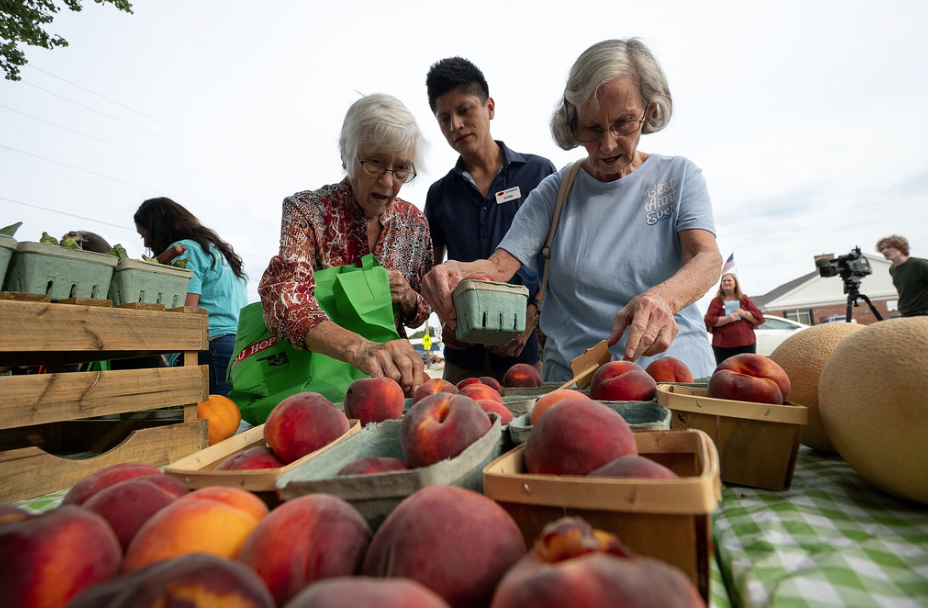
Leo Perez, center, Oklahoma State University Extension educator, special projects, helps senior residents in Haskell, Oklahoma, select locally grown fruits and vegetables during the downtown Mobile Market. The event provides access to fresh foods and food safety information. (Photo by Mitchell Alcala, OSU Agriculture)
By Trisha Gedon
Pop-up Mobile Markets were a big hit in nine Oklahoma communities this summer thanks to Oklahoma State University Extension and partnering agencies.
The Mobile Markets were hosted in Stilwell, Muskogee, Webber Falls, Porum, Haskell, Boynton, Westville, Taft and Warner through October. The markets in Muskogee were available to Head Start students while the others were open to senior adults. Partnering agencies included Healthy Oklahoma Nutrition Alliance, Eastern Oklahoma Development District's Area Agency on Aging, Muskogee County Health Department, Cherokee Nation, Muskogee and Adair counties' TSET Healthy Living Programs and OSU Extension's High Obesity Program.
"The purpose behind the Mobile Markets was to break down barriers and increase access to healthy foods in these rural communities," said Leo Perez, Oklahoma State University Extension educator, special projects. "The Mobile Markets get fresh produce directly into the hands of senior citizens. There are a lot of health benefits of having a diet rich in fresh fruits and vegetables."
Perez said the markets distributed a total of 8,371 pounds of locally sourced produce and beef during the summer.
Selections at the Mobile Market included sweet potatoes, watermelon, cantaloupe, peaches, okra, red potatoes, green beans, squash, zucchini, corn, butternut squash, tomatoes and either ground beef or beef patties. The Eastern Oklahoma Development District's Area Agency on Aging provided each market visitor with $15 in Market Bucks to spend on the foods of their choice, said Marissa Proctor, the agency's social services specialist.
"This market in Haskell is one of six markets we host in Muskogee County," she said. "These residents don't have access to fresh foods like they do in bigger communities, and they appreciate what we have to offer at the Mobile Markets. Plus, coming to the market has helped them with social isolation."
Haskell resident Betty Rogers participated in the Mobile Markets all summer. She said she used her Market Bucks for meat, and she always picked up some of her favorites, including tomatoes and okra.
"This is a very good program because it isn't just about getting the food; we get to fellowship with the young people who run it and with each other," Rogers said. "We get recipes and ideas on how to use the food. The people are so nice and helpful. I just love it."
Lacey Wallace, High Obesity Program manager in the Northeast District Extension office, said the Mobile Market's offering of fresh foods complemented a valuable social outlet for senior citizens.
"People would line up early each time and it was great for social interaction," Wallace said.
Lainey Porter, president of the Healthy Oklahoma Nutrition Alliance, acquired the fruits, vegetables and meat from local growers and producers.
"This has been a great outlet for the producers who provided the fruits, vegetables and beef," she said. "The seniors participating appreciate and value the foods that were provided. It has been fun to hear them talk about nostalgic recipes such as patty pan squash."
The synergy of the partnering groups working together is part of what makes the Mobile Markets so successful, said Tiffany Tolbert of the Muskogee County Health Department.
"We work together and understand we all have to step up and make it happen," Tolbert said. "Some of the communities we serve don't have a local grocery store or affordable options, so it's important to bring fresh produce to these areas. Everyone has the right to have access to healthy food that's affordable."
Janice Hermann, OSU Extension nutrition specialist, said an internal OSU Extension grant funded a food safety component of the Mobile Markets in which participants received a handy kitchen tool at no cost.
"Each of the Mobile Markets had a food safety message for the participants," Hermann said. "Eating nutritious foods is important, but food safety also plays a role in good health."
Hermann presented information on four basic kitchen safety rules, including cleaning fruits and vegetables, using separate cutting boards for meats and fresh produce, cooking to proper internal temperatures and chilling. Visitors to the markets received a different kitchen utensil each month, including a vegetable scrubber, small cutting board, food thermometer and refrigerator thermometer.
"This work would not be possible without all of the support from our community partners, and we're proud of our teams' efforts and the impact we made this season," Perez said.
OSU Extension uses research-based information to help all Oklahomans solve local issues and concerns, promote leadership and manage resources wisely throughout the state's 77 counties. Most information is available at little to no cost.
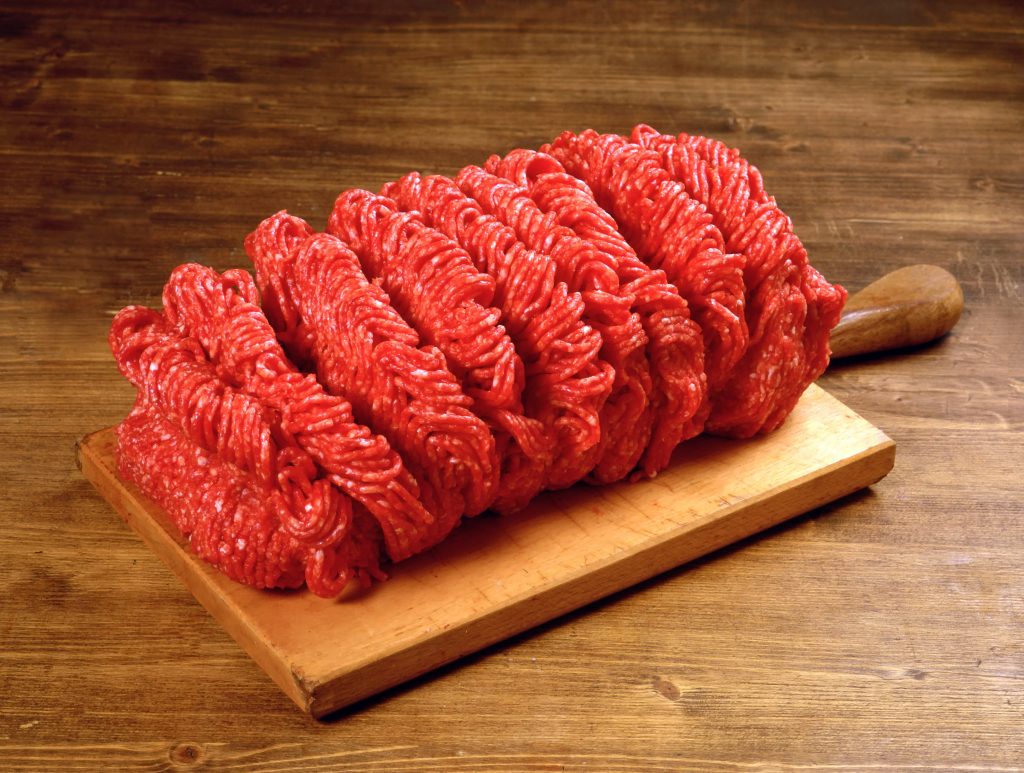
Dr. Derrell Peel, Oklahoma State University Extension Livestock Marketing Specialist, offers his economic analysis of the beef cattle industry as part of the weekly series known as the "Cow Calf Corner," published electronically by Dr. Peel and Mark Johnson. Today, Dr. Peel talks about the ground beef market.
Total beef production in the U.S. is down 5.2 percent year over year through the first three quarters of the year. Nonfed beef production includes beef from cows and bulls and makes up an average of 16 – 17 percent of total beef production over time. Nonfed beef production has averaged 16.5 percent of total beef production thus far in 2023 and is down 6.1 percent for the year to date.
Through the end of September, total cow slaughter is down 5.4 percent with a 4.4 percent increase in dairy cow slaughter partially offsetting a 13 percent year over year decline in beef cow slaughter. Cow carcass weights are down as well, averaging 3.8 pounds lighter this year compared to 2022. Bull slaughter is down 6.1 percent year over year through September and bull carcass weights are down by 5.6 pounds compared to one year ago. Bull beef makes up an average of 10 percent of total nonfed beef.
Nonfed beef is used for a variety of products including muscle cuts, sausage products and a wide variety of processed beef products but the largest use is for ground beef production. Nonfed beef is characterized by 90 percent lean trimmings (90s), which are combined with fatty trimmings from fed cattle, characterized by 50 percent lean trimmings (50s) to make ground beef. These trimmings are the basis for the majority of hamburger used for food service, especially quick service restaurants (QSR) and some retail grocery ground beef. Retail grocery ground beef often includes primal specific grinds, such as ground round, ground chuck, etc.
Table 1. Ground Beef Product Prices.
| 90 % Lean | % Change YOY* | 50 % Lean | % Change YOY* | Ground Beef Wholesale^ | % Change YOY* | |
| $/cwt. | $/cwt. | $/cwt. | ||||
| Jan | 247.13 | -10.5% | 108.41 | -4.0% | $224.01 | -10.0% |
| Feb | 256.25 | -9.3% | 114.80 | 6.6% | $232.67 | -8.2% |
| Mar | 268.97 | -5.3% | 133.13 | 18.4% | $246.33 | -3.6% |
| Apr | 275.74 | -1.1% | 169.68 | 36.3% | $258.06 | 2.0% |
| May | 277.55 | 1.6% | 190.21 | 80.5% | $263.00 | 7.2% |
| Jun | 286.23 | 3.5% | 190.50 | 64.0% | $270.27 | 8.2% |
| Jul | 293.87 | 7.1% | 172.23 | 57.1% | $273.59 | 10.8% |
| Aug | 300.99 | 12.3% | 144.88 | 38.6% | $274.97 | 14.2% |
| Sep | 308.27 | 16.6% | 128.13 | 30.4% | $278.25 | 17.6% |
*Year over Year ^Calculated as a 5:1 ratio of 90s and 50s
Fed beef production from fed steers and heifers includes 50 percent lean trimmings that are used for ground beef production. Fed beef production is down 4.8 percent year over year through September with steer slaughter down 5.3 percent and heifer slaughter down 1.8 percent year over year. Steer carcass weights are down 5.6 pounds and heifer carcasses are down 9.6 pounds compared to one year ago. This leads to a smaller supply of 50 percent lean trimmings. There are many ways to combine lean and fatty trimmings to produce ground beef. Prices for both 90s and 50s are currently higher year over year (Table 1). Table 1 shows the price of a typical ground beef reference price formulated as a 5:1 ratio of 90s to 50s that produces an 83.3 percent lean ground beef combination. The September ground beef price of $278.25/cwt. (Table 1) is a record price, slightly above the one-month pandemic spike in May 2020 that reached $277.76/cwt.
Domestic nonfed beef supplies are supplemented by imports of processing beef for ground beef production. As domestic processing beef supplies tighten up, beef imports are increasing, as expected. Total beef imports through September are up 5.4 percent year over year.
Ground beef is an important component of total U.S. beef consumption and is the inexpensive alternative that consumers increasingly turn to when beef prices rise. However, the overall decline in beef production means that ground beef supplies will be smaller and prices higher going forward.
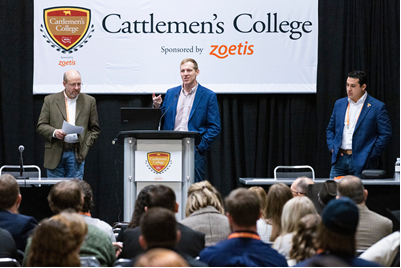
New Cattlemen's College Schedule Includes Sessions Every Day During CattleCon24 .
The 31st annual Cattlemen's College, sponsored by Zoetis, will be held in conjunction with CattleCon24, January 31-February 2, in Orlando, Florida. This premier educational experience draws more than 1,000 attendees every year and includes networking, idea sharing and informative sessions.
"We have a packed schedule featuring industry experts discussing a variety of trending topics," said Michaela Clowser, director of producer education with the National Cattlemen's Beef Association. "We are excited to offer educational sessions all three days of convention."
Cattlemen's College begins Wednesday, January 31 with keynote speaker Dr. Clay Mathis, Animal Science department head at Texas A&M University. Dr. Mathis will discuss how recent industry challenges have created opportunities that can add resiliency to ranching systems.
The 2024 Cattlemen's College schedule is designed to help cattle producers improve and grow cattle herds. Sessions will be held in classrooms as well as on the NCBA Trade Show floor and will feature industry leaders tackling innovative topics including nutrition, reproduction, genetics, sustainability, biosecurity and herd health.
Attendees can look forward to hearing from Kimberly Vonnahme, Zoetis; Brian Dorcey, DVM, Farmer's Business Network; Angela Gonella, PhD, University of Florida; Don Close, Terrain; Cassidy Johnston, Not Your Average Rancher; Dan Leahy, Foundation for Ranch Management; Cadra Krueger, PhD, Alltech; Ross Bronson, Redd Summitt; George Perry, PhD, Texas A&M University; Chance Armstrong, DVM, Auburn University; Jeff Heldt, PhD, Selko; Jacob Gilley, American Farmland Trust; Justin Rhinehart, PhD, University of Tennessee; Matt Crouse, USMARC; Dusty Abney, PhD, Cargill Nutrition; and Raluca Mateescu, PhD, University of Florida.
Each year, the Cattlemen's College agenda is developed based on feedback from producers, and their comments drive the program. One past attendee reflected that, "The biggest take away I found from attending Cattlemen's College is that there is always a newer or better way of doing things. Falling under that idea of, 'we've always done it this way' is dangerous. Never be afraid of trying things a different way."
With so much information presented, it is nearly impossible to experience all Cattlemen's College has to offer in person. To make it easier to access content, all sessions will be recorded and available for registered attendees to watch at any time in the future. To register, select the Education Package, which offers the best value and combines admission to the convention and Cattlemen's College. For more information, visit convention.ncba.org/.
Cattle producers attending Cattlemen's College are eligible to apply for the Rancher Resilience Grant. The first 75 grant applicants will receive reimbursement for registration and up to three nights hotel. For more information and to apply, visit www.ncba.org/producers/rancher-resilience-grant.
Fall is finally upon us! Having grown up a little further north than Oklahoma, I am enjoying the cooler weather and a reprieve from the humidity! As an agency, we have wrapped up fiscal year 2023 and are excited for the increased opportunities we will have as we move into 2024. In 2023, we were able to cost share conservation activities on almost 600,000 acres through the Environmental Quality Incentives Program (EQIP) and the Conservation Stewardship Program (CSP) and we are expecting our available funding for these programs in 2024 to be even greater!
NRCS has set our application batching date for 2024 funding consideration for Environmental Quality Incentives Program (EQIP), Conservation Stewardship Program (CSP), and the Agricultural Conservation Easement Program (ACEP) for Friday November 3, 2023. In addition to moving that deadline up to assist with earlier contracting dates, we are also implementing Act Now funding through EQIP this year. With Act Now, as applications are received for cover crops, perennial seedings and high tunnels, they will be immediately evaluated and ranked. If they meet a pre-determined threshold based on the resource concerns addressed, they will be obligated without having to wait for a future ranking deadline. This will allow staff to expedite the contracting process and for our customers to implement conservation practices sooner. We will be evaluating how the process works in 2024 and may have an opportunity to expand those opportunities in future years.
I would also like to apologize to those of you who may have received a text message about our program batching date at a late hour! We utilize an automated system to send those notifications out to subscribers to help keep you informed of pertinent information. Although we sent the message from our system at 4:30pm, some recipients have reported that it was not delivered until late into the night. In the future, we will send those out earlier in the day so that if there is a delay, it will not push back to a midnight hour.
We look forward to working with you on your conservation needs in 2024!
Jeanne Hamilton, Oklahoma State Conservationist
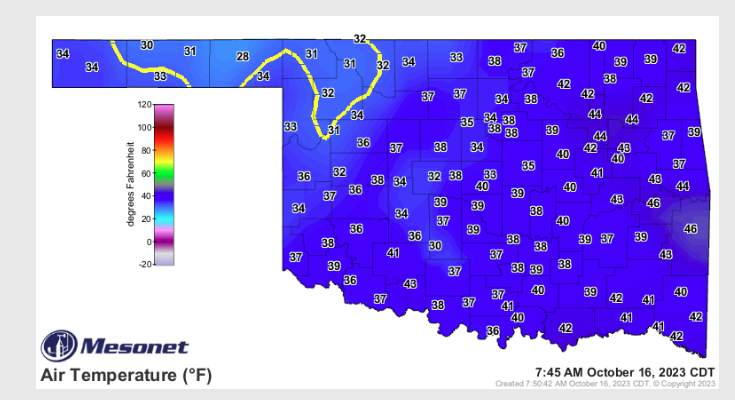
Oklahoma has been waiting for Fall and those Fall Temps have finally arrived in the state. According to State climatologist Gary McManus El Reno had a freeze this morning along with a few areas in the Panhandle, "This has been quite a cold snap. Yes, COLD. Yesterday was the first day we failed to reach a high in at least the 70s in the state since April 26. Hollis
and Kenton got close at 69 degrees."
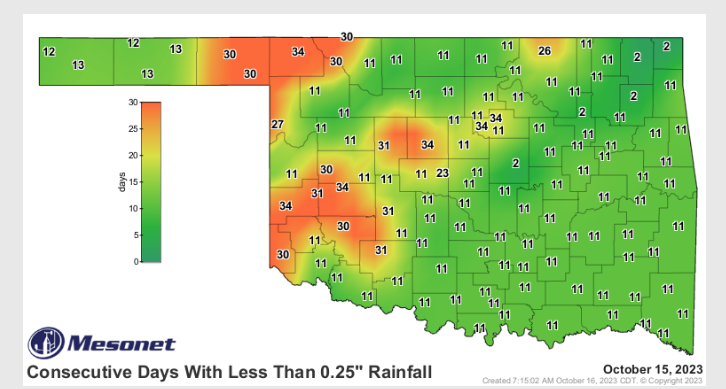
While the cooler temperatures are welcome, Oklahoma still needs some rain. McManus says its looking pretty desperate right now, "After that mostly dry cold front scoured the moisture from the air all the way to the Gulf. We're building on yet another month-long (plus) dry spell, which is very bad news for our drought-plagued state."
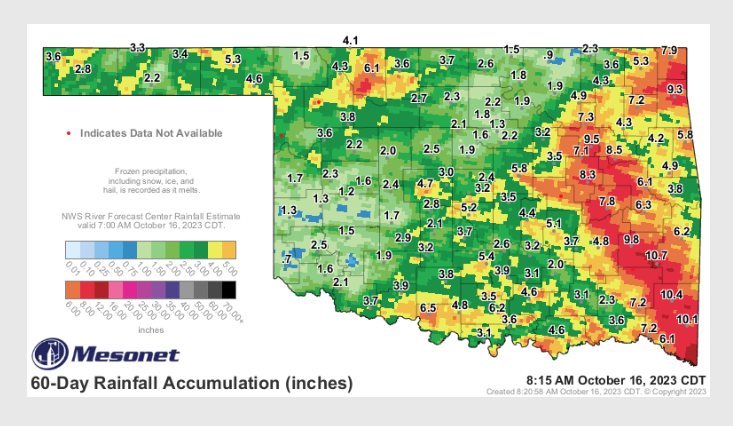
The Flash drought is now somewhere close to 87 Days and McManus says we do have some possibilties, "Another
possible storm system coming our way next week from up in the Gulf of Alaska, AND maybe from the south as well? There's a tropical system down off the west coast of Central America thinking it wants organize into a tropical storm
or hurricane in the next few days." He says the Forecast models show this next front will be headed our way later into the middle of next week, "It wouldn't be here as a tropical system, of course. Those Pacific storms don't survive the trek over the mountains if they head east, but the remnants can help generate showers and storms and also draw moisture from the Gulf of Mexico back up our way. It'll carry some upper-level moisture with it (again, low-level moisture won't make the trip over the mountains), but that can help as well. It's a long shot, but ANY shot would be welcome in the coming weeks."
That system could show up right before Halloween, so we'll have to see what Shenanigans the Oklahoma Weather has in mind for Trick or Treating!
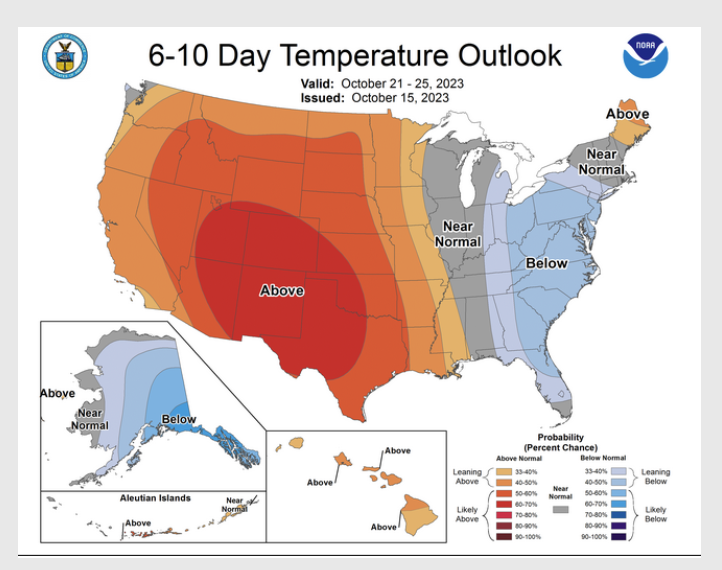
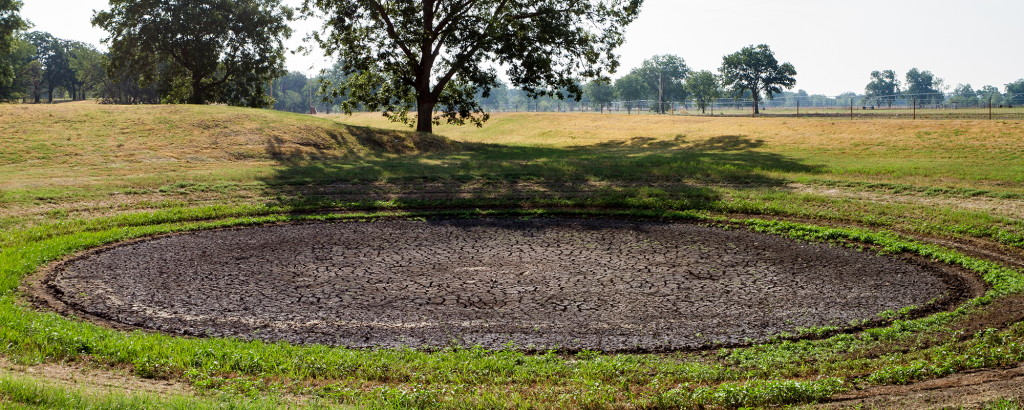
Lack of rainfall can impact wildlife habitats, food availability and quality in times of drought. Here are ways to take stock of conditions and try to help the populations on your ranch.
Just as drought conditions affect ranch management decisions and crop yields, they also take their toll on wildlife. Here are observations about evaluating and managing wildlife habitat and feeding in dry times.

If the 2023 drought continues into the fall and water levels keep dropping, waterfowl will have fewer areas to loaf, roost and feed, and will tend not to stay in their normal ranges. This would cause hunting conditions and numbers of birds staying within a given area to be well below average.
However, if we get rain in the fall and impoundments fill up, it should be an excellent year for waterfowl hunting. As water levels have been dropping throughout the summer, moist-soil plants have been germinating and growing along the banks and basins of impoundments. Many of these moist-soil plants are waterfowl foods, such as smartweeds. If water levels rise this fall, these plants will be flooded, creating excellent conditions for waterfowl hunting.
2023 waterfowl populations in the breeding grounds are estimated to be down 7% from 2022 and down 9% below historical averages this year. If our habitat conditions improve, more birds will be in the area and stay longer.

White-tailed deer have evolved and adapted to cope with the hot, dry summers commonly experienced in Oklahoma and north-central Texas. The drought we are experiencing will probably not have a long-term effect on deer populations but has the potential to have some short-term effects.
Mycotoxins are toxins produced by fungi, such as aflatoxins. Stress, including drought, during plant growth tends to encourage fungal infection and, therefore, mycotoxin production. Mycotoxins are known to negatively affect mammals, birds and fish. Relatively high levels of some mycotoxins in feed cause rapid death, while relatively low levels appear to cause no problems. Intermediate levels can cause several effects, such as liver damage, cancer, anemia, tissue necrosis, immune suppression, decreased milk production, decreased egg production, reduced conception, reduced ovulation, poor fetal development, abortion, reduced feed consumption, reduced feed conversion and gastrointestinal disturbances.
Susceptibility to various mycotoxins differs among species and among ages within species. To minimize mycotoxin problems when feeding, only feed seeds or foodstuffs that have been tested for mycotoxins and have levels approved for livestock or human consumption.

Northern bobwhite can be an indicator of good grazing management on native pastures. Regrettably, the elimination and overuse of native pastures are two of the many factors contributing to declining bobwhite numbers. A major component of bobwhite habitat is native grasses.
As with most years of drought, the overall lack of native grass is probably the most limiting factor for bobwhites. Research suggests over 250 clumps of native bunch grasses (i.e., little bluestem) per acre are needed to provide a minimum amount of nesting cover. Bobwhites use last year's growth to construct this year's nest; however, in many areas there is very little of last year's and this year's growth left.
To ensure adequate nesting cover for bobwhites next spring, maintain 25% to 75% herbaceous canopy cover (grasses and forbs) that is 10 to 20 inches tall.

Research has shown that providing supplemental food, such as milo or corn, in feeders has little beneficial effect on abundance of bobwhites, regardless of habitat quality. However, in areas with good-to-excellent bobwhite habitat, some studies have shown bobwhites may benefit from feed being broadcast over a significant percentage of the area year-round. Weekly broadcast feeding rates for milo may need to be as high as 2 pounds per acre. Before starting a feeding program, determine whether the cover aspects of habitat meet all the daily and annual requirements needed to support bobwhites.
Story credit: Steven Smith, wildlife and fisheries consultant at Noble Research Institute.
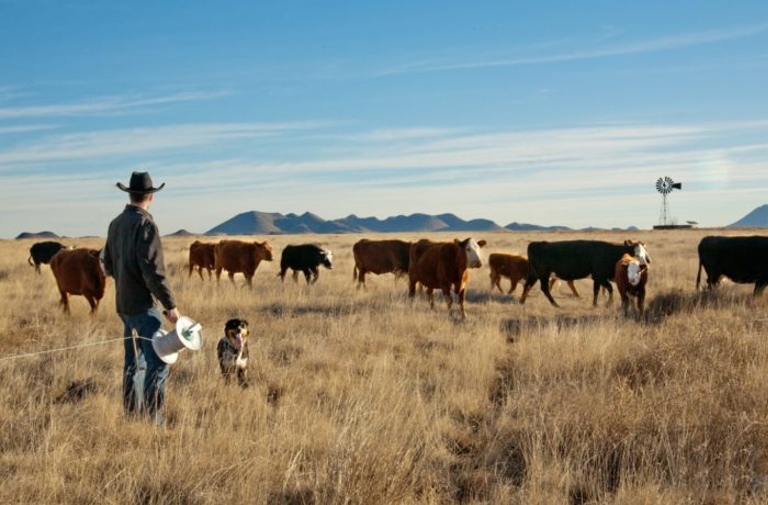
Senior Farm and Ranch Broadcaster, Ron Hays, is back visiting with Texas A&M's Bart Fischer, this time talking about the growth of the Livestock Risk Protection Program.
Aside from his role as Research Assistant Professor and Co-Director of the Agricultural and Food Policy Center at Texas A&M University, Fischer is also the former Chief Economist of the House Agriculture Committee. Fischer was a key player in the 2014 and 2018 farm bills.
"Following the 2018 Farm Bill with Mr. Lucas, we have had LFP in place, Livestock Forage Program, and that is administered by FSA," Fischer said. "There had really been no innovation on the crop insurance side for livestock."
While there have been a few tools such as livestock risk margin and livestock risk protection, Fischer said these programs did not advance very much because up until 2018, the federal government could not spend more than 20 million dollars a year on livestock policies.
"That 20 million would buy about 500 million dollars for the liability protection, but then those policies stopped being sold once they hit that limit," Fischer said.
In the Bipartisan Budget Act of 2018 that they passed in February of '18, Fischer said there was a provision in the bill that did away with the 20-million-dollar limitation. Since then, Fischer said there has been a substantial increase in innovation in the crop insurance sector for livestock.
"We are over 20 billion dollars in liability now (coverage)," Fischer said. "A 4,000 percent increase. It is very much a success story."
Now, added to the mix recently is the Weaned Calf Risk Protection, a new insurance option for livestock producers in several states.
"It is incredibly important that you work with a crop insurance agent to learn all of the ins and outs," Fischer said.
The Beef Buzz is a regular feature heard on radio stations around the region on the Radio Oklahoma Ag Network and is a regular audio feature found on this website as well. Click on the LISTEN BAR for today's show and check out our archives for older Beef Buzz shows covering the gamut of the beef cattle industry today.
Farm Director, KC Sheperd, is visiting with Oklahoma State University's Brian Whitacre, about an update on broadband in Oklahoma. Whitacre is on the state's Broadband Expansion Council, which provides recommendations to the newly formed Oklahoma Broadband Office.
"We have held a series of events where we try to listen to people that are struggling with on-the-ground broadband issues," Whitacre said. "Director Sanders with the Oklahoma Broadband Office has kind of headed those up, and we have heard that the people who tend to show up to those meetings are the ones that don't have good broadband."
Whitacre said the broadband team knows the approximate number of households around the state that need better broadband service. The number, he added, is close to 300,000.
"We finally have some money to help those specific households," Whitacre said. "Just a couple of days ago, the portal for that first chunk of money closed, so we had providers submit their documents about how many homes they were going to serve, how much money they thought it would take to get there."
With about 400 million dollars available through the Broadband Equity Access and Deployment Program, in the coming weeks, Whitacre said the broadband office will evaluate those proposals and decide who will be funded.
"There are about 150,000 (households) that don't have any broadband at all," Whitacre said.
This is only the first round of funding, Whitacre said, so the decision about the first 400 million dollars will be made in the coming weeks, and then that money will start to be expended in early 2024.
The portal for the next round of funds will open in 2024, Whitacre said, for those who were not included in the first round.
"There is about 800 million dollars that is coming," Whitacre said.
Oklahomans can still check out the interactive broadband map at https://map.broadband.ok.gov/map?zoom=7¢er=-10996721%2C4195001 and see what service looks like in their area.
Whitacre urges individuals who see unserved or underserved locations in their county on the broadband map to reach out to their local provider or local electric cooperative to inform them.
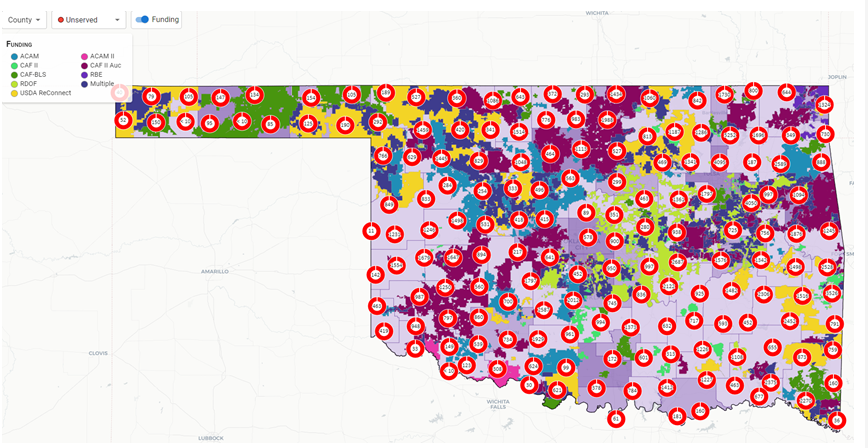
RON's Dave Lanning has a pre-opening look at today's agricultural Markets.
Click the audio tab below for today's report.
Each week, Beltway Beef brings you the latest policy news affecting the U.S. cattle and beef industry. Hear from subject-matter experts, producers, and industry leaders on the topics that impact the business viability of farms and ranches across the country.
On this episode, California rancher and past NCBA President Kevin Kester joins to share his insights on the Farm Bill, the value of the Beef Checkoff, and other major policy issues being discussed in Washington. Kester also provides updates from his ranch, including his operation's diversification in growing wine grapes. Finally, Kester discusses his family's involvement in the Honor Flight program that brings veterans to Washington, D.C. for a tour of honor. Kevin and his wife June have been involved in numerous Honor Flights, including one that brought some beef industry leaders who served in our nation's Armed Forces out to D.C. Tune in!
Radio Oklahoma Ag Network Intern, Maci Carter, had the chance to catch up with Oklahoma State University Extension grain marketing economist, Dr. Kim Anderson and talk about the latest WASDE report, the grain markets, and more.
As grain stocks are tight, Anderson said, and there were not too many changes in this WASDE report's numbers- especially U.S. wheat.
"They did increase the projected ending stocks," Anderson said. "That should have had a negative impact on price, but in the world wheat situation, they kept those stocks relatively tight and actually lowered them a little bit, so wheat stocks are tight, they remain tight, and we saw wheat prices increase today after the report."
Anderson said hard red winter wheat prices increased by about seven or eight cents following the report.
Regarding corn and soybeans, Anderson said there is potential for some production changes, but wheat is pretty much in the bin now.
"Looking down the road, stocks are tight with wheat," Anderson said. "On corn, we have got above average U.S. stocks of corn, and soybean stocks are tight."
Russia and Ukraine have had a big impact on the markets in the past month, but Anderson said that is not the case at the moment.
"If something changes so that Ukraine could export more product, they don't have a lot of products to export," Anderson said. "That could impact the market a little bit. Russia has got a large quantity of wheat they need to get on the market, and they are moving it on the market relatively well. If something happens to prohibit them from exporting, then we would have an increase in prices."
Right now, Anderson said producers should be looking at what prices will be down the road.
"Right now, the market doesn't indicate many changes in corn or bean prices, so I think what producers should look at is the cost of production for 2024, and what prices are looking for that far in advance," Anderson said.
Since wheat stocks are relatively tight and wheat stocks around the world are below average, Anderson said the wheat market is near the bottom.
"We are right now just a little bit above average, and with the stock situation, I think we should possibly be a little higher than that," Anderson said. "But again, Russia is putting a lot of wheat on the market, and that is creating some inconsistencies in the market."
Senior Farm and Ranch Broadcaster, Ron Hays is talking with Dakota Moss of Livestock Risk Services about Livestock Risk Protection for cattle producers. Livestock Risk Services has recently been added to the National Family of livestock-related businesses.
Livestock Risk Protection is a nationwide price protection offered by USDA, Moss said, and is built for any size of operation.
"It is basically ensuring against the market on any number of head from one calf all the way to 12,000 head," Moss said.
LRP can be a useful tool for producers, Moss said, whether they are locking in a margin on their stockers, or if they are a cow-calf producer looking at ensuring high prices.
"Especially with the political environment we are in, we have more uncertainty nowadays than we ever have before, so having that plan in place and protecting the marketing plan and the business plan at the LRP- there is an incredible opportunity to capture with that program right now," Moss said.
When a producer locks in their price with LRP, Moss said one advantage is that the producer is able to see the potential return. Moss added that LRP does not cost producers anything upfront.
"If this thing goes through the roof, the topside is wide open...," Moss said.
On the other hand, Moss said if the market goes backward, producers who have LRP are protected at the price they have locked in.
To get in contact or find a Livestock Risk Services agent, click here.
To sign up for daily price reports, click here.
The Beef Buzz is a regular feature heard on radio stations around the region on the Radio Oklahoma Ag Network and is a regular audio feature found on this website as well. Click on the LISTEN BAR for today's show and check out our archives for older Beef Buzz shows covering the gamut of the beef cattle industry today.
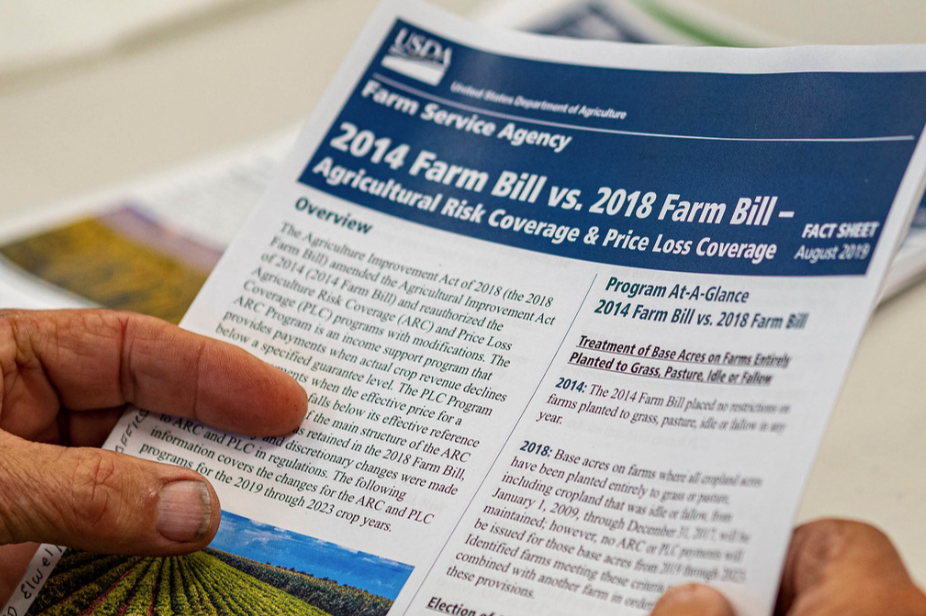
The 2018 Farm Bill has expired, and OSU Extension's Amy Hagerman says the expiration will result in both immediate changes as well as long-term shifts in the way producers run their operations. (Photo by Todd Johnson, OSU Agriculture).
By Laney Reasner
The 2018 Farm Bill expired on Sept. 30, 2023, as government officials focused on passing a 45-day continuation of the federal budget.
Amy Hagerman, an associate professor of agricultural economics and Oklahoma State University Extension agricultural policy specialist, said the expiration will have limited impact in the short term but could have long-term impacts without a continuation.
Without a continuation or resolution of the Farm Bill, some commodity programs, for example, would revert to outdated legislation created in the 1930s and 1940s, Hagerman said. However, the Farm Bill has some longevity outside of its official expiration. Certain programs that operate on calendar or crop years designated for official reporting will continue through the end of 2023 and into 2024.
"I expect we'll see a lot of conversation around the budget in the coming weeks," Hagerman said. "That's really important for the Farm Bill as well, because the budget determines the money for some of those programs (operating under the 2018 Farm Bill) and for USDA offices to administer the programs."
Hagerman predicts the Farm Bill will be extended before the end of this year. A short extension could indicate a new Farm Bill will be considered soon, whereas a lengthier extension could result in 2018 Farm Bill rules and regulations staying in place for the foreseeable future.
"Producers should pay attention to risk management in general for their whole farm and stay in close touch with what the deadlines are and what changes might be on the horizon," Hagerman said.
It is important for producers to understand any new legislation and know which programs are available to them, she said. Some legislation will not be affected by the Farm Bill expiration, but other rules or appropriations could be void until further action is taken. OSU Extension will share Farm Bill updates with producers as they occur.
Hagerman's latest Farm Bill discussion on changes in agriculture-related policy is featured in a segment of "SUNUP," OSU Agriculture's weekly television show. Watch "SUNUP" Saturdays at 7:30 a.m. and Sundays at 6 a.m. on OETA.
OSU Extension uses research-based information to help all Oklahomans solve local issues and concerns, promote leadership and manage resources wisely throughout the state's 77 counties. Most information is available at little to no cost.
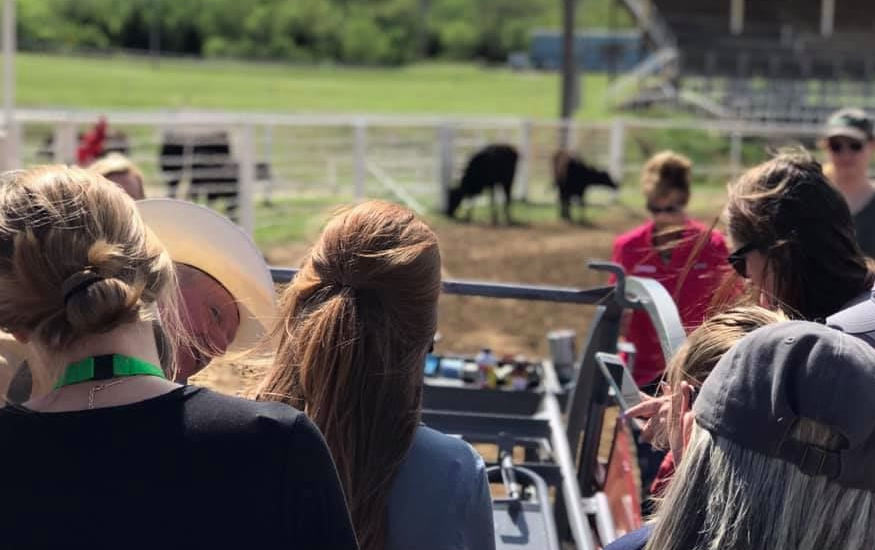
OCW will be hosting an Ag Health and Safety Educational Event on October 27, 2024, at the Woodward Event Center in Woodward, Oklahoma from 9:00 am to 3:00 pm. This event is open to everyone, and the "cost" is to bring a non-perishable food item. OCW will be donating these to the local food pantry in Woodward.
More Details:
The Event kicks off at 9:00 a.m. at the Woodward Event Center and Fairgrounds.
Topics will include first aid and basic CPR presented by AirEvac and weather awareness.
Grit and Grace Consulting will talk about mental health in the ag industry. Andrine Shufran with OSU Entomology will share her knowledge of insects that we should be familiar with to learn how to prevent pasture and crop damage.
As CattleWomen, we know the importance of keeping our families strong and healthy and Dietician Emma Mortensen will present "Food in the Field" and the benefits of beef as a healthy and nutrient-rich diet.
We will have an Arrowquip chute onsite as their representative talks to us about chute side safety. Many Oklahoma Cattle operations are a family endeavor, and helping those families understand the need to work safely together should be our top priority.
We will also have a few door prizes to give out throughout the day so come and enjoy as you learn how to keep your family safe and healthy!
Lunch will be provided, but folks are asked to Register so they will have plenty of food.
To Register: www.okcattlewomen.org
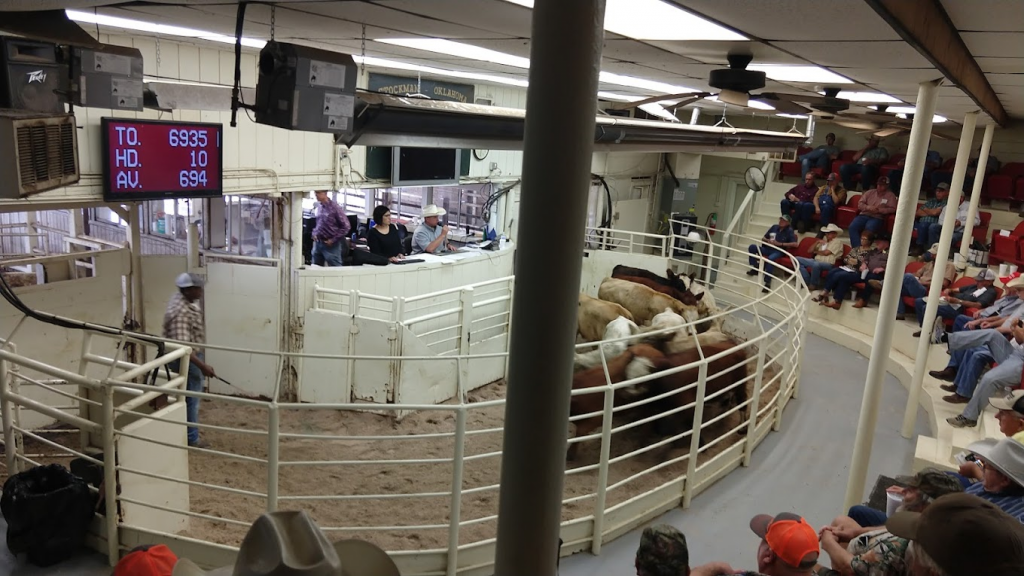
KC Sheperd, Farm Director, is back talking with Bob Rodenberger, a partner with Stockman Oklahoma Livestock Marketing, as he gives the latest on the cattle markets.
"The feeder market is still showing some softness," Rodenberger said. "A lot of it is just lack of numbers. Not a lot of feeders are moving this time of year."
The calf market has picked up some action this week, Rodenberger said, but it is still softer than it was three weeks ago. Things are looking up this week, Rodenberger said, but Oklahoma producers are still in need of some timely rains not only for pasture but for the wheat crop as well.
"Yesterday, we had 500 cows," Rodenberger said. "You don't normally have that many cows in a normal season."
Rodenberger said it is going to be a while before the cow herd starts to expand. Unless unforeseen events take place, Rodenberger said he expects the feeder market to remain steady throughout the winter.
Going into the holidays, Rodenberger said runs should be lighter, which is normal.
"We are seeing runs lighter compared to a year ago just out of the number of cows we have sold," Rodenberger said. "I think the only reason our numbers have stayed pretty consistent is they have been pulling cattle forward."

The Oklahoma Comprehensive Water Plan (OCWP) fulfills a requirement for the Oklahoma Water Resources Board (OWRB) to provide a general analysis of water supply across the state with guidelines for meeting Oklahoma's future water needs. OWRB is in the process of updating the OCWP, with an expected completion date of 2025.
A critical component of the OCWP is to engage the public to produce a plan that addresses the water-related challenges and needs that are most important to Oklahomans. We invite you to participate in this brief survey to help shape Oklahoma's water future.

The Cotton Board has hired Daniel Radford as its new Southeast Regional Communication Manager (RCM). Raford's territory includes: Alabama, Florida, Georgia, North Carolina, South Carolina, and Virginia.
Radford will inherit the territory of The Cotton Board's long-time Southeast RCM, Monty Bain, who announced his intention to retire in March of 2024. Bain will work alongside Radford until his retirement.
The Cotton Board's RCMs work to ensure that stakeholders of the Cotton Research and Promotion Program in their respective territories are informed of the activities stemming from the Program as conducted by Cotton Incorporated and administered by the Cotton Board. The RCMs visit producers in the field, speak at industry meetings, participate in trade shows, and coordinate producer tours of Cotton Incorporated.
Radford, a native of North Carolina, previously served as the Director of Alumni and Engagement for the College of Agriculture and Life Sciences at North Carolina State University. Radford has also worked closely with the North Carolina Cotton Producers Association since 2022. He has a Master of Science degree in Agricultural and Extension Education from North Carolina State University.
"I'm looking forward to traveling across my territory and meeting as many cotton producers as possible. Monty Bain has been a respected, tireless industry leader for many years. I look forward to following in his footsteps and continuing to serve and educate producers about the many benefits of the Cotton Research and Promotion Program," said Radford.
The Cotton Board's other RCMs include Grant Saum, Midsouth RCM covering Arkansas, Louisiana, Mississippi, Missouri, and Tennessee; Shelley Heinrich, Southern Plains RCM covering north Texas, Kansas, and Oklahoma; and Christi Short, Southwest RCM covering east, central, far west, and south Texas, New Mexico, Arizona, and California.
The National Pork Industry Foundation, a nonprofit research and educational organization led by pork industry leaders and managed by the National Pork Producers Council, today opens applications for the Neil Dierks Scholarship to honor NPPC's previous longtime CEO, Neil Dierks.
The $5,000 scholarship is given annually to a college student pursuing a graduate degree at a land-grant university in a field related to the pork industry.
"The National Pork Industry Foundation is privileged and excited to continue this scholarship in Neil's name," said Dwight Mogler, a pork producer in northwest Iowa and the NPPC representative on the foundation's board of directors. "His more than 30 years of dedicated service to the pork industry has included countless contributions, many of which included nurturing future leaders and seeking and elevating talented people with a variety of skills to serve as pork industry resources and decision-makers for today and tomorrow. Therefore, it is very fitting that the foundation honor Neil through this scholarship opportunity."
Applications for the scholarship, which are funded through contributions to the pork industry foundation, are due at the end of December, with each year's recipient announced at the pork industry's annual meeting – the National Pork Industry Forum – which will be held in Chicago, Illinois from March 5-7, 2024.
The Neil Dierks scholarship program compliments the Lois Britt Memorial Pork Industry Scholarship, which the National Pork Industry Foundation sponsors along with the CME Group. Named after the late NPPC board member Lois Britt, the program annually gives $2,500 scholarships to 10 college undergraduates intending to pursue careers in the pork industry. NPPC administers the program, and winners are announced at the National Pork Industry Forum.
Full eligibility and application requirements can be found here. Application deadline is December 31, 2023. Please contact Lucy Russell, NPPC Manager of Producer Engagement, with any questions about the scholarship at 515-864-7983 or russelll@nppc.org.
For more information on the Neil Dierks Scholarship and on making a contribution to the National Pork Industry Foundation, please visit the NPIF webpage.

If you've been on a commercial plane, you know these safety instructions: Put your oxygen mask on first before helping others. Obviously, what that means is that the safety of those that depend on you is best assured when you have first taken steps to ensure your own safety.
Now ratchet this analogy up by a magnitude of ten and ask what is the prudent course for our nation: Should we ensure that we can, under all circumstances, achieve self-sufficiency in our U.S. food production system before we consider the argument that our objective as a nation should be to "help" foreign countries find new markets by opening our market up to their unlimited food imports?
We know that over the past several decades we have pursued this "we must help other countries by offering them our market" course of action and we've encouraged increased volumes of foreign-sourced food into the United States, even if that meant we would dismantle some of our own food production capacity.
Let's go from the specific to the general, starting with the production of meat – our primary protein sources. Not long ago, about half the shrimp consumed in America was domestic-caught shrimp, with much of it sourced from Louisiana fishermen. But that has all changed because policy makers believed it prudent to open our market up to exporting countries such as India, Indonesia and Ecuador – in an effort to help them by granting them U.S. market access. The result: today only about 10% of the shrimp consumed in America is produced domestically, with 90% sourced from foreign countries.
Now we've talked about the U.S. sheep industry and, like in the shrimp industry, it wasn't long ago that over half the lamb consumed in America was produced by American sheep men and women. And, also like the shrimp industry, all that has changed because policy makers decided to "help" Australia, New Zealand and several other countries by granting them unlimited access to the U.S. market. The result: Today American sheep men and women only provide 26% of the lamb consumed in America while consumers are now reliant on foreign countries for 74% of their lamb meat.
So now consider this as we look at the rising level of foods for which we depend on foreign supply chains. If you had a child turn 20 years old last year, then when that child was born the U.S. imported 47.2 billion dollars' worth of food. But last year, on your child's 20th birthday, food imports had exploded to just shy of 200 billion dollars. This means that in just 20 years, the value of total food imported by the United States more than quadrupled. This is a huge increase even if we adjust the 2002 total food import value for inflation. Factoring in inflation, the 47.2 billion dollars in food imports 20 years ago would be only about 80.5 billion in today's dollars. That inflation adjustment still represents a huge increase as today it's about two and one-half times greater.
And you might recall an earlier episode where I mentioned that U.S. food imports had surpassed U.S. food exports in 2019, and last year the U.S. was a net food importer at the tune of 6 billion dollars.
I hope everyone knows that we're all being placated by our government regarding our growing dependency on foreign food and the simultaneous dismantling of our domestic food production capacity.
Here's what the U.S. Food and Drug Administration says about how important it is that we welcome these additional imports: "To help meet these consumer demands, the United States imports about 15 percent of its overall food supply."
So don't worry, be happy because we're doing this to meet U.S. consumer demands. You're supposed to overlook the fact that we're doing this at the cost of dismantling our capacity to feed ourselves.
So back to putting your oxygen mask on first. Why is this so important in the grand scheme of things?
Consider what happens when major events rattle the globe. In 2020 there was the COVID pandemic that disrupted foreign supply chains of all kinds, including food. In 2022 the Russian invasion of Ukraine disrupted foreign supply chains, including food. And now the Hamas attack on Israel threatens to again disrupt foreign supply chains, and food could well be included.
What we know from our history, both early and present, is that geopolitical conflicts arise periodically. And what we should have learned from history is that we should be prepared for their eventuality.
So, when you hear the phrase "Control the food, control the people," which is now being bantered about much more often than before, you should think "Oxygen mask." And that means you should call your members of Congress to tell them you want them to immediately begin rebuilding America's food production capacity. Tell them they should start by protecting our U.S. shrimp and sheep industries. Tell them that we must put America first in terms of achieving self-sufficiency in our U.S. food production, and then, we can begin to help other nations by offering them some access to our U.S. market.
The Oklahoma Farm Bureau Young Farmers and Ranchers committee is set to host the annual high school, collegiate and YF&R discussion meets at the OKFB Annual Meeting at the Omni Hotel in Oklahoma City.
The high school discussion meet will be held Thursday, Nov. 9 and is open to all Oklahoma high school students. The collegiate discussion meet, open to any Oklahoma Collegiate Farm Bureau members, and YF&R discussion meet, open to OKFB members ages 18-35, will be held Friday, Nov. 10.
The winner of the YF&R discussion meet will represent OKFB in the American Farm Bureau YF&R Discussion Meet at the 2024 AFBF annual meeting. The winner of the collegiate discussion meet will represent OKFB in the AFBF Collegiate Discussion Meet in Omaha, Nebraska, in March 2024, and the top four participants in the high school competition will receive cash prizes.
Participants must register online by Friday, Oct. 27. For more information, contact Zac Swartz at (405) 523-2300.
Oklahoma Farm Bureau Treasurer and District 9 Director Jim Meek was recently elected to serve as chair of the Oklahoma Broadband Governing Board at the group's regular meeting Tuesday, Oct. 10.
The Okmulgee County rancher was elected by unanimous vote after having served as vice chair since the governing board's inception in 2022, when he was appointed to the board by Oklahoma House Speaker Charles McCall.
Meek and newly elected vice chair Amanda Mullins will lead the charge in the effort to expand access to reliable, affordable high-speed internet service in the state of Oklahoma.
"The future of rural Oklahoma depends heavily on access to quality and affordable broadband service," Meek said. "Not only is agriculture becoming more dependent on technology, but many vital community resources, including medical services, financial transactions and educational opportunities rely on broadband availability to deliver their services to Oklahomans."
The Oklahoma Broadband Governing Board oversees the work of the Oklahoma Broadband Office, which was established by the passage of the Oklahoma Broadband Expansion Act during the 2022 legislative session.
The nine-member board is composed of the lieutenant governor, the state treasurer, three appointees from the governor and two appointees each from the Senate president pro tempore and the speaker of the House.
To learn more about the Oklahoma Broadband Governing Board and the Oklahoma Broadband Office, visit oklahoma.gov/broadband.
RON's Dave Lanning has a pre-opening look at today's agricultural Markets.
Click the audio tab below for today's report.
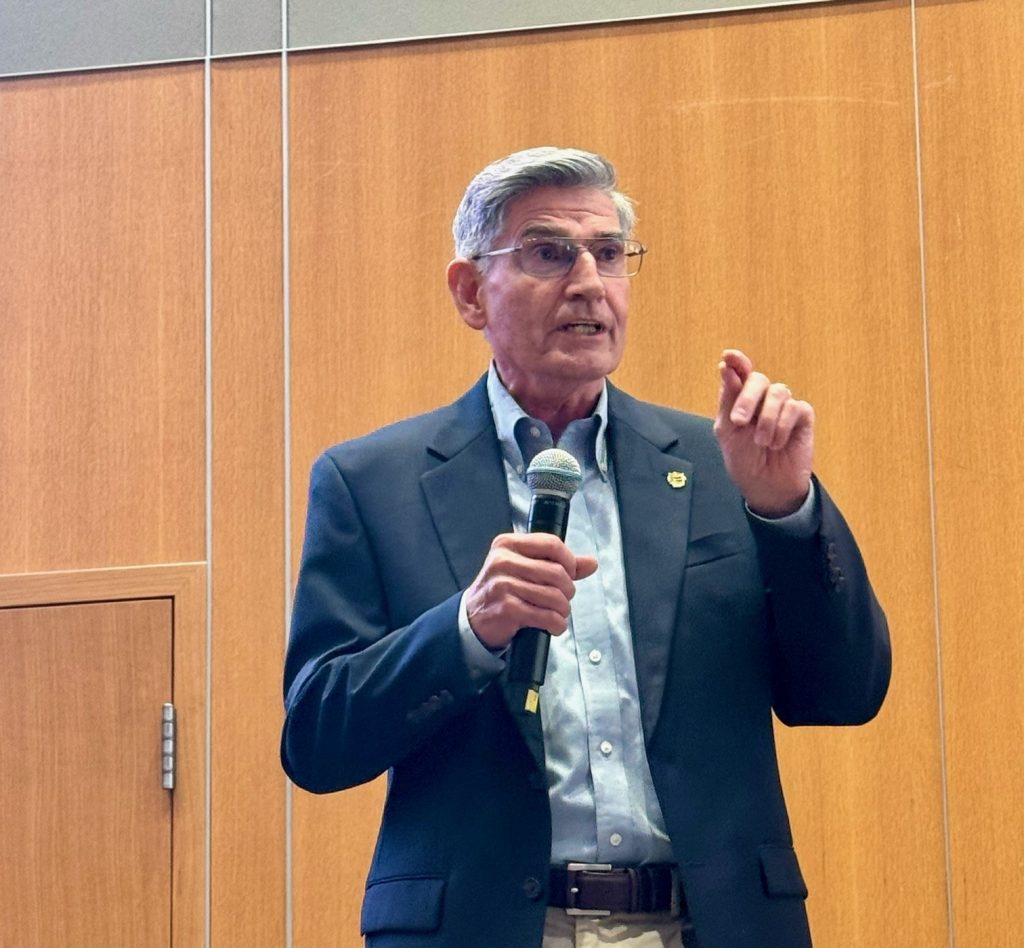
This Week on SUNUP is Oklahoma State University Extension grain market economist Kim Anderson. During this week's edition, Anderson talks about takeaways from the 2023 Rural Economic Outlook Conference, which took place on October 11 at Oklahoma State University.
"It is almost impossible to predict price, but you have to estimate prices so that you can develop budgets and you can compare different crops and different enterprises to see which one would be the most profitable for you," Anderson said. "Then, we talked about the change in land use in Oklahoma over the last four years."
With land use in mind, Anderson said since the mid-80s, cropland has declined from about 14 million acres to a little less than 12 million.
"You look at the pasture or the range or the hay land; it increased from 16 million acres to 22 million acres," Anderson said. "Wheat-planted acres has declined from 8 million to 4.5 (million acres). Corn has increased from 100,000 acres to about 400,000 acres, and soybeans are from 300,000 (acres) to 500,000 (acres)."
Anderson said cotton acreage declined from the 80s to the 90s, then increased in the last couple of years.
As for advice for producers, Anderson said it is essential that producers have a plan and a strategy.
"Be flexible," Anderson said.
This week on SUNUP:
Watch SUNUP:
Saturday at 7:30 a.m. & Sunday at 6 a.m. on OETA (PBS)
YouTube.com/SUNUPtv
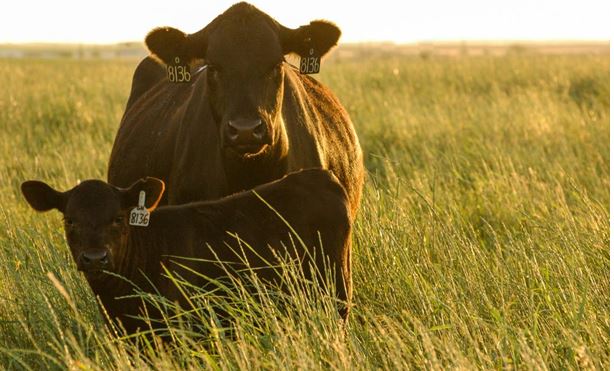
Reproductive efficiency of a beef cow herd starts with the yearly diagnosis of pregnancy. Defining the breeding season and then removing females who did not conceive or do not fit the desired calving window, allows producers several advantages. Producers who utilize pregnancy detection options typically reduce expenses, decrease labor inputs, and sell a more uniform calf crop.
The three primary methods to evaluate pregnancy in cows include rectal palpation, reproductive tract ultrasound, and blood testing. In 2017, the USDA National Animal Health Monitoring System Beef Cow-Calf Study evaluated the number of operations that utilized pregnancy checking. Although percentages were higher as herd size increased, across all operations only 19.3% used palpation, 8.8% used ultrasound, and 3.5% used blood testing for pregnancy evaluation. Producers who choose not to evaluate pregnancy status undoubtedly leave money on the table.
Historically, rectal palpation has been the industry standard and is currently the most common pregnancy testing method in the region. The reproductive tract and/or the fetal calf is manually palpated to determine pregnancy status, approximate age of the calf, and identify any physical issues that may exist in the reproductive tract or pelvis of the cow.
Ultrasound is another option to identify pregnancy as early as 21 days with high reliability at 28 days or more. Fetal age can be determined earlier than palpation alone and depending on the stage of pregnancy with more accuracy using ultrasound. Ultrasound also provides the opportunity to determine sex and potential physical abnormalities of the fetus and cow. It is important to note, both palpation and ultrasound require highly specialized training and may only be performed by those legally able to do so as outline by a state's veterinary practice act.
Blood sampling is the final option for pregnancy testing. Unlike humans, cows do not excrete a pregnancy identifier in urine. These tests detect pregnancy glycoproteins in the blood, and most can detect pregnancy reliably at 28-29 days. A skilled producer can obtain blood samples for cows and the blood pregnancy test can be done chute side with a result within 20 minutes, or the blood sample can be sent to a lab.
Although pregnancy determination is highly valuable, and tests can be conducted very early to evaluate pregnancy, there is some risk of pregnancy loss after evaluation. Additionally, there are advantages and disadvantages to each option. Producers should consult with their veterinarian on which method fits the needs of the operation.
Finally, blood testing may provide a convenience factor in some situations but does not replace the value of having a veterinarian involved in your operation. Pregnancy checking time traditionally opens the door for broader discussion regarding herd health and lays the foundation for establishing a valid veterinary-client-patient-relationship. If blood testing is the best option for the herd, the producer and their veterinarian should set aside separate time and resources to continue discussion on the operational needs and goals.
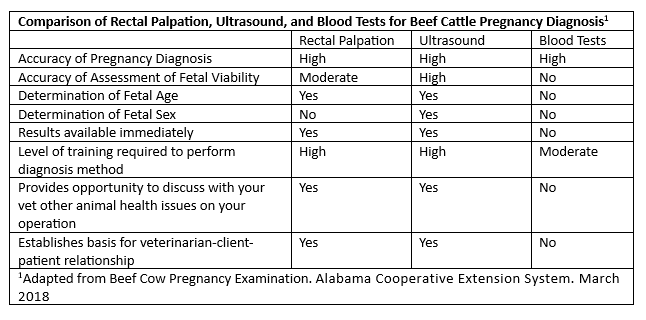
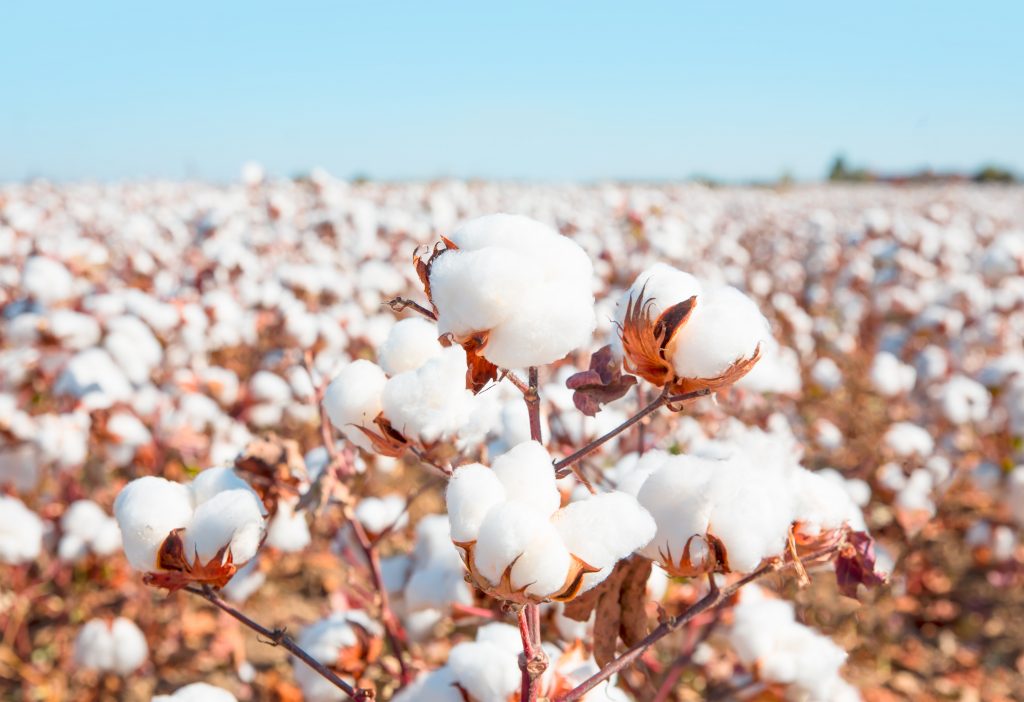
On October 12, 2023, USDA NASS released the October Crop Production report. Overall, corn production was down less than 1 percent from the September forecast, soybean production was down 1 percent, and cotton production was down 2 percent.
For the U.S., all cotton production is forecast at 12.8 million 480-pound bales, down 2 percent from the previous forecast and down 11 percent from 2022. Based on conditions as of October 1, yields are expected to average 767 pounds per harvested acre, down 19 pounds from the previous forecast and down 183 pounds from 2022.
In Oklahoma, cotton production is forecast at 270 thousand 480-pound bales, up 3.8 percent from the September forecast and down 11 percent from 2022. Based on conditions as of October 1, yields are expected to average 418 pounds per harvested acre, up 15 pounds from the previous forecast and down 216 pounds from 2022. For 2023, it is estimated that Oklahoma will harvest 310,000 acres of cotton, up 34.7 percent from 2022.
In Kansas, cotton production is forecast at 165 thousand 480-pound bales, up 29 percent from the September forecast and down .6 percent from 2022. Based on conditions as of October 1, yields are expected to average 900 pounds per harvested acre, up 207 pounds from the previous forecast and up 323 pounds from 2022. For 2023, it is estimated that Kansas will harvest 88,000 acres of cotton, down 36 percent from 2022.
In Texas, cotton production is forecast at 3.8 million 480-pound bales, down 9.5 percent from the September forecast and up 23.6 percent from 2022. Based on conditions as of October 1, yields are expected to average 515 pounds per harvested acre, down 55 pounds from the September forecast and down 219 pounds from 2022. For 2023, it is estimated that Texas will harvest 3.5 million acres of cotton, up 76 percent from 2022.
To view the entire October Crop Production report and see details for other commodities, CLICK HERE.
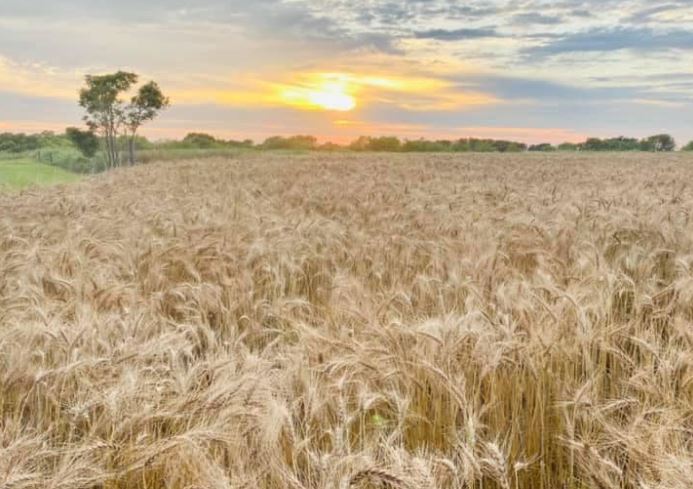
Following the release of the WASDE (World Agricultural Supply and Demand Estimates) report released on October 12, 2023, Farm Director KC Sheperd visited with Allendale's Rich Nelson about the big takeaways from the report.
"On the wheat side of things, we did see USDA incorporate those larger production numbers from the Small Grains Summary Report at the end of September, and we did see ending stocks raise from 615 to now 670 million bushels," Nelson said.
Wheat is seeing tight stocks on a world basis, Nelson said, as well as a U.S. basis.
Looking at cotton, Nelson said while smaller acreage is predicted, there will hopefully be better-harvested numbers from last year. According to the latest reports from USDA, Nelson said stocks for cotton are looking tighter than the last two years.

"What USDA did today, is they lowered planted acres yet again, and they also lowered harvested, so our increase in harvest acres is only about 700,000 from last year," Nelson said. "So, we still have, in this case, a tightened production number."
USDA slightly lowered U.S. crop production for corn and soybeans and brought down projected ending stocks for both crops as well. USDA also lowered the 2023-24 corn production of 70 million bushels (mb) to 15.064 billion bushels (bb) while also lowering soybean production at 42 mb to 4.104 bb. Both numbers were within the pre-report ranges.
You can also access the full reports here:
-- Crop Production: https://www.nass.usda.gov/...
-- World Agricultural Supply and Demand Estimates (WASDE): http://www.usda.gov/...
CORN
USDA brought down the 2023-24 crop by lowering the yield estimate .8 bushels per acre (bpa) to 173 bpa.
Production for the 2023-24 corn crop was lowered 70 mb to 15.064 bb as a result. USDA held pat on harvested acres at 87.1 million acres.
Ending stocks for the 2023-24 crop were lowered 110 mb to 2.111 bb.
USDA also lowered the carryover old-crop ending stocks by 91 mb essentially dropping the new-crop beginning stocks to 1.361 bb.
On the demand side, USDA lowered Feed and Residual use 25 mb to 5.6 bb. Total 2023-24 Food, Seed and Industrial use at 6.715 bb. Ethanol use was held at 5.3 bb. Total domestic use is forecast at 12.315 bb, down 25 mb.
Exports for the new crop also were also dropped 25 mb to 2.025 bb.
The farmgate price for the 2023-24 crop is projected at $4.95 a bushel, a five-cent increase from last month.
Globally, beginning stocks for the 2023-24 new crop were lowered 1.34 million metric tons (mmt) to 298.13 mmt. Production globally was increased slightly to 1,214.47 mmt. Global exports were bumped up slightly to 196.25 mmt. Global ending stocks for the new crop are forecast at 312.4 mmt, down 1.59 mmt.
Ukraine's production was held pat at 28 mmt and Ukraine's exports were held steady at 19.5 mmt.
Looking at global 2022-23 crop, Brazil's production was held at 137 mmt and exports were held pat at 57 mmt. Argentina's production was held at 34 mmt and Argentina's exports were held pat at 23 mmt.
SOYBEANS
USDA forecast soybean production at 4.10 bb, which is toward the low end of pre-report expectation and reflects downward adjustments to the national average yield. USDA's October estimate of 49.6 bpa is 0.5 bushel lower than last month.
Ending stocks for 2023-24 were left unchanged from last month at 220 mb but adjustments were made in many demand categories. USDA incorporated the lower production estimates, increased the crush estimate by 10 mb, cut exports by 35 mb and raised the residual estimate by 2 mb. The national average farm gate price was left unchanged at $12.90 per bushel.
Globally, USDA trimmed 2023-24 ending stocks by 3.63 mmt to 115.62 mmt, below the range of pre-report expectations. The decline came from lower beginning stocks, lower production and slightly higher crush. USDA's early estimate soybean production in Argentina and Brazil are 48 mmt and 163 mmt, respectively.
WHEAT
U.S. wheat production was estimated at 1.812 bb in October, up from USDA's September estimate of 1.734 bb. Ending stocks were estimated at 670 mb, an increase from 615 mb in September.
Wheat exports were pegged at 700 mb, unchanged from September. USDA estimates the farmgate price of wheat at $7.30, a decrease from $7.50 in September.
World ending stocks were estimated at 258.13 mmt, a decrease from 258.61 mmt in September.
Global wheat production was pegged at 783.43 mmt, an increase from 787.34 mmt in September.
Wheat production in Russia was estimated at 85 mmt, unchanged from September's estimate.
Ukraine wheat exports is left unchanged at 11.0 mmt. USDA estimates Ukraine production at 22.5 mmt, also unchanged from last month.
Australia's wheat production was pegged at 24.5 mmt in October, a drop from 26 mmt last month. Production in Argentina was estimated at 16.5 mmt, unchanged from September.
LIVESTOCK
Thursday's WASDE report wasn't as supportive as cattle producers would have hoped. Beef production for 2023 was raised by 35 million pounds due to higher cow and bull slaughter in the second half of the year, which more than offsets the weaker fed-cattle slaughter. But USDA did state that, "the increase in total slaughter is partially offset by lower dressed weights," which I raise question to, because as of last week's most recent slaughter data, carcass weights are the second highest they've been in history, behind only 2022 by 1 or 2 pounds.
Regarding quarter price projections, prices were slightly decreased from a month ago due to recent price trends. The third quarter of 2023 is now expected to average $184.27, which is $0.27 higher than last month, but the fourth quarter of 2023 is now expected to average $185.00, which is $5.00 less than a month ago. For 2024, the first quarter is now expected to average $187, which is $1.00 less than last month, and the second quarter of 2024 is now expected to average $185 which is $1.00 lower than last month's projection.
Beef imports for 2023 were increased by 70 million pounds, and 2023 beef exports were decreased by 20 million pounds.
Thursday's WASDE report shared mixed news for the hog and pork markets. Pork production for 2023 was raised by 130 million pounds as slaughter speeds in the second half have increased and based on the revisions to the first half of the 2023 pig crop.
In terms of quarterly price projections, the third quarter of 2023 is expected to average $69.27, which is down $0.27 from last month's projection, and the fourth quarter of 2023 is now expected to average $58.00 which is $1.00 lower than last month's report. For 2024 hog prices in the first quarter are expected to average $59.90, which is $2.30 lower than last month's projection, and second quarter prices for 2024 are expected to average $59.70, which is $0.20 cheaper than last month's projection.
Pork imports for 2023 were raised by 25 million pounds, and 2023 pork exports were decreased by 125 million pounds.
Senior Farm and Ranch Broadcaster, Ron Hays, is back talking with Oklahoma State University Extension Livestock Marketing Specialist Dr. Derrell Peel about cow number projections.
Beef cow herd numbers declined through 2023, Peel said, and will be smaller as of January 1, 2024.
"When you look at the slaughter numbers and work through the math, there is no way that we could have avoided getting smaller," Peel said.
Looking ahead, Peel said there is a possibility that 2024 may see the lowest cow herd numbers yet.
"It is not clear yet, particularly with the amount of drought and poor conditions we have around, what will happen in 2024," Peel said. "We will be watching this going forward, but I am pretty sure we will be smaller going into 2024."
Recently, Peel said many producers have been embracing tools such as Livestock Risk Protection.
"We have got higher prices, and we are very bullish over the next couple of years for prices in general, but there is also a lot of risk in this market, and certainly lots of potential for outside shocks that could come in and impact our market, so producers are very wise to consider using tools like LRP...," Peel said.
While the topside of the market seems to be wide open, Peel said, it would be smart for producers to lock in their bottom side in the case of a black swan event.
"If you look at a map of the prices, where we are now, it looks a lot like the left side of that price peak we had in 2014 and 2015," Peel said. "That one was basically a two-year event. We had two years of high prices, and a lot of producers, if they had some hesitation about jumping into herd rebuilding now, it is because that was pretty short-lived."
While the general setup is similar to 2014 and 2015, Peel said today has some very important differences compared to those years that will make this a much longer-lived event.
"It is going to take longer to get started rebuilding, it is going to take longer to accomplish the rebuilding, and as a result, we are going to be on a higher plane of prices," Peel said. "We are projecting formally that we will have higher average prices through 2024 and 2025 at this point at a minimum, and we have to wait and see beyond that."
Costs also continue to be high, Peel said, which is another challenge for producers. Peel said he does not believe the markets have reached enough height to provide producers with enough profit potential to respond accordingly.
As beef supplies are projected to tighten more and more, Peel said there will not be a loss of beef demand, but instead, it will become less available to some consumers due to price.
"We are going to see a substantial decrease in beef production not only in 2023, but in '24 and '25 at a minimum, so as we get into tighter and tighter supplies, the market will ration it so that some people will decide not to eat beef," Peel said.
The Beef Buzz is a regular feature heard on radio stations around the region on the Radio Oklahoma Ag Network and is a regular audio feature found on this website as well. Click on the LISTEN BAR for today's show and check out our archives for older Beef Buzz shows covering the gamut of the beef cattle industry today.
Rural Renewal Symposium sessions will discuss research conducted on the preservation of rural Oklahoma's historic downtown districts. (Photo by Todd Johnson, OSU Agriculture)
By Gail Ellis
The Rural Renewal Initiative at Oklahoma State University will host the annual Rural Renewal Symposium Nov. 2-3 at Quartz Mountain Lodge in Lone Wolf, Oklahoma.
The event brings together students, faculty, community members, nonprofit organizations, corporations, government leaders, tribal leaders and anyone with a passion for revitalizing rural communities. The symposium is designed to support interdisciplinary research within rural communities and provide a space for all people driven to improve rural areas to come together and share their perspectives on rural issues.
Linnea Harvey, OSU Rural Renewal Initiative coordinator, said this year's program will feature sessions that focus on society, human capital, natural resources, infrastructure and technology. Main themes will include information on economic development, health care and accessibility, water, food shortages, and preserving historic Main Street areas in rural Oklahoma.
"We are offering an optional tour of downtown Hobart, Oklahoma, as an extension of the third main session on investing in rural downtown districts," Harvey said. "We'll put symposium research into action in a rural community and learn how it has come to life."
The symposium will also host a panel on the Rural Scholars experience. Eleven OSU students spent the summer living and working in small towns across southwest Oklahoma. As OSU Rural Scholars, they studied the leading issues rural residents often face.
"A couple of the scholars and a community member who has worked with them will walk through the experience and give perspective on how the Rural Scholars program benefits students and small towns," Harvey said. "All of the scholars will present the final results of their summer research in poster presentations Friday morning of the conference."
This year marks the first time the symposium will be held off campus in southwest Oklahoma to better accommodate community members who collaborate with Rural Scholars.
"We heard a lot of feedback last year from community members that having the conference 3 1/2 hours away in Stillwater during the week was not the most accessible," Harvey said. "Our whole focus is on investing back in rural communities and getting researchers off campus to see the beauty, struggles and everything in between that rural Oklahoma has to offer."
The Rural Renewal Symposium also highlights two outstanding individuals each year through the Rural Renewal Research Prize and the Rural Renewal Citizenship Prize.
Rural Renewal Research Prize
Mary Emery, director of Rural Prosperity Nebraska at the University of Nebraska-Lincoln
This award is distributed to a global leader in rural renewal research, education and engagement. Honorees are employed by colleges, universities or research institutions worldwide and nominated by their colleagues. The prize includes a plaque and cash award.
Emery earned a Bachelor of Arts at Livingston College as well as a Master of Science and doctorate from Rutgers University. Over her 30-year career, she has become one of the preeminent scholars in rural community development. Emery has co-authored six books, eight book chapters and over 30 peer-reviewed journal articles. She has developed coaching techniques for community leaders that center around identifying pathways for community growth that span age, gender, class and culture. Emery's work has been foundational in the field of rural community development, and her work has had broad impacts in both research and practical applications.
Rural Renewal Citizenship Prize
Bethia Owens, manager of the Muldrow Library and Stanley Tubbs Memorial Library in Sallisaw
This award recognizes a leader who has made important contributions to the renewal of one or more rural communities. The recipient is an exceptional role model, promotes community welfare and advocates for community needs. The prize includes a plaque and cash award.
Owens, a native of Muldrow, Oklahoma, received a master's degree in library and information studies from the University of Oklahoma. She was awarded grant funding in 1994 to build a library from the ground up in her hometown. The library was completed in 1998. She has played an integral role in supporting library services in Sequoyah County and increased accessibility to computers, WiFi, books and meeting spaces for community members. Owens invests in library programming by developing and supporting health literacy, summer reading, cultural and youth STEM programs.
Additional information on the Rural Renewal Symposium and registration details are available online. Registration rates increase after Oct. 23.
To learn more, contact Linnea Harvey at ruralrenewal@okstate.edu.
OSU Extension uses research-based information to help all Oklahomans solve local issues and concerns, promote leadership and manage resources wisely throughout the state's 77 counties. Most information is available at little to no cost.

Becky Richardson
Dairy MAX, a nonprofit dairy council representing more than 900 dairy farmers, announced the hiring of Becky Richardson as Vice President of School Marketing. In this pivotal role, Richardson will steer Dairy MAX's strategic efforts in promoting dairy consumption and healthy nutrition among school-age children across Colorado, southwest Kansas, Louisiana, Montana, New Mexico, western Oklahoma, Texas and Wyoming.
Richardson will oversee the development and execution of strategic marketing campaigns and educational initiatives aimed at school districts within Dairy MAX's eight state region. As Vice President of School Marketing, she will collaborate with Dairy MAX's leadership team to develop the organizational strategic plan and she will work closely with educators, school health professionals and district administrators to implement programs that emphasize the nutritional benefits of dairy while catering to the unique needs of students and schools.
"We are excited to welcome Becky to the Dairy MAX family," said Kay Johnson Smith, chief operating officer of Dairy MAX. "Her expertise in education marketing, combined with her profound dedication to fostering success among students, makes her an excellent addition to our team. We are confident that her leadership will significantly contribute to our school marketing efforts and our mission to create healthier communities."
Richardson's educational background includes a Master of Business Administration specializing in Marketing and Finance, coupled with a Bachelor of Arts in Marketing, both earned from the University of Central Florida. Her career encompasses notable roles, including vice president of product strategy, vice president of field sales, and national director of field sales. In these roles she led a national team of education and business sales representatives, ensuring annual individual and team revenue targets were achieved and exceeded. Richardson also excelled at driving a high return on investments while managing a multi-million-dollar operational budget, generating quarterly and annual forecasts and developing strategic key performance indicator targets that drove overall revenue growth.
She has also made her mark with distinguished organizations like Academic Partnerships, a prominent Dallas-based entity collaborating with universities to deliver comprehensive online degree programs. Richardson also has a working history with respected institutions such as leading student loan servicer Nelnet Inc., Grand Canyon University and the University of Central Florida.
Her deep-rooted passion for education and her commitment to enhancing the lives of students have been the driving forces behind her career trajectory. With more than 20 years of experience in sales and education, she brings with her an in-depth understanding of industry analysis, cross-functional team leadership, marketing and strategic planning. Her dedication, analytical problem-solving skills and passion for impacting students' lives make her a vital asset to the Dairy MAX team.
"I am honored to join Dairy MAX and contribute to its mission of promoting dairy consumption and supporting the health of our communities," said Richardson. "I look forward to working closely with schools, educators and other stakeholders to create impactful initiatives that empower students to make informed food choices and lead healthier lives."
Dairy MAX is committed to fulfilling its mission, vision and values, embodying a culture of integrity, inclusion and mutual respect. As an organization, Dairy MAX aims to drive the sales of dairy in and out of schools through engaging programs like Fuel Up and Nutrition NOW, and by building strong relationships with key influencers.
Beyond her professional life Richardson volunteers her time assisting with the Metrocrest Services food pantry, which specializes in helping individuals, families and seniors who are going through a crisis situation stabilize their lives. Her extensive experience and dedication make her a valuable addition to the Dairy MAX team, and her vision aligns with the organization's long-standing commitment to fostering healthier communities.
Richardson officially began her role with Dairy MAX on July 24. To learn more about the Dairy MAX School Marketing team and current programs, visit https://www.dairymax.org/school-marketing.
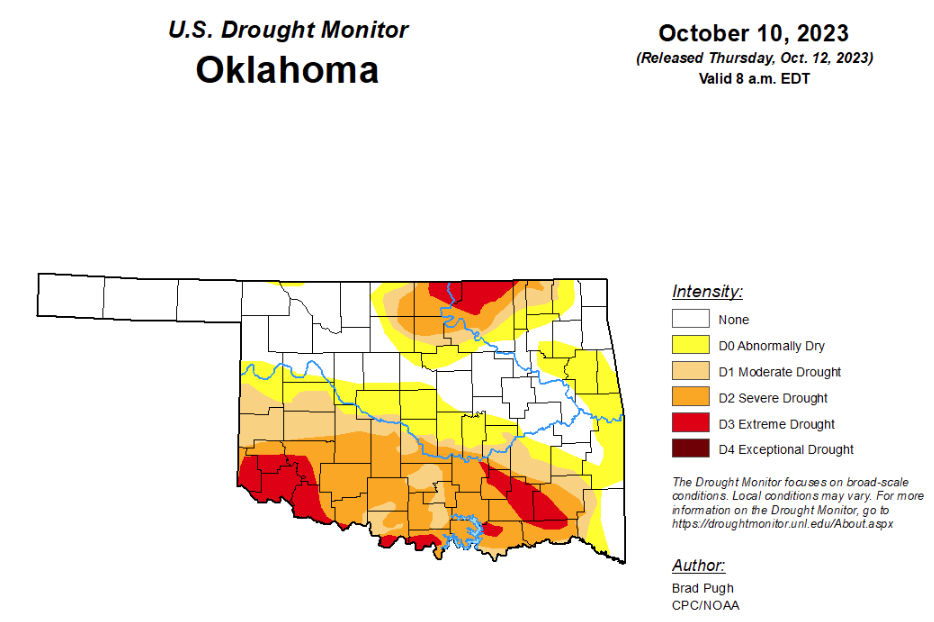
To view the latest Oklahoma drought map, CLICK HERE.
According to the latest Oklahoma drought monitor report, exceptional drought remains at zero percent, unchanged from the past few weeks.
Extreme drought or worse is now at 8.48 percent, down from last week's 14.34 percent.
Severe drought or worse is now at 29.44 percent, down from last week's 32.40 percent.
Moderate drought or worse is now at 43.11 percent, down from last week's 45.3 percent.
Abnormally dry or worse conditions are now at 63.32 percent, up slightly from last week's 63.29 percent.
According to the 6-10-day precipitation outlook map, the majority of the state aside from the eastern border stands at a near normal chance of precipitation through October 21. As for the southern border, that part of the state is leaning below a 33 to 40 percent chance of precipitation through that October 21 date.
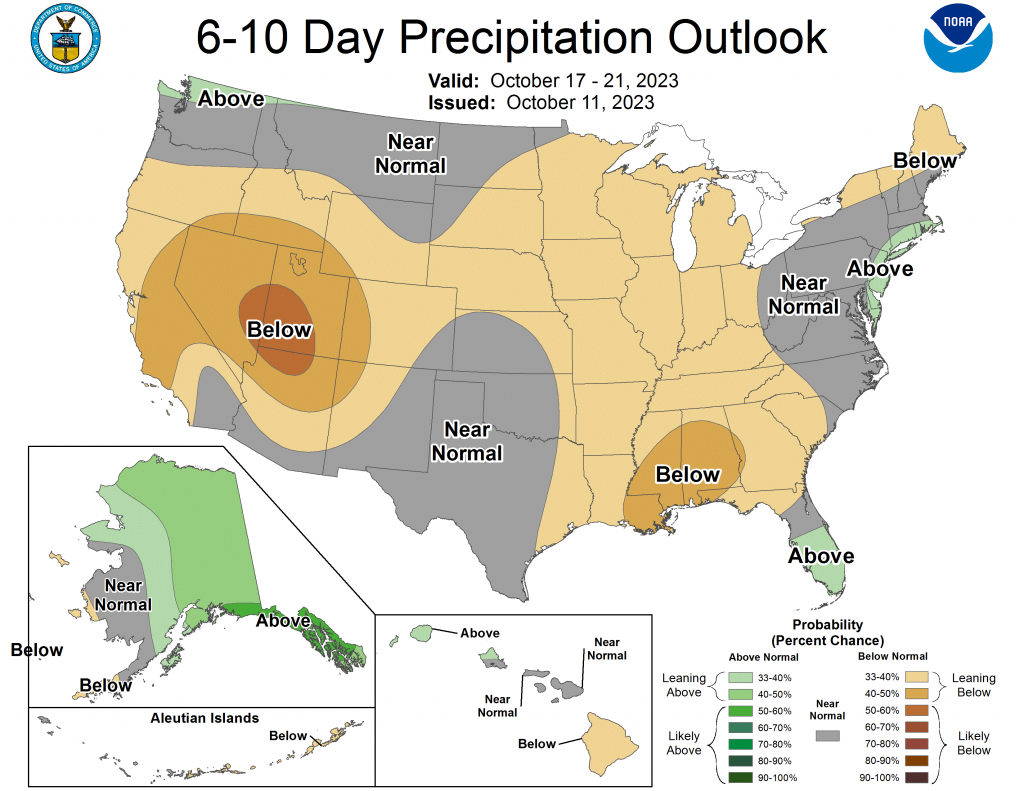
According to the latest U.S. Drought Monitor Report, a strong cold front resulted in moderate to heavy precipitation across the Great Plains, Ozarks, and western Gulf Coast during the first week of October. The most widespread improvements were made to southern Arkansas, northwestern Louisiana, southeastern Oklahoma, and eastern to central Texas where more than 2 inches of precipitation was observed this past week. Following anomalous heat across the central U.S. to start October, the cold front ushered in much cooler temperatures from October 5 to 7. The first frost or freeze of the fall affected the Northern to Central Great Plains on October 7. As the cold front progressed eastward, drought-easing rainfall overspread parts of Illinois, northern Indiana, southern Michigan, and western New York. Father to the south, short-term drought continued to expand north and east across the Southeast. Following a wet September, minor improvements were warranted for parts of Washington. Heavy rainfall, associated with Tropical Storm Philippe, resulted in improving drought for eastern Puerto Rico. Drought continues to intensify across parts of Maui and the Big Island.
To view the United States Drought Map, click here.
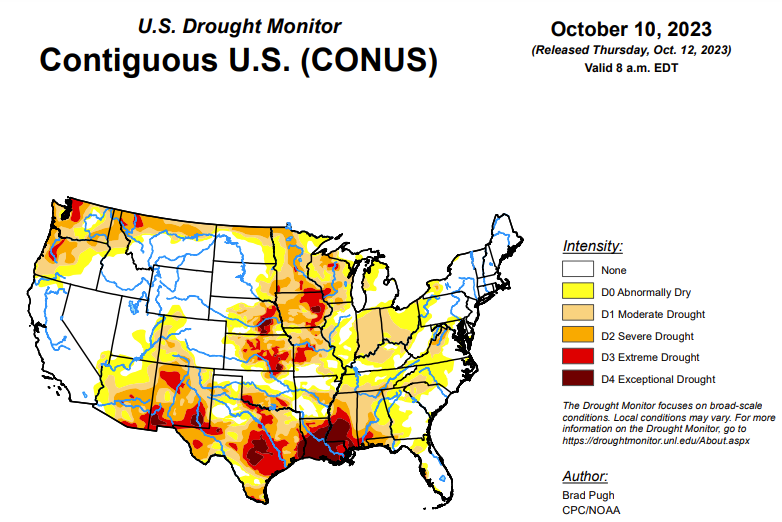
In the Southern Plains, a broad 1-category improvement was made to southern Arkansas, northwestern Louisiana, southeastern Oklahoma, and eastern to central Texas where more than 1.5 inches of precipitation occurred this past week. SPIs at multiple time scales, soil moisture, and 28-day average streamflows were also factors in determining where to depict the improvements. For areas that received more than 3 inches of precipitation and there was support from the NDMC's drought blends, a 2-category improvement was justified across southwestern Arkansas, northeastern Texas, and the Texas Gulf Coast. Drought coverage and intensity across Texas peaked in early September when 85.68 percent of the state was covered with drought (D1 or higher) and two-thirds of the state was designated with severe (D2) to exceptional (D4) drought. Based on 90-day SPEI, an expansion of D2-D4 was made to parts of Mississippi. Impacts in Mississippi include poor pasture conditions, soybean and peanut losses, and cattle sell offs. The 90-day SPEI also supported an expansion of D4 across northeastern Louisiana. Increasing short-term dryness led to an expansion of abnormal dryness (D0) and moderate drought (D1) across Tennessee.
In the High Plains, 1-category improvement was made to northwestern North Dakota and northeastern South Dakota where more than 1 inch of precipitation occurred this past week. Small improvements were also warranted in central Nebraska with the wet start to October. Although parts of eastern Nebraska also received heavier precipitation, NDMC's long-term blend supports D2+ levels of drought. Based on drier-than-normal conditions during the past 60 days and soil moisture, abnormal dryness (D0) was expanded across the southwestern corner of Nebraska. 60-day SPI, soil moisture, and NDMC's short-term blend supported an increase in D0 and the addition of D1 across southern Wyoming. The suppressed 2023 Monsoon and the 6-month SPEI supported an expansion of D2 in southwestern Colorado, while increasing short-term dryness led to increasing D0 coverage across northwestern Colorado.
In the West, 1-category improvement was made to northeastern Montana where more than 1 inch of precipitation occurred this past week. Precipitation during the past two weeks along with long-term SPIs supported the removal of extreme drought (D3) in north-central Montana. Based on SPI at multiple time scales, severe drought (D2) was added to eastern Arizona while there was an expansion of moderate drought (D1) in western Arizona. Improving 28-day streamflows along with support from NDMC's short to long-term blends led to a 1-category improvement for the Puget Sound of Washington along with southeastern parts of the state. Abnormal dryness (D0) was expanded across northeastern Utah due to increasing short-term dryness during the past one to three months and this was also consistent with changes made to adjacent Colorado and Wyoming.
Looking ahead, during the next five days (October 12-16, 2023), an intense low pressure system is forecast to track from the Central Rockies and Great Plains eastward to the Midwest and Central Appalachians. A swath of heavy precipitation (1 to 3 inches) is likely to accompany this surface low. On October 12th, a vigorous area of mid-level low pressure is expected to bring heavy snow (6 to 12 inches) to the higher elevations of Wyoming. A low pressure system is forecast to move offshore of the Southeast by October 13th after it brings widespread precipitation to parts of the Southeast. Mostly dry weather is forecast to persist across the Tennessee Valley, while much drier weather prevails across the Southern Great Plains. Periods of light to moderate precipitation are expected for the coastal Pacific Northwest.
The Climate Prediction Center's 6-10 day outlook (valid October 17-21, 2023) favors near to below-normal precipitation throughout much of the contiguous U.S. with above-normal precipitation most likely across southeastern Alaska. Increased probabilities for above-normal temperatures are forecast across the West and Northern to Central Great Plains, while below-normal temperatures are likely for the Mid-Atlantic and Southeast.
To view the 6-10 Day Precipitation Outlook Map, click here.
To view the 6-10 Day Temperature Outlook Map, click here.
To view the Monthly Drought Outlook Map, click here.
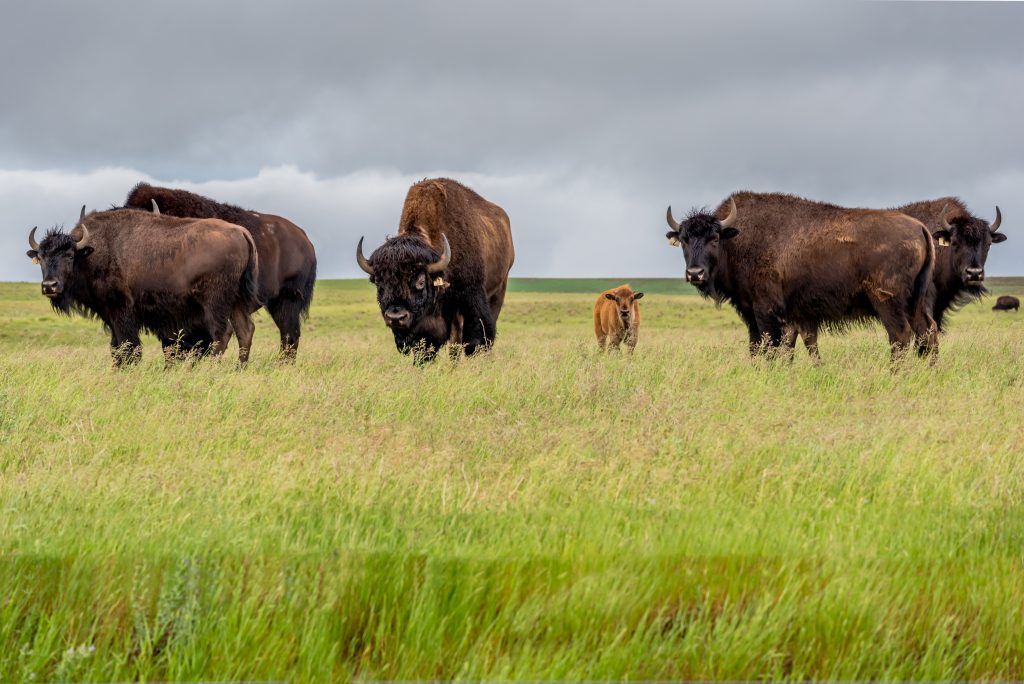
The U.S. Department of Agriculture (USDA) is announcing partnerships for a new, interagency pilot project aimed at offering more localized ground bison meat for tribal communities through the Food Distribution Program on Indian Reservations (FDPIR). The pilot will look at changes to how USDA purchases bison to better support buying the meat from local, small, and mid-sized bison herd managers and delivering it directly to their local tribal communities. Today's announcement was made by USDA Under Secretary for Marketing and Regulatory Programs Jenny Lester Moffitt, Food Safety and Inspection Service Administrator Paul Kiecker, USDA Office of Tribal Relations Director Heather Dawn Thompson, and a regional representative from USDA Food and Nutrition Service, who met with principals from the three tribal nations participating in the pilot, the Cheyenne River Sioux Tribe, Standing Rock Sioux Tribe, and Lower Brule Sioux Tribe, their herd managers, and local producer Dakota Pure Bison.
These local purchases will reduce the time and distance the meat travels to the consumer, increase economic development market opportunities for tribal and local bison operations, and provide high quality, nutritious foods for nutrition assistance programs.
USDA's Agricultural Marketing Service, which coordinates food purchases on behalf of USDA; the Food and Nutrition Service, which administers FDPIR; the Food Safety and Inspection Service, and the USDA Office of Tribal Relations are working together to bring this new opportunity to tribal communities.
"USDA recognizes the role its purchasing power can play in providing access for smaller, local, and tribal producers," said Agriculture Secretary Tom Vilsack. "We're pleased to take this step forward toward offering locally raised bison directly to the tribal communities where those herds are located."
Tribal communities have long shared an interest in accessing more localized food products through FDPIR. Tribal leaders indicated that USDA purchase specifications do not align with how tribal and other small- and mid-sized producers operate. This pilot responds to feedback from across Indian Country and from small producers by aligning purchase timeframes with indigenous informed principles of infrequent animal handling, traditional field harvests following a nature-based purchasing calendar, and allowing either USDA or state inspection. This pilot will also explore smaller packaging and purchase orders to meet small- and mid-sized enterprises at scale and exclusively target Historically Underutilized Business Zones (HUBZone) purchase preferences benefiting economically distressed areas, of which all tribal reservations qualify. All producers announced through this pilot operate on tribal lands.
"Our nation-to-nation relationship with tribes enriches how USDA does business for Indian Country and for all of rural America," said Director of Tribal Relations Heather Dawn Thompson. "This pilot is an important step to use government procurement flexibly for the benefit of tribal and our smaller producers and their surrounding communities."
USDA's pilot project is a significant step forward, creating better market access, and increasing incorporation of foods important to indigenous communities. By offering more access to local and tribal bison meat for tribal communities, USDA is investing in a more open food system for all.
The Agricultural Marketing Service recently awarded bison contracts to four tribal and local producers on September 18 to test the flexibilities outlined above. Contracts were awarded to:
The Food Distribution Program on Indian Reservations is administered by the USDA Food and Nutrition Service and provides nutritious domestic USDA Foods purchased by the Agricultural Marketing Service along with administrative funding to participating tribes and state agencies. These foods are then distributed to FDPIR participants, which include income-eligible households on Indian reservations or Native American households residing in designated areas near reservations or in Oklahoma, to help fight food and nutrition insecurity.
USDA touches the lives of all Americans each day in so many positive ways. In the Biden-Harris Administration, USDA is transforming America's food system with a greater focus on more resilient local and regional food production, ensuring access to healthy and nutritious food in all communities, building new markets and streams of income for farmers and producers using climate smart food and forestry practices, making historic investments in infrastructure and clean energy capabilities in rural America, and committing to equity across the Department by removing systemic barriers and building a workforce more representative of America. To learn more, visit www.usda.gov.
Identify late-season threats to limit harvest loss and plan for the coming season.
Prep work for harvest should include scouting fields for late threats to yield. "Knowing the state of your fields helps limit harvest loss and plan for next season," says LG Seeds Agronomist Al Bass.
"Don't rely on what you hear," says Bass, noting widespread variability this season. "Get into your fields and look."
Bass wants farmers to keep the following five guidelines in mind this fall to improve future performance.
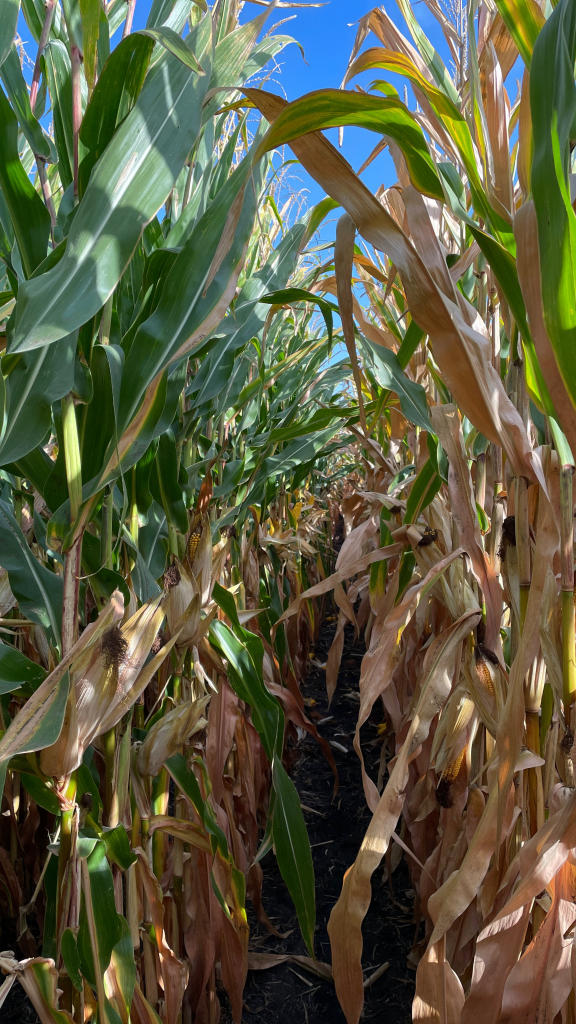
#1. Check stalk quality
Stalk quality is one of Bass's primary concerns in his Wisconsin territory this season. "Stalk degradation through the fall can cost farmers a lot of yield if they're caught unaware," he says.
The pinch test or push test helps determine if lodging is a risk. The pinch test involves squeezing the stalk between the second and third internode. "If it's spongy or collapses easily, plan on harvesting the field earlier," Bass says.
The push test entails pushing the stalk over to a 45-degree angle. "If more than 10% of those stalks break easily, that indicates standability issues and the need for an earlier harvest," Bass says.
Hybrids that stood out for impressive late-season standability in Wisconsin include LG49C28 and LG52C42, according to Bass. "This season especially, we're seeing why stalk health should factor into hybrid selection."
#2. Balance harvest loss with drying costs
Another major source of loss, according to Bass, is waiting until corn dries to 15% moisture to harvest fields. "While that saves on drying cost, the likely head shelling and harvest loss outweighs any savings."
He recommends farmers harvest when moisture is between 18% and 22%. "That strikes a good balance of minimal harvest loss and artificial drying costs," Bass says.
#3. Look for rot, too
Farmers checking fields should also keep an eye out for stalk or ear rot. "Despite dryness, there are a few of them out there this season — likely because the stress of dryness left the corn plant more susceptible to disease," Bass explains. "Ear rot threats include Diplodia, Gibberella and Fusarium."
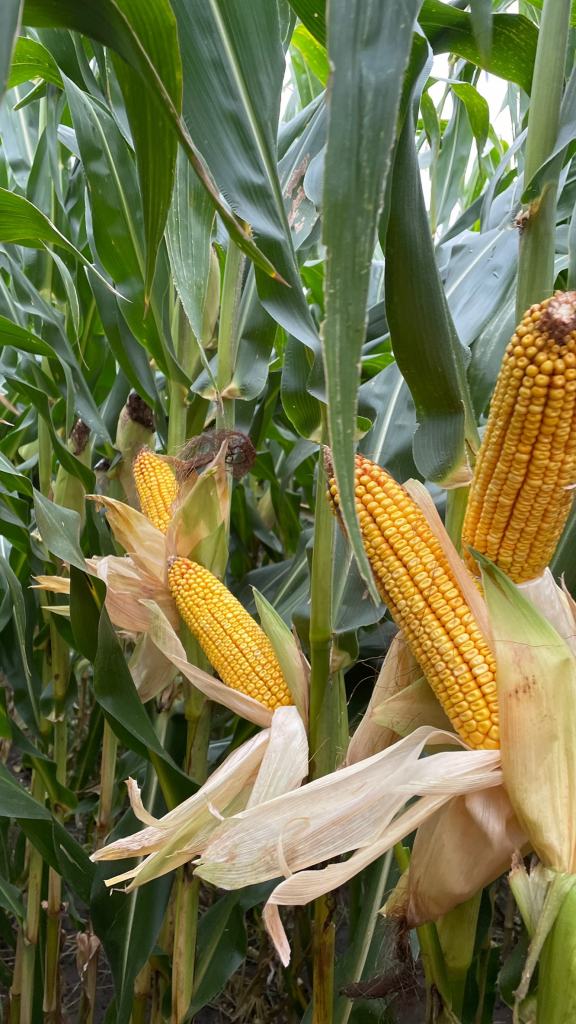
Stalk rot can compromise stalk quality, and some threats like Fusarium stalk rot can be difficult to spot because it doesn't cause the black spots on the stalk associated with anthracnose, Gibberella and Diplodia.
"If you have stalk or ear rot, you'll want to get that crop harvested and dried down quickly to reduce the amount of mycotoxin that'll continue to grow," Bass says. This is another threat that can be mitigated via hybrid selection.
#4. Assess pests and weed pressure
Bass also advises farmers to be on watch for pests that move in late in the season, like European corn borer, corn earworm or Western bean cutworm. They can threaten stalk health and shave bushels off yield.
Thankfully, there are several trait options that offer protection. "The Agrisure Viptera® trait is a great option on corn earworm and Western bean cutworm," Bass says, adding that the VT Double PRO® trait also protects against corn earworm. "Knowing what's in your field and your general area can help with those trait decisions."
Weed pressure is also heavier this year because dryness limited the canopy for both corn and soybeans. Bass encourages farmers to keep track of the weeds they have this fall and use that to develop a herbicide program for next year.
#5. Look at the whole picture when it comes to hybrid selection
"Plant health matters not only during the summer when leaf diseases cause problems, but also with late-season intactness," Bass says. "Look at the whole picture. Season-long monitoring of crops leads to better hybrid choices and prevents surprises in the fall."
For help determining what products make the most sense for your farm, reach out to your local LG Seeds agronomist.
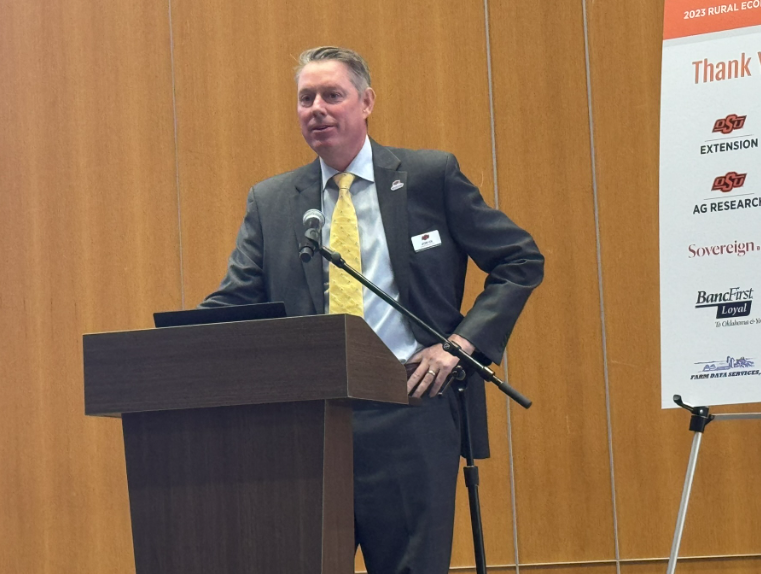
Farm Director, KC Sheperd, is visiting with the Dean and Vice President of the Division of Agricultural Sciences and Natural Resources at Oklahoma State University, Dr. Jayson Lusk, about New Frontiers Agricultural Hall and his priorities going forward.
The construction of the New Frontiers Agricultural Hall is on track, Lusk said, as the new space will not only be a great place for students and faculty to learn, work, and research, but it will also aid in the recruitment of new students.
"A wonderful facility that is made possible by the generous support of donors and alums," Lusk said. "We are aiming for that facility to be done this summer because we have classes scheduled for the fall."
Some of Lusk's priorities, he said, involve improving the school's ag farms and livestock facilities. As OSU is known for releasing top-of-the-line wheat varieties, Lusk said improving those facilities will be vital to continued success in the future.
"Thinking about how we can grow extension and add new capacities in a new modern way is something I am looking forward to working on in the next year or two," Lusk said.
OSU's world-class wheat breeding team is not only Oklahoma-based, Lusk said, but wheat varieties produced by the team are planted on 10 percent of all wheat acres nationally.
"To give an analogy, in the car market, Honda has about a 10 percent market share," Lusk said. "I am not satisfied with being Honda. I want us to be Ford or Chevy."
It is challenging to conduct 2023 research in 1940s facilities, Lusk said, so one of his top priorities is to continue to make improvements.
"Those things take first-rate facilities, and we are going to be working on that to try to raise the funds that are necessary to make that kind of work happen," Lusk said.
Hildago County resident, Erasmo Anguiano, was arrested for Criminal Mischief on Oct. 2. The charges filed are the result of an investigation led by Texas & Southwestern Cattle Raisers Association Special Ranger Joe Aguilar Jr.
In September, Special Ranger Aguilar received a call from a rancher in Hildago County reporting damages to fences at ranches along Wallace Road in northern Mission.
During an investigation, Aguilar learned the ranch manager caught Anguiano removing portions of fencing at the ranch and reported seeing a roll of fence line the bed of Anguiano's work truck. When approached about the theft, Anguiano claimed an unknown person asked him for help to remove the fence. Anguiano could not identify the person.
Further investigation determined that Anguino stole fencing from other victims at night while working as a canal rider at the local irrigation district.
Anguiano confessed to the crimes and was arrested on October 2, 2023, and booked at the Hidalgo County Jail with a $7,500 bond.
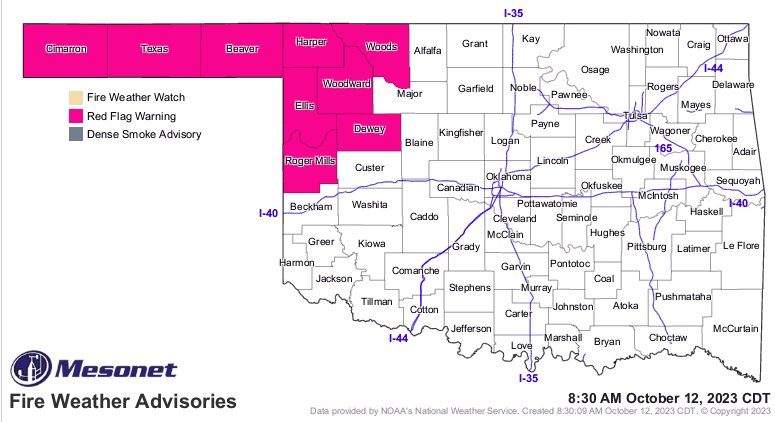
Statewide Discussion: While most of Oklahoma did receive rainfall in the last 10 days. Some areas received well over 1.5"
while others did not accumulate wetting amounts. Many locations are now 7 days separated from wetting rain while extreme northwest, parts of southwest and some western counties are now 22-30 days separated. Fire danger in recent days has been moderated although the current warming trend and dry conditions has elevated concern especially in the Panhandle and western counties.
Today: A Red Flag Warning is in effect today from Noon through this evening for the Oklahoma Panhandle and parts of northwestern Oklahoma. Critical fire weather will slide into the Warned Area as a dryline pushes east ahead of a cold front driving in tonight. Above normal temperatures combined with relative humidity values below 20% and strengthening winds over receptive fuels will promote potential for enhanced fire behavior this afternoon and evening. Of note, fuels have not experienced a hard freeze. Remaining live fuel moisture will serve as a heat sink providing some
moderation in fire behavior. Conditions are expected to improve gradually into the overnight hours as the dryline retreats; however post-frontal winds remain elevated. Rain chances with the cold front are generally confined to northeastern Oklahoma.
• Warned Area: As a dryline pushes east this afternoon, warm/dry/breezy conditions over receptive fuels will support
potential for increased initial attack activity and some large fire potential. Significant fire occurrence probability remains
low, and new fire occurrence is generally expected to be captured within an operational period. Temperatures
76°(Cimarron County) to 90° (NW OK) under clear skies with afternoon relative humidity values 10-21% will yield fine-dead fuel moisture values tapping 3%. Energy Release Component values are generally less than 70% translating to
moderate resistance to control. Southerly winds this morning will become southwest to west this afternoon/evening
sustained 21-30 mph with gusts 30-45 mph. Rangeland fuels in the Warned Area will yield head fire rates of spread 160-
240 ft/min (+/- 2.3 mph). A Canadian front will push into the area tonight with winds shifting to the northwest in the early
morning hours.
• Southwestern/Western Oklahoma: Drought stressed fuels have exhibited resistance to recovery following recent rainfall in some areas and continue to be very receptive exhibiting active fire behavior. High fire danger indices are expected today as above-normal temperatures in the upper-80°s to low-90°s develop with relative humidity values 13-29% under clearing skies yielding 3-4% fine-dead fuel moisture. Southwesterly winds sustained 16-23 mph gusting 24-30 mph will support rates of spread 124-215 ft/min (+/-1.9 mph) in rangeland fuels.
• Central & Eastern Oklahoma: East of the dryline, afternoon relative humidity values will struggle to fall below 35% with
most locations remaining at or above 45% limiting development of concerning fine-dead fuel moisture values. Although
probability of ignition will be low, any fire that starts will have potential to exhibit erratic fire behavior in unsheltered fuels. Temperatures in the 80°s under gradually clearing skies with afternoon relative humidity values averaging +40% will hold fine-dead fuel moisture at 7%+. Southerly winds will be strongest north of I-44 where sustained 20-30 mph gusting to 45 mph are likely. Grass dominated fuels will exhibit muted fire behavior with rates of spread on established fires generally less than 120 ft/min. As the cold front arrives overnight, some rain chances develop with the highest probability confined to northeast Oklahoma.
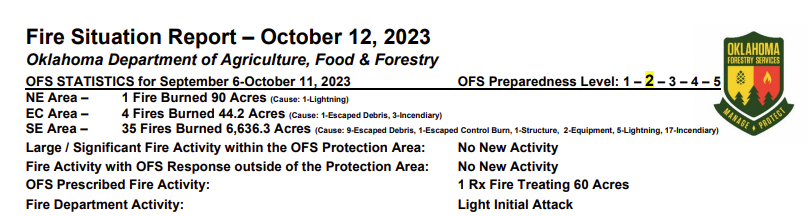
Near-Term: The immediate post-frontal environment will bring elevated wind speeds into Friday although cooler temperatures and improved relative humidity values will set back overall fire danger. Dry conditions will dominate the near-term forecast, but again temperatures remain below-normal through the weekend and respectable overnight moisture recovery will stall development of the burning period on a daily basis through the weekend.
Burn Bans:
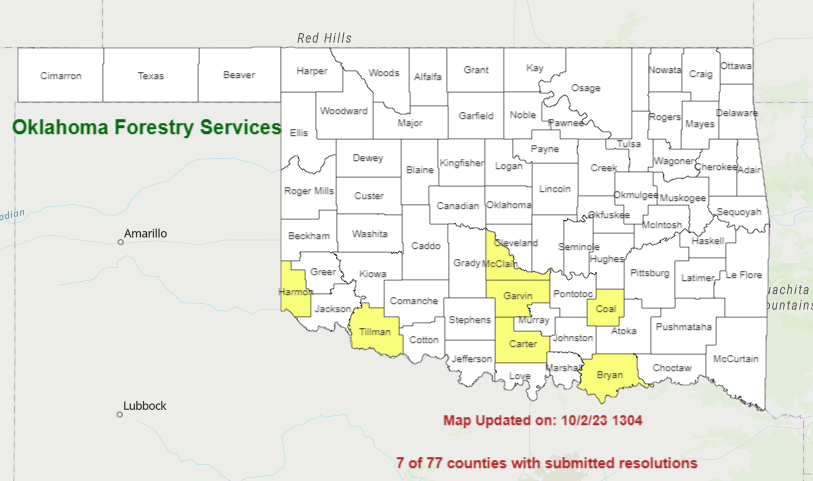
RON's Dave Lanning has a pre-opening look at today's agricultural Markets.
Click the audio tab below for today's report.
| Last week's 628,000 head total inspected slaughter featured a bit of recovery from the prior week's exceptionally small 612,000 head. Packers remain disciplined with production as fed cattle prices remain in a low to mid-$180's trading range and boxed beef values continue to seek their fall price bottom. |
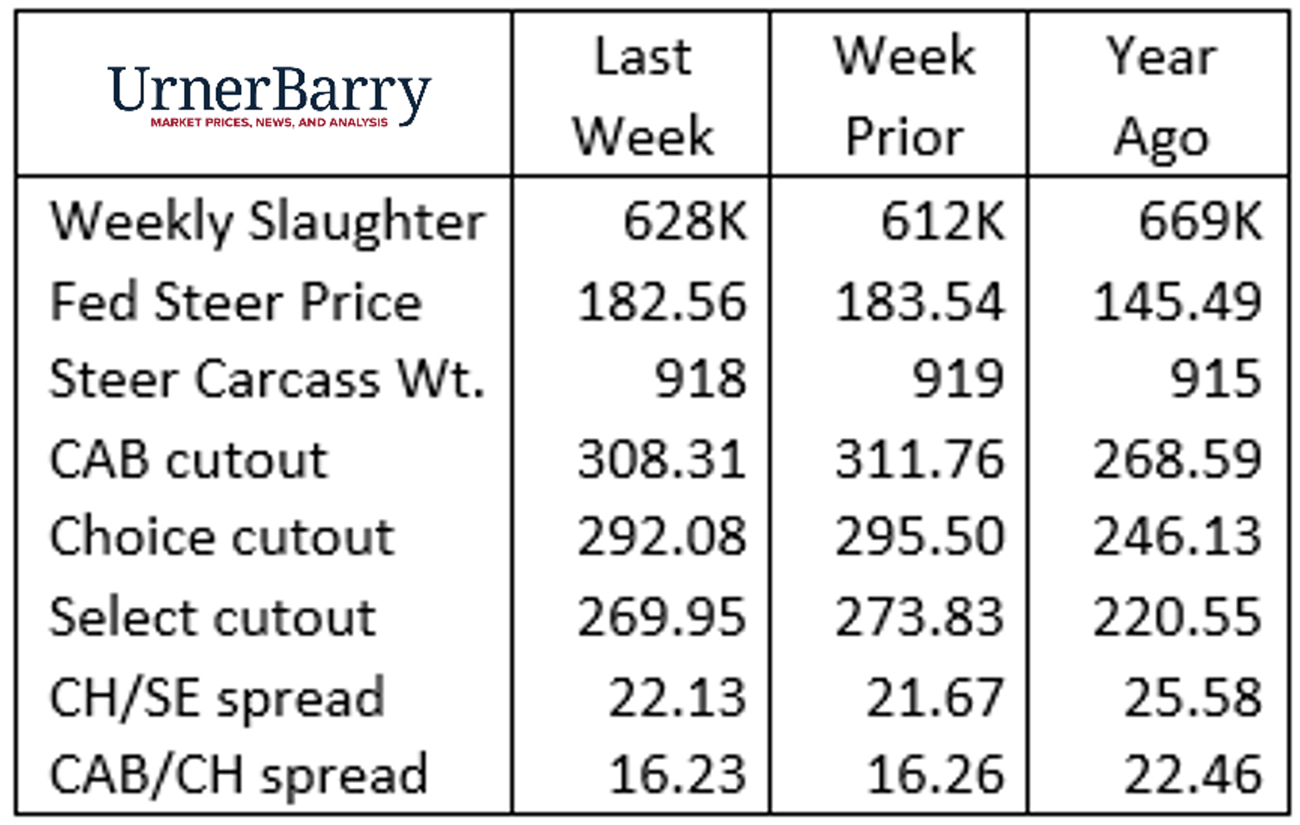 |
| Focusing on fed cattle slaughter, the past four Saturdays have averaged just 7,500 head, in keeping with the latest pattern. In the past four Fridays, harvested head counts ranged from 71% to 95% of the weekly Monday through Thursday daily averages. CME Live Cattle contract price volatility has been the overriding factor tempering spot cash cattle values most recently. The threat and subsequently averted government shutdown jostled equity markets and this volatility spilled over into commodity markets. The October LC contract has traded in a wide range from $186/cwt. to as low as sub-$182/cwt. in the past eight trading days. Futures are leading the market during this period but the spot market stands to move to the front as the fourth quarter continues. The total beef market complex awaits a turning of the tide as anticipated fourth-quarter demand has historically turned boxed beef values upward in the second half of October. The waiting will commence this week as Urner Barry's carcass cutout values this Monday showed a $3.02/cwt. decline in the Choice cutout price to mark $288.75/cwt. Reviewing carcass cutout prices shows many cuts are priced according to the seasonal playbook. Chuck and round items are priced steady to slightly higher as consumers look for lower-cost cuts. As well, cooler weather in many regions signals increases in roasting items. Strip loins and shortloins are capturing attention as buyers see value in these items that have adjusted to much lower prices. Tenderloins won't offer such an opportunity as stout fourth quarter demand lies ahead and early demand already has CAB tenderloins priced over $15.00/lb. wholesale. Ribeyes recently priced lower for a few weeks but the small share available on the spot market should now price higher into early December. Thin meats have come well off of their summer highs and are being picked by buyers. Similarly, CAB grinds showed weakness in last week's pricing but remain at historic highs. |
| Feedyard Insights Bring Focus to Profitability |
| The recently published "Industry Insights" report conducted by CattleFax analysts in partnership with Angus Media revealed several interesting trends and attitudes from the feedyard and cow-calf sectors. Focusing on feedyard factors most relevant to the CAB brand and end-product merit shows attitudes and behavior aligned with the market's pull-through demand signals. Factors affecting cattle purchasing decisions were, predictably, heavily weighted toward health. Vaccination status, current health condition, preconditioning and weaning status topped the list with each of these capturing 87% to 92% of feedyard managers' highest attention. Previous purchase history followed next with 81% strongly weighting their own feeding experience with calves from a given source. The reason for the latter factor logically includes not only health but a handful of performance and carcass traits relative to profit potential. |
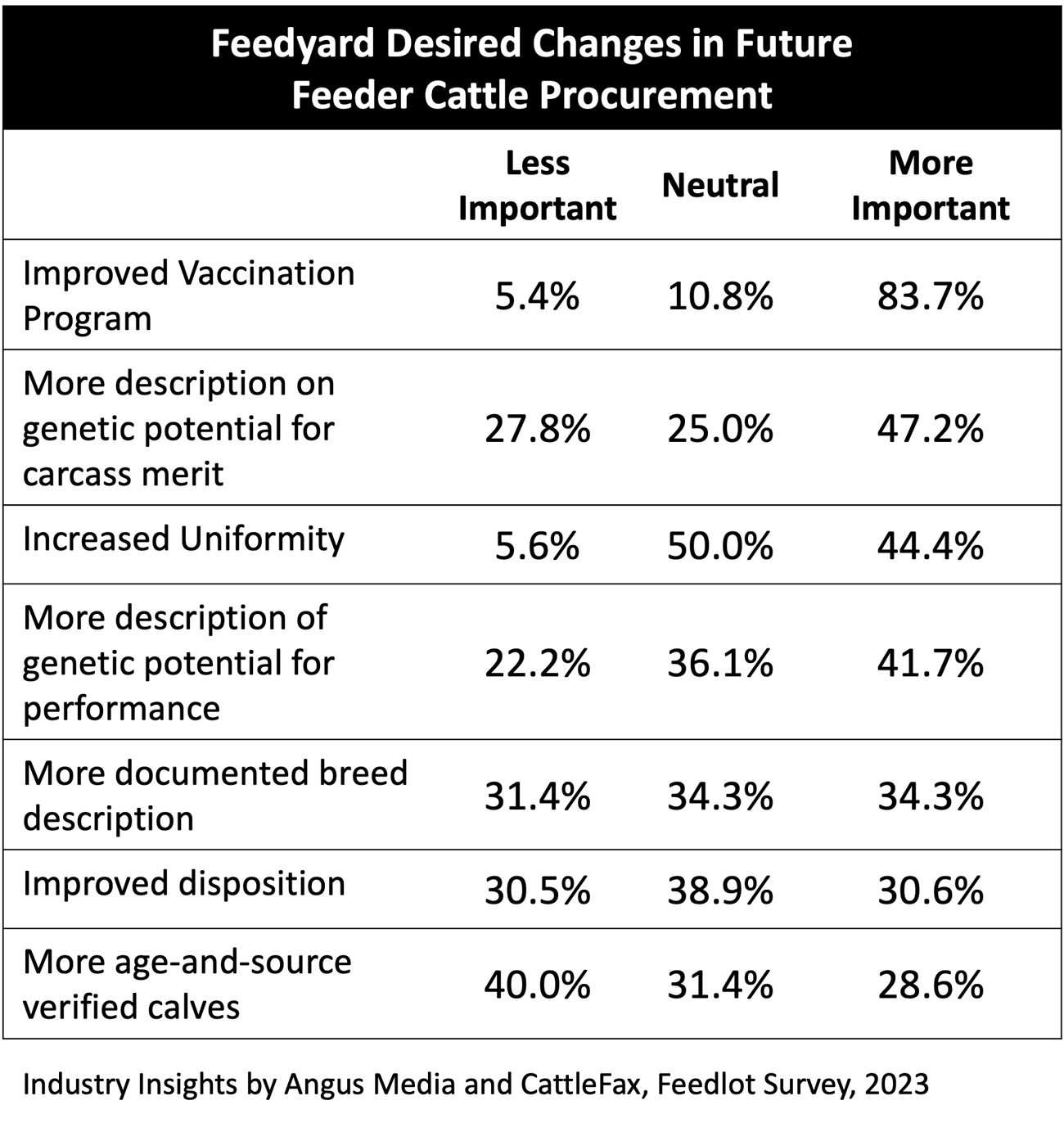 |
| Sixty-five percent of feedyards surveyed indicated a strong preference for "all or high-percentage black-hided, CAB-candidate" cattle. Cattle with verified Angus genetics came in with 35% strongly preferring this attribute. A separate question specific to only breed type revealed that 78% of feeders were strongly attracted to known black Angus, 76% toward black hide (although not breed specific) and 54% responding strongly in favor of black baldies. When asked what role genetics play in the feedyard purchasing decisions 34.7% of respondents note some attention to breed composition and 37.3% pay attention to hide color. Interestingly, 10.7% indicated strong attention to sires of feeder cattle and 9.3% highly regard profit potential as denoted by genetic merit predictors. These numbers suggest there is great potential for advancement regarding use and availability of genetic information in feeder cattle transactions. Sixty-eight percent of feeders indicated that they pay a premium for cattle with the potential to quality for the CAB brand. Of those who paid a premium, 42% expect the premium to increase in the future, 42% expect the premium to stay the same and 10% expect it to decrease. One of the most concise questions asked feeders to score several cattle traits posing the most challenge to feedyard profitability. Health and feed conversion were the overwhelming top two, followed by dressing percentage, quality grade and carcass weight. Possibly some of the most valuable insights useful to cow/calf producers and feeder cattle marketers are the elements feedyard managers noted they would like to change in the future for feeder cattle procurement. Improved vaccination easily stood at the top with 83.7% of feedyards scoring this as most important. More description of genetic potential for carcass merit followed in second with 47.2% ranking this highly. Rounding out the top five most preferred areas of change in the future are increased uniformity, more description of genetic potential for performance and more documented breed description. Many more pertinent details can be easily reviewed in the Industry Insights publication here. |

2023 Farm Bill prospects dim with Congress mired in tense partisanship and upheaval
The combination of high interest rates and a strong U.S. dollar is beginning to take a disproportionate toll on rural industries like agriculture, forest products, mining and manufacturing. Most international transactions are still conducted in dollars, and a strong dollar makes U.S. exports more expensive and imports cheaper. That disproportionally hurts the backbone of the rural economy, according to a new quarterly report from CoBank's Knowledge Exchange.
While the U.S. economy is outperforming expectations, the rest of the world—Europe and China in particular—has fallen short. As a result of the U.S. economic position relative to other countries, the dollar has gotten much stronger than previously anticipated. The expectation that interest rates will remain high for the foreseeable future has also contributed to the strengthening dollar.
"The challenge for agriculture and other rural industries that rely heavily on global markets is their export partners simply can't afford to buy U.S. products," said Rob Fox, director of CoBank's Knowledge Exchange. "When you combine the loss of exports with a general slowdown in the U.S. economy, it's a double whammy for many businesses operating in rural America."
The disruptive geopolitical and economic events in recent years resulted in the historically irregular situation where commodity prices and the dollar were both moving upward in tandem. But those events are now fading as market drivers. The fundamental inverse relationship between the broad array of commodities and the dollar has largely returned.
Farm Bill negotiations will take a back seat while the House of Representatives attempts to select a new speaker and Congress works to pass its annual appropriations bills before the Continuing Resolution expires on Nov. 17. The most likely outcome is an agreement by year-end to extend the current Farm Bill by a few months or up to a year or more.
Grains, Farm Supply & Biofuels
Historically low water levels on the Mississippi River are limiting grain movement heading into peak fall harvest season. Higher barge rates on the river are pressuring interior basis values for corn and soybeans. The combination of a strong U.S. dollar and robust export competition from Brazil and Russia are creating major headwinds for the U.S. grain and oilseed export program. Winter wheat planting is underway in the U.S. with acreage expected to be down slightly as prices languish below expected breakeven costs of production.
Fertilizer prices continued to weaken in the third quarter. Anhydrous ammonia and potash prices fell 30% and 15%, respectively. Prices for natural gas, used as a both feedstock and production input, dropped by about 7%. The fall fertilizer application season should be reasonably normal for regions that are seeing an orderly harvest. While the outlook for the 2024-25 planting season is cloudy, less fertilizer usage is expected as acres shift from corn to soybeans.
Fuel ethanol production was very strong during the third quarter, averaging 16.1 billion gallons compared to 15.4 billion during the second quarter of 2023. A strong summer travel season and attractive fuel ethanol prices were the key demand drivers. Profitability was also favorable, exceeding 50 cents per gallon vs. 20 cents per gallon in the year ago period. Renewable diesel and other biofuel capacity continues to grow, having increased by 26% or 800 million gallons since January 2023.
Animal Protein & Dairy
Limited supplies of market-ready cattle suppressed beef availability throughout the third quarter. USDA estimates total U.S. beef output will be down 5% in 2023 and expects an additional 7% decline in 2024. Tight supplies continued to churn the wholesale beef market. The composite boxed beef cutout climbed to record highs in June and July, averaging a 16% premium year-over-year for the quarter. But with fed cattle prices up 30% compared to last year, packer margins came under pressure. Despite the rising price environment, consumer demand for beef has remained steadfast.
The U.S. Supreme Court decision to uphold California's Proposition 12 spurred a rally in the pork market. Pork cutout values increased 41% from May-July, countering weak prices earlier in the year. Hog prices also rallied, with nearby hog futures climbing 36% from late May through early August. With production rising and seasonal interest fading, markets have since cooled. USDA's latest hogs and pigs report suggests that while the industry is making efficiency gains, production levels will continue to teeter on meager profit expectations.
Chicken markets were tepid at the beginning of the third quarter. Breast meat values were unseasonably low and wings hovered around $1 per pound. While elevated consumer price points may have contributed to soft disappearance, the burden of elevated surplus was difficult to offload. Severe margin compression combined with high input costs caused some producers to reconsider longer-term production goals. Any growth will be limited given the announcements of six plant closures this year.
Strong cheese production and slowing dairy exports combined to pull Class III milk prices down to a paltry $13.77 per cwt. by midsummer. With ample cheese and strong milk production, Midwest spot loads of Class III milk bottomed out much lower than the five-year average. Faced with low milk prices and high feed costs, dairy farmers sent more cows to slaughter to take advantage of record-high beef prices. Futures markets indicate that the final quarter of the year could be much better, with projected Class III milk prices at $17.30 per cwt. The biggest wild card for milk prices is China, the world's leading dairy-product importer, which is facing an economic downturn.
Cotton, Rice, Sugar & Specialty Crops
Ongoing drought stymied cotton production in Texas, which typically accounts for roughly one-third of total U.S production. USDA is expecting U.S. cotton production will drop 9.2% year-over-year, landing at its lowest level in 10 years. Export demand has been lethargic as the strong U.S. dollar and slowing global economy diminish sales. Heading into the fourth quarter, outstanding export sales of all U.S. upland cotton were down 23% year-over-year. The tug-of-war between shrinking supply and slowing demand has left cotton prices adrift in a narrow trading range.
India's export ban on white rice shocked world rice markets in July. Asian rice prices quickly climbed to a 12-year high. World buyers raced to secure supplies from other major exporters like Thailand, Vietnam and Pakistan. However, the price response in the U.S. has been muted with domestic rice production making a major recovery from last year's small harvest. With much of India's exportable rice inventory now offline, new export business has materialized for U.S. exporters.
Extreme drought and heat in Louisiana and Texas severely crimped harvest expectations for two of the largest sugarcane producers in the U.S. Yields in the region are expected to fall to the lowest level in 16 years. USDA dropped its national sugarcane production forecast to 3.758 million short tons raw value, down 8% year-over-year. Sugarbeet harvest is expected to climb as key growing states have benefited from ideal growing conditions. So far, a slowing economy has had little impact on total sugar consumption in the U.S.
U.S. imports of fruit and berries shrank to 915,000 tons in July, a 15.2% drop versus the previous month However, fruit imports are well on track to continue their decades-long trend of steady annual increases, led by Mexico, Guatemala and Costa Rica. USDA has revised down expectations of imports of fresh vegetables, largely due to hurricanes impacting growers in Mexico's western and north-central regions. In 2022, Mexico supplied 51% of fresh fruit imports and 69% of fresh vegetable imports into the U.S. (by value).
Food & Beverage
Inflation-adjusted annual food spending hit a record high in 2022, according to USDA. The increase follows a trend dating back 25 years, with the number increasing 70% from 1997-2022. Current food spending trends reflect a continued consumer interest in eating experiences that save time and money. Those behaviors are expected to continue and intensify as heightened inflation and difficult economic conditions persist. Frozen products are especially well-positioned to capitalize on consumers' desire for convenience and cost savings. However, inflated prices still appear to be taking a considerable toll on each segment of the frozen case.
Power, Water & Communications
U.S. crude oil prices increased 30% in the third quarter, with WTI futures rising from $71 at the start of July to $95 by the end of September. And while the post-pandemic, post-Russian invasion market had already breached the $100 per barrel threshold in early 2022, the 2023 rally is different. High prices this time around are marked by an important re-ordering in global supply, intransigent producers and a global economy that simply won't slow down. Without greater demand side destruction, transportation costs are likely to remain elevated through 2024.
Telecommunication companies are continuing the aggressive pursuit of fiber network assets. Competition to capture the first-mover advantage for fiber-to-the-home service is intensifying. Studies have shown that first-to-market fiber providers in rural and underserved markets garner the majority of the market share and typically see less competition. Gaining access to capital quickly can make the difference in being the first market entrant. That is leading operators to get creative in their approach to raising capital, with some issuing bonds backed by their existing fiber networks and customer contracts.
Read The Quarterly. Each CoBank Quarterly provides updates and an outlook for the Macro Economy and U.S. Agricultural Markets; Grains, Biofuels and Farm Supply; Animal Protein; Dairy; Cotton and Rice; Specialty Crops; Food & Beverage industries and Rural Infrastructure.
About CoBank
CoBank is a cooperative bank serving vital industries across rural America. The bank provides loans, leases, export financing and other financial services to agribusinesses and rural power, water and communications providers in all 50 states. The bank also provides wholesale loans and other financial services to affiliated Farm Credit associations serving more than 76,000 farmers, ranchers and other rural borrowers in 23 states around the country.
CoBank is a member of the Farm Credit System, a nationwide network of banks and retail lending associations chartered to support the borrowing needs of U.S. agriculture, rural infrastructure and rural communities. Headquartered outside Denver, Colorado, CoBank serves customers from regional banking centers across the U.S. and also maintains an international representative office in Singapore.

Oklahoma Farm Bureau is set to host the final Cultivating Healthy Minds webinar featuring Dr. Shannon Ferrell of Oklahoma State University Friday, Oct. 13 at noon on the Zoom webinar platform.
The final webinar will be centered on resilience in agriculture, where Dr. Ferrell will explore the idea of "toxic grit" and offer tools farmers and ranchers can use to cope with some of agriculture's unique risks and mental health concerns.
The webinar session will also feature a testimonial from an Oklahoma Farm Bureau member about their walk with mental wellbeing to offer hope and encouragement by starting conversations around this important topic.
Dr. Shannon Ferrell is a professor of agricultural economics at Oklahoma State University, where he specializes in agricultural law. As an educator and speaker, he has helped audiences across North America understand the fundamental legal elements of farm business management and farm transition planning, and he has testified before Congress and the Oklahoma legislature on multiple policy issues involved in farm transitions. All Cultivating Healthy Minds webinars are free and open to the public. Visit okfb.news/CHM23 to register for the webinar and learn more about the program.
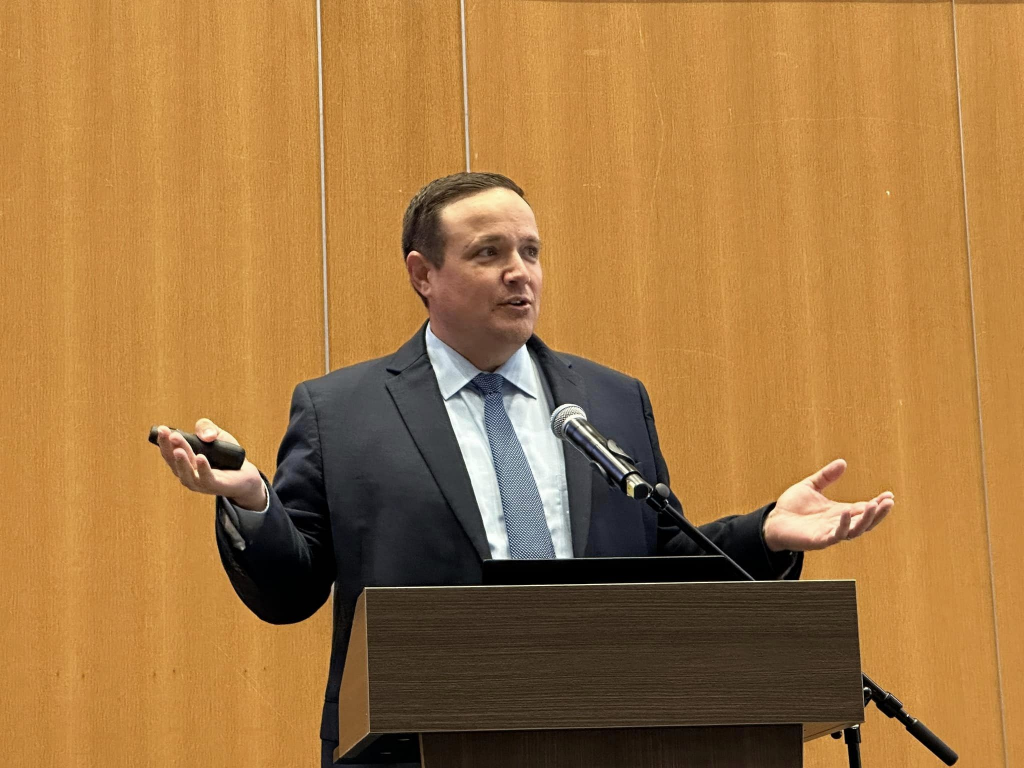
At the 2023 Rural Economic Outlook Conference, Senior Farm and Ranch Broadcaster, Ron Hays, caught up with Texas A&M's Bart Fischer and talked about the next farm bill.
Aside from his role as Research Assistant Professor and Co-Director of the Agricultural and Food Policy Center at Texas A&M University, Fischer is also the former Chief Economist of the House Agriculture Committee. Fischer was a key player in the 2014 and 2018 farm bills.
With everything going on in Washington D.C. at the moment, Fischer said it is hard to predict which direction things will go. One positive factor, Fischer said, is that Senator Debbie Stabenow has announced her retirement soon, so she will have a great interest in completing the farm bill and doing a good job of it.
"We don't know how the process is going to unfold, but it will unfold, and eventually, we will have a new farm bill," Fischer said. "For me, right now, the message I conveyed this morning was it is much more important to get a good farm bill done at this point."
One topic Fischer touched on at the conference was the common misconception that if a farm bill is not reauthorized, there will be no crop insurance. Crop insurance, he added, is authorized outside of the farm bill.
Conservation programs such as EQIP (Environmental Quality Incentives Program), Fischer said, were reauthorized until 2031 last fall during the Inflation Reduction Act.
"Ironically, a lot of the farm bill has already been reauthorized," Fischer said.
Certainly, Fischer said there are plenty of smaller programs in terms of funding that need to be reauthorized, but the biggest yet to be reauthorized is Title I.
Looking back to the 2014 farm bill, Fischer said thanks to Congressman Frank Lucas, one of the signature pieces of Title I was the inclusion of the Livestock Forage Program.
"Now we go into this farm bill with LFP permanently paid for already, and we don't have to go through that process this time around," Fischer said.
Fischer said having to wait a year or two for a completed farm bill is not the end of the world if it means charting a better course for the years that will follow.
In the words of Frank Lucas, Fischer said, "We write farm bills for the bad times, not the good times."
Seven in 10 consumers say animal diet is extremely or very important when purchasing meat.
As consumers continue to be conscientious about their food choices, a new survey from the United Soybean Board reveals valuable insights into consumer preferences and purchasing attitudes for animal protein, particularly pork products. According to the survey, 70% of respondents say that animal diet is extremely or very important to them when purchasing meat, up from 51% in 2019.
Meat consumers who prefer soy-fed meat say it offers better health, higher quality, greater nutrition and better taste. This research confirms that consumers desire to know more about their meat choices, such as what poultry and livestock consume. When it comes to soybean meal, this nutritional package of protein, the amino acids that make it up, and energy concentration continues to be the standard for all other plant protein feedstuffs.
"It's no secret that for poultry, livestock and seafood, U.S. soybean meal is an excellent source of nutrients including protein, which is why we grow our own soybeans to feed the pigs on our farm," said Carla Schultz, checkoff farmer-leader and soybean and pig farmer from Michigan. "Highlighting consumer preference for pork products raised on a high-quality diet presents a real opportunity. Showing that soy is a favored feed ingredient among consumers adds value for our half-million U.S. soybean farmers," Schultz shared on a recent Supermarket Perimeter webinar.
Other key takeaways from the survey include:
"It's inspiring to see the growing support for inclusive label transparency rather than exclusive marketing tactics," said Wendy Vlieks, vice president of communications for USB. "This emphasizes the pivotal role of factual information on food labels across the food industry, where informed choices directly influence consumer behavior."
Insights from the survey will help inform the checkoff's communications investments and messaging to key consumers. In September, U.S. Soy and grocery chain Giant Eagle launched a collaboration to promote soy-fed pork to its customers. The checkoff has also partnered with Coborn's and other large Midwestern retail chains on similar efforts. The goal is to show that consumers seek and may pay more for pork that's fed sustainably grown U.S. soy meal.
USB commissioned global market research firm Reputation Leaders to survey more than 2,000 U.S. adults online spanning 30% Baby Boomers, 26% Gen X, 31% Millennials and 14% Gen Z.About United Soybean Board: United Soybean Board's 77 volunteer farmer-leaders work on behalf of all U.S. soybean farmers to achieve maximum value for their soy checkoff investments. These volunteers create value by investing in research, education and promotion with the vision to deliver sustainable soy solutions to every life, every day, across the three priority areas of Infrastructure & Connectivity, Health & Nutrition, and Innovation & Technology. As stipulated in the federal Soybean Promotion, Research and Consumer Information Act, the USDA Agricultural Marketing Service has oversight responsibilities for USB and the soy checkoff. For more information on the United Soybean Board, visit unitedsoybean.org.
Congressman Tom Cole (OK-04) released the following statement after the passing of Lieutenant General Donald E. "Gene" Kirkland.
"It is with great sadness in which I learned of the passing of my good friend and great American, General Gene Kirkland. The General and I became very good friends over the course of several tours at Tinker Air Force Base when I would visit, and especially after 2018 when he assumed the role of Commander of the Air Force Sustainment Center. His leadership of the largest, most capable sustainment enterprise in the world earned him much-deserved respect and praise.
"Once he retired from service, he helped stand up and lead the new Oklahoma Aerospace and Defense Innovation Institute at the University of Oklahoma as its Executive Director. He came to this role armed with a wealth of experience, knowledge, relationships and energy and has helped leave a founder's mark as his legacy at this important institute.
"America has lost a great patriot, Oklahoma has lost a wonderful leader and I have lost a dear friend. My deepest sympathies go out to his wife Judy, family, friends and loved ones as they navigate this tremendous loss."
Agriculture Secretary Tom Vilsack today visited Annandale Terrace Elementary School in Annandale, Virginia, where he unveiled two new grant opportunities plus a training and technical assistance partnership to help schools continue to invest in nutritious school meals. This announcement helps to reach the goals released in conjunction with the historic White House Conference on Hunger, Nutrition, and Health in September 2022 to increase access to healthy foods for students at schools across the country. All this unfolds as USDA joins students, parents/caregivers, schools, communities, and partners across the country in recognizing National School Lunch Week, as proclaimed by President Biden, and National Farm to School Month.
"USDA is committed to giving students the nutrition they need to reach their full potential by empowering schools to continue serving delicious, healthy meals," said Secretary Vilsack. "There's no better time to announce these new efforts to support schools than during National School Lunch Week and Farm to School Month, as we acknowledge the critical role that school meals play in a child's life. The Biden-Harris Administration will continue doing everything we can to ensure schools have the tools they need to keep serving the highest quality meals to kids across America."
USDA is partnering with the Urban School Food Alliance to provide trainings and tools to school districts that will help them purchase high quality foods, while keeping costs low. In recent years schools have faced challenges in obtaining healthy foods consistently, efficiently and effectively. This initiative will support schools with school meals procurement, including the development of tools and training.
"The Urban School Food Alliance appreciates the opportunity to work with USDA to improve the school food procurement process for all stakeholders," said Dr. Katie Wilson, executive director of the Urban School Food Alliance. "With procurement practices laying the foundation for obtaining fresh, healthy food served throughout our nation's schools, we look forward to developing and implementing new tools to push for a more efficient and sustainable food system that includes supporting local economies."
In addition, there are two new grant opportunities opening to support school meals:
Partnership with Urban School Food Alliance
The Urban School Food Alliance currently consists of 18 large school districts that share best practices about purchasing school foods, based on their experiences and procurement data they have gathered and analyzed beginning in school year 2017-2018. Through its new partnership agreement with USDA, the Urban School Food Alliance will:
The Urban School Food Alliance has existing trainings and resources they will begin sharing with school districts immediately, and the development of new tools and the advisory group are both expected to begin in early 2024.
Healthy Meals Incentives Initiative – School Food Systems Transformation Challenge Sub-Grants
Two of the four organizations leading the School Food Systems Transformation Challenge Sub-Grants will open applications in November 2023:
Applications for sub-grants managed by two other organizations – Full Plates Full Potential and Illinois Public Health Institute – will open in early 2024. Collectively, the four organizations were awarded $50 million to administer these sub-grants. The grants will support collaboration between school districts, food producers, suppliers, distributors, and/or community partners to stimulate a resilient, equitable, and nutritious school food system.
Eligible organizations are encouraged to check the USDA's Healthy Meals Incentives website for updates and sign up for bi-monthly newsletter at the bottom right of the USDA Team Nutrition website.
Patrick Leahy Farm to School Program
The Patrick Leahy Farm to School Program, also known as the Farm to School Program, helps child nutrition programs incorporate local foods into school breakfast and lunch; summer meals; and meals served at child care centers. The program offers a variety of resources, from research, technical assistance, and grants to help build and grow farm to school programs.
Applications for Fiscal Year (FY) 2024 Patrick Leahy Farm to School Grant Program are now open through January 12, 2024. To receive updates about the grants application and other farm to school news, subscribe to The Dirt, program's monthly e-newsletter.
Since the Farm to School Grant program began in 2013, USDA has awarded a total of $84 million in grants to projects across all 50 states, the District of Columbia, the U.S. Virgin Islands, Guam, and Puerto Rico, which have reached over 28 million students in more than 63,000 schools. The Department is expected to award at least $10 million in grants in 2024.
In addition, this month, the Farm to School Program also launched the 2023 Farm to School Census, a periodic survey of school districts' participation in local procurement and agricultural education activities. The Census is the most comprehensive survey of farm to school activity in the United States. USDA encourages all school districts to complete the survey to build an accurate picture of farm to school activity across the nation.
Related Resources:
USDA's Food and Nutrition Service works to end hunger and improve food and nutrition
security through a suite of 16 nutrition assistance programs, such as the school breakfast and lunch programs, WIC and SNAP. Together, these programs serve 1 in 4 Americans over the course of a year, promoting consistent and equitable access to healthy, safe, and affordable food essential to optimal health and well-being. FNS also provides science-based nutrition recommendations through the co-development of the Dietary Guidelines for Americans. FNS's report, "Leveraging the White House Conference to Promote and Elevate Nutrition Security: The Role of the USDA Food and Nutrition Service," highlights ways the agency will support the Biden-Harris Administration's National Strategy, released in conjunction with the historic White House Conference on Hunger, Nutrition, and Health in September 2022. To learn more about FNS, visit www.fns.usda.gov.

The National Cattlemen's Foundation (NCF) is now accepting applications for the 2024 CME Group Beef Industry Scholarship. Ten scholarships of $1,500 each will be awarded to outstanding students pursuing careers in the beef industry.
Introduced in 1989 and sponsored by CME Group, the scholarship identifies and encourages talented students who play a vital role in the future of food production. Students studying education, communication, production, research or other areas related to the beef industry are eligible to apply for the annual scholarship program.
"We are proud of our long-standing collaboration with the National Cattlemen's Foundation and NCBA to help advance education opportunities for hardworking students," said Derek Sammann, CME Group's senior managing director and global head of commodities, options and international markets. "The CME Group Beef Industry Scholarship program offers valuable risk management skills to our next generation of food producers, which represent a critical part of the global economy."
Eligible applicants must be a graduating high school senior or full-time undergraduate student enrolled at a two- or four-year institution. The application process includes submitting a one-page letter expressing career goals related to the beef industry, a 750-word essay describing an issue in the beef industry and offering solutions to this problem and two letters of recommendation. The applicant or a family member must be a member of the National Cattlemen's Beef Association.
The application deadline is Nov. 10, 2023, at midnight Central Time. For more information and to apply, visit www.nationalcattlemensfoundation.org. Scholarship winners will be announced during CattleCon24, January 31-February 2, in Orlando.
Organized in 1972, NCF is a 501(c)(3) nonprofit organization providing charitable, scientific and educational activities to benefit the cattle industry.
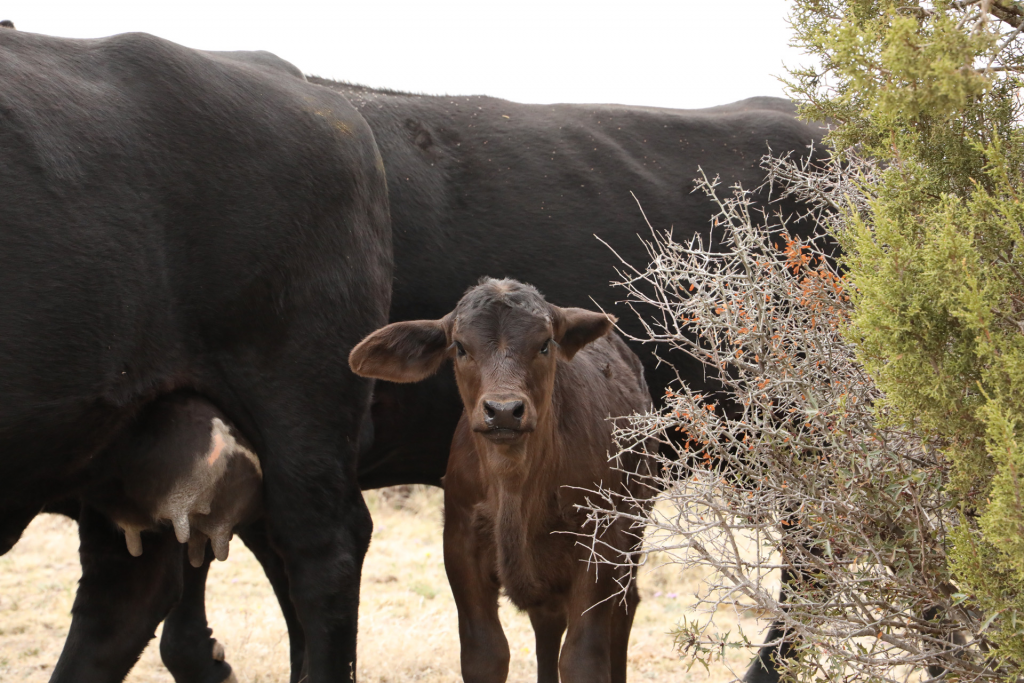
Senior Farm and Ranch Broadcaster, Ron Hays, is talking with the National Cattlemen's Beef Association Chief Counsel Mary-Thomas Hart about sustainability in the beef cattle industry.
"When we think about sustainability in the U.S. beef industry, I think it is important to consider sustainability as a three-legged stool, so you have three parts," Hart said.
Those three parts, Harts said, are environmental sustainability, economic sustainability, and social sustainability. In 2021, Hart said NCBA set four sustainability goals that address all three pillars of the sustainability stool.
"The first is to demonstrate climate neutrality of U.S. cattle production by 2040, the second is to increase opportunities for producer profitability, and the third is related to ecosystem services and the social value that cattle ranches provide in rural communities," Hart said. "The fourth is related to workforce development and worker safety. Through those four goals, we hope to not only maintain the high standard we have in the U.S. beef industry but to urge continuous improvement within our industry."
When it comes to sustainability, Hart said it is important to think of not only the cattle, but the operation as a whole.
"You have to think about the operation itself and what it is giving back not only to your community, but to the larger society," Hart said. "That comes in the form of ecosystem services. Green space, wildlife habitat, natural water filters, and carbon sequestration are all examples of ecosystem services that aren't currently compensated, but certainly provide value."
Hart said at NCBA, one popular topic of discussion is making conservation a commodity.
"We want to recognize that ranchers aren't just producing beef," Hart said. "They are creating a lot of value in the form of these ecosystem services."
Regarding talk in the media about beef production being the biggest contributor to climate change, Hart said this is simply not true.
"I think it is important to set aside U.S. cattle in beef production from beef production in the rest of the world," Hart said. "We don't have to deforest to produce cattle in the United States. Our grasslands are naturally purpose-built for ruminant grazing, which is an incredible thing."
Hart said the U.S. has the lowest greenhouse gas emissions per pound of beef for any beef-producing nation in the world.
"We have made significant improvements reducing our emissions per pound of beef by about 40 percent since 1960," Hart said. "That happens in every segment of the supply chain."
As ranchers increasingly introduce rotational grazing to their operation, Hart said improvements are seen both in carbon sequestration and methane emissions.
Not only is beef a nutritionally dense product, Hart said, but it also is a product with low emissions per pound of beef and serving.
"When you look at the picture of wholistic environmental health that comes from food production, beef cattle production, I think, beef is about as sustainable as it gets," Hart said.
The Beef Buzz is a regular feature heard on radio stations around the region on the Radio Oklahoma Ag Network and is a regular audio feature found on this website as well. Click on the LISTEN BAR for today's show and check out our archives for older Beef Buzz shows covering the gamut of the beef cattle industry today.
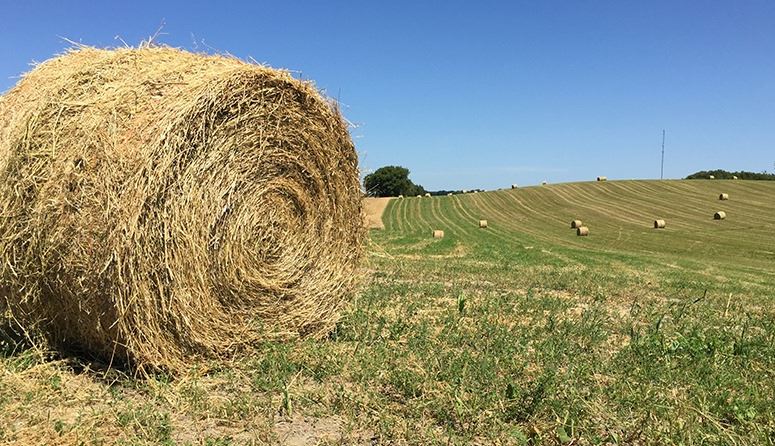
Compared to the last report, Hay is slow to steady. Very little movement across Oklahoma. The state did receive some rainfall throughout most of the state, but we still need some widespread rain as we
head into our fall season.
Trends:
Alfalfa Large squares $180-$200 a ton
Alfalfa Rounds - No Trend
Grinding hay - No Trend
Bermuda 5x6 rounds - $70-$100 a bale
Bermuda Large Squares - No Trend
Grass Hay 4x5-4x6 - $60-$70 a bale
Grass Hay 5x6 - $70-$80 a bale
The Oklahoma Mesonet Drought Monitor shows we are at 0 percent in exceptional drought, 12.91 percent in an extreme drought, 30.93 percent in severe drought, 46.76 percent in moderate, 65.71 percent in abnormally dry conditions, 34.29 percent that has no drought conditions.
* The next report release will be on October 13
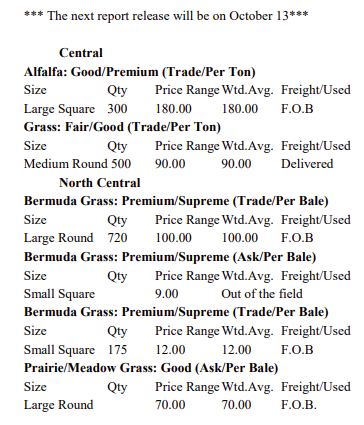
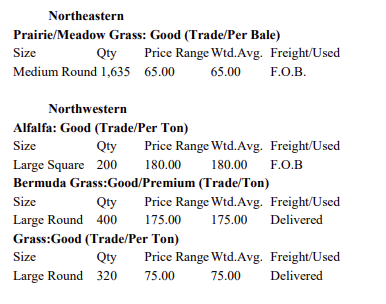
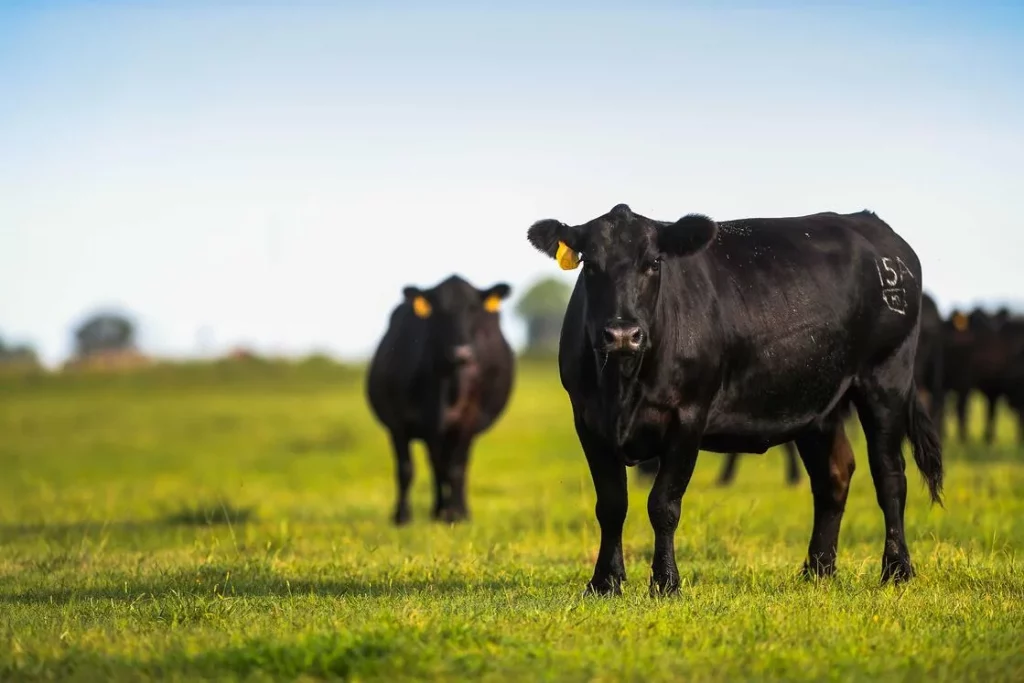
As both the world and the cattle industry become more and more data-driven, cattle breeders want user-friendly tools they can trust. One such tool, the World Angus Evaluation (WAE), is being released October 13. It aims to help eliminate hurdles for cattlemen participating in international commerce with Angus genetics.
Participating groups – the American Angus Association®, the Canadian Angus Association and Angus Australia – have analyzed the breed's genetics globally to create an international tool for genetic comparisons. The evaluation also uses data from the three groups to improve accuracies for 11 expected progeny differences (EPDs).
Because the WAE is an expansion of a foot score evaluation released in 2020 by the same entities, the claw set EPD (CLAW) and foot angle EPD (ANGLE) are already available in the three-country evaluation. Angus Genetics, Inc. (AGI®) leads the WAE research efforts for the three groups.
"Putting all the data together leverages each association's database really well," said Kelli Retallick-Riley, president of AGI® of the U.S. "We want to make sure that when Angus producers, no matter what country they're in, go to sell a bull or go to purchase genetics, they have access to comparable EPDs."
The 11 additional traits included in the 2023 WAE release are calving ease direct (CED), calving ease maternal (CEM), birth weight (BW), weaning weight (WW), yearling weight (YW), maternal milk (MILK), scrotal circumference (SC), marbling (MARB), carcass weight (CW), ribeye area (RIB) and fat thickness (FAT).
U.S., Canada and Australia have engaged in the trade of beef cattle genetics for many years, said Myles Immerkar, CEO of the Canadian Angus Association. However, it has not been easy for breeders to translate how an animal from one country scores under another country's evaluation system.
The common currency created through the WAE will support trade activity and simplify comparing animals' EPD values.
"There's a huge efficiency created by us being on the same evaluation," he said. "If we can do a better job in our evaluations that describe those animals, especially for countries that are doing a lot of trade, I think producers are going to be in much better shape."
Immerkar cites birth weight records as an example, where more data points create better tools for members. He estimates the Canadian Angus Association has around 1.2 million birth weight records alone, but together the WAE considers 9 million records in its calculations.
"We're very much focused on technology and particularly enhanced genetic improvement technologies for our members," said Christian Duff, Angus Australia's general manager of genetic improvement. "Our global initiative is a great step forward for the global Angus community and something we're really grateful being part of."
Aside from increasing ease of trade and evaluation accuracies, sharing data with one another helps all three groups because data on some traits is difficult and expensive to collect. Specifically looking at traits related to carcass merit, combining forces allows genetic evaluation for carcass traits to become more robust while avoiding additional costs for data collection.
High-quality research on tough questions often requires collaboration at an international level. A geneticist with AGI®, Andre Garcia, said outside of the WAE the teamwork between international entities has been exciting, because they have valuable discussions about their overlapping work during monthly meetings.
"It's really fun to be able to work with partners that you trust, you enjoy working with, and that all have similar objectives when it comes to the success of Angus cattle around the world," Retallick-Riley said.
Duff said that while his members are looking forward to the release, he knows there will also be questions about it. In response, member outreach and education will be ongoing.
One piece of good news for Angus breeders in the three counties is the WAE will not change members' data collection or reporting procedures. Other common questions have been about data security and how the sets were combined. The associations assure their members that their data submissions are being treated with the same care for the WAE as they would be for any other tool or research project.
"Multiple test evaluations and validation procedures were performed to ensure that phenotypes are compatible across databases, and that environmental differences such as age and contemporary groups are properly modelled," Duff said.
To learn more about the WAE, visit Angus.org in the U.S., cdnAngus.ca in Canada, or AngusAustralia.com.au/news in Australia.
Unit sales of 4WD ag tractors experienced a notable upswing in both the U.S. and Canada in September, closing the third quarter of 2023 in a strong position, according to the latest data from the Association of Equipment Manufacturers (AEM).
In the U.S., 100+hp 2WD tractors, and 4WD tractors grew year-over-year. Both segments, along with self-propelled combines remain positive for the year. The biggest overall growth among tractors happened in 4WD units, growing more than 113 percent in September. In Canada, 4WD sales finished the month in a similar position, up more than 91 percent.

"With the technology in today's equipment, it's no surprise to see the 4WD segment continuing to grow as farmers look to increase their yields," said Curt Blades, senior vice president, industry sectors and product leadership at the Association of Equipment Manufacturers. "This segment has been strong all year, as farmers are continuing to invest in productivity gains for their operations."
Overall unit sales of U.S. tractors are down 4.3 percent compared to sales in September 2022, with 100+hp 2WD units being the only other growth segment, while combine sales finished nearly flat, only selling 8 fewer units than the previous year. Canadian tractor sales fell nearly 14 percent, with combines declining more than 37 percent.
Year to date at the end of the third quarter of 2023, combine sales overall are positive, up more than 25 percent, while tractors altogether are down just over 8 percent in the U.S. Year-to-date Canadian tractor unit sales didn't change pace much versus the previous month, now down just over 14 percent, while combines are up 16.5 percent.
The full reports can be found in the Market Data section of the AEM website under Ag Tractor and Combine Reports.
U.S.: https://www.aem.org/market-data/statistics/us-ag-tractor-and-combine-reports/
Canada: https://www.aem.org/market-data/statistics/canadian-ag-tractor-combine-reports/
Over the years, quite a lot of research established the link between body composition and overall pregnancy rate in beef cows exposed to a limited breeding season. Most of the older work indicates improved overall pregnancy rate when cows calve in a body condition score 5 or greater (scale of 1 to 9) and when first-calf heifers calve in a body condition score 6 or greater (scale of 1 to 9). Recently, I ran across an excellent data set evaluating pregnancy rates associated with body condition score recorded at the time of weaning. This data was originally published in the Montana Farmer-Stockman by Dr. Matt Cherni, DVM. In his data set, 78,398 weaning body condition score and pregnancy records were collected over a seven-year period on one large cow/calf operation.
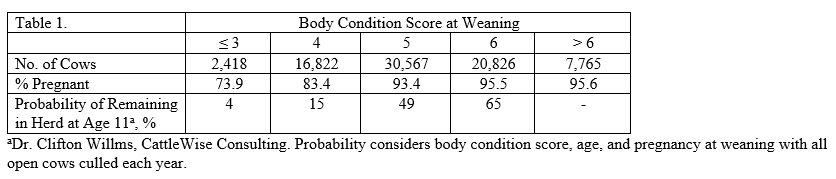
There is generally a moderate correlation between body condition at calving and body condition at the time of weaning. Thus, it is not surprising that increased body condition at weaning was also associated with increased pregnancy rate (Table 1). Dr. Cherni's data also revealed substantial reduction in pregnancy when 2 and 3-year-olds and when 9 and 10-year-olds were in body condition score 3 or less at the time of weaning. Interestingly, a score of 4 was more detrimental to pregnancy rates in the 9 and 10-year-old cows. A score of 4 had little impact on 2-year-olds' pregnancy and only slight negative impact on 3-year-olds when compared to cows of the same age and a score of 5 or greater at weaning.
Dr. Clifton Willms used this data set to calculate the probability of remaining in the herd at age 11 assuming all cows that were open at weaning were culled each year (Table 1). In his analysis Dr. Willms estimated dramatic improved longevity in cows that were able to maintain a body condition score of 5 or greater. These data confirm the important connection between reproductive efficiency and body composition of the cow. Certainly, the production system should be designed to achieve moderate herd-average body condition at calving and weaning in most years. More importantly, these data highlight the opportunity to select animals within contemporary groups that are a great fit for the environment from a body composition standpoint. Said another way, cows with body condition score below herd average at calving or weaning may require expensive purchased or harvested supplemental feed to avoid reproductive failure. Assuming they are otherwise healthy, those animals within each contemporary group are telling us that they are not a good fit for the ranch environment. Without expensive artificial environmental adjustments they have a much greater probability of reproductive failure.
RON's Dave Lanning has a pre-opening look at today's agricultural Markets.
Click the audio tab below for today's report.
SOUTHERN PLAINS WINTER WHEAT:
Oklahoma Winter wheat planted reached 50 percent, up 13 points from the previous year but down 3 points from normal. Winter wheat emerged reached 23 percent, up 4 points from the previous year but down 4 points from normal.
Kansas Winter wheat planted was 57 percent, ahead of 47 percent last year, and near 56 percent for the five-year average. Emerged was 28 percent, ahead of 17 percent last year, but near 29 percent average.
Texas Winter wheat planted reached 55 percent, down 2 percentage points from the previous year and up 2 from the five-year average. Winter wheat emerged reached 28 percent, up 1 point from the previous year and up 2 points from the average.
Winter wheat planted for the U.S. reached 57 percent, up 4 percentage points from the previous year and even with the five-year average. Winter wheat emerged reached 29 percent, up 5 percentage points from the previous year and down 1 from the average.
Corn maturity reached 89 percent, up 4 percentage points from the previous year and the five-year average. Corn harvested reached 34 percent, up 5 points from the previous year and up 3 points from the average. Corn conditions rated 53 percent good to excellent, 29 percent fair, and 18 percent poor to very poor. Last week's conditions rated the same.
Soybeans dropping leaves reached 93 percent, up 3 percentage points from the previous year and up 6 from the five-year average. Soybeans harvested reached 43 percent, up 2 percentage points from the previous year and up 6 from the average. Soybean conditions reached 51 percent good to excellent, 31 percent fair and 18 percent poor to very poor. Last week's conditions rated 52 percent good to excellent, 31 percent fair and 17 percent poor to very poor.
Cotton bolls opening reached 82 percent, down 1 percentage point from the previous year and even with the five-year average. Cotton harvested reached 25 percent, down 3 percentage points from the previous year and up 1 percentage point from the average. Cotton conditions rated 32 percent good to excellent, 27 percent fair, and 41 percent poor to very poor. Last week's conditions rated 30 percent good to excellent, 27 percent fair and 43 percent poor to very poor.
Rainfall totals in Oklahoma averaged 0.92 inches. According to the October 3rd US Drought Monitor Report, drought conditions were rated 63 percent abnormally dry to exceptional drought, down 37 points from last year. Additionally, 45 percent of the state was in the moderate drought to exceptional drought categories, down 55 points from the previous year. Statewide, temperatures averaged in the low to upper 60's.
Winter wheat planted reached 50 percent, up 13 points from the previous year but down 3 points from normal. Winter wheat emerged reached 23 percent, up 4 points from the previous year but down 4 points from normal.
Corn mature reached 95 percent, down 1 point from the previous year but up 2 points from normal. Corn harvested for grain reached 46 percent, down 4 points from the previous year and down 8 points from normal. Corn conditions rated 66 percent good to excellent, 22 percent fair and 12 percent poor to very poor. Last week's conditions rated 64 percent good to excellent, 26 percent fair and 10 percent poor to very poor.
Sorghum coloring reached 93 percent, down 2 points from the previous year and down 3 points from normal. Sorghum mature reached 65 percent, down 9 points from the previous year and down 8 points from normal. Sorghum harvested for grain reached 32 percent, up 3 points from the previous year and up 1 point from normal. Sorghum conditions rated 34 percent good to excellent, 35 percent fair and 31 percent poor to very poor. Last week's conditions rated 36 percent good to excellent, 37 percent fair and 27 percent poor to very poor.
Soybeans dropping leaves reached 50 percent, up 1 point from the previous year but down 1 point from normal. Soybeans harvested reached 13 percent, unchanged from the previous year and from normal. Soybean conditions rated 66 percent good to excellent, 23 percent fair and 11 percent poor to very poor. Last week's conditions rated 61 percent good to excellent, 30 percent fair and 9 percent poor to very poor.
Peanuts mature reached 63 percent, down 6 points from the previous year but up 1 point from normal. Peanuts harvested reached 5 percent, up 1 point from the previous year but down 3 points from normal. Peanut conditions rated 98 percent good to excellent and 2 percent fair. Last week's conditions rated 97 percent good to excellent and 3 percent fair.
Cotton bolls opening reached 82 percent, down 6 points from the previous year but up 1 point from normal. Cotton harvested reached 7 percent, up 6 points from the previous year and up 2 points from normal. Cotton conditions rated 9 percent good to excellent, 35 percent fair and 56 percent poor to very poor. Last week's conditions rated 9 percent good to excellent, 28 percent fair and 63 percent poor to very poor.
Hay: The fourth cutting of alfalfa hay reached 83 percent, down 3 points from the previous year and down 6 points from normal. The fifth cutting of alfalfa hay reached 19 percent, down 5 points from the previous year but up 5 points from normal. The third cutting of other hay reached 53 percent, down 26 points from the previous year and down 4 points from normal.
Livestock conditions rated 67 percent good to excellent, 25 percent fair and 8 percent poor to very poor. Last week's conditions rated 63 percent good to excellent, 29 percent fair and 8 percent poor to very poor.
Pasture and range conditions rated 37 percent good to excellent, 36 percent fair and 27 percent poor to very poor. 29 percent good to excellent, 36 percent fair, and 35 percent poor to very poor.
Winter wheat planted was 57 percent, ahead of 47 percent last year, and near 56 percent for the five-year average. Emerged was 28 percent, ahead of 17 percent last year, but near 29 percent average.
Corn mature was 97 percent, near 93 percent both last year and average. Harvested was 64 percent, ahead of 59 percent last year and 55 percent average.
Soybeans dropping leaves was 89 percent, ahead of 80 percent last year and 79 percent average. Harvested was 39 percent, ahead of 28 percent last year and 21 percent average. Soybean conditions rated 20 percent good to excellent, 32 percent fair and 48 percent poor to very poor. Last week's conditions rated 18 percent good to excellent, 32 percent fair and 50 percent poor to very poor.
Sorghum coloring was 97 percent, near 95 percent last year and 98 percent average. Mature was 74 percent, ahead of 68 percent last year, and near 71 percent average. Harvested was 29 percent, ahead of 23 percent last year and 21 percent average. Sorghum conditions rated 32 percent good to excellent, 37 percent fair and 31 percent poor to very poor. Last week's conditions rated 32 percent good to excellent, 38 percent fair and 30 percent poor to very poor.
Cotton bolls opening was 92 percent, ahead of 80 percent last year and 75 percent average. Harvested was 9 percent, behind 15 percent last year, but ahead of 4 percent average. Cotton conditions rated 39 percent good to excellent, 39 percent fair and 22 percent poor to very poor. Last week's conditions rated 35 percent good to excellent, 42 percent fair, and 23 percent poor to very poor.
Pasture and range conditions rated 12 percent good to excellent, 35 percent fair and 53 percent poor to very poor.
Winter wheat planted reached 55 percent, down 2 percentage points from the previous year and up 2 from the five-year average. Winter wheat emerged reached 28 percent, up 1 point from the previous year and up 2 points from the average.
Corn mature reached 96 percent, down 3 percentage points from the previous year and up 3 points from the five-year average. Corn harvested reached 83 percent, down 1 point from the previous year and up 3 from the average. Corn conditions rated 49 percent good to excellent, 27 percent fair and 24 percent poor to very poor. Last week's conditions rated the same.
Cotton bolls opening reached 76 percent, down 1 percentage point from the previous year and even with the average. Cotton harvested reached 32 percent, down 2 percentage points from the previous year and up 3 points from the average. Cotton conditions rated 15 percent good to excellent, 24 percent fair and 61 percent poor to very poor. Last week's conditions rated 11 percent good to excellent, 24 percent fair and 65 percent poor to very poor.
Peanuts mature reached 52 percent, up 2 percentage points from the previous year and up 9 from the average. Peanuts harvested reached 11 percent, down 6 points from the previous year and down 1 point from the average. Peanut conditions rated 39 percent good to excellent, 45 percent fair and 16 percent poor to very poor. Last week's conditions rated 34 percent good to excellent, 40 percent fair and 26 percent poor to very poor.
Sorghum matured reached 97 percent, down 3 percentage points from the previous year and up 3 from the average. Sorghum harvested reached 88 percent, down 6 points from the previous year and up 1 from the average. Sorghum conditions rated 45 percent good to excellent, 22 percent fair and 33 percent poor to very poor. Last week's conditions rated the same.
Soybeans dropping leaves reached 90 percent, down 9 percentage points from the previous year and even with the five-year average. Soybean conditions rated 35 percent good to excellent, 37 percent fair and 28 percent poor to very poor. Last week's conditions rated 36 percent good to excellent, 37 percent fair and 28 percent poor to very poor.
Pasture and range conditions rated 8 percent good to excellent, 24 percent fair and 68 percent poor to very poor.

On Tuesday, the Rural & Agriculture Council of America (RACA) and seven other organizations representing rural and agricultural interests wrote a letter to Congressional leaders in support of the AM Radio for Every Vehicle Act. This bill would require vehicles manufactured in, or imported into, the U.S. to have devices installed that provide access to AM radio.
In the letter, the groups say, "AM radio is an essential communications medium in rural America. Local news, weather, and sports reporters are recognized as respected sources for information that affects the lives of millions of rural residents."
Other organizations signing onto the letter include the Latino Farmers & Ranchers International, Inc., Livestock Marketing Association, National Grange, National Farmers Union, U.S. Cattlemen's Association, Independent Beef Association of North Dakota, Independent Cattlemen's Association of Texas, and the North Dakota Farmers Union.
To read the letter, click here.
There are several reasons to overseed pastures in the fall, and several ways to do it. Jim Johnson of Noble Research Institute shares his best tips for cover-crop success.
If you're thinking about overseeding cover crops in your pastures this fall, that's a good place to start – thinking about both the why and the how.
Jim Johnson, senior ag consultant at Noble Research Institute, says there are three main reasons ranchers and farmers might consider planting a cover crop on grazing land in the fall:
It's important to consider, however, whether or not putting in a cover crop is always the best solution to covering ground or adding diversity, Johnson says.
"For bare ground and for diversity, rest could be what's needed, maybe more than adding seed," if it's not an area of erodible land, he says. "So often, those plants are there. They just never get a chance to express themselves, and they never get a chance to build a healthy root system."
Johnson says he's seen some phenomenal results from ranchers giving such areas 365 days of rest. He suggests starting with resting a small area, or even just building a small exclosure in a pasture to keep livestock from grazing, to see how much cover and diversity you get from resting that spot for a year.
For more thoughts on cover-crop overseeding decisions, see the Noble Rancher article Can Management Alone Build Plant Diversity, or Are Cover Crops Always Needed? One Expert Weighs In.

What cool-season cover crops to plant?
Once you've decided to plant, the choice of cool-season cover crops to overseed in a pasture depends on a rancher's goals, what's already in the pasture and what will do well in the region. Johnson's list of annuals and weak perennials to consider in southern Oklahoma and north Texas includes:
Two main overseeding methods: Drilling and broadcasting
Drilling: For ranchers with access to a no-till drill and with large areas to cover, drilling is the overseeding method of choice, Johnson says. Here are his tips for successful cover-crop drilling:

Broadcasting: For smaller areas, or if you don't have access to a no-till drill, there are several ways to broadcast cover-crop seeds. Johnson has this advice for successful broadcasting:

In recent years, the enemies of the U.S. and our allies have become increasingly more aggressive. Unfortunately, this weekend aggression once again came to a head when Hamas invaded parts of Israel and carried out the deadliest attacked seen in 15 years.
The results have been nothing short of devastating with at least 800 innocent lives lost, more than 150 hostages kidnapped and taken to Gaza and more than 2,600 seriously injured, far worse than the United States' own September 11th. Moreover, at least 11 American lives have been lost and Americans are still trapped and unable to escape. In the wake of this unprovoked war, I was proud to cosponsor a House Resolution with more than 230 of my House colleagues to formally condemn Hamas in the strongest terms and express unconditional support for Israel and its right to defend itself. It is essential Congress stand together in support of Israel.
Hamas has been a longtime threat to Israel and the Middle East and has repeatedly shown its disregard for human life and sole intention to do harm. This has taken form through numerous unprovoked and unwarranted rocket attacks on Israel by Hamas and Hezbollah, sometimes despite supposed ceasefire agreements, and use of its own civilians as human shields. Now, we have seen barbaric and disturbing acts of violence against innocent civilians.
Under the last administration, the Middle East experienced historic peace and stability with agreements between Israel, the United Arab Emirates, Sudan and Bahrain. Now, Afghanistan has been retaken by the Taliban, Iran has been emboldened and Israel is at war with Hamas. The world has unquestionably changed and become more dangerous. It is now more important than ever to make critical investments in our national defense and provide support to our allies – and that is just what Congress's priority should be.
Israel has been an indispensable ally and partner to the U.S. for decades. In the hard days and weeks ahead, the United States offers its unwavering support to Israel in its changing posture in defense of itself and in pursuit to bring Hamas to its knees and cripple its enablers. In addition to this support, I urge the Department of State and Department of Defense to exercise every power they have to bring Americans to safety.
Our nation has a duty to stand with Israel, who are courageous defenders of western values. There is no room to sympathize with the terrorist organization of Hamas. America has always remained Israel's longest and most loyal ally, and this partnership will certainly continue during our friend's time of dire need.
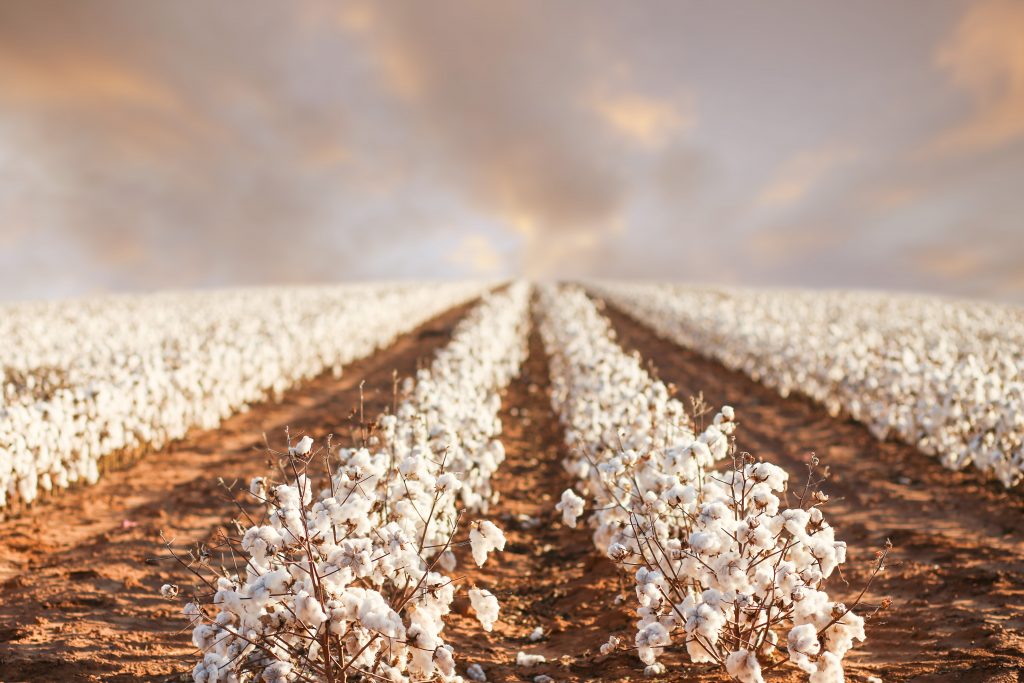
The U.S. Cotton Trust Protocol ("Trust Protocol") is pleased to announce the membership of Kiabi. Founded in 1978 in Northern France and with 579 shops in 25 countries, Kiabi is committed to sustainable sourcing and driving positive social and environmental change in fashion retail.
Kiabi's "2030 Vision" aims to integrate positive fashion and sustainability with 72% of its products already designed using sustainable fibers and a goal to see this figure reach 100% by 2025 thus reducing energy and water usage while limiting pollution and habitat degradation in the supply chain.
Cotton already represents 70% of the raw material used in Kiabi's products. By utilizing the program's proprietary Protocol Consumption Management Solution (PCMS) to track U.S. Cotton and/or Protocol Cotton, they will be provided full supply chain transparency. Kiabi will also have the ability to use Protocol Consumption Units (PCCUs) for internal calculations of Scope 3 emissions or making proportionate environmental claims on products.
The Trust Protocol is the only sustainable cotton system that provides quantifiable, verifiable goals and measurement and drives continuous improvement in six key sustainability metrics – land use, soil carbon, water management, soil loss, greenhouse gas emissions, and energy efficiency. It is also the first to offer article-level supply chain transparency to members.
"As we strive to meet our ambitious goals and look more closely at our suppliers and their processes," said Virginie Cayzeele, raw materials leader at Kiabi. "We need to be able to measure continuous improvement across our sustainability metrics confidently and accurately as part of our analysis of our scope 1, 2, and 3 carbon emissions and biodiversity risks. The Trust Protocol's blockchain-enabled value chain transparency solution will ensure rigorous and verifiable evidence in our work for the protection and preservation of our planet."
"We're pleased to welcome Kiabi to the U.S. Cotton Trust Protocol and supporting their commitment to sustainable cotton sourcing. We look forward to providing them with measurable, verifiable data and outcomes as they pursue their environmental and social goals," said Dr. Gary Adams, President of the U.S. Cotton Trust Protocol.
The Trust Protocol is aligned with the UN Sustainable Development Goals, recognized by Textile Exchange and Forum for the Future, and part of the Sustainable Apparel Coalition, Cotton 2025 Sustainable Cotton Challenge, Cotton 2040, and Cotton Up initiatives. It has also been published in the International Trade Centre Standards Map, recognized as a standard for sustainable cotton by the Partnership for Sustainable Textiles, approved as a standard for sustainable cotton by German Federal Government, and confirmed as an ISEAL Community Member.
To learn more about The Trust Protocol, visit TrustUSCotton.org.
Oklahoma Farm Bureau members are invited to attend the Oklahoma Water Resources Board's second round of stakeholder input meetings in December. As the largest user of water in Oklahoma, it is crucial for agriculture to have a voice in these meetings.
The stakeholder meetings will center on the impending updates to Oklahoma's Comprehensive Water Plan with discussions on water policy, future water supply and demand, water challenges and more.
For more information on the stakeholder input meetings and OCWP changes, visit the OWRB website.
All meetings are scheduled for 1-4 p.m.
December 5
Panhandle State University – Student Union Ballroom
323 Eagle Boulevard, Goodwell, OK
December 11
Cameron University McMahon Centennial Complex – McAsland Ballroom
2800 West Gore Boulevard, Lawton, OK
December 12
Kiamichi Technology Center – Conference Room A/B
13739 Southeast 202nd Road, Talihina, OK
December 13
Cherokee Chota Center
3307 Seven Clans Avenue, Tahlequah, OK
December 14
Francis Tuttle Technology Center – Portland Campus
3500 Northwest 150th Street, Oklahoma City, OK

Owners are pessimistic about future business conditions.
The NFIB Small Business Optimism Index decreased half of a point in September to 90.8. September's reading marks the 21st consecutive month below the 49-year average of 98. Twenty-three percent of owners reported that inflation was their single most important problem in operating their business, unchanged from last month and tied with labor quality as the top concern.
"Owners remain pessimistic about future business conditions, which has contributed to the low optimism they have regarding the economy," said Bill Dunkelberg, NFIB Chief Economist. "Sales growth among small businesses have slowed and the bottom line is being squeezed, leaving owners few options beyond raising selling prices for financial relief."
Though state-specific data is unavailable, NFIB State Director Jerrod Shouse said:
"It's clear that small business owners remain deeply concerned about the economy, and for good reason. The pressure of inflation and the labor shortage are showing no signs of easing, just as sales are slowing. With the holiday season just around the corner, Main Street needs our support."
Key findings include:
According to NFIB's jobs report, 43% (seasonally adjusted) of all small business owners reported job openings they could not fill in the current period, up three points from August. Owners' plans to fill open positions remain elevated, with a seasonally adjusted net 18% planning to create new jobs in the next three months.
Fifty-seven percent of owners reported capital outlays in the last six months. Of those making expenditures, 41% reported spending on new equipment, 22% acquired vehicles, and 17% improved or expanded facilities. Twelve percent of owners spent money on new fixtures and furniture and 7% acquired new buildings or land for expansion. Twenty-four percent of owners plan capital outlays in the next few months.
A net negative 8% of all owners (seasonally adjusted) reported higher nominal sales in the past three months, up six points from August's lowest reading since August 2020. The net percent of owners expecting higher real sales volumes improved one point to a net negative 13%.
The net percent of owners reporting inventory gains improved four points to a net negative 3%. Not seasonally adjusted, 13% reported increases in stocks and 15% reported reductions. A net negative 4% of owners viewed current inventory stocks as "too low" in September, so more now have surplus stocks. By industry, shortages are reported most frequently in the transportation (15%), construction (9%), retail (9%), and services (8%) sectors. A net negative 1% of owners plan inventory investment in the coming months, down one point from August. Not much inventory investment.
The net percent of owners raising average selling prices increased two points from August to a net 29% seasonally adjusted. Twenty-three percent of owners reported that inflation was their single most important problem in operating their business, unchanged from last month and tied with labor quality as the top problem.
Unadjusted, 13% of owners reported lower average selling prices and 41% reported higher average prices. Price hikes were the most frequent in finance due to rising interest rates (75% higher, 3% lower), construction (53% higher, 6% lower), retail (49% higher, 11% lower), services (33% higher, 12% lower), and wholesale (33% higher, 10% lower). Seasonally adjusted, a net 30% plan price hikes.
Seasonally adjusted, a net 36% reported raising compensation in September. A seasonally adjusted net 23% plan to raise compensation in the next three months, down three points from August. Nine percent of owners cited labor costs as their top business problem, up one point from August. Twenty-three percent said that labor quality was their top business problem, down one point.
The frequency of reports of positive profit trends was a net negative 24%, up one point from August. Among owners reporting lower profits, 29% blamed weaker sales, 20% blamed the rise in the cost of materials, 15% cited labor costs, 8% cited lower prices, 7% cited the usual seasonal change, and 6% cited higher taxes or regulatory costs. For owners reporting higher profits, 55% credited sales volumes, 22% cited usual seasonal change, and 9% cited higher selling prices.
Two percent of owners reported that all their borrowing needs were not satisfied. Twenty-three percent reported all credit needs met and 65% said they were not interested in a loan. A net 8% reported that their last loan was harder to get than in previous attempts.
Four percent of owners reported that financing was their top business problem. A net 26% of owners reported paying a higher rate on their most recent loan.
The NFIB Research Center has collected Small Business Economic Trends data with quarterly surveys since the fourth quarter of 1973 and monthly surveys since 1986. Survey respondents are randomly drawn from NFIB's membership. The report is released on the second Tuesday of each month. This survey was conducted in September 2023.
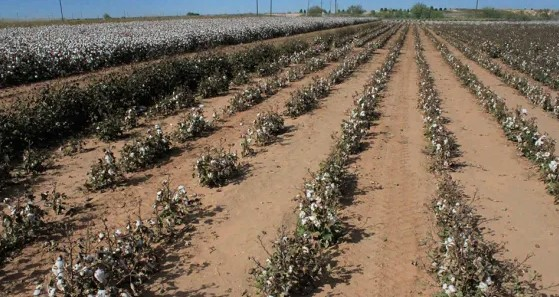
At the Shantz Farm Field Day last week, Associate Farm Editor, Reagan Calk, had the chance to visit with the NexGen Regional Manager, Shane Osborne, about this year's cotton crop.
According to the latest Oklahoma Crop Progress Report issued by the USDA on October 2, cotton conditions rated 9 percent good to excellent, 28 percent fair, and 63 percent poor to very poor. In the week prior, conditions rated 14 percent good to excellent, 25 percent fair, and 61 percent poor to very poor.
"It has been a very rough year," Osborne said. "We actually started out with decent potential, but to be quite honest, the heat this year has been overwhelming. We have had an abundance of heat from early on."
Many areas, Osborne said, never received rainfall amounts substantial enough to develop or store water in the soil profile.
"That storage in the profile- we rely heavily on that to make cotton in Oklahoma both for dryland, of course, but also the irrigated acre depends heavily on that storage in the profile," Osborne said. "Our best crops come from a combination of irrigation and storage. When we don't have that, it is going to be a very tough year."
Cotton harvest is getting close, Osborne said, as some producers are beginning to apply harvest aids.
"If we continue to have open weather, it will be pretty quick," Osborn said. "Unfortunately, a lot of that harvest is happening without a stripper or a picker. It is going on with a shredder because those acres are failing. It is going to be pretty tough this year on a harvested acre number for Oklahoma."
Regarding those harvest aid applications, Osborne gave some insight into what he recommends.
"We still find the best results when growers will run a boll opener with a defoliant," Osborne said. "When those top harvestable bolls are mature, and the seeds within those bolls are mature, we want to trigger that harvest aid application, that boll opener, and use a defoliant to remove those leaves and condition that plant. When we do that, our fiber quality goes up, our yields are maintained, and we see the best results there."
After stripping the cotton, Osborne said following with a desiccant will help to dry the plant.
Osborne also touched on harvest discipline and said it would be a mistake to harvest when the humidity is too high.
"We can bring on some fiber quality issues ourselves by making some poor decisions in that area, so when we are stripping, we want that humidity to be low, when we are picking, we can stand a little bit more, but we better be paying attention to that number," Osborne said. "That helps us deliver good quality cotton to the gin, and that keeps the ginner happy and the farmer as well."
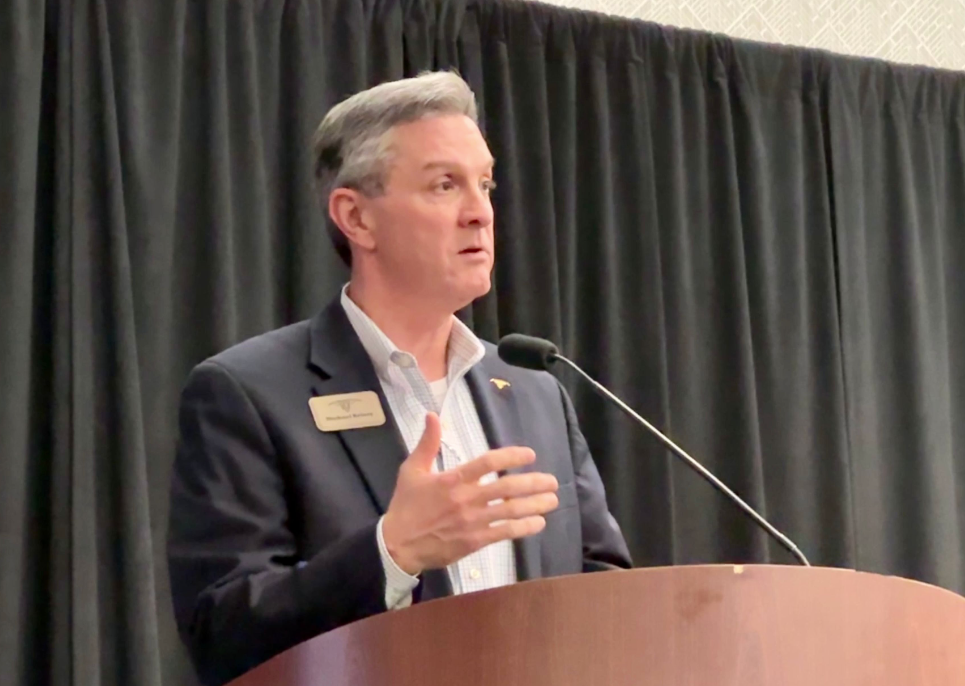
Senior Farm and Ranch Broadcaster, Ron Hays, is back talking with the Executive Vice President of the Oklahoma Cattlemen's Association, Michael Kelsey, about the state of the cattle industry.
Through what Kelsey has seen around the country, he said there is a lot of optimism regarding the beef industry, as well as some concern. Some of that concern, he added, is dependent on weather conditions and when heifer retention will begin.
"The cattle market is strong, and beef demand continues to be strong," Kelsey said.
Many producers want to begin to retain some heifers, Kelsey said, but they do not have the ability to do so just yet.
"Before you have the ability to do it, you have to have the desire to do it," Kelsey said. "I have to have the want to. There is a lot of want to out there, and to me, that is very encouraging."
Kelsey said the majority of cattle producers in the state recognize that there is opportunity in the beef industry for several years to come for reasons beyond profitability.
There is a lot of optimism and a lot of desire to be in this business, and that is a really good thing," Kelsey said. "That is a great start."
At the federal level, an ag appropriations bill has not made it across the finish line yet, but Kelsey talked about some amendments that the House voted on, including anti-electronic animal ID.
OCA is in favor of electronic ID, but there were members of Congress, including some from Oklahoma, who voted in favor of an amendment to the Agricultural Appropriations bill that would have prohibited any money to be spent on Electronic ID tags.
"That is a broad issue, but the safety of us producing food is what was being attacked," Kelsey said. "That is the target."
Regarding the Farm Bill, Kelsey said we will not see one produced in 2023.
"Hopefully, we will see an extension," Kelsey said. "Those pieces of the Farm Bill that have been relevant to risk management have been so critical."
The Beef Buzz is a regular feature heard on radio stations around the region on the Radio Oklahoma Ag Network and is a regular audio feature found on this website as well. Click on the LISTEN BAR for today's show and check out our archives for older Beef Buzz shows covering the gamut of the beef cattle industry today.
Tiny, bright red pustules on soybean roots are a telltale sign of red crown rot, a disease that severely affects yields and is spreading throughout the Midwest.
Red crown rot is a fungal disease of soybeans that has been common in the southern U.S. for years. AgriGold agronomist Brett Leahr is concerned about the spread of the disease in his Illinois territory and has seen the disease firsthand scouting fields.
Red crown rot is caused by the soilborne fungus Calonectria ilicicola and can have a severe impact on soybean yields. "It shuts the plant down as fast as possible," says Leahr. "It can take an 80-bushels-per-acre field to 20 bushels per acre."
While there's still a lot to learn about managing red crown rot, Leahr wants farmers to know what to look for. "From afar, red crown rot looks similar to sudden death syndrome (SDS)," he says. "But red crown rot moves very fast and appears to kill the plant much more rapidly than SDS. You see a little spot of it pop up and you come back a couple days later in the field and it's just exploded."
Leahr recently conducted a soybean plot study that demonstrated the effect of moisture on red crown rot. During the recent dry period, he marked the rows he watered. "When I went back a few weeks ago, red crown rot was in the exact areas we watered, so it clearly loves moisture," says Leahr.
"I think this year it fell with rain patterns – where we had those early rains is where we're seeing it pop up," he adds.
To understand the impact of red crown rot and prepare to manage it in the future, Leahr says farmers should do two things: scout and document.
What to look for when scouting
Because red crown rot looks similar to SDS or brown stem rot, it's important to verify its presence by inspecting the root system. "If you see slightly off-pitted soybeans, the first thing to look for is interveinal chlorosis or yellowing," says Leahr. "The next step is to pull the plant up, knock the soil off the roots as gently as possible and look for red streaking on the stem around the soil line."
A distinctive sign of red crown rot is the presence of red pustules on the root system. "If you look at the root system and see tiny, bright red balls – get a magnifying glass if needed – it's red crown rot," he says. "SDS will have the exact same leaf orientation and interveinal chlorosis, but with more of a turquoise or teal color on the roots."
Importance of documentation
A record of which fields have red crown rot helps farmers and agronomists know which fields may be affected in the future. "Some farmers who have red crown rot on their soybean acres right now may not remember if a field had it before," says Leahr. "That's why good documentation helps when planning future soybean acres."
AgriGold is proud to offer Saltro® seed treatment, which is approved in Arkansas, Indiana, Kentucky, Tennessee, Illinois, Iowa, and Missouri, to suppress red crown rot. Always follow label instructions.
Farmers that detect red crown rot in fields – or think it may be present – should work with a crop advisor, extension specialist or their AgriGold agronomist to confirm the diagnosis and create a management plan for the future.
Mark Johnson, Oklahoma State University Extension Beef Cattle Breeding Specialist, offers herd health advice as part of the weekly series known as the "Cow Calf Corner" published electronically by Dr. Peel, Mark Johnson, and Paul Beck. Today, Johnson talks about manure scoring.
At this time of year, producers with spring calving herds are in the process of managing cows for the next calving season in 2024. With warm season grasses going dormant and losing nutritional quality. There are a couple of convenient management tools we can use to ensure we are meeting our cow's nutritional requirements. The first is body condition scoring cows and the second is to monitor manure consistency. By monitoring body condition score (BCS) across our entire cowherd, on a regular basis, we can monitor the plane of nutrition over the long-term. This will answer the question "What condition are my cows in, and are they gaining, maintaining or losing condition?" The goal is to have cows in a BCS 5 at calving (on a 1-9 scale). If cows are in adequate condition (BCS 5 or higher) and maintaining, no immediate nutritional changes are needed. However, if cows are in poor condition (BCS less than 5) or losing condition, nutritional management changes are needed requiring the addition of protein supplemental and/or energy so that BCS does not drop below 5 before calving. If the cows are in BCS greater than 5 and maintaining, the nutrition program is more than adequate.
What is Manure Scoring?
Manure scores range from 1 – 5. A manure score of 1 is more liquid than solid with consistency of cream soup. A manure score of 5 is very firm and can stack several inches high. These are the manure piles you trip over when walking through pastures. In healthy cows, manure scoring can serve as an indicator of forage quality and animal performance. In the short term, manure scoring helps us make sure we are providing enough nutrition without overdoing it. At this time of year, the primary question this indicator can help answer is, "Do the cows need a protein supplement? If they are receiving a protein supplement, is it enough?" The pictures below show manure from animals that have excess dietary protein (Figure 1), adequate dietary protein (Figure 2), and a deficiency of dietary protein (Figure 3) during late gestation.
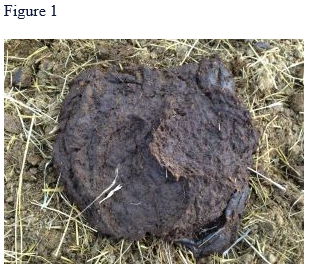
Manure patties similar to Figure 1 indicate a diet with crude protein greater than 10%. The center of the patty has a crater-like appearance. If there are small folds present around the edges of the patty, the crude protein content will be in the 10-13% range. No additional supplementation is needed for mature cows with manure of this consistency during late gestation.
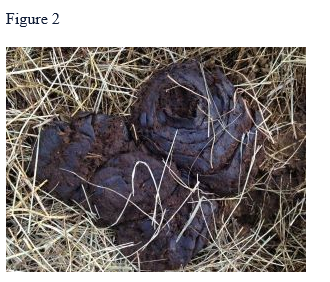
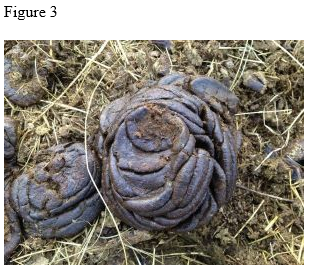
The manure in Figure 3 indicates diets with crude protein of 5% or less. These patties have very distinct rings at the lower portion which tend to be firm. Manure from this forage quality tends to stack, but the rings are a true indicator of lower forage quality. This manure type indicates the forage is below maintenance requirements for all classes of beef cattle and that protein supplementation is necessary to increase digestibility and utilization of the low-quality forage.
When cows are grazing dormant range, it can be challenging to get a representative sample of the forage to test for quality. Manure scoring is easily done while checking pastures and indicates protein deficiency, adequacy or excess in the diet. When manure scoring indicates inadequate dietary protein, adding or increasing the level of protein supplementation will be beneficial in meeting overall nutrient requirements and maintaining the BCS of your cowherd.
References: https://extension.sdstate.edu/monitoring-nutrient-status-beef-cows
OSU Beef Cattle Manual, Eighth Edition, E-913
There is a new blog post out at the Southern Plains Perspective. Read below! The Southern Plains Perspective is authored by Clay Pope- who farms with his wife Sarah and is a contractor for the USDA Southern Plains Climate Hub in the area of outreach.
Wildfires-It's no surprise that this is the topic that comes up again and again when you talk about adapting to the changing climate. After all, wildfires are pretty scary and unlike tornadoes, hurricanes, thunderstorms and the like, you rarely have the advanced warnings about how weather conditions are developing just right for an extreme event (although that is changing—actually wrote about the developing early warning systems for wildfires not to long ago. You can read it here). Wildfires are horribly destructive and are definitely on the rise as our rainfall patterns change. And no recent tragedy shows this more than the fires that plagued Maui, Hawaii in August.
It's been two months since fires broke out on Maui and decimated the historic town of Lahaina, leaving 115 dead and a community changed forever. This catastrophic wildfire is now considered the deadliest in the U.S. in over a century. And while many factors contributed to this terrible event, one thing clearly stands out—the presence of large amounts of invasive vegetation that created a fuel source for the fire.
In 2014 the Hawaii Wildfire Management Organization conducted a study on wildfire hazards around Maui. Their finding designated Lahaina as being at "extreme" risk of fire danger largely due to dense and unmanaged vegetative fuel loads, high likelihood of fire ignition, strong winds, and frequent periods of drought.
Large levels of vegetative fuel loads? Strong winds? Frequent periods of drought? Sounds a lot like the Southern Plains, doesn't it?
For nearly 200 years, Hawaii's economy was highly dependent on sugar cane and pineapple agriculture. But starting in the 1990s these industries declined. Large swaths of farming acreage were abandoned, and in 2016, Hawaii's last sugar cane plantation shuttered. Without anyone managing this land, non-native species such as guinea grass, molasses grass and buffel grass moved in. These species, native to Africa, were introduced to Hawaii in the late 18th century and today cover almost a quarter of Hawaii's land including thousands of acres of former sugar and pineapple plantations and roadside shoulders.
Former farm ground covered with invasive species? Again, this all sounds familiar....
You can guess the rest of the story. Strong winds and dry weather combined with this high fuel load created conditions eerily similar to those we have seen to many times in our neck of the woods. And just as it has been with wildfires in the Southern Plains, the devastation caused by these blazes could have been reduced if there was less fuel load for these fires to consume.
That is why it is so important that we take steps now to better harden our farms, ranches and homes to the danger of wildfire. This includes reducing wildfire fuel loads with tools like prescribed fire, mowing and livestock grazing. Oklahoma State University has some great wildfire preparation information here as well as a link to additional resources put together in partnership with Kansas State University, Texas A&M University and others. The tragedy in Maui is just the latest in what continues to be a growing list of horrible wildfire events. We need to remember that there is a lot of similarity between the wildfire challenges we are seeing in the Southern Plains and the conditions that led to these blazes. We need to do all we can to keep our farms and homes off that list.
AAA is reminding drivers that this is the time of year when they are most likely to strike a deer, which can be both dangerous and now, significantly more expensive than in years past. October through December marks deer-mating season, so the animals are more active and therefore, more likely to dart into the roadway, increasing the risk of a costly and potentially deadly collision.

While the vast majority of deer strikes do not involve serious injury, according to the Insurance Institute for Highway Safety (IIHS), in the 10-year period from 2012-2021, almost 2,000 people were killed in crashes involving deer, including 46 here in Oklahoma.
With that in mind, AAA is encouraging drivers to stay focused and look out for deer, especially during the morning and evening hours when the distracted animals are most active and most likely to intersect with commuters.
"Safety is priority one, so first and foremost, we are encouraging motorists to adjust their driving behaviors to prevent a deer collision," says Rylie Fletcher, spokesperson for AAA Oklahoma. "Drivers may also want to adjust their insurance coverage because even a minor collision will likely be a major expense."
New Vehicle Technology Driving Up Cost of Repairs
Insurance Agency at AAA statistics indicate that across Oklahoma, the average claim for an animal strike in 2022 was almost $6,500 – up more than 40% in just five years.
While there are multiple factors at play, the sharp increase is due, in large part, to new vehicle technology including cameras and sensors that may be in the windshield, bumper or rearview mirrors, driving up the cost of repairs. Lingering supply chain issues are also an issue.
"Deer can be unpredictable, so even the best drivers are at risk," Fletcher adds. "In addition to your vehicle damage, the cost of repairs may put a serious dent in your wallet if you don't have a comprehensive insurance policy with adequate coverage."
AAA Tips to Avoid an Animal Collision
In the event of a collision with an animal, Insurance at AAA recommends:

About AAA:
AAA provides automotive, travel, and insurance services to more than 63 million members nationwide and more than 400,000 members in Oklahoma. AAA advocates for the safety and mobility of its members and has been committed to outstanding road service for more than 100 years. AAA is a non-stock, membership corporation working on behalf of motorists, who can map a route, find local gas prices and electric vehicle charging stations, discover discounts, book a hotel, and track their roadside assistance service with the AAA Mobile app (AAA.com/mobile) for iPhone, iPad and Android. For more information on joining or renewing a Membership, visit www.AAA.com.
RON's Dave Lanning has a pre-opening look at today's agricultural Markets.
Click the audio tab below for today's report.
While most of the state has enjoyed much more fall-like temperatures the past few days, it looks like summer is not ready to let go just yet! According to State Climatologist Gary McManus we will see a little more summer before we see a LOT more fall, "Now we go back to the heat of SUMMER Fall before we get to go back to FALL fall by the weekend. Thursday ahead of a front could be up in the 90s for southern OK with some compressional heating." The next storm system arrives late Thursday, bringing a lot of wind to Oklahoma and pulling a cold front across the region.
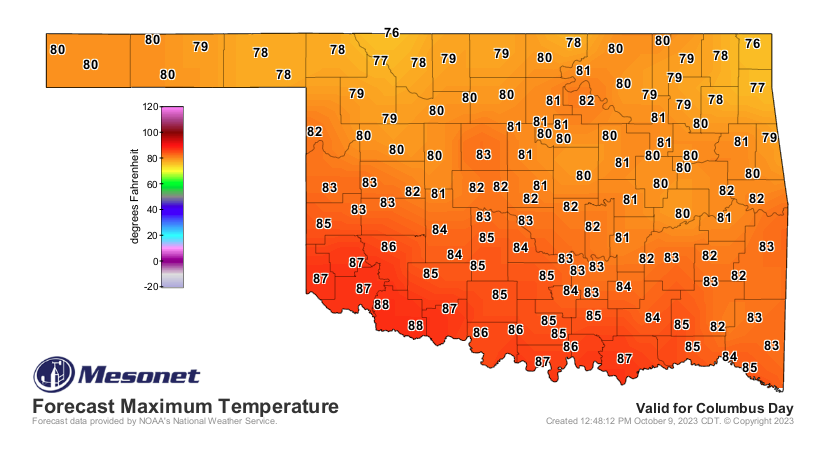
Even though it will be warmer for the next few days, another Cold Front is on the horizon for Thursday that might even bring a few freeze warnings in certain parts of Oklahoma, "That cold front looks rather pleasant for a diversion from this week's heat, and it could stick around awhile. Again. We may get to add to that freeze map over the weekend in the Panhandle." The Earliest Freeze in Oklahoma was back on October 8, 2012. The Average freeze for the state is the first week of November.
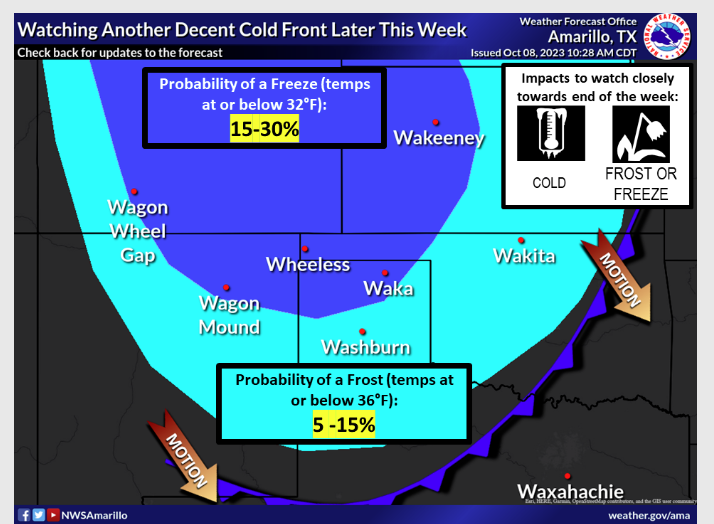
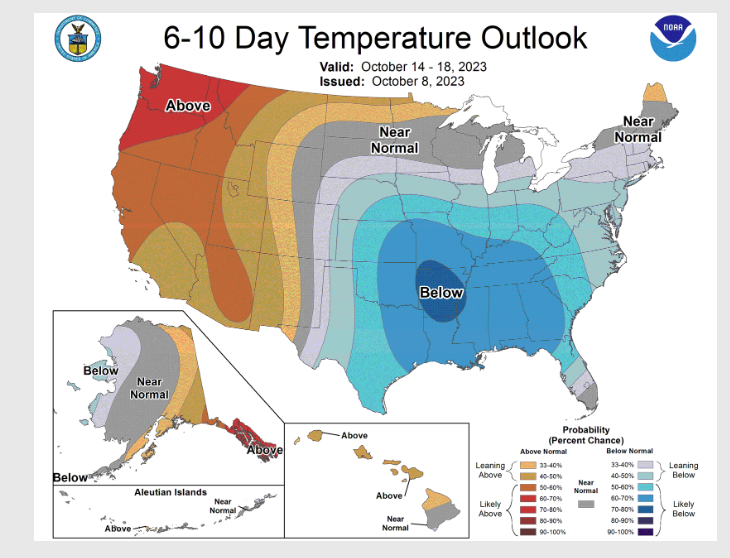
As for Rain, McManus says he's hoping to see something come along with the cold front, but right now it still looks mostly dry. And as for that Halloween Day Snow? Well McManus says its something to keep watching from Space! As we all know, Oklahoma weather is always full of surprises! Daylight savings time is coming up on November 5th this year, so we only have about a month left for the later sunset.
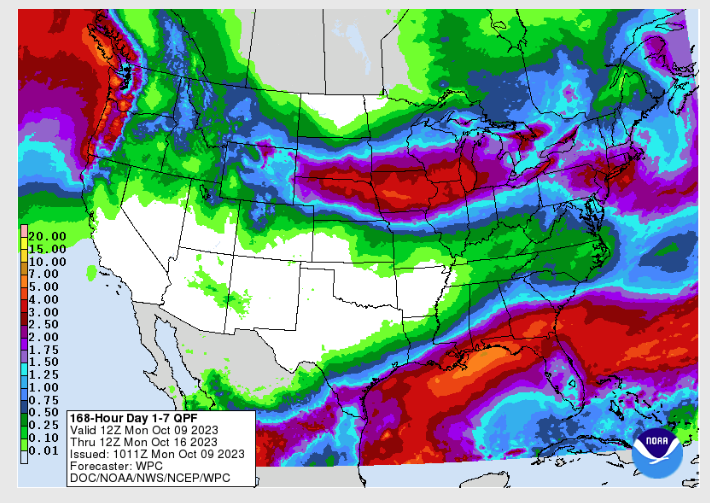
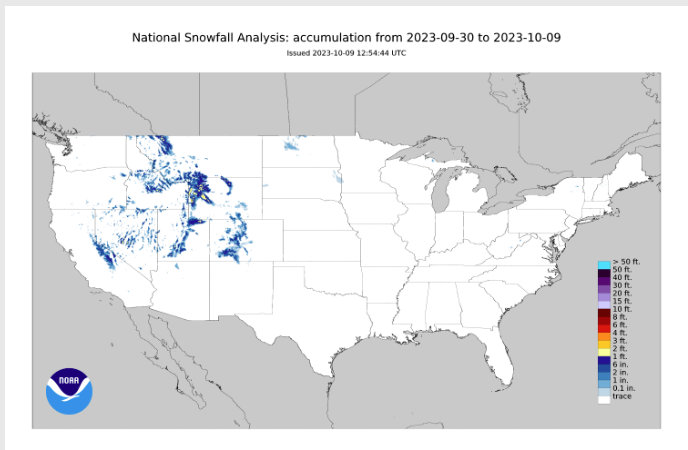
Track Cattle Records with Handy Booklet
The 2024 edition of the Redbook is now available to help cattle producers effectively and efficiently record their daily production efforts, which can enhance profitability and reduce stress levels. The pocket-sized booklet, developed by the National Cattlemen's Beef Association, helps cattle producers simplify their recordkeeping.
In addition to Beef Quality Assurance (BQA) practices and proper injection technique information, the 2024 Redbook includes a section on building a biosecurity plan and has more than 100 pages to record calving activity, herd health, pasture use, cattle inventory, body condition, cattle treatment, AI breeding records and more. It also contains a calendar and notes section.
Redbooks can be purchased online at https://store.ncba.org/ for $8.00 each, plus shipping. Customization, including adding a company logo on the cover, is available in quantities of 100 books or more. For more information on custom orders, contact Grace Webb at gwebb@beef.org or (303) 850-3443.
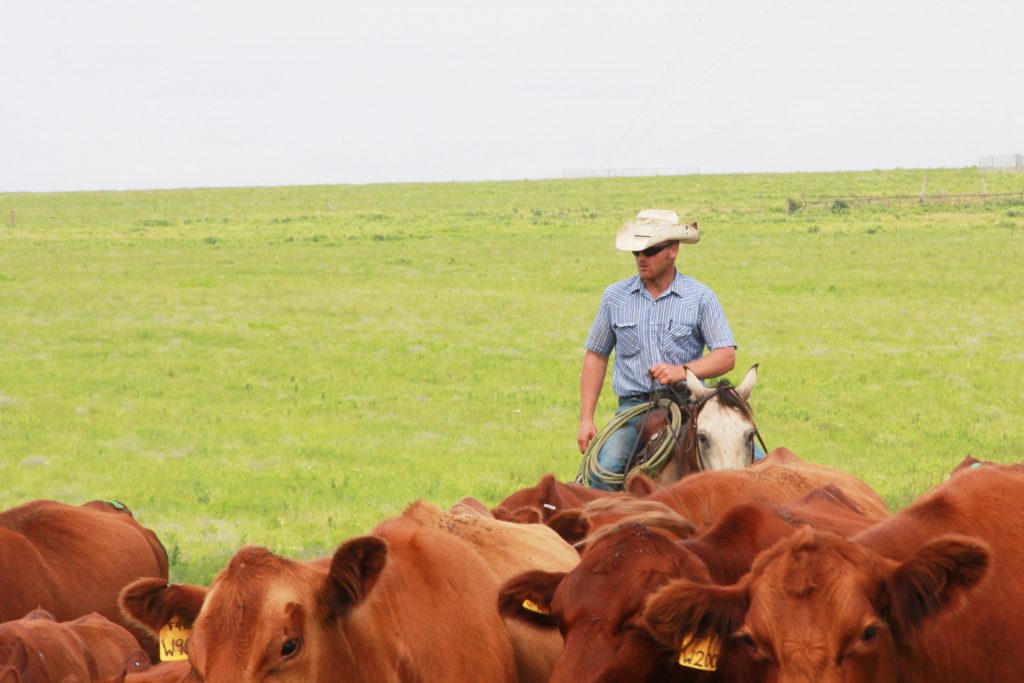
Senior Farm and Ranch Broadcaster, Ron Hays, is talking with the Executive Vice President of the Oklahoma Cattlemen's Foundation, Michael Kelsey, about battles over animal agriculture rights in the state of Oklahoma.
"There is a more organized animal rights push in the state of Oklahoma," Kelsey said.
As these groups are becoming more active, Kelsey said it is going to be important for groups such as the OCA to watch and play defense on matters like petition initiatives either through the legislature or through the signature-gathering process.
"I think they have shown their cards, and I think they have been very upfront that they want to see state law reflect their ideals of animal management," Kelsey said. "That includes the ideas of Prop 12, cage size, prohibition of cages, etcetera."
While some initiatives may not include cattle, Kelsey said the OCA recognizes cattle are still going to be targeted eventually.
"They want to adjust how we manage cattle, and they have ideas in terms of state law," Kelsey said. "I think we are going to have to be very vigilant on that..."
As animal activist groups continue to gain funding and become more aggressive in their agendas, Kelsey said it will be an ongoing battle even after the next legislative session is closed.
"I am not going to be shocked at all if we don't see a handful of bills that are filed," Kelsey said. "(They) probably won't go anywhere. We will sure try to keep them from going anywhere, but a handful of bills that are filed that are very anti-animal agriculture (in the next 2024 Legislative Session)."
At the Federal Level, the OFF Act is another example of an attempt at anti-animal agriculture legislation, Kelsey said, because checkoff programs help to promote products such as beef.
"It is definitely very much an anti-animal and anti-agriculture stream," Kelsey said.
Groups that are promoting the OFF Act are still hopeful that it could be slipped into the next Farm Bill that will likely be drafted in 2024.
The Beef Buzz is a regular feature heard on radio stations around the region on the Radio Oklahoma Ag Network and is a regular audio feature found on this website as well. Click on the LISTEN BAR for today's show and check out our archives for older Beef Buzz shows covering the gamut of the beef cattle industry today.

At NPB, we know times are tough, and we're here to support you. We are working diligently to ensure that brighter days are on the horizon.
As part of our commitment to revitalize the pork market, we proudly introduce Surprisingly Pork.
This isn't just another marketing endeavor. It's a vision to showcase pork in a new light, emphasizing that it is good for you and good for the planet.
By investing Pork Checkoff funds in this platform, we aim to rewrite the pork narrative, positioning it as a staple for families now and for years to come.
Repositioning Pork in the Market: For too long, pork has been in the shadows when it comes to its nutritional benefits. There's a gap between the reality of pork's nutritional benefits and the consumer perception. Surprisingly Pork aims to bridge this gap.
Targeting High-Value Segments: Millennials, particularly millennial moms, have emerged as a critical demographic. With research showing their increasing inclination toward pork, targeting this segment is a strategic move. Their buying habits not only influence their families but also set trends for the wider consumer base.
Evolving Market Dynamics: Today's consumers demand transparency, health benefits and sustainability. By emphasizing the unexpected advantages of pork, from its nutritional content to its versatility, we're meeting the market's evolving demands head-on.
Educate and Engage: Through a mix of social media content, targeted ads, recipes and in-store activations, we aim to be present in every step of the consumer's journey, sharing pork's benefits.
Change Perceptions: The platform's focus is to disrupt outdated notions surrounding pork. With compelling language and relatable content, we anticipate creating a positive and lasting shift in consumer sentiment.
Drive Purchases: By being where our consumers are, especially on e-commerce platforms like Instacart and through in-store signage, we're ensuring that pork isn't just considered but also purchased.
Times are hard, and with Surprisingly Pork, we're hoping to make them better. Learn more about this work in an article by David Newman, NPB's senior vice president of market growth.
Read More
As we round off 2023 and enter 2024, what are the current legislative priorities for cooperatives, and what policies should cooperative leaders and members keep an eye on? Join the National Farmers Union and NCBA CLUSA for this 2023 Co-op Month Webinar.
The first webinar takes place on October 19, 1:00 pm Central Time. To get registered, click here:

During Fire Prevention Week (October 8-14), the American Red Cross reminds everyone that cooking is the leading cause of home fires and issues safety steps everyone can follow to avoid one of these blazes.
Every year, fire departments respond to more than 170,000 home fires caused by cooking. The top reason for these fires is someone leaving the stove unattended while cooking. According to the National Fire Protection Association (NFPA), cooking fires caused hundreds of deaths, thousands of injuries and more than $1 billion in damages each year.
Cooking brings family and friends together, but this normal, everyday activity can also lead to disaster. To help keep your loved ones safe, the Red Cross offers these 10 steps:
Community events improve preparedness and familiarize people with their local resources. The Tuttle Fire Department is hosting an open house and the Walters Fire Department is holding a home fire event with fire alarm installations. Stilwater's Fire Department's home fire campaign begins Oct 21. On Oct 28, Muskogee Fire Department will kick off its home fire campaign, as well as the Shawnee Scorch in Shawnee, OK.
If you cannot afford to purchase smoke alarms or are physically unable to install one, the Red Cross may be able to help. Contact your local Red Cross for more information.
Download the Red Cross First Aid app for quick, expert advice on what to do in case of an emergency. Find all of the Red Cross apps in smartphone app stores by searching for the American Red Cross or going to redcross.org/apps.
HOME FIRE CAMPAIGN SAVE LIVES Since October 2014, the Red Cross Home Fire Campaign, working with community partners, has saved at least 1,928 lives by educating families about fire safety, helping them create escape plans and installing free smoke alarms in high-risk areas across the country. To learn more about the campaign and how you can get involved, visit redcross.org/homefires.
About the American Red Cross:
The American Red Cross shelters, feeds and provides comfort to victims of disasters; supplies about 40% of the nation's blood; teaches skills that save lives; distributes international humanitarian aid; and supports veterans, military members and their families. The Red Cross is a nonprofit organization that depends on volunteers and the generosity of the American public to deliver its mission. For more information, please visit redcross.org or cruzrojaamericana.org, or visit us on Twitter at @RedCross.
Between the USDA Federal Milk Marketing Order Modernization hearing and efforts to pass a new farm bill, dairy's policy plate is full this fall – with plenty of opportunities for different parts of the industry to argue over what's their favorite dish.
That's to be expected, and disagreement along doesn't forestall progress, said Peter Vitaliano, NMPF vice president for economic policy and market research, in a Dairy Defined podcast released today. "There's always been contention in this industry, and as an economist, I can appreciate that, because there are genuine economic interests at stake," he said. "So certain conflicts are inevitable, and they tend to come out in an issue such as federal orders."
But that said, NMPF's proposal for comprehensive modernization remains the strongest path forward, as shown in hearing testimony. "It's almost two years now since National Milk began crafting a very carefully balanced proposal that is in the interest of dairy farmers and their marketing cooperatives," he said. "I think we're doing a great job of presenting our case at this hearing. That's the whole purpose of the hearing, to make our case in great detail based on factual evidence for our proposal, which our board of directors approved unanimously."
Vitaliano is joined on the podcast by Executive Vice president for Government Relations Paul Bleiberg, discussing the likely path forward for yet-to-be-passed farm bill, a twice-a-decade reauthorization of USDA programs that expired Sept. 30.
For more information on NMPF's FMMO efforts and to follow the hearing, click here. The full podcast is here. You can also find the podcast on Apple Podcasts, Spotify and Google Podcasts.

Farm Director, KC Sheperd, caught up with extension specialist at Oklahoma State University, Brent Ladd, and talked about the Rural Economic Outlook Conference coming up on October 11 at the OSU Alumni Center in Stillwater, Okla.
The event will kick off at 8 a.m. with breakfast and registration, includes a catered lunch at noon, and will wrap up around 3:30 p.m.
"Once again, we have a great lineup of speakers," Ladd said. "We always have a couple of outside keynote speakers, and we also have a couple of faculty (members) within the ag econ department speak as well."
Some of the speakers aside from OSU faculty include Bart Fischer of Texas A&M University, and KKTV 11 News Chief Meteorologist in Colorado Springs, Brian Bledsoe.
Among speakers from OSU staff, Ladd said Dr. Derrell Peel will be speaking on drought and cattle, Dr. Kellie Raper will be giving a department research update, Dr. Kim Anderson will be speaking on the grain markets, Dr. Amy Hagerman will be speaking on 2023 Farm Bill impacts, and Dr. Rodney Jones will give an ag economic outlook.
"Of course, we want producers there because it is a lot of good information, but we also target lenders and policymakers as well," Ladd said.
Altogether, Ladd said the conference should offer topics to interest anyone in attendance.
"We want everyone that takes their time to come attend to get a lot of value out of it, so we try to have a variety of topics each year," Ladd said. "We always like to find notable keynote speakers who are experts in their field."
To see the agenda for the 2023 Rural Economic Outlook Conference, CLICK HERE.
To Register, CLICK HERE.
For all other information on the event's webpage, CLICK HERE.
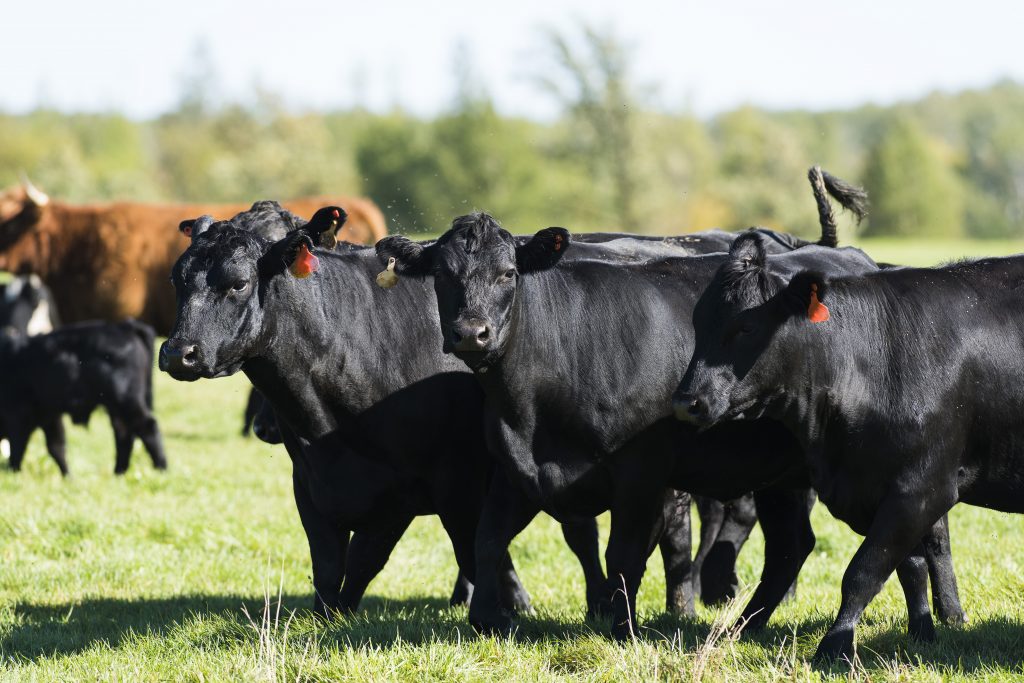
Dr. Derrell Peel, Oklahoma State University Extension Livestock Marketing Specialist, offers his economic analysis of the beef cattle industry as part of the weekly series known as the "Cow Calf Corner," published electronically by Dr. Peel and Mark Johnson. Today, Dr. Peel talks about challenges when it comes to rebuilding the cow herd.
There can be little doubt that the biggest issue in the cattle industry right now is the question of when herd rebuilding will begin. The challenge of herd rebuilding can be summed up with the following three questions.
What do we need to do?
Drought-forced herd liquidation due to roving drought from 2020-2022 has pushed the beef herd smaller than intended and smaller than it needs to be. The January 1 beef cow herd at 28.9 million head, is the smallest since 1962. The beef cow herd has continued to decrease in 2023 and will be smaller yet going into 2024.
Domestic and international demand for U.S. beef will support and encourage a significantly larger herd going forward. This will require increased heifer retention and reduced cow culling that will further squeeze cattle slaughter and beef production for at least 2-3 years. After record beef production in 2022, due to drought liquidation, beef production is falling in 2023 and expected to fall sharply for at least two more years. By 2025, beef production is forecast to be down 15-16 percent from the 2022 level. This will be the lowest level since 2015 and possibly the lowest level since 1993. Herd rebuilding will be needed and encouraged by the market.
What can we do?
Persistent drought is making it difficult to stop herd liquidation, never mind stabilizing and then rebuilding the herd. As of early October, 40 percent of the U.S. is in some stage of drought with 23 percent in D2 (Severe) to D4 (Exceptional) drought. This includes regions where significant numbers of beef cows are located. While herd liquidation is likely still happening in some regions, from a national perspective, herd liquidation has slowed or stopped. Beef cow slaughter is down year over year in 2023 but is not down enough to suggest that the cow herd has fully stabilized.
Moreover, the continued liquidation of cows and heifers in recent years means that the industry has little ability to begin any herd expansion soon. The latest monthly slaughter data shows that total female (cow+heifer) slaughter has averaged 51.7 percent of total cattle slaughter in the last year, the highest average rate since 1986. It will take several months of reduced female slaughter before any herd expansion will be possible. In the most recent herd expansion, the percentage of female slaughter in total cattle slaughter dropped to a low of 43.3 percent in 2016, two years into the last cyclical expansion. The situation now suggests that, once it starts, it will likely take a year or so before the cow herd inventory will stabilize and any expansion can begin.
What do we want to do?
Finally, is the question of producer expectations and whether producers are even trying to begin rebuilding. While some producers can't rebuild due to continued drought or drought recovery, other producers have compelling financial needs to pay down debt or restore equity drained by drought and high input costs before retaining any heifers. Certainly, some producers are beginning to retain heifers but, on balance, it looks like minimal herd rebuilding is starting in 2023. Some older producers are looking at the current market as a means to exit cattle production, or at least, cow-calf production. Sharply higher interest rates and the cost of financing herd rebuilding is also a deterrent for some producers and lenders, especially when combined with some skepticism about how long the current market will last.
All in all, it's beginning to look like 2024 will be, at best, a year of stabilizing the beef cow inventory. Neither Mother Nature nor producers seem to be in much of a hurry to get started with the next herd expansion. When it does start, herd rebuilding is likely to be a lengthy process with strong prices supporting the recovery of the industry.
RON's Dave Lanning has a pre-opening look at today's agricultural Markets.
Click the audio tab below for today's report.
August exports of U.S. pork were steady year-over-year, led by another tremendous performance in Mexico, according to data released by USDA and compiled by the U.S. Meat Export Federation (USMEF). Beef exports were well below the large totals posted in August 2022 but showed improvement over July results.
August pork exports totaled 226,519 metric tons (mt), steady with last year, while export value fell 1.5% to $649.5 million. Through the first eight months of 2023, pork exports were 11% above last year's pace at 1.91 million mt, valued at $5.32 billion (up 9%).
"I cannot say enough about Mexico's remarkable demand for U.S. pork and the critical revenue these exports drive for the U.S. industry," said USMEF President and CEO Dan Halstrom. "But the story of this year's export growth extends well beyond Mexico, as demand is climbing in other Western Hemisphere destinations and the U.S. industry is also achieving gains in several Asia-Pacific markets."
August beef exports totaled 109,000 mt, down 19% from last year – when export volume was the second highest on record – but a 6% increase over July. Export value was $883.9 million, down 15% year-over-year but 9% above July. For January through August, beef exports trailed last year's record pace by 12% in volume (881,343 mt) and 19% in value ($6.69 billion).
"Beef exports certainly face significant headwinds, especially in our large Asian markets where foodservice has been slow to recover and consumer confidence is low due to the impact of rising prices and the strong U.S. dollar," Halstrom explained. "But exports to South Korea and Japan did bounce back to some degree after a difficult July. Mexico continues to be a major bright spot for U.S. beef, and exports to other Western Hemisphere partners in Central and South America and the Dominican Republic also gained momentum in August."
August pork export highlights led by value record in Mexico
Pork exports to Mexico continued to drive toward a new annual record in August. Volume increased 12.5% year-over-year to 91,297 mt, while export value was up 9% to a record-high $211.7 million. Through August, exports to Mexico topped last year's record pace by 14%, reaching 705,312 mt, while export value climbed 18% to $1.47 billion. This includes a sharp increase in pork variety meat exports, which soared by 45% in volume (104,580 mt) and 43% in value ($189.6 million).

Demand for U.S. pork also trended higher in the Dominican Republic, where August exports increased 26% from a year ago to 6,215 mt, valued at $17.9 million (up 28%). Through August, exports to the DR are on a record pace at 66,733 mt, up 26% from a year ago, valued at $181.3 million (up 34%). U.S. pork faces increasing competition in the DR from the United Kingdom, Canada, the European Union and a few pork establishments in Brazil. However, the U.S. holds the advantage of zero-duty access through CAFTA-DR and remains the market's dominant supplier with 94% market share.
August pork exports to Central America increased 16.5% from a year ago to 8,726 mt, while value climbed 23% to $26 million. Through August, exports to the region increased 7% year-over-year to 79,554 mt, valued at $229.2 million (up 13%). Export growth was led by Guatemala, El Salvador, Nicaragua and Costa Rica. Shipments to leading market Honduras increased only slightly in volume (30,342 mt, up 1%) but posted a 17% increase in value ($76.5 million).
Other January-August results for U.S. pork exports include:
August beef exports below last year, but demand robust in Latin America
U.S. beef exports to Mexico continued to trend higher in August, with shipments increasing 16% from a year ago to 18,674 mt. Export value increased even more dramatically, climbing 35% to $110.9 million – the highest since December 2020. Through August, beef exports to Mexico were 17% above last year at 136,508 mt, valued at $773.5 million (up 25%).

Beef exports to Guatemala were the second highest on record in August (1,038 mt, including nearly 1,000 mt of muscle cuts), propelling shipments to Central America to 1,774 mt, an increase of 42% from a year ago. Export value reached $12.1 million, up 33%. Through August, exports to the region were down 4% in volume (13,261 mt) and 6% in value ($91.5 million), but exports trended higher to Guatemala and increased sharply to Honduras and Nicaragua.
Beef exports to the Dominican Republic trended higher in August at 883 mt, up 6%, while value increased 28% to $11.7 million. Through August, exports to the DR were up 6% to 6,527 mt, while value climbed 12% to $73.2 million. With shipments also increasing to the Bahamas and the Netherlands Antilles, January-August exports to the Caribbean increased 5% in value to $170.9 million, despite a 6% decline in volume (18,140 mt).
Other January-August results for U.S. beef exports include:
August lamb exports trend lower
Despite an increase in exports to the Caribbean, August exports of U.S. lamb muscle cuts fell 14% from a year ago to 107 mt – the lowest volume this year. Export value was down 18% to $678,000. Through August, lamb muscle cut exports were down 3% to 1,371 mt, valued at just under $8 million (down 7%). January-August exports increased to the Netherlands Antilles, Panama and Canada but were lower to the Dominican Republic and the Bahamas. Shipments to Mexico were up slightly in volume but value trended lower.
Complete January-August export results for U.S. pork, beef and lamb are available from USMEF's statistics web page.
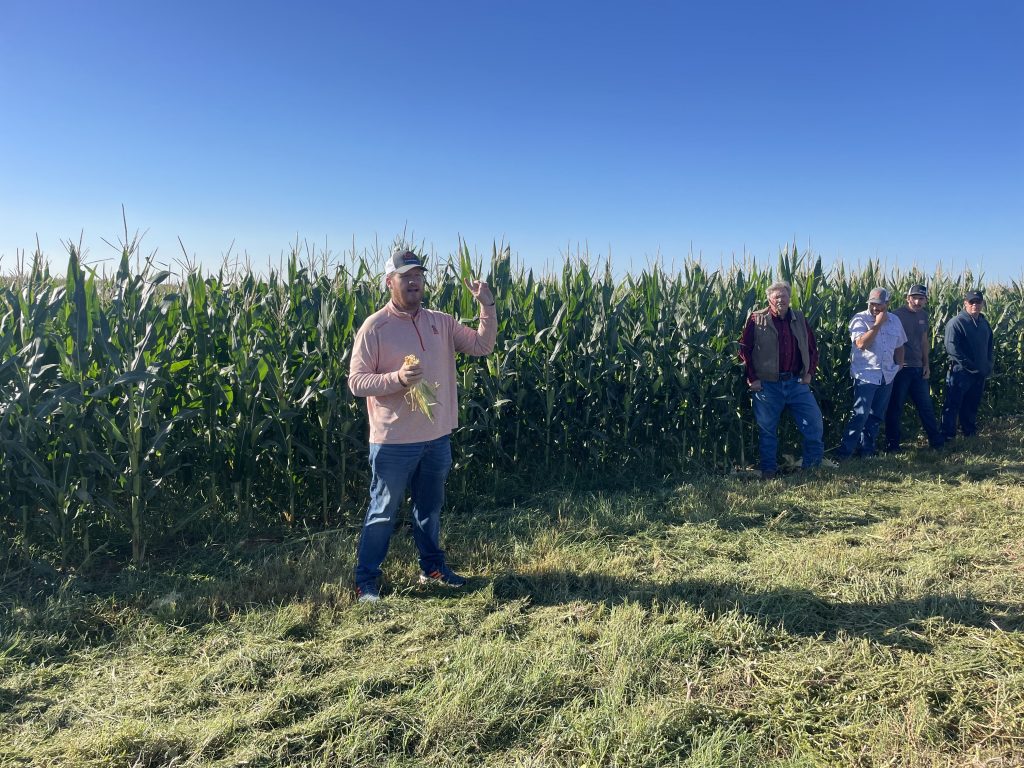
At the Shantz Farm Field Day in Hydro, Okla., Associate Farm Editor Reagan Calk caught up with Oklahoma State University Extension Cropping System Economist Josh Lofton and talked about this year's late-season corn.
Lofton spoke about some late-season corn grown in Hydro at the field day and described this type of corn as a risk-reward scenario.
"Inherently, when we plant these later systems, they are always risky systems because they are outside of what we normally do," Lofton said. "However, the reward is often there, because in a lot of our double crop and a lot of our late season, we are typically in a lot better environmental conditions."
If producers have never planted late corn, Lofton said they need to be prepared for southern rust disease. While southern rust is common in corn, Lofton said it usually comes when the corn is mature enough not to see yield limitations.
"As opposed to last year, we are seeing a little bit more spike of the southern rust than we did last year," Lofton said.
The hot and dry September had an impact on this year's crop as well, Lofton said.
"It really took the top end of our corn out," Lofton said. "We are seeing a little bit smaller kernels to where we are not being able to fill out that ear as well as we would like to."
If rainfall becomes more frequent, Lofton said that will be favorable to the crop, especially if temperatures improve.
"In our full season (corn), a lot of times, growers can even forego a fungicide application depending on where you are in the state and what you typically see, especially for southern rust," Lofton said. "We don't typically see it until much later in the year if we even see it in our full season."
When it comes to late-season or double-crop corn, Lofton said he recommends growers be ready for one or two fungicide applications.
Regarding Nitrogen application, Lofton said it is not typically necessary in terms of yield management, but it is helpful for weed management.
"Maybe we don't gain a lot of bushels from it, but maybe we have a lot cleaner fields, and we are able to capture that yield a lot more efficiently," Lofton said.

The co-chairs of the Senate 4-H Caucus, U.S. Senators Debbie Stabenow (D-MI) and John Boozman (R-AR), applauded Senate adoption of their resolution supporting the designation of "National 4-H Week."
The resolution, introduced by Stabenow and Boozman, supports the designation of October 1 through October 7, 2023 as "National 4-H Week;" recognizes the important role of 4-H in youth development and education; and encourages all citizens to recognize 4-H for the significant impact the organization and members have made and continue to make by empowering young people with the skills needed to lead for a lifetime.
"As a former 4-H'er myself, I know that 4-H empowers young people to thrive in their communities and grow into future leaders through hands-on health, science, agriculture, and civic engagement projects," said Chairwoman Stabenow. "In Michigan, it is the largest youth development organization, and its positive impact on young people across the country cannot be understated. I'm glad that my colleagues came together to recognize 4-H Week and the power of young people to change the world."
"I saw firsthand what a tremendous impact 4-H has on young people while watching my three daughters get so much out of the experience while growing up. They were very active 4-H members and state record book winners. Next to church, there was probably no bigger influence for them than 4-H. That's why I praise 4-H, and encourage young people to join, at every opportunity. I want them to have same positive experience in their lives," said Ranking Member Boozman. "National 4-H Week shines a spotlight on the organization's efforts to help shape the next generation of leaders, and in turn, helps increase the number of young people participating in 4-H."
"This year's theme for National 4-H Week is 'I Love 4-H,' reminding us that every child has valuable strengths and real influence to improve the world around us," said Jill Bramble, President and CEO, National 4-H Council. "We are grateful to Senators Stabenow and Boozman for shining a light on the life-changing power of 4-H. This resolution raises national awareness for 4-H, attracting more adult mentors and the next generation of leaders."
4-H, the youth development program of the Cooperative Extension System of land-grant universities, is the largest youth development organization in the nation, supporting nearly six million young people across the country. The organization provides experiences for young people to learn through hands-on projects in the important areas of health, science, agriculture and civic engagement.
Stabenow and Boozman were joined in introducing the resolution by the following 32 senators: Sens. John Barrasso (R-WY), Mike Braun (R-IN), Sherrod Brown (D-OH), Susan Collins (R-ME), Tom Cotton (R-AR), Mike Crapo (R-ID), Steve Daines (R-MT), Richard Durbin (D-IL), Joni Ernst (R-IA), Deb Fischer (R-NE), Chuck Grassley (R-IA), Martin Heinrich (D-NM), John Hoeven (R-ND), Cindy Hyde-Smith (R-MS), John Kennedy (R-LA), Angus King (I-ME), Amy Klobuchar (D-MN), James Lankford (R-OK), Ben Ray Lujan (D-NM), Cynthia Lummis (R-WY), Joe Manchin (D-WV), Roger Marshall (R-KS), Pete Ricketts (R-NE), James Risch (R-ID), Mike Rounds (R-SD), Rick Scott (R-FL), Jeanne Shaheen (D-NH), Tina Smith (D-MN), Thom Tillis (R-NC), Raphael Warnock (D-GA), Roger Wicker (R-MS) and Todd Young (R-IN).

State agriculture commissioners, secretaries and directors each lead departments and programs unique to their state. Yet, they all play a role in advocating for farmers and agricultural businesses while protecting the people of their state. The National Association of State Departments of Agriculture (NASDA) recently interviewed Oklahoma Agriculture Secretary Blayne Arthur as part of its Work In Ag series to gain insights into the vital role that the chief state agricultural officers play in promoting and advancing farmers and the food system within their respective states.
Arthur says one of her main goals in her position is to boost prospects for local producers and businesses.
"One of the primary goals here in my function at the department of agriculture is to increase opportunities for our 'Made in Oklahoma' companies which are our local producers – and that could be everything from beef producers to folks who are making salsa or jellies or jams," Arthur said.
She shared that this includes expanding market opportunities for them, not only domestically, but also internationally. Branding Oklahoma products for consumers who are paying more attention to where their food comes from not only supports local farmers, but also stimulates the state's economy.
"Something that we've seen over the last couple of years is kind of this new enthusiasm in local products and consumers wanting to know who's producing their food, how they're producing it, where it's being produced. And we're really working on expanding that awareness, but also building up that supply chain at the same time to make sure that that's an easy path for those smaller and medium sized producers to have access to both the domestic and international markets for all their products."
While not everyone is aware of the agricultural industry in their daily lives, Arthur said the agriculture industry impacts everyone, not just those who work in the field.
"We talk a lot in the agriculture industry about how there is less than two percent of the U.S. population who are involved in production agriculture every day, but we also say that 100 percent of people like to eat every single day," Arthur said. "So the work that we do here at the department of agriculture, and certainly the work that our farmers and ranchers do, impacts citizens every single day because of the food that they are consuming. A big part of what we do is make certain that they have the most accessible, affordable, safest food supply that you can find anywhere in the world.
We always like to remind our consumers, no matter where they live – in an urban area or a rural area – agriculture is very important to them.

Working in an industry that covers all Oklahomans means Arthur collaborates with division directors on a wide range of issues from wildfire management to seed and fertilizer regulation to policy issues. She and her team also engage directly with farmers and ranchers, ensuring that government officials are in-touch with farmers and see their challenges from the field. While Arthur says there are no typical days in her position, the employees in her department work under the united mission to uplift the agriculture industry in ways that best benefit everyone in the state.
"A lot of the day is just talking with folks, doing a lot of listening," Arthur said. "We really work to do a lot of listening here so that we can try to improve processes and improve the way that government works. So, every day is different. But ultimately my goal here at the agency, and I would say all of our division directors' goals, is to do a better job with our responsibilities. Ultimately that's having good conversation with the folks that we work with and impact every day."
As Arthur strives to continue advancing her department and life for Oklahomans, she encourages others to consider a career in agriculture. For students or professionals seeking a meaningful profession or considering a career change, agriculture offers a world of opportunities. Arthur highlights that agriculture is not limited to those with a farming background. The sector welcomes individuals with diverse skills and interests; mechanics, engineers, researchers, communicators, pharmacists, veterinarians and farmers are just a few of the positions available in the agricultural realm.
"No matter your personal interest or your studies that you're working on, there is a space for you in the agriculture sector," Arthur said. "I think ultimately the best thing about working in the agriculture sector is you know that the work that you do every single day is going to benefit people, certainly in your community and in your state, but ultimately across the world as well as you help move forward the food and fiber supply for everyone."
Learn more about careers in agriculture that might interest you at nasda.org/workinag.

Senior Farm and Ranch Broadcaster, Ron Hays, is back visiting with the Executive Director of Nutrition Research at the National Cattlemen's Beef Association, Dr. Shalene McNeill, talking about beef nutrition research.
"We want to build on some great research builds that we have had, even over the past few years," McNeill said. "Now, more state beef councils are investing in research because they see the importance as well as what we are doing with the national checkoff."
In the last six months, McNeill said the Beef Checkoff has completed two big studies.
"One is getting back to the dietary guidelines showing that today, Americans are eating beef within the recommendations of the dietary guidelines," McNeill said. "In other words, we don't have to cut back on our beef intake to fit and meet the dietary guidelines."
The second research study released, McNeill said, was focused on diabetes.
"We actually showed that regular beef eating as part of a healthy and balanced high-protein diet reversed some of the symptoms of diabetes," McNeill said. "You can eat a higher protein diet, you can have great health benefits, you can reverse some of the symptoms of diabetes..."
McNeill said Americans do not have to eat a lot of beef, but if they choose to do so, they can still have a healthy and balanced diet.
"A lot of people want to eat a balanced diet, but they want to eat more beef in their diet, and this research shows that when you are eating a balanced diet, you can bump up your protein, it can be from beef, and you can reverse some of those signs of diabetes," McNeill said.
Moving into the new fiscal year, McNeill said checkoff research is looking to study the impact of beef consumption on brain power and brain development.
"We know that beef builds strong bodies because we know that it can build muscle," McNeill said. "Beef eating is really good for muscle repair and muscle maintenance, and that is an important area of research that will continue, especially for aging."
As consumers today are defining health more broadly, McNeill said they want to feel good not only physically but mentally and emotionally.
"We think beef plays a role in all of that, so we are going to do some new areas of exploration that I think are really exciting, but also build on some of those areas we have done in the past like healthy aging, healthy weight loss, healthy growth and development for growth and teenagers...," McNeill said.
McNeill said the consumer has a positive view of beef, and continuing to educate influencers such as dietitians and physicians will be a big focus.
"Physicians are also beginning to see that when their patients are eating diets that they are familiar with, that they like, that can help them stay satisfied longer-and that includes beef- they are becoming more open-minded," McNeill said. "We still have a lot of work to do to make sure we are in front of those health care professionals with the latest science. They want to see science."
To learn more about the human nutrition research efforts that the Beef Checkoff is being invested into, click here.
The Beef Buzz is a regular feature heard on radio stations around the region on the Radio Oklahoma Ag Network and is a regular audio feature found on this website as well. Click on the LISTEN BAR for today's show and check out our archives for older Beef Buzz shows covering the gamut of the beef cattle industry today.
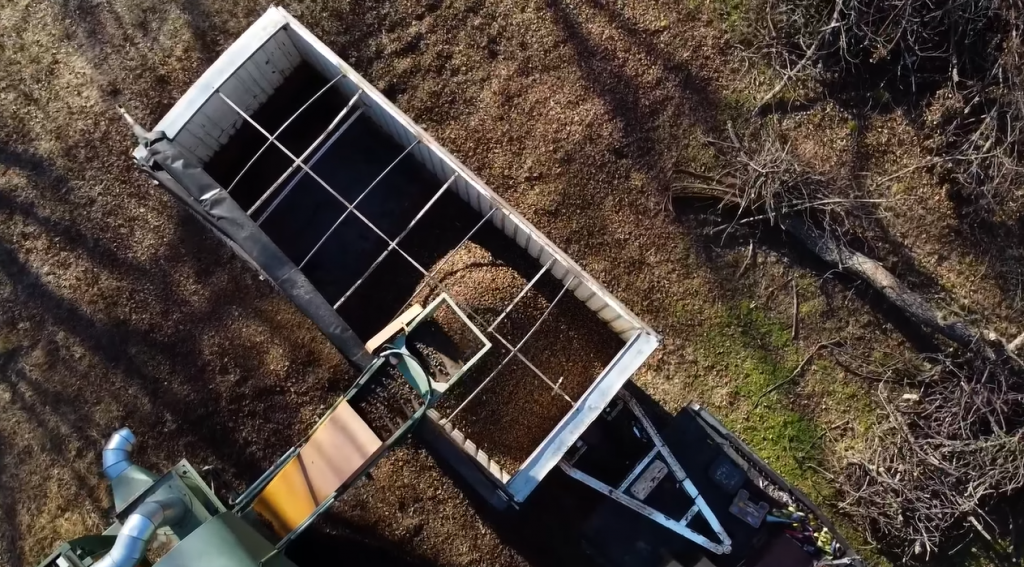
Farm Director, KC Sheperd, is talking with Oklahoma State University Associate Fruit and Pecan Extension Specialist, Becky Carroll, about the upcoming 2023 Native Pecan Field Day on October 12 at Leon Bailey's Pecan Farm in Okfuskee County from 2:30 p.m. to 6 p.m.
While registration begins at 2:30 p.m., Carroll said the event kicks off at 3 p.m.
Anyone can attend the event, but registration is required by October 10, since dinner will be provided. It is recommended to bring a lawn chair and plan to stay for dinner at the grove at the conclusion of the field day.
Carroll said pecans are one of Oklahoma's biggest commodities. Oklahoma is one of the top native pecan producers in the nation, and around 75 percent of Oklahoma's total pecan production is native pecans.
"We produce, on average, about 17 million pounds of pecans each year," Carroll said. "It varies greatly because pecans are called alternate-bearing plants, so they may have a big crop one year and not much the next."
Topics at the field day will include:
This field day is a great opportunity for attendees to learn about updates in the pecan industry and network with other pecan producers.
"A lot of is going to based on that establishing or improving pecan growth," Carroll said.
Charlie Graham with the Noble Research Institute will be in attendance, Carroll said, and he is going to go over how many pecan trees must be in an acre of land to be productive. Graham will be marking out an acre of timber and using that as a real-life example for attendees.
"It is hard to imagine what that looks like unless we measure it out and take a look, and that is one of the biggest problems with our pecans in Oklahoma is that they are going to be overcrowded, and that reduces production and causes a lot of other issues...," Carroll said.
OSU forage specialist, Brian Pugh will be talking about forage and grazing options for native producers, Carroll said, because cattle and native pecans go together often around the state.
"There is a lot of potential out there for people who are interested in developing a native grove and getting into that business," Carroll said. "It does require some management. There are different levels of management, where the more you put in the more you are going to get out..."
For more information, please contact Becky Carroll at 405-744-6139 or becky.carroll@okstate.edu.
October is National Farm to School Month! Join us and thousands of schools, early care and education sites, farms, communities, and organizations across the country as we celebrate food education, school gardens and lunch trays filled with healthy, local ingredients.
At the core, farm to school is built for and by communities, with all of us working together to cultivate a better future for us all. Farm to school brings together a community of individuals across sectors, generations, and interests—farmers, parents, students, advocates, teachers, food service workers, and lawmakers—who all share a common vision of an abundant, nourishing, and equitable food system.
Throughout October, our activities will be focused on celebrating achievements, sharing stories of collaboration and community, and highlighting progress toward racial equity in farm to school, so that we can continue to grow stronger, together.
National Farm to School Month is a great opportunity to plan a new farm to school activity, organize a special celebration of your current efforts, or initiate a new partnership. The Farm to School and Early Childhood Education Program through the Oklahoma Department of Agriculture, Food and Forestry is dedicating the week of October 16-20, 2023, to celebrate all things Farm to School! This week-long celebration highlights the incredible connection between our schools and local agriculture. Join us for a week filled with exciting activities that are designed to ignite curiosity and foster a deeper understanding of where our food comes from. Each day during this week will feature a new way to celebrate.
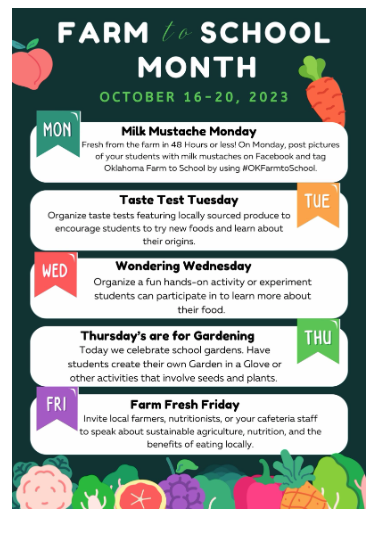
Highlight your farm to school activities in your newsletters, website or blog, and materials that go home to parents like school lunch menus. Invite media & policymakers to visit your school, farm or other sites; participate in Farm to School Month events and activities.
Join the movement by using the hashtags #F2SMonth and #OKFarmtoSchool in your social media posts. Tag @oklahomafarmtoschool in your posts so we can share your content! Follow @farmtoschool on Instagram, LinkedIn, Facebook and X to see highlights of National Farm to School Month celebrations across the country.
KC Sheperd, Farm Director, is back talking with Bob Rodenberger, a partner with Stockman Oklahoma Livestock Marketing, as he gives the latest on the cattle markets.
Rodenberger said runs this week were lighter.
"The rain slowed down some people," Rodenberger said. "Everybody is in farming mode. This happens every October; there is nothing new about this."
Based on the lack of water in ponds and lack of hay for the winter, Rodenberger said he is still seeing a decent number of cows come through.
There is still demand for beef, Rodenberger said, but there is less disposable income for consumers because of inflation.
"I read an article this morning that sales of chicken have gone up drastically versus pork and beef," Rodenberger said.
Regarding the possible government shutdown in the future, Rodenberger said there is no consistent pattern to follow based on past events to say whether the market will break to the upside or downside.
"I don't think there is anything to predict," Rodenberger said. "It is something to worry about. The worst thing is, if they shut down, all of our government programs are going to be on stall. It doesn't mean they are not going to install them back, but if you are trying to enroll in something or if you are trying to do your LRP, that will be non-existent until they open the government back."

The labor shortage continues to hinder Main Street as 43% (seasonally adjusted) of all small business owners reported job openings they could not fill in the current period, up three points from August.
"Small business owners have spent the first three quarters of 2023 working to recruit and retain qualified employees for their businesses, but it still remains a top challenge," said Bill Dunkelberg, NFIB Chief Economist. "Owners continue to raise compensation to attract the right employees."
Though state-specific data is unavailable, NFIB State Director Jerrod Shouse urged the State Legislature to keep small business owners and the challenges they face in mind:
"All year, Oklahoma job creators have stood in the gap of their open positions all while trying to recruit top talent and retain their employees. This challenge is compounded by inflation, which continues to put pressure on prices. The Special Session that was called earlier this week was an opportunity to further reduce the tax burden on Main Street. Our members are hopeful lawmakers will put their differences aside and prioritize the well-being of our state's economy."
The percent of small business owners reporting labor quality as their top business operating problem remains elevated at 23%. Labor cost reported as the single most important problem for business owners increased one point to 9%, four points below the highest reading of 13% in December 2021.
Owners' plans to fill open positions remain elevated, with a seasonally adjusted net 18% planning to create new jobs in the next three months. Overall, 61% of owners reported hiring or trying to hire in September, up two points from August. Ninety-three percent of those hiring or trying to hire reported few or no qualified applicants for the positions they were trying to fill. Thirty percent of owners reported few qualified applicants for their open positions and 27% reported none.
Seasonally adjusted, a net 36% of owners reported raising compensation. A net 23% of owners plan to raise compensation in the next three months, down three points from August.
Thirty-seven percent of owners have job openings for skilled workers and 18% have job openings for unskilled labor. When asked about the overall change in employment at the firm, 10.8% reported higher and 12.2% reported lower. Overall, small firms have not been successful at adding to employment growth, and the major problem appears to be a lack of qualified applicants, even in the services sector which requires little technical training to fill a position.

Beginning in the late '70s, the Beef Quality Assurance program has changed over time to serve as an educational resource for producers while having a positive impact on the beef industry. Dan Kniffen, Ph.D., Penn State assistant professor of animal science, and Josh White, NCBA senior executive director for producer education and sustainability, join the podcast to discuss how the BQA program has evolved and how the program has made progress. Powered by the American Hereford Association, 1881, has a mission to share stories of the breed's rich history in the beef industry, connect with the faces behind the bald face and share the progress that has impacted the industry. Tune in wherever you listen to podcasts or at the link below.
To learn more about the BQA program, visit bqa.org
RON's Dave Lanning has a pre-opening look at today's agricultural Markets.
Click the audio tab below for today's report.

With a government shutdown seeming inevitable at the end of last week, Congress surprisingly passed a last-minute, short-term spending bill over the weekend to keep the government funded through Nov. 17.
While this is positive news, soy growers are keeping an eye on the 45-day deadline and the developments surrounding the historic vacancy in the role of House Speaker, which impacts legislative activity in that chamber.
Past ASA president Kevin Scott (SD) told AgDay that the weekend stopgap funding measure was a welcome surprise, but lawmakers need to find long-term solutions and ensure the federal budget protects farm programs. He emphasized that the ag budget is only a small percentage of the federal budget.
Appropriations
After greater clarity is known regarding the next Speaker of the House, many expect the House to resume work on annual appropriations bills that have not yet been approved. According to Agri-Pulse, there is no update on the ag spending bill that failed last week. The bill failed 191-237 last Thursday, when 27 Republicans joined Democrats in opposition.
While the ag spending bill did not pass, soy growers still celebrated a major win last week when the House struck down Rep. Victoria Spartz's (R-IN) amendment to the legislation that aimed fire at commodity checkoff programs and was vehemently opposed by the soy industry and others.
Although it is unclear when the Senate will move forward with its ag appropriations bill, ASA will continue to watch developments closely, as an anti-checkoff amendment to this bill was filed recently by Sen. Mike Lee (R-UT).
Farm Bill
The stopgap legislation did not include an extension of the current farm bill, which generally expired Sept. 30; however, it is no surprise that additional time is needed to craft a new farm bill. Temporary lapses and extensions have occurred in past reauthorizations. If history is a guide, an extension of some sort – short or longer-term – may arrive in the December timeframe if needed.
House and Senate Agriculture Committee leaders are delayed in unveiling draft farm bill legislation and moving it forward for a variety of reasons, including budget challenges.
Title I & Crop Insurance
ASA is receiving questions about a lapse in Title I farm safety net programs and crop insurance. Two very important points:
Crop insurance is authorized under entirely separate law and does not expire. Amendments to crop insurance are often incorporated into farm bills to address various interests.

| Gross Receipts to the state Treasury for the past 12 months outpace the prior year's revenue in September. While the downward trend from the March record annual high of $17.64 billion continues, the 12-month total of $17.14 billion is still $110.66 million or 0.6 percent higher than the previous year's revenues. The September receipts of $1.475 billion were $225 million or 18 percent more than the $1.25 billion generated in August. When comparing this as a single month to last September, the revenue totals show a drop of $113.6 million or 7.1 percent. This monthly comparison shows the Gross Production Tax component, which are receipts from energy sources, fell from $184.7 million to $93.4 million, a decrease of $91.3 million or 49.4 percent. |
 |
| Other Indicators The U.S. jobless rate rose to 3.8 percent in August, up by 0.3 percent from the previous month. Oklahoma's unemployment rate also had a modest increase for the month ending at 2.8 percent, up by 0.1 percent in August. As measured by the Consumer Price Index, the U.S. Bureau of Labor Statistics reports the annual inflation rate rose in August to 3.7 percent. The energy component of the index still showed a decline over the year, dropping 3.6 percent, but the food index remained higher than the overall inflation rate, ending the month at 4.3 percent. Regional economic trends continue to indicate cautious optimism. The Creighton University Mid-America Business Conditions Index for the nine-state region increased from 49.5 to 52.5 in September, rising above growth neutral. The Oklahoma component of the index showed solid improvement in September, growing to 53.7 from 46.9 the previous month. |
 |
 |
 |
| About Gross Receipts to the Treasury The monthly Gross Receipts to the Treasury report, developed by the State Treasurer's Office, provides a timely and broad view of the state's economy. It is released in conjunction with the General Revenue Fund report from the Office of Management and Enterprise Services, which provides information to state agencies for budgetary planning purposes. The General Revenue Fund, the state's main operating account, receives less than half of the state's gross receipts with the remainder apportioned to other state funds, remitted to cities and counties, and paid in rebates and refunds. Later this month, please look for the Oklahoma Economic Report which provides a broader economic overview. |
View full PDF report below.
This Week on SUNUP is Oklahoma State University Extension grain market economist Kim Anderson. During this week's edition, Anderson talks about commodity prices.
Anderson said wheat prices are at $6.25 in the Pond Creek area and around $6.35 in the panhandle. Wheat harvest is expected to be around the same as last year at about 69 million bushels, Anderson added.
As for where wheat prices will end up, Anderson said it is not likely for prices to go lower than $3 or above $13 dollars, but it is not impossible either.
Looking at the 2024 harvest prices, Anderson said right now, wheat producers can forward contract for $6.25.
"If you look from harvest to harvest, from year to year, the average change is $1.26, and the average price in Pond Creek has been $7.45, so that gives you a range of $6.20 to $8.70 for next year," Anderson said. "We are at $6.25 right now, so we are already at the bottom of that."
Anderson said that based on history in Oklahoma, most producers will get a higher average price for their wheat if they will sell during the June to August period.
This week on SUNUP:
Watch SUNUP:
Saturday at 7:30 a.m. & Sunday at 6 a.m. on OETA (PBS)
YouTube.com/SUNUPtv
Agricultural producers' sentiment declined for the second month in a row during September as the Purdue University-CME Group Ag Economy Barometer fell 9 points to a reading of 106. Producers expressed concern about both their current situation as well as future prospects for their farms. The Current Conditions and Futures Expectations Indicesboth declined 10 points in September leaving the Current Conditions Index at a reading of 98 while the Future Expectations Index stood at 109. Weakening prices for major crops and ongoing concerns about high production costs and interest rates weighed on producers' minds this month. September's declines left all three indices below year-ago levels. This month's Ag Economy Barometer survey was conducted from September 11-15, 2023.
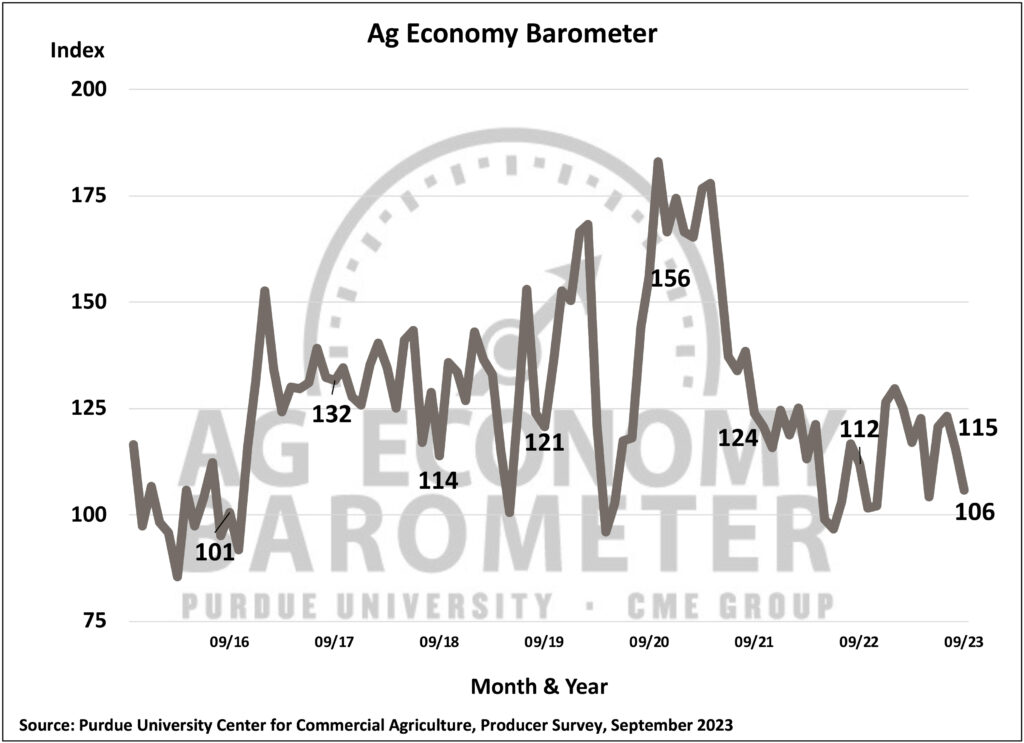
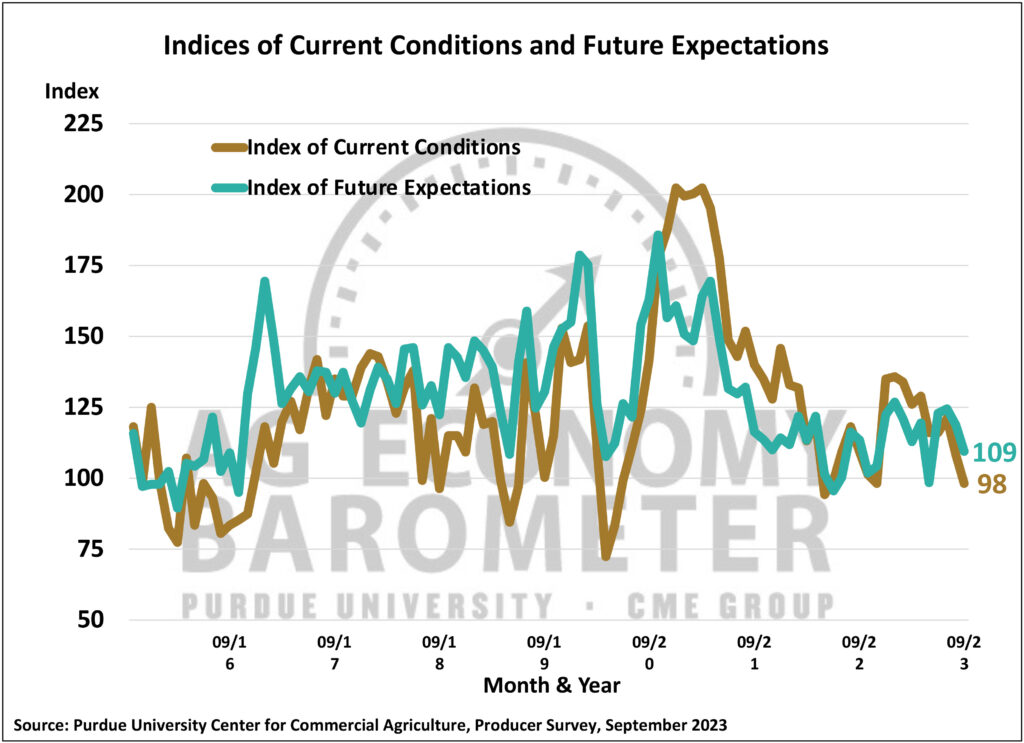
The Farm Financial Performance Index was unchanged in September compared to August, leaving the index at a reading of 86. Although the index didn't change, there was a shift in responses to the question the index is based upon, with fewer producers reporting that they expect financial performance to be about the same as last year. In a nod to how variable conditions have been around the country this growing season, there were small increases in the percentages of producers who 1) expect better conditions and 2) expect worse financial conditions compared to last year.
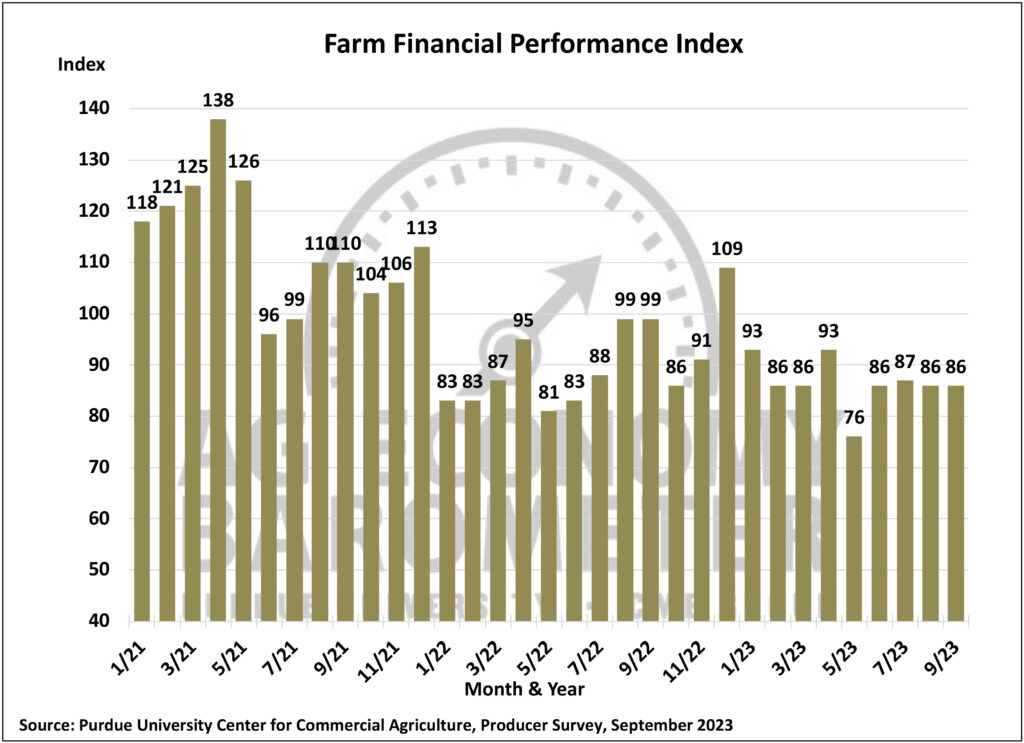
There was a small uptick in the Farm Capital Investment Index, which rose from a reading of 37 in August to 39 in September. The increase resulted from a slight rise in the percentage of producers who said now is a good time to make investments. However, three-fourths of the producers in this month's survey still said it's a bad time for large investments, pointing to the high cost of machinery and new construction along with rising interest rates as primary reasons why they feel that way. Notably, 40% of producers who feel it's a bad time to invest cited rising interest rates as a key reason, up from 35% last month and up from 14% when this question was first posed in July 2022. Starting in July 2023, the survey has posed an additional question to producers who say it's a good time to invest. Among those who think the investment climate is favorable, the number one reason cited the last three months has been strong cash flows on their farm operations.
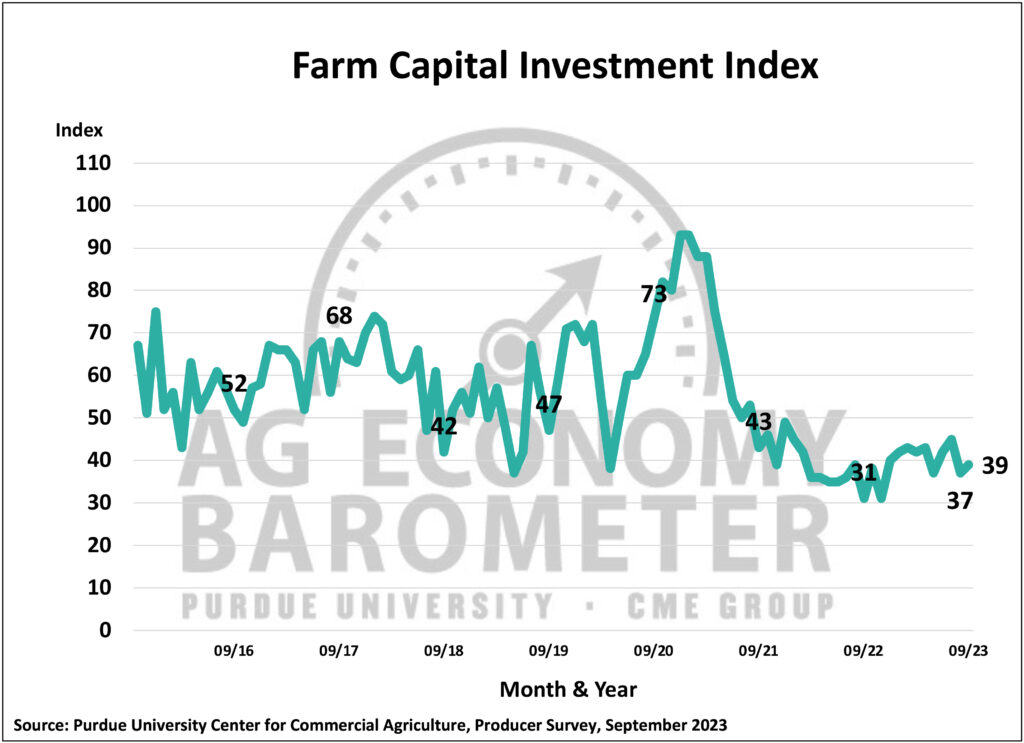
Producers continue to point to high input costs as a top concern for their farming operations in the year ahead, with nearly one-third of respondents in this month's survey saying that it's their number one concern. Nearly tied for second place this month were rising interest rates, chosen by 25% of respondents, and lower crop and/or livestock prices, chosen by 22% of farmers in this month's survey. The percentage of producers choosing lower crop and/or livestock prices has increased since the beginning of the year when just 16% of producers cited it as a top concern.
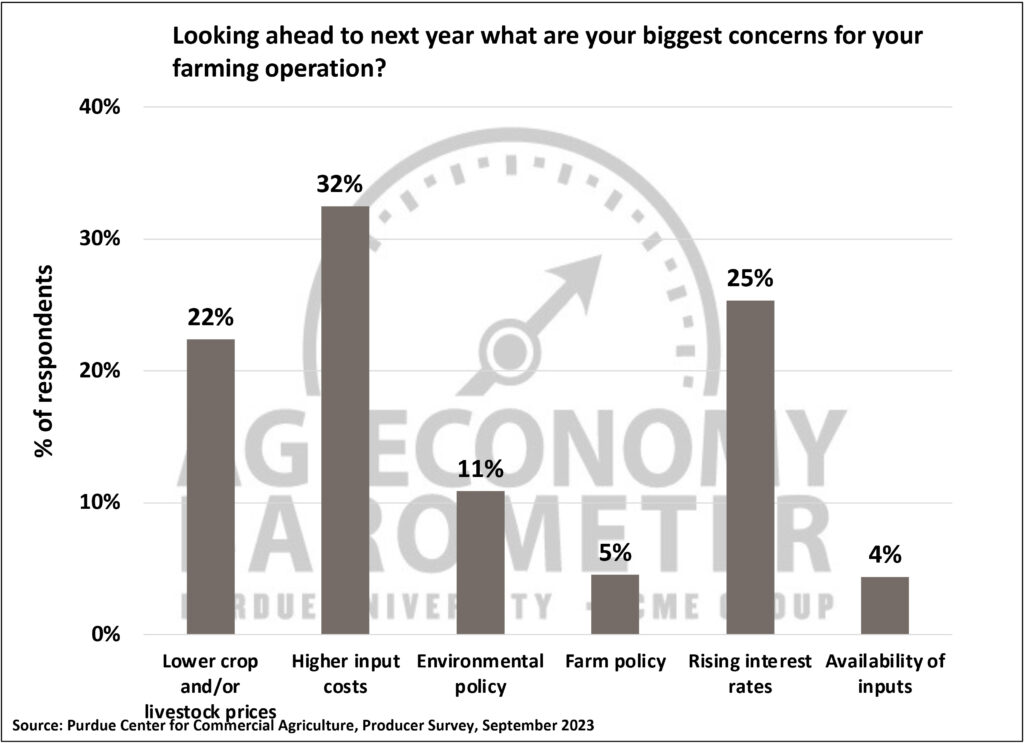
Producers remain relatively optimistic about farmland values. The Short-Term Farmland Value Expectations Index was unchanged at a reading of 126 while the long-term index rose 2 points to 153. The long-term index, which is focused on the five-year outlook, has climbed 16 points since hitting its low point back in February. The short-term index bottomed in May at a reading of 110 before bouncing back to its current level in June. The relative optimism about farmland values expressed by producers is somewhat surprising given concerns expressed about high input costs, rising interest rates, and the risk of lower crop and or livestock prices. Respondents who expect farmland values to rise over the next five years continue to point to non-farm investor demand for farmland along with inflation as the top two reasons for farmland values to continue rising.
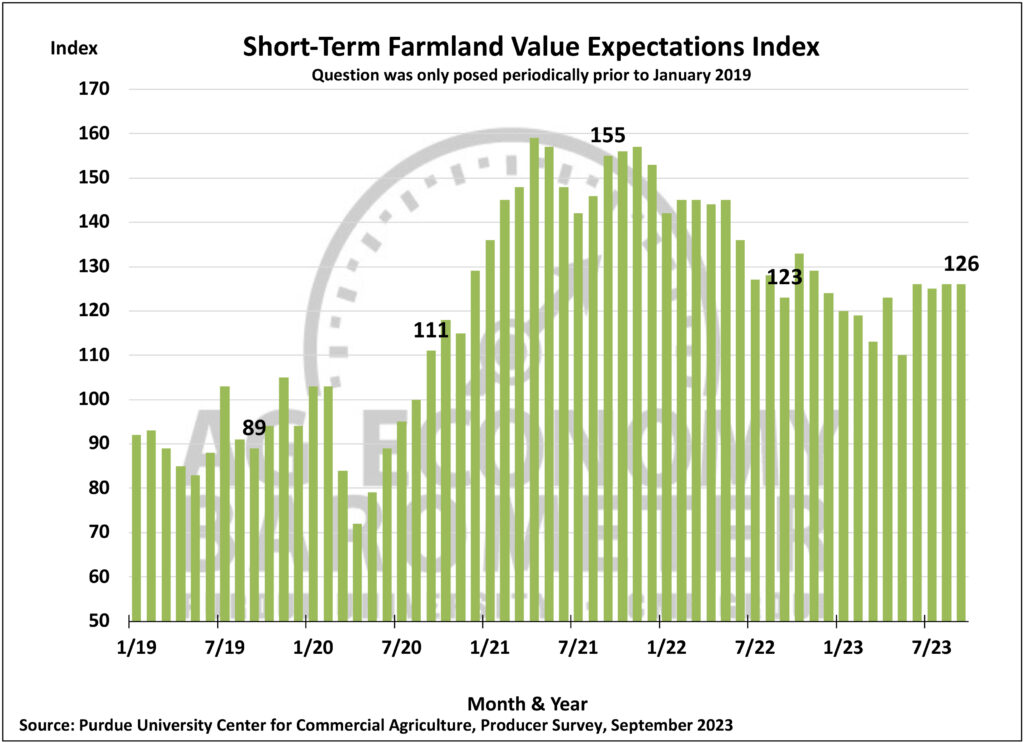
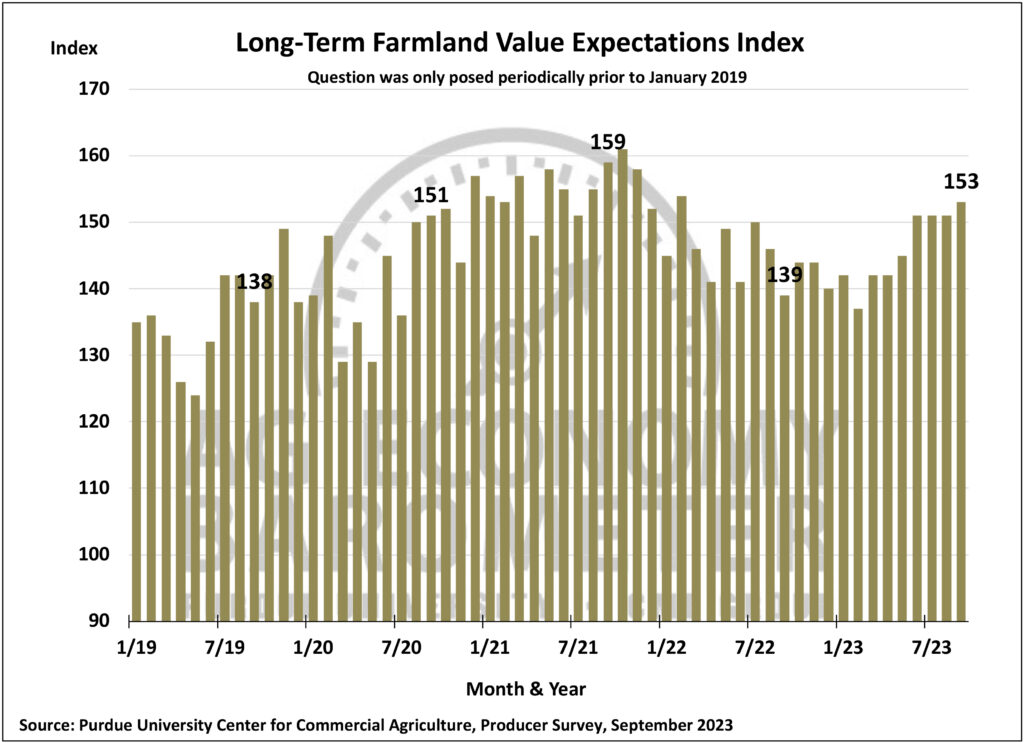
The September survey included several questions posed to corn and soybean growers to learn more about their perspective on cover crops. Just over half (52%) of the corn/soybean growers said they currently plant cover crops on a portion of their acreage. However, of this group, nearly half (47%) of them said they used cover crops on no more than 25% of their acreage. Among those who reported having used cover crops, 41% of respondents said they had used cover crops for 5 years or less, while 14% said they've been using cover crops for more than 20 years. The top two reasons cited by cover crop users for planting cover crops were improves soil health and improves erosion control. Farmers who tried planting cover crops and chose to discontinue their use pointed to varied reasons for dropping cover crops from their rotation, including saying it was not profitable, followed by hurts crop yields, insufficient soil benefits, and a lack of resources to plant cover crops. Interestingly, just over half of producers who discontinued planting cover crops said there were "other" reasons for not planting cover crops in addition to those provided in the response list.
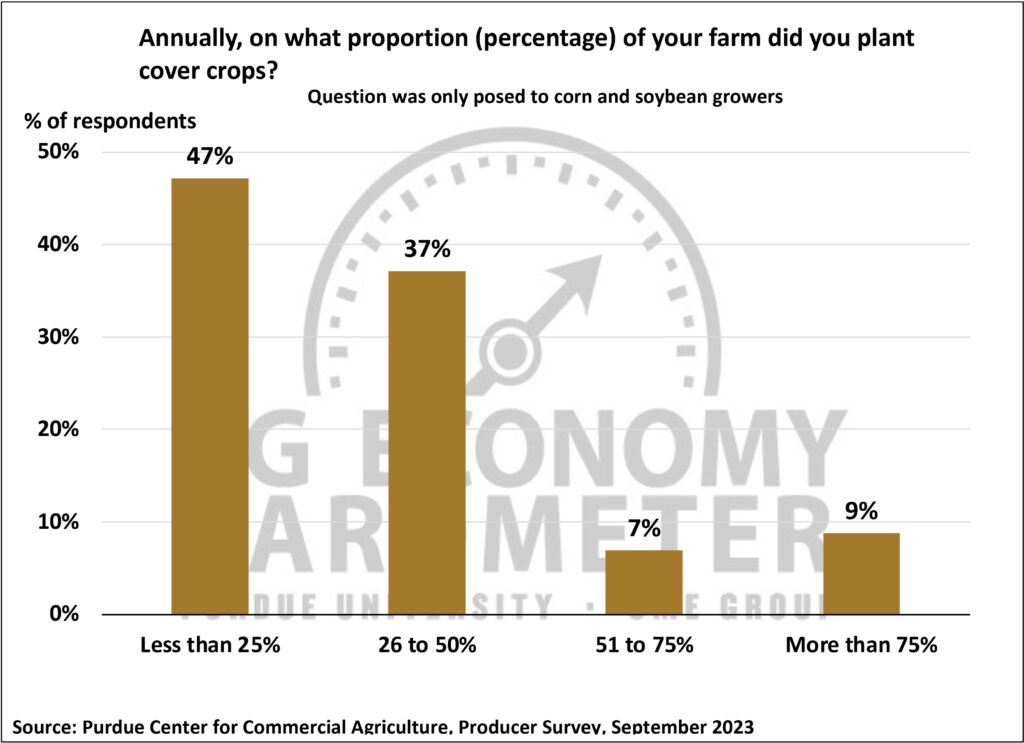
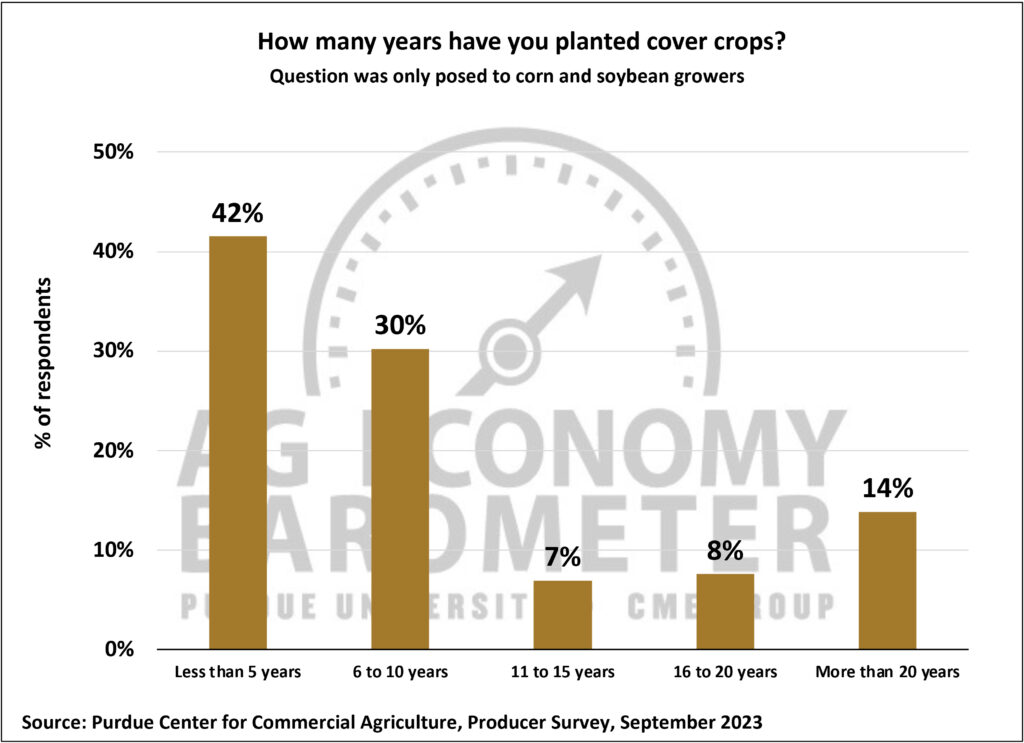
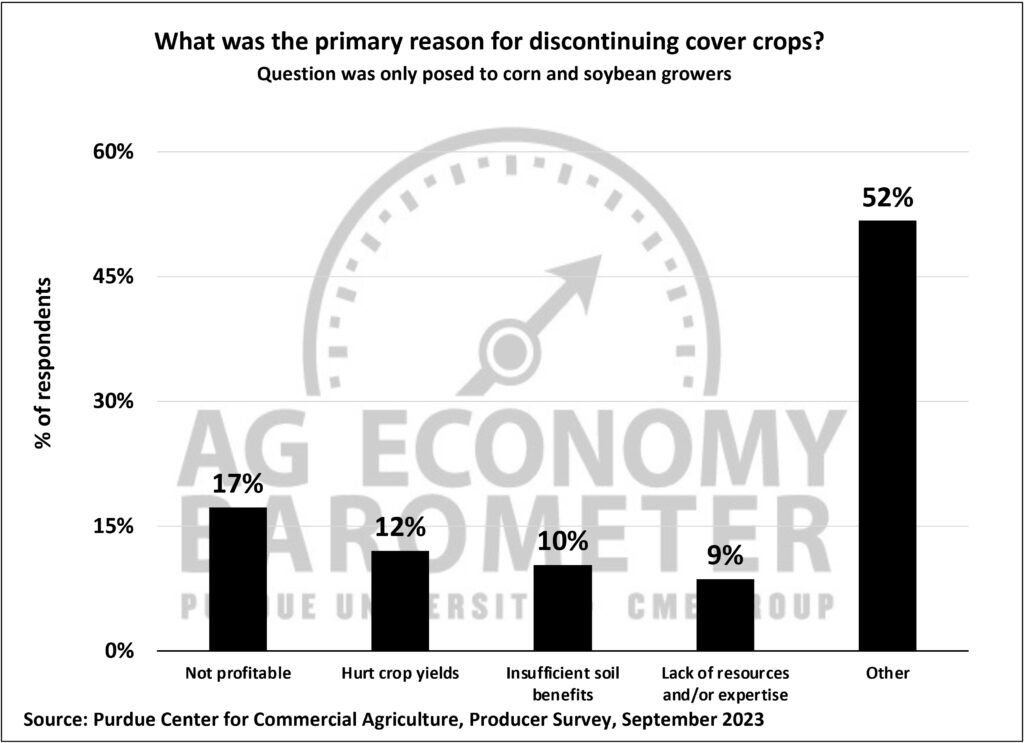
Wrapping Up
Farmer sentiment weakened in September as the Ag Economy Barometer fell 9 points from its August reading. The dip in farmer sentiment was attributable to producers' concerns about both the current situation and the future as both the Current Conditions and Future Expectations indices declined. Worries about the risk of declining prices for crops and livestock along with ongoing concerns about high input costs and interest rates weighed on producer sentiment this month. Despite the weak sentiment reading, producers remain relatively optimistic about farmland values as expressed by both the short and long-term farmland values indices.
Food insecurity remains prevalent in the U.S. with sparsely-populated rural areas often being disproportionally affected. Rural communities comprise 63% of all U.S. counties but 87% of counties with the highest food insecurity rates. The primary challenge for rural residents is the prevalence of low-access food deserts, where the distance to supermarkets impedes the ability of consumers to access a wide range of food and beverage options.
According to a new report from CoBank's Knowledge Exchange, the sheer volume of consumers experiencing food insecurity due to poor access represents a potential market opportunity for food manufacturers. Serving these customers through direct-to-consumer ecommerce platforms or direct delivery could be a relatively easy and profitable means to improve their food options.
"A sizable portion of the country falls within the realm of a food desert and with 10% of the U.S. population experiencing some degree of food insecurity, the market is there," said Billy Roberts, senior food and beverage economist for CoBank. "Innovation in the areas of driverless and drone delivery could ultimately provide food and beverage companies even more opportunities to establish direct relationships with underserved rural consumers."
U.S. Census Bureau data indicates that 27 million Americans suffered from food insecurity as of July 2023. Feeding America estimates the number of food insecure is closer to 34 million.
Dozens of rural counties have no food store options. Walmart is the largest food retailer in the U.S. but there are considerable gaps in its market penetration. Population density suggests many of the food deserts in less-populated areas of the country simply do not have the consumer base to support a full-size grocery store.
Research from The Brookings Institution finds 93% of the U.S. population—including 90% of people living in food deserts—has access to food delivery from at least one of four major players: Amazon, Instacart, Uber Eats or Walmart. However, only 37% of rural residents within limited-access food deserts have access to the major food delivery services. Significant barriers remain for these communities, often including the lack of reliable broadband connectivity.
Convenience and dollar stores have increasingly focused on foods, improving access in some rural communities. However, low margins may be an obstacle to their continued growth in food sales. Dollar Tree recently pared down its profit expectations, citing an increase in low-margin purchases such as food, as well as issues with shrink and fuel costs.
Roberts said agribusinesses and food manufacturers looking to establish a more direct line to their consumers may well consider adopting tactics seen during the height of the pandemic. "Farmers in rural America expanded their own delivery capabilities to meet consumer demand that stemmed from empty grocery store shelves or consumers efforts to isolate themselves," he said.
For shelf-stable food and beverage, delivery mechanisms exist even if it takes the form of FedEx, UPS or USPS. Fresh food offerings present another challenge altogether. But direct-to-consumer approaches will become more viable as delivery technologies improve. Food and beverage manufacturers could incorporate those technologies and establish their brands as part of rural consumers' ensconced ordering procedures.
Read the report, How Delivery Innovation Can Reduce Hunger in the Heartland.
American Farmland Trust, has announced it will sponsor the new national public television series America The Bountiful with its premiere planned for Spring 2024.
American Farmland Trust is the only national organization that takes a holistic approach to agriculture, focusing on the land itself, the agricultural practices used on that land, and the farmers and ranchers who do the work.
America The Bountiful is a food, history, and travel series exploring the regional food traditions of America's heartland, hosted by tv personality, cookbook author, and radio podcast host Capri Cafaro. The new series takes viewers on a journey into America's heartland to learn about culture and find inspiration in the chronicles of farmers, artisans, restauranteurs, and home cooks through the bounty that they grow, produce, and eat. The show will help shine a spotlight on the vibrant, culturally diverse, untold food stories and traditions hidden across America.
"AFT is focused on saving the land that sustains us all and our new partnership with America the Bountiful will help us reach an important PBS audience of engaged and committed conservationists, farmers, and food lovers across the country," said AFT President and CEO John Piotti. "We're excited to amplify the great stories from America the Bountiful with our supporters to further educate about the importance farmland protection, sound agriculture practices, and resilient food systems. It's an exciting partnership to share our vision of keeping America bountiful!"
AFT and its partners across the nation have permanently protected nearly 7 million acres of farmland. An additional 300 million acres of farmland have been protected with conservation practices. Since its founding over forty years ago, AFT has raised awareness about farmland loss with conservationists, farmers, policymakers and the public. This sponsorship will continue that work to engage a broader audience about the importance of farmland protection and to gain support for much-needed state and local policies to facilitate conservation on our nation's most productive, versatile, and resilient soils.
"I cannot think of a more fitting partner for our program than America Farmland Trust," says Capri S. Cafaro, the creator, executive producer and host of America The Bountiful. "It is our objective to capture stories that celebrate American farmers, acknowledge the importance of agriculture, and help educate audiences about where their food comes from. We are honored to have the support of an organization that holds shared values."
Keeping America bountiful isn't easy. Today, our nation's most productive and resilient land is at risk of being fragmented or lost to development, and farmers face increasing pressure from thinner margins and a changing climate. To help educate and engage the audience as part of the sponsorship, American Farmland Trust will share research and resources with the fans of the show through social media and special events. Supporters can learn more about farmland stewardship and join AFT's Keep America Bountiful® campaign to help support programs that keep farmers farming, make productive use of our agricultural resources and ensure a bounty for future generations of Americans.
Join AFT's Keep America Bountiful® campaign: https://farmland.org/keep-america-bountiful/
Learn about the series America the Bountiful – https://americathebountifulshow.com/
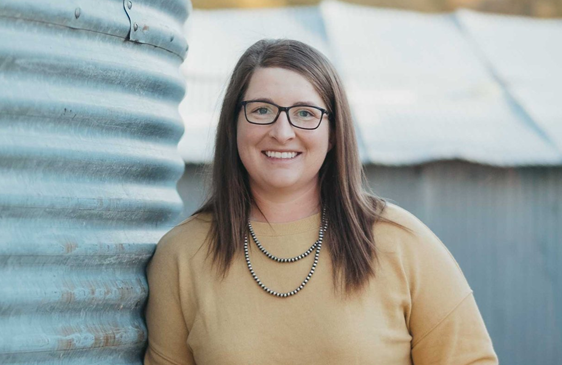
| The American Hereford Association (AHA) is pleased to welcome its newest team member, Emilee Holt, Caldwell, Idaho, as the Western region field representative. In her position, Holt will attend Hereford sales and events and assist breeders with their marketing and genetic selections. She will also help educate members and commercial producers about AHA programs and other beef industry opportunities. Holt is an Idaho native and lifelong Hereford enthusiast. She grew up raising and exhibiting Hereford cattle and was a 15-year member of the Idaho Junior Hereford Association. "The versatility of the Hereford breed adds a lot of value for both seedstock and commercial operations," Holt says. "I'm excited to continue promoting Hereford genetics in this new role while assisting breeders in my home region." A 2019 Kansas State University (K-State) animal sciences and industry alumna, Holt has worked for NJW Polled Herefords for almost four years, while assisting her family with their Hereford herd. Holt has experience in both the commercial and seedstock sectors of the beef industry. She completed internships with Wagyu Genetics and Boise Valley Feeders under the Agri Beef Company, where she assisted with analyzing DNA and feedlot management. Holt was also a member of the livestock judging and meat evaluation teams at K-State. "We are excited to have Emilee join the AHA team. She brings a wealth of Hereford knowledge and experience to the AHA and seedstock producers in her territory," says Joe Rickabaugh, AHA director of seedstock marketing. "Emilee is a vibrant person who enjoys Hereford cattle. We welcome her to Team Hereford." Holt will begin her duties Oct. 25. She can be contacted at 208-965-3130, or at eholt@hereford.org. |

The Department of Natural Resources Management at Texas Tech University, the Texas Parks and Wildlife Department (TPWD) and the Texas Wildlife Association (TWA) are hosting the Panhandle Wildlife Conference (PWC) Oct. 20-21 at the National Ranching Heritage Center in Lubbock.
The conference is the first of its kind since the 1990s and will explore the diverse landscape and wildlife of the Texas Panhandle, a region rich in both history and natural resources.
"This conference was designed with the Texas Panhandle landowners and land managers in mind," said Brad Simpson, TPWD district leader for District 2. "We wanted to showcase not only what is going on in the Panhandle, but also provide land managers the opportunity to see and hear up-to-date information.
"We are excited to be able to share some of this information with Panhandle landowners and land managers. There is something for everyone."
Presenters at the conference include land owners, TWA leadership, personnel from TPWD, the Texas A&M Forrest Service and the U.S. Fish & Wildlife Service among others.
The event will also include a chuckwagon dinner and social following the evening panel discussions Friday.
Early bird registration is available through Oct. 9. Tickets for the event are $50 for students and $75 for the public.
Tickets also are available for those wishing to use the conference as a continuing education credit.
To register for the event, click here and for more information, including an agenda for the conference, please visit the PWC website.
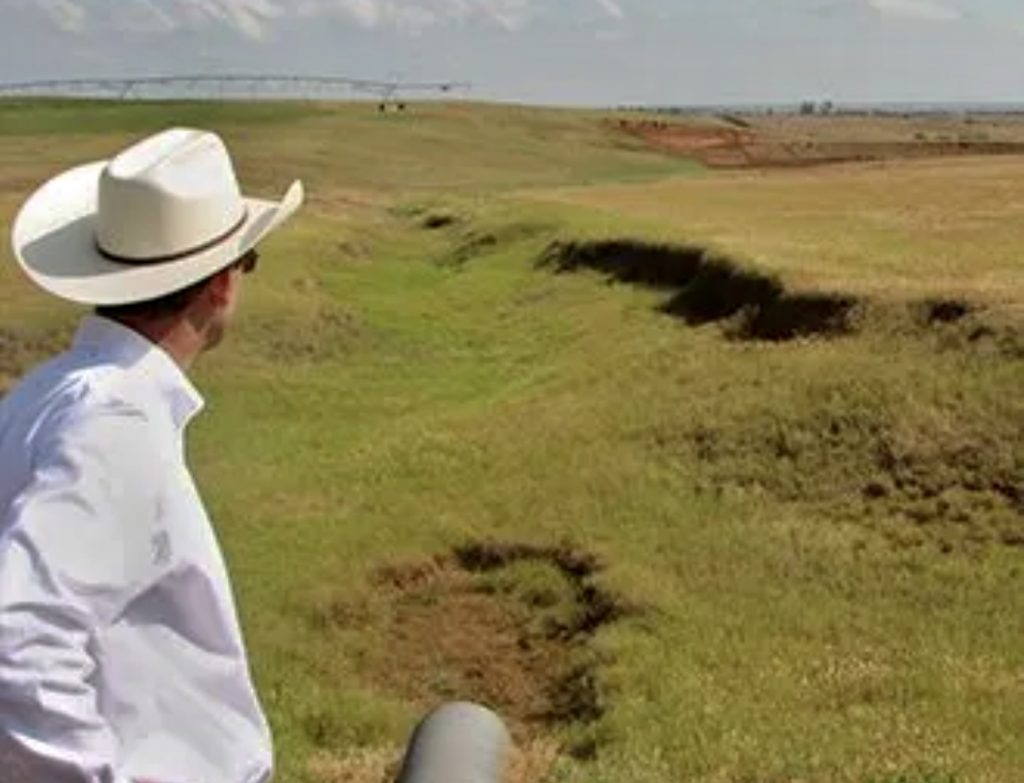
The 41st annual Commissioners of the Land Office (CLO) fall land lease auctions will begin October 9, 2023 in Boise City and conclude October 19, 2023 in Shawnee. Over 500 tracts in 36 counties will be available for lease at the eight auctions.
All leases are for a term of five years unless otherwise indicated. Detailed lists of available tracts, including minimum bids required, are available online at www.clo.ok.gov. You can also get details on the leases to be auctioned by clicking here for the CLO Brochure. Visit the agriculture real estate auction page and sign up for email updates to stay informed of auction specifics. The leases are suitable for a variety of agricultural and recreational uses and generate revenue that goes directly to Oklahoma education.
Leases in Cimarron County will be auctioned at the Cimarron County Fairgrounds at 9 a.m. Oct. 9.
Leases in Beaver and Texas County will be offered at 2 p.m. Oct. 9 at the Texas County Fairgrounds.
Bidding for Ellis, Harper, Major, Woods and Woodward County leases begins at 10 a.m. Oct. 10 at the Woodward Event Center and Fairgrounds.
Leases in Alfalfa, Blaine, Garfield, Grant, Kay and Kingfisher counties will be offered at 10 a.m. Oct. 11 at the Garfield County Fairgrounds in Enid(in the Chisholm Trail Pavilion.)
Leases in Caddo, Greer, Harmon, Kiowa, Roger Mills and Washita counties will be auctioned at 10 a.m. Oct. 16 at the Comanche County Fairgrounds in Lawton.
Leases in Beckham, Caddo, Kiowa and Washita counties will be auctioned at 10 a.m. Oct. 17 at the Elk City Convention Center.
The Logan, Noble, Pawnee and Payne County lease auction will be held at 10 a.m. Oct. 18 in
Stillwater at the Payne County Expo Center.
Auctions will conclude at the Heart of Oklahoma Expo Center in Shawnee at 10 a.m. Oct. 19 with Canadian, Cleveland, Lincoln, McClain, Oklahoma and Pottawatomie County leases.
Statewide, over 750,000 acres are actively managed by the Commissioners of Land Office and revenue generated from lease auctions is distributed to Oklahoma schools and universities. In Fiscal Year 2021, over $116 million was distributed to Oklahoma education beneficiaries.
Common schools do not have any restrictions on how the Land Office dollars are used and may be used for everything from teachers' salaries to bus maintenance and expense. Higher education is required to use the funds for capital improvements, which could include anything from maintenance to funding for new buildings or dormitories.
The PDF file below details all of the available tracts on a county by county basis- you can also access it online- available here

Laura Wolf, a seasoned communications strategist, has joined the National Corn Growers Association (NCGA) as director of investor relations and communications.
Wolf will work closely with NCGA funders, such as checkoff programs, thinking globally about the organization's funding needs and reporting on its accomplishments. She will also work on public relations efforts for the organization.
"Laura brings a great deal of experience and know-how to this position and will be an incredible asset as we work to communicate with all of our stakeholders," said NCGA Vice President of Marketing and Communications Nicole Hasheider. "She is equal parts strategist and tactician, and her skills will go a long way in advancing the cause of corn growers."
Wolf comes to NCGA from OBP Agency, one of the country's leading agencies focused on advertising and public relations for the agriculture industry, where she worked on campaign development, brand strategy and cross-channel communications for the agency's leading clients. She also helped grow the agency's agriculture client portfolio.
A native of the Show Me State, Wolf holds a degree from Missouri State University in agricultural communications.
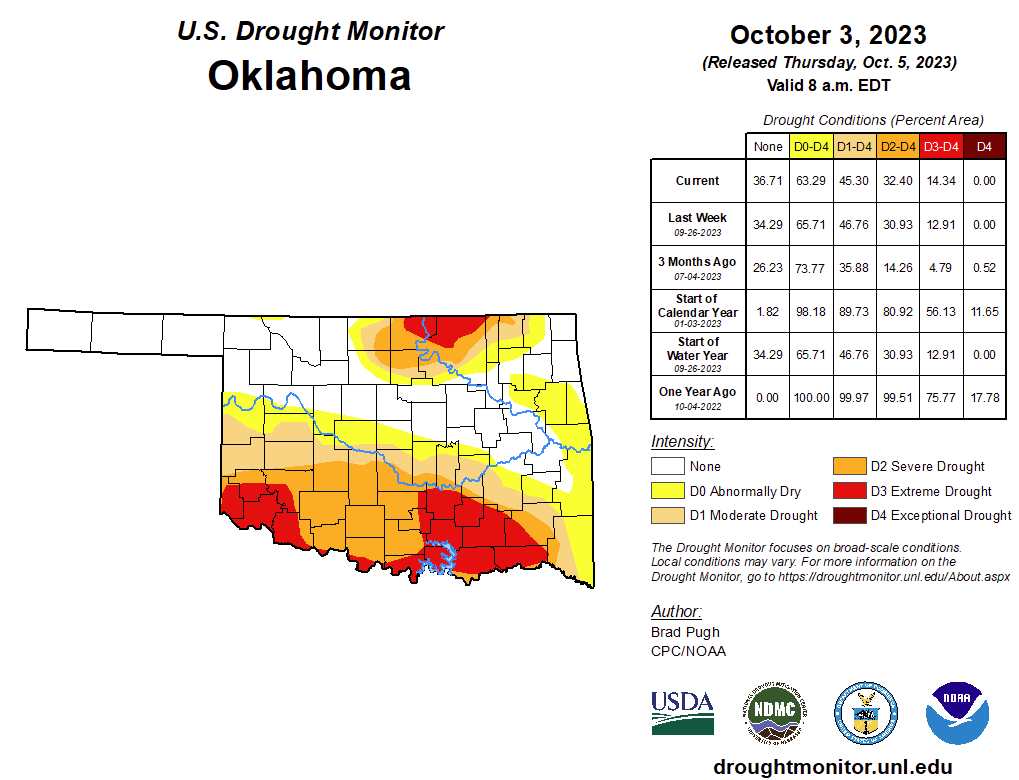
To view the latest Oklahoma drought map, CLICK HERE.
According to the latest Oklahoma Drought Monitor, Exceptional Drought remains at Zero percent, unchanged for the past few weeks.
Extreme drought or worse is now at 14.34, up from last weeks, 12.91 percent.
Severe drought or worse is now at 32.40 percent, up from last week's 30.93 percent.
Moderate drought or worse is slightly better now at 45.30 percent, improved from last week's 46.76 percent.
Abnormally dry or worse conditions are now at 63.29 percent, improved from last week's 65.71 percent.
According to the 6-10 Day Precipitation Outlook Map, most of the panhandle and southwestern Oklahoma is leaning below a 40 to 50 percent chance of precipitation through October 14. The rest of the state is leaning below a 40 to 50 percent chance of precipitation through October 14.
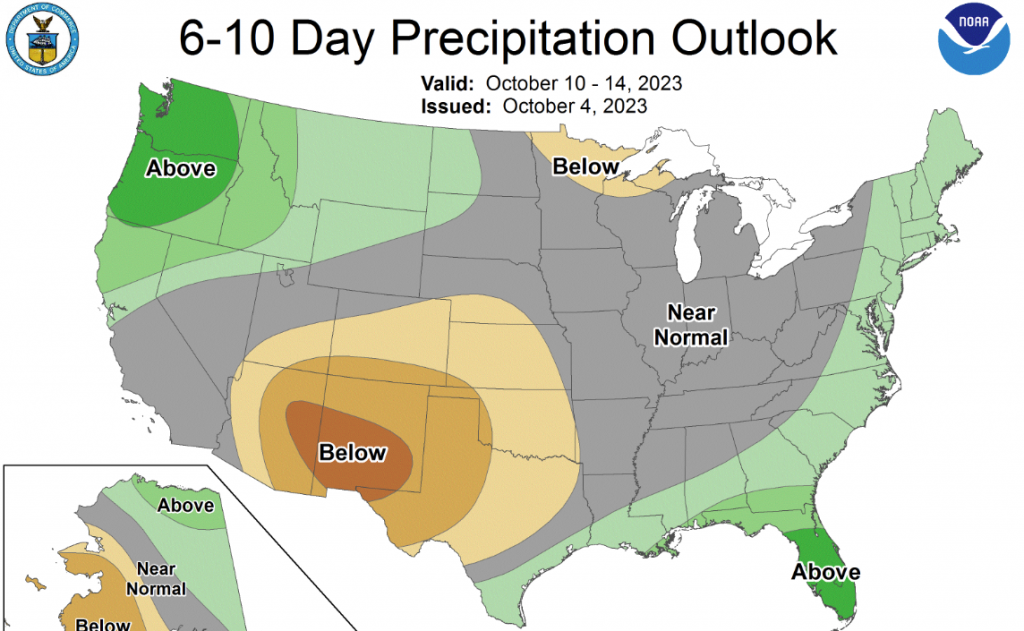
According to the latest US Drought Monitor Map, The rapid onset and intensification of drought continued across the South with drought expanding northeast from the Lower Mississippi Valley to the Tennessee Valley and Southern Appalachians. A drier-than-normal September expanded abnormal dryness (D0) and moderate short-term drought (D1) across the Upper Ohio Valley, Eastern Corn Belt, and western parts of Pennsylvania, New York, and West Virginia. Drought of varying intensity persists across the Middle to Upper Mississippi Valley and parts of the Great Plains. However, heavy rainfall at the beginning of October improved the Southern High Plains. A suppressed 2023 Monsoon intensified drought across Arizona and western New Mexico. Early fall precipitation began to ease drought along the coastal Pacific Northwest. Drought continues to worsen along the leeward side of Maui.
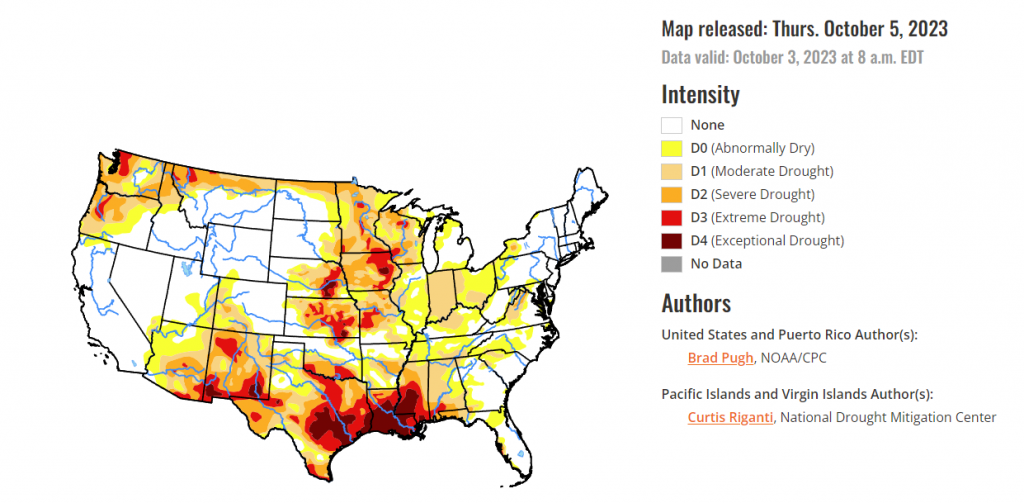
To view the United States Drought Map, click here.
In the Southern Plains, A broad 1-category degradation was made to the Lower Mississippi Valley and Tennessee Valley as 30-60 day SPI/SPEI, NDMC short-term blend, soil moisture, and impacts supported expanding/intensifying drought. Impacts in Mississippi include poor pasture conditions, soybean and peanut losses, and cattle sell offs. Severe (D2) to exceptional (D4) drought persists across much of Mississippi and Louisiana, while drought of varying intensity affects the Southern Great Plains. Heavy rainfall (more than 2 inches) on October 2nd supported a 1-category improvement across the Oklahoma Panhandle and western Texas. Based on state recommendations and consistent with the NDMC drought blends, the extreme drought (D3) was slightly reduced across western Texas.
in the Midwest A mix of degradations and improvements were made this past week across the Middle to Upper Mississippi Valley, Ohio Valley, and Corn Belt. The largest areas of degradation were focused across Indiana and Ohio where many areas have received less than 25 percent of their normal precipitation during the past 30 days and soil moisture indicators continue to decline. Based on NDMC's short to long-term blends and soil moisture, extreme (D3) and exceptional (D4) drought was expanded across eastern Iowa. Parts of Kentucky, southern Illinois, Minnesota, and Wisconsin had a 1-category improvement after heavy rainfall (more than 1.5 inches) the previous week.
in the High Plains, Increasing 30 to 60-day deficits along with support from SPIs at various time scales and the NDMC's short-term drought blend, a 1-category degradation was made to northeastern Kansas and southeastern Nebraska. Despite a mostly dry week across southern South Dakota, a reassessment of current indicators such as NDMC's drought blends supported a decrease in abnormal dryness (D0) and moderate drought (D1) in that area. A 1-category degradation was made to northwestern Colorado, based on SPEIs at multiple time scales along with support from soil moisture and vegetation indicators.
In the West, Following the drier-than-normal Monsoon, a 1-category degradation was warranted for parts of Arizona and western New Mexico. Conversely, heavy rainfall (more than 2 inches) on October 2nd led to a 1-category improvement for parts of eastern New Mexico. NDMC's short-term blend and soil moisture supported a 1-category degradation in eastern Utah. Extreme drought (D3) was improved to severe drought (D2) in parts of northern Montana based on indicators dating back 12 months. In addition, 28-day average streamflows are above the 5th percentile in northwestern Montana. During the past two weeks, coastal Oregon and the Puget Sound of Washington received 3 to 6 inches of precipitation which supported a 1-category improvement.
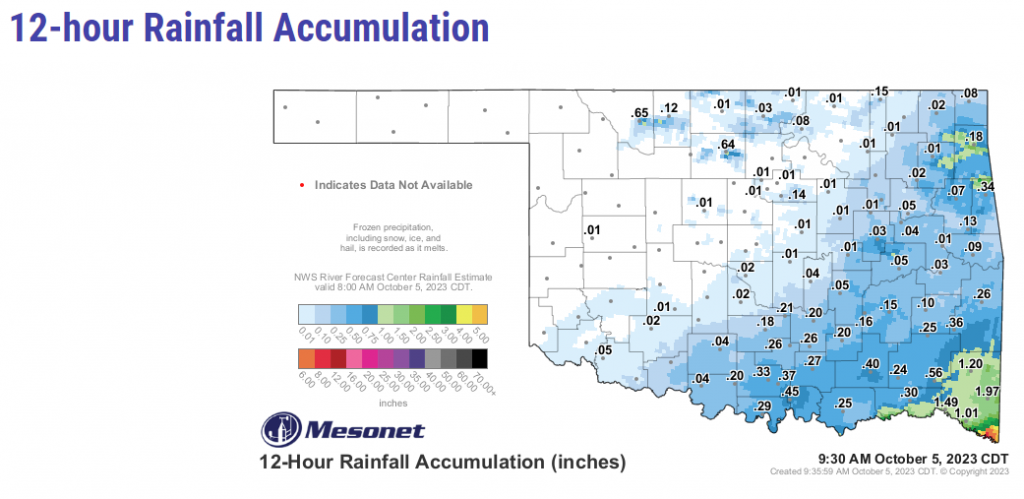
To view the 6-10 Day Precipitation Outlook Map, click here.
To view the 6-10 Day Temperature Outlook Map, click here.
To view the Monthly Drought Outlook Map, click here.
The cost of purchasing a turkey could be lower this Thanksgiving, thanks to a drop in avian influenza cases and a recovery of the turkey population in the United States. American Farm Bureau Federation economists analyzed turkey and egg prices in the latest Market Intel report, which states the average price for an 8-to-16 pound turkey typically served for Thanksgiving was $1.27 per pound in August 2023, 22% lower than the same time last year.
"The status of HPAI (Highly Pathogenic Avian Influenza) is much different now than it was just a year ago," the Market Intel states. "Migratory birds are a major vector of this virus, which naturally makes spring and fall migration high risk times. Detections from the current outbreak peaked during March 2022 with 20.96 million birds affected before gradually falling to just 540 birds in September 2023. This can be compared to 8.15 million birds affected in September 2022. June marked the first month with no detections since the outbreak began in February 2022."
"A robust turkey population is good news for farmers and families across the country," said AFBF President Zippy Duvall. "The resilience of our food supply is an example of the strength of American agriculture, which is helped in part by the farm bill. We urge Congress to focus on passing the farm bill by the end of the year to ensure farmers can continue to put food on the tables of America's families."
Egg production also saw a year-to-year increase, with 9.38 billion eggs produced in September 2023, a 2% increase from the same time last year. The national average retail price for shell eggs was $2.04 per dozen in August 2023, down 30% from $3.11 in August 2023. This is nearly 60% lower than the record average price of $4.82 set in January 2023.
AFBF tracks the cost of a full Thanksgiving dinner every year in its annual marketbasket survey. Full details on the cost to cook a Thanksgiving feast for 10 will be released on Nov. 15.
To read the full Market Intel on turkey and egg prices, click here.
Have Market Intels delivered to your inbox. Click here to subscribe.
U.S. Senator Markwayne Mullin (R-OK) announced that following his advocacy efforts, Oklahoma Public School Resource Center has been selected to receive $55 million in grant funding over the next five years through the U.S. Department of Education's Charter School Program Grant to allow the continued growth of quality charter schools in Oklahoma.
"Offering high-quality education options for the next generation is the most significant action we can take for the future of our state," said Sen. Mullin. "As the father of six wonderful children, I know firsthand the importance of ensuring our educators have the tools they need to best meet our children's individualized needs. I'm confident Oklahoma Public School Resource Center will use this grant to support new and expanding institutions to meet the unique needs of Oklahoma students and their families. The next generation of Oklahomans is worth fighting for, and I'm proud to have played a part in securing this federal funding opportunity."
Every year, the federal government makes federal grant funding available to individuals, nonprofit organizations, local governments, businesses, and other groups. Senator Mullin's office is available to support eligible organizations in their applications for federal grant opportunities. Learn more by visiting Senator Mullin's website HERE or by contacting Senator Mullin's Tulsa office at 918-921-8520.
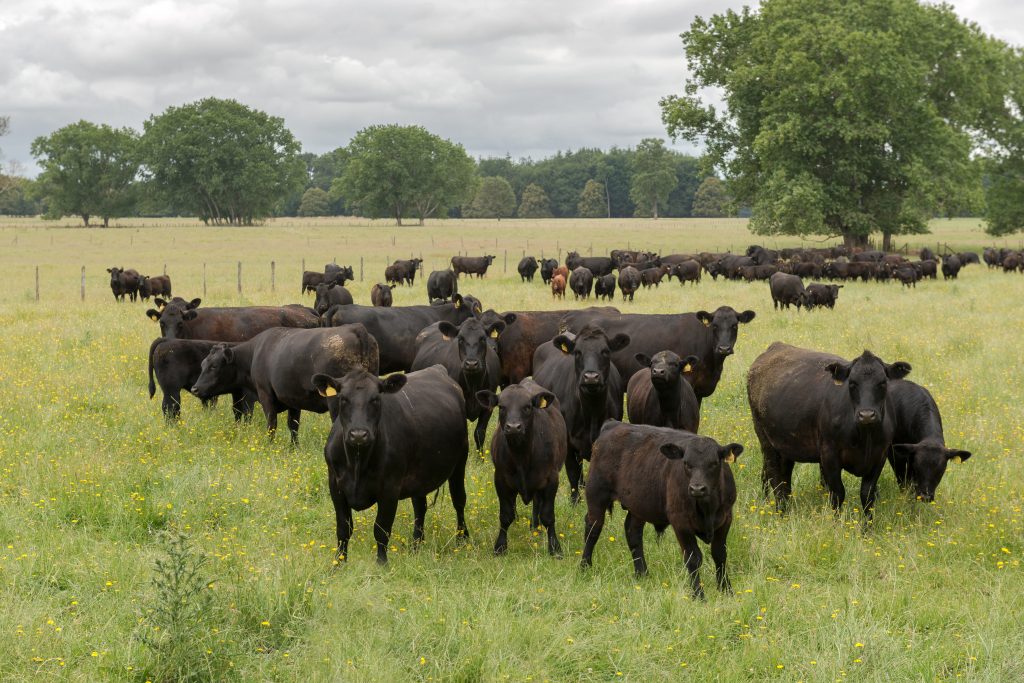
Senior Farm and Ranch Broadcaster, Ron Hays, is talking with Oklahoma State University Extension Livestock Marketing Specialist Dr. Derrell Peel about the cull cow market and more.
"The cull cow market has moved higher this year just like all the other cattle markets," Peel said.
A cull cow of average quality, Peel said, is bringing around $1.08 to $1.10 per pound depending on dressing percentage.
"We had record beef production in 2022 that was based on slaughter, which was driven by the drought liquidation that we had, so we were sort of pulling inventories down and pulling cattle forward because we marketed calves early and so on," Peel said.
Now, Peel said, steer slaughter is down, and heifer slaughter is down as well, but at a slower pace.
"Beef cow slaughter is down significantly this year at about 13 percent," Peel said. "Dairy cow slaughter is the only class of cattle that is actually up on a year-over-year basis, so you have to look over into the dairy market to explain that."
Year-to-date, Peel said total cattle slaughter is down about 3.9 percent for the year so far.
When marketing their cull cows, Peel said there are a few things producers should keep in mind.
"To the extent that we are a little bit lower seasonally, if you hang onto them a little bit after culling, feed them, and put some weight back on them, you will sell more pounds for more money typically from about a November low into the first part of the next year," Peel said. "Depending on how much weight they gain, you might raise them up a grade in terms of their classification, and they will bring even more money."
There is also a tight bred cow situation, Peel added.
"If you leave a bull with those cows while you are feeding them and putting a little weight on them, some of them very likely will get pregnant...," Peel said.
If a cow is bred over the winter, Peel said, she will likely be worth even more in the spring.
The Beef Buzz is a regular feature heard on radio stations around the region on the Radio Oklahoma Ag Network and is a regular audio feature found on this website as well. Click on the LISTEN BAR for today's show and check out our archives for older Beef Buzz shows covering the gamut of the beef cattle industry today.
John Deere's new 1 Series Round Balers help farmers ensure optimal moisture levels and consistent bale weights are maintained in every field, in every windrow and with every bale.
The 1 Series features innovative Bale Doc technology to document bale moisture and weight in near real time. That data can then flow into the John Deere Operations Center for post-harvest analysis. After analysis is completed, farmers can make informed decisions about nutrient management or use the data to help get the best prices possible for their bales, or to reduce fertilizer costs.
"No matter what the size of your operation, John Deere offers a 1 Series Round Baler that delivers consistent, high-quality round bales," said Chase Milem, marketing manager for John Deere. "Operators can see in real time what the moisture levels are of the bales they are making, right from the cab. This is information farmers can use to decide if they need to stop baling for the day, or whether they should apply a preservative like John Deere GREEN-GARD."
John Deere 1 Series Round Balers also reduce operator fatigue thanks to integrated technology that automates gate cycle functions. Baler Automation automatically opens and closes the gate at the right time, eliminating repetitive tasks, reducing operator error and minimizing downtime, helping farmers get the most bales as quickly as possible. Regardless of the age of their tractor, Milem said there are many good reasons for farmers to upgrade to the 1 Series, considering Baler Automation compatibility.
 The 1 Series Round Baler features innovative technology to document bale moisture and weight in near real time.
 Baler Automation automatically opens and closes the gate at the right time, reducing operator error and minimizing downtime.
 A new, standard 8-inch G5e display gives operators total visibility and control over baling operations.
 Data can flow into the Operations Center for post-harvest analysis.
A new, standard 8-inch G5e display provides operators with an easy-to-learn, consistent experience, giving them total visibility and control over baling operations. The 1 Series also features a new optional High-Capacity Pickup to help farmers finish baling more quickly compared to previous models. Internal testing showed the high-capacity pickup was able to pick up and feed crop with up to 33% increased capacity compared to previous models.
"Customers said reliability, serviceability and productivity were three important factors for them when considering the purchase of a new round baler," Milem said. "We took what farmers liked most about our previous round balers and added new features to boost their baling capacity and new technology to better help farmers make informed agronomic decisions based on real-time data."
The John Deere 1 Series Round Baler lineup includes the 451E, 451M, 451R, 461M, 461R, 551M, 561M and 561R. The "E" model designates the baler is equipped with a regular pickup; the "M" denotes the baler is equipped with the MegaWide™ Plus pickup, and the "R" model shows the round baler is equipped with the High-Capacity or the High-Capacity and Precutting feeding system.
Net-Lift Assist, Net Lighting and a Preservative System are options available for the 1 Series. With Net-Lift Assist there is a 90% reduction in lifting effort as the connecting linkage attaches to the netwrap handles and the netwrap roll is moved into position. Net Lighting illuminates the netwrap and wrapping components, making it easy to reload the baler in low-light conditions. The Preservative System for the 1 Series utilizes a tank, sensors, controller and distribution system to ensure the right amount of preservative is applied to each bale.
To learn more about John Deere 1 Series Round Balers visit JohnDeere.com or contact your local John Deere dealer.
About Deere & Company
Deere & Company (www.JohnDeere.com) is a global leader in the delivery of agricultural, turf, construction, and forestry equipment. We help our customers push the boundaries of what's possible in ways that are more productive and sustainable to help life leap forward. Our technology-enabled products including John Deere Autonomous 8R Tractor, See & Spray™, and E-Power Backhoe are just some of the ways we help meet the world's increasing need for food, shelter, and infrastructure. Deere & Company also provides financial services through John Deere Financial.
For more information on Deere & Company, visit us at www.deere.com/en/news/.
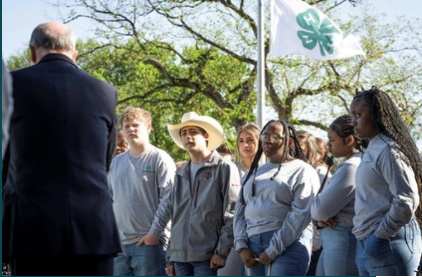
U.S. Agriculture Secretary Tom Vilsack has proclaimed October 1-7 as National 4-H Week! 4-H is the largest youth development organization in the United States – a network of 500,000 volunteers and 3,500 4-H professionals that provides caring and supportive mentoring to 6 million 4-H'ers.
What is now known as National 4-H Week began as an outgrowth of World War II. Following Pearl Harbor, it was decided to postpone holding the National 4-H Camp in Washington, D.C. Soon after, 4-H leaders in Ohio announced their plans for a State 4-H Mobilization Week, focusing on what 4-H members could do for national defense. The idea was embraced by 4-H leaders nationwide and evolved into National 4-H Mobilization Week, which was observed in 1942, 1943 and 1944. Beginning in 1945, and every year since, it has been known as National 4-H Week.
You can read and download the Proclamation on National 4-H Week, 2023 - United States Department of Agriculture.
4-H Programs Empowering Youth
A statewide needs assessment conducted in 2020 and 2021identified that the highest-priority intergenerational need in Hawaii as healthy living, which encompasses food systems, relationships and physical health.
To address this need, Hawaii County Extension delivered educational programs and workshops to teach gardening, cooking and nutrition to individuals, including youths, families and older adults. Programs included nutrition field day activities for youths; online and in-person workshops and demonstrations on cooking and gardening; and a project that provided kupuna (older generation family members) with plants and gardening education.
As a result, 100% of youth participants in the Healthy Snacking class made a new recipe and learned something new about food safety. Youth participants in the propagation lesson achieved a 70% survival rate of cuttings after 20 days. Read more results here.
The South Dakota 4-H Legislature Program is a state-level civic and governmental education program allowing participants an opportunity to gain a better understanding of how state government operates.
During 2022, 14 youths (ages 14-18 years old) participated in the 4-H Legislature program. They experienced improved interpersonal communication skills and confidence in a group setting. They learned essential skills for understanding the rights and responsibilities of being a South Dakota citizen and gained workforce and life skills that add value to themselves and their community. In the future, graduates of the 4-H Legislature program are well positioned to serve as inclusive community leaders and public servants.
Upcoming 4-H Event
Planning to attend the 2024 National 4-H Conference April 19-24 in Washington, D.C. Join NIFA for an informational session on November 16 to learn about the conference's history, objectives, schedule, chaperone roles, policies and registration process.
| August 2023 To the People of Oklahoma: The Office of the State Treasurer is pleased to issue the monthly investment performance report. This report is an important part of my office and commitment to disclose our economic environment and portfolio results. Portfolio Performance, Diversification, and Strategy August portfolio yielded 2.71% with a weighted average maturity of 2.75 years. Total assets equaled $15.3 billion, up $2 billion in comparison to August 2022. U.S. government agencies were 13% of the portfolio, and 18% were mortgage-backed securities. As a share of assets, 61% were U.S. treasuries, 7% money market mutual funds and 0.5% certificates of deposit. State bond issues and foreign bonds totaled 0.5%, comprising the balance of funds invested. |
 |
| Market Conditions for August The benchmark 10-year treasury closed the month at 4.11%, the 2-year was 4.86% and the 30-year closed at 4.21%. "Positive economic data has pushed many investors to believe that the Fed will keep rates higher for longer to tame inflation, buoying yields on longer-term government debt," as reported by Dow Jones Newswire. |
| S&P Dow Nasdaq For the month -1.7% -2.3% -2.1% Year-to-date 34% 4.7% 17.4% Dow Jones Newswire said, "The S&P 500 and NASDAQ Composite snapped five-month winning streaks, while the Dow Jones Industrial Average posted its first monthly loss since May." |
The minutes from the July Federal Reserve meeting reflected that Fed officials were still concerned about inflation and the Fed raised interest rates by 0.25%. CNBC reported, "Almost all the meeting participants, which includes nonvoting members, were in favor of the rate increase. However, those opposed said they thought the committee could skip a hike and watch how previous increases are impacting economic conditions." |
| Economic Developments for August The nonfarm jobs for July were upwardly revised by over 14% to 371,000 from the previously reported number. The number of jobs created for the month of August were below expectations coming in at 177,000. |
| According to Reuters, "There were 1.51 job openings for every unemployed person in July, the lowest ratio since September 2021, compared with 1.54 in June. A survey from the Conference Board also showed consumers' views of the labor market less upbeat in August." |
The Bureau of Labor Statistics said the Consumer Price Index for All Urban Consumers increased 0.6% in August on a seasonally adjusted basis, after increasing 0.2% in the previous month. Over the last 12 months, the all-items index rose 3.7% before seasonal adjustment. Half the index increase was attributed to the cost of gas. Shelter costs also added to the index, rising for the 40th consecutive month. The headline Producer Price Index (PPI) came in at 0.3% and rose 0.8% on a year-over-year basis. Core PPI, which takes out food, energy and trade services components, gained 0.2%. |
Retail sales beat expectations in July coming in at 0.7% month-over-month. The sales number for the previous month was also upwardly revised by 0.1% to 0.3%. Consumer spending remains solid despite higher interest rates and inflation. |
| According to Trading Economics, "Sales in July likely got a boost from Amazon's Prime Day. Sales at non-store retailers recorded the biggest increase followed by sporting goods, hobby, musical instruments and books." Retail sales would have increased to 1% if autos, gas, building materials and food services were removed. |
Mortgage rates and limited inventory continued to negatively affect the sales of existing homes. The seasonally adjusted annualized rate of existing home sales dropped to 4.07 million in July in comparison to 4.16 million in June. This was the lowest level of homes sales since January and was below market expectations. Sales dropped 16.6% on an annualized basis. |
| According to Trading Economics, "The inventory of unsold existing homes increased 3.7 percent from the previous month to 1.11 million at the end of July, or the equivalent of 3.3 months' supply at the current monthly sales pace." |
The second estimate of gross domestic product (GDP) was downwardly revised to a 2.1% annualized rate from 2.4% for the second quarter of 2023. |
| Reported by Reuters, "Inventory investment was sharply revised down to show it declining at a $1.8 billion pace instead of increasing at the previously reported $9.3 billion rate. Inventories were a small drag to GDP growth rather than adding 0.14 percentage point as estimated last month. There were also downward revisions to business spending on equipment and intellectual products. These offset a slight upgrade to consumer spending." |
Collateralization All funds under the control of this office requiring collateralization were secured at rates ranging from 100% to 110%, depending on the type of investment. Payments, Fees, and Commissions Securities were purchased or sold utilizing competitive bidding. Bank fees and money market mutual fund operating expenses are detailed in the attached pages, as is the earnings split between the State Treasurer and the master custodian bank on securities lending income. Total Funds Invested Funds available for investment at market value include the State Treasurer's investments at $11,878,146,452 and State Agency balances in OK Invest at $3,506,396,841, for a total of $15,384,543,293. |
Best regards,
RON's Dave Lanning has a pre-opening look at today's agricultural Markets.
Click the audio tab below for today's report.
One Hundred Fifty of the top placing 4-H and FFA members and their animals "Made the Stage" at the 2023 Tulsa State Fair on Wednesday evening. The Tulsa State Fair and the Tulsa State Fair Ringmasters presented over $400,000 in monetary awards to those that were honored at the Ford Truck Arena.
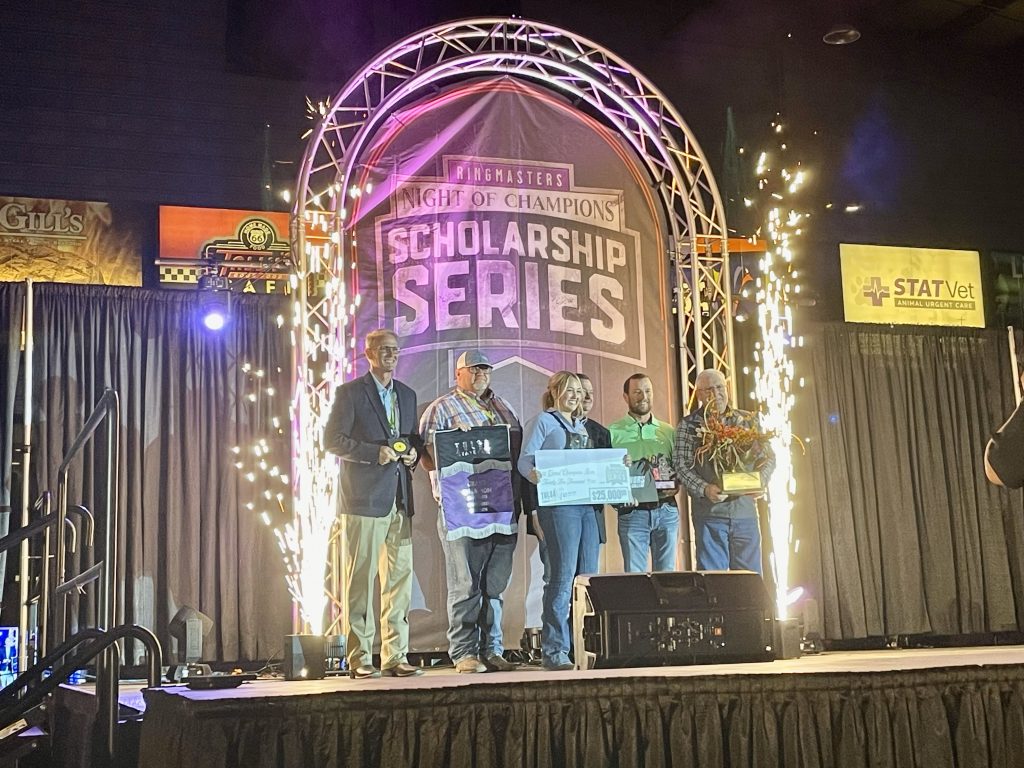
The Grand Champion Market Steer was the top Crossbred shown by Cara Cummings of the Hollis FFA Chapter. Cara received a check for $25,000 for winning the 2023 Market Steer Show. $20,000 was paid out to the Reserve Grand Champion Steer- owned and shown by Kreas Richard of Newcastle FFA.
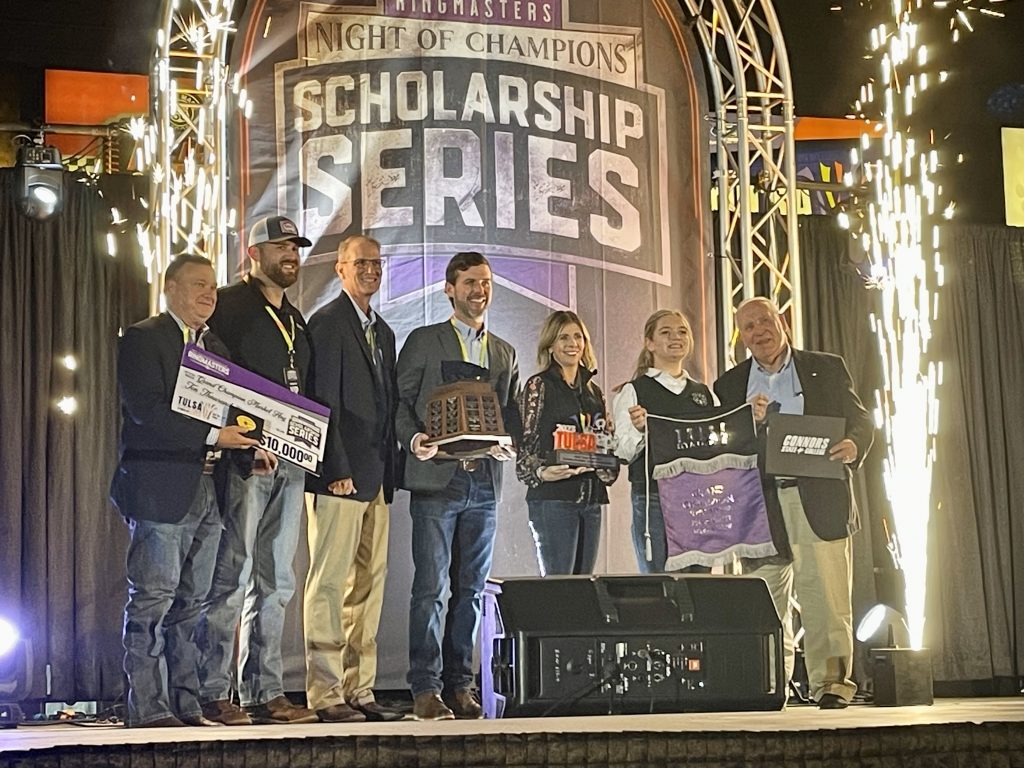
The Grand Champion Market Barrow was shown by Claire Voss of Chisholm 4-H- Claire won the Yorkshire breed championship and then was selected as the Grand Champion of the show- receiving a $10,000 cash prize. The Reserve Grand Champion Barrow was the Dark Cross Champion- shown by Kaitlyn Dufur of Caddo FFA, picking up $7,500 for her efforts.
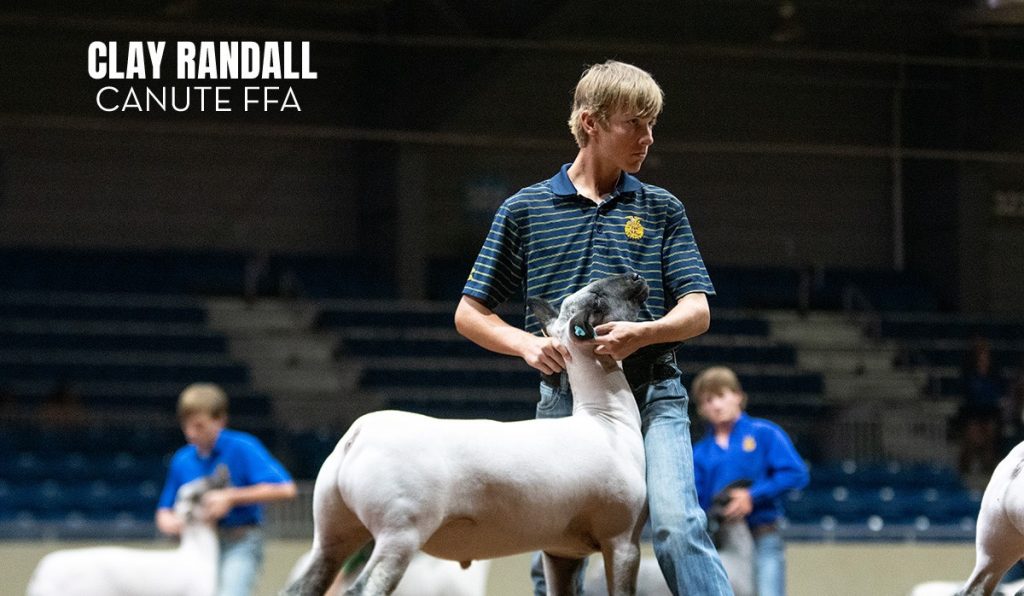
Canute FFA claimed the top awards in the Market Lamb division- the Grand Champion Market Lamb was shown by Clay Randall of Canute FFA and awarded a $10,000 prize while the Reserve Grand Lamb was shown by Sayde Allen of Canute FFA earning her $7,500- both of the top lambs coming out of the Blackface Cross entries.
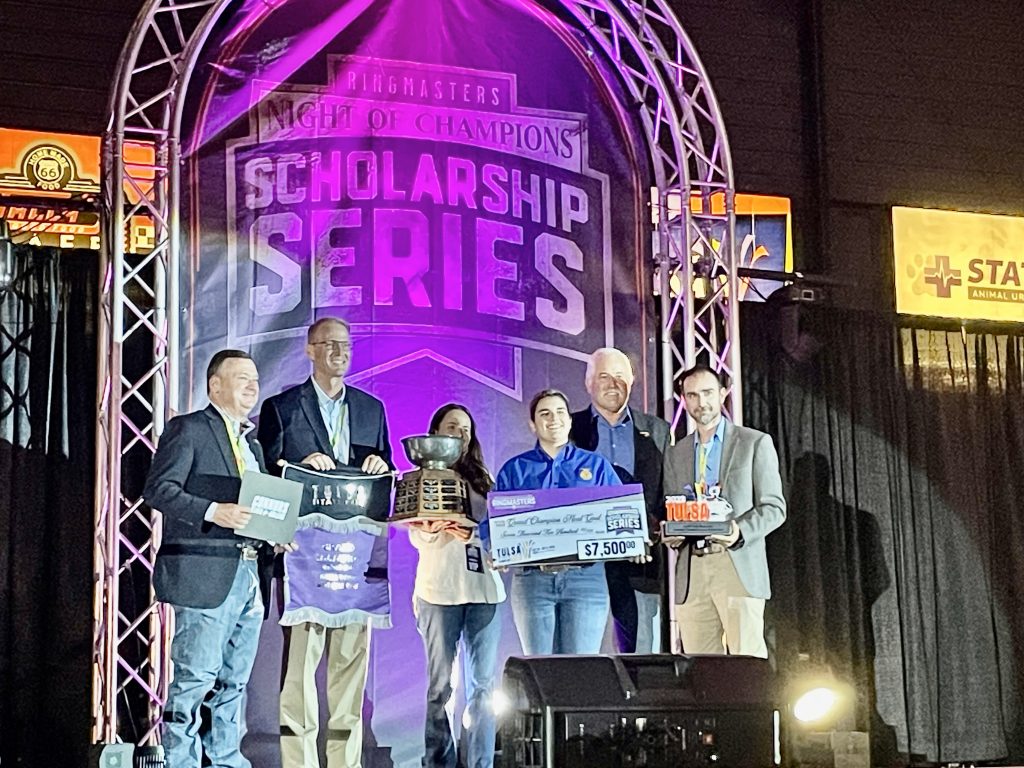
The Grand Champion Market Goat was shown at the 2023 Tulsa State Fair by Taylor Glover of Elgin FFA- earning top prize in the Meat Goat division of $7,500- while the Reserve Grand Champion Market Goat was shown and owned by Baylor Pearson of El Reno FFA.

Finally- the Tulsa state Fair had a competitive Broiler Show again in 2023- Champion Broiler was shown by Cassi Ray of Clinton (winning $1,500) and the Reserve Grand Broiler was shown by Afton Fuse of Tipton FFA.
Our thanks to Karli Fuss of AFR for helping us names and details of the winners- as well as photos.

A new dairy checkoff growth program with pizza partners is expected to drive an additional 12-plus million pounds of cheese use.
The bulk of the cheese will be used internationally through an effort with a major quick-serve restaurant pizza chain and a U.S. cheese company. The pizza chain has opened its sourcing to U.S.-produced cheese suppliers as it seeks to return its business success to pre-COVID levels. The company also is leaning on the checkoff for strategic support to increase pizza consumption frequency in this market via advertising and marketing communications.
On the domestic front, Domino's® has added Pepperoni Stuffed Cheesy Bread to its lineup of Stuffed Cheesy Bread. The oven-baked breadsticks are stuffed with cheese and pepperoni, covered in a blend of cheese made with 100% real mozzarella and cheddar, and seasoned with a touch of Parmesan and garlic.
"The checkoff's relationships have always been an underpinning of our plan and our partners understand the challenges our farmers face with rising input costs that affect their bottom line," said Barbara O'Brien, president and CEO of Dairy Management Inc. (DMI), which manages the national dairy checkoff program. "They are stepping up with innovative ways we can collaborate to drive more sales of U.S.-produced cheese on their products."
DMI supported Domino's with consumer research, which helped make the Pepperoni Stuffed Cheesy Bread launch a success. This option received high consumer test scores and joins the chain's Stuffed Cheesy Bread lineup, which debuted in 2011.
The checkoff also plans to work with Domino's on an enhanced loyalty program that continues to have growing appeal with customers and will drive pizza and cheese sales.
"Domino's values its partnership with DMI, as there would be no pizza without the hard work of dairy farmers around the U.S.," said Kate Trumbull, Domino's senior vice president – chief brand officer. "Thanks to them, we're able to offer a variety of delicious, cheesy, craveable products to customers around the country."
In addition to DMI, the efforts with Domino's were supported by state and regional checkoff organizations American Dairy Association Mideast, Midwest Dairy and the United Dairy Industry of Michigan. While these teams contributed directly to this effort, O'Brien said funding from the entire dairy checkoff network helps make these and other partnerships possible.
"This pizza growth program is just one example of the power of our national and local organizations working together," O'Brien said.
International focus
The other pizza company the checkoff is working with on the international front has exclusively sourced its cheese from outside the U.S. The company is seeking to kick-start growth efforts and found a willing partner in the checkoff thanks to its longtime proven success in helping to grow U.S. pizza and cheese sales.
A marketing campaign begins in October and runs through March of 2024. Pizza remains a largely untapped opportunity in many global markets where it is often consumed about once a year. With consumer tastes rapidly shifting, it is a timely opportunity to support pizza growth internationally.
O'Brien emphasized the effectiveness of the checkoff's strategy of working with leading quick-serve restaurant chains, who invest hundreds of millions on marketing efforts and advertising to promote their dairy-centric menu items. While these pizza-focused efforts are additions to the annual strategic plan, O'Brien said other restaurant partners continue to deliver sales-building successes, too.
Taco Bell announced its new permanent menu item, the Grilled Cheese Burrito, whose creation was led by the checkoff's onsite food science team, after a successful run as a limited-time option. The burrito uses 11 times the amount of cheese that the chain's regular taco does, and its success led to new flavors of the Grilled Cheese Burrito and expansion of this platform across the menu, including the Grilled Cheese Dipping Taco.
McDonald's continues to enhance its McFlurry lineup with new flavors, including the Peanut Butter Crunch McFlurry, which is currently in market. The chain also had a successful launch this summer of the Grimace Shake, which generated large amounts of media coverage and social media interaction. These efforts are made possible with checkoff food science and marketing support.
"The checkoff has enjoyed longtime partnerships with the leading burger, pizza and Mexican quick-serve restaurants that have an astonishing reach of loyal customers, not just in the U.S. but abroad," O'Brien said. "They understand quite well the value that dairy delivers to their menus, and they see how our checkoff resources and expertise can help them reach their business objectives to remain on top of their game."
For more information about the dairy checkoff, visit www.usdairy.com/for-farmers
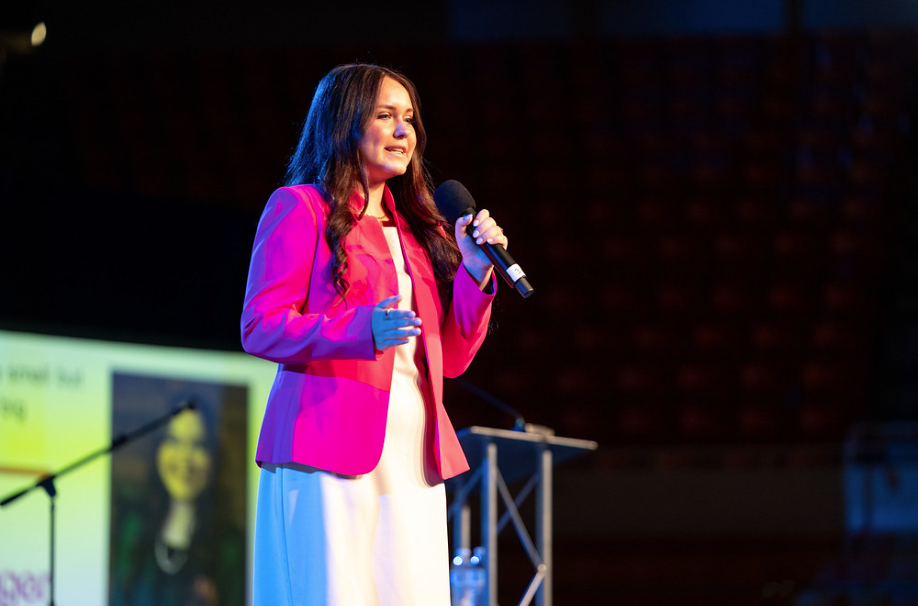
Jenessa Dugger, Pittsburg County 4-H'er, was named a finalist for the prestigious 2024 4-H Youth in Action Award. She is one of 12 finalists nationwide. (Photo by Mitchell Alcala, OSU Agriculture)
The National 4-H Council has announced Jenessa Dugger of Harthshorne, Oklahoma, is a runner-up for the prestigious 2024 4-H Youth in Action Award. She was recognized for her commitment to supporting heart patients.
Dugger is a member of the Lakewood 4-H Club in Pittsburg County. She created her nonprofit, Art for Hearts, to raise funds by auctioning pieces of art donated by Oklahoma artists. Proceeds from the project help patients at the Saint Francis Heart Hospital with medical needs. A heart patient herself, Dugger aims to raise awareness and funds to support those with heart problems. She also serves as a leader on her tribe's reservation, honoring her heritage and focusing on meeting needs in her community.
Greg Owen, Oklahoma State University Extension 4-H educator in Pittsburg County, said he has watched Dugger work diligently to achieve her goals.
"We are so proud of Jenessa for being selected as one of only 12 National Youth in Action runners-up, as well as her accomplishments while serving as president of the state leadership council for 2022-2023," Owen said. "She has an outstanding service project and is a wonderful example of 4-H in Pittsburg County and the Oklahoma 4-H Youth Development program."
She is the daughter of Michele Dugger and a freshman at Northeastern State University in Tahlequah, Oklahoma.
The 4-H Youth in Action Awards began in 2010 to recognize 4-H'ers who have overcome challenges and used the knowledge they gained in 4-H to create a lasting impact in their community. More information about the 4-H Youth in Action program and the 2024 runners-up is available online.
4-H, the nation's largest youth development organization, grows confident young people who are empowered for life today and prepared for careers tomorrow. 4-H programs empower nearly 6 million young people across the U.S. through experiential learning, which develops critical life skills. 4-H is the youth development program of our nation's Cooperative Extension System and USDA and serves every county and parish in the U.S. through a network of 110 public universities and more than 3,000 local Extension offices. Globally, 4-H collaborates with independent programs to empower one million youth in 50 countries. The research-backed 4-H experience grows young people who are four times more likely to contribute to their communities; two times more likely to make healthier choices; two times more likely to be civically active; and two times more likely to participate in STEM programs.
Learn more about 4-H at www.4-H.org, or on Facebook and Twitter.
OSU Extension uses research-based information to help all Oklahomans solve local issues and concerns, promote leadership and manage resources wisely throughout the state's 77 counties. Most information is available at little to no cost.
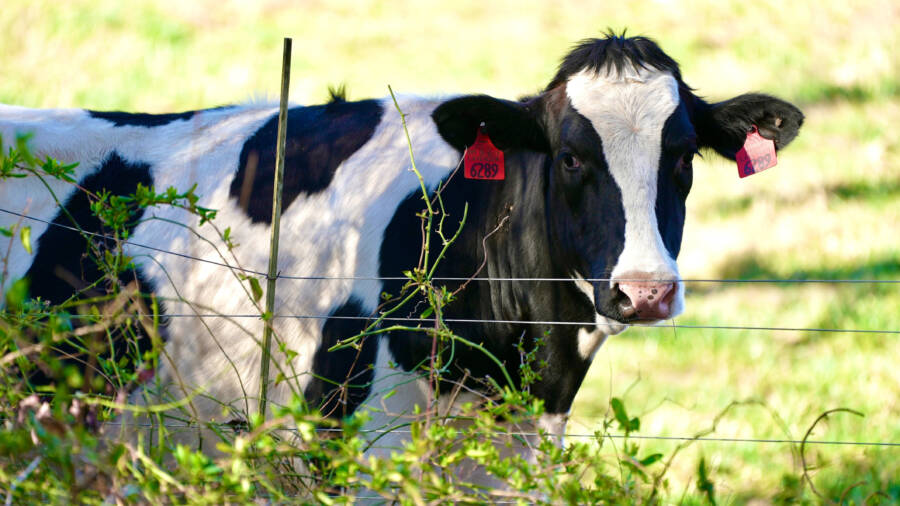
American Farm Bureau Federation Chief Economist Roger Cryan presented the testimony below on behalf of AFBF and its membership at the ongoing Federal Milk Marketing Order Pricing Formula hearing.
The testimony focuses on removing Class I and Class II milk from the advanced pricing formula used by dairy processors when calculating the price paid to farmers for their milk. Class I milk is used for beverages while Class II milk is used for foods like ice cream, cottage cheese and sour cream.
According to AFBF data presented at the hearing, advanced pricing has disrupted the orderly marketing of milk and led to unfair marketing conditions for dairy farmers. This disruption is caused when the price of other classes of milk rises above the announced advanced price of Class I and Class II milk. A full explanation of advanced pricing is available via Market Intel.
AFBF has previously testified on adding 640-pound cheddar cheese blocks and unsalted butter to the price survey used in Class price calculations, in support of member policy to include more products in the price calculations. AFBF also supports several proposals by the National Milk Producers Federation, which would increase Class I prices, drop barrel cheese from the Class III price formula, and return to the "higher-of" Class I formula.
Below are excerpts from the testimony, which can be read in full here.
A fundamental focus of AFBF's proposals is the reduction or elimination of negative producer price differentials and the de-pooling they cause. We believe that an orderly pool is the key to orderly marketing and ensuring Federal Milk Marketing Orders continue to benefit farmers, cooperatives, processors, and consumers. The key to an orderly pool, in turn, is, above all, the proper alignment of the four Class prices.
This statement covers AFBF proposal 18 under category four.
Proposal 18: AFBF proposes to end the advanced pricing of Class II skim milk and components and Class I milk and components
In AFBF proposal 18, the Class II skim milk price would be equal to the Class IV skim milk price plus the Class II differential. The Class II nonfat solids price would be equal to the Class IV nonfat solids price plus one-hundredth of the Class II differential. The Class I skim milk price would be the higher of the Class III or Class IV skim milk price plus the Class I differential. And the Class I butterfat price would be equal to the butterfat price plus one-hundredth of the Class I differential.
Under classified dairy pricing, handlers participating in an order have an obligation to the pooling function of federal orders based on how the milk is used (the Class price). In seven of the 11 federal orders dairy farmers are paid based on the component content of their milk via multiple component pricing. In this process the producer value of milk is determined monthly based on the cheese milk (Class III) component levels of fat, protein, and other solids. The difference between the total pooled revenue from what handlers pay for their allocated Class price values and the component value worth of producer's milk is denoted as the producer price differential. When the component value of milk in the pool is higher than revenue pooled from paid Class prices, deductions are applied to farmers' checks in the form of a negative producer price differential to represent the gap in pool value. Dairy farmers became accustomed to negative PPDs during 2020 and 2021 with average all-market PPDs reaching over -$7 per hundredweight – showing up as a massive deduction on milk checks.
Furthermore, the testimony describes the issue of when milk prices are announced:
Currently, the classified prices for each month are announced at two different times. First, the advanced prices are announced by the 23rd day of the preceding month. For example, September's advanced prices are announced on or before August 23. Advanced minimum prices are announced for Class I, Class I skim, Class I butterfat, and Class II skim. By the fifth day of the following month, the Class II, Class II butterfat, Class III, Class III skim, Class III butterfat, Class IV, Class IV skim, and Class IV butterfat prices are announced. These prices for September are announced on or before October 5. This arrangement creates a long lag between when the advanced prices and current prices are announced for that same month and means that the advanced prices (Class II skim milk and components and Class I skim milk and butterfat) can be based on weekly data that is 25 to 40 days older, on average, than the basis for the "current" prices (Class II butterfat and all Class III and IV prices).
This means when market prices rally, announced (final) prices can be much higher than advanced prices, leading to low and negative PPDs. This creates an incentive to de-pool milk from the order to benefit from the non-pooled value of the recently elevated prices (without sharing that value with the pool), which further depresses the PPD, and undermines the FMMO principle of uniform pricing.
... Dairy farmers have had to deal with wide and rapid spreads in prices that have contributed to income uncertainty and disruptions in their ability to manage risk. Over the past 20 years the percentage of de-pooled milk has increased. Based on data from USDA, between 2007 and 2012 the average monthly percent of eligible milk that was de-pooled across all orders was 5.7%; between 2013 and 2018 this percentage increased to 9.5%. Between 2018 and 2023, this figure nearly doubled to an average of 18.9% of eligible milk being de-pooled each month. Handlers are de-pooling milk at higher volumes more frequently.
The testimony concludes with a summary:
AFBF believes that disorderly marketing conditions are present when producers do not receive uniform prices because of frequent de-pooling. AFBF also believes the current system of advanced pricing contributes to the frequency and magnitude of de-pooling. Given the growing number of resources for data and market information, AFBF proposes a structure of announcing Class prices at the same time.
This is the seventh week of testimony at the hearing, taking place in Carmel, Indiana. The final AFBF proposal accepted for consideration by USDA, on increasing the Class II differential, is expected to be discussed next week.
AFBF's proposals are based on years of work by dairy farmer members, policy established through AFBF's grassroots policy development process, and recommendations developed during the FMMO Forum, which brought together representatives from all sectors of the dairy industry last October.
Full AFBF testimony on advanced pricing as submitted to the hearing, including reference sources, charts and updated statute language, is available here. An explanation of the four AFBF proposals accepted for consideration is available here. For more information on all nine AFBF proposals, including those rejected by USDA, read Market Intel.

Sandibel "Sandi" Sandoval funded her education via the Smithfield Scholarship Program.
She is the first in her family to attend college and recently graduated from Iowa State University.
Schools in Iowa, Kansas, Missouri, Nebraska, North Carolina, South Dakota and Virginia receive funds.
Smithfield Foods awarded more than $740,000 to 13 schools in seven states to fund educational scholarships for the 2023-2024 school year.
The scholarships are need-based and awarded to eligible dependents of full-time and retired Smithfield employees. Students can receive up to $7,500 annually in scholarships to participating colleges and universities for four years.
Sandibel "Sandi" Sandoval, the daughter of Vincente Sandoval who has worked in Smithfield's Denison, Iowa, facility for 15 years, funded her education via the Smithfield Scholarship Program. She is the first in her family to attend college and recently graduated from Iowa State University. Sandoval spoke about the impact the scholarship had on her family in a recent video, available here.
"The thought that my dad works for a company that doesn't just support him but also his family is great," Sandoval said. "They've helped him out more than what I can imagine a company would help out, and it's been great to have that kind of support system for me and my dad. When Smithfield says "Good is What We Do," they truly do mean it."
Smithfield has awarded more than 1,600 educational scholarships totaling nearly $9 million since launching the program in 2002.
For additional information about participating schools, academic programs and individual scholarship application processes, visit smithfieldfoods.com/scholarships.
Smithfield offers good pay and comprehensive benefits including paid vacations, holidays and more. To view full-time career opportunities with the company, visit smithfieldfoods.com/careers.
The Oklahoma Water Resources Board is pleased to announce the second in a series of stakeholder input meetings in locations across the state. The meetings are focused on the 2025 update of Oklahoma's Comprehensive Water Plan.
Meetings are tentatively scheduled from 1:00–4:00 pm. While anyone may attend, we request participation from local officials, water utility suppliers, regulated industry, commercial agricultural producers, economic development entities, and representing organizations.
Meeting schedule:
December 5 - Panhandle State University, Student Union Ballroom, 323 Eagle Boulevard, Goodwell, OK
December 11 - Cameron University, McMahon Centennial Complex, McAsland Ballroom, 2800 West Gore Boulevard, Lawton, OK
December 12 - Kiamichi Technology Center, Conference Room A/B, 13739 Southeast 202nd Road, Talihina, OK
December 13 - Cherokee Chota Center, 3307 Seven Clans Avenue, Tahlequah, OK
December 14 - Francis Tuttle Technology Center, Portland Campus, 3500 Northwest 150th Street, Oklahoma City, OK

Farm Director, KC Sheperd, is talking with the executive director of the Oklahoma Cattlemen's Foundation, Mariah Reimer, about the campaign for a new headquarters for the Oklahoma Cattlemen's' Association.
"For the first time, the Oklahoma Cattlemen's Association and the Oklahoma Cattlemen's Foundation will be doing a capital campaign called 'The Lasting Legacy Campaign to Preserve your Industry,'" Reimer said. "What is so special about this, and the reason it is such a once-in-a-lifetime, is because it is for a new building for the Oklahoma Cattlemen's Association. A new home for our members, and really a representation of the strength of our industry."
The Lasting Legacy campaign is a three-million-dollar capital campaign for the Oklahoma Cattlemen's Association's new headquarters. The new headquarters will be located in Oklahoma's Stockyards City.
Since 1968, OCA has been in the existing office located in the historic Stockyards of Oklahoma City. The new building will feature more office space for staff, living quarters, an event center, an outdoor gathering place, and an all-around updated look and feel, while preserving the tradition that our current office holds.
"Where else would we go than Cowtown," Reimer said. "That is where OCA's home has always been."
The new headquarters will be in the same place as the current headquarters, Reimer said, but it will increase in size, including an event center, a larger conference board room, a commercial kitchen, living quarters, an outdoor gathering space, and more.

Reimer said this new space will allow the OCA to host members and other industry leaders in a better capacity.
"A three-million-dollar campaign is a lot of money to people who are ranchers and farmers, but for us, it is bigger than that," Reimer said. "We want to represent our industry how it should be."
Having a new and improved headquarters, Reimer said, will allow the OCA to be represented well when hosting a multitude of organizations and individuals, whether from the Oklahoma Capitol or organizations such as the National Cattlemen's Beef Association.
"This will leave a legacy for our association and our industry," Reimer said.
This expansion will help OCA staff have room to have meetings, prepare for events, and more, Reimer said, as the current headquarters is not large enough to house every staff member at once.
"Right now, when we have something we need to do, we basically congregate in our kitchen at a small little table, and while we get the job done, you know, we work really hard to be able to do that for you, but to make it more effective will not only grow our industry and help us work more effectively for you, but it will take us to the next level," Reimer said.
The campaign is not just about the building, Reimer said, but about leaving a legacy for generations to come.
"It is about being able to work effectively and being able to showcase our industry in a way that we can and to be able to do what we are doing for years passed, currently," Reimer said. "I know when I am long gone that this building will still be there, and it will have an impact on those youth of our industry."
There are different levels of contribution to the campaign, Mariah said, and some levels allow businesses and the brands of ranches to be engraved into the walls of the new headquarters. Contributions made to the campaign will directly impact the future of Oklahoma's cattle and agriculture industries. The campaign will feature a variety of ways to participate in not only leaving your legacy, but preserving your industry. Many of these ways of giving are consistent with the missions, purposes and priorities of the OCA and OCF. They include online gifts, cash or check, sponsorships, pledge, employer matching, estate planning, endowments, stocks and bonds, livestock and more.
One unique way to help the campaign, Mariah said, is to donate a steer to the 10th Annual Steer Carcass Challenge on November 10th in Stillwater, Oklahoma. Fifty percent of proceeds from the carcass challenge will go back to the campaign, Reimer added.
"It is going to take everybody," Reimer said.
For more information about the campaign and how to give, visit https://ocf.squarespace.com/giving.

Members of Congress continue to show bipartisan support for rural small businesses as they prepare to debate the nation's next farm bill.
Last week, U.S. Sens. Pete Ricketts (R-NE) and Tina Smith (D-MN) introduced the Rural Microentrepreneur Assistance Act of 2023. The legislation extends and enhances the Rural Microentrepreneur Assistance Program (RMAP).
Established in the 2008 farm bill, RMAP assists rural entrepreneurs who are unable to access credit from traditional lenders by providing loans and technical assistance through community lenders, such as the Center. The program has provided critical support to small businesses in nearly every state.
The Center for Rural Affairs commends Sens. Ricketts and Smith for their work to expand opportunities for rural small businesses across the country.
"Rural entrepreneurship continues to evolve, and it is important that programs like RMAP do the same," said Johnathan Hladik, policy director for the Center. "Sens. Ricketts and Smith deserve credit for recognizing this and for doing what they can to help small businesses succeed."
With language developed alongside stakeholders across the country, the legislation includes key program changes that would provide direct benefits to entrepreneurs. The updates increase the maximum loan amount from $50,000 to $75,000, allow small businesses to use loan funds for construction and renovation projects, and eliminate requirements for Microenterprise Development Organizations to use multiple sources of funding to provide loans to underserved rural business owners.
"Raising the loan cap is a direct response to the increased cost of doing business since 2008," Hladik said. "In addition, the legislation will allow entrepreneurs to renovate existing brick-and-mortar establishments and revitalize rural towns."
In introducing the legislation, Ricketts noted the important role small businesses play in the U.S.
"Small businesses are the backbone of our national economy," he said. "This legislation would give individuals the opportunity to turn ideas into reality. With stubbornly high inflation, the barriers to entry to start a business are higher than ever before. I'm proud this bill will reward innovation and entrepreneurship in rural parts of the country like Nebraska."
The Rural Microentrepreneur Assistance Act has also been introduced in the U.S. House— by Reps. Zach Nunn (IA-3) and Angie Craig (MN-2).
"We commend Sens. Ricketts and Smith and Reps. Nunn and Craig for their leadership on behalf of rural small businesses, and encourage congressional leaders to include the Rural Microentrepreneur Assistance Act in the final farm bill package," Hladik said.

Do you know someone who exemplifies what it means to be an advocate for the beef community? Nominate them for the 6th annual Advocate of the Year award.
Nominations are due Friday, October 27, 2023, and the winner will be awarded a trip to the 2024 Cattle Industry Convention in Orlando, Florida in February 2024. Past winners include Kiah Twisselman and Tucker Brown.
This award is intended to recognize those who exemplify what it means to be advocates for the beef community. An effective advocate is one who is active in addressing consumer concerns and telling the beef story, and who does so in a way that is reflective of the community's values.
Nominations should include a description of the advocate's accomplishments in positively representing the beef community. Nominees should be graduates of the Masters of Beef Advocacy program.
Submissions should speak to the advocate's abilities to reach beyond their inner circles of influence, both online and in their respective communities. Specific examples of successful social media posts (with reach and engagement measures), community events, engagement with local, state or national advocacy programs, or other measurable impacts may be included. References are welcomed.
Nominations are due by Friday, October 27, 2023.
The winner will be awarded a trip to the 2024 Cattle Industry Convention in Orlando, Florida to receive recognition during the event.
The U.S. Department of Agriculture (USDA) has announced $27.6 million in grants to provide training, outreach and technical assistance to underserved and veteran farmers, ranchers, and foresters to help them own and operate successful farms, ranches, and forest lands. Funding is made through USDA's 2501 Program. The 2501 program is administered by the USDA Office of Partnerships and Public Engagement (OPPE).
"The 2501 Program demonstrates USDA's commitment to improving the livelihoods of the country's underserved and veteran farmers, ranchers and foresters by ensuring that they have access to and are equipped with the resources, knowledge and tools to be successful," said OPPE Director Lisa Ramirez. "This program is part of USDA's commitment to equity and inclusion for underserved communities and reducing barriers to USDA programs and resources."
In 2023, USDA is investing $27.6 million in grants to 41 organizations in 27 states (PDF, 736 KB) for their efforts to provide outreach and technical assistance to underserved and veteran farmers and ranchers. This funding is made available through the Agriculture Improvement Act of 2018.
Among the 2501 Program awardees is the Recirculating Farms Coalition's Growing Local Veterans in Agriculture project. This project will teach veterans about vertical farming and other agricultural innovations for a more equitable food system providing fresh, local, accessible food and stable, green jobs in New Orleans, Louisiana. Another 2501 award will go to the Pueblo of Isleta for the Farmers Outreach and Assistance Program for Tribal Communities initiative in Isleta Pueblo, New Mexico.
The 2501 Program was created through the 1990 Farm Bill to help underserved farmers, ranchers and foresters who have historically experienced limited access to USDA loans, grants, training and technical assistance. The 2014 Farm Bill expanded the program to include veterans. Grants are awarded to higher education institutions and nonprofit and community-based organizations to extend USDA's engagement efforts in underserved and veteran communities.
Projects funded under the 2501 Program include, but are not limited to, conferences, workshops, and demonstrations on various farming techniques, and connecting underserved farmers and ranchers to USDA resources and services. Since 2010, the 2501 Program has provided more than $221 million dollars to fund more than 657 projects.
More information about the funded projects is available at the OPPE website.
USDA touches the lives of all Americans each day in so many positive ways. In the Biden-Harris Administration, USDA is transforming America's food system with a greater focus on more resilient local and regional food production, fairer markets for all producers, ensuring access to safe, healthy and nutritious food in all communities, building new markets and streams of income for farmers and producers using climate smart food and forestry practices, making historic investments in infrastructure and clean energy capabilities in rural America, and committing to equity across the Department by removing systemic barriers and building a workforce more representative of America. To learn more, visit www.usda.gov.
Oklahoma Cattlemen's Foundation (OCF) launched the Lasting Legacy Campaign on October 4 to raise $3 million to provide a new "home base" for the Oklahoma Cattlemen's Association (OCA).
OCA has been in the existing office in the historic Stockyards of Oklahoma City since 1968. The new building will feature more office space for staff, living quarters, an event center, outdoor gathering place and an all-around updated feel and look, while preserving the tradition of our current office.
"Whether you have been to the OCA headquarters or not it should matter to you because it is the home of our industry and having business facilities is crucial for any organization to function efficiently and successfully," said Mariah Reimer, OCF Executive Director. "Launching the Lasting Legacy Campaign is a significant moment for OCA. I am excited to give back to an organization whose goal is to take care of individuals like my family and represent our industry on the local, state and national level. Now is the time to pay it forward and do your part toward impacting our organization through the Lasting Legacy Campaign."
Contributions made to the campaign will directly impact the future of Oklahoma's cattle and agriculture industries. The campaign features a variety of ways to contribute. Many of these gifts are consistent with the missions, purposes and priorities of the OCA and Foundation. These include online gifts, cash or check, sponsorships, pledge, employer matching, estate planning, endowments, stocks and bonds, livestock and more.
"This legacy is one we are proud and honored to have; the Lasting Legacy Campaign allows OCA and the Oklahoma Cattlemen's Foundation to have the resources and capability to have a strong home for our members," said Michael Kelsey, Executive Vice President of OCA. "Your legacy will forever be engraved in our industry for generations to come with the impact you make toward the Lasting Legacy Campaign. Thank you for helping us preserve your industry."
The Oklahoma Cattlemen's Foundation's mission is to support the Oklahoma cattle industry by preserving past traditions and educating current and future generations in coordination with OCA and OJCA. To learn more visit oklahomacattlemensfoundation.com.
Manufacturing has brought Oklahoma tremendous economic growth and stability throughout the years, and I'm proud to celebrate National Manufacturing Week alongside our small businesses, stakeholders, and state manufacturers. It's an honor to serve a state that continues to push the envelope with cutting-edge innovation, technological development, and sustainable growth.
There's no question that Oklahoma is open for business. More than 4,200 manufacturers operate in Oklahoma, enjoying "right-to-work" laws with low unemployment insurance taxes. This allows Oklahoma to remain competitive in the labor market while advancing in our economic growth and allowing individual workers to decide for themselves if union membership makes sense for their personal goals. From aerospace and defense to food, foundries, and plastics, Oklahoma has successfully recruited thousands of companies to enjoy Oklahoma's business-friendly environment while supplying countless high-paying jobs.
Moreover, Oklahoma is ideally located at the crossroads of America, allowing manufacturers to have a favorable, cost-effective, and convenient location between the East and West Coast. Our state is proudly home to four inland waterway ports, three class-I rail lines, 135 public-use airports, and two international airports. We have a constant flow of talented professionals from Oklahoma's 20 colleges and universities that offer manufacturing technician-related programs and other skills-based trade objectives. Whether students learn via vocational training or higher education, it's imperative that Oklahoma's educational programs reflect the needs of our expanding manufacturing industry.
Oklahoma CareerTech's system is projecting an impressive 10,000 manufacturing-related program completions in the next five years, launching the next generation into the future of Oklahoma manufacturing. Oklahoma is also home to the world's largest Department of Defense air depot and commercial airline, maintenance, repair, and overhaul facilities.
Oklahoma's growing manufacturing industry accounts for 9.15 percent of the total economic output in our state and employs 7.90 percent of the total workforce. Our total manufacturing output is around $18.59 billion, with 9.15 percent share of total gross product. Furthermore, manufacturers help to drive the Oklahoma economy with $5.71 billion in manufactured goods exports as of 2021. I am also proud to recognize Oklahoma's cost-effective electricity; industrial electric rates are 20-30 percent lower than all other U.S states.
At the end of the day, it is the hard-working Oklahomans and job creators that make our state's manufacturing sector so impressive. This National Manufacturing Week, I want to give a massive thank you to everyone who continues to make our manufacturing industry so successful in Oklahoma. Our state would not be able to perform as well as we do without your steadfast commitment, entrepreneurial spirit, and constant innovation to support a stronger Oklahoma.
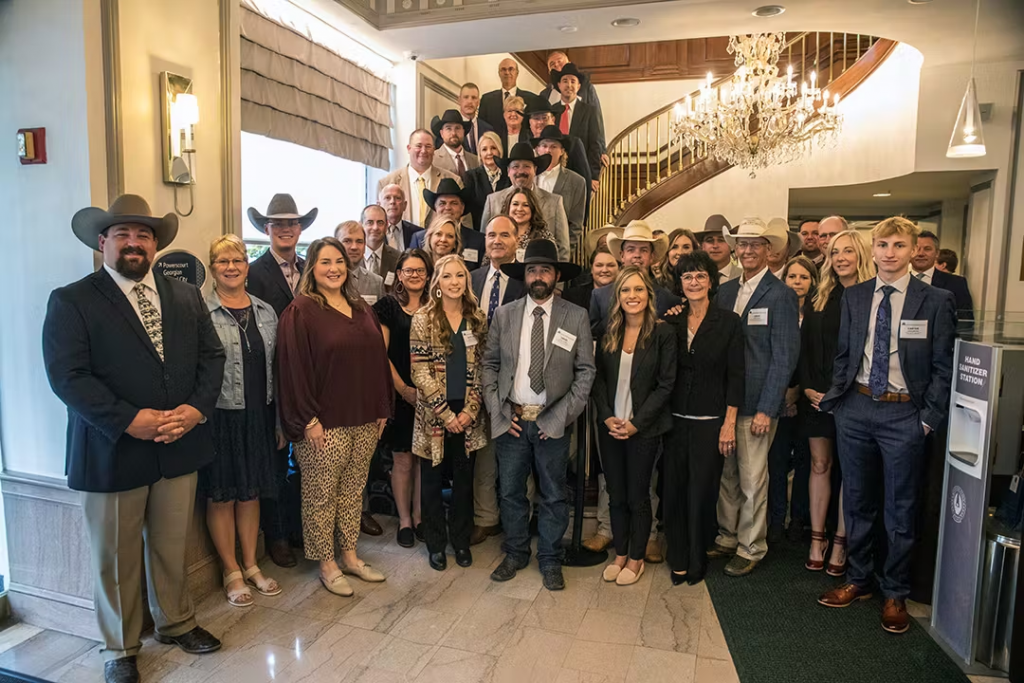
Farm Director, KC Sheperd, had the chance to catch up with the Livestock Marketing Association's director of government and industry affairs, Luke Hale. Over 50 Livestock Marketing Association members and staff met with senators, U.S. representatives, congressional staffers, and U.S. Department of Agriculture officials Sept. 18-19, during the association's 17th D.C. Fly-In. Hale talks to KC about highlights from the event.
LMA strictly represents stockyards, sales barns, and dealers, Hale said. Some of the services LMA provides include regulatory assistance for compliance as well as legislative and government affairs on matters regulated by the Packers and Stockyards Act.
"Livestock Marketing Association holds a D.C. member fly-in each year," Hale said. "It is just a time for sale barn market owners and dealers to come up and visit with members of Congress about some of the issues they are dealing with, any changes we are working on for the Packers and Stockyards Act, and also meet with some agency officials that are in charge of regulatory oversight."
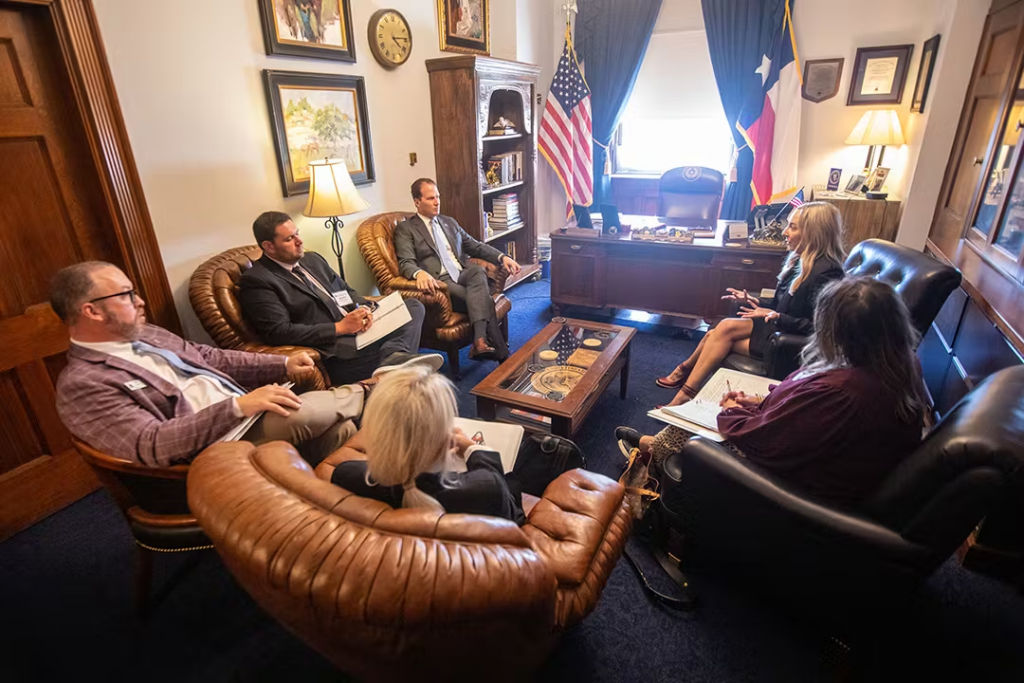
LMA members from at least four to five different locations across the state of Oklahoma also attended the event, Hale said.
"The Oklahoma delegation, Congressmen and women, senators, are always great to meet with," Hale said. "They had a very productive meeting. The main issue they were primarily discussing is moving back a regulation that prevented market owners from being able to invest in packing facilities. It is a regulation that was born out of the times of terminal stockyards when they were co-located with those packers, and there was kind of a necessary separation that needed to be in place.
Now, Hale said markets have changed significantly, becoming more oriented toward small businesses, Hale said, and the creation and adoption of the competitive auction market has brought forth the need for separation.
"Members from Oklahoma and Livestock Marketing Association's staff have been working with congressional members to get some text out there in the House and Senate, and move forward with the Farm Bill," Hale said.
Additionally, Hale said they are working on some adjustments to the Packers and Stockyards Act that would modernize and allow for more efficient and safe payments if auctions would like to do so. One example of a safer payment, he added, is wire transfer.
"Under the law, markets and dealers are required to pay within a certain amount of time, and it has become very difficult given that the law was written in a time before ACH and wire were around," Hale said.
Work is also being done to obtain funding through appropriations for electronic identification tags.
"There is a rule coming down from USDA that is looking to shift that direction, so market owners don't directly have to bore that expense, but obviously markets and dealers are dependent on their producers and their profitability and success, so being able to ensure that added expense of electronic ID doesn't get passed down to them...," Hale said.

Make your mark in "Building an Angus Legacy!"
Angus Foundation offers granite paver at the American Angus Association® headquarters.
It's not too late to leave a lasting mark on the American Angus Association®. By donating to "Building an Angus Legacy" cattlemen, alumni of the junior program and others can have a paver in front of the Association headquarters in Saint Joseph, Missouri, personally engraved.
An unrestricted, tax-deductible donation of $300 to the Angus Foundation secures a paver.
All the proceeds from the "Building an Angus Legacy!" campaign support the Angus Foundation and its mission to advance Angus education, youth and research programs.
In 2013, the front walkway of the Association was remodeled and each of the new 6-by-12-inch granite pavers became available for recognition. Previous donors have listed their names or their farm's name. Others have made a donation in memory of a loved one or the name of their group or state association.
Orders will be accepted on a first-come, first-served basis. To submit an order and payment, contact the Angus Foundation at 816-383-5100. The Foundation is accepting orders via mail to 3201 Frederick Ave., Saint Joseph, MO 64506 or online at www.angusfoundation.org .
Foundation staff are also available to assist you in completing your order form.
"The Angus Foundation would like to thank the members of the Angus family who have already donated to "Building an Angus Legacy" and looks forward to furthering participation until every paver on the Association walkway is engraved," said Jaclyn Boester, Angus Foundation executive director.
– Written by Katelyn Engel, Angus Communications
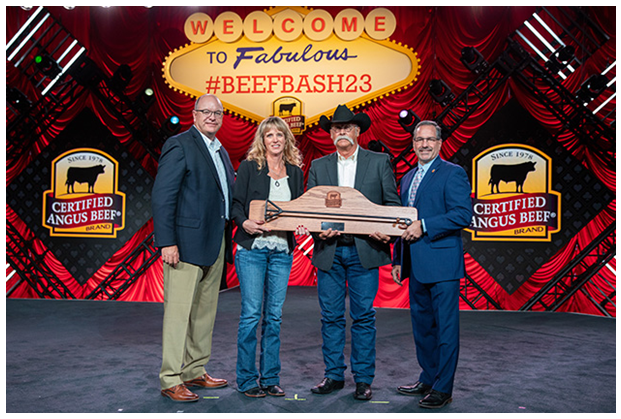
Caption: (from left) John Stika (CAB), Shannon and Rusty Wharton, Bruce Cobb (CAB)
The view of Wharton 3C Ranch, near Syracuse, Kansas, in the summer of 2023 is so green Shannon and Rusty Wharton might have better luck convincing people it is a slice of heaven rather than the harsh, drought-ridden environment locals know.
In fact, a few years ago, there wasn't a cow in these pastures, lack of rain left the soil unable to produce much more than dust.
The commercial outfit is made up of about 600 head spread across more than 35,000 acres, most of that a Western Association of Fish and Wildlife conservation easement. A 1,000-head grow yard prepares calves for finishing. The Whartons have been managing it for various owners since 2005. The last time it changed hands in 2017, they made the numbers work, purchasing the cattle and a little land, leasing the rest.
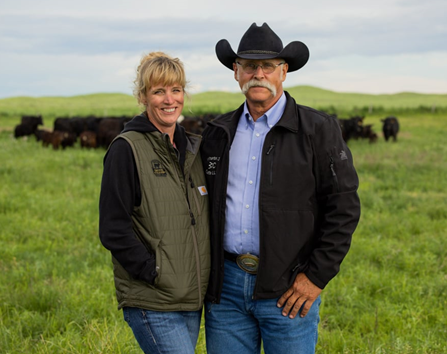
A mix of puzzle pieces built over time helped two first-generation cattle ranchers carve out their own place in the cattle business. Their resilience and success earned Wharton 3C Cattle the 2023 Certified Angus Beef (CAB) Sustainability Award.
A Better Way
Unburdened by tradition that sometimes saddles generational ranches, the Wharton's mindset is business first. Follow the science and data in selection and management, then work to get better every day.
"We have our goal towards quality, not only quality in the meat we produce, but also quality of the land," Shannon says.
Involved in retained ownership since the 1990s, the couple tracks everything from conception to carcass data. A recent load of cattle were 100% Certified Angus Beef ®, including 92% Prime. They achieved 87% or higher CAB and Prime across all their 2021fed cattle. Premiums on those cattle add some extra black ink to the bottom line.
People and a wider vision drive them to build not only their section of the cattle business but the entire industry.
"We all need each other," Shannon explains. "Without the cow-calf producer, restaurants don't have great beef to serve, without the packer, our product doesn't get to those restaurants and consumers don't have access to it. And commercial producers need someone to feed and finish those cattle. So, it's very important that we all work together and realize in the end, we're all producing the same product."
Caption: "We have our goal towards quality, not only quality in the meat we produce, but also quality of the land," Shannon Wharton says.
Greater Involvement
This thought process led Shannon to get involved in the U.S. Roundtable for Sustainable Beef (USRSB).
"It's such a neat organization where we can have the whole supply chain sit down together and say, okay, from the producer all the way to the retailer, we're producing this beef. Let's do it to the best of our ability. Let's make sure we're not impacting the environment negatively. Let's ensure we're taking care of the animals and our employees."
The USRSB framework aligns with the Whartons' mindset on management.
"We have to be sustainable to be in this business." Rusty says. "If we don't do the right thing with the grazing management plan, if we don't take care of the cattle properly and if we fail to bring together our customer base, then we're not going to be in business."
Rusty admits he's been one to store cattle or grazing data in his head or scribbles in a dashboard notebook. However, technology to sort and the discipline to keep records allow him to run their cattle operation like any other business. That recorded and analyzed data enables good decisions, workable drought plans and meeting the requirements of take 1/3, leave 2/3 when grazing the conservation easement.
"It helps you stay focused when you need to make a move," Rusty says.
The most valuable takeaway for the couple's USRSB involvement has been opening new avenues of communication. Shannon has firsthand experience in how simple management tools like Beef Quality Assurance certification and written grazing management plans can align values across the beef supply chain.
"Being involved in the U.S. Roundtable for Sustainable Beef has impacted how we communicate what we do, because we've been doing this for a long time and this is what we believe in," Shannon says. "So, our communication about sustainability is improved by the Roundtable."
Visionaries who were willing to learn, work hard and persevere, Wharton 3C cattle is building both their business and the cattle business for the future.
Click to watch the video recognizing Wharton 3C Cattle's award.
(from left) Shannon and Rusty Wharton
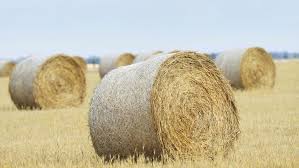
Hay is slow to steady. Very little movement across Oklahoma. The state did receive some rainfall throughout most of the state, but we still need some widespread rain as we head into our fall season.
Trends:
Alfalfa Large squares $180-$200 a ton
Alfalfa Rounds - No Trend
Grinding hay - No Trend
Bermuda 5x6 rounds - $70-$100 a bale
Bermuda Large Squares - No Trend
Grass Hay 4x5-4x6 - $60-$70 a bale
Grass Hay 5x6 - $70-$80 a bale
The Oklahoma Mesonet Drought Monitor shows we are at 0 percent in exceptional drought, 12.91 percent in an extreme drought, 30.93 percent in severe drought, 46.76 percent in moderate, 65.71 percent in abnormally dry conditions, 34.29 percent that has no drought conditions. * The next report release will be on October 13*
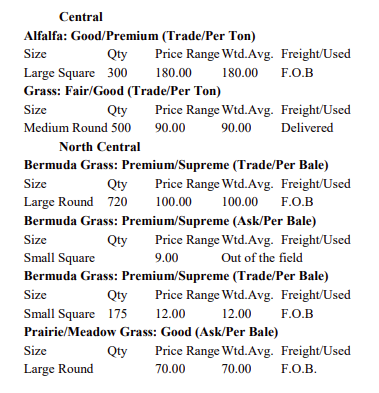
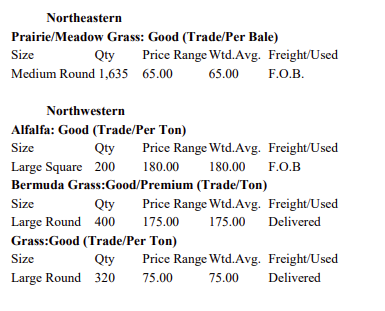
AMSOIL has launched new Commercial-Grade Tractor Hydraulic/Transmission Oil for hard-working agricultural and commercial equipment. It delivers exceptional value for customers seeking an upgrade over conventional and synthetic-blend oils.
Formulated with greater than 50% synthetic content and high-performance additives, AMSOIL Commercial-Grade Tractor Hydraulic/Transmission Oil minimizes viscosity change and provides outstanding wear protection. It features anti-wear additives to protect gears and other components undergoing severe-service load conditions, helping to prolong pump and valve life. Friction-modifier additives promote consistent clutch operation, reduced chatter and smooth operation, while anti-foam additives help control fade and reduce sponginess. The result is reduced maintenance and reliable operation for a wide range of applications.
"Our Commercial-Grade line is designed specifically for commercial operations looking for upgraded protection from standard conventional products, but don't want a full-synthetic solution," said AMSOIL Market Manager, Heavy-Duty Brett Granmo. "AMSOIL Commercial-Grade Tractor Hydraulic/Transmission Oil delivers on all counts – protection, performance and price."
AMSOIL Commercial-Grade Tractor Hydraulic/Transmission Oil is a synthetic-blend Universal Tractor Transmission Oil (UTTO) that is compatible with conventional tractor hydraulic/transmission oils. Use of AMSOIL lubricants does not void any new vehicle or equipment manufacturer's warranty.
Senior Farm and Ranch Broadcaster, Ron Hays, is featuring commentary from National Cattlemen's Beef Association Chief Veterinarian, Dr. Kathy Simmons and Senior Director of Government Affairs, Tanner Beymer, about the reauthorization of the Animal Drug User Fee Act (ADUFA).
ADUFA must be reauthorized every five years to provide user fees to the FDA's Center for Veterinary Medicine to hire expert drug reviewers and to provide information to drug sponsors for new animal drugs.
ADUFA allows the Food and Drug Administration's (FDA) Center for Veterinary Medicine (CVM) to collect fees from animal health companies, which fund the agency's review and approval process for new animal drugs. ADUFA ensures that the FDA has an efficient system for authorizing new cattle medicines and diagnostic tools that keep livestock healthy and protects our safe, wholesome food supply. NCBA fought hard to ensure that this latest ADUFA reauthorization contained no post-market amendments that would harm the effectiveness of the FDA's review process, disrupt producers' access to cattle medicines, or simply keep the legislation from passing Congress before the September 30th deadline.
"This money means new animal drugs in our toolbox will continue in a timely manner, and it also fosters innovation because it facilitates the drug approval process for the sponsors," Simmons told Hays in an interview earlier this year.
NCBA's Senior Director of Government Affairs, Tanner Beymer, also weighed in on the reauthorization and said the last-minute addition of the five-year reauthorization of ADUFA to the just passed Continuing Resolution that funds the federal government for the next forty-five days is a pleasant surprise and victory for animal agriculture.
"It prevents using some of those user fees from getting those drugs approved and implemented, and it goes into basically allowing FDA to oversee some of those distributions," Beymer said. "Obviously, there have been a lot of conversations over the last several weeks and several months, I guess I should say, about how we go about getting ADUFA reauthorized in such a divided Congress."
In the event that ADUFA was to expire, Beymer said many positions at the FDA would become vacant because there is no funding source to pay those employees.
"That would have had really dire consequences, particularly for veterinarians and those on the animal health side of our industry," Beymer said. "Getting a clean reauthorization for five years and ensure there is no disruption to the system gives us that extra degree of certainty and allows us the opportunity to go in and have some of these conversations with FDA about these animal drug products that we use on a regular basis and ensure that there is no disruption from the system."
The Beef Buzz is a regular feature heard on radio stations around the region on the Radio Oklahoma Ag Network and is a regular audio feature found on this website as well. Click on the LISTEN BAR for today's show and check out our archives for older Beef Buzz shows covering the gamut of the beef cattle industry today.
On Aug. 23, USDA began hearing testimony on proposals to amend the Federal Milk Marketing Order system. Now in week seven of testimony, 21 submitted proposals continue to be discussed and examined by USDA and dairy industry stakeholders. Testimony on category four, which covers base Class I skim milk price adjustments, including advanced pricing dynamics, is currently being heard. Several organizations argue that the current use of advanced pricing for Class I and Class I skim milk in conjunction with the "average-of" plus 74 cents formula has contributed to disorderly marketing conditions and non-uniform pricing for dairy farmers.
Background
The Federal Milk Marketing Order system establishes provisions under which dairy processors purchase milk from dairy farmers supplying specific marketing areas. One of the primary functions of the federal order structure is the calculation of minimum uniform prices paid to farmers. USDA does this by attempting to calculate the value of raw milk used in a dairy product based on the value the dairy product garnered in the marketplace (its end use).
Currently, the FMMO system categorizes milk into one of four classes, based on what dairy products it is used to make. Each class of product has a different value in the market so that the price dairy product manufacturers pay reflects the final market value of those goods. The four class prices are currently as follows: Class I – milk used for beverages; Class II – milk used in soft products like ice cream, sour cream and cottage cheese; Class III – milk used in hard cheese and spreadable cheeses; and Class IV – milk used to produce butter or powdered dairy products. USDA uses the value of sold commodity dairy products and works backward to determine the value of raw milk in those products. The primary reason for using a classified pricing system is that it promotes raw milk price equity among handlers and farmers. The intention is to ensure handlers in a similar location and who produce similar products pay the same minimum classified price for the raw milk and that farmers producing milk in the same area receive the same price (i.e., uniform pricing).
Under classified dairy pricing, handlers participating in an order have an obligation to the pooling function of federal orders based on the Class price. It is important to note that not all handlers must participate in pooling. Only Class I handlers are required to pool their milk every month. Class II, III and IV handlers can remove their milk from the order, or "de-pool," in certain months if they so desire. Different orders have different regulations governing how and at what pace handlers can re-pool milk on the order if they decide to not participate.
In seven of the 11 federal orders dairy farmers are paid based on the component content of their milk via what is known as multiple component pricing. In this process, the producer value of milk is determined monthly based on the cheese milk (Class III) component levels of fat, protein and other solids. The difference between the total pooled revenue from what handlers pay via the set Class price and the component value worth of producer's milk is denoted as the producer price differential. When the component value of milk in the pool is higher than revenue pooled from paid Class prices, deductions are applied to farmers in the form of a negative producer price differential. Dairy farmers were repeatedly confronted with negative PPDs during 2020 and 2021, with average all-market PPDs reaching over -$7 per hundredweight – showing up as a massive deduction on milk checks. This often leads to handlers withdrawing milk from the pool.
The most common of the many factors that contribute to the existence of negative PPDs are: Class III milk value rising above the butter-powder (Class IV) milk value, changes in utilization rates of milk due to production changes in an order, the advanced prices for Class II skim and Class I milk lagging behind rising Class III component prices, and changes in utilization due to de-pooling by handlers deciding to not pool milk in an order for one or more months by which de-pooling leads to more de-pooling.
Advanced Pricing
Currently, the classified prices for each month are announced at two different times. First, the advanced prices are announced by the 23rd day of the preceding month. For example, September's advanced prices are announced on or before Aug. 23. Advanced minimum prices are announced for Class I, Class I skim, Class I butterfat, and Class II skim. By the fifth day of the following month, the Class II, Class II butterfat, Class III, Class III skim, Class III butterfat, Class IV, Class IV skim, and Class IV butterfat prices are announced. These prices for September are announced on or before Oct. 5. This arrangement creates a long lag between when the advanced prices and current prices are announced for that same month and means that the advanced prices (Class II skim milk and components and Class I skim milk and butterfat) can be based on weekly data that is 25 to 40 days older, on average, than the basis for the "current" prices (Class II butterfat and all Class III and IV prices).
This means when market prices rally, announced (final) prices can be much higher than advanced prices, leading to low and negative PPDs. This creates an incentive to de-pool milk from the order to benefit from the non-pooled value of the recently elevated prices (without sharing that value with the pool), which further depresses the PPD, and undermines the FMMO principle of uniform pricing.
The impact of advanced pricing on orderly marketing of milk is not new to Federal Milk Marketing Order discussions. USDA has acknowledged the impact of lagging fluid and manufacturing Class pricing on orderly marketing of milk in previous analyses. In USDA's proposed rule published in Federal Register Volume 64, number 63, released on April 2, 1999, they wrote:
"Since Class I handlers must compete with manufacturing plants for supply of milk, the Class I price must be related to the price of milk used for manufacturing.
"It is apparent from the price patterns of a large part of 1998 that the current two-month lag between manufacturing and fluid pricing does not establish as close a relationship between the two price levels as is desirable. Indeed, from an analysis of the differences between prices generated by a six-month declining average and the current pricing system, it is clear that the current two-month lag does not accomplish any closer relationship between manufacturing and fluid prices than would the six-month declining average.
"When manufactured dairy product prices are relatively stable the advance pricing of Class I milk works quite well. However, since 1988 the volatility in the manufactured dairy product market has caused problems with the advance pricing of Class I milk. The first problem is readily evident in class price relationships during the latter part of 1998. The frequent occurrence of price inversions during that period indicates that some alteration to both theproposed and current methods of computing and announcing Class I prices may be necessary. Class price inversion occurs when a market's regulated price for milk used in manufacturing exceeds the Class I (fluid) milk price in a given month and causes serious competitive inequities among dairy farmers and regulated handlers. Advanced pricing of Class I milk actually causes this situation when manufactured product prices are increasing rapidly.
"Since the Class I price is announced in advance, in a rapidly changing market the Class I price may not reflect the value needed to compete for the necessary raw milk supply or the Class I price may be overvalued relative to the raw milk price. Undervaluing Class I milk is a particular problem since it reduces producers' pay prices at a time when the producers should be receiving a positive price signal."
The conditions USDA refers to from over 20 years ago related to price inversions, rapidly changing markets and resulting competitive inequalities among dairy farmers have continued. A range in a price series provides insights on how volatile a price is. Larger ranges in price indicate high volatility while a smaller range would indicate lower volatility. As displayed in Figure 1, the range in Class prices within a year has exceeded $4 per hundredweight frequently since 2012. For example, the annual range in Class I prices has exceeded $4 per hundredweight in six of the past 12 years. The annual range in Class II prices has exceeded $4 per hundredweight in five of the past 12 years. The annual range in Class III prices has exceeded $4 per hundredweight in seven of the past 12 years. And the annual range in Class IV prices has exceeded $4 per hundredweight in four of the past 12 years. The average annual range in prices has exceeded 20% of the average final Class price for all Classes of milk, with Class III ranges exceeding 28% of the average final Class III price since 2012. Dairy farmers have dealt with wide and rapid spreads in prices that have contributed to income uncertainty and disruptions in their ability to manage risk.
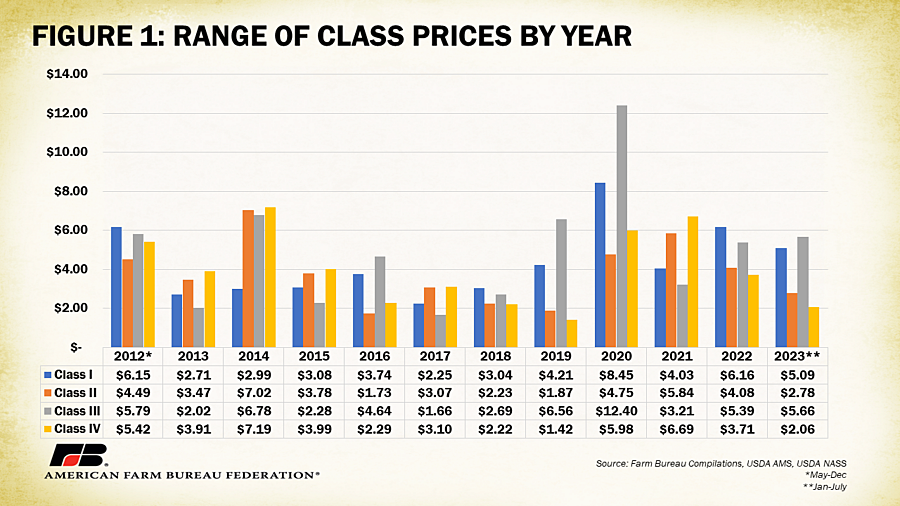
USDA continues in the same section on the issue of de-pooling:
"Milk used in Class I in Federal order markets must be pooled, but milk for manufacturing is pooled voluntarily and will not be pooled if the returns from manufacturing exceed the blend price of the market wide pool. Thus, an inequitable situation has developed where milk for manufacturing is pooled only when associating it with a market wide pool increase in returns. Illustrative of the worsening class price inversion problem are the growing volumes of milk that, while normally associated with Federal milk orders, are not being pooled due to price inversion problems."
Over the past 20 years the percentage of de-pooled milk has increased. Based on data from USDA exhibit 30, between 2007 and 2012 the average monthly percent of eligible milk that was de-pooled across all orders was 5.7%; between 2013 and 2018 this percentage increased to 9.5%. Between 2018 and 2023, this figure nearly doubled to an average of 18.9% of eligible milk being de-pooled each month. Handlers are de-pooling milk at higher volumes more frequently, contributing to increased occurrences of disorderly marketing. It is important to note, a comparison of milk de-pooled in only Order 30 was analyzed to ensure the addition of California's Order 51 in 2019 was not the driving cause of this trend.
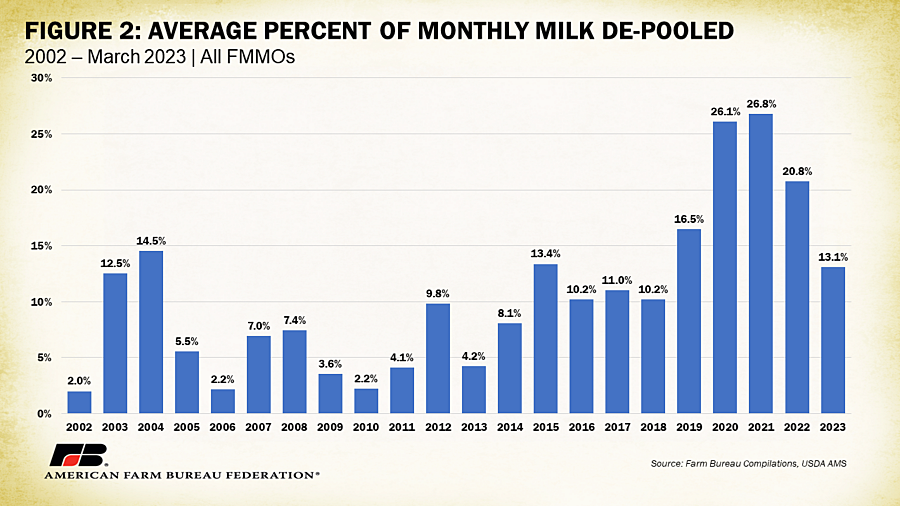
The increase in de-pooling has been correlated with the volatility in Class prices at varying levels with a higher positive correlation between wider Class I and Class III ranges and higher rates of de-pooling. More frequent de-pooling has also been positively correlated with lower and negative producer price differentials. These interactions are displayed in Table 1.
Based on AMS' final Class pricing data from May 2012 to July 2023, the range of Class prices for each year was compared to the average monthly percentage of milk de-pooled that year using Excel's CORREL function, which determines the correlation coefficient between two variables. The same was done comparing month-to-month percentages of pooled milk with the average all-order producer price differential. A positive correlation (between zero and one) indicates varying strengths of positive linear relationships between the two variables, while a negative correlation is reflected in a value between 0 and -1. For instance, the correlation coefficient of the annual range in Class I prices compared to rates of average annual rates of de-pooling is 0.62, indicating as the range of Class I prices was higher, the rate of de-pooling was higher. Similarly, the correlation coefficient of the monthly all market combined PPD and monthly percent of pooled milk was also 0.62, indicating as the PPD increased, the percent of monthly pooled milk also increased.
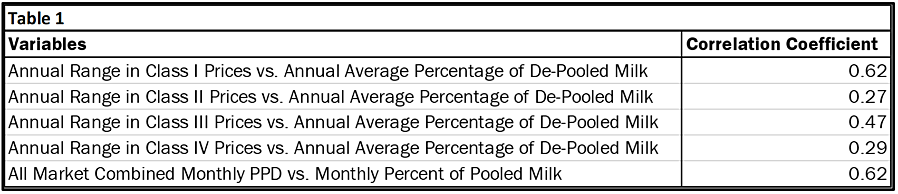
The inequitable situation that USDA described over 20 years ago has become increasingly present in today's dairy markets. Eligible processors pool milk when market-wide pool returns are expected to be positive compared to current manufactured Class prices but are likely to de-pool milk otherwise. This causes serious competitive inequities among dairy farmers, contrary to the intention of uniform prices.
Large ranges and rapid increases in Class prices contribute to, or at least are associated with, higher rates of de-pooling. Figures 3 and 4 compare the average percent of milk de-pooled across all markets within three different identified timeframes. The first timeframe isolates months in which the Class III price (for Figure 3) and the Class IV price (for Figure 4) rose positively more than 5%. The second timeframe isolates months in which the corresponding Class price declined more than 5%. The third timeframe isolates months in which the change in the corresponding Class price was below 5%. Both the average and median percent of eligible milk de-pooled are displayed for the three different timeframes. For months where Class III prices increased more than 5% the amount of de-pooled milk from the market averaged 19.9%, while the percentage of milk de-pooled in months with more than a 5% decline or lower than a 5% change averaged 13% and 13.3%, respectively. Likewise for months where Class IV prices increased more than 5% the average amount of de-pooled milk from the market averaged 19.5%, while the percent of milk de-pooled in months with more than a 5% decline or lower than a 5% change averaged 13% and 13.9%, respectively. It is important to note that these values are averages across all orders, the impact of stricter pooling rules in certain orders is not accounted for. Since existing pooling rules limit the rate at which milk could be re-pooled it is likely that the full magnitude of Class price changes on de-pooling is more extreme than presented.
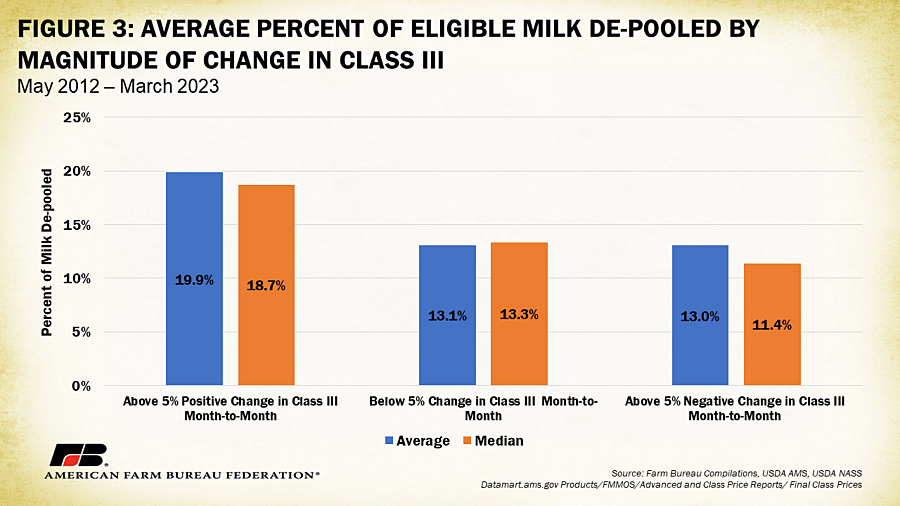
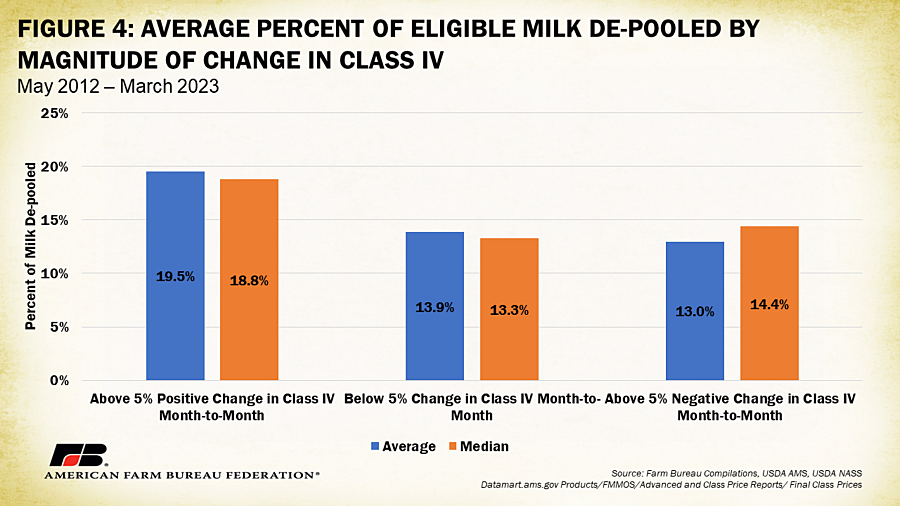
As mentioned previously, when market prices rally, announced (final) prices can be much higher than advanced prices, leading to low and negative PPDs. This creates an opportunity to de-pool milk from the order to benefit from the non-pooled value of the recently elevated prices reflected in available market information, further depressing the PPD. Producers who incur the additional costs of consistently servicing the Class I needs of the market receive a lower return than they would otherwise have received if they did not continue to service the Class I market. Prices received by dairy farmers who supplied the other milk needs of the market are not known. However, as USDA affirmed, "it is reasonable to conclude that prices received by dairy farmers were not equitable or uniform."
After their in-depth discussion, USDA ultimately decided to reduce the time lag between advanced and announced prices by 18 days with the intention that price inversions and associated de-pooling behavior would be avoided. USDA defended their decision with several important points. Firstly, the National Dairy Product Sales Report (NDPSR), which includes statistics and pricing information used in the first step of establishing a minimum pay price are announced publicly every week. Therefore, as USDA puts it, "handlers can update formulas on a weekly basis to estimate what the Class I price will be before the price is announced."
Let's read through a quick example. Announced in late May, the Class I price for June 2020 was $14.24/cwt. During June there were four NDPSR releases: June 4, June 10, June 17 and June 24. Per these reports, the prices of the following products changed by the corresponding amounts between the first report and the last report.
Announced in early July, the Class III price for June 2020 was $21.04. There were five releases of the NDPSR in July: July 1, July 8, July 15, July 22 and July 29. Per these reports, the prices of the following products changed by the corresponding amounts between the first report and the last report.
The Class IV price formula does not include the commodity values of cheese in its calculation, instead relying on nonfat dry milk prices and butter prices in its formula. Given the above per-pound values, the spread between the Class III and IV price could be inferred before the announcement of monthly prices pooled manufacturers would have to pay are reported. This differs from the advanced price announced for Class I and II, which are based on different, previous values. This available information means that processors should have enough information and enough time to de-pool milk when price changes are clear and rapid. The presence and frequency of published commodity pricing data should allow handlers to estimate price changes regardless of when a price is announced. Additionally, as more products are offered on the Chicago Mercantile Exchange, handlers will have increased access to the information needed to hedge and manage risk.
USDA agreed on this matter in their 1999 decision stating:
"Also, as more NASS product price survey observations become available, basis differences from earlier traded/ issued product price surveys such as those from the Chicago Mercantile Exchange or Dairy Market News will be more predictable and, therefore, should provide for more accurate predictions of future price levels. In addition, futures markets have been established for the four dairy products in the NASS price surveys. While trading to date in these contracts has not been large, interest in these markets may increase as the industry learns to use them as effective hedges to the component values determined under this final decision. These markets also will assist handlers in estimating the Class I price."
Summary
The Federal Milk Marketing Order system establishes provisions under which dairy processors purchase milk from dairy farmers supplying specific marketing areas. Two of the primary functions of the federal order structure are the calculation of minimum uniform prices paid to farmers and to incent orderly marketing of milk. Recent price conditions have revealed disorderly marketing is present when producers do not receive uniform prices because of frequent de-pooling. The current system of advanced pricing contributes to the frequency and magnitude of de-pooling. Given the growing number of resources for data and market information, the historic benefit of advanced pricing may no longer be necessary and its removal in the pricing of Class I and II milk may be a viable option to help modernize the FMMO system.
The National Dairy Farmers Assuring Responsible Management (FARM) Program today announced the launch of FARM Biosecurity – Enhanced, a new aspect of the FARM Biosecurity Program that includes training and an online database.
FARM Biosecurity – Enhanced, includes an online database to develop and securely store dairy producers' enhanced biosecurity plans (EBP) and an online training that helps users write those plans. FARM has also developed a FARM Biosecurity – Enhanced Biosecurity Prep Guide and Database User Guide to complement these tools.
Stronger, or enhanced, levels of biosecurity will be needed to protect cattle against the highly contagious foot-and-mouth disease (FMD) found in two-thirds of the world. One FMD case in the United States could shut down movement across the nation of livestock and their products for at least 72 hours.
FARM Biosecurity – Enhanced incorporates the on-farm elements of the Secure Milk Supply Plan for Continuity of Business. The Secure Milk Supply (SMS) Plan for Continuity of Business was designed to help the dairy industry prepare for an FMD outbreak by providing producers with the tools to develop an enhanced biosecurity plan. The FARM Biosecurity – Enhanced database not only securely stores the EBP plans, but with producer permission will share the plans with state animal health officials for their approval to speed up issuing a movement permit in the event of an FMD outbreak.
FARM Biosecurity has two parts: Everyday Biosecurity for common disease threats and Enhanced Biosecurity for highly contagious foreign animal diseases. The FARM Biosecurity resources aim to protect dairy cattle, build resiliency, and future business continuity opportunities for the dairy industry.
NMPF and the National Dairy FARM Program would like to thank the United States Department of Agriculture National Animal Disease Preparedness and Response Program (USDA NADPRP) for funding the FARM Biosecurity initiative through a cooperative agreement and Dr. Danelle Bickett-Weddle with Preventalytics who was instrumental in the development of the FARM Biosecurity resources.
To learn more about the FARM Program or access protocol templates and training aids, visit the FARM website: nationaldairyfarm.com. To learn more about the Secure Milk Supply Plan, access templates, standard operating procedures, movement logs, and more, visit securemilk.org
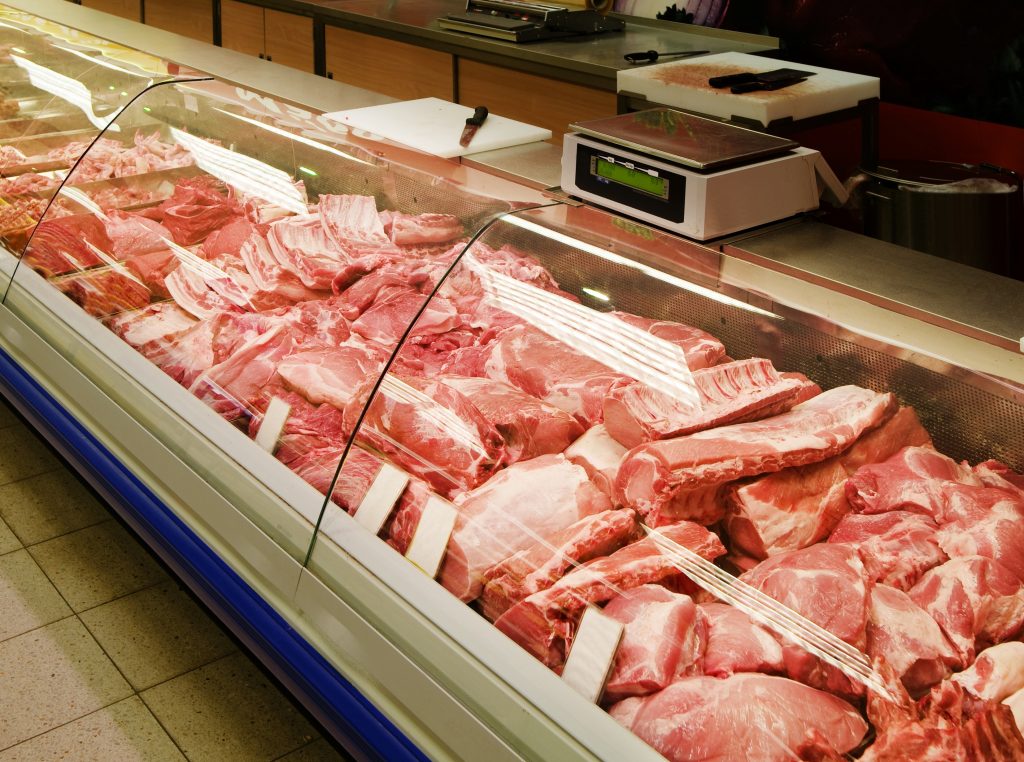
Weekly, Oklahoma State University Extension Beef Cattle Nutrition Specialist Paul Beck offers his expertise on the beef cattle industry. This is a part of the weekly series known as the "Cow-Calf Corner." Today, he talks about beef enhancing research.
Consumers relate the color of meat to freshness and base their purchasing decisions on color more frequently than any other quality trait. When purchasing beef, studies show that consumers want to see a bright cherry red color, deeming other color deviations as unacceptable off color of beef products is a significant economic cost to the beef production system. A recent published study from Oklahoma State University meat science researchers noted that the US beef industry loses $3.73 billion annually due to beef discoloration. Here are some highlights of efforts by OSU Animal and Food Sciences faculty and students to improve beef value.
Dr. Gretchan Mafi and Laura Yoder studied natural antioxidants and different packaging types on color and freshness of ground beef. Consumers prefer traditional foam trays with PVC plastic overwrap but this may limit shelf life. Alternatives like "Master Packaging" (MP) or "Modified Atmospheric Packaging" (MAP) will extend shelf life of meat products. In a MP, products are first packaged in traditional PVC and placed into a large bag which is flushed with inert gasses, such as carbon monoxide, nitrogen, or carbon dioxide, to create an anaerobic condition. Modified Atmospheric Packaging is where beef is place in rigid trays with air evacuated and then backflushed with gas mixtures. Rosemary, green tea and a combination of rosemary + green tea were added to ground beef and formed into patties. Patties were packaged into PVC, MAP or MP. Panelists strongly detected the green-hay flavor in patties with rosemary and rosemary + green tea antioxidants. However, patties with green tea or regular ground beef patties did not have detectable green-hay flavor. All patties in PVC had greater amounts of lipid oxidation and discoloration than those in MAP. In PVC packaging, green tea or rosemary + green tea reduced lipid oxidation and discoloration compared to control or rosemary patties in PVC. This research shows that packaging and use of antioxidants can reduce beef discoloration and extend storage shelf life. (More details can be at https://iastatedigitalpress.com/mmb/article/id/11697/)
Dark-cutting beef has a higher pH postmortem due to increased stress caused by many factors including transportation, weather and handling. Dark-cutting beef reduces carcass value because of negative consumer perceptions. A project by Dr Ranjith Ramanthan and Morgan Denzer looked at the effects of packaging type and enhancement of dark cutting beef with glucono delta-lactone and rosemary (DCE). Dark cutting steaks with enhancement had an increase in redness in 24 h of dark storage. DCE steaks packaged in a novel nitrite embedded packaging improved surface redness during retail display. However, repackaging DCE steaks in PVC decreased color stability and redness of steaks within 12 h of the display. The enhancement decreased internal redness upon cooking, and panelists did not notice major tenderness differences. This research suggests that adopting appropriate packing and enhancement technology has the potential to increase the value of dark-cutting beef. (To read the full article https://www.sciencedirect.com/science/article/pii/S2772502222001494.)
The meats group at OSU is very active in conducting research that will improve the economics of our industry by decreasing waste and increasing consumer acceptability of our beef products.
RON's Dave Lanning has a pre-opening look at today's agricultural Markets.
Click the audio tab below for today's report.
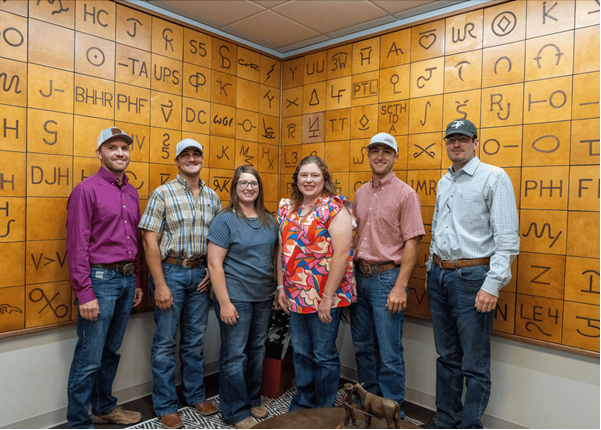
| "Being a young producer in the breed, this is a really important time to get a broad perspective on what the industry is doing as a whole and all of the different dynamics within the Hereford breed," says Jacob Rausch, Rausch Herefords, Hoven, S.D. "That way, when I'm back home at my operation, I'm taking all of those things into consideration. I'm not getting tunnel vision or pigeonholing myself. It's going to create an opportunity for more success." Rausch was one of six young Hereford breeders selected to attend the American Hereford Association's (AHA) first Seedstock Academy, an intensive week-long opportunity in September to learn more about current beef industry dynamics, to network and share ideas with other seedstock and commercial producers. "As a young breeder, it's exciting to see what we can do to further improve this breed. It's been really nice to branch off and see the different environments people operate in, but all come together and talk about the value of Hereford cattle throughout the United States," says Shayne Wiese, Wiese and Sons, Manning, Iowa. "The connections alone, and the camaraderie has been outstanding. Also, getting a crash course into a lot of these Association programs is very, very helpful to me." "It is a really great learning experience, not just for what we can do better every day, but how we can think through things and make things better for the long term," says Emilee Holt, NJW Polled Herefords, Decker, Mont. "The Seedstock Academy multiplied a normal learning experience by 10. The people you were surrounded with multiplied that times another five." Designed with Intention "The Hereford Seedstock Academy is the logical extension of the breed's intentional leadership development, which is a key part of the AHA's strategic plan," explains Jack Ward, AHA executive vice president. "Members of the Seedstock Academy have already established themselves as high-achieving individuals with years of committed Hereford seedstock production experience despite their young age." Shane Bedwell, AHA chief operating officer and director of breed improvement emphasizes the week's curriculum was designed to provide participants tools and information to benefit their operations, their customers and the Hereford breed. In-depth discussion areas and tours included: the breed's National Reference Sire Program (NSRP) at Olsen Ranches, Harrisburg, Neb., the breed's mainstay NRSP herd; visits with leading commercial cow-calf producers, stocker operators and cattle feeders; insight to the pioneering AHA collaborative sustainability research project with AgNext and Colorado State University; Hen House Local Markets, a premier Certified Hereford Beef® retailer; and leveraging individual breeder brands with the AHA brand. "I come from the commercial side of the business, and I happen to raise registered cattle. For these young Hereford breeders to grasp what's going on every day in the commercial part of our business is huge," says Bill Goehring, AHA president. "These young leaders had the opportunity to delve into key facets of each commercial sector during the week and what that means to their operation, their commercial bull customers and the breed." Goehring and his family raise Hereford seedstock, run commercial cows and operate a sale barn near Libertyville, Iowa. "This group was amazing," Bedwell says. "Their ideas, their openness, their willingness to share their thoughts. It was apparent that this breed is on a powerful trajectory with the talent that we have in this class." Detailed Insights "I'm really excited about the work we're doing as a breed and breed association to capitalize on the breed's advantages in crossbreeding, and the research we are doing to keep ahead of the curve when it comes to consumer concerns about sustainability," explains Tyler Schultz, Sandhill Farms, Haviland, Kan. "I've been a part of a lot of different young stockman groups, but to have one with people in the same business as me is rare." "My favorite part about the experience was getting to network with the others, learn about what they are doing in their programs and how they are overcoming the challenges that we all face," says Keayla Harr, J & L Cattle Services, Jeromesville, Ohio. "Getting to see Olsen Ranches and the National Reference Sire Program in action, what we're documenting and how that entire program works has been incredibly beneficial in understanding how the data improves the breed's genetic evaluation and how we're proving some of these young bulls." "My biggest takeaway is the impact we can make on the beef cattle industry when we make good, responsible genetic decisions," says Breck Debnam, Innisfail Farms, Madison, Ga. "It's definitely been an eye-opening experience for me. Being able to interact with leaders in our industry, folks who are extremely talented at what they do and then bring those ideas back to the ranch is a priceless opportunity." Members of the 2023 Hereford Seedstock Academy are: Breck Debnam, Innisfail Farm, Madison, Ga. Keayla Harr, J & L Cattle Services, Jeromesville, Ohio Emilee Holt, NJW Polled Herefords, Decker, Mont. Jacob Rausch, Rausch Herefords, Hoven, S.D. Tyler Schultz, Sandhill Farms, Haviland, Kan. Shayne Wiese, Wiese and Sons Herefords, Manning, Iowa |
The U.S. Department of Agriculture (USDA) today announced the names of individuals who will hold senior staff positions in Washington, D.C.
Tate Mitchell has been appointed as Chief of Staff for the Office of Communications
Tate Mitchell comes to USDA from the White House Office of the Vice President, where she served as Associate Director of Press Operations. In this role, she managed all press operations for the Vice President. Before that, Mitchell served as a Press Assistant at the U.S. Small Business Administration. She also worked on the North Carolina Coordinated Campaign, Biden for President, and Kamala Harris, For the People. Mitchell earned a Bachelor of Journalism from the University of Missouri and is a Texas native.
Rudy Soto has been promoted to Deputy Assistant Secretary for the Office of Congressional Relations
In his new role, Rudy Soto will be responsible for the External and Intergovernmental Affairs team, working in tandem with USDA's Deputy Assistant Secretary for the Office of Congressional Relations, Eric Deeble. Soto previously served as USDA's Acting Director of External and Intergovernmental Affairs. Before that, he was USDA's Rural Development State Director for Idaho since January 2021. As Rural Development State Director, Soto was instrumental in promoting economic development, increasing access to healthcare, and improving infrastructure in Idaho's rural communities. Before that, Soto served as a legislative staffer in the U.S. House of Representatives, covering energy, environment, agriculture, and tribal affairs. Soto was born and raised in Nampa, Idaho, and is a proud member of the Shoshone Bannock Tribes of the Fort Hall Reservation and a veteran of the United States Army National Guard. He earned a bachelor's degree from Portland State University.
Steffanie Bezruki has been promoted to Senior Advisor for the Office of the Deputy Secretary
Steffanie Bezruki joined USDA in January 2021. She most recently served as Chief of Staff for the Under Secretary of Rural Development and previously as Chief of Staff for the Rural Business-Cooperative Service (RBCS). Before her tenure at USDA, she served in various leadership positions on Capitol Hill, including as Legislative Director for Congresswoman Abby Finkenauer and, previously, as Senior Policy Advisor for Congresswoman Cheri Bustos. Her policy areas of focus included agriculture, rural development, health care, and issues impacting small businesses. Bezruki is originally from Central Illinois and holds a bachelor's degree from the University of Illinois at Urbana-Champaign.
Well it looks like we might actually see some fall temperatures this week, and also the possibility of Rain, But as we know in Oklahoma, when we get rain, we always see a threat of severe weather. State Climatologist Gary McManus says We will see the possibility of large hail, a slight tornado risk, and possible flash floods, "it appears the severe hail is a big threat. Somebody's gonna get 3-5 inches of rain, and somebody else close to them is gonna get a half-inch. But flash flooding is a big concern over the next couple of days."
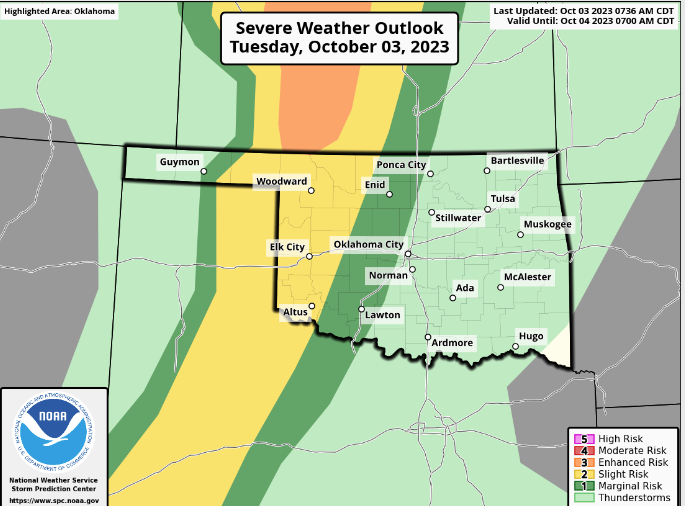
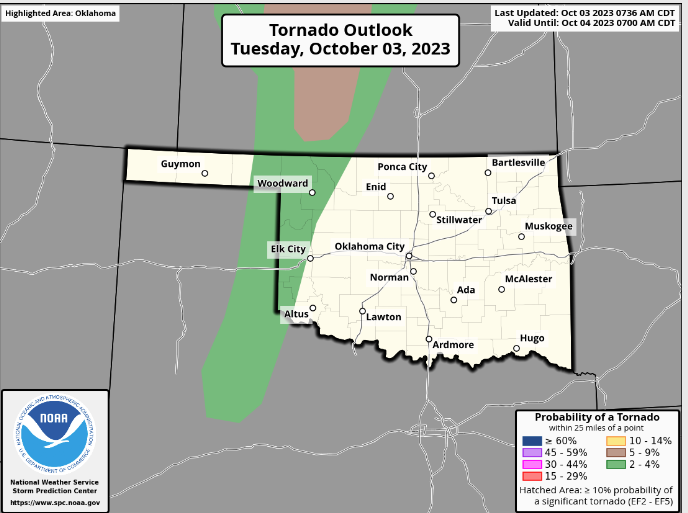
Looking at the forecast, we have at least SOME chance of severe weather throughout the state through Wednesday evening, and then we could see much cooler temps on the horizon.
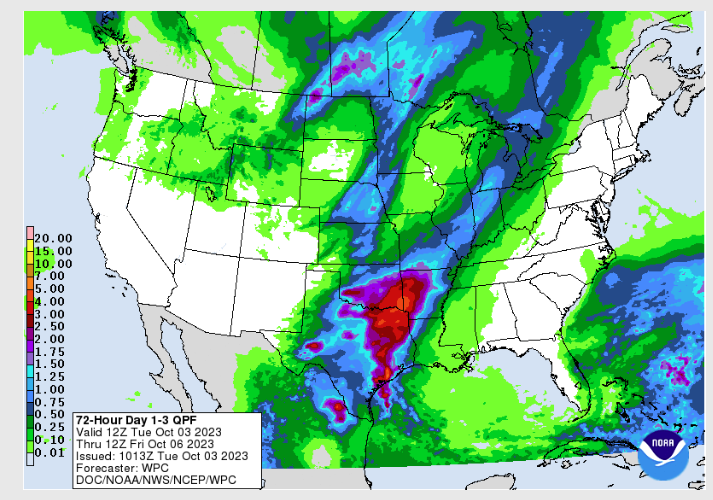
McManus says we will see almost winter-like temps as the weekend rolls in, "I see winter
Saturday morning."
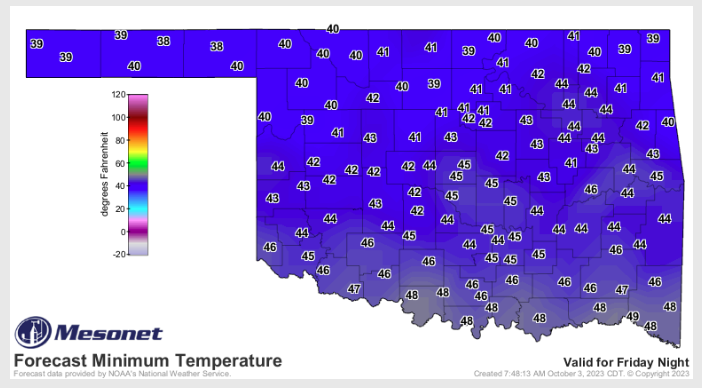
Those fall-like temps will be welcome as its been hot the past few weeks, with most of the state still showing 80s and 90s. McManus says we may even have our first freeze on the horizon, "We're getting much closer to our first fall freeze climatological dates, if not average then an early case."
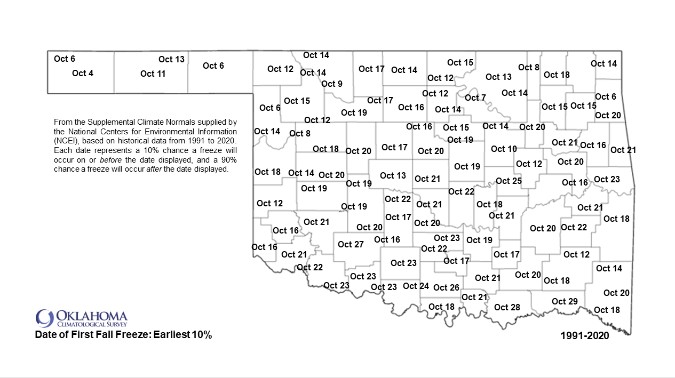
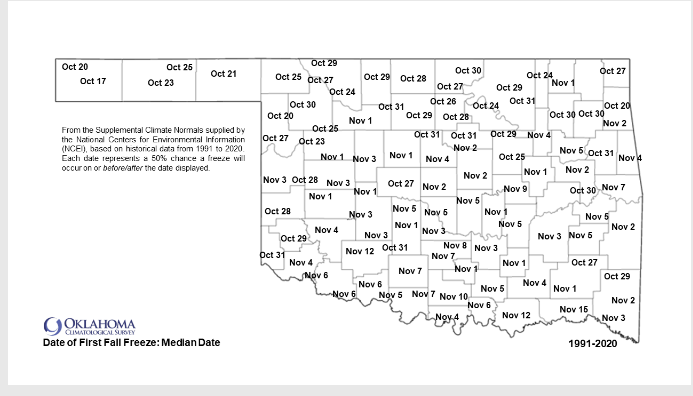
To read more from Gary McManus in his daily ticker, click here:
Today, the Animal Agriculture Alliance announced the theme of its 2024 Stakeholders Summit: "Ready, Set, Solve! Advancing Animal Agriculture." The 2024 Summit is set for May 8-9 in Kansas City, Mo. Speaking proposals for the event are being accepted through November 22. Interested speakers can submit their proposals at https://bit.ly/AAA24RFP. Registration for the event will open in January.
Dozens of speakers. Hundreds of perspectives. Countless ideas. And that's just at the starting line of the 2024 Summit. It's going to take a team to drive our future forward. It's going to take you, running alongside fellow stakeholders from across the food chain who know that putting in the work is the only way to transform today's challenges into tomorrow's solutions. Are you ready? Then take your spot at the 2024 Summit.
The Alliance is currently seeking proposals for keynote presentations and panel discussions that fit the 2024 theme. Presentations should provide unique and thought-provoking ideas and focus on actionable tools attendees can immediately use and implement. For more information, visit the proposal guidelines and form. For questions about the speaker proposal process, contact Abby Kornegay at akornegay@animalagalliance.org.
"The annual Stakeholders Summit is known for its dynamic speaker-filled schedule, and the 2024 Summit will be no different," said Hannah Thompson-Weeman, president and CEO, Animal Agriculture Alliance. "The Alliance team is excited to tap into the 2024 Olympics theme with an emphasis on propelling animal agriculture toward the ever-evolving finish line as we all work to reach our collective goals. We look forward to curating an agenda that embodies this focus."
Registration for the Summit will open in early 2024 and a tentative schedule will be shared at that time. Check the Summit website for the most up-to-date information. You can also follow the hashtag #AAA24 for periodic updates about the event on social media. For general questions about the Summit please email summit@animalagalliance.org or call (703) 562-5160.
The Summit is a one-of-a-kind conference attended by a diverse group of decision makers, including representatives from farms, ranches, allied industries, food processors, restaurants, grocery stores, legislatures, universities, government agencies and media. The 2023 Summit, themed "Partners in Progress: Building a Sustainable Future for Animal Ag" and held in Arlington, Va., attracted nearly 320 attendees. Select session recordings from the 2023 event are now available for public viewing, including:
Get involved: Show your support for the Alliance's outreach efforts by becoming an official Summit sponsor today! For more information on 2024 sponsorship opportunities, contact Hannah Thompson-Weeman at hthompson@animalagalliance.org.
Congressman Tom Cole (OK-04) released the following statement.
"Speaker McCarthy can not only be credited for delivering this Republican majority but has also delivered on his commitments to the American people," said Cole. "He has been an instrumental leader to our conference, and because of him, House Republicans have advanced policies that would secure the border, restore American energy dominance and rebuild the economy. He had my full support in January, and he has my full support now."

Farm Director, KC Sheperd, is talking with the Director of Market, Membership and Education at the Texas Cattle Feeders Association, Brady Miller. Miller talks about what to look forward to at the TCFA Annual Convention coming up on October 8-10 in Grapevine, Texas.
The convention at the Gaylord Texan Resort and Convention Center will offer a group of dynamic speakers, Miller said, starting out with an update from the president of the National Cattlemen's Beef Association, Todd Wilkinson.
In conjunction with the Texas Beef Council, Miller said on Monday morning, TCFA will be hosting a panel of speakers to talk about staying in touch with what the consumer is looking for.
"If we are not producing a good product that they are willing to buy, as this product continues to get more expensive every day and every year, then we are missing the boat," Miller said. "The worst thing we can ever do is produce a product that the consumer doesn't like or doesn't want, and then our demand goes down, and it just goes downhill from there."
After the awards luncheon, on Monday, there will be more speakers, beginning with Wayne Hoffman. Hoffman is a mentalist and illusionist, Miller said, and he will be talking about the power of the mind.
"In my opinion, we are in an industry that has a lot of ups and downs...it is really important to make sure you are able to keep your mental side and your mind right and know the power of the mind and what the mind can do," Miller said.
The session will end with Blue Angels pilot, John Foley. At the top of his game, Miller said Foley is always looking at ways to improve. In his career, Foley had little room for error- much like feeding cattle.
"His talk is mainly about how the good and the best become better," Miller said. "I think that is an important message for our guys because, yes, for right now, we produce an excellent product. The consumer is buying it, and the consumer likes it, and they are eating it. That doesn't mean we should stop, and we shouldn't be looking for ways to continue to improve and make our product better."
The TCFA room block at the Gaylord Texan is now full. TCFA has worked to find alternative options near the Gaylord Texan for those who have not booked their hotel room yet. To see other hotel options, click here.
For event info, click here.
To see the agenda, click here.
For registration info, click here.
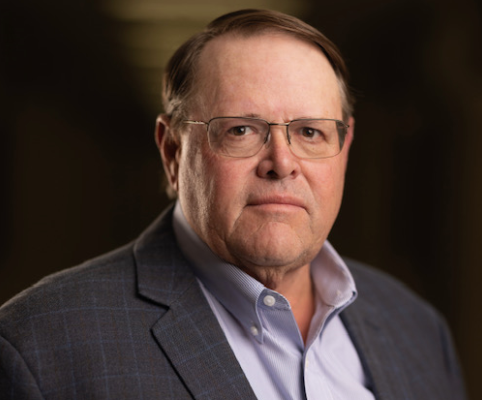
Scott Frazier
The National Sorghum Producers board of directors re-elected officers and a new director at its annual board and budget meeting in August. Craig Meeker of Wellington, Kansas, will serve a second term as chair, Amy France of Scotty City, Kansas, will continue to serve as vice chair and Kody Carson of Olton, Texas, retains his position as past chair.
"This executive leadership team has represented sorghum farmers exceptionally well this past year, and we look forward to following their leadership through 2024," NSP CEO Tim Lust said. "As we near more concentrated farm bill debate and other issues pressing sorghum farmers and the industry, Craig, Amy and Kody serve as a shining example of dedication and expertise, guiding us toward a more prosperous and sustainable future for sorghum in the United States. Our industry is fortunate to have them at the helm of this industry during this important time."

The NSP board of directors elected one new member—Scott Frazier from Chapman Ranch, Texas. Frazier produces sorghum, cotton, corn and cattle, cultivating a deep connection to agriculture. He served on the Texas Farm Bureau & Affiliated Companies Board of Directors, where he served as secretary/treasurer. He has contributed to the Nueces County Farm Bureau, leading as president for a number of years. Frazier was also a member of the Texas Agricultural Lifetime Leadership (TALL) Class XIV and represented Texas agriculture at the USMCA hearing in Montreal in 2019. For two decades, Frazier has lobbied in D.C. and Austin, serving as a passionate advocate for the agriculture industry.
Marc Adams with CoBank was also re-elected to the board. Frazier and Adams will serve a three-year term that began Oct. 1. The NSP board also recognized one leader who ended his term as director on Sept. 30—Jay Wilder of Snook, Texas.
"We are deeply appreciative of the leadership and insight that Jay has offered during his tenure in the sorghum industry," NSP Chair Craig Meeker said. "I hold immense respect for his significant contributions to our industry and extend my best wishes to Jay as he embarks on his next chapter."
New directors and officers took their respective positions on the NSP board Oct. 1. View NSP's entire leadership team at SorghumGrowers.com.
The three-day, hands-on course helps producers manage an entire ecosystem for healthier cattle and a more sustainable future.
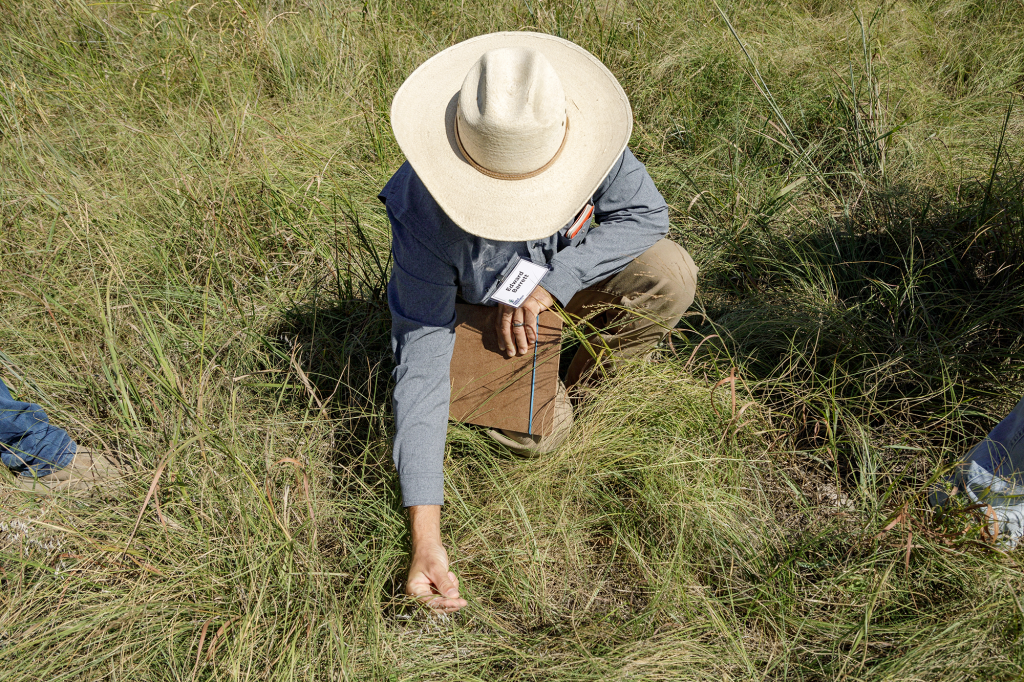
Noble Research Institute is offering a new course for the first time this month: Essentials of Regenerative Grazing. This is the second course in a series of new educational programs designed to help ranchers enhance and restore the land, to make it more resilient and reach livestock grazing goals through regenerative management.
Essentials of Regenerative Grazing provides producers with the tools, skills and knowledge needed to initiate a grazing management strategy appropriate for their livestock operation. Ranchers and farmers can attend the three-day, in-person course Oct. 23-25 at Noble Research Institute in Ardmore, Oklahoma, or Nov. 14-16 at the Miami Tribe of Oklahoma Council House in Miami, Oklahoma.
Registration for the Essentials of Regenerative Grazing course is open now at https://www.noble.org/essentials-of-regenerative-grazing. Seating is limited, so early registration is recommended.
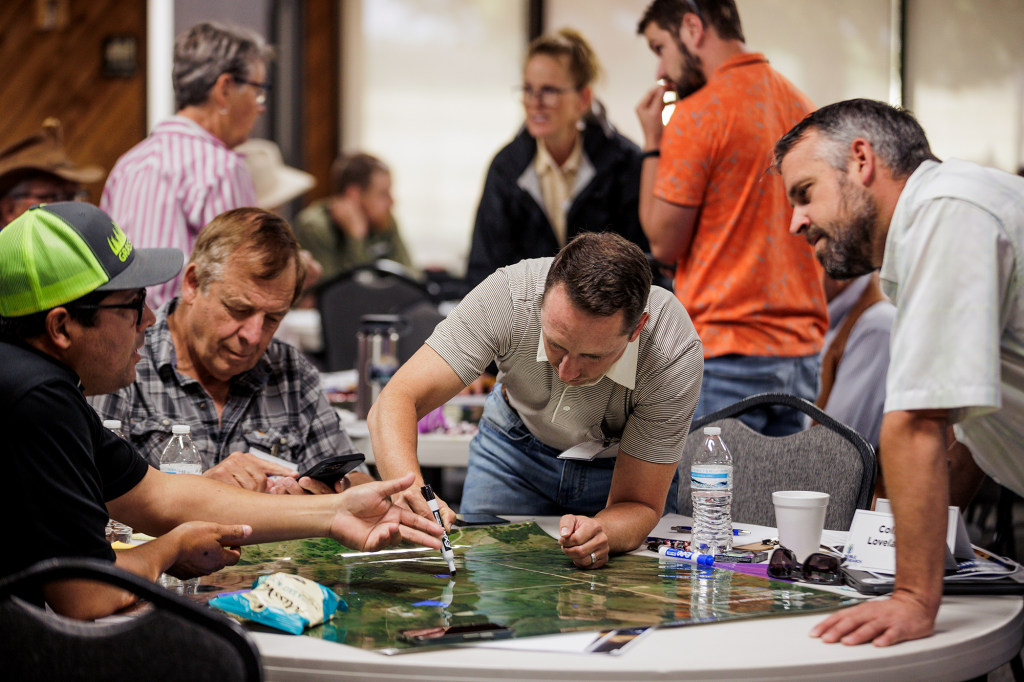
"Program participants gain working knowledge and experience in strategically applying adaptive grazing techniques to enhance the ecosystem function and soil health of their ranches," says Hugh Aljoe, Noble Research Institute's director of ranches, outreach and partnerships. "We use a mix of classroom and field work to send producers home with the tools to make practical and effective changes to their grazing management that will improve the soil health of their grazing lands and the profitability of their operations."
Grazing management can be the most important and impactful tool used to improve soil health on grazing lands. This class provides participants with tools to apply a "safe to learn" approach to their operations at a comfortable scale as they begin grazing regeneratively. The information presented helps producers understand how to graze more effectively and improve the ecosystem of their ranches. As the ecosystem improves, so will soil health and ranch profitability.
The Essentials of Regenerative Grazing course is suited for ranches of all sizes and producers of all experience levels. Participants will take home skills and knowledge to begin adaptive high stock density grazing on their own operations. Transforming the entire ranch into a more regenerative operation occurs one grazing event at a time. This course demonstrates how a grazing manager gets started.
The curriculum for the course was designed in collaboration with grazing expert, consultant and author Jim Gerrish. The in-person, hands-on, three-day training will give participants the knowledge and experience they need to:
Gerrish and other experienced Noble facilitators will teach and demonstrate easy-to-follow techniques to quickly assess forage production and infrastructure capacity in order to create the immediate steps needed to begin grazing more effectively. Follow-up opportunities will keep course attendees connected with a peer network of fellow ranchers and coaching services from Noble's facilitators.
Here's what one recent attendee said about the Essentials in Regenerative Grazing Course:
One of the things I was able to witness over the last three days is how to manage cause and effect of whether you graze it enough, or don't graze it enough or graze it too much. Then the recovery period is the key, coming back to it, and how to monitor that, and know when the time is right.Kerry Cornelius, ranch management professor at Texas Christian University and a cattle and sheep rancher from Weatherford, Texas.
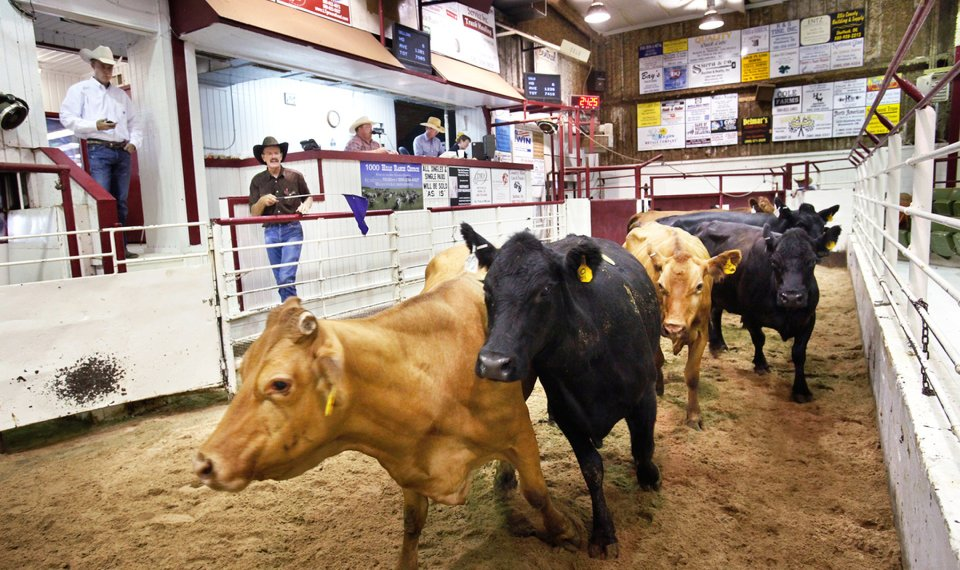
Senior Farm and Ranch Broadcaster, Ron Hays, is featuring comments from Farm Director KC Sheperd's interview with the new owner of the Woodward Livestock Auction, Ben Hale.
For the last 23 years, the Woodward Livestock Auction has been owned and operated by Jerry Nine. Now, Nine has sold the auction to Hale and his family. Hale also operates the Western Livestock Commission at the Oklahoma National Stockyards and the Comanche Livestock Auction with his family.
"About three years ago, we bought one in Knoxville, Iowa as well that we still operate," Hale said.
During the regular sale day this Thursday, October 5, Hale said there will be a special re-grand opening for the Woodward Livestock Auction.
"Just to do an official kick-off, you know, ribbon cutting to tell everybody we are glad we are there, appreciate the business, and look forward to many years of doing the same thing," Hale said.
Hale said this is an exciting opportunity to expand his family's footprint in the cattle industry further in the state. Hale is grateful to have the chance to work in this business with his family, he said, as his children play an integral role in operating.
During that grand reopening on October 5, there will be a free come-and-go breakfast at the auction at 8 a.m., special programs at 9 a.m., and a ribbon cutting and sale opening for the day at 10 a.m.
The Beef Buzz is a regular feature heard on radio stations around the region on the Radio Oklahoma Ag Network and is a regular audio feature found on this website as well. Click on the LISTEN BAR at the top of the story for today's show and check out our archives for older Beef Buzz shows covering the gamut of the beef cattle industry today.
The Board of Directors for the American Farmland Trust unanimously elected Val Dolcini to the American Farmland Trust Board of Directors, the oversight group tasked to oversee the organization that promotes sound farming practices, protects, and keeps farmers on the land.
"We are thrilled to have Val join AFT to help us grow to new heights into the future," said AFT President and CEO John Piotti. "Val's diverse and extensive experience in agriculture and passion for our work will be an invaluable asset for AFT in the years to come."
Dolcini is U.S. Head of Sustainability and Government Affairs for Syngenta, a global agriculture company headquartered in Switzerland. His work spans over 25 years of agricultural policy and management experience in the state, federal, and nonprofit sectors. He has also held senior staff positions in the U.S. House of Representatives, the California State Legislature, and the California governor's office.
Prior to joining Syngenta, he was state Senate confirmed director of the Department of Pesticide Regulation in California. At the same time, he served as the Deputy Secretary for Agriculture at the California Environmental Protection Agency, where he worked with agricultural organizations, farmers, environmentalists, state agencies and other stakeholders. A nonprofit leader, Val also served as president of the Pollinator Partnership, which works across the U.S. and Canada to promote the health of pollinators through conservation, education, and research.
"Farming and agriculture have been my focus and passion throughout my entire career," said Dolcini. "I specifically want to focus my time on the board to expand opportunities for new beginning farmers and work to respond to climate change and its impact on agriculture. I could not be more honored to take my experience and apply it to making key decisions for an organization as crucial to the future of farming than AFT."
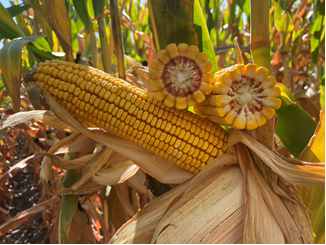
Field GX F's ability to handle a wide range of conditions helped the family rise to the top in 2023 for farmers in South Dakota and southern Minnesota.
AgriGold's Field GX™ families help farmers manage risk and maximize ROI.
Why should you care about the genetic diversity of your hybrids? Because no two growing seasons are the same. AgriGold's annual evaluation of the hybrids in its Field GX™ genetic families ensure seed choices match your yield goals and management to minimize risk through diversification.
"Knowing a hybrid's genetic family helps simplify management, reduce risk and maximize return on investment," says AgriGold Agronomist Brian Ternus. "You never know how any given season will play out. That's why it's important to spread your risk by planting hybrids from different families."
Value of diverse genetics
Think of Field GX as a diversity indicator, Ternus says. "I advise farmers to select hybrids from at least two different families for their farms," he says. "If your goals allow, three families are even better."
Grain fill is a prime example of how genetic diversity can ease on-farm risks, says AgriGold Agronomist Chris Ouzts. "The late grain-filling hybrids of Field GX G didn't look impressive around the Fourth of July, but they received the moisture they needed to fill out their longer ears late in the season and were high yielders for southern Louisiana in 2023."
If the season had played out differently and heat moved in, leading up to black layer, Ouzts says late grain fillers like Field GX G would have come in light. "Earlier fillers like Field GX H are better able to handle those conditions," Ouzts says. "Having both families on your farm spreads your risk."
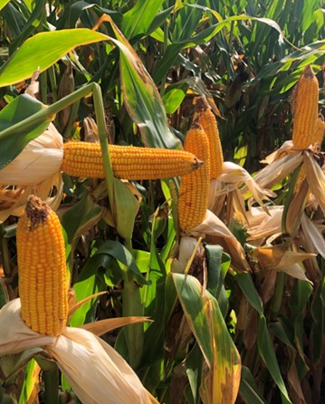
Smart hybrid placement
The Field GX family groupings also give farmers a general idea of the hybrids' agronomic characteristics as well as what management practices generate the best responses. "Thanks to the Field GX system, knowing what family a hybrid belongs to tells me how to place and manage it," Ouzts says. "We know Field GX H hybrids respond well to fungicide, for example, keeping plants healthy during grain fill."
A farmer's goals, management practices and soil type factor into family selection. "If you have a lot of stress acres, one of our more versatile families that perform well across many soil types and management styles, like Field GX G or Field GX F, might be a good fit," Ouzts says. Versatility and strong stress tolerance helped Field GX F perform well in Ternus' territory of southern Minnesota and South Dakota where drought was a challenge in 2023.
Bottom line — no two growing seasons are the same, and hybrid performance will likewise vary. Planting hybrids with diverse genetic backgrounds spreads your risk. Reach out to your local AgriGold agronomist to learn more about how Field GX simplifies diversifying genetics on your farm.
Oklahoma State University Extension will partner with the Oklahoma Department of Environmental Quality and the U.S. Department of Agriculture-Rural Development to host a free Oklahoma Environmental Law Enforcement Training Seminar on Oct. 12 in Oklahoma City. (Photo by Shutterstock)
By Trisha Gedon
Illegal roadside dumps continue to adversely affect the back roads of Oklahoma. To help combat this issue, Oklahoma State University Extension is partnering with the Oklahoma Department of Environmental Quality and the U.S. Department of Agriculture-Rural Development to host an Oklahoma Environmental Law Enforcement Training Seminar in Oklahoma City.
What: Law enforcement professionals, city officials, tribal environmental representatives, county commissioners and anyone interested in learning about environmental law enforcement are invited to participate in the free workshop. Chad Keller, senior environmental specialist with the Oklahoma Department of Environmental Quality, will instruct the class. He has been an investigator with the DEQ for 29 years and is a sergeant with the Criminal Investigation Unit.
When and where: Oct. 12, 8:30 a.m. to 5 p.m., Oklahoma County OSU Extension Center, 2500 NE 63rd, Oklahoma City, Oklahoma.
WHY: Roadside dumpsites are not only unsightly and illegal, but they also wreak havoc on the environment. These sites can cause contamination of soil, groundwater, drinking water wells, streams and rivers. Other side effects include possible injury to children playing in or around the site, damage to plant and wildlife habitats, and a decrease in the quality of life for nearby residents and the local community. Participants will gain expertise in environmental crime investigations involving:
Participants will also learn more about identifying resources for improving local enforcement programs and have an opportunity to network with others involved in law enforcement.
For more information or to register for the free workshop, contact Keima Borsuah at 405-744-9827 or keima.kamara@okstate.edu.
OSU Extension uses research-based information to help all Oklahomans solve local issues and concerns, promote leadership and manage resources wisely throughout the state's 77 counties. Most information is available at little to no cost.
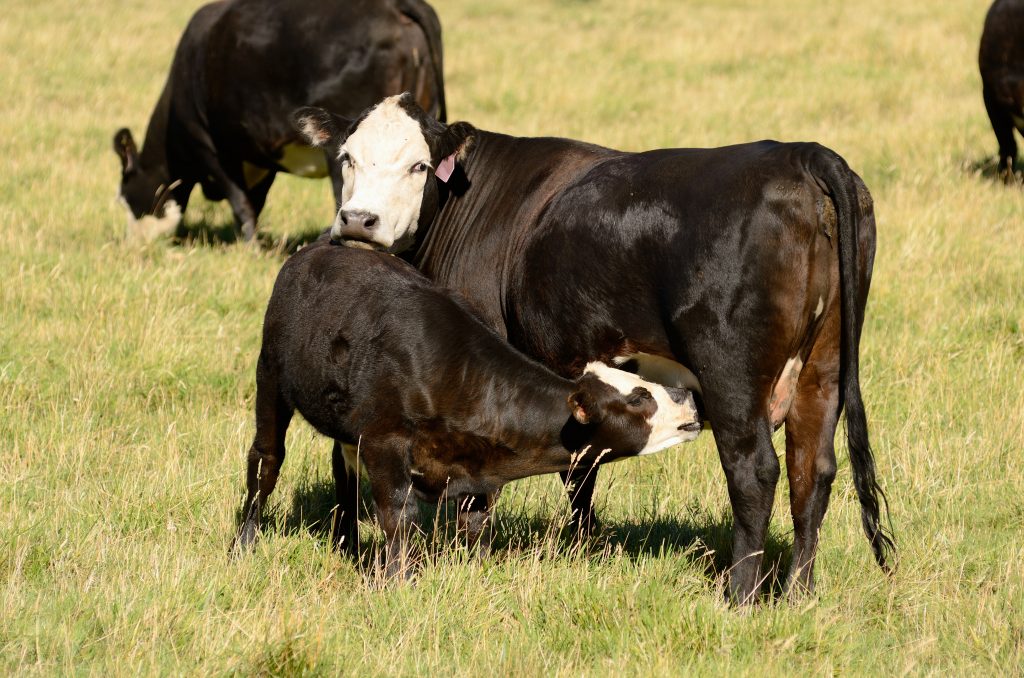
Mark Johnson, Oklahoma State University Extension Beef Cattle Breeding Specialist, offers herd health advice as part of the weekly series known as the "Cow Calf Corner" published electronically by Dr. Peel, Mark Johnson, and Paul Beck. Today, Johnson talks about reproductive efficiency.
If beef production was perfect, all our cows and heifers would get pregnant in the first 21 days of breeding season, calve unassisted about 9 – 9 ½ months later and wean off a calf weighing 50% of their mature weight about 6 – 7 months after calving. Our cattle would be living in symbiosis with nature so that the cattle, the soil and the plants grazed in our production environment were all healthy, vigorous and productive. Cows highest nutritional requirements (at peak lactation) would occur when our forage was of the highest quality and post-weaning, our dry cows would be grazing our mature or dormant forage when they have their lowest nutritional requirements of the annual production cycle. The cows would seldom vary from a body condition scores (BCS) of 5.5 – 6.
The reality that beef production is not perfect and the "ideals" listed above are seldom achievable on a herd-wide basis, should never be considered an acceptable excuse to accept less than those standards. Selection, nutrition, herd health and parasite control, proper stocking rates and range management all impact the Percent Calf Crop Weaned. And while we manage according to what is practical and economically feasible, we need to remain steadfast and relentless in our pursuit of a 100% calf crop weaned and breeding females weaning off the highest possible percentage of their mature weight. Why? Because in cow-calf production systems, the source of the initial product in the beef production chain, few traits (if any) outweigh the economic importance of Percent Calf Crop Weaned. Breeding females that are open at the end of breeding season or fail to carry a pregnancy to term and produce a live calf, and calves that die between birth and weaning are a drain on the profit potential of any operation.
Data collected at weaning this fall should serve as an indicator of where management, nutrition, herd health or genetics could be improved. A defined (short, 90 days or less) breeding season, good records of female inventory at the beginning of the last breeding season, calving season and now at weaning can reveal information to help determine where and when incremental improvements can be gained. In the end we want to get as close to the "perfect" numbers we mentioned above, along the way, several calculations (covered in Chapter 4 of the OSU Beef Cattle Manual) can lead to more informed management decisions.
When evaluating the reproductive efficiency of your herd, keep the following in mind:
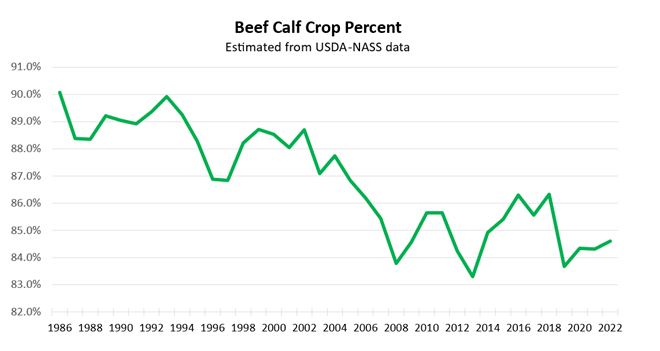
1)-continued, Yes, the graph indicates that on a national basis the Percent Calf Crop
Weaned has not improved over the past 37 years.
References: OSU Beef Cattle Manual, Eighth Edition, E-913
Dr. David Lalman
Dr. Derrell Peel
Each week, Beltway Beef brings you the latest policy news affecting the U.S. cattle and beef industry. Hear from subject-matter experts, producers, and industry leaders on the topics that impact the business viability of farms and ranches across the country.
It's been a busy few days in Washington! Congress rejected an amendment attacking the Beef Checkoff after thousands of cattle producers spoke up against the legislation and a government shutdown was averted after a last-minute deal was reached to pass a continuing resolution. For more on these developments, NCBA Senior Director of Government Affairs Tanner Beymer joins Beltway Beef to discuss Rep. Victoria Spartz's anti-checkoff amendment, the latest on the agricultural appropriations bill, and the future for government funding legislation in Congress.
RON's Dave Lanning has a pre-opening look at today's agricultural Markets.
Click the audio tab below for today's report.
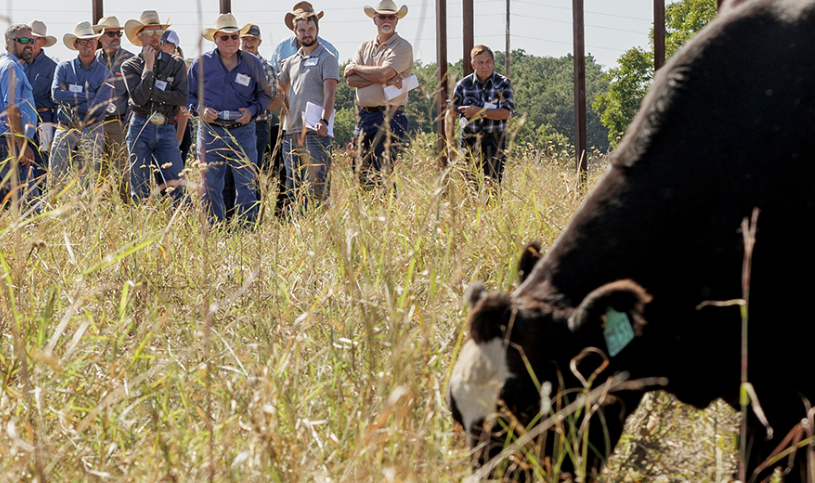
Noble Research Institute is offering a new course for the first time this month: Essentials of Regenerative Grazing. This is the second course in a series of new educational programs designed to help ranchers enhance and restore the land, to make it more resilient and reach livestock grazing goals through regenerative management.
Essentials of Regenerative Grazing provides producers with the tools, skills and knowledge needed to initiate a grazing management strategy appropriate for their livestock operation. Ranchers and farmers can attend the three-day, in-person course Oct. 23-25 at Noble Research Institute in Ardmore, Oklahoma, or Nov. 14-16 at the Miami Tribe of Oklahoma Council House in Miami, Oklahoma.
Registration for the Essentials of Regenerative Grazing course is open now at https://www.noble.org/essentials-of-regenerative-grazing. Seating is limited, so early registration is recommended.
"Program participants gain working knowledge and experience in strategically applying adaptive grazing techniques to enhance the ecosystem function and soil health of their ranches," says Hugh Aljoe, Noble Research Institute's director of ranches, outreach and partnerships. "We use a mix of classroom and field work to send producers home with the tools to make practical and effective changes to their grazing management that will improve the soil health of their grazing lands and the profitability of their operations."
Grazing management can be the most important and impactful tool used to improve soil health on grazing lands. This class provides participants with tools to apply a "safe to learn" approach to their operations at a comfortable scale as they begin grazing regeneratively. The information presented helps producers understand how to graze more effectively and improve the ecosystem of their ranches. As the ecosystem improves, so will soil health and ranch profitability.
The Essentials of Regenerative Grazing course is suited for ranches of all sizes and producers of all experience levels. Participants will take home skills and knowledge to begin adaptive high stock density grazing on their own operations. Transforming the entire ranch into a more regenerative operation occurs one grazing event at a time. This course demonstrates how a grazing manager gets started.
The curriculum for the course was designed in collaboration with grazing expert, consultant and author Jim Gerrish. The in-person, hands-on, three-day training will give participants the knowledge and experience they need to:
Gerrish and other experienced Noble facilitators will teach and demonstrate easy-to-follow techniques to quickly assess forage production and infrastructure capacity in order to create the immediate steps needed to begin grazing more effectively. Follow-up opportunities will keep course attendees connected with a peer network of fellow ranchers and coaching services from Noble's facilitators.
Here's what one recent attendee said about the Essentials in Regenerative Grazing Course:
One of the things I was able to witness over the last three days is how to manage cause and effect of whether you graze it enough, or don't graze it enough or graze it too much. Then the recovery period is the key, coming back to it, and how to monitor that, and know when the time is right.Kerry Cornelius, ranch management professor at Texas Christian University and a cattle and sheep rancher from Weatherford, Texas.

U.S. pork producers tasked the National Pork Producers Council (NPPC) with leading an effort to update the existing swine traceability system. NPPC is asking swine producers, veterinarians, cull swine and breeding operators and show pig enthusiasts to comment on the draft standards by Oct. 27, 2023.
In 2006, U.S. swine producers voluntarily adopted animal traceability standards to strengthen the industry's ability to track animal movements with the goal of controlling the spread of animal diseases, particularly foreign animal diseases such as African swine fever, foot-and-mouth disease, and classical swine fever (hog cholera).
"Approximately 1 million pigs are in transit every day, giving diseases plenty of opportunities to spread," said Scott Hays, NPPC president and pork producer from Missouri. "With the growing threat of a foreign animal disease reaching the United States, the need to address gaps in our existing traceability system is important for our farms and our industry."
International markets would close immediately if a foreign animal disease were discovered in the United States. Strengthening live-swine traceability will better assure animal health officials that they have access to comprehensive movement data and show trading partners that the United States knows where disease-free animals are and that exported products are safe.
"With $7.7 billion worth of pork being consumed by international consumers, we need to assure trading partners that the United States can identify disease-free animals and provide them products from unaffected farms," Hays added.
Updates will address gaps in the following areas:
• Breeding stock — sows and boars — cull animals, and show pigs, whose movements currently are difficult to track, giving each a unique ID number.
• Premises registration for all producers, cull and breeding operations and show pig farms.
• Movement reporting for all pigs to a centralized database that is available to animal health officials.
NPPC is seeking industry input before finalizing the updated standards early next year and presenting a resolution to delegates at the 2024 National Pork Industry Forum in March. The next comment period ends Oct. 27, 2023.
To view the current draft standards, make a comment, or learn more, visit nppc.org/trace. For questions, reach out to invest@nppc.org or your state pork association.

Much like 2022 when Governor Kevin Stitt called the legislature into a special session over the concept of cutting taxes- the Governor has called another special session that happens today- October 3rd- and has similarities to 2022- but does offer some different twists.
Oklahoma Farm Report's Ron Hays talked with Steve Thompson of the Oklahoma Farm Bureau on the eve of the Special Session- and Thompson says it's unlikely that any definitive action will come out of the special session- but lawmakers will have to consider what is ahead for Oklahoma if the Federal Courts decide tribal members don't have to pay state income tax- and that conversation could be a major topic in the next general session in early 2024. He believes that the result of a similar call by the Governor in 2022 about a personal state income tax cut may be what may happen again in 2023- not much. He adds that the general farm organization is concerned about higher property taxes if the Governor is successful in lowering or even eliminating personal income taxes.
The Governor's special session call is for three purposes:
According to NonDoc- "Stitt's proposed "trigger" scenario refers to the Stroble v. Oklahoma Tax Commission case pending before the state Supreme Court. Appellant Alicia Stroble, a Muscogee (Creek) Nation citizen, argues that federal law and state code clearly exempt her from state income tax assessed against her pay from entities controlled by her tribe on its reservation."
Stitt's third item in his special session call included five bullet points, which appear verbatim below:
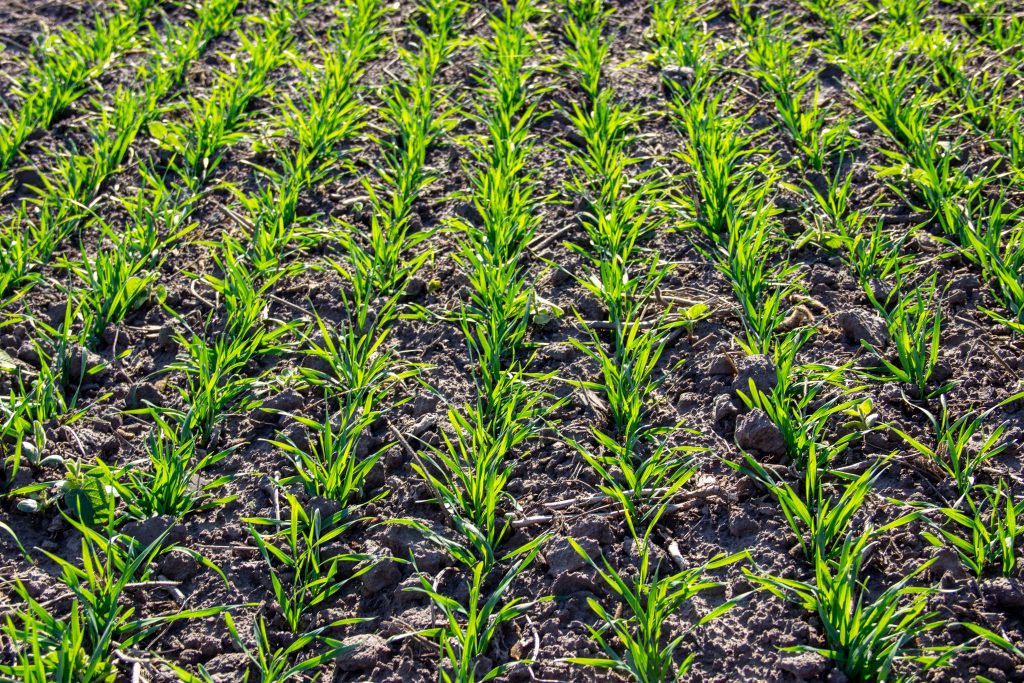
SOUTHERN PLAINS WHEAT PLANTINGS:
In Oklahoma, Winter wheat planted reached 27 percent, unchanged from the previous year but down 11 points from the five-year average. Winter wheat emerged reached 10 percent, up 1 point from the previous year but down 1 point from normal.
In Kansas, Winter wheat planted was 37 percent, ahead of 28 percent last year, but near 38 percent for the five-year average. Emerged was 14 percent, ahead of 6 percent last year, but near 15 percent average.
In Texas, Winter wheat planted reached 45 percent, down 2 percentage points from the previous year and up 3 points from the five-year average. Winter wheat emerged reached 13 percent, down 5 points from the previous year and even with the average.
Winter wheat planted for the U.S. reached 40 percent, up 1 percentage point from the previous year and down 3 points from the five-year average. Winter wheat emerged reached 15 percent, up 1 percentage point from the previous year and down 1 point from the average.
Corn maturity reached 82 percent, up 9 percentage points from the previous year and up 7 points from the five-year average. Corn harvested reached 23 percent, up 4 percentage points from the previous year and up 2 from the average. Corn conditions rated 53 percent good to excellent, 29 percent fair, and 18 percent poor to very poor. Last week's conditions rated the same.
Soybeans dropping leaves reached 86 percent, up 8 percentage points from the previous year and up 9 points from the five-year average. Soybeans harvested reached 23 percent, up 3 percentage points from the previous year and up 1 point from the average. Soybean conditions rated 52 percent good to excellent, 31 percent fair and 17 percent poor to very poor. Last week's conditions rated 50 percent good to excellent, 32 percent fair and 18 percent poor to very poor.
Cotton bolls opening reached 75 percent, down 1 percentage point from the previous year and up 2 points from the five-year average. Cotton harvested reached 18 percent, down 3 percent from the previous year and up 1 point from the average. Cotton conditions rated 30 percent good to excellent, 27 percent fair and 43 percent poor to very poor. Last week's conditions rated 30 percent good to excellent, 28 percent fair and 42 percent poor to very poor.
Rainfall totals in Oklahoma averaged 0.06 inches. According to the September 26th US Drought Monitor Report, drought conditions were rated 66 percent abnormally dry to exceptional drought, down 34 points from last year. Additionally, 47 percent of the state was in the moderate drought to exceptional drought categories, down 53 points from the previous year. Statewide, temperatures averaged in the upper 70's. Topsoil moisture conditions were rated short to very short and subsoil moisture conditions were rated very short to short and adequate. There were 6.7 days suitable for fieldwork.
Winter wheat planted reached 27 percent, unchanged from the previous year but down 11 points from normal. Winter wheat emerged reached 10 percent, up 1 point from the previous year but down 1 point from normal.
Corn mature reached 85 percent, down 2 points from the previous year but up 1 point from normal. Corn harvested for grain reached 42 percent, up 2 points from the previous year but unchanged from normal. Corn conditions rated 64 percent good to excellent, 26 percent fair and 10 percent poor to very poor. Last week's conditions rated 62 percent good to excellent, 26 percent fair and 12 percent poor to very poor.
Sorghum coloring reached 90 percent, down 4 points from the previous year and from normal. Sorghum mature reached 51 percent, down 12 points from the previous year and down 11 points from normal. Sorghum harvested for grain reached 19 percent, unchanged from the previous year but down 4 points from normal. Sorghum conditions rated 36 percent good to excellent, 37 percent fair and 27 percent poor to very poor. Last week's conditions rated 41 percent good to excellent, 41 percent fair and 18 percent poor to very poor.
Soybeans setting pods reached 95 percent, up 1 point from the previous year and from normal. Soybeans dropping leaves reached 40 percent, unchanged from the previous year but up 2 points from normal. Soybeans harvested reached 7 percent, up 7 points from the previous year and up 2 points from normal. Soybean conditions rated 61 percent good to excellent, 30 percent fair and 9 percent poor to very poor. Last week's conditions rated 55 percent good to excellent, 35 percent fair and 11 percent poor to very poor.
Peanuts mature reached 59 percent, unchanged from the previous year but up 7 points from normal. Peanut conditions rated 97 percent good to excellent and 3 percent fair. Last week's conditions rated the same.
Cotton bolls opening reached 78 percent, down 4 points from the previous year but up 7 points from normal. Cotton conditions rated 9 percent good to excellent, 28 percent fair and 63 percent poor to very poor. Last week's conditions rated 14 percent good to excellent, 25 percent fair and 61 percent poor to very poor.
Hay: The fourth cutting of alfalfa hay reached 75 percent, down 5 points from the previous year and down 10 points from normal. The fifth cutting of alfalfa hay reached 15 percent, down 4 points from the previous year but up 5 points from normal. The third cutting of other hay reached 45 percent, down 29 points from the previous year and down 7 points from normal.
Livestock conditions rated 63 percent good to excellent, 29 percent fair and 8 percent poor to very poor. Last week's conditions rated 63 percent good to excellent, 28 percent fair and 9 percent poor to very poor.
Pasture and range conditions rated 29 percent good to excellent, 36 percent fair, and 35 percent poor to very poor. Last week's conditions rated 27 percent good to excellent, 35 percent fair and 38 percent poor to very poor.
Winter wheat planted was 37 percent, ahead of 28 percent last year, but near 38 percent for the five-year average. Emerged was 14 percent, ahead of 6 percent last year, but near 15 percent average.
Corn mature was 93 percent, ahead of 81 percent last year and 85 percent average. Harvested was 51 percent, near 48 percent last year, and ahead of 42 percent average. Corn conditions rated 33 percent good to excellent, 34 percent fair and 33 percent poor to very poor. Last week's conditions rated 33 percent good to excellent, 32 percent fair and 35 percent poor to very poor.
Soybeans dropping leaves was 79 percent, ahead of 66 percent last year and 65 percent average. Harvested was 24 percent, ahead of 18 percent last year and 11 percent average. Soybean conditions rated 18 percent good to excellent, 32 percent fair and 50 percent poor to very poor. Last week's conditions rated 20 percent good to excellent, 31 percent fair and 49 percent poor to very poor.
Sorghum coloring was 94 percent, near 91 percent last year and 95 percent average. Mature was 60 percent, ahead of 50 percent last year and 54 percent average. Harvested was 19 percent, ahead of 9 percent last year and 11 percent average. Sorghum conditions rated 32 percent good to excellent, 38 percent fair and 30 percent poor to very poor. Last week's conditions rated 33 percent good to excellent, 37 percent fair and 30 percent poor to very poor.
Cotton bolls opening was 91 percent, ahead of 74 percent last year, and well ahead of 63 percent average. Harvested was 5 percent, near 6 percent last year and 2 percent average. Cotton conditions rated 35 percent good to excellent, 42 percent fair, and 23 percent poor to very poor. Last week's conditions rated 33 percent good to excellent, 44 percent fair and 23 percent poor to very poor.
Winter wheat planted reached 45 percent, down 2 percentage points from the previous year and up 3 points from the five-year average. Winter wheat emerged reached 13 percent, down 5 points from the previous year and even with the average.
Corn matured reached 91 percent, down 5 percentage points from the previous year and up 1 point from the five-year average. Corn harvested reached 78 percent, down 1 point from the previous year and up 2 from the average. Corn conditions rated 49 percent good to excellent, 27 percent fair and 24 percent poor to very poor. Last week's conditions rated the same.
Cotton bolls opening reached 68 percent, down 1 point from the previous year and up 1 from the average. Cotton harvested reached 28 percent, down 2 percentage points from the previous year and up 4 points from the average. Cotton conditions rated 11 percent good to excellent, 24 percent fair and 65 percent poor to very poor. Last week's conditions rated 10 percent good to excellent, 25 percent fair and 65 percent poor to very poor.
Peanuts mature reached 40 percent, even with the previous year and up 5 percentage points from the five-year average. Peanuts harvested reached 7 percent, down 1 point from the previous year and up one point from the average. Peanut conditions rated 34 percent good to excellent, 40 percent fair and 26 percent poor to very poor. Last week's conditions rated 31 percent good to excellent, 35 percent fair and 34 percent poor to very poor.
Sorghum matured reached 94 percent, down 2 percentage points from the previous year and down 4 points from the average. Sorghum harvested reached 85 percent, down 5 percentage points from the previous year and up 1 from the average. Sorghum conditions rated 45 percent good to excellent, 22 percent fair and 33 percent poor to very poor. Last week's conditions rated the same.
Soybeans dropping leaves reached 86 percent, down 8 percentage points from the previous year and even with the five-year average. Soybeans harvested reached 47 percent, up 7 points from the previous year and down 13 points from the average. Soybean conditions rated 63 percent good to excellent, 37 percent fair and 28 percent poor to very poor. Last week's conditions rated 36 percent good to excellent, 36 percent fair and 28 percent poor to very poor.
Pasture and range conditions rated 5 percent good to excellent, 22 percent fair and 73 percent poor to very poor. Last week's conditions rated 7 percent good to excellent, 24 percent fair and 69 percent poor to very poor.

Over the weekend, Congress passed a short-term continuing resolution, which will fund the federal government through November 17, 2023. While the stopgap appropriations bill is necessary to avoid a government shutdown, the lack of a full fiscal year (FY) 2024 appropriations package continues to slow down the 2023 Farm Bill process. The lapse in Farm Bill authorization on September 30 marks a critical juncture for American agriculture, demanding urgent action from Congress to resolve the full FY 2024 appropriations process so the work can proceed with Farm Bill reauthorization. The impacts associated with a lapse in Farm Bill authorization will be varied across programs as some are tied to the fiscal year, crop year, and others are mandatory programs. The Farm Bill provides certainty and is the bedrock of support for our farmers, delivering essential resources, policies, and stability necessary for a prosperous agricultural sector and a secure food supply.
"The Farm Bill plays a pivotal role in supporting American farmers, rural communities, and sustainable agricultural practices," said NAWG President and Oregon wheat farmer Brent Cheyne. "While we are glad Congress worked to pass a short-term continuing resolution, our leaders need to set aside their differences, pass a long-term appropriations package, and commence work on a Farm Bill without additional delay. We would like to express our appreciation to the agricultural committees for their diligent efforts and hard work in crafting the Farm BilI. We hope that all of Congress will prioritize passing the Farm Bill to serve the best interests of Americans and the agriculture sector by the end of the year."
NAWG implores Congress to work collaboratively and swiftly to reach a resolution on FY 2024 appropriation and work to get a Farm Bill signed into law by the end of the year. Farmers deserve the assurance of a functioning Farm Bill that supports their endeavors, fosters innovation, and ensures the continued growth of our agricultural industry.
In recent years, the process of passing the 12 annual government funding bills, also known as appropriations, has grown increasingly difficult. When Republicans regained majority of the U.S. House of Representatives this year, one of our top priorities was to restore regular order by passing appropriations bills to provide full government funding at more sensible spending levels and with priorities that address the crises our nation is facing. Although the fiscal year lapsed this past weekend without completing this process, Congress managed to avoid a dangerous government shutdown by passing a Continuing Resolution (CR) and allow House Republicans to finish the funding process before the end of this year.
A clean CR is not ideal, and by simply putting the federal government on autopilot, these funding resolutions cause a great deal of inconvenience to our federal agencies, our military and ultimately, to the American taxpayer. Passing all 12 bills and striking a deal with the Senate before the September 30 deadline is certainly the more ideal scenario, but the truth of the matter is that we are not there yet.
However, a government shutdown in the interim is not the answer and it never works as a negotiation tactic to get what you want. A government shutdown only punishes the American people, our service members and civilian workforce. And given the vast number of civilian workers and service members located in the Fourth District of Oklahoma, a shutdown is not something I could support. I am glad the House did the right thing this weekend to keep the government open while Congress works toward finishing the job.
Funding levels set by Democrats previously in control of both chambers of Congress are unsustainable. Republicans have already passed four bills to send to the Senate that would fund roughly 70 percent of our government. These bills would cut wasteful spending, support our service members and military retirees, secure the border and strengthen our national defense. We will also remain in Washington, D.C. for the rest of this month to finish these funding bills so we can begin to work with the Senate on a final agreement.
It is crucial that we complete the appropriations process before January 1, 2024. At that point, if all 12 bills have still failed to be enacted, a new law will automatically enact a CR to fund the government until the end of the next fiscal year, September 30, 2024, with a one percent across-the-board cut to all programs and agencies. While this reduction may initially seem like a good outcome, an across-the-board cut would lock in unfavorable funding levels and policies from a Democratic majority and be an abdication of House Republicans' ability to adjust spending to reflect the country's priorities.
In Article I, section 7, clause 1 of the United States Constitution, our Founding Fathers laid out the framework for the Congressional "Power of the Purse." Funding the government is Congress's most essential duty and a job we must complete. House Republicans can enact real policy changes and spend our dollars more wisely through full year appropriations, and that is just what we should do.

Reed Marcum is one of four 2024 Youth in Action Award winners recognized by the National 4-H Council. Marcum, a freshman at Oklahoma State University, made a big impact on his hometown of McAlester, Oklahoma, with his 4-H projects and activities. (Photo by Mitchell Alcala, OSU Agriculture)
The National 4-H Council today announced the winners of the 2024 Youth in Action Awards, a national program sponsored by Bayer that recognizes four diverse young leaders who have made a positive impact in their communities.
Reed Marcum, an active member of the Oklahoma 4-H Youth Development program in Pittsburg County, is one of the four national winners.
Each winner receives a $5,000 higher education scholarship and will spend the year 2024 inspiring other youth by telling their 4-H story. They will also have opportunities to showcase their work nationally, network with prominent 4-H alumni and serve as official 4-H spokespeople for Youth in Action.
The winners are announced during National 4-H Week, held Oct. 1-7, 2023, to celebrate and showcase the opportunities and impact that 4-H offers young people across the country.
Marcum, 18, is from McAlester, Oklahoma. After facing struggles around social anxiety and speaking because of an attention deficit diagnosis, Marcum gained confidence and found his voice in 4-H. He used his newfound courage to organize programs to address the needs of his community, organizing multiple annual events including a book bag giveaway and toy drive that benefit underserved populations in McAlester.
After a young neighbor lost his life to pediatric cancer, he started a foundation and organized an annual silent auction to raise funds for pediatric cancer research and support affected families. Marcum's community has rallied around his leadership, allowing him to grow his projects exponentially each year, estimating total donation and fundraising efforts close to $3.5 million overall.
Greg Owen, Oklahoma State University Extension 4-H educator in Pittsburg County, said Marcum is deserving of this award.
"He has done so much through his various service projects in our community and helped so many people," Owen said. "Reed is truly a servant leader who strives every day to find ways to help others. Pittsburg County 4-H and I are extremely proud of Reed becoming our county's fourth National Youth in Action Award winner. I'm looking forward to watching his various experiences nationwide with this honor over the next year."
Marcum is a freshman at OSU and is the son of Angie Miller and Jim Marcum.
Other 2024 award winners include Katie Collins, Charlotte, Tennessee; Amiyah Elam, Waycross, Georgia; and Avani Rai, Bloomington, Illinois.
"The 2024 Youth in Action Awards honor four incredible young people, each of whom are model examples of their generation – embodying a commitment to service, a love of their communities and a passion for leadership that represent the best of 4-H," said Jill Bramble, president and CEO, National 4-H Council. "We are proud that Cooperative Extension's 4-H programs have offered Katie, Amiyah, Reed and Avani these opportunities to lead and tools to succeed, which they have used to make a positive impact on their communities and inspire other 4-H'ers to do the same."
The 4-H Youth in Action Awards, sponsored by Bayer, began in 2010 to recognize young people who overcome challenges and use the knowledge they gain through participation in 4-H to create a lasting impact in their community.
4-H, the nation's largest youth development organization, grows confident young people who are empowered for life today and prepared for careers tomorrow. 4-H programs empower nearly 6 million young people across the U.S. through the nation's Cooperative Extension System and USDA and serve every county and parish in the U.S. through a network of 110 public universities and more than 3,000 local Extension offices. Globally, 4-H collaborates with independent programs to empower 1 million youth in 50 countries. The research-backed 4-H experience grows young people who are four times more likely to contribute to their communities, two times more likely to make healthier choices, two times more likely to be civically active and two times more likely to participate in STEM programs. Learn more about 4-H at 4-H.org and follow 4-H on Facebook, Instagram and Twitter.
OSU Extension uses research-based information to help all Oklahomans solve local issues and concerns, promote leadership and manage resources wisely throughout the state's 77 counties. Most information is available at little to no cost.
The Animal Drug User Fee Act Helps New Animal Health Products Come to Market.
Today, the National Cattlemen's Beef Association (NCBA) hailed the reauthorization of the Animal Drug User Fee Act (ADUFA), a top priority for NCBA that is now law following President Joe Biden's approval of a continuing resolution to fund the government. Included in the continuing resolution, this "clean" reauthorization of ADUFA keeps the legislation in effect for another five years.
"Keeping our livestock healthy is on every cattle producer's mind," said NCBA President Todd Wilkinson, a South Dakota cattle producer. "NCBA made the ADUFA reauthorization a top priority at the 2023 Cattle Industry Convention, and I am proud to see our team's hard work pay off with this latest reauthorization being signed into law. This is just one of many examples of how NCBA works hard to protect our interests in Washington, D.C."
ADUFA allows the Food and Drug Administration's (FDA) Center for Veterinary Medicine (CVM) to collect fees from animal health companies, which fund the agency's review and approval process for new animal drugs. ADUFA ensures that the FDA has an efficient system for authorizing new cattle medicines and diagnostic tools that keep livestock healthy and protects our safe, wholesome food supply. NCBA fought hard to ensure that this latest ADUFA reauthorization contained no post-market amendments that would harm the effectiveness of the FDA's review process, disrupt producers' access to cattle medicines, or simply keep the legislation from passing Congress before the September 30th deadline.
"Incredible veterinary drug innovations are happening every day, and ADUFA ensures that the FDA has the resources it needs to review these new technologies for safety and efficacy and to bring them to market for cattle producers," said NCBA Chief Veterinarian Dr. Kathy Simmons. "We are pleased that Congress passed the ADUFA reauthorization and President Biden signed it into law."

A new farm manager has been hired at the Michigan State University Southwest Michigan Research and Extension Center (SWMREC) in Benton Harbor. Michael de Schaaf, a small agricultural service business owner with nearly three decades of winemaking experience, assumed the role Oct. 1.
The SWMREC is part of a network of 15 MSU AgBioResearch centers across the state.
As farm manager, de Schaaf will be tasked with day-to-day oversight of research projects, including those with fruits, vegetables and other specialty crops, as well as outreach through MSU Extension. He will also partner with the center coordinator and staff to determine budgets, oversee maintenance of buildings and equipment, and develop and maintain relationships with growers and industries throughout the region.
"I have always been interested in the research at the station, even if it did not pertain to grapes," de Schaaf said. "As the farm manager, I see my main responsibility as a project manager for the researchers, ensuring their research is supported and conducted as prescribed. We also have to maintain plots for MSU Extension so that faculty are able to demonstrate and interact with growers, all while maintaining equipment, buildings and the grounds."
The SWMREC was established in 1989 and encompasses 350 acres in one of the state's most diverse agricultural regions. The center primarily serves the fruit and vegetable industries, but research also takes place with field crops, Christmas trees and woody ornamentals.
For almost 30 years, de Schaaf has held an array of roles in the wine industry, including as winemaker and distiller at Round Barn Winery, Distillery and Brewery; as owner and developer for Hickory Creek Winery; and as a grape producer at Meadowbrook Farms, his family's fourth-generation farm in Benton Harbor. He is also a past president of the Michigan Grape Society.
As an educator in the viticulture and oenology (study of winemaking) arenas, de Schaaf was an instructor at Lake Michigan College for multiple years. Most recently, he has served as owner of Lake Michigan Shore Wine Growers, a custom vineyard management company.
The SWMREC is renowned for its viticulture research and holds a Viticulture Day each summer for growers and wine industry representatives, making de Schaaf a natural fit.
"Most of my previous positions have been in startup ventures, so creative problem solving has been a must, and due to the fact that most startups don't have large budgets, I have needed to wear many hats," de Schaaf said. "I have been farming for close to 30 years now and have dabbled in tree fruit, livestock and hay production, with my main focus on wine grapes. I think that has prepared me well to take on this new role."
In addition to his winemaking background, de Schaaf studied sports medicine at Ferris State University.
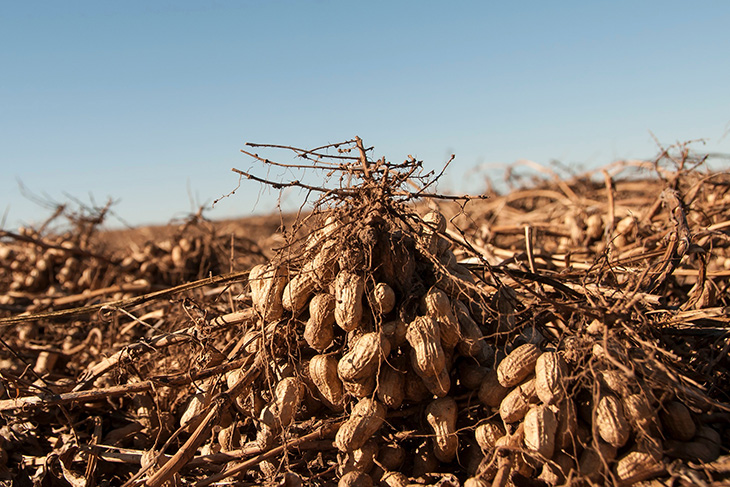
Associate Farm Editor, Reagan Calk, had the chance to visit with Aaron Schantz about the Schantz Farm Field Day coming up on Thursday, October 5, in Hydro, Okla.
The field day will feature multiple crops, Schantz said, including peanuts, cotton, and corn. Attendees will also have a chance to receive 3 ODAFF Applicator CEUs.
Some of the topics discussed will include reducing pesticide applications with improved genetics, peanut disease management, weed management in peanuts, fungicide and herbicide management on late corn, and more.
"This gives you a good opportunity to come out, see the different crops, see what we are doing on-farm with research, and be able to enjoy a good meal, get your CEUs, and fellowship with fellow farmers and producers," Schantz said.
The CEUs will be built into the information provided during the farm tour, Schantz said, but producers will have the chance to come back after the tour and listen to PowerPoint presentations discussing those topics more in-depth.
"Registration is going to be at 7:45 a.m.," Schantz said. "We will have a bus available at 8:15 to go out and do the farm tours, and then we will come back at 11:30 to do presentations before lunch."
At 12:30, Lunch will be catered by Pecina's Mexican Café in Weatherford.
Following lunch, Schantz said individuals in the area will have brought their antique tractors to perform demonstrations. There will also be tables available for industry groups to showcase their products.
"Anybody who is in the agriculture business- this is a good place to network," Schantz said.
Directions to the field day from Hydro: 2 miles north on Highway 58, I mile west, ½ mile north.
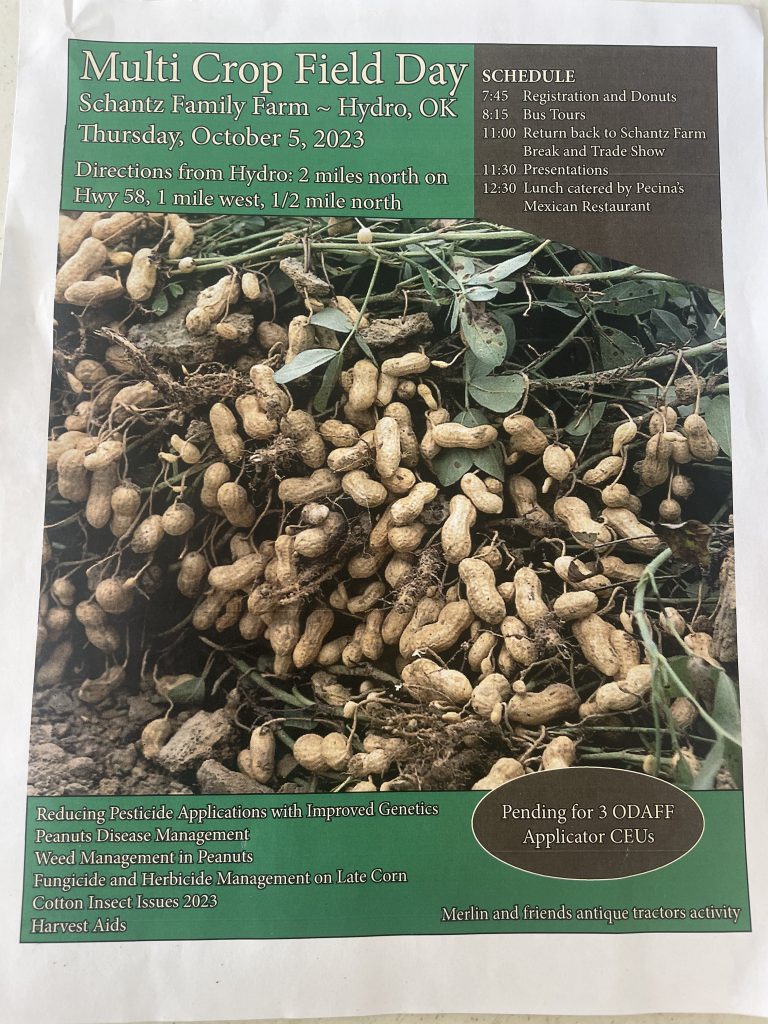

The American Farm Bureau Federation announced the opening of general registration today for the 2024 American Farm Bureau Convention. The convention will be held Jan. 19-24, 2024, in Salt Lake City, Utah.
"New Frontiers" is the theme of AFBF's 105th consecutive convention, a "can't miss" event that offers attendees unique insights on the policies and perspectives that will affect farms, ranches and agribusinesses in 2024 and beyond.
"This is your opportunity to join the Farm Bureau family as we explore new frontiers in agriculture, develop professional skills and help set the agenda in Washington," said AFBF President Zippy Duvall. "I look forward to seeing you in January in Salt Lake City as we gather together with a common purpose to kick off another year of feeding, clothing and fueling our great nation."
A broad array of educational and inspiring workshops will be available to attendees interested in honing their leadership skills, expanding business proficiency and gleaning insights from industry visionaries with expertise in food production-related policies and trends. A vibrant trade show with exhibitors showcasing cutting edge innovations in agricultural technology, tools and services is also sure to capture the attention of attendees.
Workshops will be offered in four tracks – public policy, rural development, member engagement and consumer engagement. Workshop topics include Farm Bill Update; Who's Up Next? A 2024 Elections Analysis; Livestock Markets; Crop Markets; Dairy Market Issues; As Seen on Social Media: Farm to Fork in Action; and The Next Big Thing in Growing Farm Bureau Membership.
Numerous optional ag and food-related day tours are available for attendees who wish to explore the great state of Utah. These include touring the Utah State University Animal Science Farm, a brine shrimp cooperative, elk farm and an artisan cheese plant. Attendees can also sign up to visit a chocolate factory, see where the 2002 Olympic Games took place, visit a salt mine or learn about lavender farming. Details about additional tours will be posted when available.
View the high-level convention agenda here. Members may register for Convention and tours through their state Farm Bureau office. Others may register through AFBF at this link. The official event hashtag is #AFBF24 and the event website is https://annualconvention.fb.org/.

Associate Farm Editor, Reagan Calk, had the chance to visit with the current president-elect of the Oklahoma CattleWomen, Amarie Bartel, about her passion for the group and her plans if elected as president.
"I have been involved with Oklahoma CattleWomen for about three years," Bartel said. "I started as the secretary, then was the vice president of beef promotion, and now I am serving as president-elect. It has been a fabulous opportunity to stay involved with the cattle industry no matter what phase of life I am in, and I think that is one of my favorite things."
One of the questions Bartel has been considering through her time as president-elect, she said, is "Who are we as cattlewomen?"
It is easy to be a gatekeeper in the cattle industry, Bartel said, because of the technical knowledge required and the years of hard work many put into their operations.
"Something I have been challenging myself lately is to be a gate-getter," Bartel said. "I want to make sure I am opening the gate for other cattlewomen to come in and learn about our industry, so that is what I am excited about. We have the challenge to be a gatekeeper or gate-getter, and I am excited to cultivate a community of gate-getters in the Oklahoma CattleWomen."
Also working as the Oklahoma Farm Buruea's economic development coordinator, Bartel said her passions are able to overlap in both organizations.
"When I accepted my position at Oklahoma Farm Bureau, actually one of the first questions my supervisor asked me was, 'You are going to stay involved in the CattleWomen, right?'"
Bartel said each time she steps away from her desk at OKFB to come to an Oklahoma CattleWomen event, she remembers they are working toward the same mission.
"I am glad to be part of an industry where we can all collaborate as a community in that way," Bartel said.
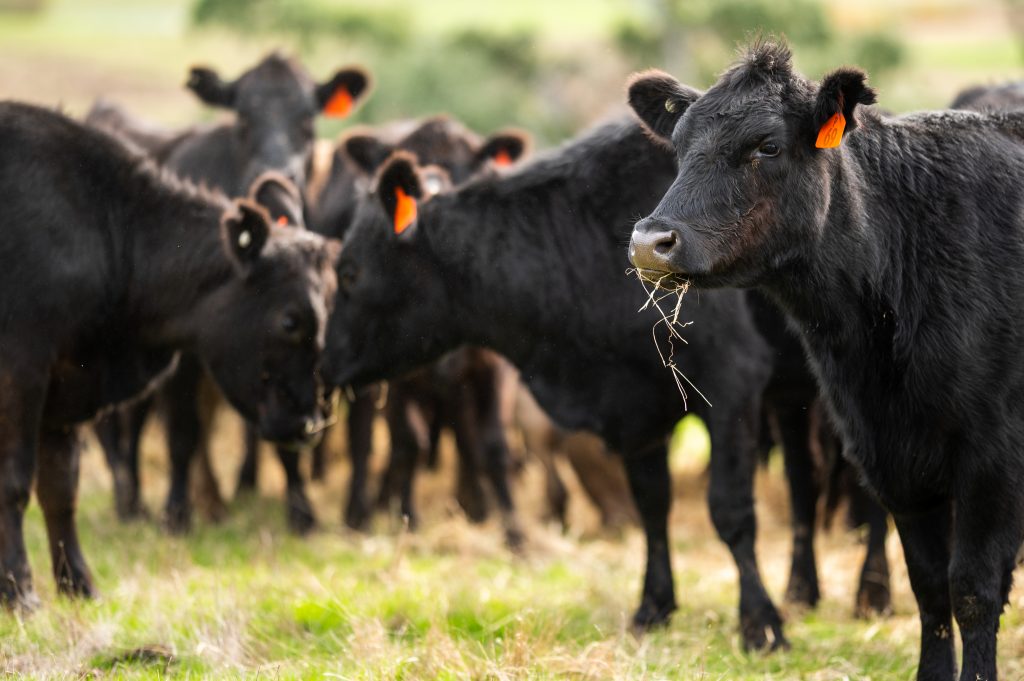
Dr. Derrell Peel, Oklahoma State University Extension Livestock Marketing Specialist, offers his economic analysis of the beef cattle industry as part of the weekly series known as the "Cow Calf Corner," published electronically by Dr. Peel and Mark Johnson. Today, Dr. Peel talks about the Oklahoma cattle market.
The fall calf marketing season is upon us. In most years, this means that auction volumes increase, and prices of calves and stockers decrease to seasonal lows. This year is likely to be different. Current prices for calves are roughly 18 percent higher than March/April prices and heavy feeder cattle prices are higher than spring by over 30 percent. Feeder cattle prices are sharply higher this year compared to one year ago. Feeder steers and heifer prices at Oklahoma auctions are higher by 45 -55 percent compared to the end of September 2022.
Volumes at Oklahoma auctions are down by 9.4 percent in 2023 through the end of September compared to one year ago. That amounts to a reduction in feeder cattle sales of over 95,000 head so far this year. The decrease in auction volumes has been greater in the second half of the year with weekly volumes down by 22.8 percent since the middle of the year. The volume of feeder cattle is expected to be smaller year over year even as seasonal volumes increase in October and November. Though there are no strong, clear indications of heifer retention yet, the percent of heifers in auction volumes has been lower in August and September, about 40 percent, compared to an average of just over 44 percent in the first seven months of the year.
Winter wheat grazing is an important cattle production activity in Oklahoma and surrounding regions of the southern plains. Demand for wheat pasture stocker cattle helps support calf prices in the fall and depends on the development of wheat pasture. The latest crop progress report shows that wheat planting is slower than usual with 18 percent of Oklahoma wheat planted as of September 24, down two percent from last year and seven percent below the five-year average of 25 percent for the date. Reemerging dry conditions is limiting wheat pasture development this fall.
The situation for cull and replacement cows is similar to feeder cattle with sharply higher prices and reduced volumes year over year. Average auction prices for cull cows in Oklahoma are about 35 percent higher this fall compared to last year. The auction volume of cull cows is down 15.5 percent for the year to date but is down 43.2 percent since mid-year. The volume of bred and breeding cows is down 28.0 percent for the year to date and down 45.6 percent since the end of June. Auction prices for bred cows are up roughly 50 percent year over year. I am hearing anecdotal reports of bred cow prices jumping sharply this fall.
Hay supplies are improved from a year ago and pastures are in somewhat better shape compared to last year. The latest pasture conditions rate Oklahoma with 38 percent poor to very poor compared to last year at this time when 75 percent of pastures were poor to very poor. However, many producers report that low stock water remains a serious concern in many regions. Cattle producers will enjoy near record cattle prices this fall but continue to face numerous production and cost challenges. Hopefully the emerging El Niño will bring broad-based moisture improvements this winter and set up better conditions for 2024.

Rep. Ken Luttrell, R-Ponca City, recently was elected to serve as vice chairman of the Center for Legislative Energy and Environmental Research (CLEER).
The election came at the Energy Council's annual Global Energy and Environmental Issues Conference held in Little Rock, AR.
" It's an exciting time to be a part of CLEER," Luttrell said. "There are a growing number of states and provinces participating in The Energy Council, and the CLEER Board provides critical input to the Council's legislators. I am especially excited to serve with longtime friend and CLEER Chairman, Rep Francis Thompson, Louisiana's longest-serving legislator, with 49 years of elected service. I look forward to continue sharing Oklahoma's energy solutions, concerns, challenges and policies with other states and bringing their ideas and best practices home to Oklahoma."
The purpose of CLEER is to provide support for the Energy Council, bringing research and publications of energy policy issues to the Council's attention and sponsoring forums and other opportunities for dialogue on energy and related environmental issues. CLEER's support addresses energy and environmental questions and helps educate members of the Council with regard to state, national and global energy issues, in order that they may better serve their constituents. It consists of Legislative leaders from 15 energy-producing states and two Canadian provinces.
In fiscal year 2023-24, the Energy Council will meet three times to consider local, national and international concerns.
Luttrell's energy-producing House district, which includes parts of Kay and Osage counties, has oil and natural gas exploration and development, wind and coal power generation and Oklahoma's largest refinery, the Phillips 66 refinery in Ponca City.
In the Oklahoma House of Representatives, Luttrell serves as chair of the Appropriations & Budget Subcommittee for Select Agencies and also as a member of the Energy & Natural Resources Committee.
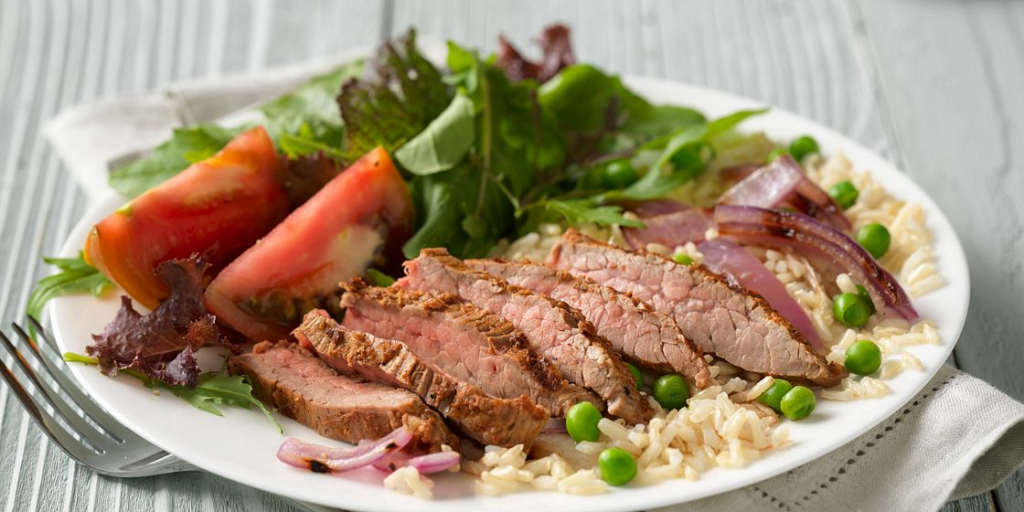
Senior Farm and Ranch Broadcaster, Ron Hays, is visiting with the Executive Director of Nutrition Research at the National Cattlemen's Beef Association, Dr. Shalene McNeill, about beef industry priorities in the next Dietary Guidelines for Americans.
Currently, the U.S. is under the dietary guidelines that came out in 2020 and will expire in 2025. The next set of Dietary Guidelines are now being formulated by the Dietary Guidelines Advisory Committee, that is aiming to issue updated Guidelines for 2025 -2030 by the end of 2024.
The Beef Checkoff, McNeill said, was one of 83 organizations and individuals that had the chance to give thoughts during public commentary.
"We really wanted to focus on the critical role that beef plays and its nutrients play at each life stage, "McNeill said. "Beef has a special package of nutrients- iron, zinc, and B vitamins. As we talk about, these are not only needed in infancy, but they are also needed during adolescence, during adulthood, pregnancy, and aging."
As Americans age over time, McNeill said gaps have begun to emerge that beef can help fill.
"We are starting to see widening rates of iron deficiency," McNeill said. "That is because people have cut back on their beef intake, so we are seeing those consequences, and we wanted to make sure the committee had that research in front of them..."
Checkoff members also reminded the dietary guidelines committee that, based on current evidence, plant-based proteins are not a substitute for the real thing.
"You just don't get the same nutrient mix, the body does not metabolize them the same way, they are not equivalent, so we want to really reinforce that it is fine if you want to increase fruits and vegetables and plant proteins, but they are not a substitute for beef proteins," McNeill said.
McNeill said it is expected that around October of 2024, the scientific committee will turn over their recommendations to the USDA and the Health and Human Services, so they can begin writing the dietary guidelines. If the timeline goes as projected, McNeill said those guidelines will be available to the public in January of 2025.
"This is a very active phase for us at the Beef Checkoff because we want to make sure all of those research dollars that beef producers are investing in are getting into the hands of these scientists as they are making those recommendations," McNeill said.
The Dietary Guidelines for Americans are the foundation for all federal feeding policies, McNeill said, so if it is not in the dietary guidelines, it is not going to be on the school lunch menu.
"If it is not on the dietary guidelines, it is not going to be what our military is being served, so they have a very influential role in the way we think about nutrition and health," McNeill said.
As beef consumers put nutrition at the top of their mind, McNeill said people are looking for ways to change their diet to eat healthier and eat more protein, which is critical to the research the Beef Checkoff has shown, proving the benefits of eating more beef.
"There is a lot of national and public attention on eating healthier, so I think the dietary guidelines will continue to get a lot of attention and have an impact," McNeill said.
The Beef Buzz is a regular feature heard on radio stations around the region on the Radio Oklahoma Ag Network and is a regular audio feature found on this website as well. Click on the LISTEN BAR at the top of the story for today's show and check out our archives for older Beef Buzz shows covering the gamut of the beef cattle industry today.
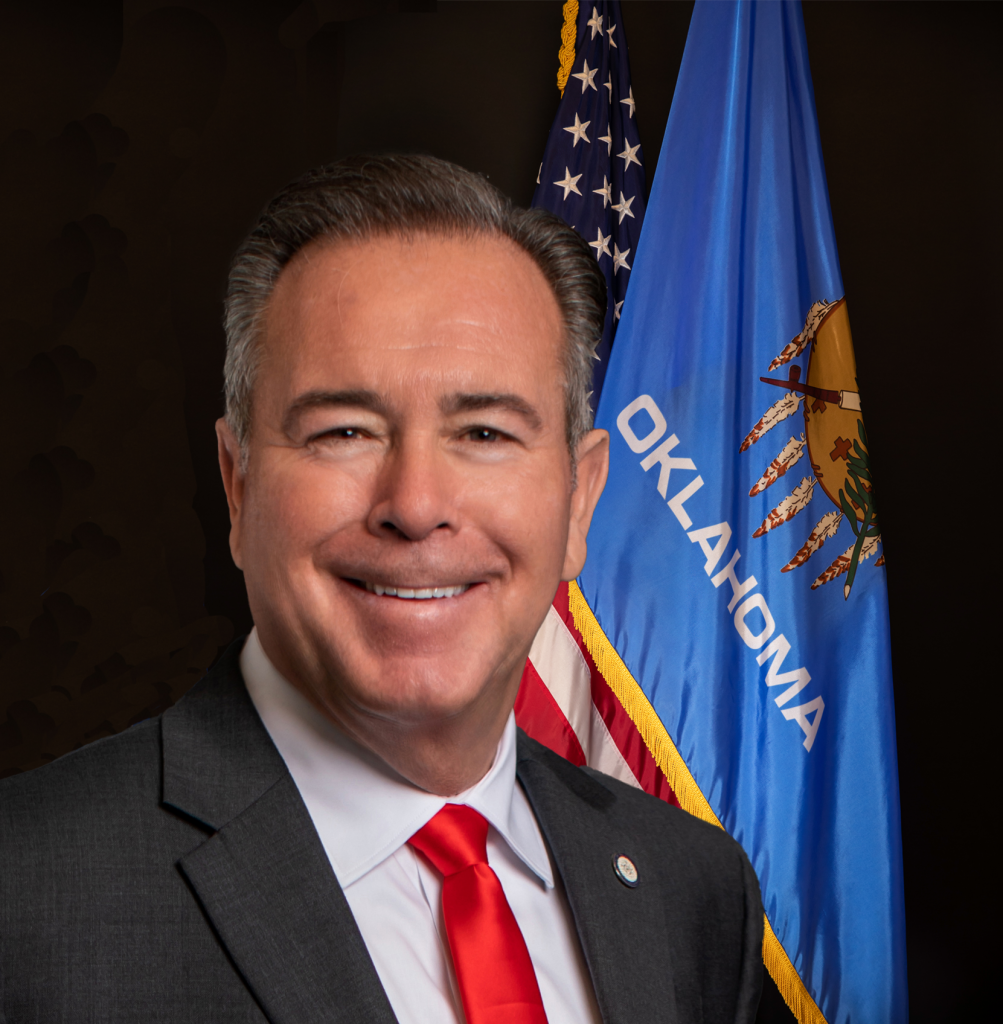
Receive benefits for funds used to contribute and spend on future education
By State Treasurer Todd Russ
Student academic success is top of mind as families settle into school routines. I encourage Oklahoma families to take the next step in setting a gameplan for a tax-free education savings path this month, which September is aptly recognized as College Savings Month across the nation.
It's understandable if the thought of saving for future education seems overwhelming. With tax-free benefits available on payroll contributions and educational expenses, that is where Oklahoma 529 can help start a savings journey for future education expenses for your child, grandchild and loved ones. From Oklahoma 529's launch in 2000 through June 30, 2023, Oklahoma 529 has helped more than 87,000 students with their financial education needs.
Learn about the benefits of Oklahoma 529 and start building a strong foundation for your loved one's future educational success. Before College Savings Month comes to a close, here are four ideas to help Oklahoma families start on the path toward saving:
1
Open an Account: Oklahoma 529 accounts are easy to open and during the month of September receive a bonus, visit oklahoma529.com for full details. Accounts provide owners triple tax benefits: a state tax deduction for Oklahoma taxpayers, state and federal tax-deferred growth of any earnings, and tax-free withdrawals for education expenses such as tuition, books, computers and living expenses at colleges, universities, CareerTech, and graduate or professional schools. Plus, see how an Oklahoma 529 account can pay for K-12 tuition.
2
Ask for Gifts at Holidays, Birthdays and Special Occasions: When asked for gift ideas, remember a contribution gift to an Oklahoma 529. Grandparents, aunts and uncles and friends can all join in and help save for a child's education at holidays, birthdays, and special occasions. Plus, Oklahoma tax payers may qualify for the state tax deduction.
3
Save Consistently: Once an Oklahoma 529 account is opened, contribute regularly to maximize your tax benefits. Some families set up recurring contributions from a bank account, while others may prefer to make payroll direct deposits. You can even encourage your student to start early savings habits by giving to their own account that eventually benefits them – through money earned from a job or allowance.
4
Enter the Bright Future Sweepstakes: Oklahoma 529 launched the Bright Future Sweepstakes that gives six Oklahoma families $529 to start an Oklahoma 529 account or add to their existing account. The sweepstakes runs through Dec. 31, 2023, with one winner drawn each month. Learn more by visiting oklahoma529.com/brightfuture for prize details, official rules and to enter.
RON's Dave Lanning has a pre-opening look at today's agricultural Markets.
Click the audio tab below for today's report.

Handful of Harmful Amendments to Agriculture Appropriations Bill Easily Defeated or Withdrawn
The U.S. House of Representatives' Fiscal Year 2024 Agriculture Appropriations Bill failed in a late Thursday night vote as both chambers frantically work to find a government funding solution that keeps the federal government's doors open past this weekend. Debate on amendments to the legislation took place on Tuesday evening and into the early hours of Wednesday morning. Key agriculture groups worked closely together in the days leading up to the votes to urge lawmakers to defeat harmful amendments. One such amendment targeting commodity checkoff programs was defeated in a vote of 49-377.
Several amendments attempting to reduce, or entirely strike funding from international food assistance programs were defeated as well. Although the legislation ultimately failed, reports note that the amendment process highlighted what may be key issues in the forthcoming farm bill debate. Reports praised House Agriculture Committee Chairman, Congressman G.T. Thompson (R-PA), for his successful efforts in defeating harmful amendments, stating, "Call it a dry run, and a very successful one: House Agriculture Chairman Glenn "G.T." Thompson, (R-PA), got to warm up for the coming farm bill debate this week by working to bury some key amendments to the fiscal 2024 Agriculture spending bill. The amendment votes were largely symbolic, but they nevertheless involved noteworthy issues."
Despite the victories, an amendment cutting McGovern-Dole food aid was adopted even as other anti-food aid amendments, including cuts to Food for Peace, were rejected. The underlying bill also proposed cuts to U.S. food aid to offset the increases announced by USDA using CCC funding though USDA's action was prompted by calls from Congress. However, the bill's failure to pass in the House undermines these amendments that managed to get over the wall in a negotiation with the Senate. Read more here.
On Wednesday, USDA announced that it would release funds totaling $1.75 billion for at least certain portions of emergency relief program payments for 2020, 2021, and 2022 losses. Our calculations indicate that after Emergency Relief Program (ERP) Phase I ($7.455 billion), ERP Phase II ($1.17 billion), Emergency Livestock Relief Program (ELRP) ($750 million), and administrative costs ($100 million), a total of $525 million remains. It is still our position that these funds must be used to address the non-triggering shallow losses from the original Phase I model. USDA has yet to roll out ERP for 2022 crop year losses. Reports still indicate that USDA plans to offer farmers a choice between the failed Phase II approach or the successful Phase I approach but with a "progressive factor" that cuts deepest against producers the greater their loss. We continue to urge lawmakers to step in and address this problem before it is too late. Read USDA's announcement here.
The Senate Agriculture Committee convened on Wednesday for a hearing concerning foreign ownership in U.S. agriculture. Several lawmakers, including Senators Mike Rounds (R-SD), James Lankford (R-OK), Tammy Baldwin (D-WI), and Jon Tester (D-MT), appeared before the panel to discuss potential legislative solutions to the issue. View more from the hearing here.
The House Financial Services Committee last week advanced, 42-0, the Agricultural Security Risk Review Act, which would add the Secretary of Agriculture as a permanent member of the Committee on Foreign Investment in the U.S (CFIUS). Former House Agriculture Committee Chairman, Congressman Frank Lucas (R-OK), introduced the bill back in May. The measure now heads to the full House floor for consideration. Congressman Lucas stated, "Protecting America's agriculture security is a critical part of our national security. With an increasing amount of foreign investment in U.S. agriculture, including the Secretary of Agriculture as a member of CFIUS is long overdue. I know firsthand just how important the security of our agricultural industry is, which is why I applaud my colleagues on the House Financial Services Committee in taking a critical step to make my longstanding priority law." Read more here.
USDA on Thursday announced the addition of several approved conservation practice standards for popular conservation programs, including through the Environmental Quality Incentives Program (EQIP) and the Conservation Stewardship Program (CSP). According to a release from USDA, "These in-demand activities are expected to deliver reductions in greenhouse gas emissions or increases in carbon sequestration as well as significant other benefits to natural resources like soil health, water quality, pollinator and wildlife habitat and air quality." The list of approved conservation practice standards, including the latest additions, may be viewed here.
This month, R-CALF USA joined on to comments by Food & Water Watch and cosigned by several other organizations representing farming, ranching, consumer, and environmental interests, that were submitted to the U.S. Department of Justice (DOJ) and the Federal Trade Commission (FTC) in strong support of the agencies' updated Merger Guidelines proposed last July.
In the comments, the groups applauded the FTC and the Antitrust Division of the DOJ for moving to strengthen and clarify how mergers will be reviewed. They noted that inadequate antitrust enforcement has allowed monopolistic trends and anti-competitive behavior to become rampant in food and agricultural markets, highlighting the devastating consequences for rural America, rural economies, and the American food system.
The comments focused on the importance of the Guidelines reining in unbridled consolidation in agribusiness markets, which have eliminated competition and trended toward monopolies far beyond what Congress intended to avoid when passing the Sherman and Clayton Acts.
According to the FTC, the Sherman Antitrust Act of 1890 outlaws every contract, combination, or conspiracy in restraint of trade, and any monopolization, attempted monopolization, or conspiracy or combination to monopolize. And the Clayton Antitrust Act of 1914 prohibits mergers and acquisitions where the effect may be substantially to lessen competition or to tend to create a monopoly. It also bans certain discriminatory prices, services, and allowances in dealings between merchants.
The organizations' comments noted their support of the Guidelines establishing clear thresholds and presumptions indicating which mergers violate the Clayton Act and therefore should be blocked and made recommendations to further strengthen that approach. They also made clear their support for returning to proper antitrust enforcement principles, under which claimed efficiencies cannot save an otherwise illegal merger or acquisition.
The group of organizations also included numerous examples and exhibits and previous comments that they and others submitted in April of 2022 on the joint FTC-DOJ Merger Enforcement Request for Information. These earlier comments provided specific examples, recommendations and requests for the strengthening of merger enforcement guidelines and the effective enforcement of laws preventing further concentration and anticompetitive behavior in agribusiness markets, noting the results of the agencies' failures to previously uphold the laws. "We thank the DOJ and FTC's efforts to strengthen antitrust enforcement and revive the letter and spirit of the Clayton Act," said R-CALF USA CEO Bill Bullard. "We encourage the strong enforcement of the Guidelines and the halting of further mergers or acquisitions by dominant firms in our markets. We will continue working to halt market concentration to protect American farmers, ranchers, and consumers, so we can return profitability and prosperity to rural America."
The office of Congressman Josh Brecheen notifies constituents that the in-person town hall meetings scheduled for Monday, October 2nd, Tuesday, October 3rd, and Wednesday, October 4th have been postponed due to legislative business in Washington, as the House of Representatives will now be in session this week.
Constituents can follow our Facebook page here to stay up to date on future town hall dates.
Congressman Josh Brecheen voted against H.R. 5860 - Continuing Appropriations Act, 2024 and Other Extensions Act.
"We should not be funding the government at current levels when our national debt is more than $33 trillion and the average family of four is spending $1,200 more a month to buy the exact same goods and services. If we are going to fund the government, we need meaningful cuts to spending and we need to secure our border," said Congressman Josh Brecheen.
Congresswoman Bice issued the following statement:
"I have repeatedly worked to negotiate packages that cut spending, secure our border, and take care of our men and women in uniform. However, I refuse to let our troops, border patrol agents, and countless other federal employees throughout Oklahoma's Fifth Congressional District to go without pay and be pawns in this process. This is why I voted to give Congress 45 days to continue our work as we seek to restore fiscal responsibility in Washington, D.C. In this interim period, I will focus on working to end Biden's Border Crisis and pass fiscally responsible appropriations bills."
Congressman Tom Cole (OK-04), Vice Chairman of the House Appropriations Committee, released the following statement after the U.S. House of Representatives advanced H.R. 5860, the Continuing Appropriations Act, which would keep the government open until November 17. Cole supported the legislation.
"While Congress should come to an agreement to fully fund the government, we should also remember that the funding levels instilled by Democrats previously in control of both chambers of Congress are unsustainable," said Cole. "House Republicans are passing our appropriations bills to provide full funding and have already sent four bills, which would fund nearly 70 percent of the discretionary budget, to the Senate. But we cannot shutdown the government in the interim and punish the American people, our service members and civilian workforce. This legislation would avoid that while allowing Congress to finish the job and provide critical disaster relief to Hawaii which was devastated by wildfires.
"I applaud Speaker McCarthy for taking this path forward. Government shutdowns are not the way to govern and do not work as a negotiation tactic. I thank him for his leadership to avert a shutdown, something the previous four Republican Speakers did not do, and this body for working in a bipartisan manner for the good of the American people."
Senator James Lankford (R-OK) issued the following statement after the Senate passed a Continuing Resolution to fund the federal government through November 17, 2023:
"This is not how the United States of America should govern. We should have the battles on spending, national security, and foreign policy, but we should also keep the federal government open so federal workers, contractors, and the American people are not affected by a congressional fight. The status quo in DC needs to end. My Prevent Government Shutdowns Act will hold Congress accountable instead of putting our military, Border Patrol, federal employees and their families through the stress of serving without knowing when they will get paid."
Archives:
2026-11 | 2026-10 | 2026-09 | 2026-08 | 2026-07 | 2026-06 | 2026-05 | 2026-04 | 2026-03 | 2026-02 | 2026-01 | 2025-12 | 2025-11 | 2025-10 | 2025-09 | 2025-08 | 2025-07 | 2025-06 | 2025-05 | 2025-04 | 2025-03 | 2025-02 | 2025-01 | 2024-12 | 2024-11 | 2024-10 | 2024-09 | 2024-08 | 2024-07 | 2024-06 | 2024-05 | 2024-04 | 2024-03 | 2024-02 | 2024-01 | 2023-12 | 2023-11 | 2023-10 | 2023-09 | 2023-08 | 2023-07 | 2023-06 | 2023-05 | 2023-04 | 2023-03 | 2023-02 | 2023-01 | 2022-12 | 2022-11 | 2022-10 | 2022-09 | 2022-08