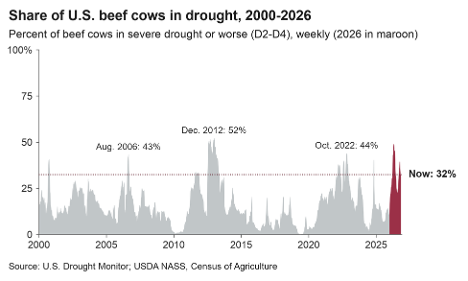
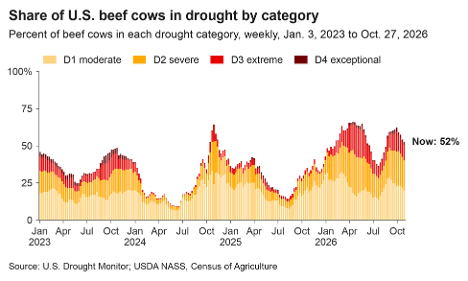
Josh Maples writes in Southern Ag Today: Drought has been a problem for beef cattle producers for nearly all of 2026. On the October 27 U.S. Drought Monitor map, 52 percent of the nation's beef cows were in areas of drought (D1 or worse), and about one-third (32 percent) were in severe drought or worse (D2-D4). These figures weight each county's drought conditions by its beef cow numbers from the 2022 Census of Agriculture. This year's drought stands out over the long run. The share of beef cows in severe drought or worse peaked at 49 percent in late April. That is the highest since the 2012-13 drought, when it reached 52 percent, and above the peaks of the 2006 and 2022 droughts (43 and 44 percent).
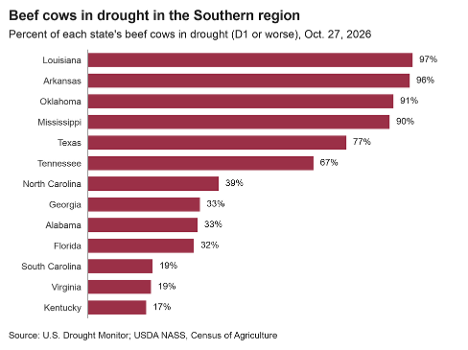
The South is carrying much of this burden. The 13 states in the Southern Risk Management Education Center region hold about 13 million beef cows, or 45 percent of the U.S. total. Across those states, 65 percent of beef cows were in drought on October 27, up from 29 percent a year earlier. More than 90 percent of beef cows in Louisiana, Arkansas, Oklahoma and Mississippi were in drought, along with 77 percent in Texas and 67 percent in Tennessee. Conditions are better on the eastern edge of the region, where fewer than 20 percent of beef cows in Kentucky, Virginia and South Carolina were in drought.
More than half of U.S. beef cows have been in drought in 29 of the 43 weeks so far this year. Severity has also been higher than usual. Through April and May, about one in five beef cows was in an area with extreme or exceptional drought (D3-D4). For cow-calf producers, drought heading into winter means less stockpiled forage and earlier hay feeding and also increases fuel use for feeding and moving cattle. USDA-FSA Livestock Forage Disaster Program payments can help eligible producers in drought areas.
Certainly, drought has impacted the ability of producers to expand their herds. Drought has also led to higher production costs through increased feed purchases. Recent hay price data has indicated some sharply higher hay costs leading into Fall. El Niño might bring more rain this winter, but timing could be too late for much grass growth in some areas.
Maples, Josh. "Drought Grips Southern Cow Country Heading into Winter." Southern Ag Today