
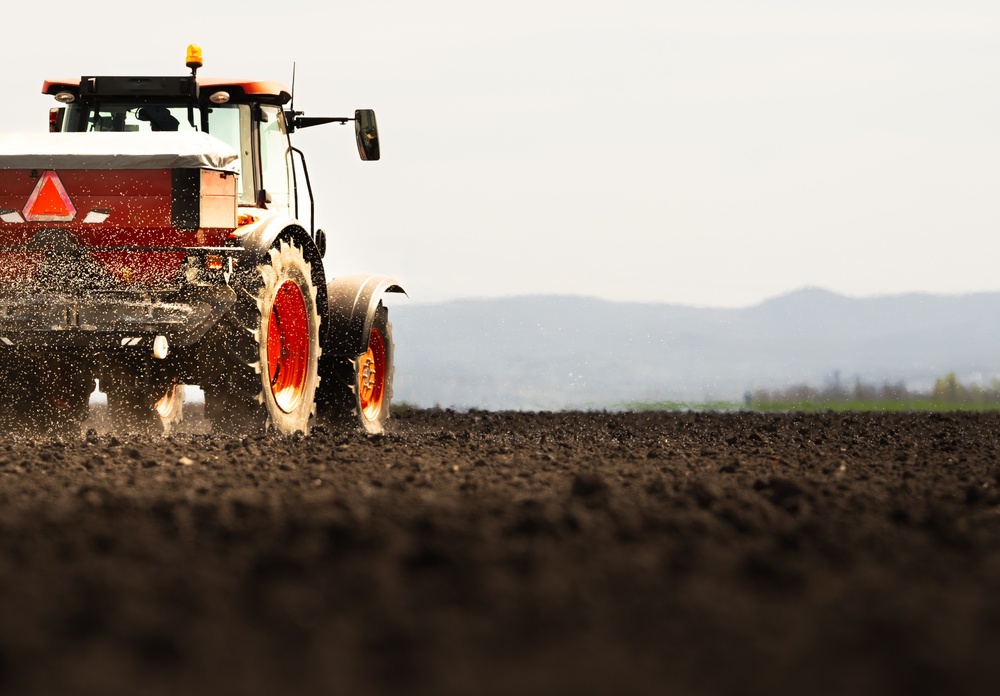
With harvest progressing rapidly across the Midwest, growers are weighing critical decisions around fall fertilizer applications, particularly the timing and economics of applying nitrogen. A joint panel discussion hosted by University of Illinois Extension and the Illinois Fertilizer and Chemical Association (IFCA) addressed the logistical hurdles, environmental risks, and agronomic management strategies farmers face when planning fall nutrient programs.
A primary focus for growers applying fall anhydrous ammonia is waiting for soil temperatures at the four-inch level to drop to 50 degrees Fahrenheit and trend downward. John Jones, Extension Soil Fertility Specialist at the University of Illinois, emphasized that tracking soil temperature thresholds remains an evolving target.
Dan Schaefer, Director of Nutrient Stewardship for the Illinois Fertilizer and Chemical Association, noted that warmer autumns over the past decade have pushed ideal application windows later into the year. Research funded through the Illinois Nutrient Research and Education Council (NREC) shows that when fall temperatures linger above thresholds into December, early-applied nitrogen converts rapidly to nitrate.
"In the last 10 years, we've seen a change in the dynamics of when we put on fall nitrogen; it seems to be moving a little bit later," Schaefer explained. "The guidelines tell us to wait until we have a 50-degree soil temperature at the 4-inch level and trending downward... Some of the October-applied nitrogen was almost completely nitrate probably by the time we hit that March 1st timeframe. When that happens in our tile-drained fields, we have a loss of nitrate through the tiles."
Schaefer highlighted that NREC research at Douglas County trial sites has shown fall application can be a leakier system even when using nitrification inhibitors. While retailers and farmers rely on fall applications to alleviate severe spring transportation and application bottlenecks, Schaefer noted that splitting nitrogen or moving more application volume to the spring improves overall nitrogen use efficiency.
For producers in the field, waiting for cooler temperatures requires disciplined management, especially when dry fall conditions allow harvest to finish early. Eric Miller, a farmer in Piatt County, Illinois, noted that harvest pace and late-season weather forecasts dictate how growers approach their application windows.
"When we're having these dry falls, harvest goes smoothly, and then it becomes a question of how much discipline do I have to wait for 50 and going down," Miller said. "If you don't have a fallback for how you're going to get your nitrogen applied and it's fall anhydrous, that's where the challenge is. If you're comfortable with spring anhydrous applications, if you have the ability to put some on at planting time, certainly side-dress—those are your plans B, C, and D to consider."
From a risk-management perspective, Nick Paulson, Agricultural Economist at the University of Illinois and member of the farmdoc team, highlighted the balancing act producers must maintain. Paulson noted that managing nitrogen timing mirrors calling audibles in the field, weighing the operational risk of delaying applications against potential spring weather delays and workload compression.
Jones shared findings from upcoming NREC-funded research comparing fall and spring anhydrous applications. The data indicates that applying anhydrous ammonia in the spring typically results in an optimal nitrogen rate that is 16 to 20 pounds per acre lower than fall applications, without creating a significant difference in yield.
When setting nitrogen application targets, Jones urged producers to consult data-driven tools like the corn nitrogen rate calculator and focus on the Maximum Return to Nitrogen (MRTN) rather than chasing top-end yields.
Across more than 800 research trials conducted statewide, Jones pointed out that aiming for maximum bushels yielded only about 1.3 bushels per acre more than applying at the profit-maximizing rate. However, reaching that marginal yield required an additional 10 to 24 pounds of nitrogen per acre. Highly productive soils often require lower optimal nitrogen rates because of their natural fertility. Jones reminded growers that rate recommendations reflect total nitrogen from all sources, meaning farmers must budget any nitrogen applied through herbicide carriers or phosphorus fertilizers when calculating their overall fertility plan.
While these findings reflect Midwestern corn acres, the principles of soil temperature thresholds and nitrogen efficiency directly hit home for Oklahoma producers establishing winter crops and grazing systems. Across Oklahoma, lingering autumn heat routinely keeps four-inch soil temperatures elevated well through October, significantly accelerating microbial activity that converts applied ammonium into leachable nitrate before root systems can utilize it. For regional wheat growers and cattle producers balancing fall forage production against input costs, dumping the entire season's nitrogen upfront into warm ground carries substantial financial risk. Emphasizing split applications—supplying just enough starter fertility to support early tiller development and canopy cover, then utilizing tools like Oklahoma Mesonet soil temperature maps and late-winter topdressing to deliver the remaining balance—allows Southern Plains producers to protect their nutrient investments and adapt to unpredictable seasonal rainfall.